Blog

  • Todd Blanche refuses to pledge DOJ independence from Trump

    Todd Blanche refuses to pledge DOJ independence from Trump

    Blanche’s remarks put a longstanding Justice Department norm under fresh scrutiny: how much distance should separate the White House from federal investigations and prosecutions? The answer matters because the department’s decisions can shape individual cases, public trust and the limits of presidential influence.

    Todd Blanche refused to pledge that the U.S. Department of Justice would remain independent from the White House, saying he would take President Donald Trump’s views into account when directing federal law enforcement. The attorney general’s position matters because it raises a basic question about whether prosecutorial decisions will be insulated from a president’s political interests.

    Blanche did not describe a specific case or order from Trump. But declining to make that commitment shifts attention from any one investigation to the broader relationship between the Justice Department, President Donald Trump and the White House.

    Blanche rejected a clear firewall

    The immediate issue is straightforward. Asked whether the Justice Department would operate independently, Blanche said he was not prepared to make that pledge, according to reporting by The Washington Post.
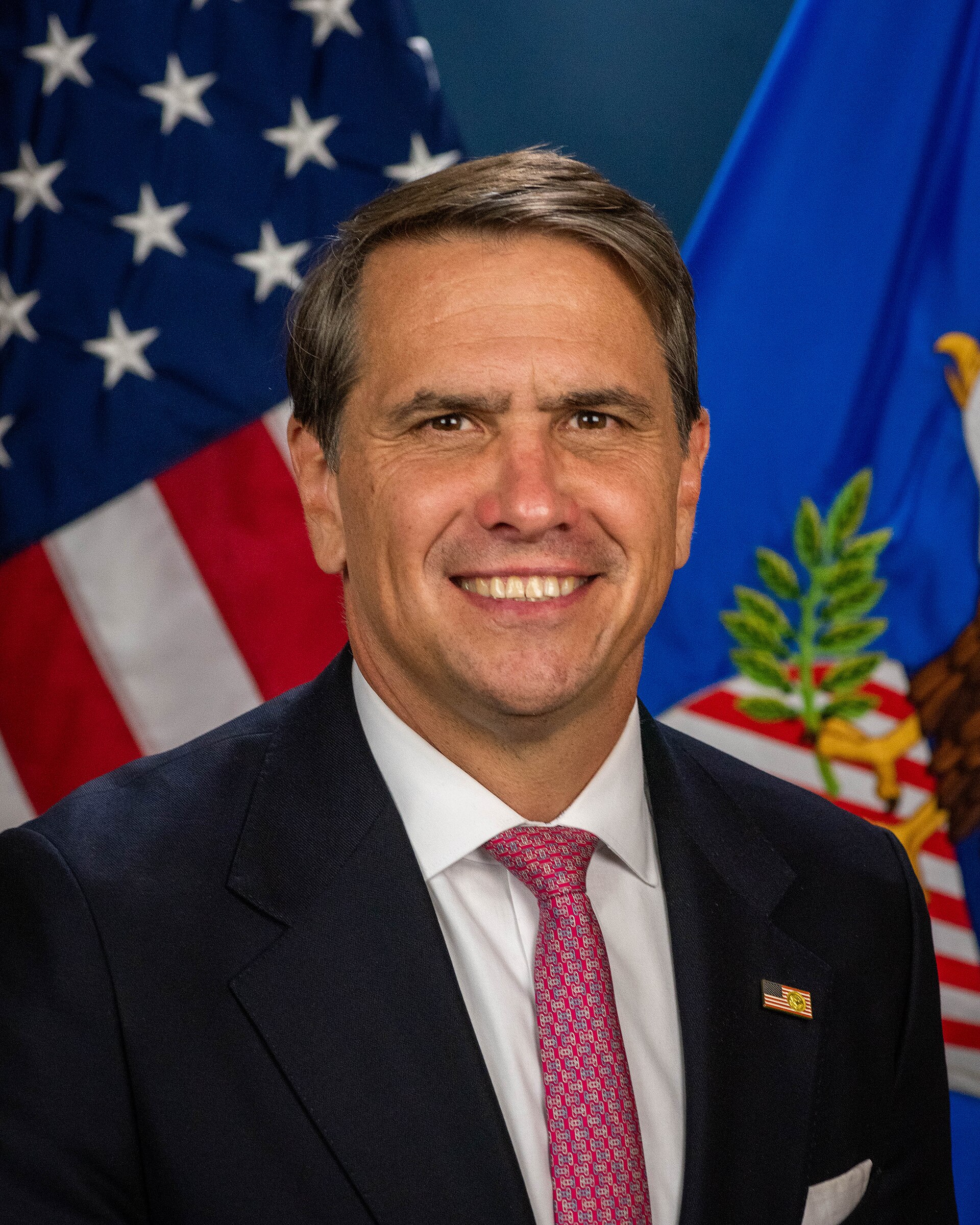
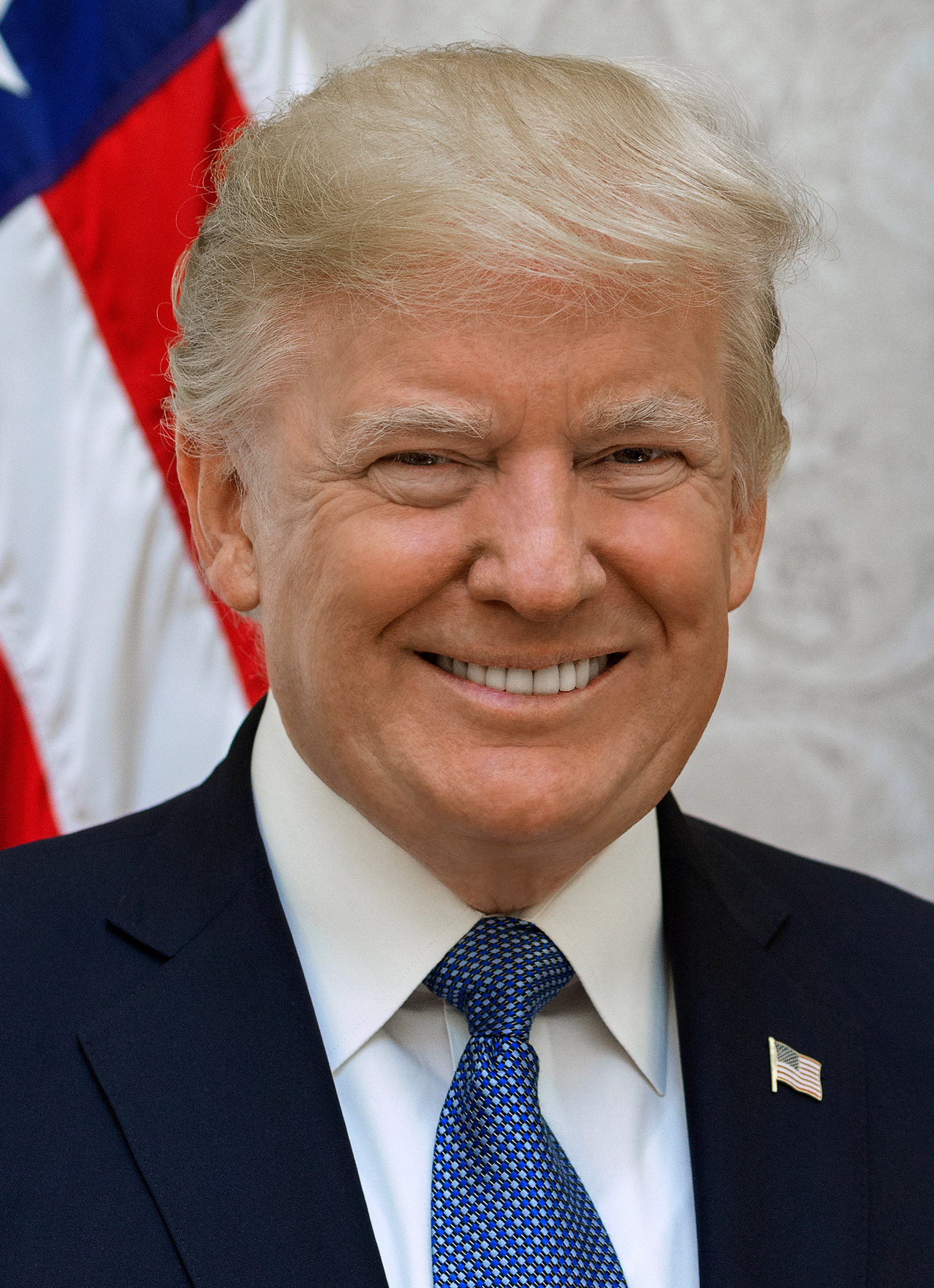
    AG Todd Blanche Official Portrait
    Image: Ryan M. Biller, via Wikimedia Commons, Public domain.

    He also said Trump’s views would factor into how he directs federal law enforcement. That is a notably different posture from an assurance that the department will make charging, investigative and enforcement decisions without White House input.

    Those two ideas can coexist in an administration only with careful boundaries. The president sets broad executive-branch priorities, appoints senior officials and is politically accountable for the administration. Yet the Justice Department has traditionally treated particular investigations and prosecutions as areas requiring professional distance from political officials.

    Blanche’s remarks leave the public without a clear description of where he would draw that line. Taking a president’s views into account could mean considering broad policy objectives, but it could also invite concerns about influence over individual law-enforcement decisions. The available reporting does not spell out which interpretation Blanche intended.

    Why DOJ independence is different

    The Justice Department is part of the executive branch, not a separate branch of government. Its leaders are appointed by the president, and an attorney general is expected to carry out lawful administration policy.

    “Independence,” in this setting, does not usually mean that the department has no connection to the president. It refers to a practical and ethical expectation that prosecutors and investigators should not use government power to reward allies, punish critics or resolve political disputes.

    That distinction is especially important because federal law enforcement has unusually direct power over people and institutions. The department can investigate alleged crimes, bring federal charges, seek warrants and supervise agencies such as the FBI. Decisions that appear politically directed can damage confidence even when officials argue they are acting within their authority.

    Supporters of a more president-centered approach may argue that voters elect a president to set policy and should expect senior appointees to follow that agenda. Critics counter that criminal enforcement cannot be treated like ordinary policy because the stakes include liberty, due process and equal treatment under the law.

    Confirmation fight adds context

    Blanche’s position has already been a point of contention on Capitol Hill. Sen. Chris Coons, a Delaware Democrat, said he pressed Blanche during his Senate Judiciary Committee confirmation hearing on whether he would stand up to Trump and act independently on behalf of the American people.

    In a statement released by Coons’s office, the senator described Blanche as Trump’s former personal attorney and said Blanche had been serving as acting attorney general while seeking confirmation to lead the department permanently. Coons framed the hearing as a test of whether Blanche could maintain sufficient separation from the president.

    The senator also made wide-ranging criticisms of the department’s recent direction, including allegations involving political enemies, personnel decisions and grants. Those are Coons’s allegations and political arguments, not findings established by the material available here.

    Still, the exchange illustrates why Blanche’s answer is drawing attention. Confirmation hearings often focus on credentials and policy views. In this case, the central dispute is about institutional restraint: whether the attorney general sees resistance to presidential pressure as part of the job.

    The question is implementation

    No report cited here identifies a particular federal case in which Blanche acted on Trump’s wishes. Nor does Blanche’s refusal to offer a blanket pledge, on its own, establish that the Justice Department will make improper decisions.

    The more consequential evidence will come from conduct: contacts between White House officials and Justice Department leaders, written policies governing those contacts, personnel decisions, public explanations for major cases and the department’s treatment of matters involving political figures.

    Past norms have often relied as much on judgment and internal practice as on a single enforceable rule. That can make them durable when officials respect them, but vulnerable when leaders openly question their value or define them narrowly.

    For career prosecutors and agents, the stakes are practical. They need clarity about whether case decisions will be judged on evidence and law, or on whether outcomes align with the preferences of politically appointed leaders.

    Public trust is the larger test

    Blanche may argue that listening to the president is consistent with serving in an executive administration. His critics will see his refusal to promise independence as confirmation that the White House could have an improper role in law-enforcement choices.

    Both sides are arguing over more than phrasing. They are debating whether the Justice Department should operate primarily as an instrument of a president’s agenda or as a law-enforcement institution with special safeguards against political direction.

    The answer will not be settled by one interview response. But Blanche’s unwillingness to pledge independence gives Congress, department employees and the public a clear standard by which to assess the decisions that follow.

    For now, the key unresolved issue is not whether a president may set broad priorities. It is whether the Justice Department’s most sensitive decisions will retain enough distance from the White House to command confidence across political lines.
  • Trump’s AI George Washington cameo boosts $400M White House ballroom push

    Trump’s AI George Washington cameo boosts $400M White House ballroom push

    A post featuring an AI-generated George Washington was more than an offbeat social-media moment. It arrived as Trump continued promoting a proposed White House ballroom that remains politically contentious.

    Donald Trump posted an unusual AI-generated video involving George Washington on August 16, 2026, thanking “George” for ideas about a proposed White House ballroom. The post, reported by MEAWW News, showed Trump and Washington inside a virtual version of the $400 million project Trump has continued promoting.

    The unexpected turn was the identity of “George”: not a current adviser or donor, but an AI-rendered version of the first president. The joke-like video also put fresh attention on a project that, according to the report, still requires approval before it can be built.

    George Washington becomes the pitchman

    Trump’s message was unusually specific. MEAWW reported that he wrote, “Thank you, George, for some of your brilliant ideas on this great Military Complex/Ballroom!”

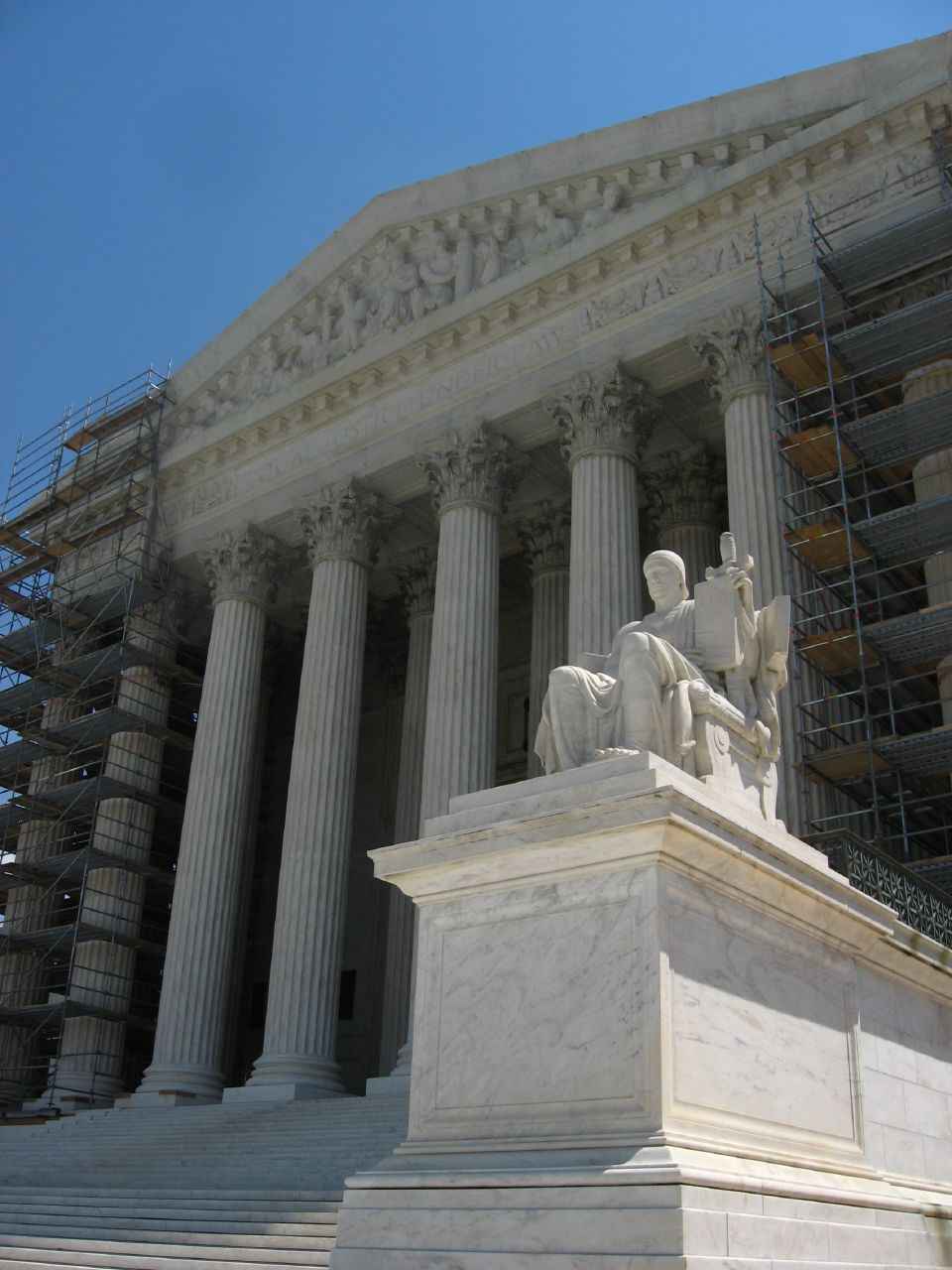
    Supreme Court Building, United States Supreme Court, Washington, D.C.
    Image: Ken Lund, via Flickr, CC BY-SA 2.0.

    In the video described by the outlet, Washington stands beside Trump as the two tour an elaborate ballroom that exists only as a digital creation. That is the central oddity of the post: a long-dead president is presented as a collaborator on a modern White House proposal.

    The premise may have been intended as humor, spectacle or both. But it also does something more practical for Trump’s message: it turns a technical construction and approval dispute into a highly shareable visual.

    The project is bigger than a post

    The proposed ballroom is described in the source report as a $400 million construction effort. MEAWW said Trump is seeking permission from the Supreme Court to move forward with it, although the report did not provide a court filing, docket number or a direct link to a government announcement.

    That distinction matters. The video depicts a finished interior, while the report says the project does not yet exist. One social-media caption quoted by the outlet referred to a “new White House ballroom” as being “under construction,” but that characterization conflicts with the article’s own account that permission remains unresolved.

    For readers trying to separate the post from the proposal, the clearest takeaway is that the video should not be treated as evidence that the ballroom has been approved or built. It is a visualization of what Trump wants to create, based on the available report.

    Why the AI format changes the story

    Political figures have long used renderings, ceremonial backdrops and historic imagery to sell big projects. AI lets that approach become more personal and less formal: instead of a blueprint or architects’ presentation, Trump can appear to receive enthusiastic advice from George Washington.

    That format blurs several lines at once. It blends satire, promotion and an imagined historical endorsement, while giving supporters an easy object to celebrate and critics an easy target for ridicule.

    Eric Daugherty of Right Line News shared the clip on X and called it “awesome,” according to MEAWW. Political commentator Brian Krassenstein took the opposite view, calling the post evidence that Trump had “completely lost [his] marbles.” MS NOW host Eugene Daniels, the report said, expressed uncertainty about what the video was meant to be.

    Those reactions reflect the larger divide around the clip. Supporters can see a playful, attention-grabbing defense of a presidential vision. Critics can see an extravagant digital promotion for a project whose public justification, approval path and ultimate cost warrant scrutiny.

    A ballroom raises public questions

    The unusual Washington cameo may dominate the conversation, but the more consequential issue is the proposed construction itself. A $400 million White House project invites questions about how the estimate was calculated, what changes it would make to the complex, who would oversee the work and what legal authority supports it.

    The source report characterizes the effort as controversial, yet it leaves several basic points unclear. It does not identify the expected funding source, the architectural plan, a construction schedule, or the precise lower-court or agency action that prompted a Supreme Court request.

    Those gaps do not prove that the proposal lacks a plan. They do mean that a polished AI tour offers far more detail about the imagined look of the ballroom than the available reporting offers about its real-world mechanics.

    For a project tied to the White House, where changes carry symbolic as well as practical weight, that imbalance is likely to keep driving debate. The building is not merely a venue; it is a public landmark and the seat of the presidency.

    The post also carried a contrast

    MEAWW noted that The Daily Beast criticized Trump’s post by contrasting the virtual ballroom tour with reported conditions aboard the USS Abraham Lincoln. The source said the criticism focused on allegations involving shortages and poor living conditions for sailors, claims that are separate from the ballroom proposal and were not independently documented in the material provided here.

    The juxtaposition explains why the video drew stronger reactions than a typical AI novelty. Critics used it to argue that Trump was emphasizing a grand personal project while more immediate concerns demanded attention. Supporters may argue that a social-media post does not prevent an administration from addressing other issues at the same time.

    Either way, the clip invited an argument about priorities, not just about technology or historical humor.

    What remains unresolved

    Trump’s post made the ballroom easy to picture: George Washington appears to approve, Trump supplies the tour and the finished room is already on screen. The actual proposal remains less clear.

    Based on the source material, the unanswered questions include whether the Supreme Court will consider or grant the requested permission, how the $400 million estimate would be funded, and whether a formal public plan will be released. The report also does not establish whether Trump or the White House offered a detailed explanation of the video’s intended message.

    For now, the George Washington appearance is the attention-grabber. The lasting significance lies in what it was promoting: a costly proposed White House ballroom that has become a political symbol before construction has begun.

  • Judge Halts NYC’s Mamdani-Backed Second-Home Tax Rollout

    Judge Halts NYC’s Mamdani-Backed Second-Home Tax Rollout

    The ruling delays collection of a proposed surcharge on certain second homes, but it does not decide whether the policy can ultimately stand. The next court filings could determine whether the dispute stays focused on the rollout or grows into a broader challenge.

    New York State Supreme Court Justice Wayne M. Ozzi temporarily halted New York City’s rollout of Mayor Zohran Mamdani’s second-home tax on Monday, putting a projected $500 million-a-year revenue stream on hold. Ozzi, sitting in Staten Island, issued an order that pauses implementation of the Mamdani-backed pied-à-terre surcharge while homeowners challenge the way New York City rolled it out.

    The order does not decide whether the NYC second-home tax is legal. It delays collection for now and leaves City Hall preparing an immediate appeal, with the future of a tax aimed at certain owners with primary residences elsewhere still unresolved.

    A pause, not a final defeat

    The immediate effect of Ozzi’s temporary restraining order is straightforward: New York City cannot proceed with its planned implementation of the surcharge for now. The city had not yet begun collecting the expected revenue.

    Residential buildings in New York City (11741424434)
    Image: rufus, via Wikimedia Commons, CC BY 2.0.

    But the ruling is narrow in an important way. The homeowners who sued New York City last week challenged how the program was being put into effect, according to The New York Times. At this stage, the judge was not asked to settle the larger question of whether the tax itself is lawful.

    A temporary restraining order is meant to preserve the status quo while disputed claims are considered. That makes this a delay rather than a cancellation of the policy.

    The available material did not fully detail how long the pause will last or its precise scope. It is also unclear how quickly an appeal could determine whether the city may resume the rollout.

    What the surcharge would cover

    New York City has described the policy as a pied-à-terre tax, or surcharge. It targets certain properties owned by people who maintain their primary residence somewhere other than the city.

    In a July announcement, the Mamdani administration said the charge could apply to one- to three-family homes, condominiums and co-ops when an owner has another primary residence. The Department of Finance had already begun mailing notices to owners who might fall within the program.

    That means the dispute is not simply about a broad increase in property taxes. It centers on a proposal designed for a defined category of second-home ownership, with eligibility turning on residency, property type and the city’s administration of those rules.

    Those details help explain the competing arguments. Supporters view the surcharge as a way to draw more revenue from people able to maintain an additional New York residence. Critics contend that decisions involving residence status, property classifications and notices require especially careful administration.

    The $500 million budget question

    City officials projected the surcharge would bring in roughly $500 million annually. That figure is central to why a temporary legal block has consequences beyond the homeowners who brought the case.

    Mamdani’s administration has tied the projected revenue to an effort to address a budget gap without cutting services or shifting more costs to working New Yorkers. Mamdani has also presented the measure as part of a broader pledge to tax wealthy New Yorkers more heavily.

    In the city’s July statement, the mayor said the money was intended to support services including parks, schools and libraries. A delayed rollout can complicate budget planning, staffing and the schedule for spending when a city expects a recurring revenue source to begin.

    Still, the $500 million is a city estimate, not money already collected. The eventual amount would depend on which properties qualify, how the tax is administered and whether the policy remains in place after the legal challenge.

    Two sharply different accounts

    Randy Mastro, a lawyer representing the plaintiffs, described the ruling as a vindication for homeowners whom he said had faced an improper process. That position reflects the lawsuit’s focus on the city’s rollout.

    City Hall rejects that characterization. Matthew Rauschenbach, a spokesperson for the mayor’s office, said the city was confident both in the surcharge and in its ability to administer it fairly and effectively.

    The disagreement places two issues side by side. The homeowners’ argument emphasizes process and protections for property owners. The administration’s argument emphasizes a more progressive revenue system and the city’s authority to carry out the policy.

    Those questions do not necessarily lead to the same legal outcome. A court could identify a problem with the way the program was implemented without invalidating the underlying tax. The litigation could also, over time, raise broader questions about the policy itself. The current order resolves neither.

    Appeal will shape the next step

    New York City said its Law Department would appeal immediately. Rauschenbach said the city believed an appeal would stay the order, though that depends on how the appellate process unfolds.

    For second-home property owners who received Department of Finance notices, the order brings uncertainty rather than a permanent exemption. The city’s earlier guidance, eligibility tools and documentation process could again become relevant if the rollout is permitted to restart.

    For the city, the case tests whether a major policy can move from announcement to collection on the intended timetable. For the plaintiffs, it offers an early opportunity to press their objections to the procedure used to launch it.

    The most accurate reading for now is a limited one: Mamdani’s proposed second-home surcharge has been paused, not struck down. The coming filings will show whether the fight remains about implementation or becomes a wider legal test of New York City’s tax policy.

  • Trump’s 34-count New York felony verdict put prison on the table

    Trump’s 34-count New York felony verdict put prison on the table

    Donald Trump’s conviction was historic, but the jury’s decision was only one stage of a longer criminal process. The key question after the verdict was not whether prison was legally possible, but whether a judge would decide it was appropriate.

    Donald Trump was convicted of felony crimes in New York on May 30, 2024, when a New York jury found him guilty on all 34 felony counts in the criminal business-records case. The verdict could lead to prison time, making Trump the first former U.S. president convicted of felony crimes.

    But a guilty verdict did not automatically mean jail. It established criminal liability and opened the possibility of a prison sentence; the punishment itself remained a decision for Judge Juan M. Merchan, shaped by New York sentencing law, the facts of the case and the arguments made by both sides.

    A historic verdict, not an automatic sentence

    The Manhattan jury found Trump guilty of falsifying business records in a case centered on a hush money payment made during the 2016 presidential campaign. Prosecutors said the records were falsified as part of a scheme to illegally influence that election.

    Donald Trump official portrait (cropped)
    Image: Shealeah Craighead, via Wikimedia Commons, Public domain.

    Trump denied wrongdoing throughout the proceedings. After the verdict, he called the trial “rigged” and “disgraceful,” claims he and his allies used to argue that the prosecution was politically motivated.

    The jury’s verdict nonetheless carried a straightforward legal meaning: it found the prosecution had proved each charged offense beyond a reasonable doubt. The finding did not resolve every future legal question, and it did not itself specify a penalty.

    That distinction matters because public discussion often treats “convicted” and “sentenced to prison” as interchangeable. They are not. A conviction can create exposure to incarceration without requiring it in every case.

    Why prison was legally possible

    Each falsifying-business-records conviction was a felony under New York law. As the Associated Press reported after the verdict, the charges carried a potential maximum sentence of up to four years behind bars.

    Maximum penalties, however, are not predictions. Judges may impose sentences below the maximum, and a judge may also consider alternatives to incarceration where the law permits them.

    At the time of the verdict, Manhattan District Attorney Alvin Bragg had not said whether prosecutors would seek imprisonment. Merchan, who had previously warned Trump about possible jail over violations of a gag order, was responsible for determining the eventual sentence.

    The case therefore produced two different headlines at once: Trump had become a convicted felon, and he faced a possible prison sentence. The second proposition depended on a later judicial decision, not on the jury’s verdict alone.

    Sentencing would weigh more than politics

    Sentencing is not supposed to be a referendum on a defendant’s popularity, party or electoral prospects. A judge generally considers the offense, the defendant’s history, conduct during the case, the parties’ recommendations and the purposes of punishment under the applicable law.

    Trump’s legal team was expected to argue for a sentence that did not include incarceration. Prosecutors could argue for a tougher outcome, though their precise position was not clear immediately after the jury returned its verdict.

    Trump’s status as a former president and active presidential candidate made the situation without modern precedent. That did not erase the ordinary structure of a criminal case: conviction first, sentencing afterward, then potential post-trial motions and appeals.

    Supporters of Trump portrayed the prosecution as an abuse of the justice system. Democrats and other critics viewed the verdict as evidence that even a former president could be held accountable in court. Neither political reaction changed the jury’s finding or gave either side control over sentencing.

    An appeal was central to the fight

    Trump said he would appeal, and his lawyer Todd Blanche criticized Merchan’s refusal to recuse himself and what Blanche described as excessive pretrial publicity. An appeal does not retry every witness account or automatically replace a jury’s verdict.

    Instead, appellate courts typically examine claims of legal error: whether the trial judge made an incorrect ruling, whether instructions to jurors were improper, whether evidence should have been excluded, or whether a defendant’s rights were violated in a way that affected the outcome.

    That process is one reason a conviction and its consequences should be described carefully. The May 30 verdict was a decisive event, but it was not the final word on every issue raised by the prosecution and defense.

    Trump also faced other criminal cases at the time. AP noted that the New York prosecution could be the only one among those cases to reach a conclusion before the November 2024 election, increasing the public and political importance of the Manhattan result.

    The election consequences were uncertain

    A felony conviction did not bar Trump from running for president, campaigning or seeking office. Nor would imprisonment itself automatically remove him from the presidential contest.

    The political effect was much harder to measure. Trump’s campaign argued that voters were focused on issues including inflation and would not be moved by the case. His campaign also used the verdict in fundraising appeals, describing him as a political prisoner.

    Democrats gained a new basis for arguing that Trump was unfit for office, while the White House said it respected the rule of law. Republican leaders largely continued backing Trump, showing how firmly partisan views had already formed around the case.

    For many voters, the facts underlying the prosecution had been public for years. That meant the verdict had the potential to reinforce existing loyalties as much as it had the potential to change minds.

    What the verdict changed immediately

    The most immediate change was legal and historical. Trump was no longer merely accused in the New York case; a jury had convicted him on 34 felony counts after a criminal trial.

    It also created a new sentencing question with real stakes. Prison was legally available, but neither inevitable nor predetermined by the number of counts alone. The judge’s eventual decision would require a separate assessment after hearing from the prosecution and defense.

    That is the clearest way to understand why the verdict mattered: it opened the door to incarceration while leaving the final punishment, the appellate challenges and the political fallout unresolved.

  • Trump’s Asia Carrier Withdrawal Tests U.S. Commitments Across the Pacific

    Trump’s Asia Carrier Withdrawal Tests U.S. Commitments Across the Pacific

    The carrier’s departure does not mean the United States has left Asia, but it removes its most visible naval symbol from the region. The key question is whether the shift is a temporary response to other demands or a longer-lasting change in priorities.

    Donald Trump has pulled the United States’ last U.S. aircraft carrier from Asia, leaving a visible gap in the Pacific as his administration focuses on Iran and the Western Hemisphere. The withdrawal means there is no longer a U.S. carrier presence in Asia, making the trade-off in American military priorities unusually easy for allies and rivals to see.

    The move does not establish that the United States has abandoned Asia or ended its regional commitments. But it does remove a highly recognizable form of rapid-response power at a time when security concerns in the western Pacific remain high—and when U.S. forces are being asked to cover competing demands.

    A visible test of priorities

    Aircraft carriers serve a military role, but they also carry political meaning. Their presence can signal that the United States has the ability to move fighter aircraft, surveillance capabilities and support personnel close to a possible crisis without depending on a host nation’s airfield.

    That is why the departure of the last carrier from Asia is more consequential than the movement of a single ship might suggest. The United States still has forces, bases, allies and other naval capabilities across the Indo-Pacific, yet those assets are not the same as having a carrier and its air wing already operating nearby.

    For governments in the region, the immediate fact is straightforward: one of the most conspicuous instruments of U.S. military power is no longer there. The larger issue is what that absence says about Washington’s ability to meet obligations in several regions at the same time.

    Iran is driving the trade-off

    Available reporting links the deployment shift to Trump’s war against Iran, which has placed additional demands on the U.S. carrier fleet. A carrier can provide airpower, intelligence support and a deterrent signal during a conflict or a period of escalation.

    Supporters of concentrating naval forces around Iran could argue that commanders must direct scarce assets toward the most urgent mission. In that view, moving a carrier is a practical response to an active pressure point rather than a change in the United States’ broader posture toward Asia.

    Critics can see a different risk. They may argue that taking a carrier out of Asia creates uncertainty for allies and gives competitors an opportunity to judge whether Washington’s attention is too fixed on another theater.

    Neither interpretation changes the underlying constraint: carriers cannot be everywhere. They require escorts, supply ships, aircraft, crews and maintenance cycles, and each ship assigned to one mission is unavailable for another.

    The Pacific presence is broader

    It would be misleading to treat one carrier’s withdrawal as a complete account of U.S. power in Asia. The regional posture also includes submarines, surface ships, aircraft, troops, logistics networks, allied forces and access to bases.

    Allies likewise assess U.S. commitments through more than ship counts. Defense agreements, joint exercises, intelligence cooperation and the readiness of forces already positioned in the region all influence whether those commitments are viewed as credible.

    Still, carriers have unusual visibility. Their arrival and departure are easily understood by governments and the public, and their operations demonstrate reach before any conflict begins. That makes their movements a powerful signal even when other capabilities remain in place.

    The available reporting describes a gap in carrier presence, not a U.S. withdrawal from Asia as a whole. That distinction matters as the move is interpreted across the Pacific.

    China will shape the reading

    China is likely to be central to how the carrier’s absence is viewed. The withdrawal comes amid signs of greater Chinese assertiveness, including tensions in the South China Sea.

    A carrier leaving the region does not automatically change the military balance or mean a rival will act because one ship has departed. The concern is more gradual: reduced visible presence can encourage probing behavior, increase pressure on U.S. partners or make a fast-moving crisis harder to manage.

    For U.S. allies, the question is not simply whether another carrier exists elsewhere in the fleet. It is whether the United States can demonstrate timely capability and resolve if conditions in the western Pacific worsen while attention and assets are directed toward Iran.

    For Beijing, the movement may be read as a clue to American priorities. Naval deployments often communicate attention as much as capability, and the absence of a carrier can carry its own message even without a formal policy shift.

    The Western Hemisphere complicates matters

    The withdrawal has also been framed around Trump’s focus on the Western Hemisphere, a broad term covering North America, Central America, South America and surrounding waters. It can involve migration, counternarcotics operations, maritime security, political instability and competition for influence.

    U.S. administrations have often used naval deployments to show that a region is receiving direct presidential and military attention. That makes the Western Hemisphere focus relevant even though the available reporting does not spell out exactly how it affected this particular carrier decision.

    It remains unclear what missions may receive additional resources, whether the shift is a short-term operational response or whether it represents a more durable reordering of priorities. Those possibilities would send very different signals to Asian partners.

    A temporary redeployment during a crisis can be reversed when conditions change. A sustained period without a carrier in Asia would raise broader questions about how the United States plans to distribute its highest-end naval assets.

    The unanswered question is duration

    The central unknown is how long Asia will remain without a U.S. aircraft carrier. Available reports provide no clear public timetable for a replacement and do not establish whether another carrier will rotate into the region soon.

    That uncertainty is what turns a deployment decision into a wider test. A carrier can reassure one audience while its departure unsettles another: Iran may see added U.S. options and deterrence, while partners in Asia see a visible reduction in rapid-response capability.

    Trump’s decision makes the cost of overlapping global priorities tangible. The United States retains significant tools across the Indo-Pacific, but the carrier withdrawal leaves allies, competitors and military planners watching to see whether those broader commitments continue to look as credible without the fleet’s most visible symbol on station.

  • Melissa Farris Case Turns on Video, Witness Claims and Two Felony Counts

    Melissa Farris Case Turns on Video, Witness Claims and Two Felony Counts

    The federal case over alleged damage at Washington’s World War II Memorial will test prosecutors’ account of spray paint, foam, witness observations and social-media footage.

    Federal prosecutors have charged Melissa Farris, 41, of Elizabethtown, Kentucky, with two felonies connected to alleged vandalism at the World War II Memorial in Washington, D.C. The charges remain accusations, and prosecutors must prove them in court.

    The government’s account brings together alleged physical damage at the National Mall landmark, a reported eyewitness observation and videos it says Farris posted. Whether that evidence establishes the charged conduct beyond a reasonable doubt remains for the court process to decide.

    The evidence described by prosecutors

    According to federal prosecutors, a witness told U.S. Park Police officers that they saw a woman spray-painting a pavilion at the memorial. Prosecutors said a Park Ranger then found foam in the fountain area of the Atlantic pavilion.

    World War II memorial in the Kuzmino Gat 1
    Image: Alexander Novikov, via Wikimedia Commons, CC BY-SA 4.0.

    Federal authorities say spray paint and foam were found at the memorial on Thursday, Aug. 13. Photos and videos from the scene showed soapy bubbles in fountains and multicolored paint on a wall, according to the government’s account. The graffiti included the phrase Clean Hands Dirty $.

    Authorities also said several people had gathered on a balcony while a woman recorded herself. Prosecutors allege the woman left after noticing the ranger.

    U.S. Attorney for the District of Columbia Jeanine Pirro posted a photo on X that she identified as showing Farris spray-painting the memorial. That identification, the witness account and the description of the physical scene are all part of the prosecution’s case and have not been adjudicated by a judge or jury.

    Why social-media footage may matter

    Prosecutors cited videos they say Farris posted from the memorial and said the footage showed her using spray paint before leaving the area. The material could be central to how the government seeks to connect Farris to the alleged damage.

    In a Facebook livestream described by CBS News, Farris said she understood the choices she was making and identified herself as a whistleblower. According to the report, she later posted videos outside the federal courthouse in Alexandria, Virginia, before turning herself in.

    In those later remarks, Farris said she had never been in that situation before and said she had been trying to get people to listen. Those statements provide her stated explanation, but they do not settle whether the government can prove the specific conduct alleged in the charges.

    What the two felony counts allege

    The U.S. Attorney’s Office for the District of Columbia said Farris was arrested and charged with depredation against property of the United States and destruction of veterans’ memorials.

    Both counts are felonies. Prosecutors said each carries a potential maximum sentence of up to 10 years in federal prison. That is the statutory maximum, not a prediction of any sentence Farris would receive if convicted.

    Farris made an initial appearance at the federal courthouse in Alexandria and was detained, according to a spokesperson for Pirro’s office cited by CBS News.

    The filing of charges does not establish guilt. Farris can challenge the government’s evidence, its account of events and its application of the law. Prosecutors must establish every required element of each count beyond a reasonable doubt.

    The memorial at the center of the allegations

    The World War II Memorial stands on the National Mall between the Lincoln Memorial and the Washington Monument. It honors Americans who served in World War II, including those who did not return home.

    Pirro called the alleged vandalism an attack on a monument honoring people who fought and died for the country. The Friends of the National World War II Memorial said a national memorial should not be used as a canvas for vandalism.

    The case involves a recurring tension at high-profile public sites: political expression can be protected, while conduct that allegedly damages a federally protected monument may carry criminal consequences. How that issue applies here will depend on the evidence and charges before the court.

    Other National Mall cases offer limited context

    The Farris case arrives amid heightened attention to alleged damage and restoration issues on the National Mall. In July, four people, including former Olympian David Hearn, were indicted or charged in a separate matter involving alleged damage to the renovated Lincoln Memorial Reflecting Pool.

    That case later changed course when prosecutors dropped the charges, saying the damage resulted from a botched construction job by a contractor rather than vandalism. CBS News reported that White House officials later asked the Justice Department to consider bringing charges again, though no final decision had been made.

    There was also an unresolved June incident involving markings in grass near the Washington Monument. No one had been charged in that matter as of the CBS report.

    Those episodes do not determine the case against Farris. They underscore why the source of alleged damage, investigators’ conclusions and the strength of supporting evidence can be pivotal in cases involving prominent public landmarks.

    What remains unresolved

    The court will assess whether the government’s alleged physical evidence, eyewitness account and social-media material identify Farris and support each charged offense.

    For now, the confirmed development is that federal prosecutors have brought two felony charges over alleged vandalism at the World War II Memorial. Whether the allegations result in a conviction remains unresolved.

  • Mike Johnson links Iran conflict to prices in Fox News defense of Republicans

    Mike Johnson links Iran conflict to prices in Fox News defense of Republicans

    Johnson’s argument tried to separate the Republican Party’s domestic agenda from the economic effects of a conflict tied to its president. Whether voters accept that distinction could shape how they assess both Trump and congressional Republicans.

    Mike Johnson blamed Donald Trump’s conflict with Iran for rising prices during a Saturday appearance on Fox News, arguing that the conflict with Iran—not Republican economic policy—was driving higher costs. The House speaker used the interview to defend the Republican Party’s economic agenda while acknowledging pressure on household budgets.

    Johnson’s argument on America with Kayleigh McEnany carries a clear political implication: Republicans want voters to see their economic program as sound and the Iran conflict as the disruptive force. The harder question is whether voters will separate Trump’s foreign-policy decisions from the record of his party in Congress.

    Johnson’s case for Republican policy

    According to the Raw Story report, Johnson said Congress had created the conditions for the economy to “take off like a rocket.” He also said the economy had begun to improve during the first quarter of the year.

    The Eisenhower Carrier Strike Group Transits the Strait of Hormuz (8170044)
    Image: U.S. Navy photo by Petty Officer 3rd Class Janae Chambers, via Wikimedia Commons, Public domain.

    But Johnson described the conflict with Iran as a major “headwind” that interrupted that progress. His framing was designed to preserve the central Republican claim that its domestic policies are capable of improving economic conditions, even if current costs remain a source of frustration.

    That is not quite the same as directly criticizing Trump. Johnson did not present his comments as a personal rebuke of the president. Still, the argument places the cause of the immediate disruption outside the congressional agenda Johnson was defending and links it to a conflict associated with Trump.

    Iran and the cost-of-living debate

    Johnson connected the conflict to worries about gas and grocery prices and said he expected the situation to end soon. He suggested prices could return “to planet Earth” when the conflict subsides.

    Raw Story also reported that Iran had vowed to maintain a blockade of the Strait of Hormuz, a waterway with broad importance for global energy shipping. A lasting disruption there can raise concerns about fuel costs and wider pressure on consumer prices.

    Yet Johnson did not offer detailed evidence in the interview showing how much of any particular increase in household costs could be attributed to the conflict. That limitation is important because the prices Americans pay for fuel, food and other necessities can reflect several forces at once.

    Energy markets, supply chains, company pricing decisions, wages, weather and consumer demand can all affect the cost of living. A geopolitical crisis may contribute to higher prices without accounting for every increase consumers see at gas stations or grocery stores.

    A politically difficult separation

    Johnson’s message asks voters to make a distinction that may be hard to sustain politically. Republicans can seek credit for the parts of the economy they view as shaped by their legislative agenda while treating a foreign-policy shock as separate from that agenda.

    Critics can make the opposite case: when a president and Congress belong to the same party, voters may see the governing coalition as responsible for the combined consequences of its choices. In that view, economic policy and foreign policy cannot be cleanly divided when both affect what families pay.

    Johnson and his allies have a response. They can argue that a sudden international crisis should not be treated as a verdict on domestic legislation, particularly if they believe their policies had been producing improvement before the conflict escalated.

    Neither argument automatically determines political accountability. Voters may focus less on which institution has the stronger theoretical case and more on whether leaders provide a convincing explanation for current costs and a believable path to relief.

    Congress remains part of the story

    Raw Story reported that Trump did not seek congressional approval for the action involving Iran. If that account is accurate, Johnson can argue that Congress does not bear the same direct responsibility for that decision.

    But Congress is not merely an observer of military action, spending, oversight or the broader direction of a unified government. That leaves Johnson navigating a narrow line: defend Congress’s economic record while avoiding a direct break with a president who remains one of the party’s defining figures.

    The tension is especially notable because Johnson is one of Trump’s most prominent congressional allies. His comments sought to acknowledge economic distress without allowing it to become a broader indictment of Republican governance.

    Voters’ everyday pressures remain central

    McEnany raised the issue in personal terms, describing a young person who cannot afford a home, is struggling with health care costs and feels the economy has failed them. She asked what Republicans could offer that voter.

    Johnson replied that giving more responsibility to government “never works.” The response echoed a core Republican objection to expanded government intervention, but it did not set out a specific short-term plan for housing, health care or immediate household expenses.

    That gap is central to the political test ahead. Voters may understand that wars, shipping routes and energy markets can influence prices, while still wanting concrete answers about rent, insurance, food and transportation now.

    What Johnson still has to prove

    Johnson predicted that the conflict would end soon, but the report did not identify a timetable or describe a path toward de-escalation. It also remains unclear how long any reported disruption in the Strait of Hormuz could last or how directly it may affect prices paid by U.S. consumers.

    There is a second uncertainty: whether voters will accept Johnson’s effort to separate Republican economic policy from the consequences of Trump’s foreign-policy decisions. His Fox News appearance made the party’s preferred explanation plain, but its durability will depend on the conflict’s course and the direction of prices.

    Raw Story cited reporting by Sarah Longwell of The Bulwark based on interviews with Trump’s 2024 supporters in Florida, some of whom reportedly gave Trump weak marks while pointing to economic concerns and the war. Those interviews are not a national poll and cannot establish nationwide opinion, but they illustrate why Johnson’s distinction may face a skeptical audience.

  • Trump’s Accountability Argument Faces a November Test

    Trump’s Accountability Argument Faces a November Test

    With congressional majorities at stake in November, Trump’s explanations for economic strain, the war in Iran and damage at the Lincoln Memorial Reflecting Pool frame a larger debate over presidential responsibility.

    Republicans seeking to hold congressional majorities in November face a political challenge that reaches beyond any one issue: defending the conditions voters experience now while arguing that those conditions stem from earlier policies and decisions.

    President Donald Trump has made that case across several areas, attributing unwelcome outcomes to Joe Biden, earlier presidents, congressional Republicans and outside circumstances. The White House says he is addressing inherited failures and delivering results. Critics argue that presidents must also own the choices made by their own administrations.

    November puts the argument before voters

    Political accountability often turns less on a single cause than on whom voters believe is responsible for responding. Trump acknowledged voter anger in a recent interview with Punchbowl, according to The Associated Press, but said it was directed at congressional Republicans rather than him.

    Lincoln Memorial and Reflecting Pool DC Aerial
    Image: OhanaSurf, via Wikimedia Commons, CC BY-SA 4.0.

    Trump has blamed Biden for weak economic conditions and persistent inflation, even though Biden has been out of office for more than 18 months. That position stands alongside Trump’s earlier promise of a rapid economic turnaround.

    The economy is not controlled by a president alone. Prices, wages, interest rates, investment and trade can affect household conditions, and policy effects can take time to emerge.

    The White House can point to policy actions and results it considers favorable, while critics can argue that voters facing difficult conditions expect the president to accept a greater share of responsibility.

    The White House says Trump is correcting long-running problems

    The White House rejects the assertion that Trump is merely shifting responsibility. Spokesperson Taylor Rogers said Trump is “rightfully addressing the failures of his predecessors” while delivering what she called major wins for Americans.

    Rogers pointed to tax cuts, efforts to lower prescription drug prices, immigration and border enforcement, increased domestic energy production and a strong stock market.

    The administration’s position is that persistent problems do not disappear immediately and that identifying their origins provides necessary context for its policies. Under that view, Trump’s references to past administrations are part of the case that he is correcting long-running failures, not an effort to escape accountability.

    Iran and congressional politics sharpen the dispute

    Trump has described the increasingly unpopular war in Iran as the result of earlier presidents’ failure over decades to curb Tehran’s nuclear ambitions. AP reported that the war has helped keep oil prices high, lowered Trump’s approval rating and shaken the global economy.

    Critics view that argument as part of a broader pattern. AP’s account describes Trump assigning blame for unwelcome outcomes to Biden, earlier presidents, congressional Republicans and external circumstances across policy areas.

    Supporters may see those statements as direct identification of the people and institutions that created the problems Trump confronts. Critics see a narrower definition of presidential responsibility, particularly when outcomes are unpopular.

    Past presidents offer competing models

    The phrase “The Buck Stops Here” is closely associated with Harry S. Truman, who kept the sign on his desk. In his 1953 farewell address, Truman said the president had to decide and could not pass the buck to someone else.

    Trump has at times expressed a similar principle. In 2013, he said that whatever happens, a leader is responsible. In his 2016 nomination speech, he said he alone could fix the system.

    His later presidential statements have often taken a different tone. During the 2019 government shutdown, Trump said, “The buck stops with everybody.” When he declared a national emergency over the coronavirus pandemic in 2020, he said of inadequate testing, “I don’t take responsibility at all.”

    Presidential historians cited by AP contrasted that approach with leaders who publicly accepted mistakes. John F. Kennedy took responsibility after the Bay of Pigs invasion; Ronald Reagan said the buck stopped with him amid Iran-Contra; George W. Bush later listed errors from his presidency; and Barack Obama said “I screwed up” after a Cabinet nominee withdrew over unpaid taxes.

    The Reflecting Pool dispute offers a local example

    A disagreement over the revamp of the Lincoln Memorial Reflecting Pool illustrates the competing accounts. Trump said vandalism caused problems with the project.

    The office of a prosecutor Trump appointed said the damage resulted from shoddy workmanship, according to AP. The supplied reporting does not resolve the underlying dispute.

    The disagreement over a Washington landmark captures the wider question surrounding any presidency: how much should a setback be attributed to conditions a president inherited, and how much belongs to the administration in office?

    The Reflecting Pool episode does not settle that question. It instead makes the division clear as voters weigh the White House’s claim that Trump is confronting inherited failures against critics’ argument that accountability requires more direct ownership when outcomes go badly.

  • Wendell Smallwood Jr. Granted Early Release to Be With Dying 8-Year-Old Mila

    Wendell Smallwood Jr. Granted Early Release to Be With Dying 8-Year-Old Mila

    A court decision means the former Eagles, Commanders and Steelers running back can be with his daughter during her final days. The case also brings together an extraordinary family crisis and a complicated legal record.

    Former NFL running back Wendell Smallwood Jr. was granted early release from prison, allowing him to be by his 8-year-old daughter Mila’s side as she dies of cancer. The former Philadelphia Eagles player’s release followed an emergency court hearing focused on the limited time left for Mila, who is in palliative care.

    The decision is a deeply personal outcome in a case with serious legal context. Smallwood, who also played for the Washington Commanders and Pittsburgh Steelers, had been serving sentences connected to fraud and a New Jersey firearms case.

    An emergency request with little time

    According to reporting by The Philadelphia Inquirer, Gloucester County Superior Court Judge Renard Scott approved a motion on Aug. 7 that allowed Smallwood to withdraw a guilty plea from the previous year. The immediate purpose was to let him be with Mila during her final days.

    Mila was diagnosed in 2026 with diffuse anaplastic Wilms tumor, a rare and aggressive childhood kidney cancer, the Inquirer reported. Her chemotherapy treatment had not succeeded, and she entered palliative care, with doctors expecting she could have weeks to live at most.

    That prognosis made time the central issue. This was not presented as a broad finding about Smallwood’s past conduct; it was a court action tied to an emergency involving his child’s condition.

    Mila’s illness drove the decision

    News coverage has understandably centered on Mila, rather than her father’s football career. An 8-year-old facing end-of-life care turns an otherwise procedural hearing into a decision about whether a parent can be present for a child’s final days.

    Palliative care is intended to support comfort and quality of life during serious illness. It can also help families navigate medical decisions and emotional strain, though the reports do not detail Mila’s care plan beyond saying she is receiving palliative care.

    The available reporting does not say how much time Smallwood will have with his daughter or set out the terms governing his release. Those unanswered details matter, but they do not change the immediate result: he was able to leave prison to be with Mila.

    The legal path was unusual

    Smallwood’s release was not described as a conventional compassionate-release decision. Instead, the court approved his request to withdraw a guilty plea in his New Jersey firearm case, according to the Inquirer’s account.

    Smallwood had pleaded guilty in March to second-degree unlawful possession of an assault firearm after authorities said he possessed an AR-15 rifle in New Jersey. He received a three-year state prison sentence that was to run concurrently with his federal sentence.

    The Inquirer reported that a July ruling by the 3rd U.S. Circuit Court of Appeals concerning New Jersey’s assault-weapons ban gave Smallwood a legal basis to seek withdrawal of that plea. Mila’s grave illness was cited as a significant reason for acting on the motion at the emergency hearing.

    That combination is important. The appellate ruling supplied the legal opening described in the reports, while the family emergency supplied the urgent human reason for the court to address the request when it did.

    His prison sentences remain part of the story

    Smallwood had already been sentenced to 18 months in prison for a COVID-19-relief fraud scheme. He pleaded guilty in December 2024 to felony wire fraud, conspiracy and tax-fraud charges related to economic-relief programs, according to the Inquirer.

    Those convictions are not erased by the account of his early release. They are also why the case can draw competing reactions: sympathy for a father facing an unbearable family loss alongside concern that criminal sentences should be applied consistently.

    Courts routinely weigh legal standards, procedural questions and individual circumstances. In this case, the reporting indicates that both a changed legal landscape around the firearm charge and Mila’s terminal illness were relevant to the outcome.

    A football career now far from center stage

    Before his legal troubles, Smallwood was known as an NFL running back who spent time with the Eagles, Commanders and Steelers. His professional record provides recognition, but it is not the reason the court action has drawn attention.

    The central fact is more intimate: an incarcerated father has been given the chance to sit with his child at the end of her life. For families confronting terminal illness, time is often the one resource no court, hospital or public institution can restore.

    The public record available in the reports leaves several questions unresolved, including the longer-term status of Smallwood’s cases and any future court proceedings. For now, the reported decision has a much narrower consequence: Wendell Smallwood Jr. can spend Mila’s final days with her.

  • Former Fox Analyst Tanya Ray Fox Escalates Sophie Cunningham Criticism

    Former Fox Analyst Tanya Ray Fox Escalates Sophie Cunningham Criticism

    The dispute around Sophie Cunningham is no longer limited to one hard foul or one social-media post. Tanya Ray Fox’s criticism has entered a larger argument about player safety, officiating consistency and the scrutiny surrounding the Indiana Fever guard.

    Tanya Ray Fox, identified as a former Fox analyst, launched a scathing public attack on Indiana Fever guard Sophie Cunningham as controversy around Cunningham continued to build across the WNBA. Fox’s criticism arrives after Cunningham’s on-court confrontation with Chicago Sky guard DiJonai Carrington and amid wider arguments over officiating, player conduct and the attention surrounding Cunningham.

    The available source material does not include Fox’s full comments, the platform where they were made or a response from Cunningham. That missing detail matters: the dispute can be placed in its WNBA context, but the precise basis and wording of Fox’s attack cannot be independently assessed from the material provided.

    Fox’s criticism enters a crowded debate

    Calling out a player is common in sports media. The stakes change when the player at the center of the criticism is already part of several overlapping conversations: a physical game incident, accusations of uneven officiating and public debate over remarks made away from the court.

    That is the setting surrounding Cunningham. A sharp critique from Tanya Ray Fox is likely to be read not as an isolated opinion, but as another contribution to a debate in which individual plays and social-media posts have been assigned broader meaning.

    Without the complete Fox remarks, it remains unclear whether her criticism focused on Cunningham’s play, her reaction during the game, her public profile, or another aspect of the controversy. It is also unclear whether Fox characterized her remarks as analysis, commentary or a personal rebuke.

    The Carrington foul intensified scrutiny

    The immediate basketball backdrop is a game in which Carrington was assessed a flagrant 2 foul after her left arm made contact with Cunningham’s head and jaw while Cunningham was attempting a layup, according to reporting by The New York Times’ The Athletic.

    Cunningham fell to the floor, then got up and moved toward Carrington before Fever teammate Makayla Timpson pulled her away. Carrington was ejected.

    Afterward, Cunningham said she believed the foul was connected to her own 2025 flagrant foul and ejection involving Jacy Sheldon, who was then with the Connecticut Sun. Carrington later said the contact was not intentional, describing it as an unfortunate result of trying to make a defensive play while returning from injury.

    Those accounts illustrate why the episode has not settled into a simple villain-and-victim narrative. Cunningham saw possible history behind the collision. Carrington denied intent and argued that the discussion should include consistent officiating for everyone.

    “White privilege” post widened the argument

    The dispute expanded after Carrington posted “WHITE PRIVILEGE” on Threads and tagged the Indiana Fever following her ejection. She later said the post was not a claim that the flagrant 2 ruling itself was an example of white privilege.

    Instead, Carrington said she was raising a broader concern about consistency in officiating. She said she wanted the same standards applied regardless of “the name on your jersey or your skin color or the score of the game, the stakes.”

    That explanation did not end the backlash. Sports analyst Emmanuel Acho called Carrington’s post “ignorant” and “asinine,” according to The Athletic. Carrington responded that she would not use the term as a rhetorical weapon without evidence, and pointed to her academic background in explaining why she took the subject seriously.

    The exchange shows the tension facing any commentator entering the story, including Fox. A critic may believe they are addressing a player’s choices or behavior, while audiences interpret the comments through the larger, highly charged language that has attached itself to the incident.

    Cunningham’s profile changes the reaction

    Cunningham had already been receiving increased attention after an ESPN report last month quoted her supporting the exclusion of transgender athletes from women’s sports. She said she wanted to protect young girls in locker rooms and argued that they should not have to compete against biological males.

    Those comments drew demonstrations and counterdemonstrations outside Fever games, according to The Athletic. Players, coaches and teammates have also been asked repeatedly about the issue.

    The Women’s National Basketball Players Association released a statement denouncing “hate, abuse, and demonization” of the transgender community. The statement did not name Cunningham.

    That background does not establish why Tanya Ray Fox criticized Cunningham. It does explain why a dispute involving Cunningham now carries more political and cultural weight than an ordinary disagreement over a foul or a player’s reaction. Supporters may see criticism of Cunningham as disproportionate scrutiny of a player who competes physically and speaks candidly. Critics may see her prominence as a reason to examine her conduct and public positions more closely.

    Officiating remains the unresolved issue

    One clear point survives the competing narratives: confidence in WNBA officiating remains a live concern for players. The league formed a task force after the 2025 season to examine areas for improvement following ongoing complaints, The Athletic reported.

    Carrington said she had discussed the situation with the league but was not encouraged by those conversations. Her stated goal was consistency, not an exception for any one player.

    For Cunningham and the Fever, the practical question is whether hard contact and emotional responses will be handled predictably game to game. For opponents, the question is whether standards are applied evenly when games involve stars, rivalries or intense online attention.

    For now, Fox’s attack on Cunningham is best understood as part of that unsettled environment. The supplied material confirms the existence of the criticism but not its full substance, so firm conclusions about Fox’s specific case against Cunningham would go beyond the available record.

    What is known and what is not

    • Known: Tanya Ray Fox has been identified in the source framing as a former Fox analyst who publicly criticized Sophie Cunningham.
    • Known: Cunningham was involved in an incident that led to Carrington’s flagrant 2 foul and ejection.
    • Known: Carrington said her “WHITE PRIVILEGE” post concerned broader officiating consistency, not the flagrant-foul ruling itself.
    • Unclear: Fox’s exact wording, specific accusation, platform, timing and whether Cunningham has responded directly.

    Until those primary details are available, the fairest reading is a limited one: Fox’s criticism has added heat to a WNBA controversy already shaped by a physical play, competing explanations and a broader argument over fairness.