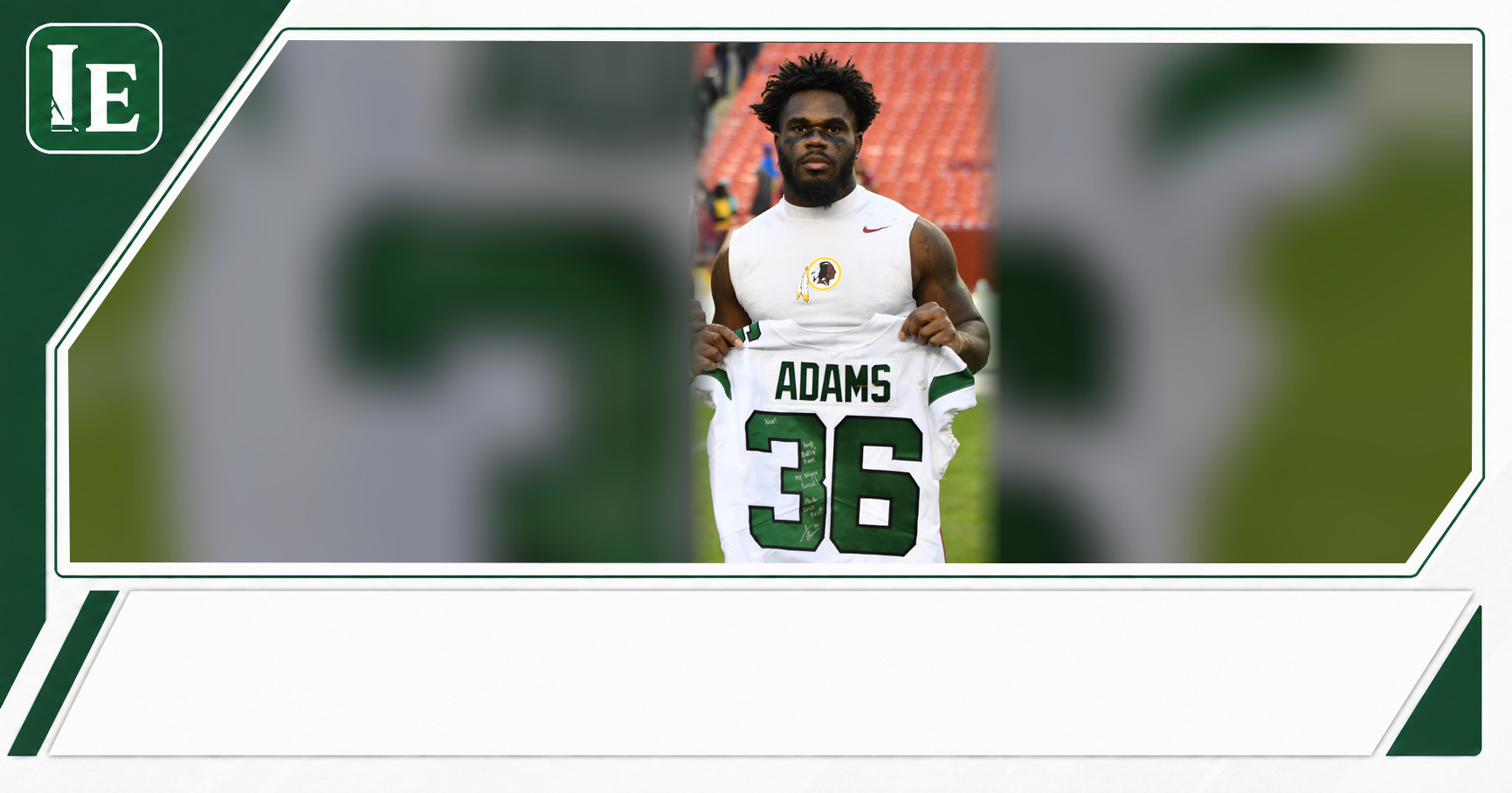
A court decision means the former Eagles, Commanders and Steelers running back can be with his daughter during her final days. The case also brings together an extraordinary family crisis and a complicated legal record.
Former NFL running back Wendell Smallwood Jr. was granted early release from prison, allowing him to be by his 8-year-old daughter Mila’s side as she dies of cancer. The former Philadelphia Eagles player’s release followed an emergency court hearing focused on the limited time left for Mila, who is in palliative care.
The decision is a deeply personal outcome in a case with serious legal context. Smallwood, who also played for the Washington Commanders and Pittsburgh Steelers, had been serving sentences connected to fraud and a New Jersey firearms case.
An emergency request with little time
According to reporting by The Philadelphia Inquirer, Gloucester County Superior Court Judge Renard Scott approved a motion on Aug. 7 that allowed Smallwood to withdraw a guilty plea from the previous year. The immediate purpose was to let him be with Mila during her final days.
Mila was diagnosed in 2026 with diffuse anaplastic Wilms tumor, a rare and aggressive childhood kidney cancer, the Inquirer reported. Her chemotherapy treatment had not succeeded, and she entered palliative care, with doctors expecting she could have weeks to live at most.
That prognosis made time the central issue. This was not presented as a broad finding about Smallwood’s past conduct; it was a court action tied to an emergency involving his child’s condition.
Mila’s illness drove the decision
News coverage has understandably centered on Mila, rather than her father’s football career. An 8-year-old facing end-of-life care turns an otherwise procedural hearing into a decision about whether a parent can be present for a child’s final days.
Palliative care is intended to support comfort and quality of life during serious illness. It can also help families navigate medical decisions and emotional strain, though the reports do not detail Mila’s care plan beyond saying she is receiving palliative care.
The available reporting does not say how much time Smallwood will have with his daughter or set out the terms governing his release. Those unanswered details matter, but they do not change the immediate result: he was able to leave prison to be with Mila.
The legal path was unusual
Smallwood’s release was not described as a conventional compassionate-release decision. Instead, the court approved his request to withdraw a guilty plea in his New Jersey firearm case, according to the Inquirer’s account.
Smallwood had pleaded guilty in March to second-degree unlawful possession of an assault firearm after authorities said he possessed an AR-15 rifle in New Jersey. He received a three-year state prison sentence that was to run concurrently with his federal sentence.
The Inquirer reported that a July ruling by the 3rd U.S. Circuit Court of Appeals concerning New Jersey’s assault-weapons ban gave Smallwood a legal basis to seek withdrawal of that plea. Mila’s grave illness was cited as a significant reason for acting on the motion at the emergency hearing.
That combination is important. The appellate ruling supplied the legal opening described in the reports, while the family emergency supplied the urgent human reason for the court to address the request when it did.
His prison sentences remain part of the story
Smallwood had already been sentenced to 18 months in prison for a COVID-19-relief fraud scheme. He pleaded guilty in December 2024 to felony wire fraud, conspiracy and tax-fraud charges related to economic-relief programs, according to the Inquirer.
Those convictions are not erased by the account of his early release. They are also why the case can draw competing reactions: sympathy for a father facing an unbearable family loss alongside concern that criminal sentences should be applied consistently.
Courts routinely weigh legal standards, procedural questions and individual circumstances. In this case, the reporting indicates that both a changed legal landscape around the firearm charge and Mila’s terminal illness were relevant to the outcome.
A football career now far from center stage
Before his legal troubles, Smallwood was known as an NFL running back who spent time with the Eagles, Commanders and Steelers. His professional record provides recognition, but it is not the reason the court action has drawn attention.
The central fact is more intimate: an incarcerated father has been given the chance to sit with his child at the end of her life. For families confronting terminal illness, time is often the one resource no court, hospital or public institution can restore.
The public record available in the reports leaves several questions unresolved, including the longer-term status of Smallwood’s cases and any future court proceedings. For now, the reported decision has a much narrower consequence: Wendell Smallwood Jr. can spend Mila’s final days with her.
Leave a Reply