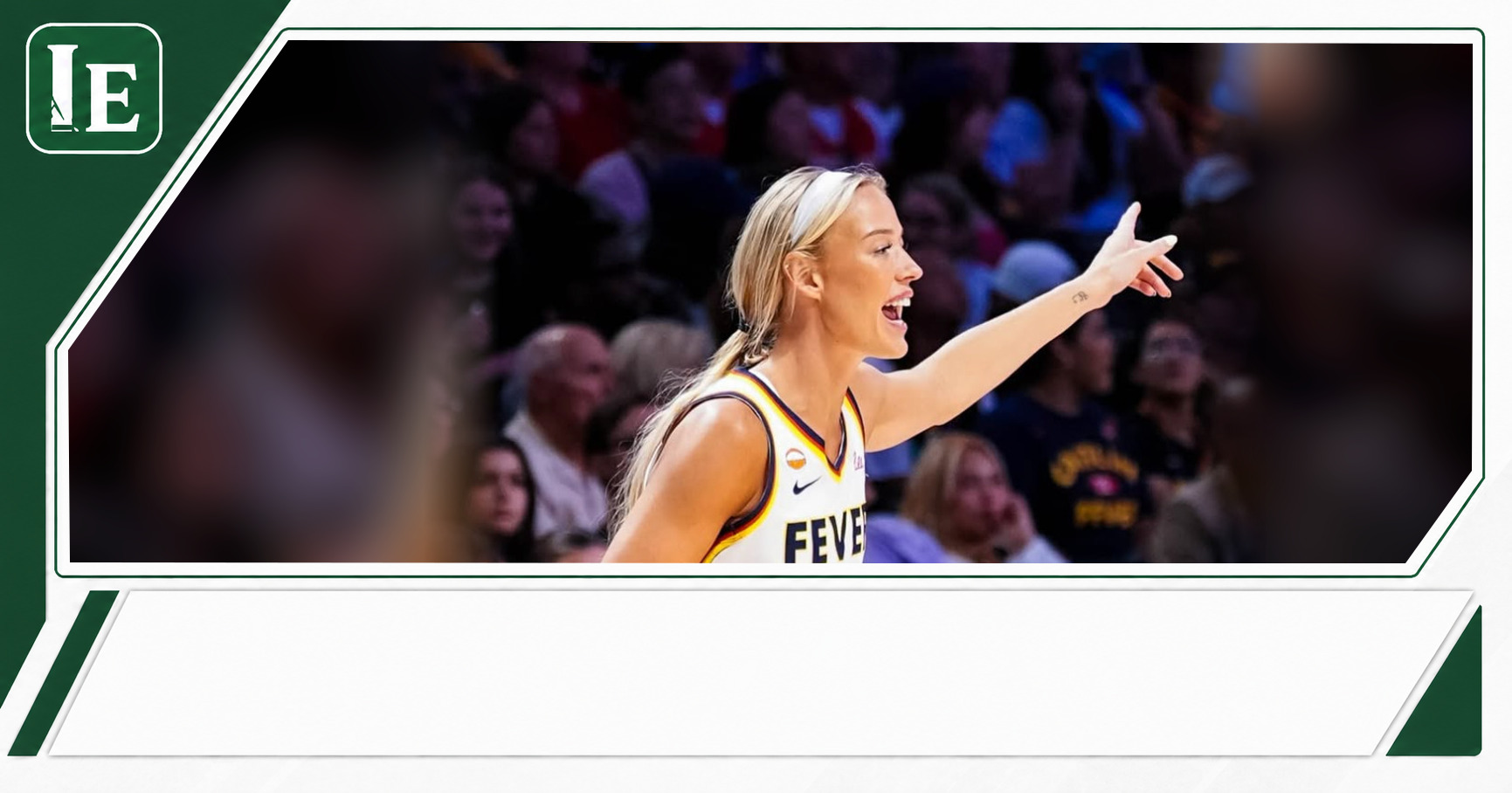
The dispute around Sophie Cunningham is no longer limited to one hard foul or one social-media post. Tanya Ray Fox’s criticism has entered a larger argument about player safety, officiating consistency and the scrutiny surrounding the Indiana Fever guard.
Tanya Ray Fox, identified as a former Fox analyst, launched a scathing public attack on Indiana Fever guard Sophie Cunningham as controversy around Cunningham continued to build across the WNBA. Fox’s criticism arrives after Cunningham’s on-court confrontation with Chicago Sky guard DiJonai Carrington and amid wider arguments over officiating, player conduct and the attention surrounding Cunningham.
The available source material does not include Fox’s full comments, the platform where they were made or a response from Cunningham. That missing detail matters: the dispute can be placed in its WNBA context, but the precise basis and wording of Fox’s attack cannot be independently assessed from the material provided.
Fox’s criticism enters a crowded debate
Calling out a player is common in sports media. The stakes change when the player at the center of the criticism is already part of several overlapping conversations: a physical game incident, accusations of uneven officiating and public debate over remarks made away from the court.
That is the setting surrounding Cunningham. A sharp critique from Tanya Ray Fox is likely to be read not as an isolated opinion, but as another contribution to a debate in which individual plays and social-media posts have been assigned broader meaning.
Without the complete Fox remarks, it remains unclear whether her criticism focused on Cunningham’s play, her reaction during the game, her public profile, or another aspect of the controversy. It is also unclear whether Fox characterized her remarks as analysis, commentary or a personal rebuke.
The Carrington foul intensified scrutiny
The immediate basketball backdrop is a game in which Carrington was assessed a flagrant 2 foul after her left arm made contact with Cunningham’s head and jaw while Cunningham was attempting a layup, according to reporting by The New York Times’ The Athletic.
Cunningham fell to the floor, then got up and moved toward Carrington before Fever teammate Makayla Timpson pulled her away. Carrington was ejected.
Afterward, Cunningham said she believed the foul was connected to her own 2025 flagrant foul and ejection involving Jacy Sheldon, who was then with the Connecticut Sun. Carrington later said the contact was not intentional, describing it as an unfortunate result of trying to make a defensive play while returning from injury.
Those accounts illustrate why the episode has not settled into a simple villain-and-victim narrative. Cunningham saw possible history behind the collision. Carrington denied intent and argued that the discussion should include consistent officiating for everyone.
“White privilege” post widened the argument
The dispute expanded after Carrington posted “WHITE PRIVILEGE” on Threads and tagged the Indiana Fever following her ejection. She later said the post was not a claim that the flagrant 2 ruling itself was an example of white privilege.
Instead, Carrington said she was raising a broader concern about consistency in officiating. She said she wanted the same standards applied regardless of “the name on your jersey or your skin color or the score of the game, the stakes.”
That explanation did not end the backlash. Sports analyst Emmanuel Acho called Carrington’s post “ignorant” and “asinine,” according to The Athletic. Carrington responded that she would not use the term as a rhetorical weapon without evidence, and pointed to her academic background in explaining why she took the subject seriously.
The exchange shows the tension facing any commentator entering the story, including Fox. A critic may believe they are addressing a player’s choices or behavior, while audiences interpret the comments through the larger, highly charged language that has attached itself to the incident.
Cunningham’s profile changes the reaction
Cunningham had already been receiving increased attention after an ESPN report last month quoted her supporting the exclusion of transgender athletes from women’s sports. She said she wanted to protect young girls in locker rooms and argued that they should not have to compete against biological males.
Those comments drew demonstrations and counterdemonstrations outside Fever games, according to The Athletic. Players, coaches and teammates have also been asked repeatedly about the issue.
The Women’s National Basketball Players Association released a statement denouncing “hate, abuse, and demonization” of the transgender community. The statement did not name Cunningham.
That background does not establish why Tanya Ray Fox criticized Cunningham. It does explain why a dispute involving Cunningham now carries more political and cultural weight than an ordinary disagreement over a foul or a player’s reaction. Supporters may see criticism of Cunningham as disproportionate scrutiny of a player who competes physically and speaks candidly. Critics may see her prominence as a reason to examine her conduct and public positions more closely.
Officiating remains the unresolved issue
One clear point survives the competing narratives: confidence in WNBA officiating remains a live concern for players. The league formed a task force after the 2025 season to examine areas for improvement following ongoing complaints, The Athletic reported.
Carrington said she had discussed the situation with the league but was not encouraged by those conversations. Her stated goal was consistency, not an exception for any one player.
For Cunningham and the Fever, the practical question is whether hard contact and emotional responses will be handled predictably game to game. For opponents, the question is whether standards are applied evenly when games involve stars, rivalries or intense online attention.
For now, Fox’s attack on Cunningham is best understood as part of that unsettled environment. The supplied material confirms the existence of the criticism but not its full substance, so firm conclusions about Fox’s specific case against Cunningham would go beyond the available record.
What is known and what is not
- Known: Tanya Ray Fox has been identified in the source framing as a former Fox analyst who publicly criticized Sophie Cunningham.
- Known: Cunningham was involved in an incident that led to Carrington’s flagrant 2 foul and ejection.
- Known: Carrington said her “WHITE PRIVILEGE” post concerned broader officiating consistency, not the flagrant-foul ruling itself.
- Unclear: Fox’s exact wording, specific accusation, platform, timing and whether Cunningham has responded directly.
Until those primary details are available, the fairest reading is a limited one: Fox’s criticism has added heat to a WNBA controversy already shaped by a physical play, competing explanations and a broader argument over fairness.
Leave a Reply