Blog

  • Trump Threatens Oman Over Iran Talks as Hormuz Tensions Rise

    Trump Threatens Oman Over Iran Talks as Hormuz Tensions Rise

    Trump’s reported comments put Oman’s role as a go-between with Iran under scrutiny at a moment when access through the Strait of Hormuz carries global economic and security consequences.

    Donald Trump threatened to bomb Oman on August 17, 2026, in connection with talks involving Iran and the Strait of Hormuz, while also calling on Iran to surrender. The reported remarks put pressure on Oman, a country involved in contacts with Tehran over access through one of the world’s most important shipping routes.

    The immediate issue is not a confirmed military operation: available reports do not establish that Trump ordered a strike, announced an imminent attack or unveiled new written U.S. policy toward Oman. The larger question is whether his language is a negotiating tactic or a sign that already fragile diplomacy around the strait is becoming more confrontational.

    What Trump reportedly said

    According to Reuters and other reports, Trump paired a demand aimed at Iran with a threat directed at Oman. The Guardian, citing Fox News journalist Trey Yingst’s account of an interview with the president, reported that Trump said Iran should “put up the white flag of surrender.”

    Muscat, Oman
    Image: Achilli Family | Journeys, via Flickr, CC BY 2.0.

    Trump also said Oman could be bombed if it “gets in the way,” referring to the country’s contacts with Iran. Reuters characterized the remarks as a call for Iran’s surrender alongside a threat to Oman.

    The distinction between rhetoric and official action matters. A presidential threat can influence the calculations of governments involved in a dispute, but the available reporting did not show a formal military order, an imminent strike or a newly announced policy toward Muscat.

    That leaves the scope and intended purpose of Trump’s comments unresolved. It is not clear whether he was responding to a specific proposal, a broader negotiating approach, or the possibility of an Iran-Oman arrangement he opposed.

    Oman’s difficult intermediary role

    Oman is central to the dispute because it has long maintained channels with Iran while also working with the United States and other regional powers. That position has made it a frequent intermediary when direct communication is difficult.

    The Washington Post reported that Iran and Oman had been discussing a solution to reopen the Strait of Hormuz. The Guardian similarly reported that the two countries were discussing control of the waterway while Washington pursued its own talks.

    For Muscat, the value of mediation depends on being able to speak credibly with parties that may not trust one another. A public threat against Oman could limit its room to carry messages, help shape arrangements or reduce tensions.

    At the time of the reports, it was unclear what specific Omani action Trump believed might obstruct a U.S.-Iran understanding. It was also unclear whether Oman had issued a public response.

    Why the strait raises stakes

    The Strait of Hormuz is a narrow passage linking the Persian Gulf with the Gulf of Oman and the Arabian Sea. Major oil and liquefied natural gas exporters rely on it to reach global markets.

    That makes the dispute more consequential than a bilateral disagreement between Washington and Tehran. Political confrontation involving the strait can unsettle energy markets, shipping companies, insurers and governments dependent on predictable maritime routes.

    Any actual disruption would have consequences far beyond Iran, Oman and the United States. Questions about control of, reopening or access through Hormuz touch on freedom of navigation, regional security and the risk of a wider confrontation.

    The reports did not spell out the terms of the Iran-Oman discussions or say whether a concrete agreement was close. Without that information, it is difficult to know what triggered Trump’s response or how directly it relates to any possible deal.

    Pressure tactic or diplomatic setback

    Supporters of a hard-line approach to Tehran may see Trump’s demand and threat as maximum-pressure diplomacy. From that perspective, the remarks signal that the United States would resist any arrangement it believes conflicts with its interests in the Strait of Hormuz.

    Critics are likely to see a different risk: threatening Oman could alienate a useful regional interlocutor precisely when lines of communication are valuable. Oman’s ability to engage both Iran and Western partners has often been part of its usefulness.

    Both readings rest on the same uncertainty. Pressure can sometimes force concessions, but it can also cause governments to harden their positions or turn away from U.S.-backed negotiations.

    The reported comments also came after a memorandum of understanding intended to support a durable peace with Iran had officially expired, according to The Washington Post. That timing adds to the uncertainty over whether diplomacy is breaking down, being reset or shifting into a more confrontational phase.

    Signals that could clarify intent

    The next developments would be official ones: clarification from the White House, a response from Oman, or statements by Iranian officials about Trump’s surrender demand and the future of talks over Hormuz.

    Observers would also watch for changes in maritime advisories, military deployments, shipping patterns or energy-market pricing. Those changes cannot be assumed from a verbal threat alone, but they could indicate whether the rhetoric is translating into operational policy.

    For now, the verified core of the episode is limited but significant. Trump publicly combined a call for Iran’s surrender with a threat against Oman tied to its dealings with Tehran over the Strait of Hormuz.

    Whether that posture strengthens U.S. leverage or makes an essential diplomatic channel harder to use remains unresolved.

  • Navy Says Truman Super Hornet Loss Tied to Arresting-Wire Failure and Readiness Gaps

    Navy Says Truman Super Hornet Loss Tied to Arresting-Wire Failure and Readiness Gaps

    The loss of a carrier-based combat jet was traced to more than a single failed component. The Navy’s findings put fresh focus on whether crews have the personnel, training and maintenance capacity to sustain demanding operations.

    A U.S. Navy investigation linked the loss of an F/A-18F Super Hornet aboard USS Harry S. Truman to an arresting-wire failure on May 6, 2025. The Navy said the carrier’s No. 4 arresting wire failed because of a malfunctioning No. 4 starboard sheave damper, while maintenance, staffing, knowledge and training shortcomings also contributed.

    The jet loss matters because an arresting-wire failure occurs at one of the most unforgiving points of carrier aviation: landing a combat aircraft on a moving ship. No injuries were reported, and flight operations resumed within hours, but the findings have intensified scrutiny of readiness during the Truman strike group’s demanding Red Sea deployment.

    The part that failed

    Aircraft carriers use arresting gear to bring incoming jets to a rapid stop. A landing aircraft lowers its tailhook, which catches one of several heavy cables stretched across the flight deck.

    USS Harry S. Truman (CVN 75) departing Greece
    Image: U.S. Navy photo by Paul Farley. (RELEASED), via Wikimedia Commons, Public domain.

    According to the Navy’s investigation summary, the F/A-18F belonged to Strike Fighter Squadron 11, known as VFA-11. The immediate mechanical cause of its loss was the malfunctioning starboard sheave damper in the No. 4 arresting-gear system.

    That explanation provides a specific equipment failure rather than a broad description of the loss as an inherent risk of carrier aviation. It also does not reduce the incident to a single defective part.

    The Navy cited wider conditions

    The investigation identified inadequate maintenance practices, low manning levels, limited knowledge and insufficient training as contributing conditions. It also said the carrier was operating in a strained environment shaped by high operational tempo and combat conditions.

    Those findings matter because the arresting system is not a standalone piece of hardware. Its reliable use depends on personnel who can maintain complex equipment, identify problems and operate under sustained pressure.

    The public summary does not say how far the cited concerns extend beyond Truman or spell out every corrective measure taken. The Navy said it took appropriate accountability actions following the investigations, without publicly detailing each one.

    A quick return, but lingering questions

    Truman resumed flight operations within hours of the May 6 incident. Supporters of the Navy can reasonably point to that recovery, as well as the formal investigation, as evidence that the ship and its crew continued to function in difficult conditions.

    Critics are likely to emphasize a different part of the same record: the Navy’s own finding that maintenance and personnel-related shortcomings accompanied the component malfunction. Rapidly restoring operations does not answer whether crews had enough time, staffing and technical depth to prevent the failure.

    A single mechanical incident does not establish that the entire fleet cannot operate effectively. Still, a jet loss tied to both equipment failure and readiness conditions raises larger questions about how complex systems are sustained during combat deployments.

    Several Truman incidents drew scrutiny

    The May jet loss was one of several serious events involving the Harry S. Truman Carrier Strike Group. The Navy released separate investigation summaries, and the incidents had different systems, crews and circumstances; they should not be treated as one event with one cause.

    In December 2024, USS Gettysburg mistakenly engaged an F/A-18F in a friendly-fire incident. The Navy cited a lack of integrated training opportunities, weak backup practices on the cruiser and insufficient cohesion across the strike group.

    In February 2025, Truman collided with the merchant vessel BESIKTAS-M near Port Said, Egypt. The Navy found that collision avoidable, said the bridge team did not navigate safely past the vessel, and relieved the commanding officer.

    Then, on April 28, 2025, an F/A-18E Super Hornet and a tow tractor went overboard from Truman’s hangar bay while the carrier carried out evasive maneuvers in response to an incoming ballistic missile in the Red Sea. Investigators identified an aircraft brake-system failure as the primary cause and said communication shortcomings compounded it.

    Combat tempo changes the calculation

    The Navy said the operational setting helped create the strain surrounding the May arresting-wire failure. Truman was operating in the Red Sea amid missile threats and a demanding mission connected to U.S. Central Command operations.

    High operational tempo can narrow maintenance windows and stretch experienced personnel. It can also make communication between departments more consequential, particularly when a ship must respond quickly to an emerging threat.

    The April 28 incident illustrates the distinction between operational pressure and technical responsibility. The maneuver was prompted by an incoming ballistic missile, but the Navy still found a brake-system failure and communication problems at the center of the loss.

    Military units are expected to operate in difficult environments, and the Navy has stressed that Truman sailors continued their mission while adapting to setbacks. Vice Chief of Naval Operations Adm. Jim Kilby said the service is committed to learning from the investigations and investing in personnel to provide battle-ready forces.

    Readiness is more than fleet size

    The Truman findings arrive as the Trump administration argues for a stronger military and expanded naval power. The investigation does not assign personal blame to President Donald Trump, but it underscores that fleet strength involves more than ships authorized, budgets approved or aircraft assigned to a carrier wing.

    Readiness also depends on whether equipment is maintained, whether crews are adequately staffed and whether sailors have the knowledge and training to sustain operations under pressure. Those are practical conditions that determine how well a force performs with the resources it already has.

    Complete repairs to damage from Truman’s February collision are scheduled for the carrier’s upcoming Refueling and Complex Overhaul at HII-Newport News Shipbuilding. What remains unclear is which changes have already been made in response to the May investigation, how broadly the Navy sees its maintenance and manning concerns, and how it will measure whether those fixes work.

    The loss of the F/A-18F is therefore not only a record of a failed arresting-gear component. It is a documented example of how a mechanical fault, maintenance practices, personnel depth and training can converge when a combat jet is trying to land at sea.

  • Poland Tournament Could Test UEFA’s FIFA Boycott Threat

    Poland Tournament Could Test UEFA’s FIFA Boycott Threat

    The Under-20 Women’s World Cup in Poland could offer an early test of UEFA’s reported boycott threat as FIFA defends Gianni Infantino’s mandate. The dispute also includes a leaked-letter claim, a withdrawn World Cup commercial proposal and an unresolved battle for support across football’s governing body.

    According to The Guardian, the tournament in Poland may be an early point for assessing whether a boycott threat develops into action. UEFA was reported to have supported the possibility of a boycott by its 55 member associations if FIFA did not abandon its World Cup commercial plans.

    That possibility sits within a broader conflict over FIFA’s leadership and direction. FIFA says Infantino was elected by its 211 member associations and retains their democratic mandate, while UEFA has indicated that his continued leadership is untenable.

    Poland could provide an early public test

    The Under-20 Women’s World Cup in Poland is one of the upcoming FIFA events identified by The Guardian as a potential early signal of whether the reported boycott threat gains force.

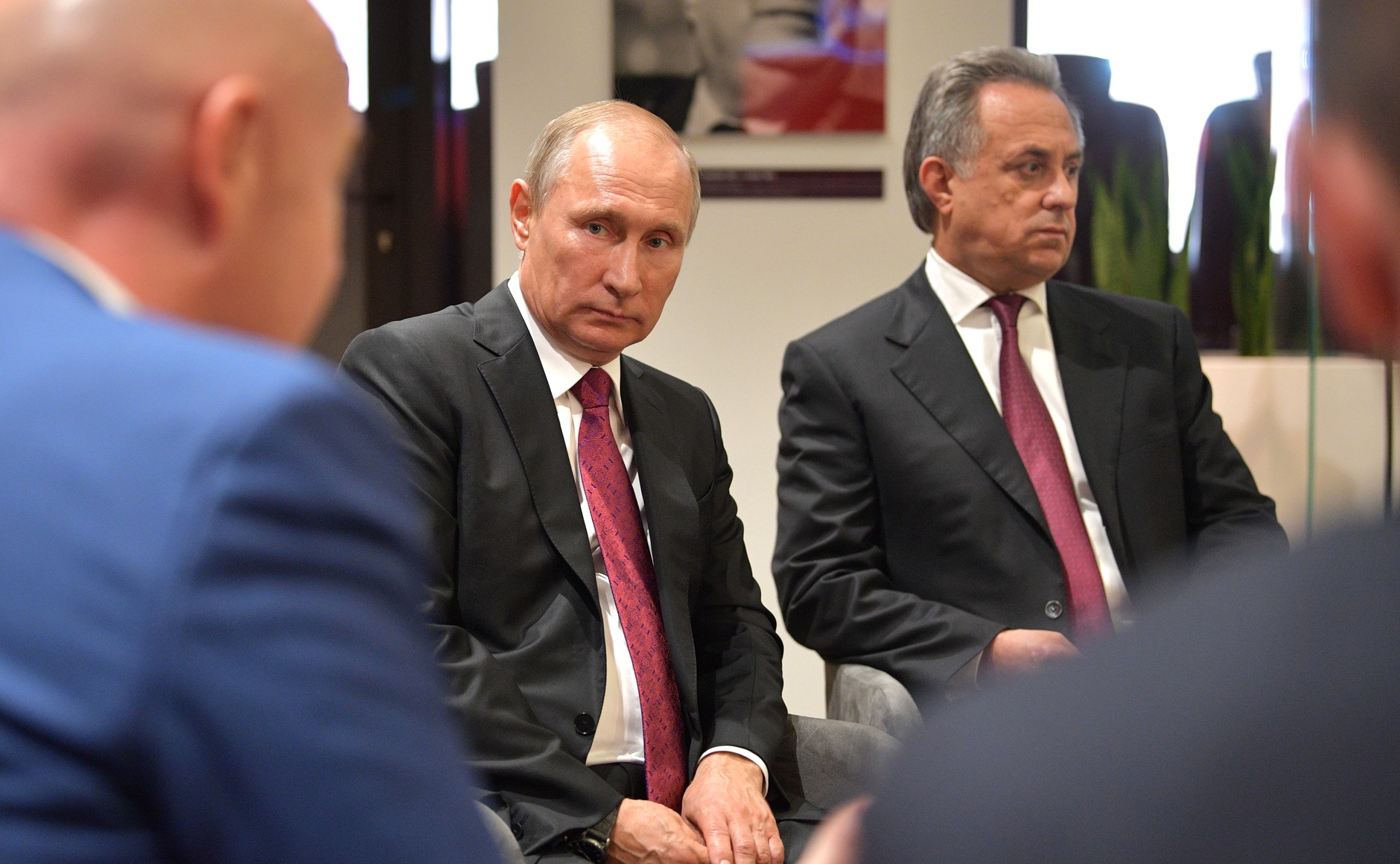
    Russian President Vladimir Putin meeting with FIFA President Gianni Infantino (2)
    Image: Presidential Press and Information Office, via Wikimedia Commons, CC BY 4.0.

    A boycott would be a significant escalation, but the available reporting describes a possibility supported by UEFA rather than a confirmed withdrawal. The tournament may therefore offer a visible measure of how far the dispute has moved from institutional statements to action.

    FIFA’s next presidential election is expected in March. Until then, statements of support, threats of action and disagreements between football bodies may all be read as signs of whether Infantino’s global coalition remains intact.

    The commercial proposal widened the rift

    The immediate clash centered on FIFA’s proposal to sell a 20% stake in a new company controlling World Cup commercial assets. UEFA opposed the plan, which raised concerns among critics about reshaping the commercial structure around FIFA’s flagship tournament without broad consensus.

    FIFA withdrew the proposal less than 48 hours after the reported boycott threat emerged. UEFA later said its position had not changed, indicating that the disagreement had not ended with the proposed sale’s withdrawal.

    FIFA and its supporters can view the resistance differently: as established football powers seeking to limit a global organization’s ability to determine its own direction. The opposing interpretations have kept the argument focused on governance, authority and the future control of World Cup commercial assets.

    FIFA rejects efforts outside its formal process

    FIFA has said allegations, leaked material or external pressure should not determine who serves as president. A spokesperson said Infantino was elected by member associations and continues to hold their mandate.

    The organization also said it would not support or facilitate an election process that conflicted with its statutes, democratic procedures or governance framework. In a statement reported by The Guardian, FIFA alleged that there was a “concerted and ongoing effort” by some parties to undermine FIFA and its president.

    FIFA also said that people without backing from member associations should not obtain through “allegation, insinuation or misinformation” what they cannot secure through formal procedures. Critics, meanwhile, argue that questions about accountability and governance decisions justify a change at the top.

    The numbers leave critics needing wider support

    According to The Guardian’s reporting, UEFA has sought support from other confederations for an Emergency FIFA Congress that could potentially lead to a no-confidence vote.

    UEFA’s 55 member associations could provide 43 votes toward the threshold required to call an emergency congress, according to that report. Removing Infantino would require 106 votes from FIFA’s 211 members.

    Europe’s opposition, even if unified, would therefore not be enough on its own. Critics would need support from well beyond UEFA to make a successful challenge possible.

    • UEFA has opposed Infantino’s continued leadership and challenged the World Cup commercial proposal.
    • Concacaf was reported to be aligned with UEFA in the wider dispute.
    • The Asian Football Confederation was reported to include some support for the European position.
    • CAF and Conmebol have publicly backed Infantino, according to the reporting.

    The contest is not simply between Infantino and Europe. It depends on whether either side can build a durable alliance across FIFA’s confederations.

    Separate allegations remain unresolved

    The leadership dispute has also been complicated by reporting about a departure payment to a former UEFA employee alleged to have been in a relationship with Infantino when he was UEFA general secretary more than a decade ago.

    According to The Guardian’s reporting, UEFA confirmed the payment and the Norwegian Football Federation called for Infantino to resign. FIFA described allegations surrounding the matter as categorically untrue.

    Those developments have added scrutiny, but they do not establish wrongdoing or independently create a route to remove a FIFA president. FIFA has criticized parts of the media coverage as unsubstantiated or false and said it would challenge reporting it considered inaccurate.

    The leaked-letter claim has unanswered questions

    Infantino was reportedly threatened with the end of his FIFA presidency in a leaked letter. But the letter’s contents, author and status have not been publicly established in the available reporting.

    Available material does not provide the letter’s text, identify its author with certainty or show that it triggered a FIFA constitutional procedure. It may signal private opposition or add political pressure, but it does not itself begin a formal removal process.

    What remains unclear is whether the reported letter represented an individual warning or a coordinated effort. The larger question is whether the opposition can translate criticism into the broad international backing required under FIFA’s formal rules.

  • Fetterman Cites CBS Poll to Blast Democrats’ Turn Toward Socialism

    Fetterman Cites CBS Poll to Blast Democrats’ Turn Toward Socialism

    John Fetterman is using new poll numbers to sharpen his break with the Democratic Party’s left flank. The dispute is less about one survey than about what Democrats should prioritize when appealing to primary voters and competitive-election voters.

    John Fetterman called the Democratic Party’s growing embrace of socialism “lunacy,” criticizing what he sees as socialism’s rising influence inside his party. Fetterman cited a CBS News poll in which 58 percent of Democratic respondents viewed socialism positively and 50 percent viewed capitalism negatively, using the contrast to warn about the party’s political identity.

    The Pennsylvania Democrat’s message lands amid primary wins by democratic socialists and progressive insurgents in New York, Los Angeles, Michigan and Colorado. The immediate disagreement is over more than ideological labels: it is about whether the party’s leftward energy can widen its appeal or make difficult races harder to win.

    Fetterman’s message to his party

    In a social-media post, Fetterman described himself as a “proud free market capitalist.” His complaint was not simply that individual Democratic candidates hold progressive positions; he argued that the party’s broader identity is being pulled toward socialism.

    John Fetterman 1 (cropped)
    Image: Governor Tom Wolf, via Wikimedia Commons, CC BY 2.0.

    That framing continues a pattern of Fetterman publicly separating himself from parts of the Democratic coalition. He is presenting the issue as an electoral warning, arguing that openness to socialism is a direction Democrats should resist rather than celebrate.

    The language is deliberately broad, grouping a range of candidates, causes and ideological trends under one concern. Supporters may see that as a needed confrontation with a problem the party has avoided; critics may see it as an oversimplification of a coalition that contains significant differences.

    The CBS poll behind the warning

    The CBS News poll cited by Fetterman found that 58 percent of Democratic respondents had a very or somewhat positive view of socialism. Eighteen percent had a very or somewhat negative view, while 24 percent had no opinion.

    Views of capitalism ran in the other direction. Thirty-two percent of Democratic respondents had a positive view, 50 percent had a negative view and 18 percent had no opinion.

    For Fetterman, the important political contrast is clear: more Democratic respondents expressed favorable views of socialism than capitalism. The results give him a concise way to argue that attitudes inside the party are moving away from an economic identity he embraces.

    But the poll, as described in the report, measures reactions to broad terms. It does not establish which policies respondents support, how strongly they hold those opinions, whether they agree on a party platform or whether those views would determine a general-election vote.

    Why the labels carry weight

    “Socialism” can cover very different ideas for different voters. It may suggest stronger public programs and labor protections to some, while others may associate it with public control of major industries.

    “Capitalism” is similarly loaded. It can evoke entrepreneurship and opportunity, or it can bring to mind inequality, corporate power and economic concentration.

    That ambiguity leaves room for sharply different readings of the same survey. Fetterman treats the responses as evidence of an ideological shift with potential electoral costs. Progressives and democratic socialists can argue that negative views of capitalism reflect concerns about housing costs, health care and wages—and that more assertive policy proposals answer those concerns.

    Neither interpretation is fully resolved by a favorable or unfavorable response to a label. Still, labels have real campaign value because candidates use them to signal priorities, and opponents use them to draw contrasts.

    Primary victories fuel both sides

    Fetterman’s criticism followed recent primary wins by democratic socialists and progressive insurgents in New York, Los Angeles, Michigan and Colorado, according to the report. Those outcomes have made the internal Democratic disagreement more visible.

    For activists on the left, victories in primaries can be evidence that voters want candidates who take stronger positions on affordability, policing, immigration or corporate power. They can view those results as proof that a more forceful agenda has political momentum.

    For Democrats who share Fetterman’s concern, the same victories raise a different question: whether candidates who prevail in primaries can build support among persuadable voters in closely contested races. A message that succeeds in a heavily Democratic city or district may not translate to a statewide contest in Pennsylvania or a competitive House district elsewhere.

    Neither conclusion automatically follows from a collection of local contests. Political coalitions differ substantially by state, district and city, which means each side can point to the same primary results as evidence for an opposing strategy.

    A dispute Fetterman has pressed before

    This was not Fetterman’s first warning about the party’s left flank. In late June, he raised concerns about the prominence of what he called the “dirtbag left,” referring to left-leaning candidates who identify as democratic socialists and had won primaries.

    In remarks to Fox News’s Sean Hannity cited by The Hill, Fetterman criticized candidates associated with proposals to abolish Immigration and Customs Enforcement, the police and the border. Those issues are particularly charged, and the report notes that not every progressive or democratic socialist supports the same positions.

    That distinction is central to the argument. Fetterman is connecting a set of candidates and trends to a broader warning about socialism, while critics can argue that the label collapses a diverse group of people and policy views into one political target.

    Sen. Mike Lee, a Utah Republican, responded to Fetterman’s latest post by inviting him to join Republicans. The response showed how quickly a Democratic internal dispute can be used by the opposing party.

    The larger test is coalition politics

    The central question is not likely to be settled by one post or one poll. Democrats still must decide how to accommodate activists and primary voters pushing the party’s priorities while also assembling support from voters with widely different economic and cultural views.

    Fetterman’s position is unmistakable: he sees growing Democratic receptiveness to socialism as a warning sign. The opposing view is that skepticism toward capitalism and demands for bolder policy are not liabilities but responses to voters’ material concerns.

    What remains unclear is how representative the cited poll findings are of the voters Democrats most need in battleground contests. It is also unclear whether the primary victories Fetterman referenced amount to a lasting national shift or a series of local outcomes.

    Those unresolved questions explain why the clash has resonance beyond Fetterman’s remarks. The party’s argument over socialism is ultimately an argument over which voters, messages and candidates can hold together a broad Democratic coalition.

  • Trump’s Election Order Faces Injunctions as New 2026 Draft Circulates

    Trump’s Election Order Faces Injunctions as New 2026 Draft Circulates

    Litigation over Executive Order 14248 has already tested the limits of federal election authority. A separate draft tied to the 2026 midterms has renewed that dispute, even as Trump says he is not considering it.

    President Donald Trump’s March 25, 2025, election executive order is already the subject of court fights that have paused or blocked some provisions. That legal record is the immediate backdrop for a 17-page working document that, according to PBS News, contemplates far broader federal intervention in the 2026 midterm elections.

    The document is not an adopted order. Trump told PBS he was not considering declaring a national emergency around the midterms, and the White House said outside advocates routinely offer policy ideas to administration officials.

    Existing litigation has already limited parts of the 2025 order

    Executive Order 14248, titled “Preserving and Protecting the Integrity of American Elections,” addresses issues including the Election Assistance Commission, the federal voter-registration form, mail-ballot requirements, state election-database access, federal election funding conditions and voting systems.

    Donald Trump
    Image: qiusihan3, via Flickr, Public Domain Mark 1.0.

    According to Congress’s Congressional Research Service, a federal court in Washington, D.C., granted a preliminary injunction in April that paused some provisions of the order. A federal court in Massachusetts issued an injunction in June blocking additional provisions in a case brought by multiple states.

    Washington and Oregon also separately challenged the order. The cases could help determine whether particular executive-branch election requirements may take effect and where presidential authority ends.

    States remain the principal election administrators

    The Constitution gives states the initial and principal responsibility for administering elections within their jurisdictions. Congress has a limited role in regulating the time, place and manner of federal elections, but presidential authority does not displace state election systems without a valid legal basis.

    That division matters because election rules are carried out by state and local offices. States set many procedures, train poll workers and run polling places.

    A national-emergency declaration can activate powers Congress has provided by statute. It does not itself establish authority to direct states to replace or rewrite their election procedures.

    The circulating draft imagines a much larger federal role

    PBS News reported reviewing a 17-page working document circulating among some Trump allies. The proposal envisions a president declaring a national emergency over alleged foreign interference and then making major changes to the conduct of the 2026 midterms.

    PBS reported that the document includes nationwide hand-marked paper ballots, public hand counts, county-based voter re-registration, documentary proof of citizenship and voter-identification requirements at polling places.

    Trump said he was not considering the emergency declaration described in the document. The proposal therefore does not change how Americans register or vote.

    Peter Ticktin, an attorney and longtime Trump acquaintance who confirmed to PBS that the document had circulated among supporters, said a president may act during an emergency involving foreign interference. Voting-rights advocates and election-law specialists cited by PBS said an attempted federal takeover of state-run elections would face swift legal challenges. Max Flugrath of Fair Fight Action said there is no statute allowing a president to seize control of state-run elections through an emergency declaration.

    Citizenship documentation remains a central policy dispute

    Executive Order 14248 sought, according to PBS, to reshape federal election-integrity policy, including through proof-of-citizenship requirements for federal voter-registration forms.

    Supporters of documentary citizenship requirements say verification is needed to guard against unlawful voting. Critics say the requirements can make registration more difficult for eligible voters who do not readily have documents such as passports or birth certificates.

    Evidence of widespread noncitizen voting affecting national election outcomes has not been established, though the issue remains politically potent. PBS reported that the Republican-led House passed the SAVE Act, which would require documentary proof of U.S. citizenship for federal voter registration. Its prospects in the Senate were uncertain.

    Voter ID rules show the practical limits of a single approach

    Trump has said he wants voter ID in place before the 2026 midterms, writing on Truth Social that it would happen whether Congress approved it or not. But voter ID is not governed by one national standard.

    Thirty-six states require some form of identification at the polls, according to the National Conference of State Legislatures, as cited by PBS. The rules differ: some accept a broad range of documents, while others use stricter photo-ID requirements or permit voters without identification to cast provisional ballots.

    Any nationwide approach would require a valid legal foundation, action by Congress or cooperation from election administrators, and a response to likely litigation. Colorado Secretary of State Jena Griswold, a Democrat, called the reported draft a threat to election administration and said states would resist attempts to take control of their systems.

    The 2026 debate, then, is not limited to the unadopted draft. It also concerns the unresolved court challenges to the March 2025 order and the competing paths available through legislation, executive action and state election law.

  • Hasan Piker weighs defamation action over Scott Jennings radio montage

    Hasan Piker weighs defamation action over Scott Jennings radio montage

    The conflict is not over whether Piker’s words appeared in the footage, but whether editing changed what viewers were reasonably meant to understand. It is also a test of how quickly a viral accusation can become a broadcaster’s legal and editorial problem.

    Hasan Piker is threatening or preparing a defamation lawsuit against Scott Jennings over an edited compilation of Piker’s livestream clips used on Jennings’ Salem Media radio show. Piker says the clip misleadingly portrayed him as endorsing violence by claiming he called for Black voters to be lynched.

    The dispute could also reach Fox News after anchor Harris Faulkner reportedly cited the same compilation on air. No complaint has been filed, but the clash raises a central question for broadcasters: when can repeating an edited viral clip create legal exposure?

    The accusation carried severe consequences

    According to reporting by Raw Story, Jennings aired a segment about Piker that included a montage of clips from the streamer’s broadcasts. Jennings tied Piker to Michigan Senate nominee Abdul El-Sayed and said El-Sayed’s “best friend” was calling for Black voters to be lynched.

    Jennings also promoted the allegation on social media and urged followers to listen to the material themselves, according to the report.

    The significance of the claim is clear. It did not simply characterize Piker as provocative or politically extreme; it portrayed him as advocating racial violence. Piker has forcefully rejected that interpretation.

    He told Status that his legal team was preparing a defamation action against Jennings and Salem Media, calling a filing “unavoidable.” That is a threat of litigation, not a case already before a court. Available reporting identified no filed complaint or court docket.

    Authentic clips can still mislead

    The central disagreement is not necessarily about whether Piker said the words heard in the montage. It is about whether the compilation fairly conveyed the setting, speaker, target and meaning of those words.

    A Snopes review described in Raw Story’s reporting found that the footage was authentic but assembled from separate livestreams. The review concluded that crucial context had been removed: Piker was sarcastically responding to a message posted by a viewer in his live chat, rather than personally urging violence.

    That distinction could be the foundation of Piker’s prospective claim. A clip can preserve a speaker’s exact phrasing while changing the apparent meaning if it removes the preceding exchange, the tone of the response or the person being addressed.

    Edited excerpts are not automatically deceptive. Radio and television commentary routinely condense lengthy interviews, speeches and livestreams. The harder issue is whether the editing materially changed how a reasonable audience would understand the remarks.

    What Piker would need to prove

    Defamation law in the United States generally requires a false statement presented as fact that damages a person’s reputation. For public figures, the standard is usually higher: they must typically establish “actual malice,” meaning the defendant knew a statement was false or acted with reckless disregard for whether it was true.

    Piker is a well-known online political commentator, so that demanding standard could apply if he files. A court would likely need to consider more than the final radio segment.

    • The complete livestreams and the edited montage
    • The wording Jennings used on air and online
    • The sourcing and review process behind the segment
    • What Jennings and Salem Media knew about the clips’ context
    • Any corrections, clarifications or responses after the allegation was challenged

    Jennings and Salem Media could argue that the remarks were opinion, fair commentary or a good-faith reading of material they believed was accurate. Piker’s likely position would be that the allegation was a factual and particularly damaging accusation that the fuller footage did not support.

    Those arguments have not been tested in court, and no legal outcome should be assumed.

    Salem Media’s role remains unresolved

    The threatened action is aimed at Jennings and Salem Media, which nationally syndicates his radio show. But the reporting available does not establish who assembled the compilation, what editorial checks took place before it aired or what materials were reviewed by those involved.

    Those missing details matter. A publisher’s potential responsibility in a defamation dispute can depend on its role in producing, approving and distributing a claim, as well as how it responds after being notified that the claim is disputed.

    Piker has alleged that Jennings either misunderstood livestreaming conventions or relied on misleading material supplied by others. Those are Piker’s allegations, not findings by a judge or jury.

    Jennings, Salem Media and Fox News did not respond to requests for comment cited by Raw Story. CNN, where Jennings also appears, referred comment requests to Jennings and Salem Media, the report said.

    Why Fox News is part of it

    Fox News entered the picture because Harris Faulkner reportedly referred to the same compilation during an on-air segment. Piker told Status that any legal action could extend to the network.

    That possibility remains conditional. No lawsuit against Fox News was reported, and the available account does not establish precisely what footage Faulkner aired, how she described it or what context was included in the segment.

    Those distinctions would be consequential if Piker pursued a claim. A network’s exposure would turn on its own broadcast, editorial process and knowledge, not simply on the fact that a disputed clip appeared elsewhere first.

    Still, the episode shows how a disputed media package can gain force as it moves from social media to radio, television and political discussion. Each repetition can reach an audience that never sees the longer video or the surrounding exchange.

    The personal and editorial stakes

    Piker said the controversy led to a surge of death threats and prompted him to increase security, travel less and limit public appearances. Those claims have not been independently resolved through litigation, but they illustrate why the disagreement is more than a fight over online rhetoric.

    The larger issue is editorial as much as legal. Fast-moving clips often reward the most inflammatory interpretation, while the work of checking a full stream, chat exchange or sequence of events takes longer and may draw less attention.

    For now, the record consists of competing accounts: Piker says the montage falsely depicted him as endorsing violence, while the intentions and internal review behind its use have not been publicly established. The next meaningful development would be a lawsuit, formal legal demand, public response or additional evidence about how the compilation was made.

    Until then, the dispute stands as a reminder that genuine footage and a fair representation are not necessarily the same thing.

  • Trump Threatens Oman Over Iran Talks as Hormuz Deadline Expires

    Trump Threatens Oman Over Iran Talks as Hormuz Deadline Expires

    Oman’s negotiations with Iran over the Strait of Hormuz have put a U.S. ally and regional intermediary at the center of a stalled peace effort. The reported threat arrives as a 60-day U.S.-Iran negotiating window has expired without a durable agreement.

    Donald Trump reportedly threatened to bomb Oman if it interfered with U.S.-Iran talks, according to an Aug. 17, 2026, phone interview with Fox News cited by USA TODAY. The reported warning was tied to Oman’s negotiations with Iran over the Strait of Hormuz, a vital oil-shipping passage, and it adds pressure to already stalled U.S.-Iran peace efforts.

    The account places Oman—a U.S. ally with channels to regional governments—between Washington and Tehran as a 60-day negotiating window expired on Aug. 17. No new U.S. military order, public ultimatum, formal policy change or official Omani response was described in the report, leaving the practical meaning of the statement unresolved.

    A reported warning, not an order

    USA TODAY reported that Trump made the remarks in a phone interview with Fox News. Its account cited Trey Yingst, Fox News’ chief foreign correspondent, who said he spoke with the president.

    Strait of Hormuz
    Image: European Space Agency (ESA), via Wikimedia Commons, Attribution.

    According to that report, Trump said Oman would face military action if it got in the way of U.S. negotiations with Iran. That is a consequential claim, but the available reporting did not include the White House’s position, a defined set of conditions for Oman, or a formal shift in U.S. policy.

    That distinction matters. A reported presidential statement can affect how governments calculate risk even without a military directive or a publicly announced ultimatum. But it does not, on its own, establish that military action has been ordered or that Washington has issued Muscat a specific demand.

    Why Oman is central now

    Oman is not presented in the report as an adversary. It is a U.S. ally and a regional intermediary that has maintained contact with governments whose relationships with Washington are difficult.

    That position can make Oman useful when official diplomacy is stuck. Its conversations with Iran could help carry messages, test whether compromise is possible or create a route toward de-escalation.

    They could also create tension with Washington if the Trump administration sees a separate Oman-Iran arrangement as weakening U.S. leverage or producing terms the United States would reject. The reported warning therefore raises a basic diplomatic question: whether Oman’s role is being treated as a potential bridge to a deal or as an obstacle to one.

    Hormuz is more than a map

    The immediate subject of Oman’s talks with Iran was reopening the Strait of Hormuz, according to USA TODAY. The narrow waterway lies between Iran and Oman and is among the world’s most consequential maritime chokepoints.

    The report said Iran and the United States had both asserted control over the strait. It also said the United States had imposed a naval blockade on Iranian ports intended to prevent Iranian ships from using the passage to transport oil.

    For Iran, access to Hormuz carries economic, political and strategic importance. For the United States and its partners, the ability to move ships safely through the passage bears on oil flows, commercial shipping, insurance costs and the broader security posture across the Persian Gulf.

    That means a deal involving shipping access is not merely a local matter. If Iran viewed an Oman-mediated arrangement as easing pressure without meeting Washington’s conditions, it could reshape the leverage behind the broader U.S.-Iran confrontation.

    The peace window has closed

    The reported comments came as a 60-day period for U.S.-Iran negotiations expired on Aug. 17. USA TODAY said the period was set out in a memorandum of understanding reached in June and was intended to give the sides time to develop a peace agreement.

    Instead, the preliminary framework quickly broke down, according to the report. There was no durable end in sight to a war that began in late February.

    Iranian leaders have said Tehran would not accept an agreement unless the United States accepted certain conditions, including compensation for Iran. Trump has rejected that demand. On the facts described in the report, the parties’ stated terms remain incompatible.

    That helps explain why Oman’s separate contacts have become so sensitive. A mediator may be most valuable precisely when direct talks have failed, yet those same contacts can become contentious if either side believes they alter the bargaining balance.

    Pressure strategy faces competing risks

    Supporters of a hard-line approach could argue that a warning to Oman signals that Washington will not permit a regional arrangement to undermine its bargaining position with Tehran. From that view, pressure is meant to preserve U.S. control over the terms of any settlement.

    Critics could see the opposite danger: threatening a country with working relationships on both sides may damage one of the few available channels for communication. If trust in Oman’s neutrality declines, its ability to act as a go-between could become more limited.

    The report also said Trump had stated the previous week that he was prepared to declare the Strait of Hormuz a “territory of the United States.” It did not explain how such a declaration would work or what legal authority the administration would cite.

    For Oman, Iran and other regional governments, control of the strait is tied to sovereignty as well as commerce. Stronger rhetoric can therefore increase the risk that a dispute over access and negotiating terms grows into a wider military crisis.

    Key details still missing

    The available report does not establish what specific Omani action Trump would consider “getting in the way.” It does not say whether Washington communicated red lines to Muscat or whether Oman’s discussions with Iran directly conflicted with U.S. objectives.

    There is also no described breakthrough, replacement deadline for talks or publicly detailed agreement over the Strait of Hormuz. Those absences matter because they separate the reported statement from a confirmed change in policy or military posture.

    The next meaningful signals would be whether U.S. and Iranian officials revive negotiations, whether Oman continues its dialogue with Tehran, and whether either side changes its stated demands. Until then, the dispute reflects a larger contest over who can shape the route to a deal—and whether diplomacy can withstand escalating military language around one of the world’s most important shipping passages.

  • Trump administration reopens federal gun-rights applications for people with felony convictions

    Trump administration reopens federal gun-rights applications for people with felony convictions

    The Trump administration is reviving a long-dormant federal path for some people barred from possessing guns to seek relief. The policy could draw an estimated 330,000 applicants, but applicants must clear a public-safety review and may still face state restrictions.

    The Trump administration is moving to restore federal gun rights for people with felony convictions through a new Justice Department application process launched in 2026. Attorney General Todd Blanche says eligible people prohibited from possessing firearms can seek restoration, and the department expects about 330,000 people to apply.

    The central caveat is just as important: restoration is neither automatic nor guaranteed. Each applicant will face an individualized review, and even a successful federal application would not erase independent state-law restrictions on gun possession.

    A dormant federal route reopens

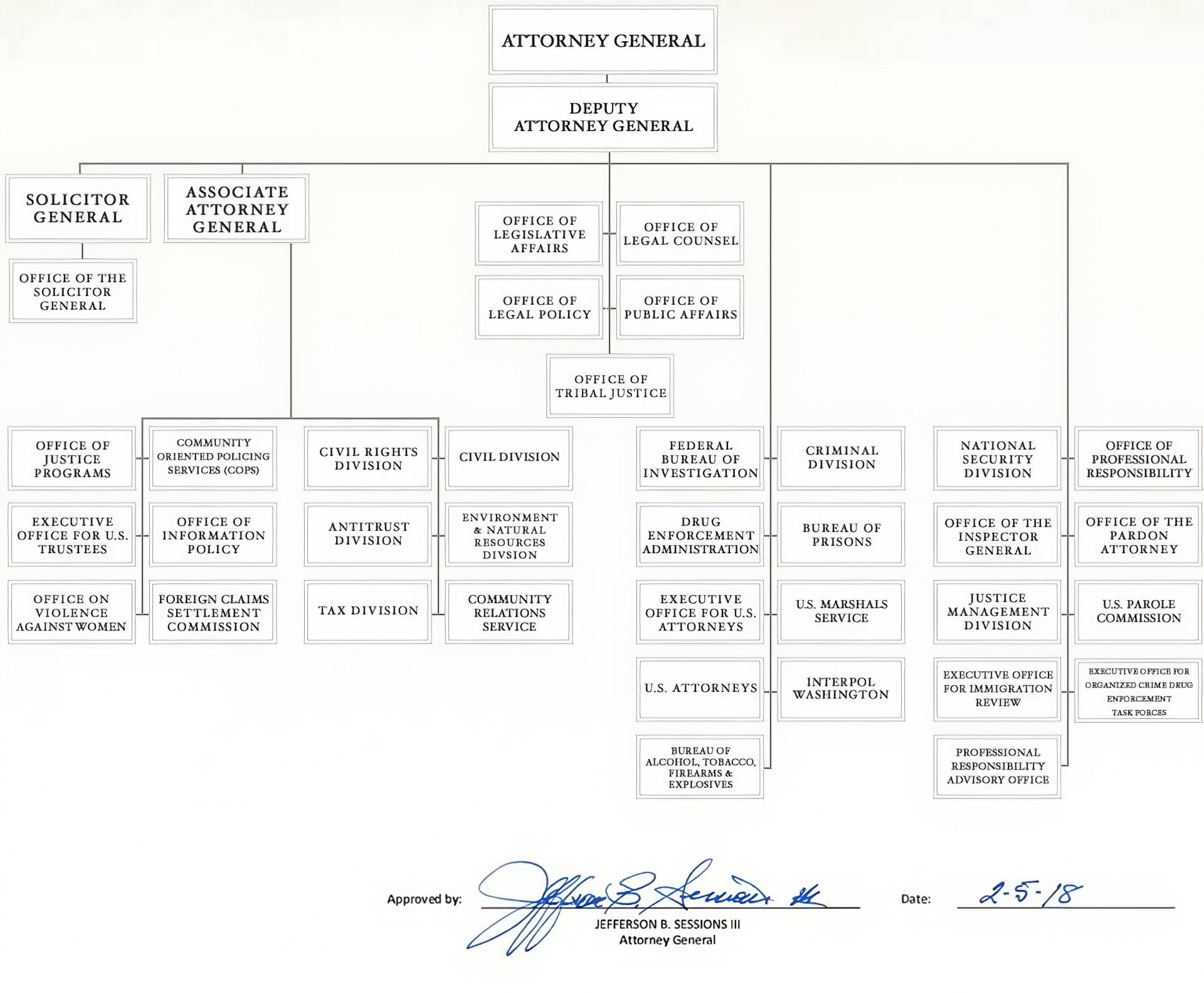
    The Justice Department says Blanche finalized a regulation that puts a working process behind a provision of federal law, 18 U.S.C. § 925(c). That law allows people subject to federal firearms disabilities to seek relief under limited circumstances.

    US Department of Justice Organizational Chart 2018
    Image: US Department of Justice, via Wikimedia Commons, Public domain.

    For more than three decades, the department says, that avenue was effectively unavailable to most applicants. Congress created the relief mechanism, but annual appropriations restrictions prevented the Bureau of Alcohol, Tobacco, Firearms and Explosives from using funds to investigate or act on most applications.

    The administration’s move does not change the basic federal rule that generally bars people convicted of crimes punishable by more than a year in prison from possessing firearms. Instead, it creates a process through which some people can ask the federal government to lift the applicable disability after review.

    Who can seek restoration

    The program is broader in description than the shorthand phrase “felons’ gun rights” suggests. The Justice Department says it is for eligible individuals who are prohibited from possessing firearms under federal law, a category that can include people barred for reasons other than a felony conviction.

    Applicants must show the attorney general that the circumstances behind their prohibition, along with their record, reputation and conduct since then, indicate they are not likely to endanger public safety. They also must show that granting relief would not run against the public interest.

    That standard places the burden on the applicant. Completing an application is not the same as being cleared to own or possess a firearm.

    • Federal relief is case-specific: The department will evaluate individual facts and circumstances.
    • Public safety is the stated test: An applicant must demonstrate that they are not likely to act dangerously.
    • No blanket restoration: The final rule says relief is neither automatic nor guaranteed.

    High-risk applicants face presumptions

    The department says it will maintain strong presumptions against relief where a person’s crime, conduct or legal status points to heightened public-safety risks. In practical terms, that means the policy is designed to distinguish between applicants rather than treat all past convictions alike.

    Absent extraordinary circumstances, the department says violent felons, registered sex offenders, people in the country illegally and others presenting an ongoing danger will remain presumptively ineligible. “Presumptively” matters: it signals a powerful barrier, not necessarily an absolute legal impossibility in every case.

    Blanche framed the policy as a Second Amendment issue alongside a safety screen. He said the government should not permanently deprive people of a constitutional right without considering whether they pose a danger, while describing the new program as rigorous and commonsense.

    That balance will be the policy’s central test. Supporters of restoration can argue that an old conviction should not always impose a lifetime federal ban. Those focused on gun violence and victim safety will scrutinize how the department measures rehabilitation, risk and the consistency of its decisions.

    Federal approval has clear limits

    A successful application would remove only the federal firearms disability covered by the decision, according to the Justice Department. It does not cancel separate state restrictions, court orders or other legal barriers that may apply to an individual.

    That distinction could be consequential for applicants. Gun laws vary sharply by state, and a person who obtains federal relief may still be prohibited from possessing a firearm where they live, because of a state conviction, a state licensing rule, a protective order or another independent restriction.

    The announcement also does not mean every person with a felony conviction is federally prohibited in exactly the same way. The details of the offense, sentence, post-conviction legal status and applicable state law can all affect whether a federal disability exists and whether relief is available.

    Why the applicant estimate matters

    The Wall Street Journal reported that the Justice Department expects roughly 330,000 people to apply to reclaim the ability to own firearms. That projection points to a potentially large administrative undertaking, especially because the rule calls for individualized consideration rather than a one-size-fits-all decision.

    The department has also described the broader universe of Americans who have lost Second Amendment rights as far larger. But an estimate of people who could apply is not a forecast of approvals. The department has not, in the material released so far, set out how many applications it expects to grant, how long decisions will take or what resources will be assigned to reviewing cases.

    Those unanswered operational details will help determine whether the policy becomes a meaningful avenue for eligible applicants or a slow, selective process with lengthy backlogs.

    What happens when the rule takes effect

    The Justice Department says the final rule takes effect 30 days after publication in the Federal Register. Applicants are being directed to the department’s Federal Firearm Rights Restoration Program site for eligibility information, instructions and access to the application process.

    The first cases will reveal how the department applies broad terms such as public interest, dangerousness and extraordinary circumstances. They may also expose how federal reviewers handle old, nonviolent convictions, evidence of rehabilitation and applicants whose state laws impose separate bans.

    For now, the administration’s announcement is best understood as the reopening of a narrow federal path, not a mass restoration of gun rights. People considering an application would need to examine both the federal standards and the laws that govern firearm possession in their own state.

  • Washington Post Writer Questions Trump’s Bedminster Golf Championship Claims

    Washington Post Writer Questions Trump’s Bedminster Golf Championship Claims

    Donald Trump has cited dozens of golf club championships, but a new opinion column argues the totals and circumstances deserve closer scrutiny. The dispute is less about a single score than about what counts as a verifiable tournament win.

    Donald Trump’s claimed golf championship wins are under renewed scrutiny after a Washington Post writer investigated the titles and challenged the truth of several claimed victories, including recent results at Trump National Golf Club Bedminster in New Jersey. A headline framing the episode as “Donald Trump embarrassed” goes further than the evidence shown, but the August 17, 2026, opinion piece raises pointed doubts about how Trump’s club championships were counted and verified.

    The central claim is not that Trump cannot play golf. It is whether victories at courses he owns were conducted, scored and documented in ways that would satisfy ordinary expectations for a competitive club championship.

    Questions follow a Bedminster claim

    The Washington Post column focuses on Trump’s reported claim that he won senior and super-senior titles at Bedminster after shooting a 2-under-par 70. Trump later described the result on Truth Social as evidence of his talent.

    The article’s author, writing in an explicitly opinionated and satirical style, says he could not find people willing to independently vouch for the score. That is the source of the current debate: an impressive score and a pair of trophies are being discussed without publicly available, independent confirmation in the material provided.

    Trump’s clubs and representatives are not quoted in the extracted report responding to the writer’s assertions. The account also does not include scorecards, a tournament field, rules sheets or results published by Bedminster that could settle the questions raised.

    The disputed total has climbed

    The writer traces Trump’s public championship tally from 12 titles in 2000 to 18 in 2013, 26 by 2024 and 36 in an August 2025 Truth Social post. Trump then said during a Thanksgiving video call with troops that he had won 38 club championships.

    That rising total is a major reason the claims attract attention. Winning one club tournament can be a meaningful accomplishment; accumulating dozens of titles across a portfolio of courses one owns creates an obvious question about how each event was defined and who administered it.

    The opinion piece suggests the count may now be 40 or higher, based on the Bedminster episode and an onlooker’s account. But that figure is not presented as an official total. It is the columnist’s running estimate, and it should be understood as such.

    What the writer alleges happened

    The column makes several serious allegations about past events. It says Trump told the writer in 2000 that he treated a first solo round at a newly acquired or built course as a club championship. It also alleges that some later titles lacked evidence of conventional competition or were credited despite Trump being elsewhere on a tournament day.

    Most notably, the author cites an unnamed former caddy who allegedly described an expectation that Trump would win and post the low score. The piece also alleges favorable on-course treatment, including help with balls and conceded putts.

    Those are allegations from a commentary article, not findings from a golf governing body or an independent investigation described in the supplied research. No supporting records, named witnesses, tournament officials or on-the-record response from Trump are included in the extract. That distinction matters, especially when a political figure’s personal claims become part of a broader public argument.

    Club titles are not tour titles

    Trump’s claimed victories are club championships at properties he owns, not professional wins on the PGA Tour, the Champions Tour or a major championship. Club championships can vary widely in format, eligibility, handicap rules and whether divisions such as senior or super-senior fields compete separately.

    That flexibility does not automatically make a club title illegitimate. Private clubs may run real, competitive events with clearly published rules and reliable scorekeeping. The credibility question turns on transparent basics: who was eligible, who played, whether rounds were completed as scheduled, how scores were attested and whether results can be reviewed.

    Ownership introduces another layer of skepticism because the person claiming the title controls the venue. The cleanest answer to that skepticism would be routine documentation: tournament dates, participant lists, scorecards, rules, officials and posted results. The available source does not show that documentation for the wins it questions.

    Golf bragging meets public scrutiny

    Trump has long made golf part of his public image, using the sport to project competitiveness, stamina and status. At 80, his claims of shooting below his age and adding championships naturally draw more attention than similar boasts from a private club member.

    Supporters may see the dispute as another attempt to ridicule Trump over a recreational pursuit, particularly because the Washington Post piece uses sarcasm throughout. Critics see a familiar concern: public claims carry more weight when they come from a president, and extraordinary sports results merit evidence.

    Both perspectives can coexist. A mocking opinion column is not definitive proof of wrongdoing, but neither does a trophy alone answer questions about the event that produced it.

    The records would settle the argument

    What remains unclear is straightforward. Were the Bedminster divisions open tournaments with other players? What rules governed them? Who verified Trump’s score? And what official record supports the full number of championships Trump has cited?

    Until independently checkable results are available, the fairest description is limited: Trump says he has won numerous club championships, while a Washington Post opinion writer disputes the legitimacy or documentation of some of those claimed titles. The controversy is ultimately about evidence, not merely whether a golfer can post a good round.

  • Supreme Court Keeps Trump on the Hook for Carroll’s $5.6 Million Award

    Supreme Court Keeps Trump on the Hook for Carroll’s $5.6 Million Award

    The justices gave no explanation for refusing to reconsider their earlier decision not to hear Trump’s appeal. The order ends one route of challenge in Carroll’s first defamation case, while a separate $83 million judgment remains under review.

    The Supreme Court rejected Donald Trump’s effort to avoid a $5.6 million payment to E. Jean Carroll, declining to reconsider its earlier refusal to hear his appeal in the Trump-Carroll civil litigation. The action leaves in place the jury verdict for Carroll, a journalist who sued Trump for defamation after he publicly denied her accusation that he sexually assaulted her in the 1990s.

    The amount began as a $5 million verdict and rose with interest while appeals proceeded. The practical result now is that the first Carroll judgment is no longer headed back to the Supreme Court through this request, even as Trump continues to challenge a separate, far larger award to Carroll.

    A procedural denial with real consequences

    The court did not issue a lengthy opinion or explain its reasoning. That is typical when the justices deny a petition for rehearing, particularly one seeking reconsideration of a decision not to take a case in the first place.

    United States Supreme Court
    Image: Matt Popovich, via Flickr, CC0 1.0.

    Trump had asked the court to revisit its prior decision declining to review the case. The justices had already turned down his initial petition after the U.S. Court of Appeals for the 2nd Circuit upheld the verdict.

    That distinction matters. The Supreme Court did not newly decide the facts of Carroll’s lawsuit, and it did not issue a broad statement about defamation law, presidential immunity or trial evidence. It simply declined to reopen Trump’s unsuccessful bid for review.

    Still, the denial has a concrete effect: the lower-court judgment remains intact, and Trump’s challenge in this case has reached the end of the line at the nation’s highest court.

    Why the award reached $5.6 million

    A New York federal jury awarded Carroll $5 million in 2023. It found Trump liable for sexually abusing Carroll and for defaming her in an October 2022 Truth Social post that called her allegation a “hoax” and said she was not his “type.” Trump has denied Carroll’s account and has maintained that he did not know her.

    The figure cited now, roughly $5.6 million, reflects interest added during the extended appeals process. According to SCOTUSblog, Carroll received the $5 million verdict amount plus interest from an escrow account in July.

    That means the court’s latest move is not merely about a hypothetical future payment. It removes a final Supreme Court avenue Trump pursued to undo a judgment that had already been secured and paid out while litigation continued.

    Trump’s legal team argued that the trial should not have included testimony from other women who accused him of sexual misconduct, along with the 2005 Access Hollywood recording in which Trump was heard making remarks about grabbing women. Carroll’s side argued that the evidence was properly admitted and that the overall evidence supported the verdict.

    The case grew from 2022 statements

    Carroll filed the lawsuit in 2022 under New York’s Adult Survivors Act, which temporarily allowed adults to bring otherwise time-barred civil claims involving alleged sexual abuse. She said Trump assaulted her in a Manhattan department-store dressing room in 1996.

    The lawsuit also focused on Trump’s response decades later. After Carroll publicly described her allegation, Trump denied it and made statements that Carroll argued damaged her reputation by portraying her account as fabricated.

    The first trial produced the $5 million verdict. A later case, based on a separate set of Trump statements made in 2019, produced an $83.3 million jury award for Carroll in 2024. The cases involve overlapping people and allegations, but they are legally separate proceedings with different statements, trials and judgments.

    That separation is easy to lose in the headlines. The Supreme Court’s latest order concerns the first case and the award now described as $5.6 million with interest—not the $83 million judgment.

    Trump raised an immunity argument

    In seeking rehearing, Trump pointed to a related legal question about statements he made while serving as president. His lawyers argued that a separate appeal involving the $83 million judgment could raise whether some statements should be treated as protected official acts.

    Trump’s position was that if the Supreme Court accepted that argument in the second case, it could affect the treatment of evidence in the first case as well. The justices did not adopt that reasoning in the rehearing request.

    Carroll’s attorneys have argued that Trump’s remarks were personal and defamatory, not official presidential acts. They have also maintained that the evidence in the first trial supported the verdict regardless of the issues Trump raised on appeal.

    The court’s refusal to reconsider does not resolve every constitutional or immunity question Trump has raised across his cases. It does make clear that those arguments will not revive this particular appeal.

    Rehearing requests almost never succeed

    The Supreme Court receives thousands of requests to hear cases each term and accepts only a small fraction. Requests asking the court to reconsider a denial of review face even steeper odds.

    SCOTUSblog noted that the court rarely grants petitions for rehearing and had not done so since 2018. The justices’ brief order fits that institutional pattern: absent a major error or an exceptional change in circumstances, a denied petition usually stays denied.

    For Trump, the loss is significant because it closes the Supreme Court chapter of the first Carroll case without a full merits hearing. For Carroll, it preserves a verdict that had already survived review in the 2nd Circuit.

    Neither outcome converts the order into a sweeping legal precedent. A denial of review ordinarily does not signal that the Supreme Court agrees with every aspect of the lower court’s reasoning. It means, in this instance, that the court will not intervene.

    The larger Carroll fight continues

    Attention now turns to Trump’s challenge to the separate $83.3 million defamation award. That case remains the more consequential financial dispute between Trump and Carroll, and it includes arguments that were not resolved by the latest order.

    The Supreme Court could consider Trump’s petition in that case later in the year. It is not required to take it, and there is no guarantee that the justices will address the immunity theory or any evidentiary question Trump has raised.

    For now, the immediate takeaway is narrow but decisive: the Supreme Court has declined Trump’s last request to reopen the first Carroll verdict. The $5 million award, which grew to about $5.6 million with interest, remains in force.