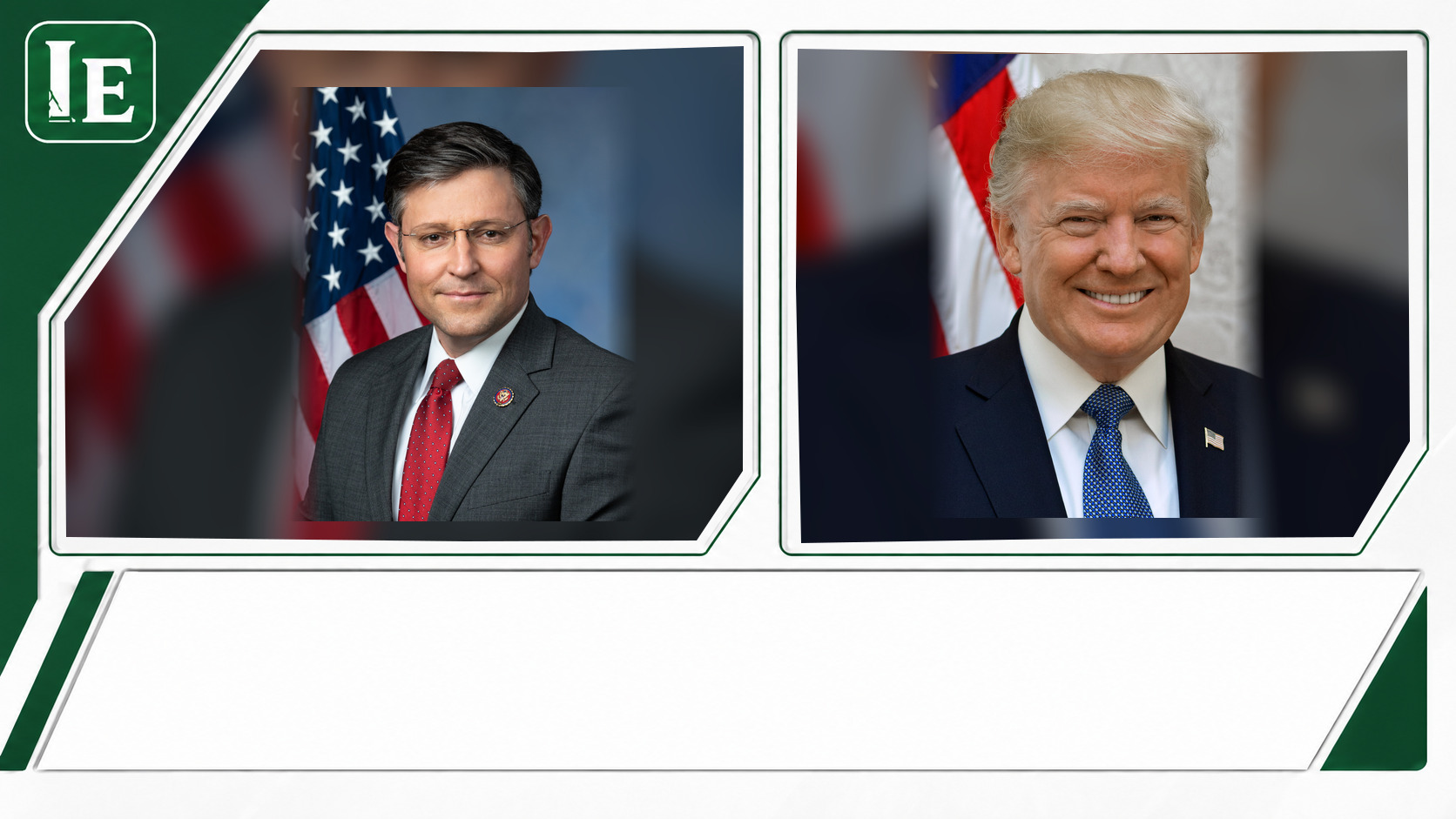
Johnson’s argument tried to separate the Republican Party’s domestic agenda from the economic effects of a conflict tied to its president. Whether voters accept that distinction could shape how they assess both Trump and congressional Republicans.
Mike Johnson blamed Donald Trump’s conflict with Iran for rising prices during a Saturday appearance on Fox News, arguing that the conflict with Iran—not Republican economic policy—was driving higher costs. The House speaker used the interview to defend the Republican Party’s economic agenda while acknowledging pressure on household budgets.
Johnson’s argument on America with Kayleigh McEnany carries a clear political implication: Republicans want voters to see their economic program as sound and the Iran conflict as the disruptive force. The harder question is whether voters will separate Trump’s foreign-policy decisions from the record of his party in Congress.
Johnson’s case for Republican policy
According to the Raw Story report, Johnson said Congress had created the conditions for the economy to “take off like a rocket.” He also said the economy had begun to improve during the first quarter of the year.

But Johnson described the conflict with Iran as a major “headwind” that interrupted that progress. His framing was designed to preserve the central Republican claim that its domestic policies are capable of improving economic conditions, even if current costs remain a source of frustration.
That is not quite the same as directly criticizing Trump. Johnson did not present his comments as a personal rebuke of the president. Still, the argument places the cause of the immediate disruption outside the congressional agenda Johnson was defending and links it to a conflict associated with Trump.
Iran and the cost-of-living debate
Johnson connected the conflict to worries about gas and grocery prices and said he expected the situation to end soon. He suggested prices could return “to planet Earth” when the conflict subsides.
Raw Story also reported that Iran had vowed to maintain a blockade of the Strait of Hormuz, a waterway with broad importance for global energy shipping. A lasting disruption there can raise concerns about fuel costs and wider pressure on consumer prices.
Yet Johnson did not offer detailed evidence in the interview showing how much of any particular increase in household costs could be attributed to the conflict. That limitation is important because the prices Americans pay for fuel, food and other necessities can reflect several forces at once.
Energy markets, supply chains, company pricing decisions, wages, weather and consumer demand can all affect the cost of living. A geopolitical crisis may contribute to higher prices without accounting for every increase consumers see at gas stations or grocery stores.
A politically difficult separation
Johnson’s message asks voters to make a distinction that may be hard to sustain politically. Republicans can seek credit for the parts of the economy they view as shaped by their legislative agenda while treating a foreign-policy shock as separate from that agenda.
Critics can make the opposite case: when a president and Congress belong to the same party, voters may see the governing coalition as responsible for the combined consequences of its choices. In that view, economic policy and foreign policy cannot be cleanly divided when both affect what families pay.
Johnson and his allies have a response. They can argue that a sudden international crisis should not be treated as a verdict on domestic legislation, particularly if they believe their policies had been producing improvement before the conflict escalated.
Neither argument automatically determines political accountability. Voters may focus less on which institution has the stronger theoretical case and more on whether leaders provide a convincing explanation for current costs and a believable path to relief.
Congress remains part of the story
Raw Story reported that Trump did not seek congressional approval for the action involving Iran. If that account is accurate, Johnson can argue that Congress does not bear the same direct responsibility for that decision.
But Congress is not merely an observer of military action, spending, oversight or the broader direction of a unified government. That leaves Johnson navigating a narrow line: defend Congress’s economic record while avoiding a direct break with a president who remains one of the party’s defining figures.
The tension is especially notable because Johnson is one of Trump’s most prominent congressional allies. His comments sought to acknowledge economic distress without allowing it to become a broader indictment of Republican governance.
Voters’ everyday pressures remain central
McEnany raised the issue in personal terms, describing a young person who cannot afford a home, is struggling with health care costs and feels the economy has failed them. She asked what Republicans could offer that voter.
Johnson replied that giving more responsibility to government “never works.” The response echoed a core Republican objection to expanded government intervention, but it did not set out a specific short-term plan for housing, health care or immediate household expenses.
That gap is central to the political test ahead. Voters may understand that wars, shipping routes and energy markets can influence prices, while still wanting concrete answers about rent, insurance, food and transportation now.
What Johnson still has to prove
Johnson predicted that the conflict would end soon, but the report did not identify a timetable or describe a path toward de-escalation. It also remains unclear how long any reported disruption in the Strait of Hormuz could last or how directly it may affect prices paid by U.S. consumers.
There is a second uncertainty: whether voters will accept Johnson’s effort to separate Republican economic policy from the consequences of Trump’s foreign-policy decisions. His Fox News appearance made the party’s preferred explanation plain, but its durability will depend on the conflict’s course and the direction of prices.
Raw Story cited reporting by Sarah Longwell of The Bulwark based on interviews with Trump’s 2024 supporters in Florida, some of whom reportedly gave Trump weak marks while pointing to economic concerns and the war. Those interviews are not a national poll and cannot establish nationwide opinion, but they illustrate why Johnson’s distinction may face a skeptical audience.
Leave a Reply