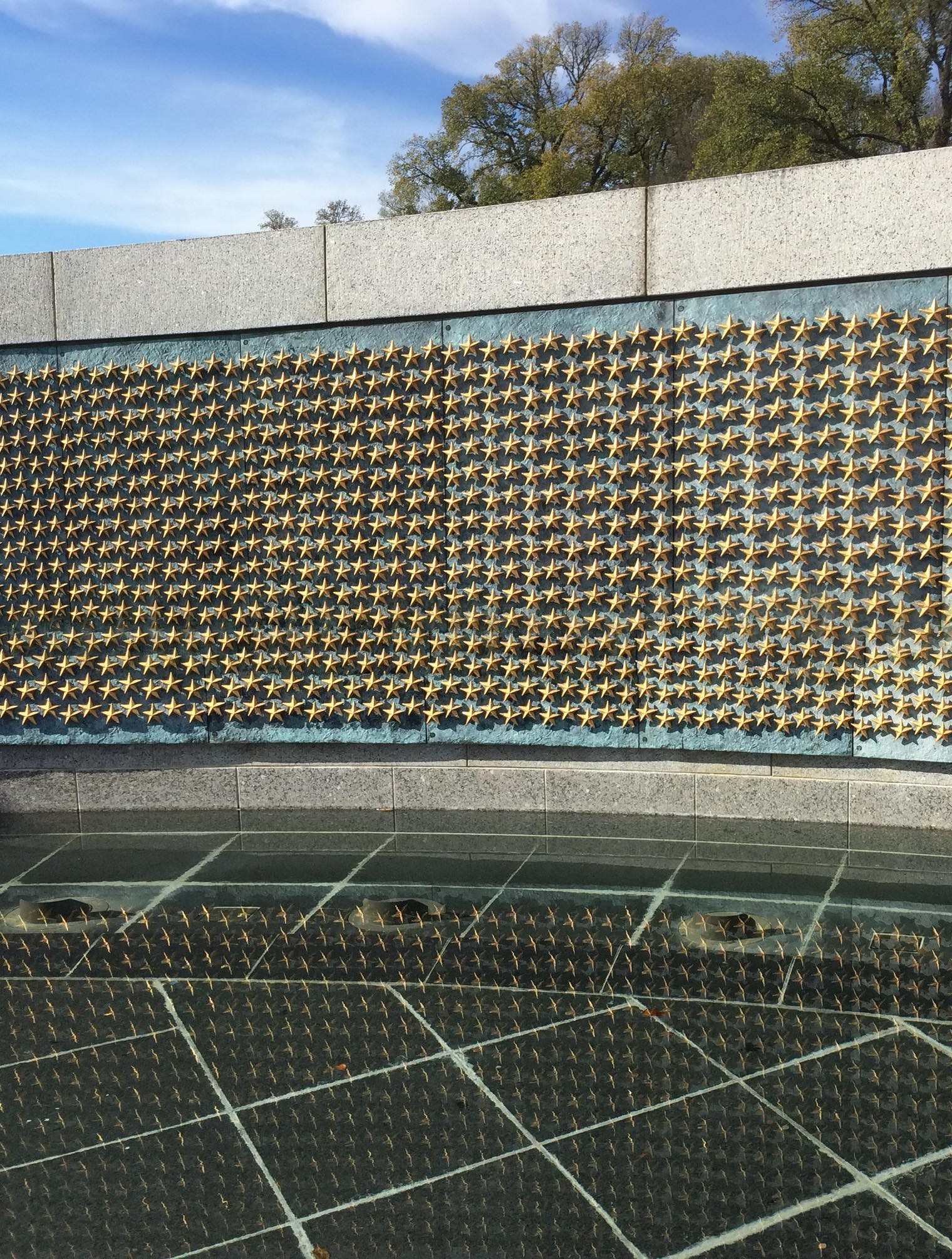
The federal case over alleged damage at Washington’s World War II Memorial will test prosecutors’ account of spray paint, foam, witness observations and social-media footage.
Federal prosecutors have charged Melissa Farris, 41, of Elizabethtown, Kentucky, with two felonies connected to alleged vandalism at the World War II Memorial in Washington, D.C. The charges remain accusations, and prosecutors must prove them in court.
The government’s account brings together alleged physical damage at the National Mall landmark, a reported eyewitness observation and videos it says Farris posted. Whether that evidence establishes the charged conduct beyond a reasonable doubt remains for the court process to decide.
The evidence described by prosecutors
According to federal prosecutors, a witness told U.S. Park Police officers that they saw a woman spray-painting a pavilion at the memorial. Prosecutors said a Park Ranger then found foam in the fountain area of the Atlantic pavilion.

Federal authorities say spray paint and foam were found at the memorial on Thursday, Aug. 13. Photos and videos from the scene showed soapy bubbles in fountains and multicolored paint on a wall, according to the government’s account. The graffiti included the phrase Clean Hands Dirty $.
Authorities also said several people had gathered on a balcony while a woman recorded herself. Prosecutors allege the woman left after noticing the ranger.
U.S. Attorney for the District of Columbia Jeanine Pirro posted a photo on X that she identified as showing Farris spray-painting the memorial. That identification, the witness account and the description of the physical scene are all part of the prosecution’s case and have not been adjudicated by a judge or jury.
Why social-media footage may matter
Prosecutors cited videos they say Farris posted from the memorial and said the footage showed her using spray paint before leaving the area. The material could be central to how the government seeks to connect Farris to the alleged damage.
In a Facebook livestream described by CBS News, Farris said she understood the choices she was making and identified herself as a whistleblower. According to the report, she later posted videos outside the federal courthouse in Alexandria, Virginia, before turning herself in.
In those later remarks, Farris said she had never been in that situation before and said she had been trying to get people to listen. Those statements provide her stated explanation, but they do not settle whether the government can prove the specific conduct alleged in the charges.
What the two felony counts allege
The U.S. Attorney’s Office for the District of Columbia said Farris was arrested and charged with depredation against property of the United States and destruction of veterans’ memorials.
Both counts are felonies. Prosecutors said each carries a potential maximum sentence of up to 10 years in federal prison. That is the statutory maximum, not a prediction of any sentence Farris would receive if convicted.
Farris made an initial appearance at the federal courthouse in Alexandria and was detained, according to a spokesperson for Pirro’s office cited by CBS News.
The filing of charges does not establish guilt. Farris can challenge the government’s evidence, its account of events and its application of the law. Prosecutors must establish every required element of each count beyond a reasonable doubt.
The memorial at the center of the allegations
The World War II Memorial stands on the National Mall between the Lincoln Memorial and the Washington Monument. It honors Americans who served in World War II, including those who did not return home.
Pirro called the alleged vandalism an attack on a monument honoring people who fought and died for the country. The Friends of the National World War II Memorial said a national memorial should not be used as a canvas for vandalism.
The case involves a recurring tension at high-profile public sites: political expression can be protected, while conduct that allegedly damages a federally protected monument may carry criminal consequences. How that issue applies here will depend on the evidence and charges before the court.
Other National Mall cases offer limited context
The Farris case arrives amid heightened attention to alleged damage and restoration issues on the National Mall. In July, four people, including former Olympian David Hearn, were indicted or charged in a separate matter involving alleged damage to the renovated Lincoln Memorial Reflecting Pool.
That case later changed course when prosecutors dropped the charges, saying the damage resulted from a botched construction job by a contractor rather than vandalism. CBS News reported that White House officials later asked the Justice Department to consider bringing charges again, though no final decision had been made.
There was also an unresolved June incident involving markings in grass near the Washington Monument. No one had been charged in that matter as of the CBS report.
Those episodes do not determine the case against Farris. They underscore why the source of alleged damage, investigators’ conclusions and the strength of supporting evidence can be pivotal in cases involving prominent public landmarks.
What remains unresolved
The court will assess whether the government’s alleged physical evidence, eyewitness account and social-media material identify Farris and support each charged offense.
For now, the confirmed development is that federal prosecutors have brought two felony charges over alleged vandalism at the World War II Memorial. Whether the allegations result in a conviction remains unresolved.
Leave a Reply