The question is less about finding a clean finish line than measuring whether Trump’s political style, agenda and hold on the Republican Party can outlast one leader. The available evidence points to a transition that remains unsettled.
Donald Trump’s continuing political influence is central to any assessment of whether the Trump era is ending. The larger question for American politics is whether a political transition is underway: one that moves beyond Trump personally, or one in which his priorities and political style continue shaping the Republican Party and national debate.
There is no single election result, speech or poll that can settle that argument. An era ends when the coalition, ideas and incentives built around a leader no longer organize political power. By that standard, the evidence needed for a final verdict is much broader than a momentary setback or a burst of enthusiasm.
Trump changed the party’s center
Trump’s rise altered more than the Republican Party’s presidential nominee. It changed the party’s internal arguments over immigration, trade, foreign policy, media, government institutions and the definition of political loyalty.
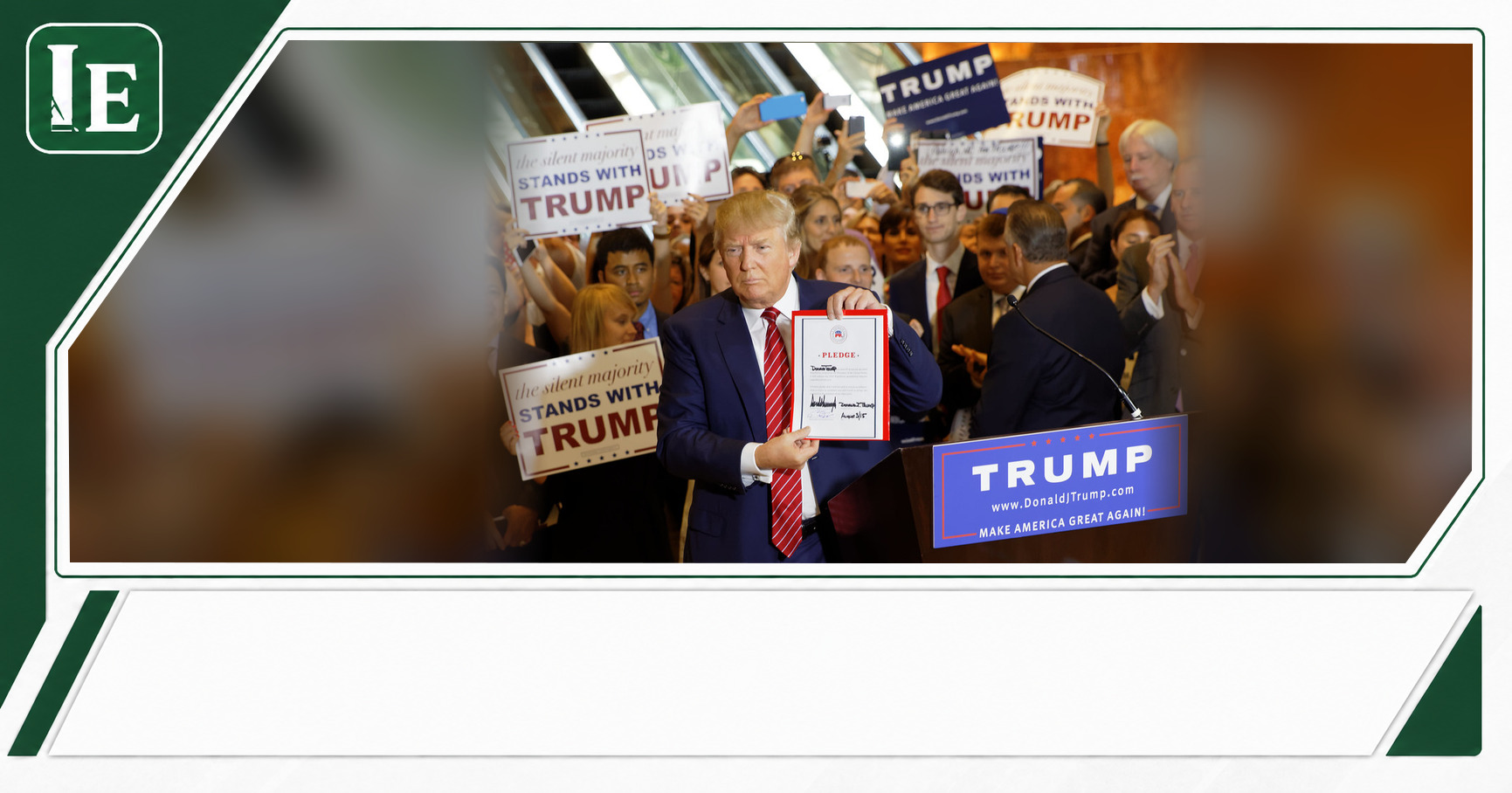
The National Archives’ archived White House biography documents the unusual scale of Trump’s 2016 breakthrough: he entered the race in June 2015, defeated 17 other Republican primary contenders and won the presidency in his first run for public office. Whatever one thinks of his record, that ascent forced a long-established party to adapt quickly to a candidate who openly challenged many of its conventions.
An era is not simply a period when one person wins office. It is a period when other politicians decide they must speak the person’s language, court the same voters and accept a changed set of policy boundaries. That is why the relevant question is not only whether Trump retains personal popularity. It is whether candidates without his name can prosper by carrying forward the political formula associated with him.
A legacy can outlast its leader
Trump’s first administration left institutional and policy footprints that do not vanish when a campaign ends. The archived White House account lists tax and regulatory changes, the replacement of NAFTA with the United States-Mexico-Canada Agreement, the creation of the Space Force, criminal-justice legislation and more than 250 federal judicial confirmations.
That account is a presidential archive, not an independent scorecard, and its descriptions reflect the administration’s view of its accomplishments. Still, the underlying point matters: executive actions, legislation, judicial appointments and party priorities can shape politics long after the official who championed them leaves office.
Supporters see that legacy as evidence that Trump redirected a party that had lost touch with voters concerned about borders, cultural change and Washington’s power. Critics argue that his influence has made politics more personal, more confrontational and less willing to respect institutional restraint. Those competing interpretations make “the Trump era” a fight over the country’s political rules as much as its policies.
Setbacks are not always endings
Political commentary often treats a disappointing result, internal party dispute or policy failure as proof that a dominant figure has reached a dead end. That can be true. It can also confuse a rough chapter with a realignment’s collapse.
A March 2025 Washington Post opinion essay argued that Trump was squandering an opportunity to create lasting Republican dominance. Its author’s premise was revealing: following Trump’s popular-vote victory in November 2024, many observers had believed a period of “Trumpian hegemony” might be beginning. The article’s conclusion was an argument, not an established fact, but it captured the sharp disagreement over how durable Trump’s moment could be.
For an era to be demonstrably ending, losses would need to produce more than headlines. Party elites would need to abandon Trump-centered incentives, voters would need to reject candidates offering his approach, and a credible alternative would need to win repeatedly. Without those developments, claims of an ending can be premature.
The test is bigger than Trump
The clearest evidence of a transition would be whether Republican candidates can build successful coalitions while departing from Trump on substance, rhetoric or both. A party can preserve portions of his agenda while choosing a less combative messenger. It can also invoke his name while quietly moving toward different priorities.
That distinction matters. If Trump’s positions on immigration, trade, skepticism of institutions and anti-establishment campaigning remain central even when other leaders carry them, then the Trump era may be evolving rather than ending. If those positions lose their electoral pull and party leaders gain by offering a different agenda, then a more decisive break may be taking shape.
Democrats are part of the test as well. An era can persist when opponents organize themselves mainly around resisting it. A genuine political transition would require competing parties to offer durable answers to the voter concerns that helped make Trump’s rise possible, not merely a return to the pre-2015 political arrangement.
What remains unresolved
The available material does not establish a final answer. It shows that Trump’s political legacy includes a major electoral breakthrough and tangible first-term actions, while commentators remain divided over whether his movement can sustain a broader governing majority.
Several questions remain open: Can Trump’s coalition hold together across economic, cultural and foreign-policy disagreements? Can other Republican figures inherit it without being defined by him? And can opponents create an alternative that addresses the same distrust of political institutions?
Declaring the Trump era over would require evidence that the incentives of American politics have changed, not just that the country is tired of another round of conflict. Until then, the more accurate description is an ongoing contest over what Trump’s influence means—and who, if anyone, can replace it.