Blog

  • Trump orders Pentagon to cut U.S.-South Korea war games

    Trump orders Pentagon to cut U.S.-South Korea war games

    The order puts a long-running U.S.-South Korea security practice at the center of Trump’s approach to Pyongyang and Seoul. The immediate question is how much of the 11-day Ulchi Freedom Shield exercise can be altered after preparations were already underway.

    Donald Trump ordered the Pentagon to scale back planned joint military exercises involving the United States and South Korea, a directive affecting the Ulchi Freedom Shield drills set to begin this week. Trump said the exercises were costly and sent an unnecessarily hostile signal to North Korea, making the decision a consequential shift for a military alliance built around readiness against Pyongyang.

    The president’s order does not cancel the U.S.-South Korea exercises outright. But his instruction to substantially reduce them, issued after plans were in place, leaves the Pentagon and South Korea to determine what training can still go ahead and what a reduced exercise means during a period of renewed North Korean missile activity.

    Trump’s rationale centers on North Korea

    Trump announced the move in a social media post Sunday, directing Defense Secretary Pete Hegseth to substantially reduce the exercises because, he said, it was too late to cancel them completely.

    The Pentagon US Department of Defense building
    Image: "DoD photo by Master Sgt. Ken Hammond, U.S. Air Force.", via Wikimedia Commons, Public domain.

    He argued that the drills cost too much and described them as a hostile message toward North Korea. Trump also pointed to his relationship with North Korean leader Kim Jong Un, saying North Korea had been unthreatening and respectful during his time in the White House.

    Trump additionally linked the decision to frustration with South Korea over Iran. According to the Associated Press, he said he had asked South Korea’s president to join U.S. efforts to denuclearize Iran and received a refusal.

    That explanation blends separate disputes: the cost and purpose of military training, relations with North Korea, and cooperation with an ally on Iran. It is not yet clear which concern will carry the most weight as Pentagon officials translate the order into changes on the ground.

    Ulchi Freedom Shield is not symbolic

    The annual Ulchi Freedom Shield exercise is a large operational test of how U.S. and South Korean forces would work together in a crisis. This year’s 11-day exercise was expected to involve about 18,000 South Korean soldiers and a sizable share of the roughly 28,500 U.S. troops stationed in South Korea.

    U.S. forces had planned training across several practical scenarios, including live-fire drills for precision targeting and maneuver, crossing water obstacles, and moving prepositioned equipment. Those are the kinds of tasks that require units from two militaries to practice procedures, communications and command arrangements together.

    The U.S. military has described the exercises as a way to strengthen readiness against North Korean threats and reaffirm the U.S. commitment to defend South Korea. For military planners, that is the core case for holding them even when the diplomatic atmosphere is tense.

    Critics of major exercises, including North Korea, see the same activity differently. Pyongyang has long denounced the drills as rehearsals for invasion, while Trump’s latest statement treats their scale as a diplomatic liability rather than simply a defense requirement.

    Missile tests sharpen the timing

    The order comes just after North Korea resumed ballistic missile testing, according to AP reporting. Those launches are prohibited by U.N. resolutions and were detected earlier this month by South Korea, the United States and Japan.

    That timing creates the central tension around Trump’s decision. The administration is reducing an exercise designed to prepare for North Korean military threats while North Korea is demonstrating weapons capabilities that allies view as part of that threat.

    Trump’s approach rests on a competing judgment: lowering the profile of the drills could avoid provoking Pyongyang and preserve room for diplomacy. The unresolved question is whether North Korea will interpret a reduced exercise as a confidence-building gesture, a temporary political decision, or a sign that allied readiness can be pressured.

    There is precedent for the argument. During his first term, Trump sought to halt or curb U.S.-South Korea exercises and said doing so would save money. His administration’s current move revives a familiar divide over whether training is a stabilizing deterrent or an obstacle to engagement.

    Seoul faces an alliance test

    The decision is also awkward because the Trump administration had recently praised South Korea’s defense role. In May, Hegseth commended the ally’s increased defense spending and its willingness to take greater responsibility for security on the Korean Peninsula.

    That praise reflected a broader U.S. demand that allies carry more of the security burden. Yet reducing shared training can complicate the very military coordination required when South Korean forces assume larger responsibilities.

    South Korea has relied on its alliance with Washington for decades, and the countries have conducted joint military exercises for more than 70 years. A drill’s scale matters beyond its immediate schedule because participants use it to test whether a combined force can respond quickly under difficult conditions.

    Trump’s Iran-related complaint adds another source of strain. Allies can cooperate closely on peninsula security while disagreeing with Washington about a separate conflict or diplomatic campaign; tying those questions together may make the alliance look more transactional to officials in Seoul and beyond.

    Congress may resist troop reductions

    The exercise order arrives alongside reports that Pentagon leaders are considering withdrawing about 4,500 U.S. troops from South Korea for redeployment elsewhere in the Indo-Pacific. That idea is distinct from scaling back a drill, but the two debates point in the same direction: how much U.S. military presence Trump wants on the peninsula.

    Congress has generally pushed back on reductions to the American footprint in South Korea. Politico reported that last year’s National Defense Authorization Act included language intended to prevent the administration from dropping the U.S. troop level below 28,500.

    Democratic Sen. Mark Kelly, a former Navy pilot, called the decision to hollow out the exercises shortsighted and a mistake. His criticism reflects a long-standing deterrence argument: readiness cannot always be rebuilt quickly after training opportunities are lost.

    Supporters of Trump’s view can counter that large drills have financial costs and diplomatic consequences, and that a smaller exercise need not mean abandoning the alliance. The policy dispute is over the acceptable tradeoff between lowering tensions today and preserving a visible, rehearsed deterrent for tomorrow.

    The scope of the cut remains unknown

    The White House order establishes the direction but not the operational details. Officials have not publicly specified which events, troop movements or live-fire components will be reduced, whether the 11-day timetable will change, or how Seoul will participate in revising the plan.

    Those details will determine whether this is primarily a symbolic adjustment or a meaningful reduction in combined readiness. A smaller public-facing event could carry a different consequence from cutting command-post training or canceling field exercises that test logistics and mobility.

    For now, Trump has put a central feature of the U.S.-South Korea alliance under a new political condition: military exercises are being judged not only by their readiness value, but also by their cost and the message they send to North Korea. How the Pentagon implements that judgment will show whether the change is a one-time diplomatic signal or the beginning of a broader rethinking of the U.S. role on the peninsula.

  • Trump’s SAVE America Act Faces a 60-Vote Senate Wall

    Trump’s SAVE America Act Faces a 60-Vote Senate Wall

    The House-passed election bill is a major Trump priority, yet its Senate prospects depend on a procedural barrier Republicans themselves are divided over. The coming debate could put party differences on display without changing the vote math.

    Donald Trump’s SAVE America Act faces a Senate filibuster obstacle: the House-passed election bill may not clear the 60-vote threshold, and many Senate Republicans are not ready to change the filibuster rules to help it pass. Senate Majority Leader John Thune plans to bring up the measure for debate, but its prospects are threatened by Republican resistance to the procedural change Trump has pushed.

    The dispute is not simply about whether Republicans support the bill’s election-policy goals. It is also about whether they will remake Senate rules, accept a prolonged floor fight or prioritize other issues as midterm elections approach.

    Debate and passage are different

    According to NBC News, Thune intends to bring the House-passed SAVE America Act to the Senate floor. Because of the way the measure is being brought over from the House, the Senate can begin debate with a simple majority.

    That procedural opening does not settle the far more consequential question: how to end debate and move the legislation toward final passage. Under current Senate rules, supporters generally need 60 votes to cut off debate.

    Republicans hold 53 Senate seats, NBC News reported. If Democrats remain opposed, the bill would need support beyond the Republican conference.

    That distinction explains why a Senate floor fight can be meaningful politically while still falling short legislatively. A bill can receive debate, amendments and high-profile votes without gaining the support needed to become law.

    Support for the bill has limits

    Sen. Thom Tillis, R-N.C., offered perhaps the sharpest example of the split between supporting the proposal and backing its current path. NBC News quoted Tillis as saying there was a “0%” chance of success, while also saying he supported the legislation on its merits.

    That is the difficult calculation behind Trump’s push. Some Republicans may favor stricter election rules and voter ID, one of the issues NBC News identified as tied to the measure, while concluding that the Senate strategy cannot produce a final victory.

    NBC News described the SAVE America Act as a sweeping proposal to rewrite election laws across the country. Trump has called it his “No. 1 priority,” according to the report.

    The resulting conflict is less about a single up-or-down policy preference than about the price of pursuing that priority in a chamber built around a 60-vote hurdle for ending debate.

    The filibuster divides Republicans

    Trump has pressed for a simple-majority change to Senate rules that would weaken or eliminate the legislative filibuster, an approach often called the nuclear option. But NBC News reported that the proposal does not appear to have enough Republican support.

    Thune said there were “not even close” to enough votes to eliminate the filibuster, according to NBC News. That assessment is especially significant because removing or weakening the rule would give a simple Republican majority a different path around the present 60-vote barrier.

    NBC News reported that Tillis, Susan Collins of Maine, Lisa Murkowski of Alaska and Mitch McConnell of Kentucky have opposed changing the filibuster. Their position preserves a rule that can frustrate the majority party but also protects minority-party leverage when Senate control changes.

    Other Republicans have backed altering the rule. NBC News identified Ron Johnson of Wisconsin, John Cornyn of Texas, Bernie Moreno of Ohio and Tommy Tuberville of Alabama as supporters of that approach. For now, however, the pro-change side does not appear to command enough support within the GOP conference.

    A talking filibuster changes little

    Some supporters have discussed a talking filibuster as a way to force an extended confrontation over the bill. But NBC News reported that it would not eliminate the need for 60 votes to formally end debate.

    The practical demands would also be substantial. Democrats could rotate speakers, while Republicans would need enough members available to maintain a quorum and prevent adjournment, according to the report.

    Johnson acknowledged that passage through such a process would be “almost impossible,” NBC News reported. Tillis also argued that it would waste time if it could not alter the eventual vote count.

    That leaves a talking filibuster as a potential tool for public pressure rather than a dependable route to enactment. It could make the policy dispute more visible, but it would not itself solve the bill’s underlying math.

    The fight could become a political stage

    Thune has characterized the expected floor action as an opportunity for a “full and robust debate,” NBC News reported. He has also said Democrats would be put on the record regarding their positions on the legislation.

    The process could include days of debate and Republican amendments, potentially extending into the following weekend or beyond, according to NBC News. That could give Republicans an extended venue to argue for the measure and highlight Democratic opposition.

    Still, using the Senate floor as a political forum is not the same as assembling votes for passage. The coming action may reveal more clearly where senators stand on the bill and the filibuster than it changes the legislation’s immediate odds.

    That distinction matters for interpreting any high-profile debate. A contentious session may create clear political moments even if the 60-vote threshold remains out of reach.

    Midterm pressure complicates the timing

    NBC News reported that some Republicans are frustrated by Trump’s decision to prioritize the SAVE America Act while the party prepares for midterm elections. Their concern is not necessarily opposition to the bill itself, but concern about the procedural and electoral consequences of a drawn-out fight.

    Tillis warned that a lengthy battle could expose vulnerable Republicans to difficult amendment votes. NBC News reported that he cited Collins as an example of a senator who could face challenging votes in a competitive reelection setting.

    An unnamed House Republican in a competitive race told NBC News that Congress should continue working on housing and affordability measures. That view reflects a competing political judgment about what should receive congressional attention.

    For Trump, the bill remains a top priority. For Senate Republicans, the unresolved questions are whether Democratic support can be found, whether the party would alter a long-standing Senate rule and whether an extended debate is worth the political cost. Without Democratic votes or a rules change that many Republicans oppose, the SAVE America Act is unlikely to reach Trump’s desk based on the vote count described by NBC News.

  • Inside the Analysis Behind a 51,000-Death Health Policy Projection

    Inside the Analysis Behind a 51,000-Death Health Policy Projection

    The figure is a projection, not a count of deaths that have occurred. It combines estimated effects from changes involving coverage, prescription assistance, nursing-home staffing and ACA affordability.

    A health-policy analysis cited by Sen. Ron Wyden of Oregon projects more than 51,000 deaths per year associated with a Republican reconciliation bill and the failure to extend enhanced Affordable Care Act premium tax credits.

    The estimate is intended to model possible long-term population-level health effects if the policy changes take effect. It is not a record of deaths that have already occurred, and it does not suggest every person affected by a coverage or benefit change faces the same risk.

    Two forecasts measure different outcomes

    The mortality projection is separate from a broader forecast about health coverage. A later policy brief from the Center on Budget and Policy Priorities, cited through a House link, said roughly 15 million people could lose coverage and become uninsured by 2034 because of Medicaid and ACA Marketplace cuts, the expiration of enhanced tax credits and other Marketplace changes.

    The group cited Congressional Budget Office estimates for that forecast. The 15 million figure measures a projected loss of coverage over time; the more-than-51,000 figure estimates annual mortality effects associated with particular policy changes.

    Both projections concern health-policy consequences, but they are not interchangeable. One concerns the number of people who could become uninsured, while the other models added mortality risk across several groups.

    Wyden publicized the researchers’ estimate

    Wyden, the top Democrat on the Senate Finance Committee, publicized the analysis in a June 3, 2025 statement. He connected the Republican proposal and the expiration of enhanced ACA premium tax credits to what he described as life-and-death consequences for people who could lose insurance or health benefits.

    The mortality estimate itself was attributed to researchers at the University of Pennsylvania’s Leonard Davis Institute of Health Economics and Yale School of Public Health’s Center for Infectious Disease Modeling and Analysis.

    Wyden is arguing against a Republican-backed plan, a political context that is important in assessing the public debate. The analysis, however, is presented as a model of how expected disruptions in coverage, medication assistance and care protections could affect population health over time.

    Prescription assistance is the largest component

    The more-than-51,000 annual estimate combines four projected effects rather than tracing the figure to a single policy change. Its largest component concerns low-income Medicare beneficiaries who could lose Medicaid support and access to low-income prescription-drug assistance.

    • 18,200 deaths a year: among 1.38 million low-income Medicare beneficiaries projected to lose Medicaid coverage and access to low-income prescription-drug assistance.
    • 8,811 deaths a year: tied to the failure to extend enhanced ACA premium tax credits.
    • 13,000 deaths a year: among Medicaid enrollees in nursing homes if a 2024 minimum-staffing rule is rolled back.
    • 11,300 deaths a year: tied to Medicaid or ACA Marketplace coverage losses involving 7.7 million people.

    The ACA credits lower monthly Marketplace premiums for eligible consumers, including many people who do not receive coverage through an employer or a public program. If premiums rise, some people may choose less comprehensive plans, delay signing up, postpone appointments or go uninsured.

    The nursing-home portion of the estimate centers on staffing. Residents can require frequent assistance with medications, meals, mobility, hygiene and monitoring for sudden changes in their condition. Supporters of minimum staffing requirements argue that baseline standards are necessary for resident safety.

    Policy details would shape the result

    Republican supporters of major Medicaid and ACA changes have generally argued that work requirements, eligibility checks and spending limits can reduce costs, curb improper enrollment and focus aid on people they consider most in need.

    Opponents argue that administrative requirements can cause eligible people to lose coverage and move costs to patients, states and health providers. Critics of federal staffing mandates, including many industry voices and Republican officials, have also argued that facilities face workforce shortages, particularly in rural areas, and that uniform requirements can strain homes with limited pools of workers and high operating costs.

    The policy dispute therefore includes practical questions about implementation. Exemptions, state-level administration, court challenges, funding decisions and later congressional action could all affect who loses insurance, prescription assistance or support.

    A projection is not a settled account

    The analysis does not say a legislative vote would produce an immediate death toll. Its results depend on assumptions about enrollment, replacement coverage, access to clinicians and medicines, and the health effects of disruptions in care.

    For people managing diabetes, heart disease, cancer or other serious conditions, maintaining prescriptions and timely care can be central to managing illness. Coverage can also affect whether someone seeks behavioral-health treatment, sees a clinician before a condition worsens or receives support that allows them to remain at home.

    The projected harm is not presented as a uniform outcome for everyone who loses benefits. Rather, the estimate is a warning about possible effects across large groups if the assumptions behind the policy changes match eventual reality.

  • Mitch McConnell’s Written Updates Draw Fresh Attention After Kaptur Video

    Mitch McConnell’s Written Updates Draw Fresh Attention After Kaptur Video

    A recovery video from Ohio Rep. Marcy Kaptur has brought renewed focus to the different ways elected officials communicate after health events become public.

    Mitch McConnell’s health updates have largely arrived in written form since his June hospitalization. That approach received fresh attention after Ohio Rep. Marcy Kaptur appeared in a video to discuss her recovery from an August 2, 2026, hit-and-run crash in Toledo.

    Kaptur, 80, said she was making a “rapid recovery.” The video does not establish what McConnell, 84, should disclose about his own health, but it has sharpened a political debate over visible reassurance, medical privacy and public confidence in elected officials.

    McConnell’s public updates have been limited

    McConnell’s June hospitalization renewed calls from critics for a video of the Kentucky senator speaking publicly. According to The Daily Beast, he had not agreed to release one.

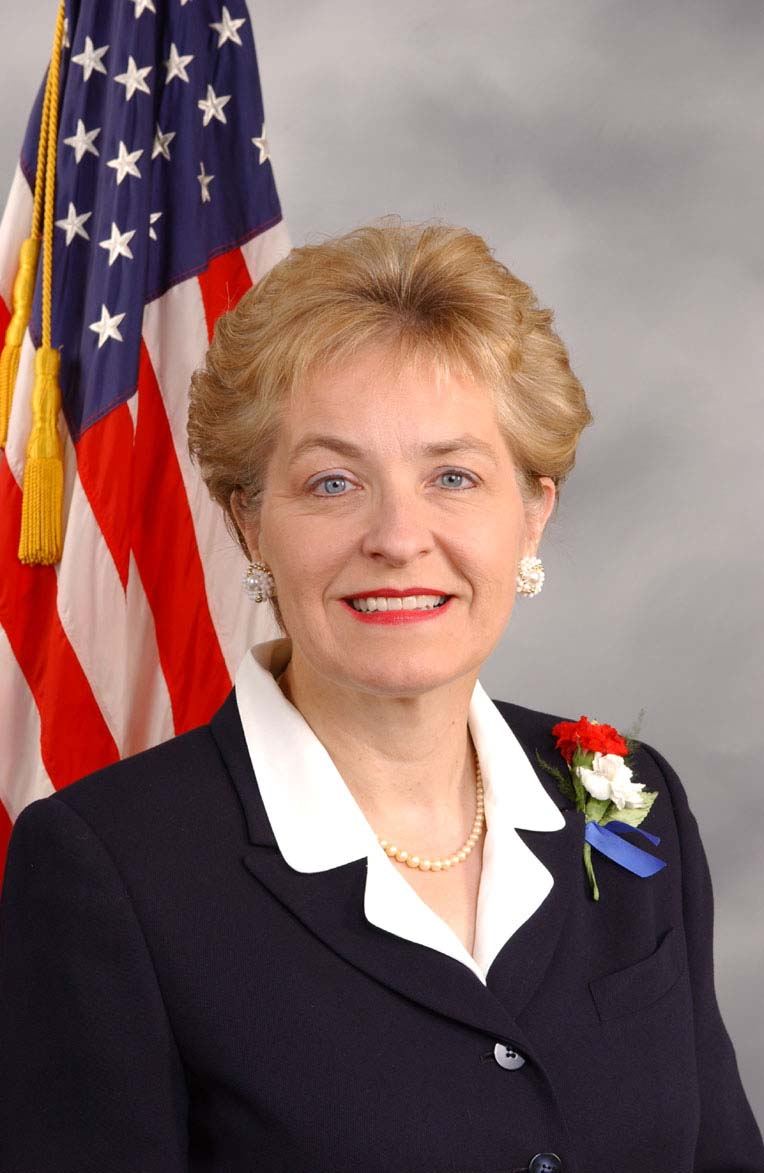
    Marcy Kaptur, official photo portrait, color
    Image: Unknown authorUnknown author, via Wikimedia Commons, Public domain.

    McConnell’s health has drawn attention for years, including after highly publicized freezing episodes in 2023. He later said he would step down as Senate Republican leader while remaining a senator from Kentucky.

    A video would not settle questions about a hospitalization or provide a diagnosis, prognosis or proof of an official’s fitness for office. Still, advocates of greater disclosure view a current, unfiltered appearance as one way for an officeholder to show they can communicate with the public and continue carrying out public responsibilities.

    Public reporting has not established why McConnell has not released such a video, whether medical or family guidance is involved, or whether he plans to provide another update.

    Kaptur’s crash prompted an on-camera update

    Kaptur, a Democrat representing Ohio’s 9th Congressional District, was a passenger in a vehicle that was struck while she was traveling to a church service, according to her office.

    Toledo police said officers responded shortly before 11 a.m. on August 2 to a hit-skip crash near Detroit Avenue and Central Avenue. Kaptur and another person were taken to a hospital with injuries police described as not life-threatening.

    Her office said Kaptur was active and alert and looked forward to returning to a full schedule. The investigation remained active, and authorities had not publicly provided a full account of the driver involved.

    In her recovery video, Kaptur offered constituents a direct account of how she was doing without releasing detailed medical records. The Daily Beast characterized the contrast with McConnell as embarrassing for him, a political assessment rather than a medical finding about the senator.

    Two cases, different public records

    The unresolved issues in Kaptur’s case concern the Toledo crash itself, including the driver who left the scene and possible accountability. Her recovery update addressed a specific incident; it did not create a rule for every elected official after every hospitalization.

    McConnell’s circumstances are separate. His limited public visibility has nevertheless become part of a broader discussion about what voters can reasonably expect when a lawmaker’s health event becomes public.

    Kaptur’s video showed one possible middle-ground approach: a brief visual statement that acknowledges a health situation while leaving many medical details private. It does not establish that every officeholder must communicate in the same format.

    Privacy and accountability remain in tension

    Elected officials retain medical privacy. Hospitalizations can be serious and personal, and decisions about disclosure may involve doctors and family members rather than political pressure to demonstrate wellness on camera.

    For that reason, an absence from video should not be treated as evidence of incapacity. Neither Kaptur’s appearance nor calls for McConnell to make one establish a medical diagnosis or show whether either lawmaker can or cannot perform the job.

    The competing argument reflects the demands of public office. Members of Congress vote, travel, meet with constituents and take part in consequential decisions. Voters and colleagues have an interest in whether their representatives can communicate and fulfill those duties.

    The question is not whether officials must surrender all medical privacy. It is whether a timely, credible public update can sometimes be part of the accountability expected from someone entrusted with public power.

    Age alone does not answer the question

    The comparison comes amid recurring scrutiny of the age and health of Congress’ longest-serving members. Kaptur has served in Congress since 1983 and, according to CBS News, is the longest-serving woman in the House and in Congress overall.

    McConnell is also among the Senate’s most experienced and influential members. His stature means concerns about his health can quickly extend to questions about Senate operations, party leadership and who is making important decisions.

    Age by itself, however, is not evidence of incapacity. Older lawmakers can remain active and effective, while younger officials can experience serious health problems. The relevant issue is functional ability and the reliability of the information available to the public.

    Kaptur’s recovery video will not resolve that debate. It illustrates why a short public appearance can carry political weight when official information is sparse: it may reassure some people while making the lack of a comparable appearance more noticeable to others.

  • Miami Activist Promotes Democratic Socialism While His Family Fled It

    Miami Activist Promotes Democratic Socialism While His Family Fled It

    A Miami Beach canvasser’s quiet conflict at home captures how one political word can carry radically different meanings across generations. Oscar Alvarez is embracing democratic socialism while his family’s escape from socialism remains deeply personal.

    Oscar Alvarez is promoting democratic socialism door-to-door in Miami, including a July canvass in Miami Beach, Florida, for congressional candidate Oliver Larkin. But Alvarez’s family fled socialism, and the young Cuban American activist struggles to discuss his political advocacy with them—a contrast that turns a campaign message into a deeply personal family divide.

    The tension matters because Miami’s politics are shaped by Cuban American families whose experiences with Cuba’s government give the word “socialism” an emotional force that extends far beyond any candidate’s platform. For Alvarez, the Washington Post reported, the hardest conversation may not be at a voter’s doorstep. It is at his family’s kitchen table.

    A canvass with personal stakes

    According to the Washington Post, Alvarez canvassed in Miami Beach this past July for Larkin, described as a democratic socialist running for Congress. Alvarez carried copies of a socialist zine as he headed out to campaign.

    Miami Beach, Florida, USA
    Image: pom'., via Flickr, CC BY-SA 2.0.

    His reluctance to tell his relatives where he was going is central to the story. The conflict is not simply about whether a campaign can win votes. It is about what Alvarez’s activism appears to represent to people closest to him.

    Door-to-door campaigning is built on direct conversation: a volunteer introduces a candidate, hears concerns and makes a case for support. Alvarez is entering those conversations in a city where many voters may have their own strong, settled views about socialism.

    At home, the stakes are more intimate. A political label that Alvarez is trying to define through democratic socialism is connected, for his family, to the reason they fled.

    One word, sharply different meanings

    The clash around Alvarez reflects a larger problem in American political debate: “socialism,” “communism” and “democratic socialism” are often used as if they mean the same thing. They do not necessarily describe the same political system, history or policy agenda.

    Democratic socialists generally argue for using democratic institutions to reduce economic inequality and expand public control or public provision in parts of the economy. Their ideas can include stronger labor protections, universal social programs, affordable housing initiatives or public investment.

    Critics, especially those whose families experienced authoritarian governments that called themselves socialist or communist, can see the term as inseparable from state repression, political persecution, shortages and the loss of basic freedoms. That reaction is not merely semantic. It is often rooted in family history.

    The Washington Post’s reader-discussion summary noted that commenters were debating the definitions and consequences of socialism, communism and democratic socialism, with some objecting to the terms being conflated. Alvarez’s experience shows why those distinctions can be difficult to establish in a short political conversation.

    Miami’s exile memory shapes politics

    Miami has long been a center of Cuban American political life, and opposition to Cuba’s communist government has helped shape local and state campaigns for decades. For many Cuban exile families, the story of leaving Cuba is a story about political survival, separation and starting over.

    That history helps explain why candidates and activists on the left face a particularly difficult task when they use socialist language in South Florida. They are not addressing an audience that is encountering the term in an abstract debate over taxes or health care.

    They are addressing voters and families who may connect it with a government they believe took away political pluralism, private property, economic opportunity or the ability to remain in their homeland. Those memories can be passed through generations even when younger relatives arrive at different conclusions about U.S. politics.

    For Alvarez, that divide is not a distant campaign calculation. His family’s flight from socialism and his own support for democratic socialism coexist in the same household story.

    The argument is bigger than labels

    Supporters of democratic socialism often say opponents use the history of authoritarian governments to dismiss policies that can exist within a democratic system. They argue that public programs, stronger unions and economic regulation are not the same as one-party rule.

    Opponents respond that the language itself matters, and that promises of equality or public control have, in some places, enabled governments to accumulate power and silence critics. From that perspective, warnings from people who lived through authoritarian socialism deserve more than a definitional footnote.

    Neither side is likely to be persuaded by a slogan alone. A candidate’s actual positions, institutional limits, record on civil liberties and willingness to tolerate political opposition all matter more than a label standing by itself.

    That is also why Alvarez’s outreach is challenging. He is not only making a case for a candidate or a set of policies. He is trying to persuade people that his use of “democratic socialism” should be evaluated separately from the political system his family escaped.

    A family conversation still unresolved

    The source account does not suggest that Alvarez has found an easy way to bridge the divide with his relatives. Instead, his decision to leave quietly with campaign materials underscores how unresolved the subject remains.

    That silence is revealing. Public politics often treats ideology as a contest of branding, polling and electoral strategy. Inside families, it can involve loyalty, inherited pain and the fear that a younger generation is minimizing what older relatives endured.

    Alvarez’s situation also complicates a familiar political stereotype. Cuban American communities are not politically uniform, and family histories do not automatically determine a descendant’s views. Yet the weight of those histories can make disagreement especially difficult to voice.

    His Miami canvass offers a narrow but telling picture of a broader national debate: democratic socialists are seeking a larger role in American politics, while many Americans—particularly those with firsthand or family experience of authoritarian regimes—hear the word socialism as a warning. Alvarez is trying to navigate both realities, one doorstep and one difficult family conversation at a time.

  • Jayme Franklin Says Pregnancy Explains Trump ‘Zapper’ Theory

    Jayme Franklin Says Pregnancy Explains Trump ‘Zapper’ Theory

    A brief Oval Office appearance turned into a viral conspiracy theory after clips showed Franklin standing near Trump with her hands on her stomach. Her response illustrates how quickly an ambiguous moment can eclipse the policy event happening around it.

    Jayme Franklin, the woman some online users dubbed the “Bobble head woman,” appeared with Donald Trump at a White House announcement in the Oval Office and later explained why she was holding her stomach: she said she is pregnant. Social media users had speculated, without evidence, that Franklin was using a hidden “zapper” device to keep Trump awake.

    Franklin’s short response addressed the viral theory but not the larger reason the footage was circulating: Trump appeared to close his eyes at points during an August 10, 2026, event on childhood vaccine recommendations. It remains unclear from the clips whether he was asleep.

    Franklin addresses the viral claim

    Franklin is the founder of The Conservateur, a conservative lifestyle brand. She stood behind Trump during the Oval Office event as he held up a signed executive order concerning childhood vaccine shots.

    Viewers noticed that Franklin frequently had her hands placed over her stomach. As snippets of the event spread, some social-media users connected that gesture to separate clips in which Trump appeared to have his eyes closed.

    The resulting theory was that Franklin had a concealed button or device capable of jolting Trump awake. There is no evidence in the material described by Forbes to support that claim.

    Franklin rejected it directly in a post on X, writing: “I’m just pregnant you weirdos.” Her statement supplied a straightforward explanation for the gesture that had become the basis of the online speculation.

    Why the “zapper” narrative caught on

    The theory drew its energy from two ambiguous visual details rather than from verified information: Franklin’s hand placement and Trump’s apparent eye-closing during a speech by National Institutes of Health Director Dr. Jay Bhattacharya.

    Neither detail, on its own, establishes what was happening. A brief video clip can show someone closing their eyes, blinking, looking down, or pausing; it cannot reliably establish sleep without broader context.

    Trump has faced prior online speculation about whether he has fallen asleep at public events. Forbes noted that he has previously said he was bored, relaxing, or blinking for an extended period when questions arose about his eyes being closed.

    That history may explain why a routine gesture by someone standing nearby was recast as part of an elaborate story. But a familiar online narrative is not proof, and Franklin’s pregnancy explanation undercuts the premise built around her movements.

    The Oval Office event had bigger stakes

    The viral moment occurred during an announcement about childhood immunizations, not an event centered on Franklin. Trump’s executive order recommended separating the combined measles, mumps and rubella vaccine into three separate doses and directed the Department of Health and Human Services to develop a plan.

    That policy discussion carries practical implications for families, clinicians and public-health agencies. According to Forbes, a number of health experts have warned that splitting the shots could increase the opportunity for infection between appointments while adding financial and logistical pressure for parents who must make multiple visits.

    Trump also repeated a claim linking childhood vaccines to autism and said the combined MMR vaccine could be dangerous. The available research brief says there is no evidence supporting those assertions.

    The combined MMR vaccine has been used for more than 40 years and studied extensively, according to Forbes. That does not eliminate policy debates about scheduling and access, but it puts the White House announcement in a much more consequential frame than the viral clip alone suggests.

    A personal detail became political content

    Franklin’s response was unusually concise, but the situation highlights a familiar dynamic in political media: people who appear in the background of a high-profile event can become central characters online within hours.

    In this case, a pregnant woman’s natural posture was interpreted by some users as evidence of a covert operation. The leap from observation to accusation happened before a mundane explanation was established publicly.

    There are competing impulses in viral-video culture. Viewers often scrutinize public officials and major political events because visibility and accountability matter. At the same time, scrutiny can become unreliable when it treats a fragment of footage as a complete account of what happened.

    Franklin’s public role and her decision to stand at a White House event made her visible. It did not turn unverified claims about her body or clothing into evidence.

    What the footage does not establish

    The clips may continue to circulate because they combine an instantly recognizable political figure, an apparent mystery, and a catchy label. But the key claims need to be separated.

    • Supported: Franklin appeared beside Trump at the White House event and said she was holding her stomach because she is pregnant.
    • Supported: Some viewers speculated online about a hidden device after seeing Trump appear to close his eyes.
    • Not established: That Trump was asleep during the event.
    • Unsupported: That Franklin had a device intended to wake or “zap” him.

    The unanswered question is less about Franklin’s gesture than about the durability of the rumor. Her explanation resolves the factual issue she addressed, but it does not guarantee that the more dramatic version of the story will stop circulating.

    The takeaway from Franklin’s response

    The “Bobble head woman” label and “zapper” theory transformed a White House appearance into a social-media spectacle. Franklin’s answer brought the conversation back to the simplest account: she said she was pregnant.

    For anyone encountering the footage after the fact, that context matters. The video captured a viral visual moment, but it was also part of a White House event involving vaccine recommendations that deserve scrutiny on their own terms.

    Franklin’s stomach-holding gesture was not evidence of a hidden intervention. The policy claims made at the event, meanwhile, remain the part of the story with direct consequences for public health and families.

  • Mamdani Backs New York Bill Forcing Amazon to Hire Delivery Workers

    Mamdani Backs New York Bill Forcing Amazon to Hire Delivery Workers

    The fight over fast delivery in New York City is becoming a test of who bears responsibility for the workers behind the doorstep service. Supporters see stronger accountability; Amazon and other opponents warn of higher costs and slower deliveries.

    Zohran Mamdani is opposing Amazon’s Prime-related delivery model by backing the Delivery Protection Act in New York City. The City Council bill would require package-delivery companies, including Amazon and FedEx, to directly employ delivery workers instead of relying on subcontractors, placing Mamdani in a growing dispute over who is responsible for the couriers behind fast doorstep service.

    The clash matters because Prime-style delivery has become an everyday expectation, while New York City handles nearly one billion packages a year, according to reporting by The New York Times. Mamdani and labor advocates argue that major companies should not be able to separate themselves from the working conditions of the people delivering their goods; opponents say the proposal could make delivery slower and more expensive.

    Mamdani joins the delivery fight

    Mamdani announced his support for the Delivery Protection Act, a union-backed measure pending before the New York City Council. The proposal is aimed at the “last-mile” portion of the delivery network: the final trip from a warehouse or distribution facility to a customer’s door.

    That final leg is where consumers experience Amazon Prime and comparable services most directly. It is also where the employment structure can become layered, with a large company operating the broader network while contractors employ many of the drivers and couriers.

    In a statement reported by The New York Times, Mamdani criticized what he called exploitative subcontracting and said corporations benefiting from workers’ labor should be responsible for the consequences of their business practices. His position makes the bill more than a technical licensing question; it is now a visible test of his approach to regulating major employers.

    What the bill would change

    The Delivery Protection Act would require warehouse operators to obtain city licenses. To qualify, companies would need to meet employment, training and safety requirements, according to The Wall Street Journal.

    The biggest change would be the direct-employment requirement. Companies such as Amazon, FedEx and other delivery operators would have to hire workers now employed through contracting arrangements, rather than depending on subcontractors to supply the labor.

    Supporters say that structure would make it harder for major delivery brands to distance themselves from low pay, unsafe conditions or weak benefits among the workforce that moves their packages. A direct employer can be more clearly held accountable than a web of smaller contractors, they argue.

    • For workers: potentially clearer employer responsibility, along with stronger training and safety standards.
    • For companies: a major shift in how they staff and manage local delivery operations.
    • For customers: possible changes to delivery speed, availability and cost.

    Why contractors are central

    Subcontracting is not incidental to the policy argument. It is a defining feature of modern logistics, allowing big companies to expand delivery capacity without employing every person who makes a local drop-off.

    For supporters of the legislation, that separation is the problem. They contend that contractors can insulate large companies from the legal and financial obligations that accompany a traditional employer-worker relationship, including rules involving pay and benefits.

    For businesses, contracting can offer flexibility. Delivery demand fluctuates sharply during holidays, sales events and weather disruptions, and outside delivery partners can help companies adjust staffing and routes without rebuilding their entire local operations.

    That leaves a difficult policy question: whether the flexibility that makes rapid delivery possible also shifts too much risk onto workers. Mamdani’s backing puts New York City squarely on the side of trying to redraw that boundary.

    Fast delivery meets city regulation

    The proposal arrives in a city where a package can be ordered in the morning and appear at a door that afternoon. That convenience depends on dense warehouse networks, tightly planned routes and a large workforce operating under intense time pressure.

    Advocates see regulation as a way to ensure that the speed promised to consumers does not come at the expense of workers or neighborhoods near delivery facilities. Mamdani said the legislation would protect delivery workers and safeguard the communities where the facilities operate.

    Amazon and other opponents of the measure have offered a different warning: direct hiring requirements could raise costs for customers and slow package arrivals. They also argue that the policy could encourage companies to move distribution hubs outside New York City, taking jobs with them.

    Neither side is arguing over a marginal service. The disagreement reaches into a major urban system used by households, small businesses and retailers that depend on reliable package flow.

    The trade-off for New Yorkers

    The strongest case for the bill is straightforward: the company whose name is on the box should bear responsibility for the conditions under which that box reaches a customer. In that view, a contractor should not serve as a buffer between a powerful platform and the workers essential to its service.

    The strongest case against it is also concrete. If the policy increases labor and compliance costs, companies may pass those costs to shoppers, reduce delivery options or reorganize operations beyond city limits. Faster shipping is not free, and changing its labor model may expose costs that consumers have not previously seen.

    There is also an unresolved practical question about implementation. A licensing system may establish standards on paper, but its effect will depend on enforcement, definitions of covered operators and how companies restructure their workforces to comply.

    The next test is in City Council

    The bill remains pending before the New York City Council, where lawmakers will have to weigh labor protections against the operational concerns raised by the delivery industry. Mamdani’s support adds political force, but it does not settle the measure’s path or its final language.

    What is clear is that the debate is no longer simply about Amazon Prime or one company’s delivery network. It is about whether cities can require large platforms to take direct responsibility for the people who make on-demand commerce work.

    For New Yorkers, the outcome could shape more than employment paperwork. It could influence the cost, pace and structure of the package delivery that has become part of daily city life.

  • Todd Blanche refuses to pledge DOJ independence from Trump

    Todd Blanche refuses to pledge DOJ independence from Trump

    Blanche’s remarks put a longstanding Justice Department norm under fresh scrutiny: how much distance should separate the White House from federal investigations and prosecutions? The answer matters because the department’s decisions can shape individual cases, public trust and the limits of presidential influence.

    Todd Blanche refused to pledge that the U.S. Department of Justice would remain independent from the White House, saying he would take President Donald Trump’s views into account when directing federal law enforcement. The attorney general’s position matters because it raises a basic question about whether prosecutorial decisions will be insulated from a president’s political interests.

    Blanche did not describe a specific case or order from Trump. But declining to make that commitment shifts attention from any one investigation to the broader relationship between the Justice Department, President Donald Trump and the White House.

    Blanche rejected a clear firewall

    The immediate issue is straightforward. Asked whether the Justice Department would operate independently, Blanche said he was not prepared to make that pledge, according to reporting by The Washington Post.

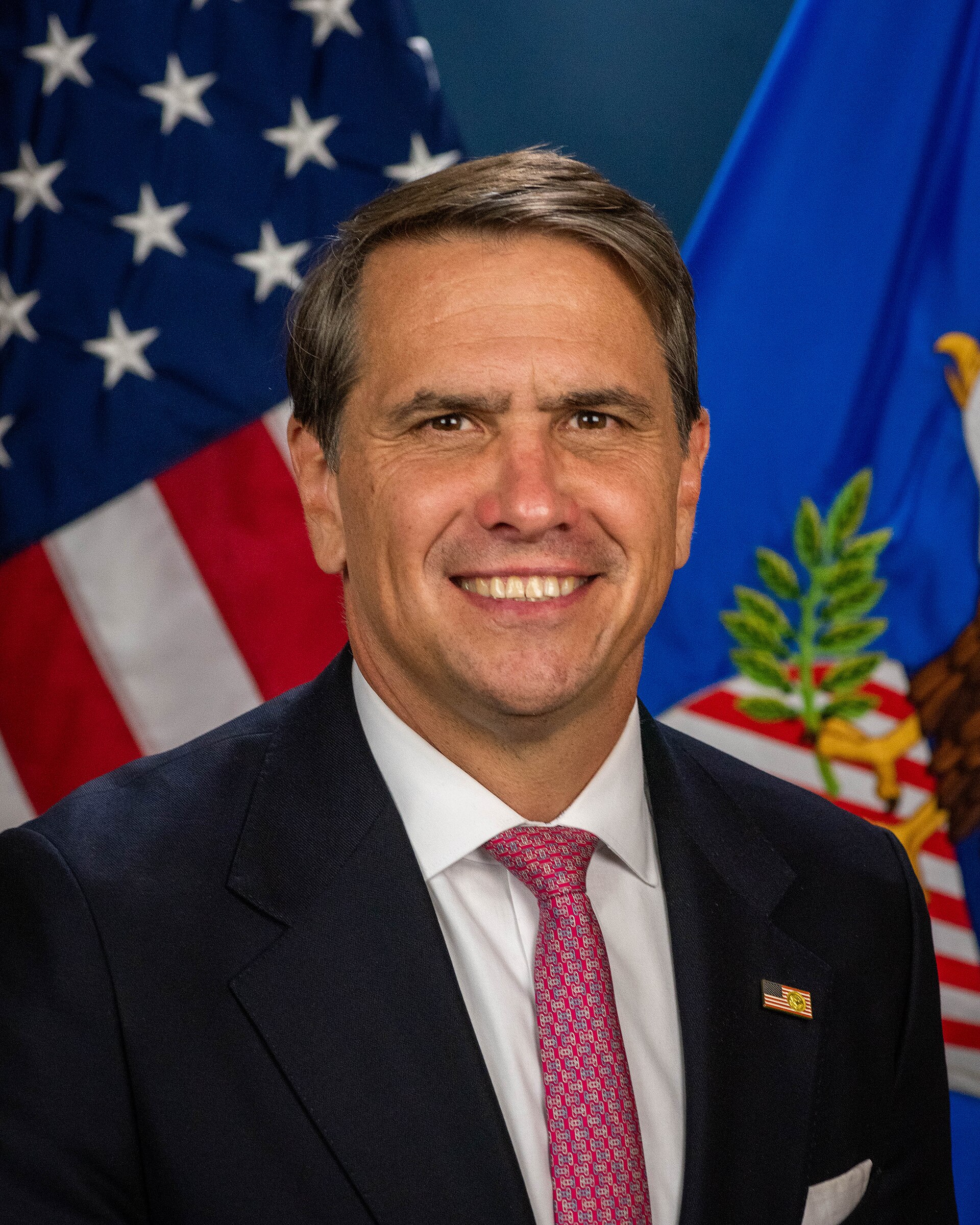
    AG Todd Blanche Official Portrait
    Image: Ryan M. Biller, via Wikimedia Commons, Public domain.

    He also said Trump’s views would factor into how he directs federal law enforcement. That is a notably different posture from an assurance that the department will make charging, investigative and enforcement decisions without White House input.

    Those two ideas can coexist in an administration only with careful boundaries. The president sets broad executive-branch priorities, appoints senior officials and is politically accountable for the administration. Yet the Justice Department has traditionally treated particular investigations and prosecutions as areas requiring professional distance from political officials.

    Blanche’s remarks leave the public without a clear description of where he would draw that line. Taking a president’s views into account could mean considering broad policy objectives, but it could also invite concerns about influence over individual law-enforcement decisions. The available reporting does not spell out which interpretation Blanche intended.

    Why DOJ independence is different

    The Justice Department is part of the executive branch, not a separate branch of government. Its leaders are appointed by the president, and an attorney general is expected to carry out lawful administration policy.

    “Independence,” in this setting, does not usually mean that the department has no connection to the president. It refers to a practical and ethical expectation that prosecutors and investigators should not use government power to reward allies, punish critics or resolve political disputes.

    That distinction is especially important because federal law enforcement has unusually direct power over people and institutions. The department can investigate alleged crimes, bring federal charges, seek warrants and supervise agencies such as the FBI. Decisions that appear politically directed can damage confidence even when officials argue they are acting within their authority.

    Supporters of a more president-centered approach may argue that voters elect a president to set policy and should expect senior appointees to follow that agenda. Critics counter that criminal enforcement cannot be treated like ordinary policy because the stakes include liberty, due process and equal treatment under the law.

    Confirmation fight adds context

    Blanche’s position has already been a point of contention on Capitol Hill. Sen. Chris Coons, a Delaware Democrat, said he pressed Blanche during his Senate Judiciary Committee confirmation hearing on whether he would stand up to Trump and act independently on behalf of the American people.

    In a statement released by Coons’s office, the senator described Blanche as Trump’s former personal attorney and said Blanche had been serving as acting attorney general while seeking confirmation to lead the department permanently. Coons framed the hearing as a test of whether Blanche could maintain sufficient separation from the president.

    The senator also made wide-ranging criticisms of the department’s recent direction, including allegations involving political enemies, personnel decisions and grants. Those are Coons’s allegations and political arguments, not findings established by the material available here.

    Still, the exchange illustrates why Blanche’s answer is drawing attention. Confirmation hearings often focus on credentials and policy views. In this case, the central dispute is about institutional restraint: whether the attorney general sees resistance to presidential pressure as part of the job.

    The question is implementation

    No report cited here identifies a particular federal case in which Blanche acted on Trump’s wishes. Nor does Blanche’s refusal to offer a blanket pledge, on its own, establish that the Justice Department will make improper decisions.

    The more consequential evidence will come from conduct: contacts between White House officials and Justice Department leaders, written policies governing those contacts, personnel decisions, public explanations for major cases and the department’s treatment of matters involving political figures.

    Past norms have often relied as much on judgment and internal practice as on a single enforceable rule. That can make them durable when officials respect them, but vulnerable when leaders openly question their value or define them narrowly.

    For career prosecutors and agents, the stakes are practical. They need clarity about whether case decisions will be judged on evidence and law, or on whether outcomes align with the preferences of politically appointed leaders.

    Public trust is the larger test

    Blanche may argue that listening to the president is consistent with serving in an executive administration. His critics will see his refusal to promise independence as confirmation that the White House could have an improper role in law-enforcement choices.

    Both sides are arguing over more than phrasing. They are debating whether the Justice Department should operate primarily as an instrument of a president’s agenda or as a law-enforcement institution with special safeguards against political direction.

    The answer will not be settled by one interview response. But Blanche’s unwillingness to pledge independence gives Congress, department employees and the public a clear standard by which to assess the decisions that follow.

    For now, the key unresolved issue is not whether a president may set broad priorities. It is whether the Justice Department’s most sensitive decisions will retain enough distance from the White House to command confidence across political lines.

  • Trump’s AI George Washington cameo boosts $400M White House ballroom push

    Trump’s AI George Washington cameo boosts $400M White House ballroom push

    A post featuring an AI-generated George Washington was more than an offbeat social-media moment. It arrived as Trump continued promoting a proposed White House ballroom that remains politically contentious.

    Donald Trump posted an unusual AI-generated video involving George Washington on August 16, 2026, thanking “George” for ideas about a proposed White House ballroom. The post, reported by MEAWW News, showed Trump and Washington inside a virtual version of the $400 million project Trump has continued promoting.

    The unexpected turn was the identity of “George”: not a current adviser or donor, but an AI-rendered version of the first president. The joke-like video also put fresh attention on a project that, according to the report, still requires approval before it can be built.

    George Washington becomes the pitchman

    Trump’s message was unusually specific. MEAWW reported that he wrote, “Thank you, George, for some of your brilliant ideas on this great Military Complex/Ballroom!”

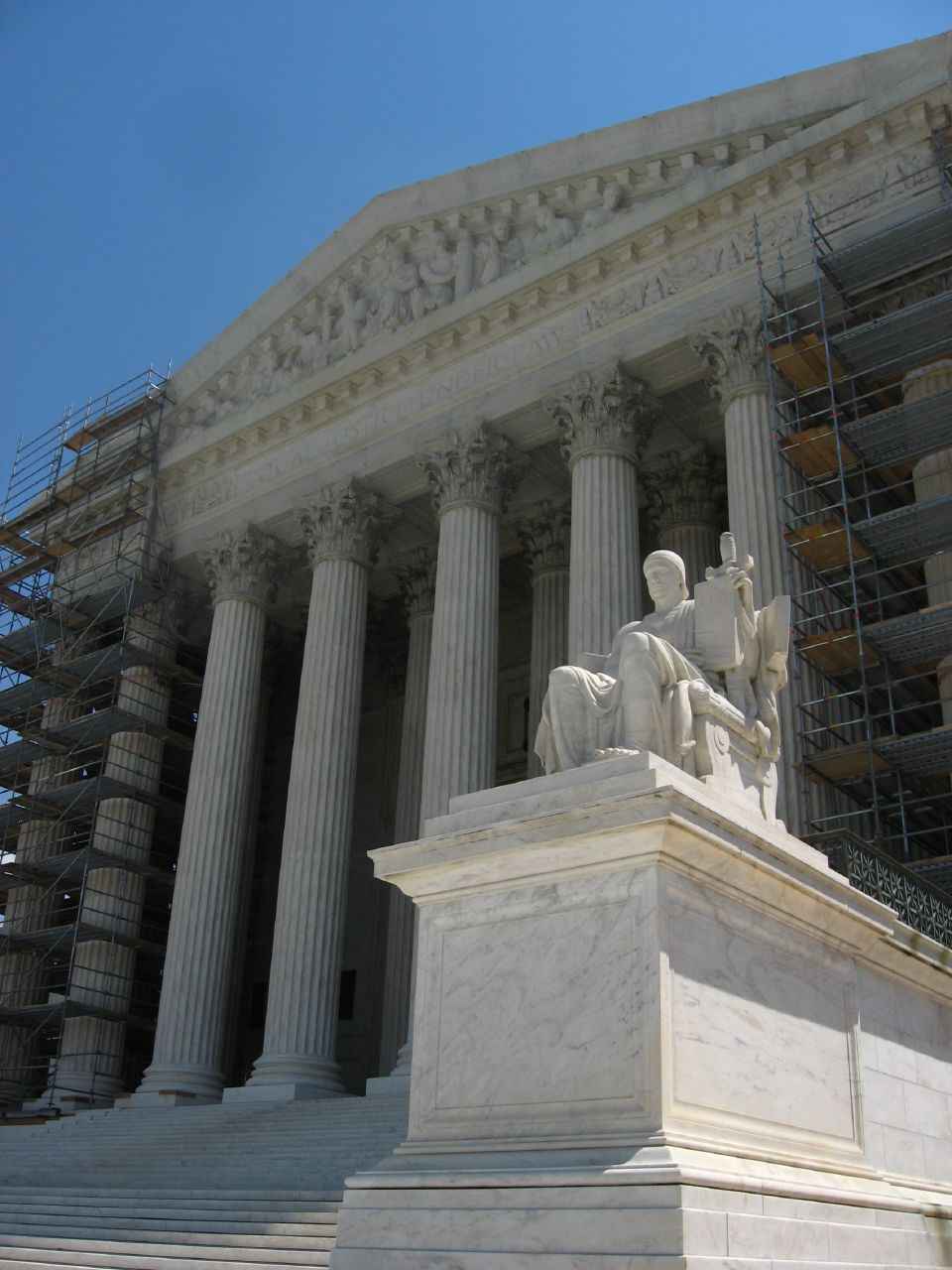
    Supreme Court Building, United States Supreme Court, Washington, D.C.
    Image: Ken Lund, via Flickr, CC BY-SA 2.0.

    In the video described by the outlet, Washington stands beside Trump as the two tour an elaborate ballroom that exists only as a digital creation. That is the central oddity of the post: a long-dead president is presented as a collaborator on a modern White House proposal.

    The premise may have been intended as humor, spectacle or both. But it also does something more practical for Trump’s message: it turns a technical construction and approval dispute into a highly shareable visual.

    The project is bigger than a post

    The proposed ballroom is described in the source report as a $400 million construction effort. MEAWW said Trump is seeking permission from the Supreme Court to move forward with it, although the report did not provide a court filing, docket number or a direct link to a government announcement.

    That distinction matters. The video depicts a finished interior, while the report says the project does not yet exist. One social-media caption quoted by the outlet referred to a “new White House ballroom” as being “under construction,” but that characterization conflicts with the article’s own account that permission remains unresolved.

    For readers trying to separate the post from the proposal, the clearest takeaway is that the video should not be treated as evidence that the ballroom has been approved or built. It is a visualization of what Trump wants to create, based on the available report.

    Why the AI format changes the story

    Political figures have long used renderings, ceremonial backdrops and historic imagery to sell big projects. AI lets that approach become more personal and less formal: instead of a blueprint or architects’ presentation, Trump can appear to receive enthusiastic advice from George Washington.

    That format blurs several lines at once. It blends satire, promotion and an imagined historical endorsement, while giving supporters an easy object to celebrate and critics an easy target for ridicule.

    Eric Daugherty of Right Line News shared the clip on X and called it “awesome,” according to MEAWW. Political commentator Brian Krassenstein took the opposite view, calling the post evidence that Trump had “completely lost [his] marbles.” MS NOW host Eugene Daniels, the report said, expressed uncertainty about what the video was meant to be.

    Those reactions reflect the larger divide around the clip. Supporters can see a playful, attention-grabbing defense of a presidential vision. Critics can see an extravagant digital promotion for a project whose public justification, approval path and ultimate cost warrant scrutiny.

    A ballroom raises public questions

    The unusual Washington cameo may dominate the conversation, but the more consequential issue is the proposed construction itself. A $400 million White House project invites questions about how the estimate was calculated, what changes it would make to the complex, who would oversee the work and what legal authority supports it.

    The source report characterizes the effort as controversial, yet it leaves several basic points unclear. It does not identify the expected funding source, the architectural plan, a construction schedule, or the precise lower-court or agency action that prompted a Supreme Court request.

    Those gaps do not prove that the proposal lacks a plan. They do mean that a polished AI tour offers far more detail about the imagined look of the ballroom than the available reporting offers about its real-world mechanics.

    For a project tied to the White House, where changes carry symbolic as well as practical weight, that imbalance is likely to keep driving debate. The building is not merely a venue; it is a public landmark and the seat of the presidency.

    The post also carried a contrast

    MEAWW noted that The Daily Beast criticized Trump’s post by contrasting the virtual ballroom tour with reported conditions aboard the USS Abraham Lincoln. The source said the criticism focused on allegations involving shortages and poor living conditions for sailors, claims that are separate from the ballroom proposal and were not independently documented in the material provided here.

    The juxtaposition explains why the video drew stronger reactions than a typical AI novelty. Critics used it to argue that Trump was emphasizing a grand personal project while more immediate concerns demanded attention. Supporters may argue that a social-media post does not prevent an administration from addressing other issues at the same time.

    Either way, the clip invited an argument about priorities, not just about technology or historical humor.

    What remains unresolved

    Trump’s post made the ballroom easy to picture: George Washington appears to approve, Trump supplies the tour and the finished room is already on screen. The actual proposal remains less clear.

    Based on the source material, the unanswered questions include whether the Supreme Court will consider or grant the requested permission, how the $400 million estimate would be funded, and whether a formal public plan will be released. The report also does not establish whether Trump or the White House offered a detailed explanation of the video’s intended message.

    For now, the George Washington appearance is the attention-grabber. The lasting significance lies in what it was promoting: a costly proposed White House ballroom that has become a political symbol before construction has begun.

  • Judge Halts NYC’s Mamdani-Backed Second-Home Tax Rollout

    Judge Halts NYC’s Mamdani-Backed Second-Home Tax Rollout

    The ruling delays collection of a proposed surcharge on certain second homes, but it does not decide whether the policy can ultimately stand. The next court filings could determine whether the dispute stays focused on the rollout or grows into a broader challenge.

    New York State Supreme Court Justice Wayne M. Ozzi temporarily halted New York City’s rollout of Mayor Zohran Mamdani’s second-home tax on Monday, putting a projected $500 million-a-year revenue stream on hold. Ozzi, sitting in Staten Island, issued an order that pauses implementation of the Mamdani-backed pied-à-terre surcharge while homeowners challenge the way New York City rolled it out.

    The order does not decide whether the NYC second-home tax is legal. It delays collection for now and leaves City Hall preparing an immediate appeal, with the future of a tax aimed at certain owners with primary residences elsewhere still unresolved.

    A pause, not a final defeat

    The immediate effect of Ozzi’s temporary restraining order is straightforward: New York City cannot proceed with its planned implementation of the surcharge for now. The city had not yet begun collecting the expected revenue.

    Residential buildings in New York City (11741424434)
    Image: rufus, via Wikimedia Commons, CC BY 2.0.

    But the ruling is narrow in an important way. The homeowners who sued New York City last week challenged how the program was being put into effect, according to The New York Times. At this stage, the judge was not asked to settle the larger question of whether the tax itself is lawful.

    A temporary restraining order is meant to preserve the status quo while disputed claims are considered. That makes this a delay rather than a cancellation of the policy.

    The available material did not fully detail how long the pause will last or its precise scope. It is also unclear how quickly an appeal could determine whether the city may resume the rollout.

    What the surcharge would cover

    New York City has described the policy as a pied-à-terre tax, or surcharge. It targets certain properties owned by people who maintain their primary residence somewhere other than the city.

    In a July announcement, the Mamdani administration said the charge could apply to one- to three-family homes, condominiums and co-ops when an owner has another primary residence. The Department of Finance had already begun mailing notices to owners who might fall within the program.

    That means the dispute is not simply about a broad increase in property taxes. It centers on a proposal designed for a defined category of second-home ownership, with eligibility turning on residency, property type and the city’s administration of those rules.

    Those details help explain the competing arguments. Supporters view the surcharge as a way to draw more revenue from people able to maintain an additional New York residence. Critics contend that decisions involving residence status, property classifications and notices require especially careful administration.

    The $500 million budget question

    City officials projected the surcharge would bring in roughly $500 million annually. That figure is central to why a temporary legal block has consequences beyond the homeowners who brought the case.

    Mamdani’s administration has tied the projected revenue to an effort to address a budget gap without cutting services or shifting more costs to working New Yorkers. Mamdani has also presented the measure as part of a broader pledge to tax wealthy New Yorkers more heavily.

    In the city’s July statement, the mayor said the money was intended to support services including parks, schools and libraries. A delayed rollout can complicate budget planning, staffing and the schedule for spending when a city expects a recurring revenue source to begin.

    Still, the $500 million is a city estimate, not money already collected. The eventual amount would depend on which properties qualify, how the tax is administered and whether the policy remains in place after the legal challenge.

    Two sharply different accounts

    Randy Mastro, a lawyer representing the plaintiffs, described the ruling as a vindication for homeowners whom he said had faced an improper process. That position reflects the lawsuit’s focus on the city’s rollout.

    City Hall rejects that characterization. Matthew Rauschenbach, a spokesperson for the mayor’s office, said the city was confident both in the surcharge and in its ability to administer it fairly and effectively.

    The disagreement places two issues side by side. The homeowners’ argument emphasizes process and protections for property owners. The administration’s argument emphasizes a more progressive revenue system and the city’s authority to carry out the policy.

    Those questions do not necessarily lead to the same legal outcome. A court could identify a problem with the way the program was implemented without invalidating the underlying tax. The litigation could also, over time, raise broader questions about the policy itself. The current order resolves neither.

    Appeal will shape the next step

    New York City said its Law Department would appeal immediately. Rauschenbach said the city believed an appeal would stay the order, though that depends on how the appellate process unfolds.

    For second-home property owners who received Department of Finance notices, the order brings uncertainty rather than a permanent exemption. The city’s earlier guidance, eligibility tools and documentation process could again become relevant if the rollout is permitted to restart.

    For the city, the case tests whether a major policy can move from announcement to collection on the intended timetable. For the plaintiffs, it offers an early opportunity to press their objections to the procedure used to launch it.

    The most accurate reading for now is a limited one: Mamdani’s proposed second-home surcharge has been paused, not struck down. The coming filings will show whether the fight remains about implementation or becomes a wider legal test of New York City’s tax policy.