Blog

  • Trump’s Ukraine impeachment heads to Senate with abuse of power at center

    Trump’s Ukraine impeachment heads to Senate with abuse of power at center

    The coming Senate trial is not only about Trump’s conduct toward Ukraine. It will test how Congress defines presidential misconduct serious enough to justify removal.

    Donald Trump’s Ukraine impeachment is nearing a Senate trial, and the Democratic-led U.S. House of Representatives is expected to send formal impeachment charges to the Senate as early as next week. The central allegation is abuse of power involving Ukraine: Democrats say Trump used the presidency to pressure Ukraine for political investigations, then resisted Congress’s inquiry.

    That transfer matters because it moves the case from House accusation to Senate judgment. Senators will not just weigh a dispute over Ukraine. They will decide whether the alleged conduct meets the constitutional standard for removing a president.

    A Senate test of power

    The House case places abuse of power at the center of Trump’s next impeachment fight. Democrats argue that the president used official authority connected to Ukraine in service of personal political interests rather than the national interest.

    A House report hosted on the official congressional document repository described the inquiry as focused on Trump’s alleged corrupt solicitation of the Government of Ukraine. The importance of that formulation is that Democrats framed the conduct as more than a policy disagreement or diplomatic dispute.

    The accusation is broader than whether a particular criminal statute was violated. The House theory is that a president can commit an impeachable offense by misusing lawful powers for improper personal gain.

    Reuters reported that the Democratic-led House was expected to send the formal charges to the Senate as early as next week. Once that happens, the rules, timing and pressure points change.

    Why Ukraine drives the case

    Ukraine is central because the House inquiry examined whether Trump sought investigations involving political rivals while Ukraine depended on U.S. support and attention. Democrats treated that alleged pressure campaign as the key evidence of abuse.

    The official House materials tied the inquiry to Trump’s dealings with the Ukrainian government. The underlying claim is that presidential control over diplomacy and security assistance cannot be used as leverage for domestic political advantage.

    Trump denied wrongdoing. Republicans rejected the Democratic framing, arguing that the impeachment effort stretched the Constitution beyond its proper limits and relied on disputed motives, policy disagreements and political hostility.

    That disagreement is why the charge carries weight. The Senate will be asked to decide whether the alleged use of foreign-policy power crossed a constitutional line, not simply whether lawmakers disapproved of Trump’s conduct.

    Two articles, one larger fight

    The House case rests on two linked accusations. One focuses on the alleged misuse of presidential power abroad. The other focuses on resistance to investigation at home.

    • Abuse of power: Democrats alleged Trump used the presidency to pressure Ukraine for investigations that could help him politically.
    • Obstruction of Congress: Democrats alleged Trump impeded the House inquiry by resisting demands for testimony and documents.

    The abuse-of-power article is the core constitutional claim. It asks senators to judge the president’s purpose and whether his use of official authority was serious enough to justify conviction and removal.

    The obstruction article raises a different institutional question: whether a president can broadly refuse cooperation with an impeachment inquiry. Congress.gov’s record of the December 2019 House Judiciary proceedings shows Democrats presenting obstruction as part of the case, while Republicans challenged both the process and the strength of the evidence.

    The Senate changes the battlefield

    When impeachment articles move to the Senate, the House no longer controls the case in the same way. House managers prosecute the articles, but the Senate sets the trial framework and senators decide the outcome.

    An impeachment trial is not a courtroom proceeding in the ordinary sense. It is a constitutional process with legal features, political consequences and a high bar for conviction.

    That means evidence will matter, but it will not be the only force shaping the result. Party alignments, public opinion and senators’ views of executive authority will all influence how the allegations are received.

    For Trump, the Senate phase is a different arena. The House had already approved the charges, but removal requires a far broader coalition in the Senate than a simple House majority.

    Competing constitutional warnings

    Democrats’ argument carries a warning about presidential power. If a president can use foreign-policy tools to seek political help, they argue, the presidency gains a dangerous shield against accountability.

    Under that view, impeachment exists for abuses that threaten elections, national security or Congress’s ability to check the executive branch. The Ukraine allegation is presented as exactly the kind of misuse of office the impeachment power was designed to address.

    Republicans offer a different warning. They argue that if Congress can impeach a president over contested intent and disputed policy conduct, impeachment risks becoming a partisan weapon.

    Under that view, elections, not removal, should decide political grievances unless there is clearer proof of a grave offense. Trump’s allies also argue the case is politically driven and constitutionally weak.

    What remains unsettled

    The immediate next step is procedural but consequential: transmission of the articles to the Senate. Until the trial rules are settled, major questions remain open, including how evidence will be presented, whether witnesses will be called and how long the proceedings will last.

    The House theory is clear: abuse of power is the leading charge, and obstruction of Congress reinforces the claim that Trump resisted accountability. The defense is also clear: Trump and his allies reject the case as politically motivated and insufficient for removal.

    The Senate’s decision will determine the immediate fate of the charges. But the stakes extend beyond one proceeding. The trial will help define how far Congress can go in treating a president’s alleged use of foreign-policy authority for personal political benefit as a removable offense.

    That is why the abuse-of-power charge matters now. It is not simply a label attached to a partisan fight. It is the constitutional theory at the center of an impeachment case moving from the U.S. House of Representatives to the Senate.

  • Capital One Says AML Review Drove 300 Trump-Affiliated Account Closures

    Capital One Says AML Review Drove 300 Trump-Affiliated Account Closures

    The dispute puts a private bank’s compliance process against a broader conservative claim that major financial institutions are cutting off politically disfavored customers.

    Capital One closed Trump Organization accounts after an anti-money laundering review, saying in a court filing that its AML team flagged activity with characteristics of money laundering before ending more than 300 Trump-affiliated accounts in 2021. The disclosure matters because President Donald Trump and the Trump Organization are fighting the closures in a lawsuit, arguing the bank cut ties for political reasons — a claim Capital One denies.

    The filing, reported by AP and Reuters, moves the dispute from a broad debate over “debanking” into the narrower and more technical world of bank compliance: what a bank saw, what it was required to do, and how much it must reveal in court.

    The bank’s stated reason

    Capital One says the account closures were not a political statement. In the court filing, the bank said the decision followed “months of analysis” and a review by its anti-money-laundering team under bank policies and regulatory guidance.

    Capital One World Headquarters
    Image: Lluck002, via Wikimedia Commons, CC BY-SA 4.0.

    According to AP, the bank said it flagged financial activity that had characteristics of money laundering. That wording is important. It does not mean Capital One publicly proved money laundering occurred. It means the bank says its internal risk review identified activity that raised compliance concerns.

    Capital One also said it did not publicize the termination decision or the confidential process behind it. The bank said it gave the plaintiffs several months, along with extensions, to find new banking services, and said they did so.

    Trump’s political-bias claim

    Trump’s side frames the same set of events very differently. A spokesperson for Trump’s legal team told AP that Capital One and other major banks “de-banked President Trump, his family, and his businesses for blatantly political reasons.”

    The lawsuit alleges the closures were unlawful and politically motivated after the Jan. 6 attack on the U.S. Capitol. Capital One wants the case dismissed and says the newer allegations are without merit.

    That split is the core of the case: Capital One says this was risk management. Trump’s side says it was discrimination by a major financial institution against a political figure and his businesses.

    Why AML language matters

    Anti-money-laundering reviews are a routine but serious part of modern banking. Banks are expected to monitor accounts for activity that may create legal, regulatory or financial risk. When internal systems or compliance teams flag concerns, banks can investigate, restrict activity, file reports with regulators or end relationships.

    Those decisions can be hard to challenge from the outside because the most sensitive details are often confidential. Banks generally do not broadcast why a customer was exited, and compliance filings can involve private customer information or reporting obligations.

    That secrecy creates a tension in this case. Capital One says confidentiality and compliance explain the decision-making. Trump’s side says the bank’s stated rationale is a cover for politics. The public court record may not yet show enough to settle that dispute for people watching from outside the litigation.

    The wider debanking fight

    The Capital One lawsuit lands inside a larger political fight over “debanking,” a term used when financial institutions close accounts or deny services because they believe a customer creates unacceptable risk. Conservatives have long argued that banks and regulators have used risk language to pressure disfavored industries or political groups.

    Those claims grew after Operation Choke Point, an Obama-era initiative in which regulators pushed banks to scrutinize relationships with certain industries, including firearms, tobacco and payday lending. More recently, parts of the cryptocurrency industry have also argued that they were unfairly cut off from banking access during the Biden administration.

    Trump has made the issue part of his governing agenda. AP reported that he signed an August 2025 executive order titled “Guaranteeing Fair Banking for All Americans,” directing federal banking regulators to end examinations of banks based on whom they do business with. His administration has also subpoenaed records from major banks as part of an inquiry into alleged debanking.

    Other banks are in view

    Capital One is not the only bank named in Trump’s broader debanking claims. Trump has also sued JPMorgan Chase, seeking $5 billion in damages, according to AP. JPMorgan has denied closing accounts for political reasons.

    The bank has said it can close accounts “with or without cause” and can also end relationships involving legal or regulatory risk. That position mirrors a point banks often make in disputes like this: they are private businesses with risk obligations, not public utilities required to serve every customer indefinitely.

    For customers, especially prominent ones, that can sound like unchecked power. For banks, the counterargument is that regulators punish them if they ignore risky account activity. The hard question is where legitimate risk control ends and viewpoint-based exclusion begins.

    What remains unsettled

    The public dispute still leaves several important questions unanswered. The filing describes flagged activity with characteristics of money laundering, but the available reporting does not lay out a full public account of the transactions, internal thresholds or specific risk findings that drove the decision.

    It is also not yet clear how much of Capital One’s internal review will become visible in court. If the case moves forward, Trump’s lawyers may seek evidence that the bank’s stated compliance rationale was inconsistent, selective or influenced by political pressure. Capital One will likely argue that its records show a standard risk-based process.

    The court does not need to decide the national debanking debate all at once. It may first decide whether the lawsuit’s allegations are legally strong enough to proceed. But the facts that emerge could shape how future claims against banks are argued.

    The immediate takeaway

    For now, the verified development is narrower than the political fight around it: Capital One says it closed more than 300 Trump-affiliated accounts in 2021 after an anti-money-laundering review, and Trump’s side says the closures were political debanking.

    Neither side’s framing fully resolves the matter. A bank invoking AML concerns is not the same as proving criminal conduct. A customer alleging political bias is not the same as proving the bank acted for political reasons.

    That is why the case has drawn attention beyond Trump and Capital One. It sits at the intersection of banking access, regulatory pressure, political identity and the opaque systems banks use to decide who is too risky to keep.

  • Trump’s Air Force One WWII Remark Lacks the Evidence Health Claims Need

    Trump’s Air Force One WWII Remark Lacks the Evidence Health Claims Need

    The verified story is narrower than the reaction: a contested historical reference, an attention-grabbing health frame, and no full wording or medical evidence in the material reviewed.

    The central fact is also the central limitation. Donald Trump made a disputed World War II reference during an interview on Air Force One, and an MSN-distributed Irish Star item described the moment as a “crazy” WWII claim that sparked “health fears.” But the available material reviewed here does not include the full wording of Trump’s remark, a complete transcript of the exchange, a formal medical assessment or proof of cognitive decline.

    That leaves room for political scrutiny, not a medical conclusion.

    Start with what is actually established

    The documented issue is a contested World War II reference attributed to Trump during an Air Force One interview. Critics treated the reference as wrong or incoherent, and the coverage quickly connected the moment to questions about health and fitness.

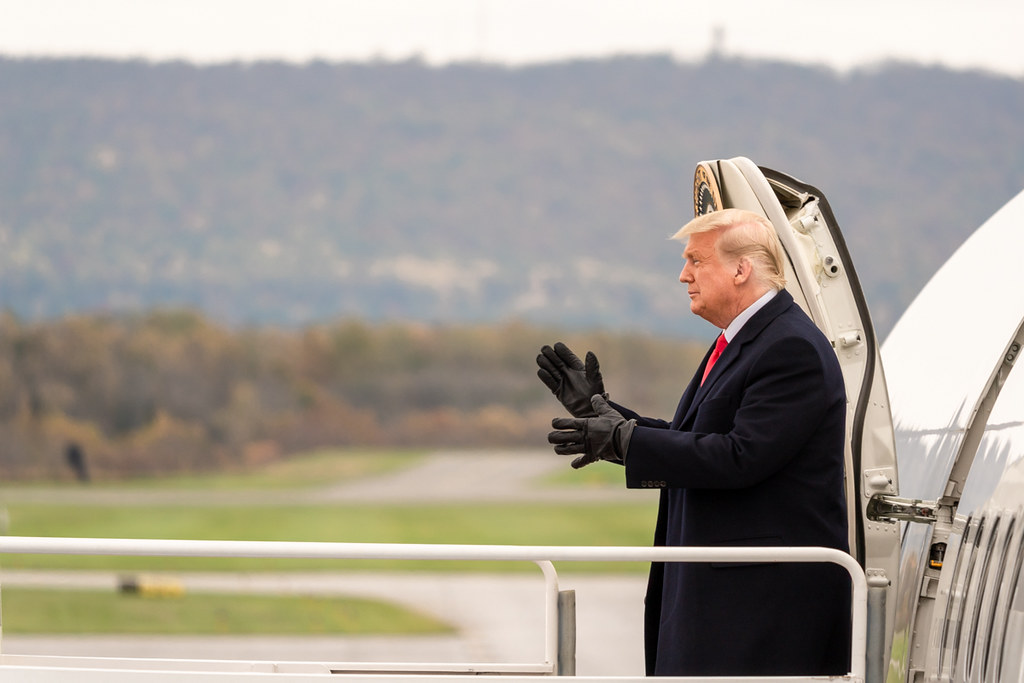
    Air Force One VC 32A HGR MD2
    Image: Acroterion, via Wikimedia Commons, CC BY-SA 4.0.

    That is a narrower record than some reaction suggests. The extracted source material does not show the full exchange, and it does not show whether Trump or his team later supplied a correction, clarification or broader explanation.

    Those absences matter because different kinds of mistakes carry different meanings. A misstated date, a clumsy comparison, an inaccurate historical claim and a confused narrative are not identical. Without the complete wording, readers cannot fairly sort the remark into one category.

    The health frame outran the record

    The phrase “health fears” changed the stakes of the story. It moved the discussion beyond fact-checking a historical reference and into speculation about Trump’s condition.

    That leap requires caution. Public officials can be pressed on accuracy, memory, judgment and command of facts. Those are ordinary standards for elected leadership, especially for a president speaking in a prominent setting.

    But a disputed sentence, by itself, is not a diagnosis. The available material does not establish illness, cognitive decline or any other medical conclusion.

    The responsible distinction is simple: the World War II reference may deserve scrutiny if it was inaccurate, but the claim that it proves something about Trump’s health has not been established here.

    Air Force One added symbolic weight

    The location helped the episode travel. Air Force One is one of the most recognizable settings in presidential politics, so an interview there carries more symbolic force than a casual aside in a less formal environment.

    According to the National Museum of the United States Air Force, “Air Force One” is the call sign used when the president is aboard an Air Force aircraft. The designation was established in 1953 to prevent confusion with other planes in flight.

    The museum’s history of presidential aircraft also frames Air Force One missions as part of major chapters in U.S. political and diplomatic history. That background gives comments made aboard the aircraft a sense of presidential command and historical importance.

    In that setting, even a stray or awkward historical reference can be interpreted as a test of control. That helps explain why the reaction escalated, but it does not supply missing evidence.

    Accountability and speculation are different

    There is no need to dismiss the episode to reject overstatement. A president’s public words can be examined closely. If a historical claim is inaccurate, it can be challenged. If a comment shows poor judgment, that can be debated as a political matter.

    Those questions are separate from medical claims. Health speculation can harden into assumed fact when a viral description is repeated often enough, especially in a political environment where every verbal slip is treated as evidence in a larger argument about age, competence and truthfulness.

    Supporters and critics may read the same moment differently. Critics may see a disputed World War II reference as part of a broader concern about fitness. Supporters may see a routine misstatement amplified by hostile framing or incomplete context. Neither interpretation, standing alone, answers the medical question.

    The evidence standard should not change because the speaker is polarizing.

    The cautious takeaway

    The safest reading is also the least dramatic one. Trump’s Air Force One remark can be evaluated as a factual and political matter while still rejecting unsupported medical conclusions.

    The useful categories are: what Trump actually said, whether the World War II reference was accurate, whether the judgment behind it was sound, and whether any health claim is supported by evidence. The current material helps with the reaction to the remark, but it does not fully answer the first category or support the last.

    Until the complete exchange is available, the missing transcript remains important. It limits what can responsibly be said about the remark and prevents a contested historical reference from being treated as proof of a medical condition.

    In presidential politics, scrutiny is necessary. So is restraint when the available record stops short of the most serious claims being attached to it.

  • Beshear Says August 3 Won’t Settle a McConnell Vacancy Fight

    Beshear Says August 3 Won’t Settle a McConnell Vacancy Fight

    The Kentucky governor is recasting the McConnell fight around vacancy rules, Senate math and Republican pressure rather than a single calendar deadline.

    Kentucky Gov. Andy Beshear is trying to move the dispute over Sen. Mitch McConnell away from one date on the calendar. According to The New Republic, Beshear said Monday that an August 3 deadline connected to a possible special election has “no legal impact” on what he could do if McConnell’s Senate seat becomes vacant.

    That does not mean Beshear can remove McConnell or install a successor. It means the governor is framing the issue differently: not as a simple deadline fight, but as a debate over Kentucky’s vacancy law, public transparency and the practical effect of a missing Republican vote in Washington.

    The date Beshear is downplaying

    The August 3 question matters because Kentucky’s rules for filling a U.S. Senate vacancy are politically sensitive and legally complex. Beshear’s latest position, as reported by The New Republic, is that the date does not control his options if a vacancy occurs.

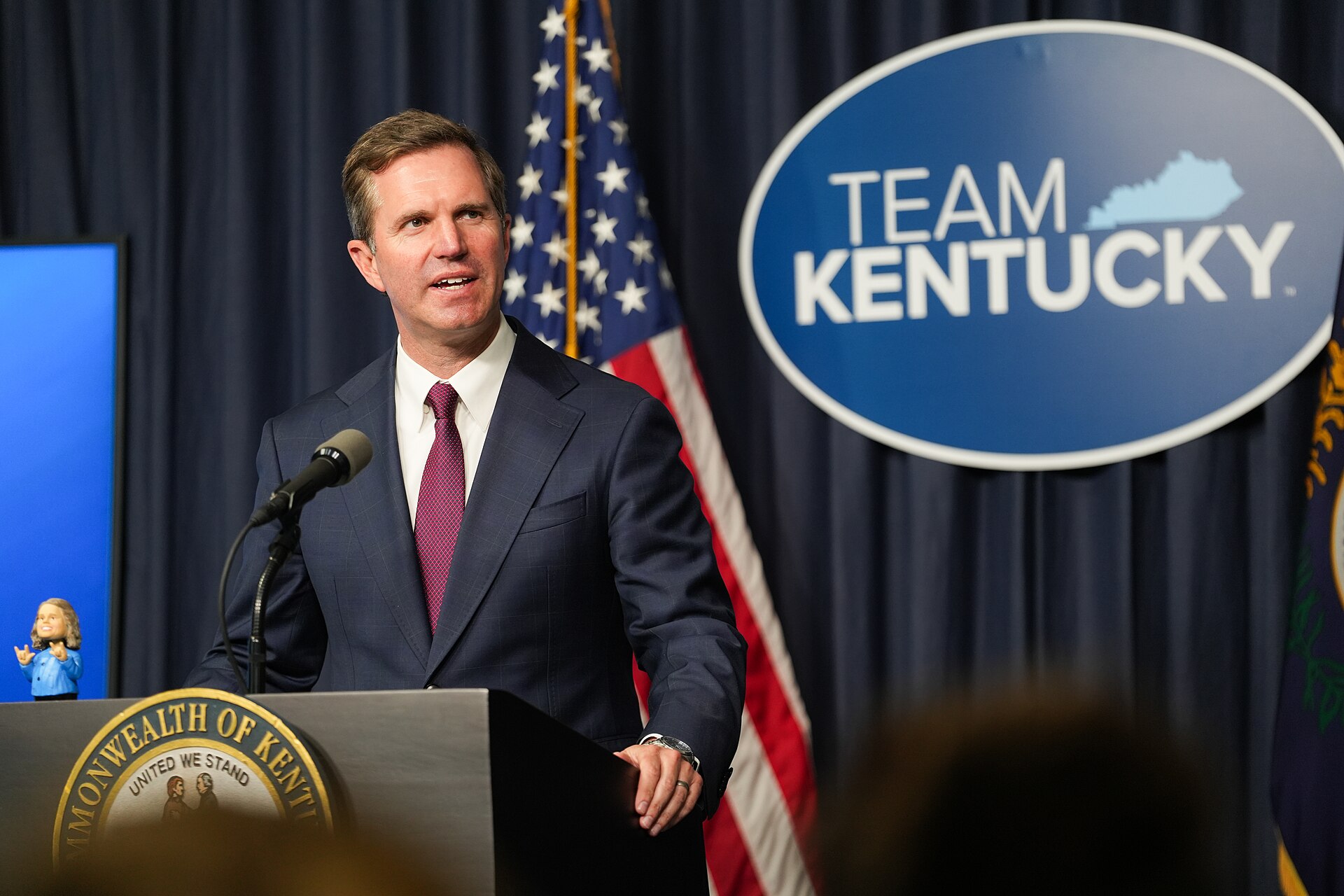
    Andy Beshear in April 2026
    Image: Governor Andy Beshear, via Wikimedia Commons, PDM-owner.

    That is a narrower claim than saying he has power over McConnell’s seat. The same report noted that Beshear never had authority to force McConnell out of office.

    Beshear had previously urged McConnell to explain his absence from Congress or step down early enough for Kentucky voters to choose a replacement. His Monday message keeps pressure on McConnell while avoiding the idea that one deadline decides the entire vacancy process.

    What the vacancy law does and does not settle

    The legal backdrop is unsettled. The New Republic reported that, under Section 152 of the Kentucky Constitution, McConnell would have needed to resign at least three months before an election for a special election to be called on that schedule.

    The report also said Kentucky’s House Bill 622 removed the governor’s ability to appoint interim replacements for vacant U.S. Senate seats. But that law remains legally untested, leaving room for dispute if an actual vacancy arises.

    For now, the important point is limitation. Beshear is not announcing a replacement plan, and he is not claiming unilateral control over McConnell’s office. He is arguing that the legal calendar does not end the political argument.

    The Senate math is Beshear’s pressure point

    Beshear’s sharpest message is about votes, not appointments. In a statement on X, he wrote that there is “one less vote” for the SAVE Act, “Trump’s war with Iran,” or a potential Supreme Court replacement.

    That statement tied McConnell’s absence to Republican priorities associated with Trump without proving that any specific vote has already failed because McConnell was away. The claim is political pressure built around Senate arithmetic: one absent senator can matter when margins are close.

    By making that argument, Beshear is asking Republicans to account for the consequences of McConnell’s absence. If there is no replacement and no vote from McConnell, the governor’s point is that the GOP may be carrying the cost of uncertainty itself.

    McConnell’s absence remains the center of the fight

    Beshear has repeatedly pressed McConnell to justify being away from Congress or step aside in time for voters to choose someone else. That criticism has become the main vehicle for the governor’s argument.

    The New Republic described Beshear as backing away from threats to replace McConnell while saying the senator’s extended absence could hurt Republicans all the same. That is a different kind of leverage: less about legal control and more about political accountability.

    Republicans can argue that Beshear is using a senator’s absence for partisan advantage. Beshear’s counter is that Kentucky’s representation and Senate votes are public matters, especially when major national issues could come before the chamber.

    Fancy Farm added a Kentucky contrast

    The dispute also surfaced around Kentucky’s annual Fancy Farm picnic. According to The New Republic, Beshear came under Republican criticism after missing the event over the weekend.

    Beshear used that criticism to point back at McConnell’s absence, casting the GOP reaction as misplaced. The contrast helped turn a procedural question about vacancy timing into a broader argument over what Republicans choose to scrutinize.

    That is why the story is bigger than a technical reading of Kentucky election law. Beshear is trying to keep attention on McConnell’s public absence, while Republicans must decide whether to answer the criticism or treat it as a partisan attack.

    What is still unresolved

    The next question is not whether August 3 automatically settles the matter. Beshear says it does not, and the reported legal landscape suggests any real vacancy could raise new questions because House Bill 622 has not been tested in court.

    It also remains unclear whether McConnell will respond directly to Beshear’s latest criticism or whether Senate Republicans will offer more detail about how they are handling his absence from Congress.

    For now, Beshear’s argument is political rather than operational. He is not replacing McConnell. He is trying to make Republicans own the consequences of a missing vote while Kentucky’s vacancy rules remain uncertain.

  • Marjorie Taylor Greene Turns Epstein Files Fight Into Trump Loyalty Test

    Marjorie Taylor Greene Turns Epstein Files Fight Into Trump Loyalty Test

    Greene’s challenge is striking because it comes from inside Trump’s own movement. The unresolved question is whether her threat becomes an organized fight or remains a high-profile rupture.

    Marjorie Taylor Greene is escalating her public break with Donald Trump, and the dispute centers on Trump’s handling of the Epstein files. Greene is teasing a major next step in her fight with Trump after saying “He’s betrayed us all” and calling Trump traitorous on June 11, 2026.

    The fight matters now because it has moved from private tension inside the House, the Republican Party and MAGA supporters into an open confrontation over loyalty, transparency and Trump’s control of his coalition.

    A MAGA demand turns inward

    Greene’s argument is not coming from the usual anti-Trump lane. That is what makes it politically uncomfortable for Republicans.

    For years, Greene was one of Trump’s most visible defenders and a prominent voice in the America First wing of the GOP. Now she is aiming one of that movement’s own transparency demands at Trump himself.

    The issue is the Epstein files, which have become a flashpoint because they combine secrecy, elite power and public distrust. For many voters drawn to anti-establishment politics, the demand is direct: release what the government has.

    Greene’s charge is that Trump and others standing in the way of broader disclosure are betraying a promise to challenge powerful interests. Trump allies are likely to see the same move differently: as a former loyalist using a sensitive issue to damage the president.

    The CNN exchange sharpened it

    In a CNN appearance with Kaitlan Collins, according to USA Today, Greene said people refusing to release the Epstein files were “traitors to the American people.”

    When Collins pressed whether she meant Trump himself, Greene replied, “I’m saying exactly that.”

    Greene also claimed Trump told her by phone that “his friends would get hurt” if the files were released. That allegation has not been independently established in the reporting provided here, and Trump’s side of that specific exchange is not included in the available source material.

    Trump has answered the wider feud with his own attack, using the nickname “Marjorie Traitor Greene,” USA Today reported. The exchange shows the dispute has crossed from policy disagreement into a public loyalty battle.

    Why the files split Republicans

    The Epstein files issue does not fit neatly into a normal partisan box. Greene and Rep. Thomas Massie were among the Republicans pressing for the files to be released, according to USA Today. Rep. Ro Khanna, a Democrat, was also part of the bipartisan push.

    That bipartisan alignment matters because it makes the fight harder to cast as only a Democratic attack on Trump. It also puts Republicans in a bind if their own voters want disclosure while party leaders want to avoid a fight with Trump.

    The rift reportedly began last fall, when Greene started criticizing the administration’s handling of the files. USA Today noted that then-Attorney General Pam Bondi did not meet the demands from Greene and Massie for broader release.

    From there, Greene’s criticism hardened into a larger accusation: that the party’s loyalty demands are overriding the transparency standard MAGA politics helped popularize.

    Massie’s defeat raised the stakes

    Greene’s anger is also tied to what happened to Thomas Massie. USA Today reported that Massie, a close Greene ally, was defeated in his primary after Trump backed his opponent and attacked him on social media.

    For Greene, Massie’s defeat appears to have become proof that dissent inside the Trump-led GOP carries a cost. She called the turn against Massie “unforgivable,” according to USA Today, and connected it to her conclusion that the Republican Party was no longer something she could support.

    That is the deeper political threat in Greene’s framing. She is not presenting herself as someone who left the movement’s ideas behind. She is arguing that she remains “America First” while rejecting the “team party jerseys,” as USA Today reported from her CNN appearance.

    To Trump loyalists, that may sound like an attempt to rebrand a political breakup. To Greene’s supporters, it may sound like an insider saying the movement failed its own test.

    The next step remains vague

    Greene’s tease of a “major next step” is the most important unresolved part of the story. The available reporting does not establish whether she is preparing a campaign, a political organization, a media project, a legal push or a broader anti-GOP effort.

    Those possibilities would have very different consequences. A campaign would be the most dramatic move, but also the hardest. A pressure effort centered on the Epstein files would be more directly connected to the dispute that started the break.

    A media-driven strategy could keep the conflict alive without requiring party infrastructure. Greene could also be using the threat itself as leverage, keeping attention on Trump’s handling of the files while positioning herself as an independent America First voice.

    For now, the safest reading is that Greene’s escalation is rhetorical rather than structural. Her words are clear. The machinery behind them has not been shown.

    Trump still holds the terrain

    Even with Greene’s public break, Trump remains the dominant figure in Republican politics. That dominance is part of why her criticism is newsworthy, but it also limits how many elected Republicans are likely to join her openly.

    Greene has said Republicans she helped elect did not publicly defend her when Trump turned on her, according to USA Today. Whether that looks like cowardice, discipline or political survival depends on where voters stand in the Trump era.

    The Epstein files complicate the usual loyalty test. A voter can support Trump and still want every document released. A lawmaker can support disclosure and still fear being seen as helping Trump’s enemies.

    That is the pressure point Greene is trying to use. She is arguing that transparency should outrank loyalty to Trump. Trump’s allies are likely to argue that she is harming the movement she once claimed to defend.

    The real test is endurance

    Greene has already done something unusual: she has taken Trump-era language about betrayal, the swamp and protecting the powerful and aimed it at Trump.

    But the durability of the fight depends on what follows. If Greene produces documents, organizes a coalition, launches a formal campaign or helps sustain bipartisan pressure on the Epstein files, the dispute could become more than a personal rupture.

    If the “major next step” stays undefined, the story may settle into a familiar pattern: a high-profile Republican break, an angry Trump response, a burst of attention and then a return to party gravity.

    For now, Greene’s break has exposed a live question inside Trump’s coalition: whether the demand for disclosure can survive when it points back at the movement’s leader.

  • Kennedy Undercuts Trump’s Reflecting Pool Claim as DOJ Points to Contractors

    Kennedy Undercuts Trump’s Reflecting Pool Claim as DOJ Points to Contractors

    The Louisiana Republican’s unusually blunt comment put fresh attention on a case prosecutors now say was built on shaky assumptions. The dispute is now less about one alleged act of vandalism than about evidence, politics and who gets blamed for damage at a national landmark.

    A GOP senator is reacting to Trump’s claims that the Lincoln Memorial Reflecting Pool was vandalized: Sen. John Kennedy said Sunday he does not know whether Donald Trump really believes it, is using political messaging, or is thinking aloud. The Justice Department moved Friday to drop its criminal case against David Hearn over damage at the Washington, D.C., landmark, saying evidence pointed instead to contractor problems—not a clear vandalism case.

    Kennedy’s jab was pointed because it came from inside the GOP: Trump, he said, “exists loudly” and “grows anxious when he has an unexpressed thought.” The line landed amid a broader fight over what actually damaged the Reflecting Pool and whether prosecutors moved too quickly.

    Kennedy breaks the GOP rhythm

    Kennedy, a Louisiana Republican and member of the Senate Judiciary Committee, did not directly accuse Trump of lying. His answer on NBC News’s “Meet the Press” was more careful—and, in some ways, more cutting.

    Reflecting Pool from the Lincoln Memorial
    Image: James "Tre" Hayes, via Flickr, CC BY 2.0.

    Asked about Trump’s insistence that vandals caused the damage, Kennedy said he was unsure whether the president believed the claim, was sending a political message or was simply talking through a thought in public. That distinction matters because it separates a factual claim from a familiar Trump pattern: stating a conclusion loudly before the evidentiary record is settled.

    For a Republican senator, the remark was notable. Kennedy has long mixed support for Trump’s agenda with occasional barbed language, and this was not a sweeping denunciation. Still, it undercut the certainty of Trump’s version at the exact moment the government’s own lawyers were retreating from the prosecution.

    DOJ now points to contractors

    The Justice Department’s reversal is the core of the dispute. Prosecutors moved Friday to dismiss the criminal case against Hearn, a three-time Olympic canoeist who had pleaded not guilty to felony destruction of property over the Reflecting Pool damage.

    In a 20-page filing, prosecutors said newly reviewed information pointed to a “rushed and botched installation” by Atlantic Industrial Coatings, which had worked this spring and summer to repaint the bottom of the pool. The filing described delays tied to rainy and windy weather, repeated testing failures involving expansion-joint sealing and problems getting sealing product to the site.

    The government also criticized an Interior Department report as “barebones,” a significant admission in a case involving a heavily visited federal landmark. In plain terms, prosecutors said the damage may have been tied to a troubled repair project rather than the criminal act alleged against Hearn.

    That does not automatically resolve every question about what happened at the Reflecting Pool. It does, however, make the original vandalism case much harder to defend in court.

    Trump rejects Pirro’s call

    Trump responded by publicly disagreeing with the Justice Department’s move. On Truth Social, he said he disagreed “100%” with the decision by U.S. Attorney Jeanine Pirro, who oversees Washington, D.C., and whom Trump appointed to the post in May 2025.

    Trump wrote that, to him, it was a “pure case of VANDALISM,” while acknowledging there “may have been some contractor difficulty.” His argument was that vandals caused the major damage, even if repair issues also played a role.

    That is the live tension: Trump is advancing a vandalism narrative; prosecutors now say the available record points elsewhere. Kennedy’s response did not settle the facts, but it signaled that even some Republicans are not ready to treat Trump’s claim as proven simply because he said it forcefully.

    Why the Hearn case buckled

    Criminal cases depend on more than suspicion, especially when prosecutors must prove who caused specific damage and how. Kennedy, who is a lawyer, described the case as a “multiple vehicle pileup” and said Pirro was “smart” to pull it back.

    His criticism cut two ways. He questioned why the case was filed without what he considered a full investigation, but he also credited Pirro for moving to abandon it once the weaknesses became clear.

    The case is not technically over until Associate Judge Todd Edelman of D.C. Superior Court rules on the government’s request to dismiss it. Judges usually give prosecutors broad room to drop charges, but the final procedural step still belongs to the court.

    For Hearn, the Justice Department’s move is a major development. For the government, it is an uncomfortable public correction in a case that had already attracted national political attention.

    A monument dispute turns political

    The Lincoln Memorial Reflecting Pool is not just another damaged public site. It sits on the National Mall, carries enormous symbolic weight and is one of the most photographed places in Washington. That makes any claim about vandalism instantly combustible.

    Trump’s framing fits a broader political theme he has used often: public disorder, weak accountability and the need for tougher enforcement. If the damage was vandalism, the case can be cast as part of that story. If the damage came largely from rushed maintenance work, the political meaning changes sharply.

    That is why the contractor issue matters. A botched installation suggests a government management and oversight problem. A vandalism case suggests criminal misconduct. The two explanations lead to very different villains, and very different remedies.

    Kennedy’s comment resonated because it exposed that divide without pretending to know Trump’s inner thoughts. He said he did not know whether Trump believed his own claim. But he also made clear that Trump’s public certainty was not the same thing as proof.

    What remains unsettled

    Several pieces of the story are still unresolved. The court has to act on the dismissal request. Officials may still face questions about how the Reflecting Pool work was planned, supervised and inspected. The public record may not yet show the full chain of decisions that led to the damage.

    • The legal question: whether Judge Edelman formally dismisses the case against Hearn.
    • The factual question: how much of the damage can be tied to contractor work, weather, materials or any other cause.
    • The political question: whether Trump continues to press the vandalism claim despite his own Justice Department’s filing.

    The broader takeaway is simple: a high-profile accusation has collided with a prosecutorial retreat. Kennedy’s mockery made the exchange memorable, but the deeper issue is the evidentiary gap between a public claim and what the government now says it can prove.

    That gap is where the story now sits—not in a slogan about vandalism, and not in a senator’s one-liner, but in the records, repairs and courtroom decision still to come.

  • Kennedy Rejects Shutdown Deal Over Jan. 6 Rioters’ Access to $1.776 Billion Fund

    Kennedy Rejects Shutdown Deal Over Jan. 6 Rioters’ Access to $1.776 Billion Fund

    The Louisiana Republican’s objection puts a sensitive Jan. 6 question inside a broader Senate fight over funding, nominations and Trump-era grievance politics.

    Sen. John Kennedy rejects a government shutdown deal in the U.S. Senate and says the Louisiana Republican wants to ban payouts for Jan. 6 rioters tied to the Jan. 6, 2021 attack on the Capitol. The fight matters now because congressional negotiators are trying to move the shutdown negotiations while a separate $1.776 billion “anti-weaponization” fund has become a flashpoint.

    Kennedy wants to ban payouts for Jan. 6 rioters before any compromise advances. His message — quoted elsewhere as “hell no” — is not just about spending levels; it is about whether people who stormed the Capitol can ever draw taxpayer-funded benefits from a new grievance fund.

    Kennedy draws a Jan. 6 line

    Kennedy, a Louisiana Republican, has not positioned himself as automatically opposed to every version of an “anti-weaponization” bill. His line is narrower and more politically charged: he does not want Jan. 6 rioters included in any new taxpayer-backed pathway for compensation.

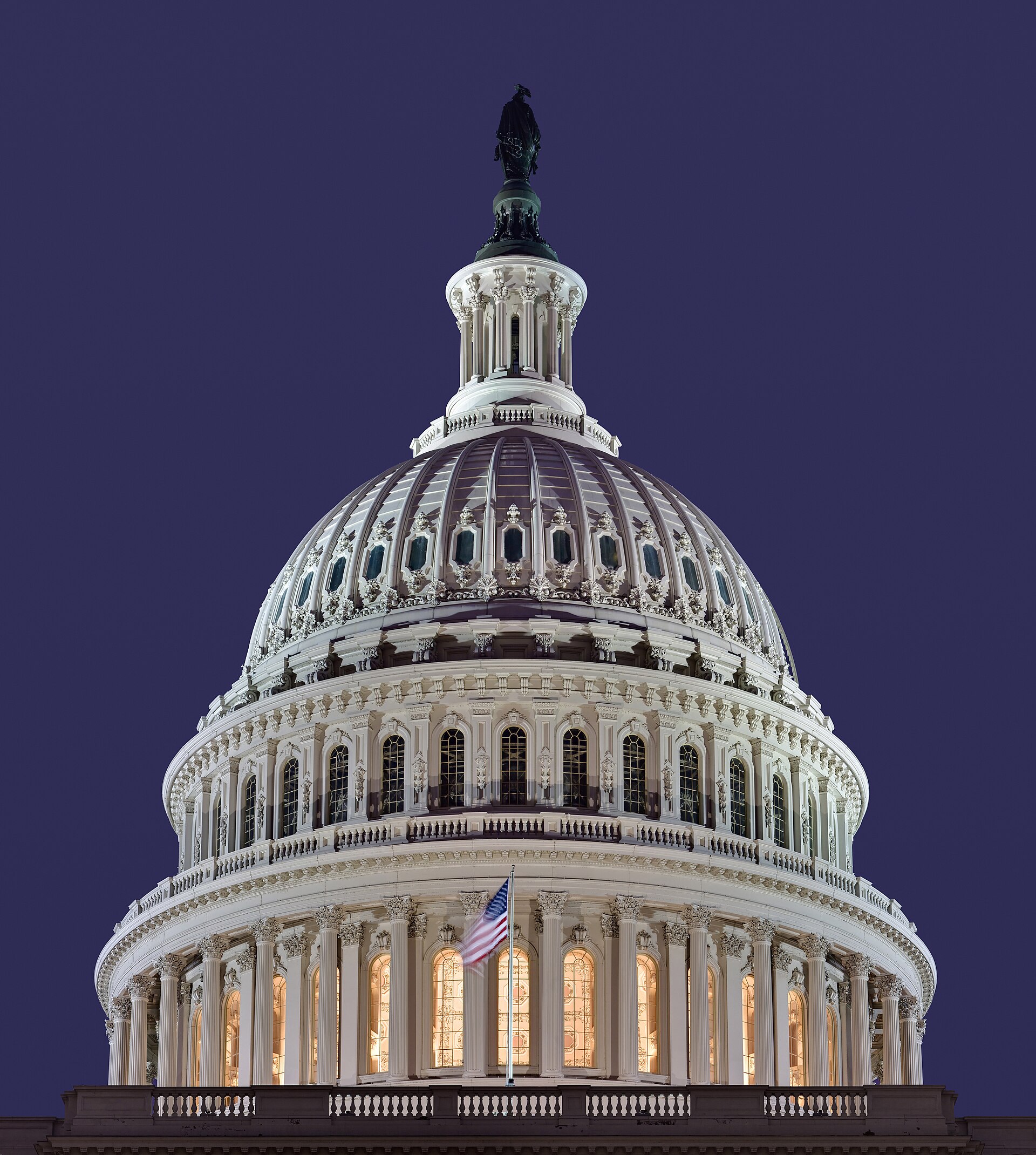
    US Capitol dome Jan 2006
    Image: Diliff, via Wikimedia Commons, CC BY 2.5.

    NBC News reported that Kennedy told “Meet the Press” he would not give the Trump administration a “blank check” for the proposed fund. Asked whether people who attacked law enforcement or stormed the Capitol on Jan. 6 should be able to receive taxpayer money from it, Kennedy said he would “take them off the table.”

    That answer matters because it gives Republicans a way to criticize what they see as government abuse without embracing one of the most divisive groups in American politics: defendants and participants connected to the Capitol attack.

    Kennedy’s argument is also procedural. He said Jan. 6 defendants who believe the federal government wronged them already have a route to bring claims under existing law, where a judge can evaluate the case.

    The $1.776 billion sticking point

    The fight centers on a proposed $1.776 billion “anti-weaponization” fund that emerged from President Donald Trump’s settlement with the IRS over his leaked tax returns, according to NBC News. The settlement also included audit protections for Trump, his family members and companies.

    The Justice Department backed away from the fund after bipartisan pushback, but Trump later reopened the possibility of pursuing it. A judge has also extended a block on the fund, meaning the money is not simply available for distribution.

    For supporters, the fund is framed as a remedy for people who say the federal government was used against them for political reasons. For critics, it risks becoming a politically favored compensation pool with loose standards and unclear guardrails.

    Kennedy is trying to occupy a middle lane: willing to read a bill, willing to consider improvements to existing remedies, but unwilling to let the fund become a blank check — especially for Jan. 6 rioters.

    Why this affects shutdown talks

    Shutdown negotiations are rarely only about top-line spending. Lawmakers often use must-pass funding moments to force decisions on unrelated or semi-related issues that might otherwise stall.

    That is where Kennedy’s stance becomes important. If negotiators are trying to assemble a broader compromise, a demand to exclude Jan. 6 rioters from any related funding language can become a condition for support, not a side comment.

    The available detailed reporting focuses more heavily on the “anti-weaponization” fund and Justice Department politics than on the full text of the shutdown compromise. That leaves an important caveat: the exact shutdown deal Kennedy rejected, and the precise legislative language he wants, have not been fully spelled out in the extracted public record.

    Still, the political signal is clear. Kennedy is warning colleagues that any package touching this fund needs a carveout for Jan. 6 participants if it expects to avoid a backlash from senators who do not want to subsidize Capitol rioters.

    Blanche nomination adds pressure

    The fund is also wrapped into the nomination fight over Todd Blanche to be attorney general. NBC News reported that Republican Sens. John Cornyn of Texas and Thom Tillis of North Carolina have said they would only support Blanche if the Justice Department changes conditions tied to Trump’s IRS settlement and provides assurances that the fund is dead.

    A Senate Judiciary Committee hearing on advancing Blanche was postponed after it became clear he did not have enough Republican support, NBC reported. The committee vote was rescheduled for Tuesday.

    Trump has suggested he could keep Blanche as acting attorney general and pursue an “anti-weaponization” bill if Cornyn and Tillis block the nomination. That threat effectively ties the nomination fight to the fund fight.

    Kennedy’s comments fit into that pressure campaign, but not neatly on either side. He has previously said he believed Blanche when Blanche told lawmakers the Justice Department was not pursuing the fund anymore. Now Kennedy is saying that if the fund comes back in legislative form, Jan. 6 rioters should be excluded.

    Existing claims are Kennedy’s fallback

    Kennedy pointed to the Federal Tort Claims Act as an existing mechanism for people who believe they were abused by the government. That law allows certain claims against the federal government, subject to restrictions and legal review.

    His point is that Congress does not have to create a broad new fund to address every claim of government misconduct. Courts can already evaluate specific cases.

    That distinction is central to the debate. A court-based process is slower and narrower, but it also requires evidence and judicial scrutiny. A congressionally created fund could be faster and broader, but critics worry it could be designed to favor politically connected claimants.

    By emphasizing existing law, Kennedy is giving himself room to say he is not dismissing all claims of government overreach. He is rejecting a special benefit for people associated with the Capitol attack.

    What remains unresolved

    The biggest open question is whether Senate negotiators will write Kennedy’s demand into any bill or side agreement. A verbal assurance may not satisfy senators who want a hard ban; overly broad language could also sweep in people who never committed violence but were still connected to Jan. 6 cases.

    Another unresolved issue is whether the fund survives at all. If Cornyn, Tillis and other Republicans continue demanding that it be killed, Kennedy’s carveout may become unnecessary. If Trump and allies revive it, Kennedy’s exclusion demand could become a key test of Republican support.

    The politics are uncomfortable for both parties. Democrats can argue the fund rewards Trump’s grievances. Republicans can argue that legitimate victims of government abuse deserve a remedy. Kennedy’s position attempts to separate those arguments from Jan. 6, where public sympathy is much harder to claim.

    For now, Kennedy’s “hell no” stance is a warning shot inside a larger negotiation: no shutdown compromise, nomination bargain or anti-weaponization bill should create a taxpayer-funded payday for people who stormed the Capitol on Jan. 6, 2021.

  • Bernie Sanders Hits Walmart’s $37.6 Billion Buybacks as Some Workers Used Medicaid, SNAP

    Bernie Sanders Hits Walmart’s $37.6 Billion Buybacks as Some Workers Used Medicaid, SNAP

    The dispute puts a familiar retail question back in focus: when low-paid workers qualify for public assistance, who is really paying the cost of cheap labor?

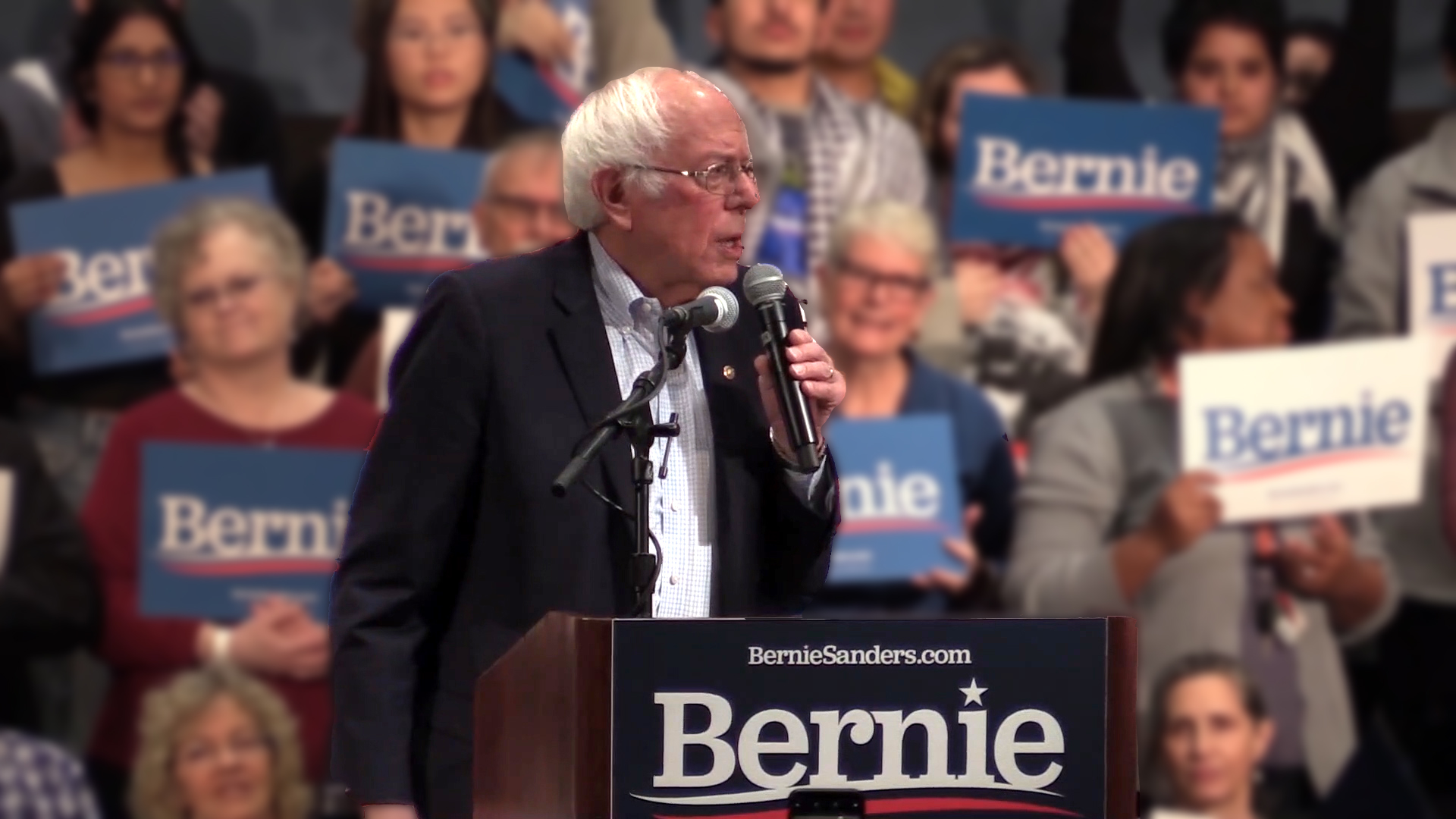
    Sen. Bernie Sanders criticized Walmart for spending $37.6 billion on stock buybacks. Some Walmart workers relied on Medicaid and SNAP, taxpayer-funded health and food assistance programs, and the article explains why that situation is controversial: Sanders says taxpayers are effectively supporting low-paid retail work while shareholders benefit.

    The clash behind the “Senator slams Walmart” moment is bigger than one retailer. It is a fight over buybacks, wages, tax breaks and whether public benefits are filling gaps left by some of the largest employers in America.

    Sanders calls it corporate welfare

    Sanders, an independent from Vermont and ranking member of the Senate Committee on Health, Education, Labor, and Pensions, has made Walmart a central target in a broader investigation into major retailers and public assistance.

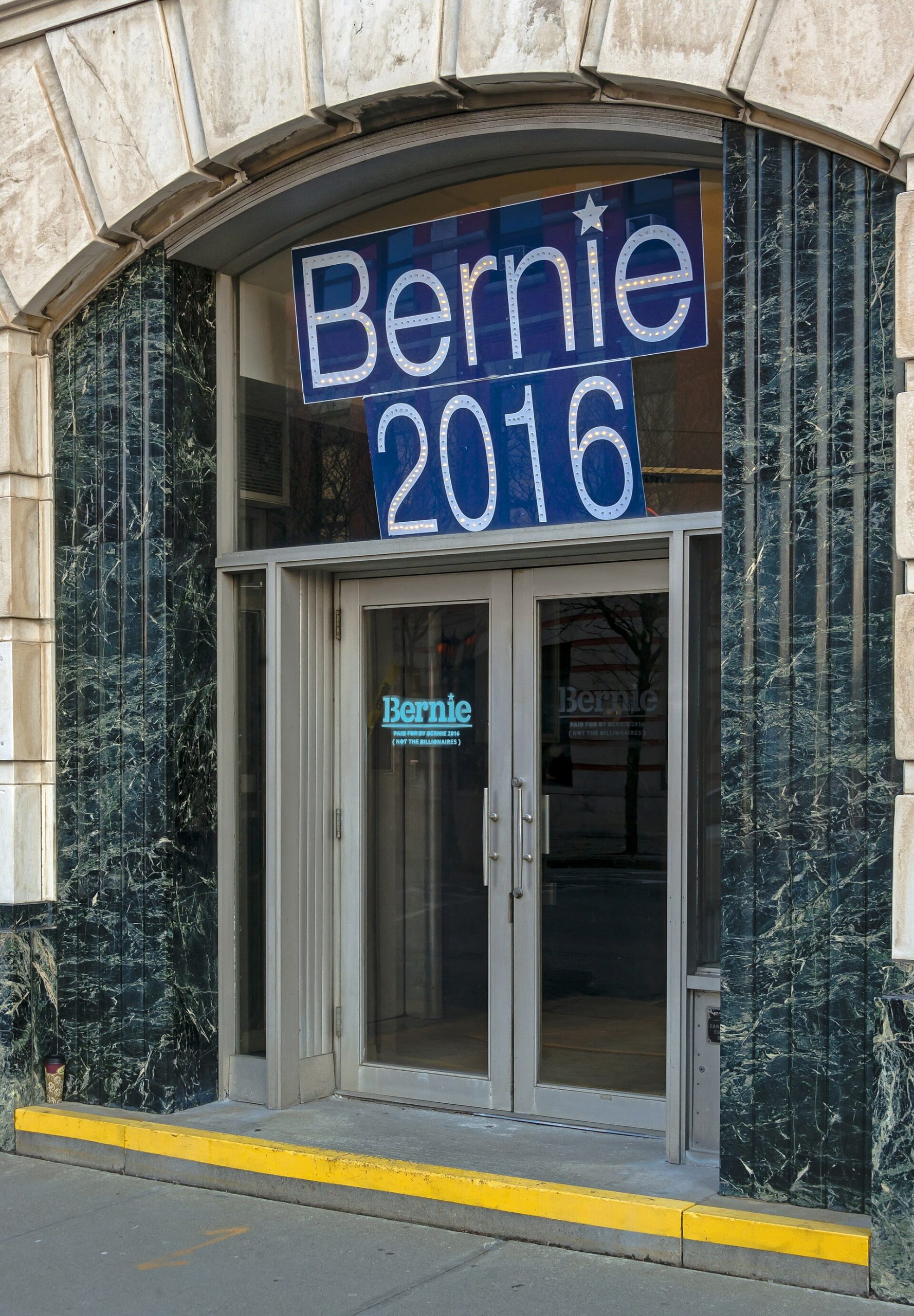
    Poughkeepsie Savings Bank entrance with Bernie Sanders sign
    Image: Daniel Case, via Wikimedia Commons, CC BY-SA 3.0.

    In a Senate statement, Sanders said he was examining how Walmart, Kroger, Dollar General and Dollar Tree could benefit from tax breaks while “tens of thousands” of employees rely on Medicaid and SNAP. His office framed the issue as a taxpayer subsidy for profitable companies.

    “It has never been acceptable that incredibly profitable companies like Walmart — owned by one of the richest families on Earth — pay their workers starvation wages, forcing many of them to rely on programs like Medicaid and SNAP,” Sanders wrote to Walmart, according to the Senate release.

    That is the core accusation: Walmart can return billions to shareholders through stock repurchases while some employees still need public help for health care or food.

    Why the buyback number stings

    Stock buybacks are not illegal, and they are common among large public companies. A company uses cash to repurchase its own shares, which can lift earnings per share and reward investors.

    But the $37.6 billion figure cited in the criticism lands differently when paired with Medicaid and SNAP. Sanders is arguing that capital choices are moral choices: money used to boost shareholder value could, in his view, be used to raise pay or improve benefits.

    That argument has political force because Walmart is not a marginal business fighting to survive. It is one of the country’s largest private employers and one of the most recognizable companies in the world.

    The harder question is whether buybacks directly cause workers to rely on benefits. Companies and investors often reject that link, arguing that buybacks reflect excess capital, long-term financial planning and obligations to shareholders. Labor advocates counter that when public programs support workers at profitable companies, taxpayers are carrying costs that employers could afford to reduce.

    Public benefits complicate the math

    Medicaid and SNAP are designed to help eligible low-income people, not to punish them for where they work. Many workers qualify because of hours, household size, local wages, medical needs or family circumstances.

    That makes the Walmart fight more complicated than a simple payroll ledger. A full national count of Walmart employees using Medicaid or SNAP was not included in the extracted materials. Nor was a full Walmart response included.

    Sanders’s office did cite a state-level example, saying that in 2025 taxpayers paid more than $26 million to provide Medicaid to Walmart workers and their families in Nevada alone. That figure, if used as Sanders intends, is meant to show that the public cost is not theoretical.

    Still, public assistance data can be hard to interpret. It does not always distinguish between full-time and part-time workers, new hires and long-term employees, or workers whose eligibility is driven by family medical needs rather than wages alone.

    Walmart’s missing side matters

    The available source material centers on Sanders’s investigation and criticism. It does not include a detailed Walmart reply to the latest accusation, and that absence matters for readers trying to judge the dispute fairly.

    Large employers typically argue that compensation includes more than hourly pay, such as health coverage, bonuses, scheduling flexibility, training and promotion paths. Retailers also often point to thin margins, intense price competition and the need to keep goods affordable for customers.

    Those arguments do not erase Sanders’s point, but they do shape the policy debate. If higher wages are mandated or strongly pressured, costs can show up elsewhere: prices, staffing levels, store hours, automation or profits.

    At the same time, the taxpayer question does not disappear. If a company’s business model depends on low wages and public benefits pick up part of the human cost, critics say the savings are being socialized while the gains are privatized.

    Tax breaks raise the stakes

    Sanders’s investigation is not only about stock buybacks. His Senate office said he asked Walmart and other retailers to disclose how much they expected to gain from Republican tax breaks and whether any savings would be passed to workers.

    The release also attacked President Trump’s “One Big Beautiful Bill,” saying it delivered major benefits to wealthy Americans and large corporations while Medicaid and nutrition assistance faced deep cuts. Because those claims come from Sanders’s office, they should be read as part of his political case, not a neutral budget score.

    Still, the policy tension is real. If public benefits shrink while low-wage workers remain eligible or financially vulnerable, the pressure moves somewhere: onto workers, families, states, charities, employers or consumers.

    That is why the Walmart buyback figure is resonating online. It gives people a simple comparison in a complex fight: billions available for shareholders, public aid still needed by some workers.

    What remains unanswered

    Sanders wants large retailers to say how much they benefit from tax changes and whether workers will share in those gains. He is also using the investigation to pressure companies to raise wages and benefits enough that employees do not need taxpayer assistance to get by.

    Several key facts remain unclear from the available materials:

    • How many Walmart employees nationally rely on Medicaid, SNAP or both.
    • How the $37.6 billion in buybacks was spread across years.
    • How many workers receiving public aid are full time, part time or seasonal.
    • Whether Walmart disputes Sanders’s numbers or framing.
    • Whether any tax savings would be redirected to wages, benefits, debt reduction, investment or shareholders.

    The debate is likely to keep drawing attention because it touches daily life from two directions: the prices shoppers pay and the taxes workers fund. Walmart’s scale makes it a stand-in for a larger economic argument over who should absorb the cost of making low-wage work livable.

    The clean takeaway is not that buybacks alone explain worker hardship. It is that Sanders has put Walmart’s shareholder rewards and workers’ reliance on Medicaid and SNAP in the same frame, forcing a sharper question: when a profitable company’s employees still need public aid, is that smart capitalism, failed wage policy or corporate welfare by another name?

  • Marjorie Taylor Greene Teases New ‘America First’ Movement Against Trump

    Marjorie Taylor Greene Teases New ‘America First’ Movement Against Trump

    The break is not just personal. Greene’s new language points to a wider fight over foreign wars, the Epstein files and whether Trump’s critics on the right can turn dissent into political power.

    Marjorie Taylor Greene is escalating her fight with Donald Trump, saying Trump has betrayed her and teasing a major next step: a new “America First” movement with other MAGA figures who have broken with him. The move matters now because it turns a public feud into a possible organizing effort on Trump’s right flank.

    Greene shared a photo on Aug. 1 with Tucker Carlson, Thomas Massie and Joe Kent, writing that they backed Trump when he promised “no more foreign wars,” but that “he’s betrayed us all.” Her closing line was the real signal: “The movement has begun.”

    Greene’s break gets organized

    For years, Greene was one of Trump’s loudest defenders. That history is what makes the new posture so striking. This is not a Democrat attacking Trump from across the aisle, or a longtime establishment Republican trying to reclaim the party. It is a former loyalist arguing that Trump broke faith with the voters who backed his “America First” pitch.

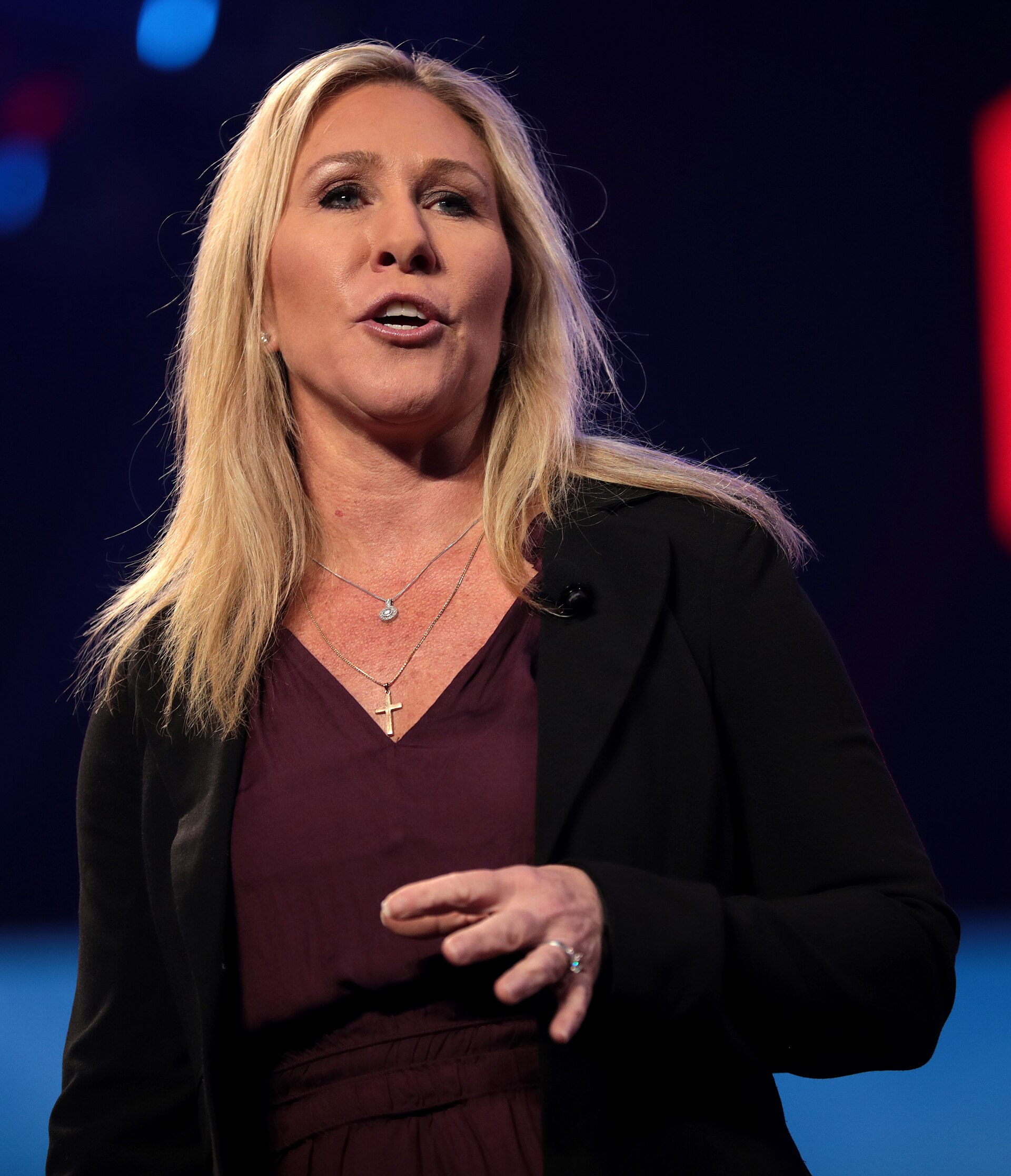
    Marjorie Taylor Greene (cropped)
    Image: U.S. House of Representatives, via Wikimedia Commons, Public domain.

    According to USA Today, Greene’s post drew major attention online, with 15,000 shares on X and nearly 10 million views. The image showed Greene seated at a table with Carlson, former Republican Rep. Thomas Massie and former Trump administration counterterrorism official Joe Kent.

    The caption did more than criticize Trump. It presented the group as a political bloc. Greene wrote that their commitment is “America First for all Americans, right, left, and center,” a phrase that reaches beyond normal Republican messaging while still claiming the MAGA brand’s core language.

    That is the tension at the center of the moment: Greene is not renouncing the movement she helped amplify. She is arguing that Trump has.

    The next step she is teasing

    The “major next step” Greene is teasing appears to be the formation of a new political movement, and possibly a new party. USA Today reported that Greene and Carlson have both talked about backing a new political party amid their criticism of Trump.

    Carlson has gone further in recent remarks, saying in an interview that he is going to help build a third party, according to USA Today. His argument, as reported, is that Democrats and Republicans are too aligned on war in the Middle East and other issues, while government should focus on the welfare of its own people.

    Greene has also said she is “in talks” about launching a new party. On “Piers Morgan Uncensored,” she said there is a group that could align around a “true America-focused party” that does not fall into what she described as the traps of either Democrats or Republicans. She also acknowledged that building a third party would be difficult.

    That caveat matters. In American politics, a third party is much easier to announce than to sustain. Ballot access, fundraising, candidate recruitment and winner-take-all elections all favor the two major parties. But a faction does not need to win the White House to matter. It can pressure primaries, shape the agenda, split voters or force leaders to answer questions they would rather avoid.

    Why Trump is the target

    The immediate rupture is over foreign policy. Greene, Carlson, Massie and Kent have all criticized the Iran war, according to USA Today. Their complaint is that Trump’s actions conflict with his campaign promise to avoid foreign entanglements and keep the focus on “America First” policies.

    Kent’s presence is notable because USA Today identified him as a former Trump administration counterterrorism official who resigned over concerns about the Iran war. That gives the group a mix of media reach, congressional experience and insider credentials.

    The argument from Greene’s side is straightforward: Trump campaigned as an anti-war leader, won trust from voters who wanted a break from foreign intervention, and then betrayed that promise. That is the political meaning behind her line, “he’s betrayed us all.”

    Trump’s defenders would likely see it differently. They may argue that presidents face threats and intelligence realities candidates do not, and that foreign policy cannot be reduced to a slogan. They may also see Greene and Carlson’s move as self-promotion by figures who thrive on conflict with party leadership.

    Epstein files add another fracture

    The Trump-Greene split is not only about Iran. USA Today reported that Greene and Massie also clashed with Trump over the Epstein files, pushing legislation to release government records connected to accused sex trafficker Jeffrey Epstein despite Trump’s opposition.

    That issue cuts differently than foreign policy. It taps into distrust of institutions, demands for transparency and suspicions among voters who already believe powerful people are protected from scrutiny. For Trump, resistance from former allies on that subject carries particular political risk because it comes from the same populist ecosystem that helped fuel his rise.

    Greene has described the handling of the Epstein files in sharp terms before, and Massie has joined her in pushing for release of records. Their position lets them claim they are fighting secrecy while casting Trump as part of the system they once said he would challenge.

    What remains unclear is whether this becomes a sustained legislative fight, a campaign message, or both. The answer will help determine whether Greene’s “movement” is an online flare-up or a vehicle with real political consequences.

    A right-flank problem for Trump

    The timing is awkward for Trump and the GOP. USA Today framed the gathering as part of growing blowback on the right as the party heads toward midterm elections that will decide control of Congress.

    Poll numbers add to that pressure. USA Today cited a new AP-NORC poll conducted July 23-27 showing that 64% of Americans believe the Iran war has not been worthwhile. Most Republicans still approved of Trump’s handling of the war, but that support had slipped to 61%, down from 71% in June.

    Those numbers do not show a party-wide revolt. They do suggest vulnerability. If even a slice of Trump’s base becomes disillusioned over war, transparency or broken promises, Republican candidates may face a more complicated turnout environment.

    Trump has responded to MAGA dissenters by attacking them, according to USA Today. That may reinforce loyalty among his strongest supporters. It can also harden the opposition among critics who now define themselves as the true keepers of “America First.”

    Movement or pressure campaign

    The central question is whether Greene, Carlson, Massie and Kent are building a durable political alternative or simply creating leverage inside the Republican coalition. Those are different projects.

    A third party would require organization, money and candidates willing to risk being blamed for Republican losses. A pressure campaign can be looser. It can use podcasts, social media, primaries and endorsements to punish candidates who back Trump on foreign policy or resist releasing Epstein-related records.

    Greene’s wording leaves room for both. “The movement has begun” sounds expansive, but it does not yet define structure, leadership, ballot strategy or policy platform beyond anti-war and “America First” themes.

    For now, the significance is that Trump is facing criticism from people who once helped sell his brand to the base. Whether Greene’s next step becomes a new party, a factional revolt or a media-driven pressure campaign, it signals that the fight over who owns MAGA is no longer just happening outside Trump’s coalition. It is happening inside it.

  • McConnell’s Delayed Senate Return Puts Focus on His Unfinished Term

    McConnell’s Delayed Senate Return Puts Focus on His Unfinished Term

    The Kentucky Republican has stepped away from Senate GOP leadership but still holds his seat. His delayed return has renewed attention on what he can do from outside the chamber and why resignation is not automatic.

    Mitch McConnell has not resigned from the Senate, but Reuters reported that he said he was unable to rejoin the chamber yet because he was still recovering from a fall.

    That distinction matters. The public record supports a delayed return, not a confirmed permanent exit. It also comes after McConnell had already given up his post as Senate Republican leader and said he would finish his work from a different seat in the chamber.

    Reuters reported a delayed return, not a resignation

    According to Reuters, McConnell said he would not rejoin the Senate when it returned to work because he was still recovering from a fall. The report did not say he had resigned, nor did it establish that he had permanently ended his Senate duties.

    Mitch McConnell
    Image: Gage Skidmore, via Flickr, CC BY-SA 2.0.

    That makes the immediate question narrower than the political speculation around him: how long he remains away, what work he can do outside the chamber and whether his office offers further guidance.

    In the Senate, physical presence can matter because members generally must be on the floor to cast votes. A missing senator can affect vote-counting when margins are close, though the impact depends on the specific vote and attendance of other senators.

    McConnell had already left GOP leadership

    McConnell’s reduced public role began before the latest recovery update. In Senate floor remarks posted by his official office, he said 2024 would be his last term as Republican leader.

    He was blunt about age and timing, saying, “Father Time remains undefeated.” But he also drew a line between leaving leadership and leaving the Senate. In the same remarks, McConnell said he was “not going anywhere anytime soon” and planned to finish the job Kentucky voters had given him, though from a different seat in the chamber.

    That distinction remains important now. Giving up leadership was an institutional handoff, not an immediate resignation from office.

    Why the seat still matters

    A Senate seat is not ceremonial, even when held by a member who is no longer in party leadership. It carries a vote, staff operations, committee influence and constituent-service duties. Kentucky still has two senators on paper, and McConnell’s office can still help residents navigate federal agencies.

    The harder issue is floor power. If McConnell remains absent for extended stretches, his vote would not be available for matters that require senators to be present. That may not decide every outcome, but in a closely divided Senate, attendance can change the math.

    There is also a representation argument. Supporters may say McConnell earned the right to complete his term and that his office can continue serving Kentucky. Critics may argue that regular absence from Washington limits what a senator can provide.

    Both arguments are politically loaded because McConnell is not just any senator. He is the former Republican leader, the longest-serving Senate party leader in U.S. history, and a figure Democrats and many Republicans still define themselves against.

    Resignation is not automatic

    The New York Times reported on the question of why McConnell was not giving up his Senate seat, reflecting the pressure around his status even as he remains in office.

    There is no automatic vacancy simply because a senator misses work during recovery. A resignation would be a formal decision by McConnell, not an inference made by observers.

    Kentucky politics adds another layer. The state’s current vacancy process does not give Democratic Gov. Andy Beshear a simple free hand to choose any replacement for a Republican senator. State law gives the outgoing senator’s party a central role in the appointment process.

    That means any resignation would create a formal transition and a political process. For now, the supported fact is more limited: McConnell has not announced an immediate resignation.

    McConnell’s influence has already shifted

    The Republican Party McConnell led is not the same party he is leaving behind. His internationalist instincts, especially on support for Ukraine and a muscular U.S. role abroad, have put him at odds with parts of the Trump-era GOP.

    That makes his reduced presence more than a health-and-scheduling story. It is also a marker of a generational and ideological transfer inside the party. McConnell’s style was transactional, disciplined and deeply institutional. The party’s current center of gravity is more populist, more media-driven and less deferential to Senate custom.

    To admirers, McConnell was a master of the chamber who delivered lasting conservative victories, especially through judicial confirmations. To critics, he normalized hardball tactics that deepened partisan dysfunction, most famously around Supreme Court vacancies.

    Either way, his role is no longer what it was when he controlled the Senate Republican leadership table. He may still have relationships, allies and an office, but he no longer holds the same command post.

    What remains unclear

    The public record still leaves important questions unanswered. McConnell has not announced an immediate resignation. Reuters reported that he was unable to return yet, not that he had permanently ended all Senate duties. A return remains possible unless his office says otherwise.

    It is also unclear how much work he can do away from the chamber. Senators can communicate with staff, weigh in on strategy and handle some official responsibilities without being physically present. But they cannot replicate every floor function from outside the Senate.

    The clearest reading is cautious: McConnell remains a senator, has already left Republican leadership and, according to Reuters, has delayed his return while recovering from a fall. What that means for the rest of his term depends on his recovery, his decisions and any further statements from his office.