Blog

  • JPMorgan Says Trump Accounts Closed After Jan. 6 Over Risk, Not Politics

    JPMorgan Says Trump Accounts Closed After Jan. 6 Over Risk, Not Politics

    The lawsuit was meant to turn bank account closures into proof of political discrimination. JPMorgan’s response instead spotlights the compliance risks banks say drove the decisions.

    The Trump family’s fight with a major bank backfired as Donald Trump’s $5 billion Florida lawsuit against JPMorgan Chase put the dispute over Trump-linked bank account closures back in court—and put the bank’s stated reasons for closing the accounts on the record. JPMorgan says accounts tied to Trump and his businesses were closed after the Jan. 6, 2021 Capitol riot because of legal and regulatory risk, not politics; the wider fight also invokes Capital One’s closure of more than 300 Trump Organization-linked accounts and a 2023 anti-debanking push.

    The core question now is not whether big banks can drop risky clients; they can. It is whether Trump can prove major lenders punished him for politics rather than using compliance rules after a national crisis.

    A lawsuit with a risky spotlight

    Trump’s case against JPMorgan Chase accuses America’s largest bank of illegally closing accounts for political reasons. The complaint, filed in Florida, also names JPMorgan chief executive Jamie Dimon, according to BBC reporting that cited a copy of the lawsuit obtained by CBS.

    JPMorgan Chase Tower, Houston, Texas
    Image: i am jim, via Wikimedia Commons, CC BY-SA 3.0.

    The suit alleges Trump and his businesses suffered “considerable financial and reputational harm” after the bank closed accounts in 2021. Trump’s filing casts the closures as part of a broader effort by powerful financial institutions to distance themselves from him and his conservative politics after the Capitol riot.

    That is the political power of the case. But it is also where the legal risk begins.

    By suing, Trump has forced the bank’s rationale into the open. JPMorgan’s public position is blunt: it does not close accounts because of political or religious views, but it does close accounts that create legal or regulatory risk.

    JPMorgan’s answer changes the frame

    JPMorgan has said the lawsuit has “no merit,” according to the BBC. The bank’s statement said: “JPMC does not close accounts for political or religious reasons.” It added: “We do close accounts because they create legal or regulatory risk for the company.”

    Reuters separately reported that JPMorgan said it closed Trump’s bank accounts about a month after the Jan. 6 attack. That timing is central to Trump’s allegation of political retaliation. It is also central to the bank’s defense that the post-riot environment created heightened risk and scrutiny.

    This is why the fight can backfire even before a judge reaches the merits. A lawsuit designed to argue political persecution can give the bank a forum to describe the client relationship in compliance terms.

    For Trump, the public message is simple: he says he was “debanked” because of politics. For JPMorgan, the courtroom message is different: banks are required to assess risk, and regulators expect them to act when a relationship raises legal or reputational concerns.

    Capital One widens the dispute

    The JPMorgan case does not exist in isolation. Trump and his businesses have also challenged account closures involving Capital One, with Trump-side allegations that more than 300 Trump Organization-linked accounts were shut.

    That number matters because it turns the argument from a single bank dispute into a broader claim about access to the financial system. Trump’s camp has portrayed the closures as evidence of coordinated or industry-wide political discrimination. Banks generally reject that framing and say account decisions are driven by risk, regulation and business judgment.

    The Capital One piece also helps explain why the dispute resonates beyond Trump’s own finances. “Debanking” has become a political shorthand for a wider grievance: the fear that banks, payment processors or other financial gatekeepers can punish disfavored views without the transparency of a court case or public vote.

    But the legal burden is narrower than the political argument. Trump must show that the closures were unlawful, not merely damaging, embarrassing or badly timed.

    Florida gives Trump a venue

    Trump filed the JPMorgan complaint in Florida, a state that bars banks from discriminating against clients based on political views. That venue is not incidental. It gives Trump’s legal team a state-law framework for turning a political accusation into a claim against a financial institution.

    Florida’s anti-debanking push gained force in 2023, when state leaders moved to restrict financial institutions from denying services based on factors such as political affiliation, religious beliefs or social-credit-style criteria. The law fits neatly with Trump’s broader argument that banks have become ideological actors.

    JPMorgan’s defense aims at the same law from the other direction. If the bank can persuade the court that the closures were rooted in legal and regulatory risk, rather than political viewpoint, Florida’s protections may not carry Trump as far as his public argument suggests.

    That is the tension at the center of the case: political discrimination is prohibited; risk management is expected.

    The politics cut both ways

    The fight also arrives during a wider clash between Trump and major banks. Dimon has publicly criticized some administration policies, including proposals affecting credit cards, immigration and the Federal Reserve, according to the BBC. That personal and policy friction gives the lawsuit a sharper political edge.

    Still, criticism of Trump administration policy does not automatically prove a bank closed accounts unlawfully. Courts generally require evidence of motive, decision-making and causation. Public tension may help tell a story, but documents, emails and internal risk assessments often decide cases like this.

    There is also a competing public-interest concern. Conservatives have argued that debanking can become a quiet form of political censorship. Banks and compliance professionals counter that they face severe penalties if they ignore risk warnings, sanctions issues, money-laundering concerns or reputational exposure.

    The BBC noted that regulators recently found nine of the country’s biggest banks had made “inappropriate distinctions” among customers based on business activities, including sectors such as oil and gas, private prisons and adult entertainment. That finding gives Trump’s argument a broader policy backdrop, even if it does not prove his specific claims against JPMorgan.

    What the case must prove

    The lawsuit’s stakes are financial, political and reputational. Trump is seeking $5 billion, a figure that signals the case is meant to be more than a narrow dispute over bank accounts.

    To win, though, Trump would likely need evidence that JPMorgan closed the accounts because of his political views, not because of risk policies applied after Jan. 6. JPMorgan will try to show the opposite: that the decision was tied to compliance obligations, regulatory expectations and the bank’s assessment of risk after the Capitol riot.

    Several key facts remain unclear from public reporting. It is not yet known what internal bank records will show, how decision-makers described the closures at the time, or whether Trump’s team can connect the closures directly to protected political activity.

    That is why the “backfire” is not just a punchline. Trump’s lawsuit elevates his debanking complaint, but it also invites a detailed examination of why major banks decided Trump-linked accounts were too risky to keep.

  • Todd Blanche Questioned Ghislaine Maxwell, Fueling Scrutiny of DOJ’s Epstein Files Process

    Todd Blanche Questioned Ghislaine Maxwell, Fueling Scrutiny of DOJ’s Epstein Files Process

    The concern is not simply what is inside the Epstein files. It is who controls the process, what gets released, and whether the public can trust a politically sensitive review.

    Todd Blanche revealed an Epstein files scheme — more precisely, a Justice Department process for handling Jeffrey Epstein-related materials — and the scheme raised red flags because Blanche is not a neutral name in modern legal politics. The Epstein files remain a public trust problem: victims’ privacy, government transparency and political credibility are all colliding at once.

    The concern now centers on Blanche’s role in Epstein-related disclosures, including Justice Department releases of Ghislaine Maxwell interview transcripts and audio. DOJ records show Blanche questioning Maxwell in July 2025, while House oversight materials later referenced meetings involving Blanche after the Epstein Files Transparency Act was passed.

    Why Blanche’s role matters

    Blanche is a prominent lawyer whose name carries political weight because of his past work as Donald Trump’s defense attorney and his later role inside the Justice Department. That combination makes any sensitive assignment involving Epstein files instantly controversial, even before the contents of the files are debated.

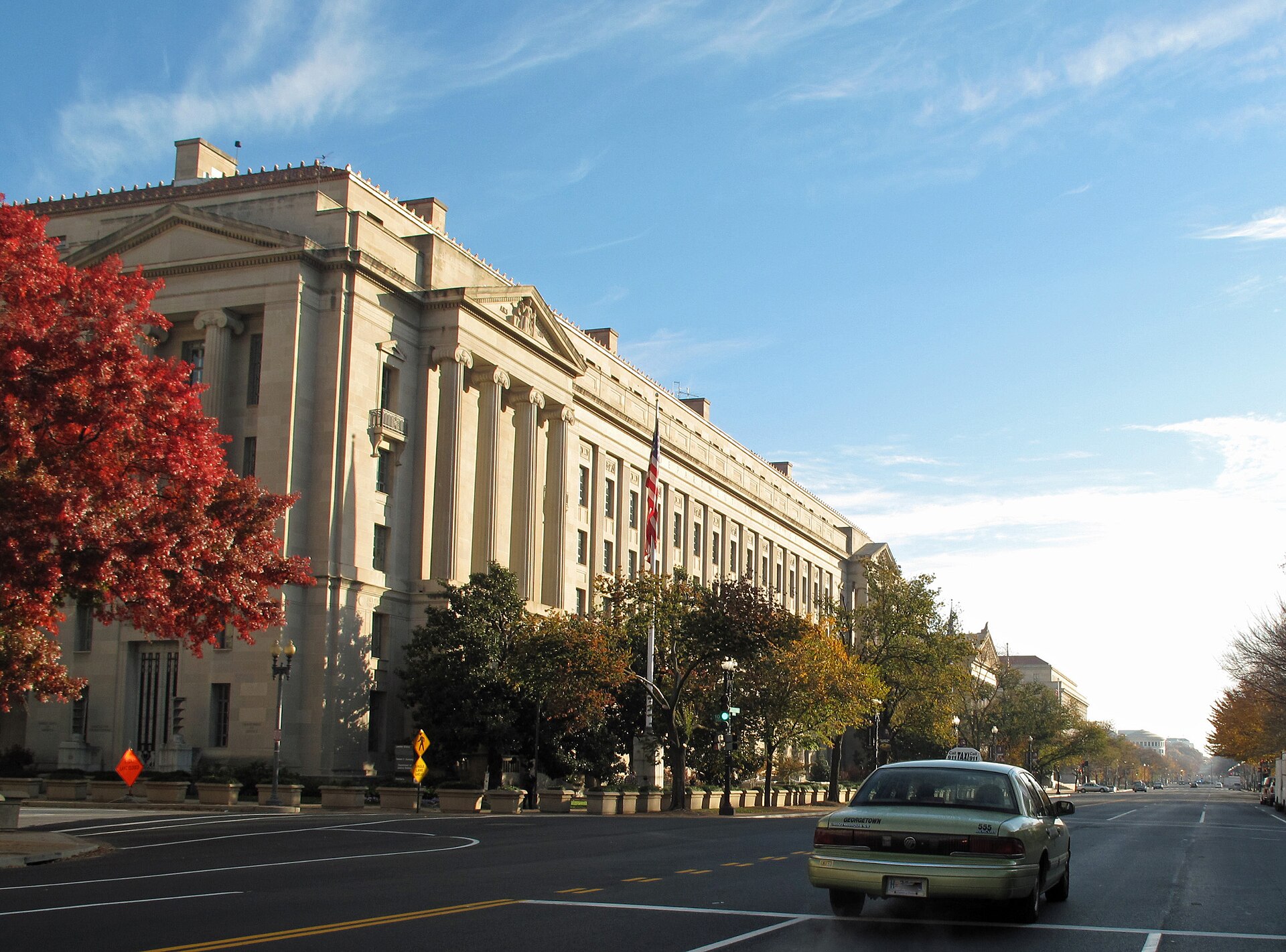
    US Department of Justice building with road
    Image: VOA, via Wikimedia Commons, Public domain.

    The red flag is not proof that Blanche did anything improper. It is a process concern: when a politically connected official is involved in reviewing or releasing explosive records, the public is left to judge not only the evidence but the fairness of the pipeline that produced it.

    That distinction matters. Epstein-related records are already surrounded by rumor, conspiracy theories and legitimate demands for transparency. A release process that looks selective, theatrical or politically managed can deepen distrust rather than settle it.

    The Maxwell interview release

    The clearest public record tying Blanche to the current controversy is the Justice Department’s Maxwell interview release. DOJ’s Maxwell Interview page lists redacted transcripts and audio recordings from two interview days, July 24 and July 25, 2025, and notes that redactions were applied to victim names and other identifying information.

    One DOJ transcript excerpt identifies Blanche speaking directly to Maxwell: “Good morning, Ms. Maxwell.” That is a simple line, but it establishes a key fact: Blanche was not merely adjacent to the episode. He was part of the questioning captured in the government’s own materials.

    The DOJ page also shows how carefully the release was staged: multiple audio parts, transcript versions and redactions. That is normal for sensitive material involving victims and possible identifying details, but it also gives critics room to ask who decided what the public should see and what should remain hidden.

    Maxwell’s role makes the release even more fraught. She was convicted in connection with Epstein’s abuse network, and any public-facing interview with her carries obvious risks: it can be valuable evidence, but it can also become a vehicle for reputation management, political messaging or selective disclosure if not handled with care.

    Congress is watching the process

    House oversight records add another layer. A House.gov transcript from a deposition involving former Attorney General Pam Bondi includes a question about how often Bondi met with Blanche after the Epstein Files Transparency Act was passed, specifically as it related to that matter.

    That question does not prove a scheme in the sinister sense. It does show congressional investigators were focused on coordination among senior officials after lawmakers moved to force more transparency around Epstein records.

    That is where the politics gets sharp. Supporters of a DOJ-led review can argue the department must manage sensitive files carefully, especially when victims’ identities are at stake. Skeptics can argue that the more politically sensitive the records are, the more important it is to have an auditable, consistent release process rather than private coordination among top officials.

    Both points can be true. Redactions are necessary. So is accountability for the redaction and release decisions.

    The real red flag

    The phrase “Epstein files” has become shorthand for a much larger question: whether powerful people were shielded from scrutiny and whether the government has been fully candid about what it knows. That is why even procedural details now attract intense attention.

    Blanche’s involvement raises three practical questions. First, what exactly was the purpose of the Maxwell interview? Second, who decided which parts of the interview and related materials would be released? Third, did political appointees have a role in shaping the timing or framing of those disclosures?

    Those questions are not fringe. They are the kind of questions any serious transparency effort has to answer if it wants the public to trust the outcome.

    The danger for DOJ is that partial disclosure can be worse than silence if it appears curated. When the government releases some records, withholds others, and relies on politically recognizable officials to explain or manage the process, suspicion fills the gaps.

    Victims complicate full transparency

    There is also a real counterweight to demands for immediate disclosure: victims’ privacy. The Justice Department’s Maxwell page explicitly says victim names and other identifying information were redacted. That is not a technicality. It is a legal and ethical necessity in a case involving sexual abuse and trafficking.

    Blanket release demands can sound righteous until they expose survivors to harassment, unwanted publicity or renewed trauma. Any serious review has to protect people who never asked to become public figures in a political fight.

    That does not excuse vague secrecy. DOJ can protect victims while still explaining the standards used for redactions, the chain of review, and whether outside or congressional oversight can verify that names were not withheld for political convenience.

    The hard part is that Epstein transparency requires two values that often clash: maximum accountability for institutions and maximum protection for victims. A credible process has to serve both.

    What remains unresolved

    What remains unclear is whether Blanche’s disclosure reflects a coherent transparency plan or a politically vulnerable release strategy that invites more doubt. The available public record confirms his participation in the Maxwell interview materials and shows congressional interest in meetings after the Epstein Files Transparency Act. It does not, by itself, establish misconduct.

    That is why the next phase matters. If DOJ can provide a clear timeline, explain who approved releases and redactions, and show how Congress can verify the process, the Blanche controversy may narrow into a procedural dispute.

    If those answers stay vague, the “dubious scheme” label will keep sticking. In the Epstein files fight, credibility is not just about what is eventually released. It is about whether the public can see how the government got there.

  • Social Security 2027 COLA Forecasts Reach 3.8%, but It’s No Windfall

    Social Security 2027 COLA Forecasts Reach 3.8%, but It’s No Windfall

    Inflation is pushing estimates higher, but a larger COLA is not a windfall. The official number will depend on upcoming CPI-W data used by the SSA.

    Social Security recipients could see a larger cost-of-living adjustment in 2027, with the projected 2027 benefit increase now estimated around 3.6% to 3.8%, and one public forecast at 3.8%, because inflation could produce a bigger COLA for beneficiaries. The Social Security Administration has not set the 2027 COLA. Recent Bureau of Labor Statistics data showed CPI-W up 3.9% over 12 months, while separate SSA actuarial materials discuss COLA policy scenarios starting December 2027, including a 1 percentage point reduction and an estimated effect of about 0.3 percentage point under another computation.

    The key word is could. The higher estimate is not a benefit notice from the Social Security Administration, and it can still move as more inflation data come in. But the range is large enough to matter for retirees, disabled workers and survivors trying to plan next year’s budget.

    The forecast is not official

    Public estimates now point to a 2027 Social Security COLA in the high-3% range. CBS News reported estimates of a 3.6% to 3.8% benefit boost after cooler June inflation data, while a posting from Rep. John Larson’s office cited The Senior Citizens League’s July 14 update putting the forecast at 3.8%.

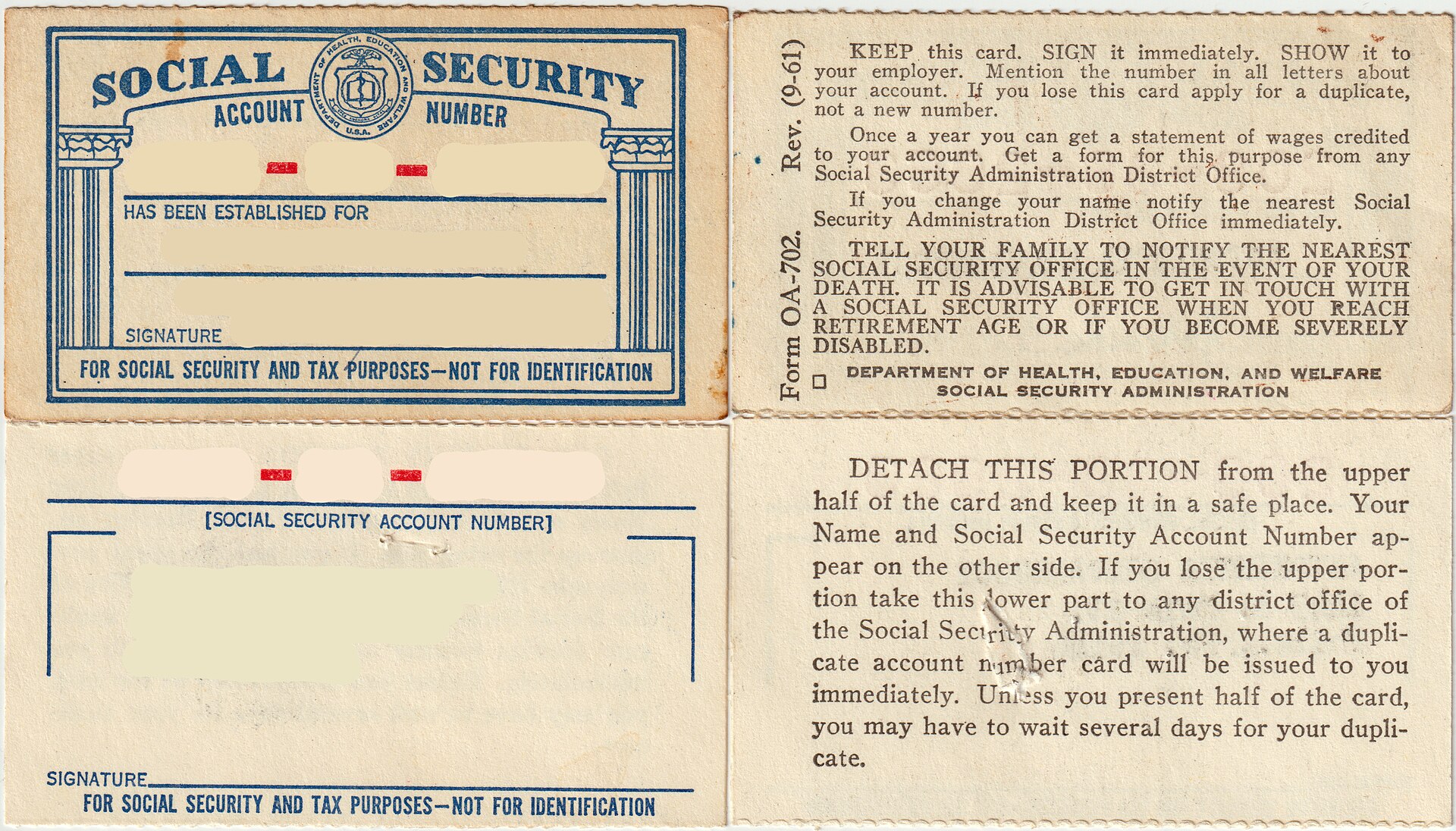
    Social Security card (09 61)
    Image: N Giovannucci, via Wikimedia Commons, CC BY-SA 4.0.

    Those numbers are forecasts, not the final adjustment. The Social Security Administration sets the official COLA by applying its formula to inflation data, rather than choosing a number based on a single month’s report or a private group’s projection.

    That distinction matters because the estimate can shift before the final calculation. If inflation cools, the COLA estimate can come down. If prices remain sticky, the projected increase can hold or rise.

    For beneficiaries, the forecast is useful as an early planning signal. It is not yet a promise about the exact amount that will show up in monthly checks.

    Why inflation drives the COLA

    Social Security’s cost-of-living adjustment is designed to help benefits keep pace with rising prices. The inflation gauge at the center of the process is the Consumer Price Index for Urban Wage Earners and Clerical Workers, known as CPI-W, which is reported by the Bureau of Labor Statistics.

    The BLS reported in its April 2026 CPI release that CPI-W rose 3.9% over the prior 12 months. That does not automatically mean the Social Security COLA will be 3.9%, but it helps explain why forecasters are looking at a larger adjustment for 2027.

    The COLA formula is sensitive to the inflation readings used in the official comparison period. A few hotter or cooler data points can make a real difference, especially when the forecast range is only a few tenths of a percentage point wide.

    That is why a forecast of 3.6% versus 3.8% is not just statistical noise for millions of households. On a $1,000 monthly benefit, 3.6% would mean about $36 more per month before deductions, while 3.8% would mean about $38 more.

    A bigger check is not a windfall

    A larger COLA can sound like good news, but it is also evidence that everyday costs remain elevated. Social Security’s annual adjustment is meant to preserve buying power, not create a bonus.

    That is the tension at the center of the 2027 forecast. Beneficiaries may receive a larger monthly payment, but the same inflation that raises the COLA may also be pushing up groceries, insurance, utilities, rent and other bills.

    The impact will vary widely by household. Someone with low housing costs may feel the increase more than someone facing rising medical or rental expenses. People with Medicare premiums or other deductions may also see a different net deposit than the headline COLA suggests.

    In practical terms, the projected increase is better viewed as partial protection against inflation, not extra income that arrives in a vacuum.

    The last data points matter

    The current 3.6% to 3.8% range leaves room for movement. A difference of 0.2 percentage point may look small, but across a year it adds up, especially for people who rely heavily on Social Security.

    For every $1,000 in monthly benefits, each 1 percentage point of COLA equals about $10 a month before deductions. A 0.3 percentage point difference equals about $3 a month per $1,000 in benefits, or about $36 over a year.

    That math is why inflation reports get so much attention as the COLA window approaches. A single report will not settle the issue, but a pattern of sticky or cooling prices can pull forecasts in one direction.

    The clearest takeaway for now is that beneficiaries should not lock in a personal budget around the top end of the estimate. The official figure still depends on the final inflation data used by the SSA’s formula.

    Policy language can confuse

    One reason this topic gets muddled is that the Social Security Administration and its actuaries publish more than one type of COLA-related material. Some documents describe how the annual adjustment works. Others analyze policy provisions that could change future benefits or program finances.

    The SSA’s Office of the Chief Actuary has material on provisions affecting cost-of-living adjustments, including scenarios that refer to changes starting in December 2027. The extracted SSA material includes a possible 1 percentage point reduction in an annual COLA and another computation with an estimated effect of about 0.3 percentage point.

    That policy language should not be read as the same thing as the current 2027 COLA forecast. A forecast estimates what the benefit increase could be under the existing inflation formula. A policy provision analysis describes what could happen under a separate rule change or proposal.

    For readers, the safest approach is to separate three things: unofficial COLA estimates, the official SSA announcement, and policy proposals that may or may not become law.

    How beneficiaries can plan

    The best use of the current forecast is cautious planning. A high-3% COLA would be meaningful, but the final number may land below the upper estimate.

    • Use a range, not one number. Planning around 3.6% to 3.8% is more realistic than assuming the top forecast will become official.
    • Estimate the dollar amount. Multiply your current monthly benefit by the projected percentage to see the rough gross increase.
    • Remember net benefits. Deductions and premiums can affect what actually reaches a bank account.
    • Watch the official SSA figure. Forecasts are useful, but the Social Security Administration’s final COLA is the number that matters.

    The bigger story is not simply that Social Security recipients may get more money in 2027. It is that inflation is still strong enough to make a larger adjustment plausible.

    If the final COLA lands near 3.8%, many beneficiaries will welcome the increase. They may also see it as confirmation of what their own budgets already show: higher checks can help, but they do not erase higher prices.

  • McConnell’s June Hospitalization Becomes a Voter Protest Over Health Disclosure

    McConnell’s June Hospitalization Becomes a Voter Protest Over Health Disclosure

    The dispute is no longer just about one senator’s medical privacy. It has become a test of how much voters are owed when illness affects public power.

    The backlash against Mitch McConnell over concerns about his health now includes a voter protest tied to a major event, with an Alternet/MSN headline framing the scene as “Voters revolt against” a “McConnell health scandal.” The point is not just the protest. It is why McConnell’s health became a political issue after weeks of limited disclosure about the Kentucky Republican’s condition.

    Records cited below show McConnell was reportedly hospitalized on June 14. On July 8, Kentucky Gov. Andy Beshear asked his office for a health update. On July 13, NPR reported McConnell said a fall had led to his hospitalization.

    The protest exposed an information gap

    The protest tied to the major event landed because it attached a visible voter reaction to a question that had already been building: What, exactly, was going on with McConnell?

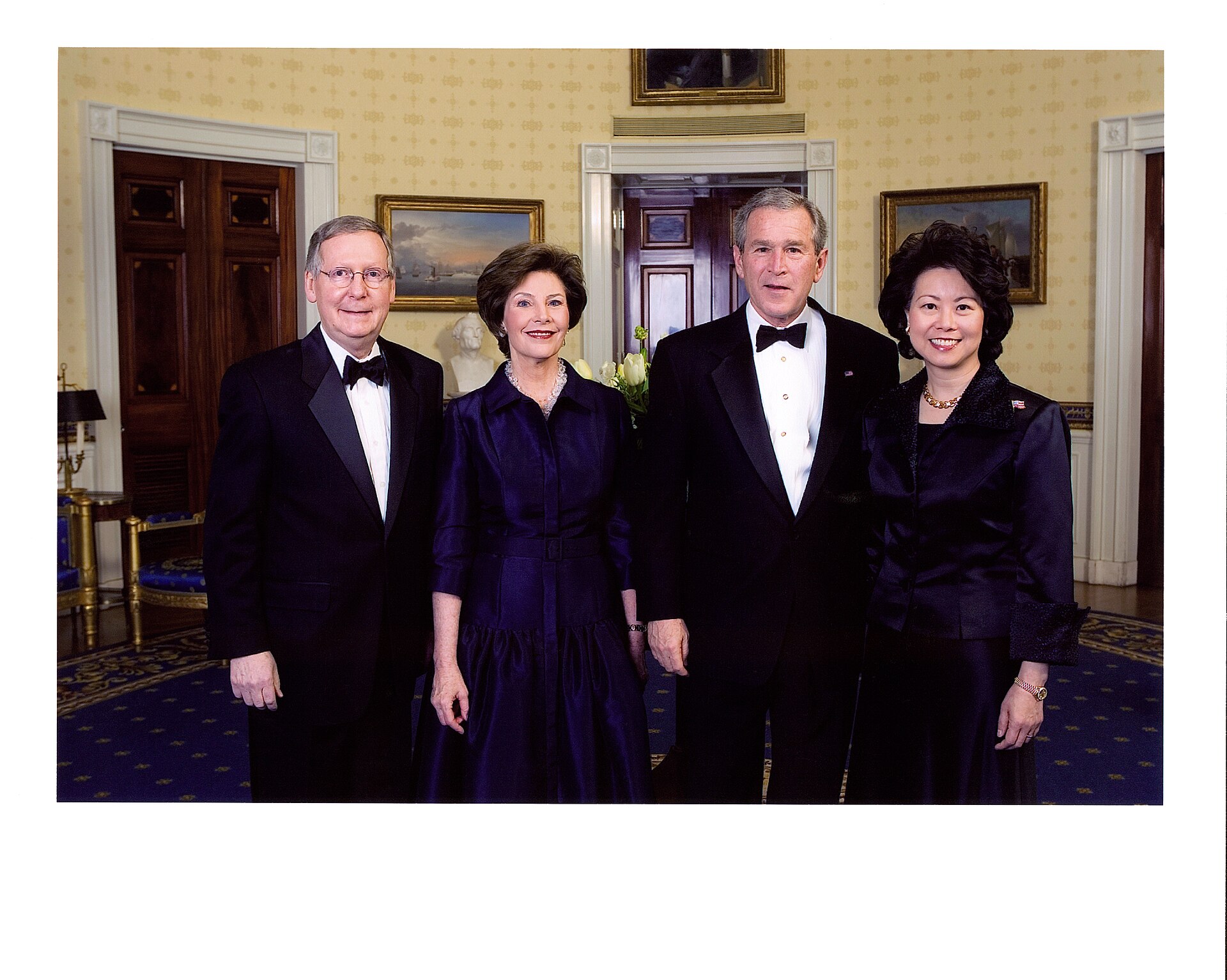
    Secretary Elaine Chao and Mitch McConnell with President George W. Bush and First Lady Laura Bush
    Image: Series: Digital Photographs Relating to Agency Officials, Events, and Activities, 8/25/1997 – 6/25/2009 Record Group 174: General Records of the Department of Labor, 1907 – 2001, via Wikimedia Commons, Public domain.

    The extracted MSN reference does not identify the event’s location, date or the specific protest tactics. That matters. The public record available here supports the existence of backlash and a protest framing, but not additional details about chants, organizers or crowd size.

    Still, the political meaning is clear enough. Voters using a high-profile event to press the issue suggests that the debate had moved beyond online speculation and into public performance.

    The phrase “McConnell health scandal” should be read as political language, not a verified finding of misconduct. The documented issue is limited disclosure after a hospitalization, followed by pressure for a fuller explanation.

    What McConnell later disclosed

    NPR reported on July 13 that McConnell said a fall led to his hospitalization, ending weeks of silence about his condition. According to NPR, the 84-year-old senator said he was briefly unconscious around the time he was first taken to the hospital.

    McConnell said he had undergone tests to determine what caused the fall. He also said he had been treated for mild pneumonia and had moved to a rehabilitation facility.

    His statement was specific in some ways and limited in others. NPR reported that McConnell said doctors confirmed he did not break any bones, did not suffer a concussion, did not have a heart attack or stroke, and did not have tumors or hemorrhages.

    He also said he was regaining his strength, but could not return to the Senate quite yet. That distinction is why the matter remained political: a health update can reassure voters about one set of rumors while still leaving open questions about timing, capacity and Senate duties.

    Beshear pushed for transparency

    Kentucky Gov. Andy Beshear’s office made the transparency argument directly in a July 8 release. Beshear sent a letter to McConnell’s office requesting an update on the senator’s health and well-being amid growing concerns about his ability to serve.

    Beshear said Kentuckians had become increasingly concerned and that allowing speculation to continue was not fair to McConnell or to Kentucky. He framed the request as a way for McConnell to speak “in a transparent manner, direct from the source.”

    The governor’s office said the request came after reports that McConnell had been admitted to a hospital on June 14 and that limited information had been shared since then. It also said Beshear’s administration had seen rising inquiries about McConnell’s health status.

    That is an important piece of the story because it shows the pressure did not come only from partisan commentary or social media. A sitting governor publicly asked for information, while also saying he wished McConnell a safe and speedy recovery.

    Privacy collided with public power

    There is a real competing view here: elected officials do not give up every claim to medical privacy when they take office. Health information is personal, and incomplete disclosures can invite unfair assumptions.

    McConnell’s own explanation, as reported by NPR, leaned into that tension. He said people of his generation often hesitate to share the vulnerability that comes with growing older, even when they are in public life.

    But Senate service is not symbolic. Absences can affect votes, nominations, legislation and party strategy. NPR noted that McConnell’s absence, paired with the unexpected death of Republican Sen. Lindsey Graham of South Carolina, temporarily reduced the GOP majority in the chamber to 51-47.

    That is where private health becomes a governance issue. Voters may not need every medical detail, but they have a strong interest in knowing whether their senator can do the job and when he is expected to return.

    The vacuum fueled the backlash

    The political damage often comes less from the health event itself than from the silence around it. In McConnell’s case, the public record shows weeks between the reported June 14 hospitalization and his fuller July 13 explanation.

    During that gap, McConnell’s office had offered limited information, according to the Kentucky governor’s office and NPR. NPR reported that his office had said he was receiving excellent care and recovering.

    That kind of statement can be accurate and still insufficient for a public audience. It answers the immediate humane question — is he being treated? — but not the civic one: can he serve?

    Once that gap opens, opponents can label the silence a scandal, supporters can accuse critics of exploiting illness, and voters can turn public events into pressure points. The protest is best understood as a result of that vacuum.

    What remains unresolved

    McConnell’s statement answered several rumors directly, especially by saying he had not suffered a stroke, heart attack, concussion, broken bones, tumors or hemorrhages. It also gave a basic explanation for the hospitalization: a fall, followed by testing, pneumonia treatment and rehabilitation.

    It did not fully settle the political question of when he would return to full in-person Senate work. McConnell said he would continue working with staff on Senate business, but also acknowledged he could not return quite yet.

    The protest tied to the major event shows that some voters do not see that as enough. Others may see the pressure as intrusive, especially after McConnell provided a medical explanation and described the personal difficulty of discussing aging in public.

    The clean takeaway is that health transparency for powerful officials has no easy formula. But long silences create their own politics. In McConnell’s case, the absence of early detail turned a medical episode into a voter backlash story.

  • Mamdani Denied Funeral Speaking Role as Soldier’s Family Avoided Political Distractions

    Mamdani Denied Funeral Speaking Role as Soldier’s Family Avoided Political Distractions

    The reported decision by Rampersad’s family turned a military funeral into a flashpoint over political presence, public mourning and who gets to speak in sacred civic spaces.

    Zohran Mamdani was denied the chance to speak at the funeral of Army Sgt. Angel Sarah Rampersad, and the funeral took place in Queens, New York, on Friday because, according to a person involved in planning cited by the New York Post, her family wanted to avoid political distractions. Rampersad, a 28-year-old U.S. Army sergeant, was killed July 17, 2026, in combat-related violence tied to an Iranian missile attack on Muwaffaq Salti Air Base in Jordan, an episode reported alongside the deaths of three U.S. service members.

    Why Mamdani got denied is now the center of a local political fight. This article explains the controversy surrounding the snub, the family’s reported reasoning, and why the moment has become a test of how public officials should show up when private grief becomes a civic event.

    A family chose limits

    The central fact is simple: Mamdani attended the service for Rampersad but was not allowed to address mourners. The New York Post column that brought the episode to national attention said he was seated in the fourth row at Calvary Assembly of God Church in Queens and waited without being called to speak.

    Calvary Assembly of God Salem building
    Image: RAJUKHAN SR RAJESH, via Wikimedia Commons, CC BY-SA 3.0.

    The reported explanation came from a source involved in funeral planning, who told the Post that the family was more conservative and wanted to limit political distractions. That is a narrow explanation, but it carries a broad message: at a funeral, especially a military funeral, the family controls the room.

    That choice does not mean the family barred Mamdani from attending. It means, according to the account, that they declined to give him a speaking role. In public life, that distinction matters. Presence can be an act of respect; a microphone can turn remembrance into a political moment.

    Why the snub escalated

    The controversy grew because Mamdani is not just another guest. He is New York City’s mayor, a figure whose attendance at a fallen soldier’s funeral would normally be treated as an official gesture of condolence.

    But Mamdani’s critics have long cast his politics as combative and polarizing, especially around foreign policy, capitalism and the language of national identity. The Post opinion piece framed the funeral decision as a rebuke of the mayor himself, arguing that the family was right to keep him from speaking.

    That is one side of the dispute. Another view is that elected officials often attend funerals and memorials precisely because they represent the public, not because every family agrees with their politics. Supporters could argue that a mayor’s role at such a service is ceremonial: to honor sacrifice on behalf of the city.

    The unanswered question is whether Mamdani or his office formally requested a speaking slot, whether the family directly rejected such a request, or whether organizers simply never included him in the program. The available account points to a deliberate decision to avoid political distraction, but it does not fully document the behind-the-scenes exchange.

    The soldier behind the dispute

    Lost in the political argument is Rampersad herself. According to the Post account, she was from Queens and served as a U.S. Army staff sergeant as part of Operation Inherent Resolve, the American-led campaign against ISIS in Iraq and Syria.

    The column reported that Rampersad was killed at Muwaffaq Salti Air Base in Jordan on July 17. Her death was described in the account as the result of an Iranian missile attack, a detail that immediately gave the funeral a larger geopolitical shadow.

    Her family’s story also complicates any easy political framing. The Post reported that Rampersad came to the United States from Trinidad at age 2 and grew up in a family with military ties. A family friend and neighbor, Carlos Garcia, was quoted as saying she died for her country doing what she loved.

    Her mother, Carol Acevedo, was quoted in the Post as saying she was highly proud of her daughter because she died for this country. That line, more than any political reaction, explains why the family may have wanted the service to remain centered on sacrifice, faith and mourning.

    Public office meets private grief

    Funerals for fallen service members sit in a difficult space. They are deeply private, but they also attract public ritual: flags at half-staff, police processions, honor guards, elected officials and cameras.

    The Post account said NYPD officers carried Rampersad’s flag-draped coffin and that officials including Gov. Kathy Hochul and state Attorney General Letitia James were present. Mamdani’s presence therefore was not unusual by itself. What was unusual was the reported refusal to let the mayor speak.

    That kind of decision can be read in several ways. To critics of Mamdani, it was a public humiliation and a sign that parts of Queens rejected his politics. To others, it may have been a family making the least political choice available: keeping speeches limited so the service did not become a headline about the mayor.

    Either way, the moment shows how hard it is for elected officials to appear at emotional public events without becoming part of the story. Even silence can be interpreted. Even a seat assignment can become a statement.

    The politics beneath the pews

    The Post column’s sharpest claims were not about funeral protocol. They were about Mamdani’s ideology, his critics’ view of his patriotism, and whether he represents the values of the city he leads. Those claims are opinion, not neutral reporting, but they explain why the story traveled.

    Mamdani’s political brand has attracted both fervent support and intense opposition. The funeral episode gave opponents a vivid scene: a mayor present at a solemn event, but not entrusted with the microphone.

    For a politician, that image can be damaging because it suggests a loss of moral authority in a setting where rhetoric usually gives way to unity. For a grieving family, though, the calculation may have been far simpler. They did not want their daughter’s service used as a stage for anyone else.

    The tension is not new. After military deaths, elected officials often speak in language meant to unite. But when an official is already controversial, even conventional remarks can be received as opportunistic or unwelcome.

    What remains unclear

    Several key details remain unresolved from the available reporting. The public record provided in the Post account does not include a direct statement from Mamdani explaining whether he expected to speak, nor does it include a full statement from the family laying out its decision in its own words.

    It is also unclear how the funeral program was set, which officials were invited to speak, and whether organizers treated Mamdani differently from other public figures in attendance. Those details matter because they separate a personal rejection from a logistical decision.

    What is clear is that the family’s reported boundary has become a political symbol. Some will see it as a deserved rebuke. Others will see the backlash as an attempt to turn a soldier’s funeral into another partisan fight.

    The cleanest takeaway may be the simplest one: a fallen soldier’s family asked, reportedly, for fewer political distractions at a service meant to honor Army Sgt. Angel Sarah Rampersad. In a city where every public gesture can become a battlefield, that boundary was enough to ignite a larger argument.

  • Todd Blanche’s Maxwell Interview Becomes Trust Test for DOJ’s 3.5 Million Epstein Pages

    Todd Blanche’s Maxwell Interview Becomes Trust Test for DOJ’s 3.5 Million Epstein Pages

    The dispute is less about one name in the files than whether the public can trust how a massive, politically charged archive was reviewed, redacted and explained.

    Washington is now arguing over trust as much as transparency: Todd Blanche’s Maxwell interview is drawing criticism after the Justice Department released 3.5 million pages of Epstein-related records, and critics say the unredacted Epstein files may contain a major red flag. The controversy links Blanche, identified in a Justice Department transcript as Deputy Attorney General, to a Ghislaine Maxwell interview involving Jeffrey Epstein’s records.

    The Epstein Files Transparency Act, which DOJ says President Trump signed on November 19, 2025, frames the release; the supplied record also flags January 31, 2026, February 1 and February 11 without adding details here. The core question is simpler: can a release this large be trusted if critics see political entanglement in the review process?

    Blanche’s role becomes the flashpoint

    The criticism centers on a Justice Department file titled Interview Transcript – Maxwell 2025.07.24 (Redacted), which lists Blanche as a participant in an interview connected to Ghislaine Maxwell, Jeffrey Epstein’s longtime associate.

    Department of Justice Seal
    Image: DonkeyHotey, via Flickr, CC BY 2.0.

    Blanche’s role matters to critics because he previously represented Donald Trump before joining the Justice Department. In a fight where DOJ has also addressed Trump-related claims in its own public explanation, his visible involvement has become the detail skeptics keep returning to.

    There is no public finding in the documents reviewed here that Blanche acted improperly. The concern is about appearance, independence and whether the department’s handling of politically sensitive material looks clean enough to persuade people who are already doubtful.

    That is why the legal-expert criticism has gained traction. The alleged “biggest red flag” is not a single revelation buried in the records. It is the possibility, critics say, that the public is being asked to trust a massive archive filtered through officials with political ties.

    DOJ points to the scale

    The Justice Department has described the Epstein production as a sweeping compliance effort under the Epstein Files Transparency Act. DOJ says it published more than 3 million additional pages, bringing the total production to nearly 3.5 million pages.

    The department also said the release includes more than 2,000 videos and 180,000 images. That sheer size is central to DOJ’s argument: the production was not presented as a narrow political disclosure, but as a huge records effort bounded by legal rules.

    According to DOJ’s public statement, the files came from several major sources: Florida and New York cases against Epstein, the New York case against Maxwell, investigations into Epstein’s death, FBI investigations and an Office of Inspector General inquiry.

    DOJ also said it over-collected materials and withheld only certain categories, including duplicate documents, privileged material, records covered by statutory exceptions such as depictions of violence, and items unrelated to the Epstein or Maxwell case files.

    Victim privacy complicates transparency

    Redactions are especially sensitive in the Epstein records because the files involve criminal investigations, victim privacy, powerful public figures, conspiracy theories and years of distrust about what the government has disclosed.

    DOJ said reviewers were instructed to limit redactions to protecting victims and their families. The department also said notable individuals and politicians were not redacted from the release of any files.

    That claim cuts in two directions. Transparency advocates want powerful people named when they appear in official records. At the same time, appearing in an Epstein-related file is not evidence of criminal conduct.

    The department’s own warning reinforces that caution. DOJ said the production may include fake or falsely submitted images, documents or videos because material sent to the FBI by the public was included if it was responsive to the act. DOJ specifically warned that some documents contain what it called “untrue and sensationalist claims” against Trump submitted before the 2020 election.

    Two readings of oversight

    Defenders of DOJ’s approach can argue that senior leadership involvement is not automatically suspicious. A matter this high-profile requires accountability, clear standards and officials willing to take responsibility for the release.

    DOJ also emphasized the size of the review team. More than 500 attorneys and reviewers contributed, according to the department.

    The U.S. Attorney’s Office for the Southern District of New York used an added protocol tied to a court order requiring certification that victim-identifying information would not be publicly produced unredacted. That detail supports DOJ’s case that the release was legally constrained, not simply dumped into public view.

    Critics see a different risk. They argue that a disclosure fight this politically combustible should have leaned harder on career prosecutors, independent review procedures or court-supervised guardrails to keep any politically connected figure away from decisions that could be interpreted as favoring or harming allies.

    Names are not proof

    The Epstein files debate often turns disclosure into accusation. That is dangerous because records in a large investigative archive can mean very different things.

    A person’s name might appear in an interview transcript, email, contact list, photograph, tip, lead, duplicate document or unrelated item collected during a broad investigation. Some records may be central to a case. Others may be noise.

    DOJ’s statement that it over-collected should make readers more cautious, not more certain. A larger release can improve transparency, but it can also increase the risk that unverified claims or irrelevant material are treated as proven facts.

    That is why the fight over redactions and review standards matters. Victim-identifying information must be protected. Unverified allegations need context. Prominent figures should not be shielded from legitimate scrutiny, but they also should not be convicted by proximity to a file.

    What remains unresolved

    The available public material leaves important process questions unanswered. It is not clear how decisions were made about which officials participated in interviews, how Blanche’s involvement was vetted, or whether internal ethics guidance addressed his prior representation of Trump.

    It is also unclear how much of the unredacted archive is available to congressional oversight bodies, courts or independent reviewers. Disputes over victim privacy could also become more complicated if new challenges arise.

    The practical takeaway is that the Epstein files fight has moved beyond the demand for more pages. DOJ says it has produced nearly 3.5 million pages. The harder test is whether the chain of review, the redaction choices and the officials explaining the release are credible enough for a case already defined by secrecy and suspicion.

    That is why Blanche’s Maxwell interview has become so significant. In a politically charged records fight, even the appearance of entanglement can become the issue the public notices most.

  • Todd Blanche submits redacted Epstein files minutes before judge’s deadline

    Todd Blanche submits redacted Epstein files minutes before judge’s deadline

    The late, court-compliant filing keeps the Epstein records fight moving, but it does not end the dispute over transparency. Redactions remain the flashpoint because the Justice Department says victim privacy and sensitive material must be protected.

    Todd Blanche submitted redacted Epstein-related files just before a judge’s deadline, with the filing happening within minutes of the deadline in court. The Justice Department’s Epstein materials relate to Jeffrey Epstein, and this article explains why the files were redacted, what the partial submission means for the Epstein records release, and why the timing matters now.

    The shorthand version is blunt: Blanche surrenders redacted Epstein files within minutes of a judge’s deadline. But the larger issue is more complicated than the clock. A court-ordered filing can satisfy a deadline while still leaving the public with only a partial view of records tied to one of the most scrutinized criminal cases in modern American politics.

    A deadline met, barely

    The reported filing matters first because it appears to have complied with the judge’s deadline. Missing a court-ordered cutoff can invite sanctions, further hearings or a sharper order from the bench. Filing within minutes keeps the process on track, even if it gives critics plenty to argue about.

    Blanche’s submission also lands in a legal and political environment where timing is treated as evidence. To supporters of the release, a last-minute handoff can look like foot-dragging. To officials responsible for the records, it can reflect the slow work of reviewing sensitive material before it leaves government custody.

    That tension is the center of the Epstein files fight: the public wants disclosure, Congress has pushed for it, and courts can enforce deadlines. But the documents are not ordinary government paperwork. They include material touching victims, witnesses, private individuals and alleged sexual abuse.

    Why the files were redacted

    The Justice Department’s public Epstein Library states that redactions have been applied to victim names and other identifying information. It also says officials made efforts to protect personal information pertaining to victims and other private individuals, along with sensitive materials that should not be disclosed.

    That is not a small caveat. Epstein-related records can contain descriptions of sexual assault, personal details of people who were never charged with crimes, and information that could expose survivors to renewed harm. The department warns that some materials may not be appropriate for all readers because of their content.

    Redactions can also cover more than blacked-out text. The Justice Department says victim names and identifying information in audio files are redacted using a steady, solid tone. That detail underscores how broad the review has to be: documents, images, audio and other formats may each require different handling.

    Still, redactions create an unavoidable credibility problem. Every black box invites suspicion that something important is being hidden. The government’s challenge is to protect legitimate privacy interests without using privacy as a shield against accountability.

    The scale is enormous

    The Epstein records release is not a single folder handed across a courtroom. According to the Justice Department, its public disclosures under the Epstein Files Transparency Act include millions of pages of responsive material. In a January 2026 announcement, the department said it had published more than 3 million additional pages, bringing the total production to nearly 3.5 million pages.

    The department also said that release included more than 2,000 videos and 180,000 images. The records were collected from multiple sources, including Florida and New York cases involving Epstein, the New York case against Ghislaine Maxwell, investigations into Epstein’s death, a Florida case involving a former Epstein butler, multiple FBI investigations and an Office of Inspector General inquiry.

    That scale helps explain why redaction disputes do not end with one filing. A database of millions of pages can contain duplicate records, handwritten documents, scanned files, poorly indexed material and information that is not easily searchable. The Justice Department’s Epstein Library warns that technical limitations and document formats may make portions of the collection unreliable for electronic searching.

    In practical terms, that means a release can be massive and still frustrating. The public may get an enormous archive, while journalists, lawyers, victims and lawmakers still have to determine what is new, what is missing and what remains too heavily redacted to evaluate.

    Transparency versus victim privacy

    There are two legitimate arguments colliding here. One side says the Epstein case involved powerful people, failed oversight and years of institutional questions, so the public has a strong interest in seeing as much as possible. That argument has only intensified as Congress and the public have pressed for fuller disclosure.

    The other side says transparency cannot come at the expense of victims. Releasing names, identifying details or graphic material could retraumatize survivors or expose private individuals who did not choose to become part of a public archive. The Justice Department’s own notice asks the public to report inadvertently posted sensitive information so it can be corrected.

    Both points can be true at once. A court can demand production, and the government can still be required to redact certain information. A document can be responsive to a transparency law, and parts of it can still be legally or ethically unsuitable for public release.

    The hard question is who gets trusted to make those calls. Courts can review disputes. Congress can demand answers. The public can scrutinize what is released. But in the first instance, much of the redaction work is done inside the same institutions whose past handling of Epstein-related matters remains under scrutiny.

    What partial release means

    A partial, redacted filing does not necessarily mean the records fight is over. It means one required step has been taken. The court may still consider whether the submission complied with the order, whether additional materials are required, or whether any redactions should be challenged.

    It also matters that the Justice Department’s Epstein Library says the site will be updated if additional documents are identified for release. That leaves room for more material to emerge, either through continuing review, congressional action, litigation or follow-up disclosures.

    For readers, the key is to distinguish between three different things:

    • Compliance: whether Blanche and the Justice Department met the judge’s deadline.
    • Completeness: whether the filing includes all records the court expected.
    • Transparency: whether the public can meaningfully understand the records after redactions.

    A filing can satisfy the first test and still be challenged on the second or third. That is why the phrase “redacted Epstein files” carries so much weight: it signals both disclosure and limitation at the same time.

    The unanswered questions

    Several important details remain unclear from the available record. The full scope of the court filing, the exact categories of material withheld or blacked out, and whether the judge will require further action are all central to understanding the filing’s impact.

    It is also unclear how much of the latest submission overlaps with material already available through the Justice Department’s Epstein Library or House Oversight disclosures. With millions of pages already released, the significance of any new batch depends on whether it adds new evidence, new names, new timelines or merely new copies of already-known records.

    The immediate takeaway is narrower but still important: Blanche appears to have met a judge’s deadline by submitting redacted Epstein-related files at the last minute. The larger fight is not settled. The next stage is about whether the redactions are justified, whether the release is complete, and whether the public gets enough information to judge the government’s handling of the Epstein record for itself.

  • Zohran Mamdani left off speakers list at Sgt. Angel Rampersad’s funeral

    Zohran Mamdani left off speakers list at Sgt. Angel Rampersad’s funeral

    The service honored a New York soldier killed in Jordan during Iranian missile and drone attacks. The dispute over who spoke shows how public mourning can quickly become politically charged.

    Zohran Mamdani was not called to speak at the New York City funeral for Army Sgt. Angel Sarah Rampersad, a soldier killed in an Iranian attack in Jordan on July 17. Mamdani attended the Friday service in Queens, at a church in Ozone Park, and had prepared remarks, but he was left off the speakers list, according to reports.

    The decision matters because the service was both a family farewell and a public military tribute — exactly the kind of moment where grief, politics and protocol can collide.

    Mamdani attended, but did not speak

    Fox News Digital reported, citing the New York Post, that Mamdani appeared to review prepared remarks on an iPad while other dignitaries addressed mourners. His name was never called.

    A source familiar with the funeral told the Post that Rampersad’s family chose not to have Mamdani speak because they wanted to avoid “political distractions.” That attribution is important: the reported explanation came through a source, not a public statement from the family read at the service.

    Mamdani’s office later released the remarks he had planned to deliver. In them, he would have said that fallen service members “gave their tomorrows for our today,” and that Rampersad gave up birthdays, ordinary mornings and evenings with loved ones so others could remain “safe and protected.”

    New York Gov. Kathy Hochul did speak at the funeral. She said that after reading about Rampersad and admiring her from a distance, the soldier felt like “one of my daughters.”

    Who Sgt. Rampersad was

    Rampersad was 28 and from Ozone Park, New York, according to the military information cited in the reports. Her funeral in Queens brought her death home to the city in the most personal way: not as a line in a Pentagon update, but as the loss of a daughter, neighbor and soldier.

    The department identified in the reports as the Department of War said Rampersad was killed in action during an enemy attack at Muwaffaq Salti Air Base in Jordan. U.S. Central Command said she and two other U.S. service members were killed while CENTCOM and partner forces defended against Iranian ballistic missile and drone attacks.

    Rampersad was assigned to the 1st Battalion, 57th Air Defense Artillery Regiment, 52d Air Defense Artillery Brigade, 10th Army Air and Missile Defense Command in Ansbach, Germany. She served as a 25U Signal Operations Support Specialist.

    The attack also killed two others

    Rampersad was one of three U.S. service members killed in the July 17 attack in Jordan. The other two were identified in the reports as 1st Lt. Tyler James Feehan, 25, of Ewa Beach, Hawaii, and Pvt. Isabella Gonzales, 19, of Carrollton, Texas.

    All three were deployed in support of Operation Inherent Resolve, the international campaign against ISIS in Iraq and Syria. Their deaths placed a local New York funeral inside a much larger military and diplomatic context: U.S. troops operating in the Middle East, Iranian attacks on American and partner positions, and the political pressure that follows when service members are killed overseas.

    That larger context helps explain why a funeral speaking role could become sensitive. For families, the priority is often the person who died. For elected officials, a military funeral can also be a public act of respect. Those two purposes can coexist, but they do not always sit comfortably together.

    Why the speaking list mattered

    Funeral programs are usually controlled by families, clergy and organizers, even when public officials attend. A mayor may be welcomed as a representative of the city without being given a microphone. A governor may speak because the family or organizers ask. The difference can carry meaning, but it can also reflect a family’s simple wish to control the tone of the day.

    The reported explanation — avoiding political distractions — points to the central tension. Mamdani is a high-profile political figure, and his presence at a military funeral was bound to attract attention. Allowing him to speak could have shifted coverage away from Rampersad’s life and service and toward Mamdani’s record, critics and supporters.

    There is another view: public officials often speak at funerals for fallen service members precisely because the community is grieving, and because the government is expected to recognize sacrifice. From that perspective, prepared remarks from the mayor of New York City would not be unusual.

    But the family’s wishes are the controlling fact. If the family did not want another political figure at the podium, that choice stands on its own. A funeral is not a campaign stage, a press conference or a test of an elected official’s standing.

    What remains unclear

    Several details have not been fully established publicly. It is not clear who first told Mamdani or his staff that he might speak, whether he was formally expected to deliver remarks, or when organizers decided his name would not be called.

    It is also unclear whether the family communicated directly with the mayor’s office or whether the decision was relayed through funeral organizers. Fox News Digital said it reached out to Mamdani’s office for comment; the reports also said his office released the prepared remarks after the service.

    What is clear is that Rampersad’s funeral became the focus of attention for reasons beyond the ceremony itself. That is exactly what the reported decision was meant to prevent.

    The cleanest takeaway is also the simplest: Mamdani attended the Queens funeral, but he did not speak; Rampersad’s family reportedly wanted to avoid politics intruding on the service; and the day’s central story remains the death of a 28-year-old New Yorker serving abroad.

  • Legal expert says Todd Blanche exposed the biggest red flag in the Epstein files release

    Legal expert says Todd Blanche exposed the biggest red flag in the Epstein files release

    The latest fight over Jeffrey Epstein records is less about one document than about who saw the full files, what the public received and whether victims’ information was protected.

    A legal expert says the “biggest red flag” in the unredacted Epstein files is not a single sensational name but the disclosure process itself: Todd Blanche, linked to the Department of Justice’s review of Jeffrey Epstein materials, is said to have given away the gap between what officials could see and what the public received. That matters now because the DOJ’s Epstein Library, last updated July 17, 2026, says redactions were applied to protect victims and private people while warning sensitive information could still appear by mistake.

    The core issue is trust. If government officials reviewed unredacted Epstein files while the public sees a redacted, technically imperfect library, every choice about what was withheld, released or corrected becomes part of the story.

    The red flag is the gap

    The legal expert’s critique turns on a simple but powerful distinction: an internal review of unredacted files is not the same thing as a public release. Officials may need to see complete materials to decide what can legally be disclosed. But the moment the public is told conclusions were drawn from a broader set of records, questions follow.

    What did reviewers see that the public cannot? Which redactions were made to protect victims, and which were made for other lawful reasons? Who checked the final release before it went online?

    That is the opening Todd Blanche is said to have exposed. By drawing attention to the government’s access to a fuller set of Jeffrey Epstein records, Blanche’s role becomes less about one file and more about whether the disclosure process can be independently understood.

    That does not prove misconduct. It does show why the phrase “unredacted Epstein files” carries so much weight: the public debate is happening around records that may not match what decision-makers actually reviewed.

    DOJ’s warning is unusually blunt

    The Department of Justice’s own Epstein Library page gives the controversy important context. The site says it houses materials responsive under the Epstein Files Transparency Act and will be updated if additional documents are identified for release.

    It also says that “all reasonable efforts” were made to review and redact personal information about victims and other private individuals, and to protect sensitive material from disclosure. That is the government’s stated rationale for not simply posting everything in full.

    But the DOJ also includes a warning: because of the volume of information involved, the website may still contain non-public personally identifiable information or other sensitive content that was inadvertently posted. The department asks the public to notify it by email if material appears that should not have been released.

    That caveat cuts both ways. It supports the argument that redactions are necessary, especially in files involving sexual abuse. It also gives critics a concrete reason to question whether the process was controlled tightly enough.

    Transparency has a victim problem

    The Epstein files controversy is often framed as a fight between secrecy and disclosure. In reality, the hardest part is that both sides can point to legitimate public interests.

    There is a strong public interest in understanding how Jeffrey Epstein operated, who enabled him, how law enforcement handled his case and why institutions failed for so long. There is also a strong interest in protecting victims from having identifying details, traumatic accounts or private information pushed into public view.

    That is why a redaction gap is so volatile. Too much secrecy feeds suspicion that powerful people are being protected. Too little care risks exposing survivors and private individuals who were never accused of wrongdoing.

    Names in documents are not proof of criminal conduct. Contact, association or mention in a file can mean many things. A careful release process should make that clear rather than turning raw records into a public guessing game.

    The files are not easy to search

    The DOJ’s Epstein Library also warns that search results may be unreliable. The department says technical limitations and the format of some materials, including handwritten text, mean portions of the library may not be electronically searchable or may produce unreliable results.

    That detail matters more than it sounds. A searchable database can create the illusion of certainty: if a name appears, it feels significant; if it does not, it feels absent. But the DOJ is telling users that neither assumption is safe.

    In a document set this sensitive, search limitations can distort the debate. People may overstate what a hit means, miss records that are not properly indexed, or draw conclusions from incomplete results.

    For legal analysts, that is another reason process matters. The credibility of the release depends not only on what is posted, but on how clearly the government explains the limits of the archive.

    What Blanche’s role raises

    The criticism tied to Todd Blanche is significant because it focuses attention on who had access to the complete materials and how conclusions were communicated. If officials describe what is or is not in the Epstein files based on unredacted review, the public needs enough detail to evaluate that claim without exposing victims.

    That does not require publishing every private detail. It could mean clearer explanations of review teams, redaction categories, quality checks and correction procedures. It could also mean a public log of updates when documents are added, removed or modified.

    The DOJ’s current language acknowledges the possibility of mistakes. It does not, by itself, answer how many mistakes have been found, how fast they are corrected, or whether outside reviewers have assessed the release process.

    Those are the questions that make the legal expert’s “red flag” bigger than a partisan talking point. The concern is whether the public can trust a process that is necessarily incomplete from the outside.

    What remains unclear

    The DOJ says the Epstein Library will be updated if more documents are identified for release. It also separates DOJ disclosures from records released by the House Committee on Oversight and Government Reform, which has released numerous Epstein-related records of its own.

    That means the public archive may continue to change. New disclosures could clarify some issues while creating fresh disputes over redactions, searchability and context.

    What remains unclear is whether the government will provide more detail about how the unredacted materials were reviewed, who made final disclosure decisions and whether any sensitive information has already been removed after public notice.

    The clean takeaway is this: the latest Epstein files dispute is not just about what is hidden. It is about whether the government can prove that what it released, withheld and corrected was handled with enough rigor to protect victims and maintain public confidence.

  • State Department apologizes after flawed map mislabels African countries

    State Department apologizes after flawed map mislabels African countries

    A bad slide at a global health conference became a bigger test of credibility. The error landed as Washington is already under scrutiny over foreign aid cuts and the future of HIV programs abroad.

    The State Department used a map that mislabeled African countries during a presentation at a conference in Rio de Janeiro, Brazil, on Sunday, then said Thursday that the mistake was “an unfortunate error.” The State Department and its Africa work are now being judged not only for a bad map, but for what the error suggests this week about competence, oversight and dysfunction inside U.S. diplomacy.

    The flawed slide appeared at an HIV/AIDS conference focused on Washington’s funding for programs combating HIV. Reuters reported that the U.S. government map mislabeled every country it identified; the BBC reported that the image misplaced or distorted several African nations and drew criticism after a photo circulated online.

    A map error with diplomatic weight

    Maps are not decorative in diplomacy. They signal whether officials understand the countries, regions and partners they are talking about. That is why a mislabeled map of Africa, shown during a State Department presentation at a major global health gathering, landed as more than an awkward technical failure.

    According to Reuters, the map was shown during a State Department presentation at a global conference in Rio de Janeiro. The BBC identified the event as the 26th International AIDS Conference, which opened Sunday in the Brazilian city.

    The State Department said the slide was wrong and accepted responsibility. In a statement reported by multiple outlets, the department called it “an unfortunate error” and said a team member had “hurriedly altered” the slide deck before the event.

    That explanation may describe how the mistake happened. It does not fully answer why a U.S. government presentation about HIV programs in Africa reached an international audience with basic geography wrong.

    What the slide got wrong

    The details made the mistake harder to wave away. The BBC reported that Nigeria, Mozambique, Ivory Coast and Malawi were incorrectly positioned on the map. Uganda was roughly in the right area but appeared misshapen, while Cameroon appeared in the key but was not clearly linked to a country on the map.

    The errors were not subtle. The BBC noted that the map could make Nigeria appear landlocked and put Ivory Coast far from its West African location. For African officials, health experts and civil society groups in the room, the message was hard to miss: a presentation about their region could not accurately show their region.

    Reuters reported that an analysis found an artificial intelligence watermark on the image, indicating it had been created using AI tools. The BBC, citing Reuters, said OpenAI was investigating the report.

    The AI angle matters because it changes the nature of the error. A mistaken label can be a human typo. A generated or hastily edited map, passed along without verification, raises a sharper question: who was checking the work before it carried the seal and authority of the U.S. government?

    The department’s apology only goes so far

    The State Department’s statement tried to contain the damage. It said the department took “full responsibility for the confusion and misrepresentation it caused for attendees, including our African partners,” according to the BBC.

    It also said the conference discussions were “substantive and constructive” and reaffirmed U.S. commitment to combating HIV/AIDS in Africa and elsewhere. That is an important distinction. A bad slide does not erase decades of U.S. investment in global HIV treatment, prevention and care.

    Still, apologies in diplomacy have a limited half-life. Partner governments and public health organizations often judge reliability through small signals: who attends, who listens, who knows the terrain, who gets the names right. Geography is one of the lowest bars to clear.

    That is why the incident spread beyond the room. The mistake came to light after HIV/AIDS expert Emily Bass shared a photograph of the slide on her Substack newsletter, according to the BBC. Online criticism followed quickly, turning an internal presentation failure into a public credibility problem.

    Why critics saw a staffing problem

    Some critics tied the error to broader concerns about staffing and expertise at the State Department. Sen. Jeanne Shaheen, the top Democrat on the Senate Foreign Relations Committee, wrote on X that the incident was “an embarrassment” and argued it reflected what happens when the department loses career experts and tries to use AI for diplomacy, according to the BBC.

    Cameron Hudson, a former State Department official, also criticized the mistake. The BBC quoted him calling it “stupid and embarrassing” and saying it reflected junior staff doing under-supervised work.

    Those critiques point to a larger tension. Government agencies are under pressure to move faster, use new tools and produce more with fewer people. But international work leaves little room for sloppy shortcuts because mistakes can look like disrespect.

    There is also a fair counterpoint: large bureaucracies sometimes make presentation errors without that proving institutional collapse. A single flawed slide is not the same as a failed policy. But when the subject is Africa, the audience is global and the issue is a life-saving health program, the margin for embarrassment is thin.

    PEPFAR sits in the background

    The presentation involved the President’s Emergency Plan for AIDS Relief, better known as PEPFAR, according to the BBC. PEPFAR has long been one of Washington’s most visible global health programs and has been credited with helping millions of people receive HIV treatment.

    That history is why the map error arrived at a sensitive moment. The BBC reported that the Rio conference opened against the backdrop of deep U.S. foreign aid cuts introduced after President Donald Trump returned to the White House last year.

    The BBC also reported that while PEPFAR’s core life-saving HIV treatment programs have largely resumed, Washington is scaling back in other areas, including prevention and disease surveillance, and plans to phase out the program in South Africa.

    In that environment, symbols carry more weight. A map mistake may seem small compared with budget decisions, but it reinforces doubts among partners already trying to understand whether U.S. commitments are stable, shrinking or being redefined.

    The unanswered questions

    The State Department has offered a cause — a hurried alteration to the slide deck — but the public record still leaves key questions unanswered. It is not clear who approved the final presentation, what review process was used, or whether AI-generated material is subject to special checks before official use.

    It is also unclear whether the department will change its internal rules for maps, graphics or AI-assisted presentation materials. If the incident produces only an apology, the same failure could happen again under a different logo and at another international forum.

    The practical lesson is simple: official maps should be treated as factual claims, not visuals to fill space. In global health diplomacy, accuracy is part of trust. A country misplaced on a slide can be read as a partner misunderstood.

    The State Department’s strongest repair now would be transparency about what went wrong and tighter review before future presentations. The immediate embarrassment is the mislabeled map. The deeper risk is letting partners believe the mistake reflects how seriously Washington takes them.