Blog

  • Father of Apalachee High School shooter gets 15 years for giving son the gun

    Father of Apalachee High School shooter gets 15 years for giving son the gun

    The sentence closes one legal chapter in a Georgia school shooting that killed four people, but it also sharpens a harder question: how far parental responsibility can reach when warning signs and firearms collide.

    Colin Gray was sentenced to 15 years in prison Thursday for giving his son, Colt Gray, the gun used in the Apalachee High School shooting in Georgia, a Sept. 4, 2024, attack at the campus about 45 miles northeast of Atlanta that killed two students and two teachers. Judge Nicholas Primm imposed the sentence days after Colt Gray, now 16, was sentenced to life in prison without parole, while victims’ families pressed the court to hold the father accountable for what prosecutors described as missed warnings and access to a rifle.

    The punishment does not answer every question left by the shooting. It does, however, mark another rare case in which a parent was criminally punished after a child carried out a school attack.

    A sentence built on access

    According to the Associated Press, Colin Gray, 55, had been convicted by a jury in March on charges tied to the deaths and injuries at Apalachee High School. Prosecutors said he gave his son the semiautomatic rifle as a Christmas gift, along with ammunition, a gun sight and other shooting accessories.

    The legal case against the father rested on a distinction that Judge Primm made plainly in court: Colin Gray did not intend the attack, but the court found his negligence criminal. Primm told him, “It is clear you failed as a parent,” while also saying that sentencing negligence is especially difficult because it lacks intent to commit the underlying violence.

    That tension sat at the center of the proceeding. Families saw a chain of choices that made the shooting possible. The judge had to sentence a man for failures prosecutors linked to catastrophe, while keeping the punishment within the law.

    The victims named in court

    The shooting killed 14-year-old students Mason Schermerhorn and Christian Angulo, along with teachers Richard Aspinwall, 39, and Cristina Irimie, 53. Another teacher and eight students were wounded, seven of them by gunfire, according to AP’s account of the case.

    Colin Gray was found guilty of second-degree murder in the deaths of the two students. Under Georgia law, AP reported, second-degree murder can apply when someone causes the death of a child while committing cruelty to children.

    He was also found guilty of involuntary manslaughter in the deaths of the two teachers. The different charges reflect how prosecutors and the jury treated the deaths of child victims and adult victims under Georgia law.

    For families in the courtroom, the legal categories did not soften the loss. Breanna Schermerhorn, whose son was killed, told the court the attack was preventable and said four families had been handed “life sentences of grief.”

    Families pushed for maximum punishment

    Victims’ relatives and survivors urged Judge Primm to impose the maximum sentence. Their argument was not that Colin Gray pulled the trigger, but that he helped create the conditions that let his son obtain and use the weapon.

    Shayna Aspinwall, whose husband was killed, told the court that Gray “did not pull the trigger” but purchased and left a firearm accessible to a minor. She said the sentence needed to account for families who must carry grief and trauma for the rest of their lives.

    After announcing the sentence, Primm addressed those affected by the shooting directly. He said the legal chapter was closing, but the pain and heartache would continue.

    That distinction matters. A prison term can resolve a criminal case. It cannot restore the ordinary school day that was shattered, or settle the wider debate over guns in homes where a child is showing signs of crisis.

    Red flags prosecutors emphasized

    At trial, prosecutors argued that Colin Gray missed or ignored warning signs before the attack. Testimony described Colt Gray’s deteriorating mental health in the weeks leading up to the shooting and his involvement in an online “true crime community” where young people discussed an obsession with mass shooters.

    Investigators also described how the gun reached the school. One testified that Colt Gray carried the rifle onto a school bus with the barrel sticking out and wrapped in poster board. He later left second-period class, went to a bathroom, emerged with the rifle and opened fire in a hallway and classroom, according to that testimony.

    The teen’s mother, Marcee Gray, who was separated from Colin Gray, told investigators she had argued with her estranged husband weeks before the shooting and asked him to secure his guns and restrict their son’s access.

    Those details formed the backbone of the prosecution’s theory: the danger was not invisible, and the firearm access was not accidental. The defense position is not detailed in the extracted AP material, but the judge’s remarks show the court was grappling with punishment for negligence, not with a finding that the father wanted the shooting to happen.

    Colt Gray’s sentence came first

    Colt Gray had pleaded guilty to murder and other charges in the Sept. 4, 2024, shooting. Days before his father’s sentencing, he was sentenced to life in prison without the possibility of parole.

    That earlier sentence established the criminal punishment for the person who carried out the attack. Colin Gray’s sentence asks a separate question: when a parent gives a child a weapon and warning signs are present, what responsibility can the criminal law impose?

    AP noted that Colin Gray is one of a small number of American parents who have faced criminal charges after their children were accused in shootings. These cases remain unusual, but they are drawing close attention because they move accountability beyond the shooter and into the home.

    The result may be read differently depending on where people stand in the national argument over guns, parenting and school safety. Some will see the sentence as overdue accountability for reckless access. Others may worry about how far negligence prosecutions can stretch when intent is absent.

    What the sentence leaves unresolved

    The 15-year prison sentence gives the Apalachee High School case a major courtroom milestone, but it does not end the community’s reckoning. The school, the families and the survivors remain tied to the consequences of one morning in September.

    It also leaves practical questions for other parents and communities. How should firearms be stored when a child is struggling? What warnings require immediate action? When does a household failure become a criminal act?

    Judge Primm’s comments captured the discomfort at the heart of the case. He said he had to set emotion aside, even amid immeasurable heartache. That is the court’s job, but the families’ testimony made clear that no sentence can fully measure what was lost.

    The immediate outcome is clear: Colt Gray will spend life in prison without parole, and Colin Gray will serve 15 years in prison for his role in giving him access to the gun. The broader message is harder, and likely to echo beyond Georgia: in school shooting cases, prosecutors are increasingly looking not only at who fired the weapon, but at who made it available.
  • Is Trumpism Entering Its Twilight as the Movement Struggles to Grow?

    Is Trumpism Entering Its Twilight as the Movement Struggles to Grow?

    The twilight argument is not that Trump has disappeared. It is that the movement he built may be losing room to grow even as it keeps shaping Washington.

    Trumpism is entering a decline or end phase, at least according to the sharpest reading now circulating around Trump: the phrase “late-stage Trumpism” frames an assessment of Trump’s political legacy while Trump-era politics still holds power. This article assesses Trump’s political legacy, the current status of Trump-era politics, and why “twilight” can describe weakness even when the movement remains electorally dangerous.

    That is the tension behind the “twilight” claim. It is not that Trumpism has vanished. It is that its strongest habits — personal loyalty, executive confrontation, permanent grievance and suspicion of institutions — may now be producing smaller political returns and larger governing costs.

    Twilight is not disappearance

    Calling this a twilight phase is not the same as saying Trump is finished. Political movements can enter a late stage while they still command headlines, staff agencies, dominate a party or terrify opponents.

    The late-stage label points to diminishing returns. The same style that once felt disruptive can start to feel repetitive. The same attacks that once rallied voters can narrow the coalition. The same reliance on one dominant figure can make succession harder, not easier.

    That is why the phrase matters now. Trumpism is no longer being judged only as an insurgency. It is being judged as a governing project, a political brand and a legacy machine. Those are much tougher tests than winning attention.

    Power is not the same as persuasion

    One reason the twilight argument has force is that Trumpism’s power has become increasingly associated with executive force rather than broad legislative persuasion. A 2025 article hosted by PubMed Central, examining the start of Trump’s second presidency, described the administration as standing out for extremely aggressive executive actions and limited engagement with legislation.

    Supporters can read that as proof of decisiveness. If Congress is slow, hostile or gridlocked, a president who moves quickly through executive authority looks, to them, like someone cutting through a system designed to block change.

    Critics see the opposite. Executive action can be fast, but it is often more fragile than law. A movement that governs mainly through orders, emergency framing and personal command may be powerful in the moment while building less durable consent.

    This is the core twilight question: is Trumpism expanding its reach, or is it substituting intensity for growth?

    The legacy file is split

    Trump’s supporters have a ready answer to any claim of decline. The National Archives preserves the Trump White House’s own accomplishments page, which credited the administration with 7 million new jobs before the pandemic, a 3.5 percent unemployment rate, nearly 160 million Americans employed, and $3.2 trillion in tax relief through the Tax Cuts and Jobs Act.

    That record is central to how Trumpism explains itself. It presents Trump not as a chaos figure, but as a president who delivered tax cuts, deregulation, market gains and a pre-pandemic economy that supporters remember as strong.

    But the counter-record is just as important to the twilight argument. A 2022 article hosted by the National Institutes of Health examined what it called the Trump administration’s inability to mount a timely and effective response to the COVID-19 outbreak despite ample warning. For critics, the pandemic exposed the limits of a political style built on combativeness, distrust of expertise and loyalty tests.

    That split legacy is not a side issue. It is the battlefield. Trumpism’s future depends partly on whether voters remember economic confidence, institutional disruption, pandemic failure, cultural combat — or some volatile mix of all four.

    The succession problem remains

    Trumpism has always been bigger than a policy checklist. It is a mood, a media ecosystem, a theory of enemies, a promise to punish institutions viewed as corrupt or hostile, and a claim that ordinary politics cannot fix the country.

    That makes it portable in some ways. Candidates can copy the language. Influencers can repeat the grievances. Officeholders can adopt the posture. The movement has already reshaped what many Republican voters expect from their leaders.

    But it is also highly personalized. Trump’s name, instincts and ability to dominate attention are not easily transferred. A successor can imitate the cadence and miss the chemistry. A party can inherit the resentments without inheriting the turnout machine.

    If late-stage Trumpism has a structural weakness, this may be it: the movement can outgrow institutions, but it may not outgrow Trump himself.

    Fatigue can become strategy

    There is another possibility. What looks like exhaustion to critics may function as strategy for supporters. Repetition can reinforce identity. Permanent conflict can keep a coalition emotionally engaged. A politics of siege can make every investigation, bureaucratic obstacle or unfavorable ruling feel like confirmation of the movement’s worldview.

    That is why declarations of Trumpism’s end have often aged badly. Trump has repeatedly benefited from opponents who mistook fatigue among critics for collapse among supporters. A movement can be tiresome to one audience and galvanizing to another.

    Still, fatigue matters. Politics requires more than keeping loyalists furious. It also requires persuading the uncertain, governing the uninterested and delivering results that survive beyond a single news cycle.

    Late-stage movements often struggle there. They become fluent in mobilization but weaker at conversion. They know how to identify enemies, but not always how to solve problems once power is obtained.

    What would disprove twilight

    The twilight thesis is not inevitable. It would be weakened if Trumpism produced durable legislative wins, broadened its coalition, built competent institutions around its priorities, and developed successors who could win without merely reenacting Trump.

    It would also be weakened if voters decided that disruption itself is the desired outcome. For a large share of the electorate, breaking norms is not necessarily a flaw; it is the promise. That makes conventional measures of political health less reliable than they used to be.

    But the thesis gains strength if the movement becomes more dependent on executive action, more centered on personal loyalty, less capable of persuasion, and more invested in relitigating old battles than defining a future.

    The cleanest reading is this: the twilight of late-stage Trumpism does not mean the lights are out. It means the movement is being tested by the burden of its own success. After years of shaping American politics, Trumpism now has to prove it can be more than disruption with a familiar name attached.

  • Karen Bass faces fresh backlash as Los Angeles homelessness rises

    Karen Bass faces fresh backlash as Los Angeles homelessness rises

    The fight is bigger than one critic’s quote. It exposes the pressure on Los Angeles to prove its homelessness strategy is working where residents, businesses and unhoused people actually live.

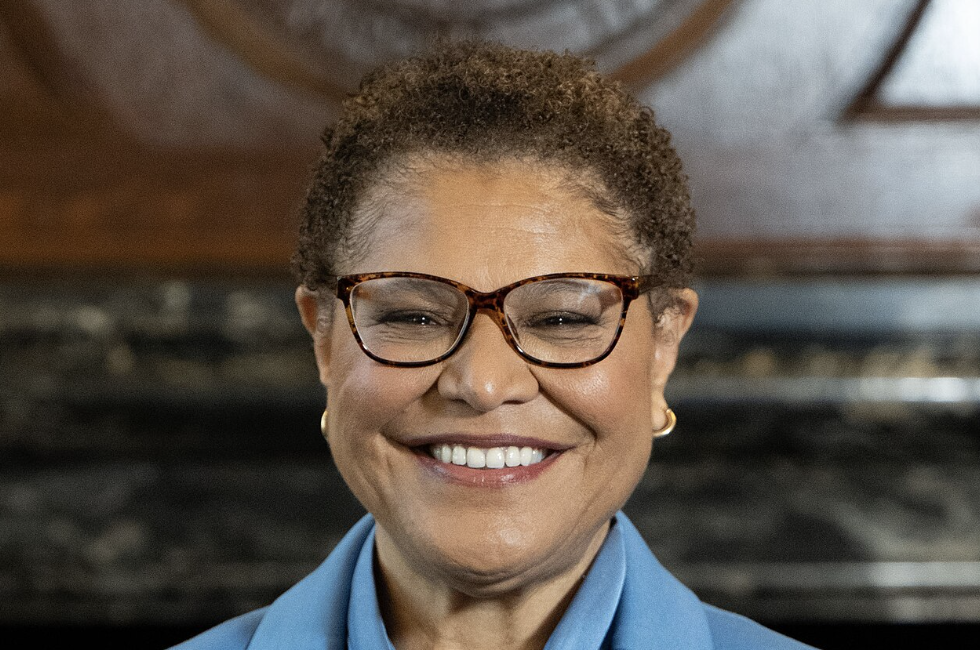
    John Alle, a Los Angeles real estate veteran, criticizes Mayor Karen Bass over a homelessness report on Jul 30, 2026, saying “She doesn’t get it” and pointing to the evidence used to challenge Bass’s handling of homelessness: repeated invitations he says Bass declined to tour L.A. neighborhoods affected by crime, drug use and rising street homelessness.

    The dispute follows a Los Angeles Times report that homelessness is up in Los Angeles, a setback for Bass, whose office has defended its homelessness strategy by emphasizing programs meant to move people indoors.

    Alle’s receipts are street-level

    The word “receipts” can imply documents, spreadsheets or hidden records. In this case, the public challenge described in the Fox News account is more direct: Alle says he has repeatedly invited Bass to see the conditions that residents and property owners say define the crisis on the ground.

    According to the report, Alle’s complaint is that the mayor has not accepted invitations to tour neighborhoods he describes as struggling with crime, drug use and rising street homelessness. His blunt conclusion — “She doesn’t get it” — is aimed less at one policy memo than at the distance he believes exists between City Hall’s narrative and daily life in parts of Los Angeles.

    That framing matters because homelessness politics in L.A. often turns on perception as much as policy. A city can open rooms, sign contracts and clear encampments, yet still face public anger if sidewalks, storefronts and transit corridors appear unchanged or worse.

    The report sharpened the fight

    The immediate backdrop is a Los Angeles Times report published July 23 that said homelessness is up in L.A., dealing a fresh setback to Bass. That is the kind of finding that changes the temperature of the debate, because Bass made homelessness the central promise of her administration.

    For critics, an increase is simple evidence that the city’s approach is not keeping pace. For the mayor’s defenders, one report does not capture the full picture of a crisis shaped by rents, mental health needs, addiction, shelter capacity and years of regional underbuilding.

    Both arguments can be true at once. Los Angeles can be moving people indoors while still seeing too many people fall into homelessness or remain outside. That is what makes the latest criticism more damaging: it lands at the point where program activity and visible results are being judged against each other.

    Bass’s defense is about movement

    Bass has built much of her homelessness agenda around getting people off the street and into temporary or permanent indoor settings. Her administration’s defense has generally rested on the idea that Los Angeles is changing the system, expanding placements and treating encampments as a housing problem rather than only a sanitation or enforcement issue.

    That defense does not erase a reported increase. It asks the public to measure progress by the scale of outreach, housing placements and infrastructure being built, not only by a single topline count or a frustrated walk through a hard-hit block.

    Alle’s criticism presses on the weakness in that argument. If people who live or work near encampments still see disorder, open drug use or tents returning after cleanups, they may not care how many internal benchmarks City Hall says it has met.

    That is the political trap for Bass: homelessness policy takes time, but voters and businesses experience the crisis in real time.

    Real estate voices carry weight

    A real estate veteran is not a neutral observer in the homelessness debate. Property owners and commercial landlords have financial stakes in public safety, foot traffic, liability concerns and neighborhood reputation. Critics of that viewpoint may argue that business frustration can lead to pressure for quick removals rather than long-term housing solutions.

    Still, dismissing that constituency would miss part of the story. In Los Angeles, homelessness affects storefronts, apartment buildings, parks, schools, libraries and transit stops. The people raising alarms are not only investors. They include renters, workers, parents, service providers and unhoused residents themselves.

    Alle’s comments resonate because they package a common complaint in plain language: officials talk about systems, while residents talk about what they see outside their doors. The strongest version of his case is not that real estate interests should dictate policy. It is that policy should be tested against conditions in the neighborhoods it is supposed to improve.

    The numbers need context

    Homelessness counts are essential, but they are imperfect tools. They depend on timing, methodology, geography and the difference between sheltered and unsheltered homelessness. A rise can reflect worsening conditions, better counting or both.

    That complexity is why officials often resist sweeping conclusions from one report. It is also why critics seize on the topline. If the number moves in the wrong direction after major promises and major spending, the burden shifts back to leaders to explain why their strategy should still be trusted.

    The public does not need every methodological caveat to understand the stakes. If homelessness is up, Los Angeles has to answer a practical question: are more people being helped than are becoming homeless, or is the city running hard just to fall behind?

    What remains unclear

    The dispute leaves several questions unresolved. It is not clear from the available public accounts whether Bass will take Alle up on a neighborhood tour, whether her office has directly answered his specific invitations, or whether the latest report will prompt any operational change.

    It is also unclear how City Hall will define success if the next visible milestone is mixed. More housing placements may be real progress. More tents in public spaces may feel like failure. Los Angeles residents are being asked to hold both facts in their heads at the same time.

    The clean takeaway is that the homelessness debate in L.A. has moved beyond promises. Bass is now being judged by whether her strategy produces conditions that people can see, count and trust. Alle’s attack may be political and pointed, but the question underneath it is the one City Hall cannot avoid: when will the evidence on the street match the story from the mayor’s office?

  • Fauci invokes the Fifth more than 100 times as Rand Paul pushes contempt vote

    Fauci invokes the Fifth more than 100 times as Rand Paul pushes contempt vote

    The hearing revived years of disputes over COVID-19 origins, pandemic policy and whether congressional oversight has become a legal trap. A contempt vote could come next.

    Anthony Fauci invoked his 5th Amendment right and refused to answer questions more than 100 times at a Senate COVID hearing Wednesday in Washington, D.C., where Republican senators grilled him on COVID-19 origins and the government’s pandemic response. Fauci called Sen. Rand Paul unhinged, and his silence was aimed at avoiding potential perjury exposure.

    The result was a three-hour confrontation that produced few new answers but sharpened a long-running political and legal fight over Fauci’s pandemic record, Paul’s pursuit of him and what Congress can demand from a witness under oath.

    Why Fauci stayed silent

    Fauci, the longtime infectious disease official who helped lead the national COVID-19 response, appeared before the Senate Homeland Security and Governmental Affairs Committee under subpoena. According to the Associated Press, he repeatedly declined to answer senators’ questions by invoking the Fifth Amendment.

    His stated reason was not simply hostility to the hearing. Fauci argued that Paul had already made clear he wanted him prosecuted and that any answer could be used to accuse him of lying under oath.

    In an opening statement, Fauci said Paul had an obvious obsession with calling for his prosecution. He said the purpose of the hearing appeared to be getting him to say something that could support Paul’s public calls for him to end up behind bars.

    Fauci said he was following his attorney’s advice, even though it pained him to do so. That phrasing matters: the Fifth Amendment protects against compelled self-incrimination, and invoking it is not the same as admitting wrongdoing.

    Paul pressed the prosecution argument

    Paul, a Kentucky Republican and one of Fauci’s most persistent congressional critics, subpoenaed Fauci for the hearing. He has long argued that Fauci should face criminal investigation over earlier testimony and public statements tied to the origins of the coronavirus and federal pandemic decision-making.

    Republicans at the hearing accused Fauci of having lied in past testimony, a charge he has repeatedly denied. With Fauci declining to answer, Paul used much of the session to lay out accusations and detailed questions that went unanswered.

    Paul also announced that the committee would vote next week on whether to hold Fauci in contempt for refusing to answer. He did not specify whether he would seek a criminal contempt referral to federal prosecutors or pursue another route.

    That uncertainty is part of the stakes. A contempt vote can be a political message, a legal escalation or both, depending on how the committee frames it and what Senate leaders do afterward.

    Democrats saw a political trap

    Democrats at the hearing described the session as a politically motivated attempt to trap Fauci, according to AP. They praised his work during the pandemic and argued that Republicans were using congressional power to pursue a long-running personal and partisan campaign.

    That is the central divide. Republicans framed the hearing as oversight of extraordinary government power during an extraordinary public health crisis. Democrats framed it as a prosecutorial fishing expedition aimed at a scientist who became a political symbol.

    Both arguments have audiences beyond the hearing room. Many Americans still want fuller answers about COVID-19 origins, public health restrictions, federal research funding and how pandemic guidance was made. Others see the continued focus on Fauci as an attempt to relitigate the pandemic through partisan score-settling.

    The hearing did little to resolve those questions because the witness at the center of them mostly did not speak.

    The Fifth Amendment complication

    The legal wrinkle is the reason this hearing stood out. Fauci received a pardon in early 2025 from President Joe Biden, according to AP, a fact Republicans raised while questioning whether he could still claim Fifth Amendment protections.

    But the concern described by Fauci’s side was not only about past conduct. The risk, as AP reported, was that any answer given Wednesday could expose him to new accusations of perjury if Republicans believed he lied during the hearing itself.

    That is why the Fifth Amendment can become powerful in congressional testimony. A witness may invoke it if an answer could reasonably furnish a link in a chain of evidence in a criminal case. In a hostile hearing, even a seemingly narrow answer can become the basis for a later dispute over truthfulness.

    For Republicans, that same invocation can look like stonewalling. For Fauci’s defenders, it looked like legal self-preservation in a room where some senators had already declared him guilty in the court of public opinion.

    Old COVID fights resurfaced

    Fauci’s role in the pandemic made him one of the most recognizable and polarizing figures in American public life. He served for decades at the National Institutes of Health and became a regular public face of the federal response as COVID-19 spread, killed and disrupted daily life.

    Paul and Fauci clashed repeatedly during earlier Senate hearings, especially over questions about virus origins, research funding and whether Fauci had been candid with Congress. Those exchanges turned both men into stand-ins for a larger fight over expertise, public trust and government authority.

    COVID-19 origins remain a politically charged subject. So does the government’s handling of masks, shutdowns, school closures, vaccine policy and public messaging. A hearing about Fauci is rarely just about Fauci; it is also about how the country remembers the pandemic and who gets blamed for its failures.

    AP reported that Fauci has faced death threats and sought security, a reminder that the debate has often moved far beyond normal policy disagreement.

    What happens next

    The immediate next step is the committee’s planned vote next week on contempt. If the panel votes to hold Fauci in contempt, the question becomes what kind of enforcement Republicans seek and whether the matter moves beyond political theater.

    A criminal contempt referral would typically require action outside the committee and would put pressure on federal prosecutors, who are not automatically bound to pursue charges. Other contempt paths could create additional legal fights over the subpoena, the scope of questioning and the validity of Fauci’s Fifth Amendment claim.

    What remains unclear is whether the hearing changes anything beyond the politics. Republicans got a public display of Fauci refusing to answer. Fauci avoided giving testimony that could create new perjury exposure. Democrats got another example of what they call a vendetta.

    The larger COVID accountability debate is still unresolved. Wednesday’s hearing showed that years after the emergency phase of the pandemic, Congress is still fighting over the same questions, and the people at the center of those fights are now answering them through lawyers as much as through testimony.

  • Alex Jones Turns on Trump and Calls for Immediate Impeachment Over Iran

    Alex Jones Turns on Trump and Calls for Immediate Impeachment Over Iran

    The demand is striking because Jones has long appealed to parts of Trump’s right-wing media base. It also highlights a growing fight on the right over war powers, Iran and trust in the administration.

    Alex Jones called for Donald Trump to be impeached immediately on Tuesday, and he said this was because of the Iran conflict. Jones calls for Congress to act as he warned that the administration may be preparing a national draft, according to reports from The Hill and WGN-TV; CNN separately posted video of the live-show remarks, saying Jones argued Trump should be impeached over the war in Iran.

    The rupture matters because Jones has long spoken to a segment of Trump’s right-wing media base. His demand turns an internal fight over foreign policy into an impeachment call, even if no formal process has been launched.

    A loyalist breaks over Iran

    Jones, formerly of InfoWars, made the comments during a recording of his show, according to The Hill’s report as carried by WGN-TV. The outlet quoted him saying, “I have had it with Donald Trump!” and accusing the president of “threatening thermonuclear war.”

    The core of the complaint was Iran. Jones framed the conflict not as a policy dispute that could be debated later, but as a crisis serious enough to warrant immediate removal proceedings.

    That is what makes the statement politically notable. Jones has been one of the loudest figures in the ecosystem that helped normalize Trump’s insurgent style. A call from him for impeachment does not mean Congress is likely to move, but it does show how volatile the Iran issue has become among parts of the populist right.

    The draft claim needs proof

    Jones also attached a broader warning to his impeachment demand. WGN-TV, citing The Hill, reported that he claimed he had been briefed by “multiple sources” that the Pentagon was giving orders to “prepare to institute a draft.”

    That claim is serious, but the public record described in the available reports does not verify it. Jones offered it as a warning on his show; the reports do not establish that a national draft is being prepared.

    That distinction matters. The United States has not used a military draft since the Vietnam era, and the country has relied on an all-volunteer force for decades. While Selective Service registration still exists for many young men, actually restarting conscription would be a major political and legal step, not something that can be treated as confirmed because a media figure says he has sources.

    The Hill reported that it reached out to the White House for comment. The available source material does not include a response from the administration.

    Impeachment is a high bar

    Jones pressed Congress to act, but impeachment is not triggered by public pressure alone. Under the Constitution, the House can approve articles of impeachment by a simple majority. Removal from office then requires conviction by a two-thirds vote in the Senate.

    That means an “immediate” impeachment demand is politically dramatic but procedurally difficult. It would require members of Congress to conclude that Trump’s handling of the Iran conflict meets the constitutional standard for impeachment, then assemble enough votes to act.

    There is no indication in the available reporting that congressional leaders have begun such a process in response to Jones’s comments. The statement is best understood right now as a media and movement signal, not as evidence that impeachment is advancing on Capitol Hill.

    Still, impeachment talk can matter before it becomes legislative action. It can shape pressure campaigns, force allies to answer uncomfortable questions and reveal where a president’s coalition is straining.

    Why this split matters

    The Trump-era right has never been a single bloc on foreign policy. Some hawkish conservatives favor aggressive confrontation with Iran. Others, especially in the populist and anti-interventionist wing, see Middle East conflicts as exactly the kind of entanglement Trump once promised to avoid.

    Jones’s comments land squarely in that second camp. His argument is not merely that Trump made a bad tactical choice; it is that the Iran conflict could spiral into a broader war and even conscription. That is why the draft claim, even unverified, is central to the political effect of his remarks.

    For Trump loyalists, the counterargument is likely to be that presidents need room to respond to national security threats and that critics are overstating the danger. For anti-interventionist voices, the fear is that wartime escalation can move faster than public consent.

    This is the tension now exposed: Trump’s brand has depended on strength, loyalty and distrust of establishment foreign policy. Iran tests all three at once.

    What remains unclear

    Several important facts remain unresolved. The available reports do not show what specific Iran-related action triggered Jones’s comments, whether the White House will respond directly, or whether any member of Congress plans to echo his impeachment demand.

    The draft allegation is also unanswered. If the administration or Pentagon denies it, that would undercut one of Jones’s most explosive claims. If officials refuse to engage, the claim may continue circulating among audiences already inclined to distrust official statements.

    There is also the question of influence. Jones can still drive attention, but attention is not the same as congressional power. His comments may resonate with voters who oppose escalation while failing to move lawmakers who remain aligned with Trump.

    The immediate takeaway is narrower but important: a prominent right-wing broadcaster who has often operated inside Trump’s media orbit is now publicly calling for Trump’s impeachment over Iran and warning of a draft. Whether that becomes a broader revolt or remains a one-show flashpoint depends on what the administration says next, what Congress does and whether the Iran conflict escalates further.

  • Trump rejects $227 million in disaster aid to four Democratic-led states

    Trump rejects $227 million in disaster aid to four Democratic-led states

    The denials affect storm recovery money that state officials say had cleared federal damage benchmarks. The dispute now raises a larger question about whether disaster relief is being tightened, politicized or both.

    Donald Trump denied disaster aid to four Democratic-led states, and the affected states were New York, New Jersey, Massachusetts and Rhode Island. The White House rejected $227 million in federal disaster assistance after it overruled FEMA and NOAA findings tied to the requests, turning a technical disaster-relief decision into a political fight over who gets help after major storms.

    Politico reported that FEMA estimates showed all four states cleared current damage thresholds; critics say Trump blocked disaster aid despite those findings. FEMA says the administration has returned to a more rigorous review process. That makes the fight bigger than one storm cleanup: it tests how much discretion presidents have over disaster money.

    Four states, one rejected package

    The denials cover requests from New York, New Jersey, Massachusetts and Rhode Island for help recovering from damaging weather. The total sought was $227 million, according to Politico, with the money aimed at public costs that can follow major storms: debris removal, emergency protective work, infrastructure repairs and other eligible reimbursements.

    The core of the dispute is not whether states wanted help. It is whether the federal government agreed that the damage rose to the level of a major disaster declaration. FEMA’s role is to assess the request and provide recommendations; the president ultimately decides whether to grant the declaration.

    State officials and lawmakers say FEMA’s own numbers supported approval. The documented damage cited in the reporting included $84.4 million in New Jersey, $79 million in New York, $45 million in Massachusetts and $19 million in Rhode Island.

    Those figures matter because FEMA uses statewide and local damage indicators to determine whether a disaster overwhelms state and local capacity. The states argue the bar was met. The administration says it is applying tougher scrutiny.

    Why FEMA thresholds matter

    Federal disaster aid is not automatic after severe weather. Governors request a declaration, FEMA reviews the damage and the White House decides whether federal assistance is justified under the Stafford Act framework.

    In New Jersey, lawmakers said FEMA documented $84.4 million in eligible damage while the state’s qualifying threshold was roughly $18.5 million. That gap is why the denial drew immediate attention: the damage estimate was not just above the benchmark, it was several times higher.

    The other three states also had damage totals that officials said exceeded FEMA’s current thresholds. That does not legally force a president to approve aid, but it has traditionally given states a strong basis for expecting federal support.

    FEMA also maintains a public Declaration Denials dataset through OpenFEMA that lists denied major disaster and emergency declaration requests. The agency notes that the data comes from its disaster systems and may contain some human error, but the dataset underscores a basic point: denials happen. The argument here is whether these denials fit ordinary discretion or mark a sharper political turn.

    The White House’s tougher line

    FEMA’s public defense is that the Trump administration has returned to a more rigorous review process. The agency says the goal is to ensure federal assistance is reserved for events that truly justify national support, not routine or expected weather impacts.

    That argument has policy force. Disaster costs are rising, extreme weather is straining federal budgets, and both parties have at times warned that the disaster-relief system needs clearer limits. A stricter threshold could push states to invest more in resilience and reserve funds.

    But the timing and targets of the denials are what make this case explosive. The rejected requests came from four Democratic-led states in the Northeast, all seeking aid after storms that officials say caused qualifying damage. When technical findings point one way and the final political decision goes the other, governors and senators tend to ask for the paper trail.

    The NOAA piece also matters because disaster requests often rely on federal weather analysis as well as FEMA damage estimates. If scientific and damage assessments supported the states’ claims, the unresolved question is what rationale outweighed them at the White House.

    Democrats see a pattern

    Politico reported earlier that, during Trump’s current term, the administration had approved 23 percent of disaster requests from states where the governor and both U.S. senators are Democrats, compared with 89 percent for states where those offices are held by Republicans.

    That comparison does not prove motive by itself. Different disasters vary in size, documentation, insured losses, local capacity and timing. A serious review has to account for those differences before treating the numbers as evidence of discrimination.

    Still, the gap is large enough that Democratic lawmakers are pressing for answers. Sen. Andy Kim of New Jersey and 15 other Democratic senators have demanded documents and information from the White House in response to the reported approval disparity.

    The political stakes are straightforward. Disaster aid is supposed to be one of the least partisan functions of government because floods, storms and infrastructure failures do not sort themselves by party registration. If states believe aid is being filtered through a partisan lens, trust in the system erodes quickly.

    Governors are preparing appeals

    New York Gov. Kathy Hochul has said she will appeal the denial. Her argument is that disaster response is a federal responsibility when damage exceeds what states and localities can reasonably absorb.

    Massachusetts Gov. Maura Healey also plans to appeal, according to a spokesperson for the state Emergency Management Agency cited by Politico. Appeals give states a chance to submit more documentation, clarify damage estimates or challenge the reasoning behind a denial.

    New Jersey and Rhode Island officials have similar incentives to keep pressing. For local governments, the difference between approval and denial is not abstract. It can determine whether taxpayers in hard-hit communities shoulder repair costs alone or receive federal reimbursement.

    Appeals may also force more transparency. If the administration releases detailed denial reasoning, the public may get a clearer view of whether the decisions were based on documentation gaps, policy changes, fiscal restraint or a broader effort to shift disaster costs back to states.

    The bigger disaster-aid fight

    Trump has spent much of his current presidency pushing to weaken FEMA’s role and move more disaster responsibility to states. A Trump-appointed panel reviewing FEMA policy has suggested raising the damage threshold used to determine whether states qualify for federal help.

    That idea has supporters who argue the federal government has become too quick to pay for events states should handle themselves. They see stricter standards as a way to preserve disaster funds for truly catastrophic events.

    Opponents argue that raising the bar would punish states and localities already facing more frequent high-cost weather events. Wealthier states may absorb more costs; smaller communities, coastal towns and older infrastructure systems may not have that cushion.

    The immediate question is whether New York, New Jersey, Massachusetts and Rhode Island can reverse the denials. The longer-term question is whether federal disaster relief is being rewritten through individual decisions before the public has a clear rulebook. For residents waiting on repairs and reimbursements, that distinction may not matter much. The money is either coming, or it is not.

  • Trump demands world’s lowest interest rates as Fed cut odds fall below 1%

    Trump demands world’s lowest interest rates as Fed cut odds fall below 1%

    The gap between Trump’s rate demand and market pricing shows how inflation concerns, Fed independence and household borrowing costs are colliding ahead of the next decision.

    Trump said the United States should have the world’s lowest interest rates. On Monday, Donald Trump called on the Federal Reserve to lower interest rates, but prediction markets are not pricing in a near-term Federal Reserve cut. Fed cut odds fall below 1%, according to market figures cited by Benzinga, putting traders sharply at odds with Trump’s preferred path.

    The divide matters because the Fed’s next move can ripple through mortgages, credit cards, stocks and business financing. Reuters reported that Trump made the comments while urging the Fed to cut, even as markets pointed toward either no change or a possible hike.

    Markets see almost no cut

    The clearest signal from the cited prediction-market data is that traders are not treating Trump’s call as the likely outcome.

    According to Benzinga, Polymarket traders put the odds of a July rate hike at 21%, while no change stood at 79%. The odds of a cut had dropped below 1%, making a near-term reduction a long-shot scenario rather than the market’s central expectation.

    Prediction markets are not Federal Reserve guidance. They are prices formed by traders who are putting money behind expected outcomes. They can miss, but they offer a snapshot of where sentiment is clustering before a policy decision.

    In this case, that clustering is not around a fast pivot to cheaper money. It is around the Fed holding its line, with some traders also weighing the possibility that rates could move higher.

    Trump wants cheaper money

    Trump has repeatedly favored lower interest rates, arguing that cheaper borrowing can support growth, financial markets and consumer confidence. His latest statement sharpened that position by saying the U.S. should have the lowest interest rate in the world.

    The political appeal is easy to understand. Lower rates can reduce financing costs for households, companies and the government. They can also support stocks by making future earnings look more attractive and pushing investors toward riskier assets.

    But central banks do not set rates simply by asking what would help borrowers most in the moment. The Fed’s mandate is focused on maximum employment and stable prices.

    If inflation remains too high, cutting rates too early can make the inflation fight harder by loosening financial conditions and encouraging more borrowing. That is why Trump’s demand also raises the familiar question of how publicly the president should pressure an institution expected to make decisions based on economic conditions.

    Why the Fed may hold

    Benzinga reported that the Fed had kept its target range at 3.50% to 3.75% since December, including at Warsh’s first meeting in June. That range is nowhere near the lowest in the world, but it reflects an effort to balance inflation risk against signs of economic slowing.

    The case for staying put is straightforward: if inflation is still sticky, policymakers may not want to signal victory too early. A premature cut could ease financial conditions before inflation is fully under control.

    The case for a hike is more contested, but it has not disappeared. Benzinga cited Dallas Fed President Lorie Logan as saying conditions called for modestly higher rates. Cleveland Fed President Beth Hammack said inflation was too high while the labor market was near full employment.

    That leaves the Fed in a politically uncomfortable position. Holding steady would disappoint Trump’s call for lower borrowing costs. Hiking would go even further against that pressure and could anger borrowers and investors hoping the next move would be down.

    Wall Street prices added risk

    Prediction markets were not the only signal pointing away from a quick cut. Benzinga reported that interest-rate swaps implied roughly a 40% chance of a hike as of Monday, citing Bloomberg.

    That figure was more aggressive than Polymarket’s 21% hike probability. The difference matters because prediction markets and derivatives markets may reflect different groups of participants, time horizons and risk assumptions.

    Citadel Securities, according to Benzinga, expected Warsh not to follow the president’s wishes and called for a quarter-point increase on Wednesday. Its macro strategist Frank Flight argued that such a move would reinforce a pledge on price stability and mark a break from the forward-guidance era.

    That was not the consensus in the Polymarket data cited by Benzinga. No change remained the largest outcome there. Still, the fact that hike odds were visible at all shows how distant the debate was from Trump’s call for the world’s lowest rates.

    Borrowers already feel pressure

    For households, the dispute is not limited to Washington or trading screens. Interest-rate expectations feed into mortgages, auto loans, credit cards and business financing.

    Even when the Fed leaves its target rate unchanged, market rates can move as investors anticipate what the central bank may do next. Benzinga cited Cato Institute data showing the 2-year Treasury yield had risen 62 basis points and the 30-year mortgage rate had climbed 45 basis points since December, even as the Fed’s target rate stayed flat.

    That means financial conditions can tighten before policymakers officially change rates. Housing is often one of the first places consumers feel it, because higher mortgage rates can reduce affordability, weaken refinancing demand and limit the pool of qualified buyers.

    Benzinga pointed to Rocket Companies and D.R. Horton as examples of businesses exposed to rate-sensitive pressures. It also noted potential pressure on the Invesco QQQ Trust, which tracks a tech-heavy Nasdaq benchmark, because higher rates can weigh on high-growth companies by increasing the discount applied to future earnings.

    The lowest rate idea has limits

    Trump’s argument frames low rates as a competitive advantage: if other countries can borrow cheaply, why shouldn’t the United States?

    The complication is that interest rates are not a global scoreboard. Countries differ in inflation, currencies, debt profiles, demographic pressures and central-bank mandates. Very low rates can signal favorable conditions in one economy and weakness or stagnation in another.

    The dollar also matters. U.S. rates help anchor global capital flows. If American rates were pushed sharply lower while inflation remained a concern, investors could demand compensation elsewhere, potentially weakening confidence in U.S. assets.

    That does not mean rates must stay high indefinitely. It means the path lower usually needs evidence, such as cooling inflation, a softer labor market or financial stress serious enough to justify easier policy.

    What remains unsettled

    The immediate question is whether the Fed holds, hikes or surprises markets with a cut. Based on the prediction-market figures cited by Benzinga, a cut was barely priced. The live contest appeared to be between no change and a possible increase.

    Another unresolved issue is how Warsh and other Fed officials communicate the decision. Benzinga noted criticism from Governor Christopher Waller over limited guidance, citing a Wall Street Journal report. Less guidance can leave markets guessing and make each Fed meeting more volatile.

    The political pressure is unlikely to disappear. If the Fed resists Trump now, he can continue arguing that high rates are holding back growth. If the Fed eventually cuts, supporters may portray that as validation of his pressure, even if policymakers cite inflation data instead.

    For now, the message from prediction markets is clear: Trump has publicly called for the world’s lowest U.S. interest rates, but traders do not see the Federal Reserve delivering that outcome quickly.

  • ESPN’s Monica McNutt Faces Backlash Over Caitlin Clark “Accountability” Remark

    ESPN’s Monica McNutt Faces Backlash Over Caitlin Clark “Accountability” Remark

    Clark’s rise has made routine WNBA commentary feel loaded. McNutt’s remarks show how quickly a discussion about media pressure can become a debate over fairness, responsibility and tone.

    ESPN analyst Monica McNutt faced backlash over comments about Caitlin Clark after Clark said media coverage was emotionally exhausting. McNutt said Clark should show more self-awareness and accountability while responding to the Indiana Fever guard’s remarks, a framing that irritated fans and viewers already wary of how the WNBA conversation around Clark is covered.

    The issue is not just one analyst’s wording. McNutt’s comments put ESPN in the middle of a familiar tension: Clark’s enormous attention has boosted interest in the WNBA, but it has also turned coverage of her into a fight over tone, responsibility and who gets blamed when the discourse turns ugly.

    Why the remark landed hard

    According to comments quoted by ChiCitySports, McNutt was responding to Clark’s description of the media attention around her as “emotionally exhausting.” McNutt did not reject that premise outright. She said she believed Clark does have an emotional experience in the league.

    But McNutt widened the conversation beyond Clark’s personal fatigue. She focused in part on Clark’s use of the word “fearful” and discussed how the broader WNBA conversation affects players who are accused of operating outside “the parameters of competition.”

    The line that became the center of the backlash was McNutt’s assessment of what Clark still needs as she grows in the league. McNutt called Clark “24” and “a shining star in the galaxy of the WNBA,” but said there was “room for a little bit more accountability and self-awareness” as Clark continues to “matriculate through this league.”

    McNutt also said she agreed that the discourse is exhausting, particularly for people who want to celebrate the league and the quality of basketball being played. That mix of agreement and critique is what made the segment so combustible.

    Fans heard a lecture

    For many critics, the problem was not simply that McNutt raised the idea of responsibility. It was that Clark had described the burden of constant scrutiny, and the response still turned into an examination of what Clark should do better.

    That is why the words “accountability” and “self-awareness” carried so much weight. To viewers sympathetic to Clark, they sounded less like context and more like a reprimand aimed at a player already living under an unusually bright spotlight.

    ChiCitySports cited several social media reactions from viewers who objected to McNutt’s framing. Some responses were bluntly critical of McNutt’s commentary style, while others argued that Clark’s words were being dissected more aggressively than another player’s might be.

    The backlash also reflects a deeper frustration among Clark fans: the sense that Clark is often expected to answer for everything around her, from ratings and rivalries to fan behavior, fouls, media narratives and how other WNBA players are discussed.

    The fairer reading of McNutt

    There is another way to interpret McNutt’s point. She did not say Clark was inventing her exhaustion. She explicitly acknowledged that Clark was having an emotional experience, and she described the larger discourse as disappointing.

    McNutt also appeared to be addressing the collateral damage that can follow Clark-related coverage. When a physical play, hard foul or defensive matchup involving Clark becomes a national argument, other WNBA players can receive online abuse.

    In that reading, McNutt was not assigning Clark full responsibility for the behavior of fans or the media. She was suggesting that a player with Clark’s visibility may have some role in shaping the tone of the conversation, especially within what McNutt described as the “larger sisterhood” of the WNBA.

    The challenge is that nuance rarely survives the clip cycle. On television, a few phrases can become the entire story. On social media, they often become proof of whatever viewers already believed about the analyst, the player or the network.

    Clark coverage is uniquely charged

    Clark’s arrival in the WNBA has turned ordinary basketball moments into national talking points. Regular-season games, press conferences and studio segments can become referendum-style debates about the league, its marketing, its players and its coverage.

    That attention has helped raise interest in the WNBA. It has also made commentary around Clark feel unusually loaded. A discussion that begins with a basketball topic can quickly become a broader argument about media tone, racial dynamics, fan conduct and who is expected to absorb the consequences of Clark’s popularity.

    That is the pressure point McNutt stepped into. Clark said the coverage was emotionally exhausting. McNutt acknowledged that exhaustion, then tried to place it inside a wider conversation about the league and other players affected by the discourse.

    For viewers who already believe Clark is over-critiqued, that pivot sounded like more of the same. For those concerned about the way Clark-centered attention spills onto other players, McNutt’s comments may have sounded like an attempt to name a real problem.

    ESPN’s role in the debate

    ESPN matters here because its analysts are not just observing the WNBA’s rise in visibility. They are helping define how a large audience understands the league’s most contentious storylines.

    In Clark-related discussions, tone can matter as much as the take itself. A phrase that might be intended as a call for maturity or league-wide awareness can land as unnecessary policing if viewers think the player is already being treated as a stand-in for every controversy around her.

    That is why this backlash became about more than McNutt’s exact wording. It touched on trust: whether fans believe ESPN’s commentary on Clark is balanced analysis, harsher scrutiny than other players receive, or an effort to hold together a WNBA conversation that keeps spinning into conflict.

    Sports television rewards strong opinions, but the Clark discourse has shown how quickly strong opinions can become personal. Analysts are asked to explain the moment, yet the moment itself is volatile.

    What remains unresolved

    As of the material reviewed, no formal statement was included from McNutt, Clark or ESPN addressing the backlash directly. That leaves the controversy largely shaped by clips, quote posts and reaction accounts.

    It is also unclear whether McNutt’s remarks will matter beyond another cycle of online criticism. Clark’s prominence makes it likely that analysts will continue debating her place in the WNBA’s growth and friction.

    The larger question is whether coverage can separate Clark’s individual experience from the cultural fight around her. Clark can be emotionally exhausted by relentless attention. Other players can also be harmed by abusive fan reaction. Both points can be true at the same time.

    That is what makes the McNutt backlash revealing. The dispute is not only about one comment. It is about whether the people covering Clark can discuss the full weight of her spotlight without making Clark herself seem responsible for every shadow it casts.

  • Tami Roman Fires Back After Sigma Gamma Rho Honor Sparks Criticism

    Tami Roman Fires Back After Sigma Gamma Rho Honor Sparks Criticism

    Roman’s response put a spotlight on a familiar tension inside honorary Greek-letter inductions: how legacy, service, celebrity and nontraditional paths are weighed in public.

    Tami Roman was named an honorary member of Sigma Gamma Rho Sorority after Sigma Gamma Rho announced a 21-woman honorary class in Tampa, Florida, on Friday, July 24, 2026, during its 61st Biennial Boule. Roman responded to criticism about the honor almost immediately, turning a celebratory induction into a wider conversation about celebrity, service and access to historically Black sorority life.

    The moment matters because honorary membership is not just a title in these organizations. It is a public statement about whose work, influence and values are being embraced as part of a long-running sisterhood.

    Roman answers in her own words

    Roman marked the announcement on Threads with gratitude, while also speaking directly to anyone questioning why she was included.

    “My journey didn’t include the college experience, but I’m grateful the sisterhood of a sorority didn’t pass me by,” she wrote. “I’m truly humbled and honored to be an honorary member of Sigma Gamma Rho!”

    She also shared a graphic that took a sharper tone: “Somebody, somewhere doesn’t think this was a good idea. Somebody, somewhere can discuss their concerns with God about his plans for ME.” She closed the message with Sigma Gamma Rho’s familiar “EEEEEEYIP.”

    Roman’s response did not read like a formal defense of her résumé. It leaned on gratitude, faith and defiance, while naming the part of her story that makes the honor especially personal: she did not take the traditional college route into sorority life.

    Who joined the honorary class

    Sigma Gamma Rho announced the group as its “TrailblazerΣ Honorary Membership Class.” The sorority said the 2026 Boule induction class reflects “the spirit of service, the power of purpose” and the idea that women across fields and communities can expand what is possible.

    Roman was listed as Tami Roman Youngblood and described as a media and social influencer and mental health advocate. Her inclusion drew much of the online attention, but she was one of 21 women recognized.

    The class reaches across entertainment, sports, public service, education, business and advocacy. Among the women named were:

    • Paralympian and nonprofit founder Femita Ayanbeku-Bradley
    • Actress and entrepreneur Malorie Bailey
    • Plumbing-industry pioneer Adrienne Bennett
    • Olympic athlete Michelle Carter
    • “Sesame Street” veteran Sonia Manzano
    • Black Girl Sunscreen founder Shontay Lundy
    • Acclaimed musician Venzella Joy Williams
    • Lynette Woodard, an Olympic gold medalist and the first female Harlem Globetrotter

    That range is important context. Sigma Gamma Rho presented the class as a group tied to service, achievement and influence, not simply a celebrity rollout.

    Why this honor draws scrutiny

    Honorary membership in historically Black Greek-letter organizations can be deeply meaningful and, at times, controversial. These groups carry cultural, educational and civic weight, and many members associate sisterhood with undergraduate chapter life, community work, rituals and years of commitment.

    That is why honorary inductions can generate mixed reactions. Supporters often see them as a way to recognize women whose public work reflects a sorority’s values. Skeptics can worry that famous names may receive attention that overshadows members who have served quietly for years.

    Roman’s post touched the most sensitive part of that divide: the college experience. Her message framed honorary membership as a door that opened later in life, rather than a substitute for the path many members took as students.

    What remains unclear is the exact criticism Roman was responding to. The available posts do not identify a single named critic or a formal complaint. Her remarks read more like a response to a familiar kind of backlash than to one documented dispute.

    A wider sorority moment

    Roman’s induction did not happen in isolation. Sigma Gamma Rho’s announcement came during a summer when other historically Black sororities also introduced honorary members, adding to a broader conversation about how these organizations define impact in 2026.

    Zeta Phi Beta recently welcomed honorary members including Niecy Nash-Betts, Sheila E., Cheryl “Coko” Gamble of SWV, Elise Neal, U.S. Rep. Lateefah Simon and Tennessee State Rep. Karen D. Camper.

    Alpha Kappa Alpha also announced a class that included scientist Dr. Kizzmekia Corbett-Helaire, LaTanya Richardson Jackson, Salli Richardson-Whitfield, Pauletta Pearson Washington, Merline Saintil and Robin Washington.

    Taken together, those announcements show organizations recognizing women whose influence spans entertainment, science, politics, philanthropy and culture. Roman’s case became especially visible because her public image has long been debated.

    Roman’s fame cuts both ways

    Roman is known for reality TV, acting and mental health advocacy. Her career has included “The Real World,” “Basketball Wives” and scripted television such as “The Ms. Pat Show.”

    That visibility is part of why the honor attracted attention. Fans may see longevity, candor, entertainment work and advocacy as reasons the recognition fits Sigma Gamma Rho’s stated focus on service and purpose.

    Critics may see the reality-TV association first and question whether that persona should be attached to a sorority’s public image. Both reactions show how strongly audiences attach past television moments to women in the public eye, even when their careers expand into other work.

    Roman did not try to answer every possible objection. Instead, she treated the induction as a personal milestone and made clear that she would not let outside skepticism define it.

    What the Tampa moment means

    The confirmed facts are straightforward: Sigma Gamma Rho named Tami Roman as one of 21 honorary members during its 61st Biennial Boule in Tampa, and Roman publicly celebrated the recognition while pushing back at criticism.

    The meaning is more layered. For Roman, honorary membership connects her to a sisterhood she said she missed through the traditional college experience. For Sigma Gamma Rho, her induction places her inside a class described around service, purpose and trailblazing achievement.

    The debate around Roman is ultimately about more than one celebrity name. It is about how legacy institutions decide whose influence counts, especially when that influence was built outside campus chapters and traditional routes.

    Honorary membership does not erase the standard path into Black Greek life. In Roman’s case, it shows how historically Black sororities are also using honorary recognition to acknowledge women whose public work, personal platform and community impact took a different road.

  • Couple buys $640 Trump watch, gets “RUMP” typo and $800 store credit

    Couple buys $640 Trump watch, gets “RUMP” typo and $800 store credit

    The typo turned a political collectible into a consumer complaint. The dispute also shows why fine print matters when celebrity-branded merchandise is sold through licensed sellers.

    Tim Petit and Melanie Petit, a Rhode Island couple, bought a $640 limited-edition Trump-branded watch as a gift. But the watch arrived with “RUMP” on the face instead of Trump, missing the “T,” and the company offered an $800 apology in store credit — a coupon for its own site, not cash.

    WJAR reported from Providence, R.I., that Tim said the Pink Inauguration First Lady model was one of 250 made. The couple’s complaint is about more than a typo: it tests what shoppers can expect when limited-run political merchandise arrives visibly wrong.

    A pricey gift goes sideways

    According to WJAR reporting carried by CNN Newsource and local stations including KPTV and WKYT, Tim Petit bought the Donald Trump-branded watch for Melanie after hearing a radio advertisement that featured Trump’s voice.

    Tim told the station the ad made him curious enough to visit gettrumpwatches.com. He chose the Pink Inauguration First Lady model, saying it looked attractive and seemed like something his wife would like.

    The price was $640. The draw, Tim said, was also scarcity: he described the watch as a limited edition, one of only 250 made.

    That is why the error landed differently than a routine shipping problem. On a product built around a famous name, the name on the face is not decoration. It is central to what the customer paid for.

    The typo was immediately visible

    Melanie Petit told WJAR she noticed right away that the watch did not say “Trump” as expected. She said the face read “R-U-M-P.”

    She liked the style of the watch, according to the report, but the missing letter made the item stand out for the wrong reason. Tim said he was disappointed because the purchase was meant to be a special gift for his wife.

    The Petits also questioned how the item made it through the process. Melanie wondered how a mistake so obvious could be handled and shipped without being caught.

    Tim told the station he believed someone in the licensing operation needed to know that “someone’s dropped the ball big time.”

    The apology kept them shopping

    The company eventually responded, according to WJAR. The Petits said it apologized, planned to replace the watch and offered them an $800 coupon to buy something else on the site.

    On paper, $800 is more than the $640 purchase price. But the distinction matters: the offer was store credit, not an $800 cash payment.

    That can divide customer expectations. Some shoppers may see a replacement plus credit as a meaningful gesture, especially if the company is trying to make up for an embarrassing mistake.

    Others may see a coupon as limited compensation because it only helps if the customer wants to spend more money or place another order with the same seller. The available reporting does not spell out every condition attached to the coupon, including expiration dates, exclusions or whether it could be combined with other offers.

    Fine print shifts responsibility

    The Trump branding is part of why the story spread, but WJAR reported an important distinction about who is behind the product.

    The site describes its products as the “official watches of President Trump,” according to the report. Its fine print says it licenses the name and likeness.

    The disclaimer also says the watches are not designed, manufactured, distributed or sold by Donald J. Trump, the Trump Organization or their respective affiliates or principals. It says the products have nothing to do with any political campaign.

    That separation is common in celebrity and political merchandise. A public figure’s name can appear prominently in marketing while manufacturing, fulfillment and customer service are handled by a licensee or vendor.

    Why a missing letter mattered

    The “RUMP” misprint is the kind of mistake that travels fast online because it is simple, visual and politically charged. But the consumer issue would still exist even without the joke.

    Limited-edition merchandise often asks buyers to pay more because the item is presented as scarce, commemorative or collectible. In this case, Tim said the watch was one of 250 made, which made accuracy and presentation part of the value.

    There is a possible counterpoint: some production mistakes can become collectible because they are unusual. Misprinted coins, stamps and memorabilia have sometimes attracted attention for that reason.

    That possibility does not erase the Petits’ complaint. A buyer who ordered a gift did not ask for an error, and a defect does not become an acceptable substitute just because someone else might later find it interesting.

    What still is not clear

    The public reporting leaves several practical questions unanswered. It is not clear how the typo passed inspection, whether other watches in the same limited edition had the same missing letter, or which vendor in the supply chain was responsible for the watch face.

    It is also unclear whether the replacement watch had arrived when the reports were published, or whether the Petits used or planned to use the $800 coupon.

    For shoppers, the broader lesson is straightforward: limited-edition and politically branded items deserve close scrutiny. Order confirmations, photos of defects and customer-service messages can matter if a product arrives wrong.

    The Petits’ watch was supposed to carry a famous name. Instead, one missing letter turned a $640 gift into a public complaint about quality control, licensed branding and whether store credit is enough when the product itself is wrong.