The Louisiana Republican’s objection puts a sensitive Jan. 6 question inside a broader Senate fight over funding, nominations and Trump-era grievance politics.
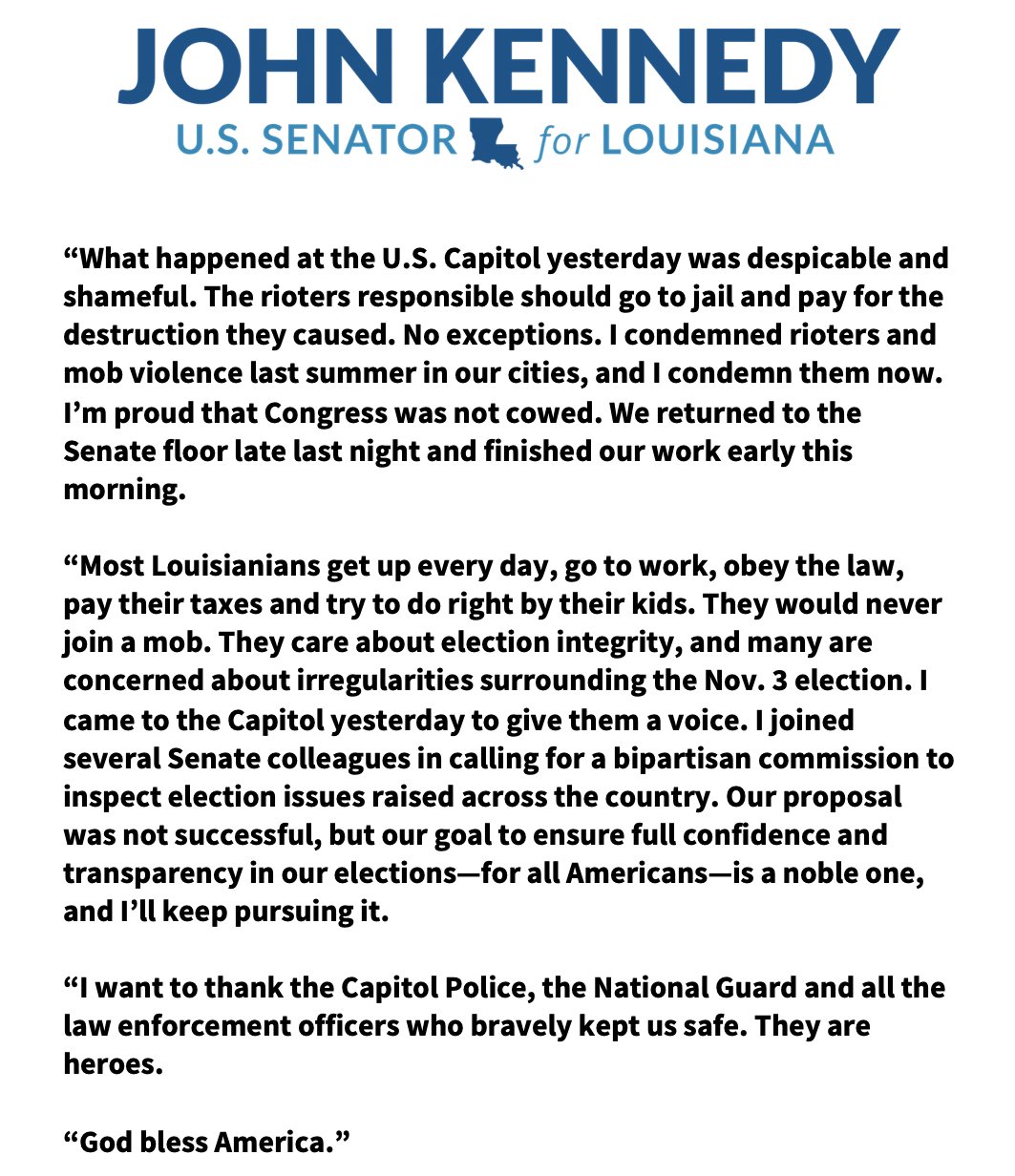
Sen. John Kennedy rejects a government shutdown deal in the U.S. Senate and says the Louisiana Republican wants to ban payouts for Jan. 6 rioters tied to the Jan. 6, 2021 attack on the Capitol. The fight matters now because congressional negotiators are trying to move the shutdown negotiations while a separate $1.776 billion “anti-weaponization” fund has become a flashpoint.
Kennedy wants to ban payouts for Jan. 6 rioters before any compromise advances. His message — quoted elsewhere as “hell no” — is not just about spending levels; it is about whether people who stormed the Capitol can ever draw taxpayer-funded benefits from a new grievance fund.
Kennedy draws a Jan. 6 line
Kennedy, a Louisiana Republican, has not positioned himself as automatically opposed to every version of an “anti-weaponization” bill. His line is narrower and more politically charged: he does not want Jan. 6 rioters included in any new taxpayer-backed pathway for compensation.
NBC News reported that Kennedy told “Meet the Press” he would not give the Trump administration a “blank check” for the proposed fund. Asked whether people who attacked law enforcement or stormed the Capitol on Jan. 6 should be able to receive taxpayer money from it, Kennedy said he would “take them off the table.”
That answer matters because it gives Republicans a way to criticize what they see as government abuse without embracing one of the most divisive groups in American politics: defendants and participants connected to the Capitol attack.
Kennedy’s argument is also procedural. He said Jan. 6 defendants who believe the federal government wronged them already have a route to bring claims under existing law, where a judge can evaluate the case.
The $1.776 billion sticking point
The fight centers on a proposed $1.776 billion “anti-weaponization” fund that emerged from President Donald Trump’s settlement with the IRS over his leaked tax returns, according to NBC News. The settlement also included audit protections for Trump, his family members and companies.
The Justice Department backed away from the fund after bipartisan pushback, but Trump later reopened the possibility of pursuing it. A judge has also extended a block on the fund, meaning the money is not simply available for distribution.
For supporters, the fund is framed as a remedy for people who say the federal government was used against them for political reasons. For critics, it risks becoming a politically favored compensation pool with loose standards and unclear guardrails.
Kennedy is trying to occupy a middle lane: willing to read a bill, willing to consider improvements to existing remedies, but unwilling to let the fund become a blank check — especially for Jan. 6 rioters.
Why this affects shutdown talks
Shutdown negotiations are rarely only about top-line spending. Lawmakers often use must-pass funding moments to force decisions on unrelated or semi-related issues that might otherwise stall.
That is where Kennedy’s stance becomes important. If negotiators are trying to assemble a broader compromise, a demand to exclude Jan. 6 rioters from any related funding language can become a condition for support, not a side comment.
The available detailed reporting focuses more heavily on the “anti-weaponization” fund and Justice Department politics than on the full text of the shutdown compromise. That leaves an important caveat: the exact shutdown deal Kennedy rejected, and the precise legislative language he wants, have not been fully spelled out in the extracted public record.
Still, the political signal is clear. Kennedy is warning colleagues that any package touching this fund needs a carveout for Jan. 6 participants if it expects to avoid a backlash from senators who do not want to subsidize Capitol rioters.
Blanche nomination adds pressure
The fund is also wrapped into the nomination fight over Todd Blanche to be attorney general. NBC News reported that Republican Sens. John Cornyn of Texas and Thom Tillis of North Carolina have said they would only support Blanche if the Justice Department changes conditions tied to Trump’s IRS settlement and provides assurances that the fund is dead.
A Senate Judiciary Committee hearing on advancing Blanche was postponed after it became clear he did not have enough Republican support, NBC reported. The committee vote was rescheduled for Tuesday.
Trump has suggested he could keep Blanche as acting attorney general and pursue an “anti-weaponization” bill if Cornyn and Tillis block the nomination. That threat effectively ties the nomination fight to the fund fight.
Kennedy’s comments fit into that pressure campaign, but not neatly on either side. He has previously said he believed Blanche when Blanche told lawmakers the Justice Department was not pursuing the fund anymore. Now Kennedy is saying that if the fund comes back in legislative form, Jan. 6 rioters should be excluded.
Existing claims are Kennedy’s fallback
Kennedy pointed to the Federal Tort Claims Act as an existing mechanism for people who believe they were abused by the government. That law allows certain claims against the federal government, subject to restrictions and legal review.
His point is that Congress does not have to create a broad new fund to address every claim of government misconduct. Courts can already evaluate specific cases.
That distinction is central to the debate. A court-based process is slower and narrower, but it also requires evidence and judicial scrutiny. A congressionally created fund could be faster and broader, but critics worry it could be designed to favor politically connected claimants.
By emphasizing existing law, Kennedy is giving himself room to say he is not dismissing all claims of government overreach. He is rejecting a special benefit for people associated with the Capitol attack.
What remains unresolved
The biggest open question is whether Senate negotiators will write Kennedy’s demand into any bill or side agreement. A verbal assurance may not satisfy senators who want a hard ban; overly broad language could also sweep in people who never committed violence but were still connected to Jan. 6 cases.
Another unresolved issue is whether the fund survives at all. If Cornyn, Tillis and other Republicans continue demanding that it be killed, Kennedy’s carveout may become unnecessary. If Trump and allies revive it, Kennedy’s exclusion demand could become a key test of Republican support.
The politics are uncomfortable for both parties. Democrats can argue the fund rewards Trump’s grievances. Republicans can argue that legitimate victims of government abuse deserve a remedy. Kennedy’s position attempts to separate those arguments from Jan. 6, where public sympathy is much harder to claim.
For now, Kennedy’s “hell no” stance is a warning shot inside a larger negotiation: no shutdown compromise, nomination bargain or anti-weaponization bill should create a taxpayer-funded payday for people who stormed the Capitol on Jan. 6, 2021.
Leave a Reply