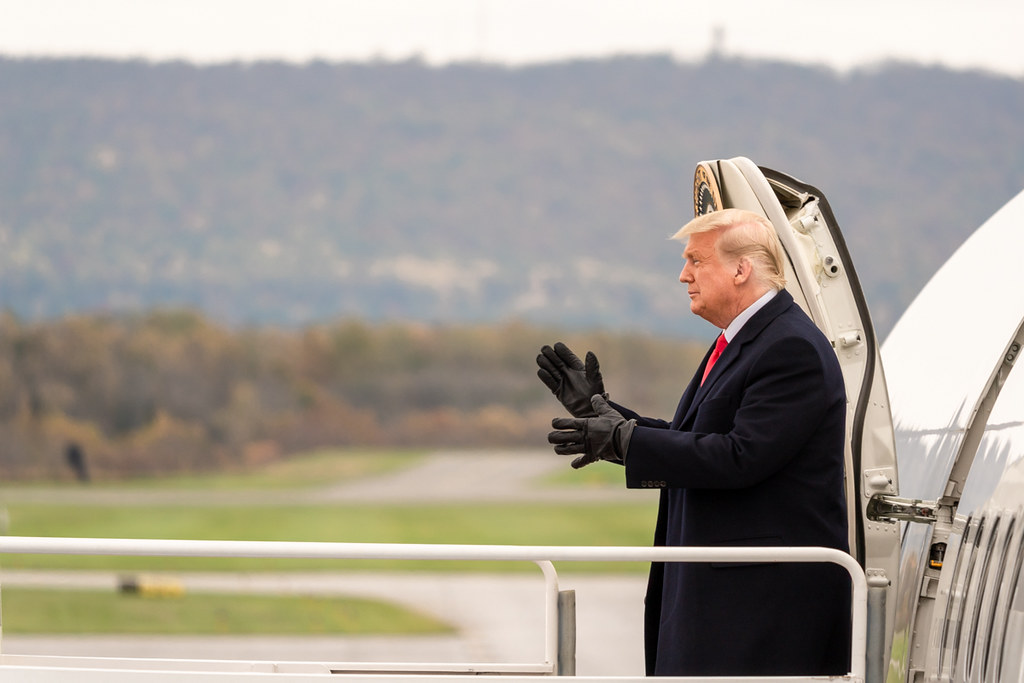
The verified story is narrower than the reaction: a contested historical reference, an attention-grabbing health frame, and no full wording or medical evidence in the material reviewed.
The central fact is also the central limitation. Donald Trump made a disputed World War II reference during an interview on Air Force One, and an MSN-distributed Irish Star item described the moment as a “crazy” WWII claim that sparked “health fears.” But the available material reviewed here does not include the full wording of Trump’s remark, a complete transcript of the exchange, a formal medical assessment or proof of cognitive decline.
That leaves room for political scrutiny, not a medical conclusion.
Start with what is actually established
The documented issue is a contested World War II reference attributed to Trump during an Air Force One interview. Critics treated the reference as wrong or incoherent, and the coverage quickly connected the moment to questions about health and fitness.
That is a narrower record than some reaction suggests. The extracted source material does not show the full exchange, and it does not show whether Trump or his team later supplied a correction, clarification or broader explanation.
Those absences matter because different kinds of mistakes carry different meanings. A misstated date, a clumsy comparison, an inaccurate historical claim and a confused narrative are not identical. Without the complete wording, readers cannot fairly sort the remark into one category.
The health frame outran the record
The phrase “health fears” changed the stakes of the story. It moved the discussion beyond fact-checking a historical reference and into speculation about Trump’s condition.
That leap requires caution. Public officials can be pressed on accuracy, memory, judgment and command of facts. Those are ordinary standards for elected leadership, especially for a president speaking in a prominent setting.
But a disputed sentence, by itself, is not a diagnosis. The available material does not establish illness, cognitive decline or any other medical conclusion.
The responsible distinction is simple: the World War II reference may deserve scrutiny if it was inaccurate, but the claim that it proves something about Trump’s health has not been established here.
Air Force One added symbolic weight
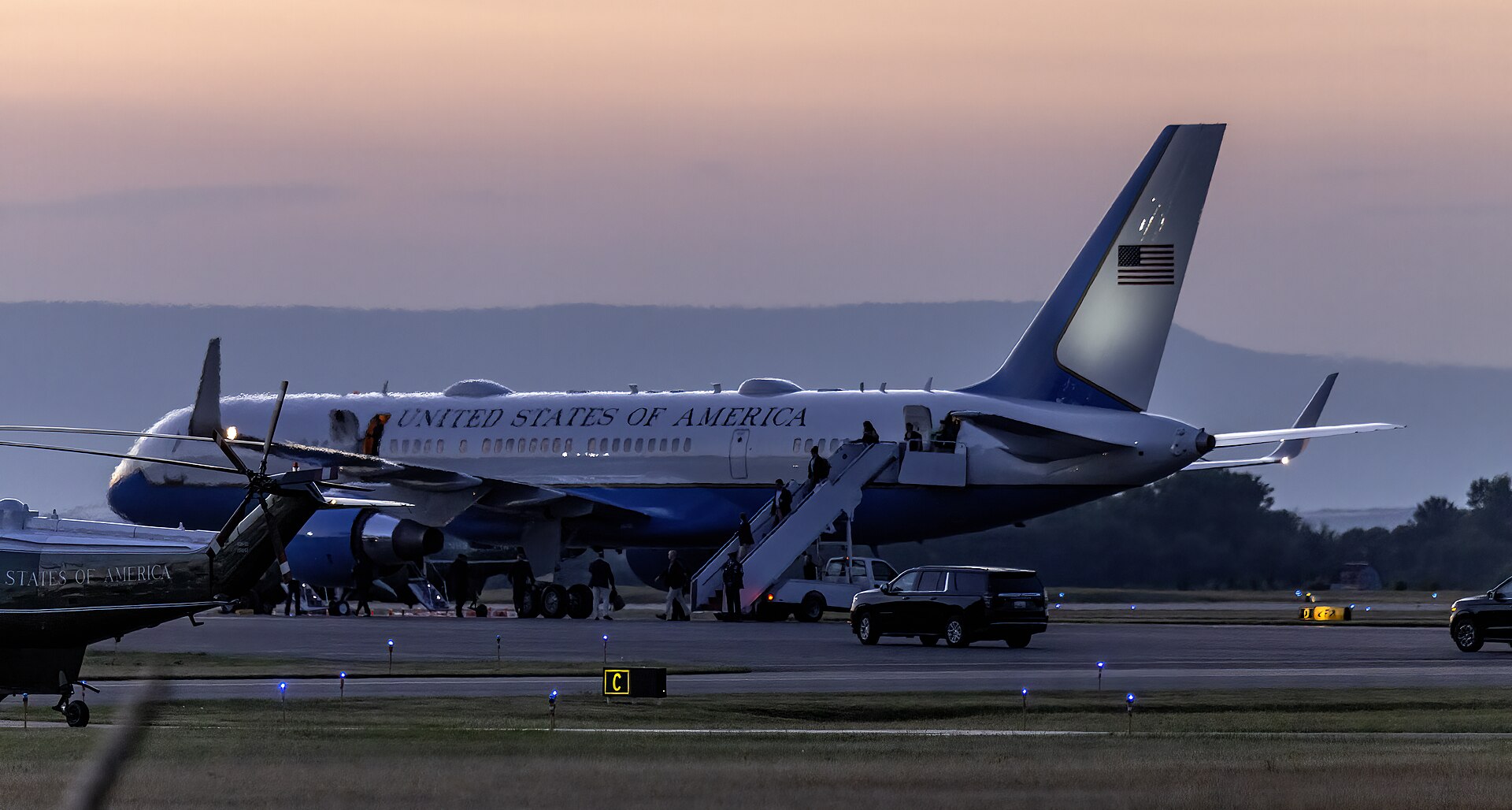
The location helped the episode travel. Air Force One is one of the most recognizable settings in presidential politics, so an interview there carries more symbolic force than a casual aside in a less formal environment.
According to the National Museum of the United States Air Force, “Air Force One” is the call sign used when the president is aboard an Air Force aircraft. The designation was established in 1953 to prevent confusion with other planes in flight.
The museum’s history of presidential aircraft also frames Air Force One missions as part of major chapters in U.S. political and diplomatic history. That background gives comments made aboard the aircraft a sense of presidential command and historical importance.
In that setting, even a stray or awkward historical reference can be interpreted as a test of control. That helps explain why the reaction escalated, but it does not supply missing evidence.
Accountability and speculation are different
There is no need to dismiss the episode to reject overstatement. A president’s public words can be examined closely. If a historical claim is inaccurate, it can be challenged. If a comment shows poor judgment, that can be debated as a political matter.
Those questions are separate from medical claims. Health speculation can harden into assumed fact when a viral description is repeated often enough, especially in a political environment where every verbal slip is treated as evidence in a larger argument about age, competence and truthfulness.
Supporters and critics may read the same moment differently. Critics may see a disputed World War II reference as part of a broader concern about fitness. Supporters may see a routine misstatement amplified by hostile framing or incomplete context. Neither interpretation, standing alone, answers the medical question.
The evidence standard should not change because the speaker is polarizing.
The cautious takeaway
The safest reading is also the least dramatic one. Trump’s Air Force One remark can be evaluated as a factual and political matter while still rejecting unsupported medical conclusions.
The useful categories are: what Trump actually said, whether the World War II reference was accurate, whether the judgment behind it was sound, and whether any health claim is supported by evidence. The current material helps with the reaction to the remark, but it does not fully answer the first category or support the last.
Until the complete exchange is available, the missing transcript remains important. It limits what can responsibly be said about the remark and prevents a contested historical reference from being treated as proof of a medical condition.
In presidential politics, scrutiny is necessary. So is restraint when the available record stops short of the most serious claims being attached to it.
Leave a Reply