The Louisiana Republican’s unusually blunt comment put fresh attention on a case prosecutors now say was built on shaky assumptions. The dispute is now less about one alleged act of vandalism than about evidence, politics and who gets blamed for damage at a national landmark.
A GOP senator is reacting to Trump’s claims that the Lincoln Memorial Reflecting Pool was vandalized: Sen. John Kennedy said Sunday he does not know whether Donald Trump really believes it, is using political messaging, or is thinking aloud. The Justice Department moved Friday to drop its criminal case against David Hearn over damage at the Washington, D.C., landmark, saying evidence pointed instead to contractor problems—not a clear vandalism case.
Kennedy’s jab was pointed because it came from inside the GOP: Trump, he said, “exists loudly” and “grows anxious when he has an unexpressed thought.” The line landed amid a broader fight over what actually damaged the Reflecting Pool and whether prosecutors moved too quickly.
Kennedy breaks the GOP rhythm
Kennedy, a Louisiana Republican and member of the Senate Judiciary Committee, did not directly accuse Trump of lying. His answer on NBC News’s “Meet the Press” was more careful—and, in some ways, more cutting.
Asked about Trump’s insistence that vandals caused the damage, Kennedy said he was unsure whether the president believed the claim, was sending a political message or was simply talking through a thought in public. That distinction matters because it separates a factual claim from a familiar Trump pattern: stating a conclusion loudly before the evidentiary record is settled.
For a Republican senator, the remark was notable. Kennedy has long mixed support for Trump’s agenda with occasional barbed language, and this was not a sweeping denunciation. Still, it undercut the certainty of Trump’s version at the exact moment the government’s own lawyers were retreating from the prosecution.
DOJ now points to contractors
The Justice Department’s reversal is the core of the dispute. Prosecutors moved Friday to dismiss the criminal case against Hearn, a three-time Olympic canoeist who had pleaded not guilty to felony destruction of property over the Reflecting Pool damage.
In a 20-page filing, prosecutors said newly reviewed information pointed to a “rushed and botched installation” by Atlantic Industrial Coatings, which had worked this spring and summer to repaint the bottom of the pool. The filing described delays tied to rainy and windy weather, repeated testing failures involving expansion-joint sealing and problems getting sealing product to the site.
The government also criticized an Interior Department report as “barebones,” a significant admission in a case involving a heavily visited federal landmark. In plain terms, prosecutors said the damage may have been tied to a troubled repair project rather than the criminal act alleged against Hearn.
That does not automatically resolve every question about what happened at the Reflecting Pool. It does, however, make the original vandalism case much harder to defend in court.
Trump rejects Pirro’s call
Trump responded by publicly disagreeing with the Justice Department’s move. On Truth Social, he said he disagreed “100%” with the decision by U.S. Attorney Jeanine Pirro, who oversees Washington, D.C., and whom Trump appointed to the post in May 2025.
Trump wrote that, to him, it was a “pure case of VANDALISM,” while acknowledging there “may have been some contractor difficulty.” His argument was that vandals caused the major damage, even if repair issues also played a role.
That is the live tension: Trump is advancing a vandalism narrative; prosecutors now say the available record points elsewhere. Kennedy’s response did not settle the facts, but it signaled that even some Republicans are not ready to treat Trump’s claim as proven simply because he said it forcefully.
Why the Hearn case buckled
Criminal cases depend on more than suspicion, especially when prosecutors must prove who caused specific damage and how. Kennedy, who is a lawyer, described the case as a “multiple vehicle pileup” and said Pirro was “smart” to pull it back.
His criticism cut two ways. He questioned why the case was filed without what he considered a full investigation, but he also credited Pirro for moving to abandon it once the weaknesses became clear.
The case is not technically over until Associate Judge Todd Edelman of D.C. Superior Court rules on the government’s request to dismiss it. Judges usually give prosecutors broad room to drop charges, but the final procedural step still belongs to the court.
For Hearn, the Justice Department’s move is a major development. For the government, it is an uncomfortable public correction in a case that had already attracted national political attention.
A monument dispute turns political
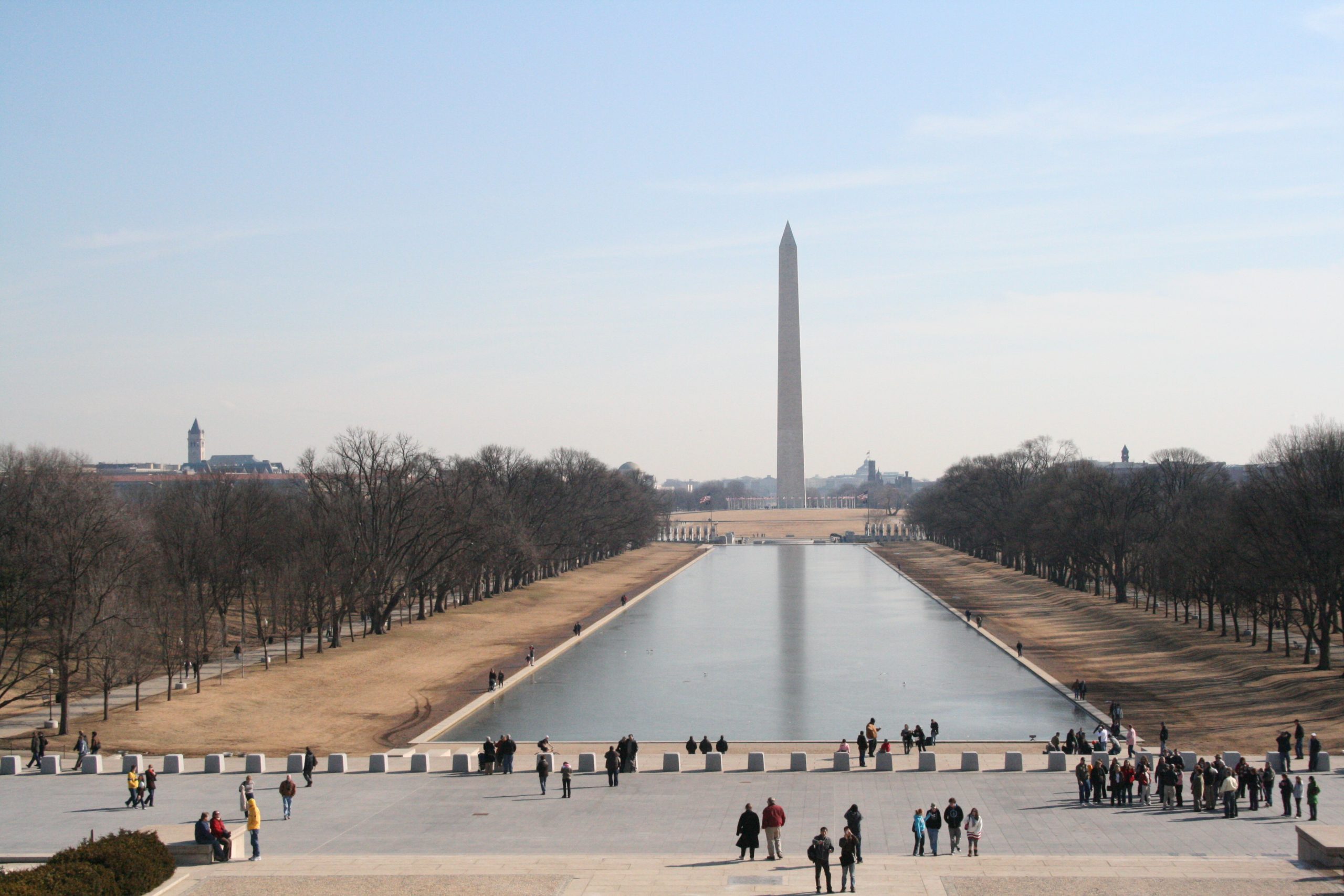
The Lincoln Memorial Reflecting Pool is not just another damaged public site. It sits on the National Mall, carries enormous symbolic weight and is one of the most photographed places in Washington. That makes any claim about vandalism instantly combustible.
Trump’s framing fits a broader political theme he has used often: public disorder, weak accountability and the need for tougher enforcement. If the damage was vandalism, the case can be cast as part of that story. If the damage came largely from rushed maintenance work, the political meaning changes sharply.
That is why the contractor issue matters. A botched installation suggests a government management and oversight problem. A vandalism case suggests criminal misconduct. The two explanations lead to very different villains, and very different remedies.
Kennedy’s comment resonated because it exposed that divide without pretending to know Trump’s inner thoughts. He said he did not know whether Trump believed his own claim. But he also made clear that Trump’s public certainty was not the same thing as proof.
What remains unsettled
Several pieces of the story are still unresolved. The court has to act on the dismissal request. Officials may still face questions about how the Reflecting Pool work was planned, supervised and inspected. The public record may not yet show the full chain of decisions that led to the damage.
- The legal question: whether Judge Edelman formally dismisses the case against Hearn.
- The factual question: how much of the damage can be tied to contractor work, weather, materials or any other cause.
- The political question: whether Trump continues to press the vandalism claim despite his own Justice Department’s filing.
The broader takeaway is simple: a high-profile accusation has collided with a prosecutorial retreat. Kennedy’s mockery made the exchange memorable, but the deeper issue is the evidentiary gap between a public claim and what the government now says it can prove.
That gap is where the story now sits—not in a slogan about vandalism, and not in a senator’s one-liner, but in the records, repairs and courtroom decision still to come.
Leave a Reply