Blog

  • Minnesota Fraud Scandal Becomes a Craig-Flanagan Senate Primary Fight

    Minnesota Fraud Scandal Becomes a Craig-Flanagan Senate Primary Fight

    The dispute is testing whether Democratic voters see the sprawling fraud cases chiefly as criminal conduct or as evidence that state leaders failed to act quickly enough. It also gives Republicans a potent argument about government management.

    Minnesota Democrats are fighting over the welfare fraud scandal, and the scandal has become part of the Democratic Senate primary. Rep. Angie Craig and Lt. Gov. Peggy Flanagan are central to the dispute after Craig tied questions of accountability to her primary opponent and Minnesota’s oversight of vulnerable public programs.

    The welfare fraud scandal is no longer only about prosecutions. It has become a Senate primary fight over whether officials in power should answer for failures that allowed fraud to grow, even when they were not accused of crimes themselves.

    Craig makes oversight a campaign issue

    According to reporting by The Wall Street Journal, Craig sharply criticized Flanagan during a recent debate while linking her to Minnesota’s welfare fraud scandal.
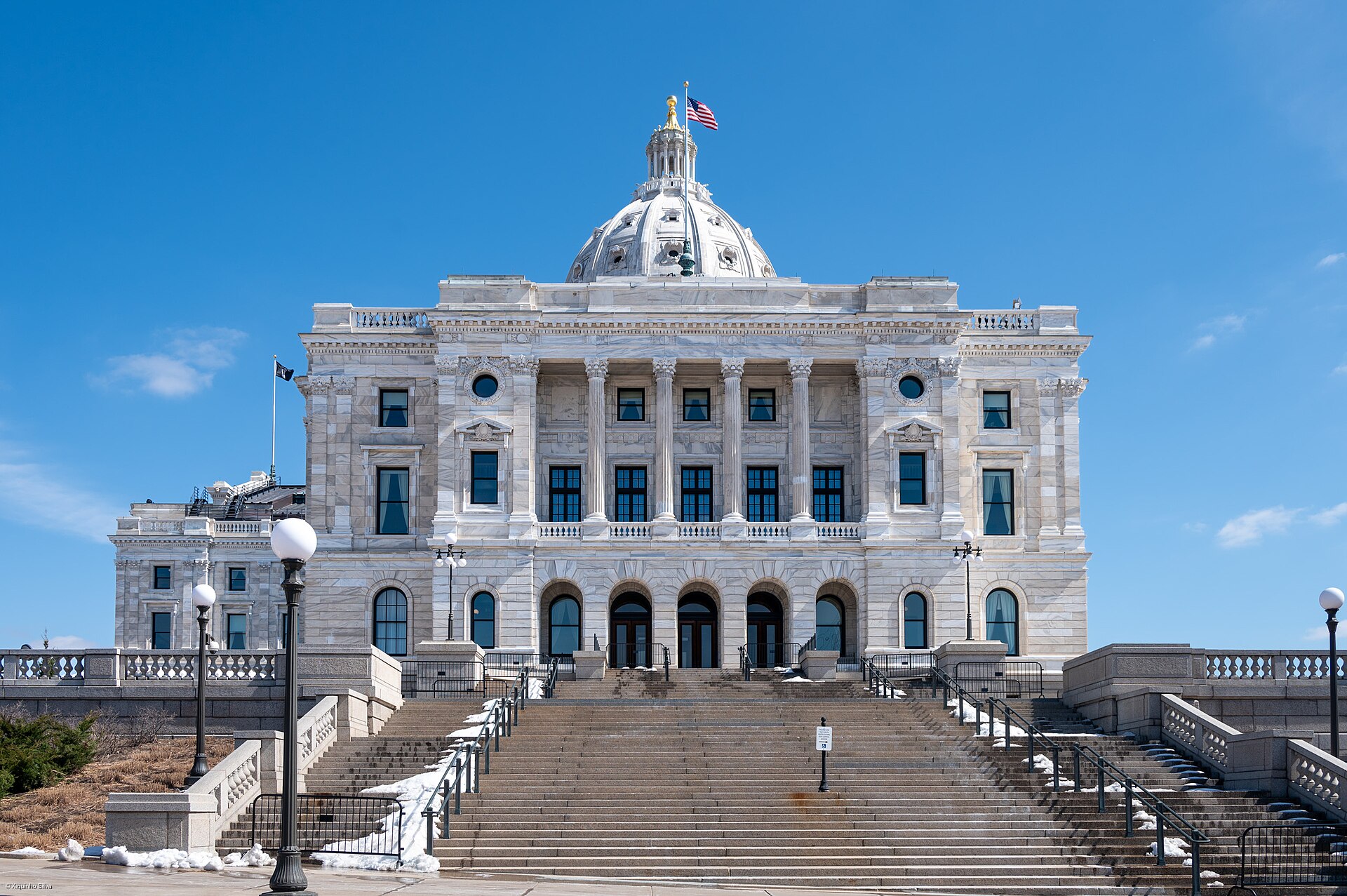
    Minnesota State Capitol 54147669410
    Image: xiquinhosilva, via Wikimedia Commons, CC BY 2.0.

    That choice gives the Democratic contest an unusually concrete point of conflict. Rather than arguing primarily over ideology or broad spending priorities, Craig is pressing a question about the operation of government: Were officials sufficiently alert to warning signs, and did they respond quickly enough?

    Flanagan’s position as lieutenant governor makes her a useful target for a campaign centered on responsibility. But the underlying administration and investigation of public programs involve state agencies, employees, nonprofit contractors, federal rules and law-enforcement bodies—not one elected office alone.

    The central political question, then, is not who carried out the fraud. It is whether leaders bear responsibility when safeguards, monitoring or escalation procedures fail to catch misconduct before losses mount.

    The cases reach beyond one program

    Minnesota’s social-services fraud cases have drawn national attention, particularly the Feeding Our Future case involving a federal child-nutrition program during the COVID-19 pandemic.

    Prosecutors have alleged that defendants used false meal claims and related entities to obtain public money intended to feed children. Federal law-enforcement agencies have continued to announce convictions and guilty pleas in the broader investigation.

    In one FBI release, federal prosecutors said they had obtained more than 50 convictions in the Feeding Our Future scheme. Separate later reporting by The Wall Street Journal said more than 60 people had been convicted, with additional people charged.

    Those counts came at different stages of a long-running investigation, so they should not be read as a single fixed tally. They do show why the scandal has become such a large political problem: this was not an isolated disputed payment or a minor administrative error.

    Criminal guilt and leadership differ

    The legal record establishes that serious wrongdoing was uncovered through prosecutions, pleas and convictions. That does not automatically answer the political argument now unfolding between Minnesota Democrats.

    Craig’s case is fundamentally a leadership argument. Voters, she suggests, can reasonably expect more from officials who held office while fraud expanded, including stronger oversight and faster responses to signs that programs could be exploited.

    Flanagan and other Democrats can counter that the people and networks who stole public money are principally responsible for the crimes. They can also argue that reducing a complex, multiyear fraud investigation to a campaign charge obscures how such schemes work and how many institutions are involved.

    Both ideas can coexist. Individual defendants can be accountable for criminal conduct, while government leaders face legitimate scrutiny over audits, staffing, controls, verification systems and the response to warnings. The unresolved issue is how much of Minnesota’s failure was preventable at the political level.

    Republicans see a broader indictment

    Republicans have cited Minnesota’s fraud cases as evidence of waste and weak oversight under Democratic leadership. The Wall Street Journal described the scandal as a powerful example for Republicans making the case that Democratic management of government programs has failed taxpayers.

    That message has value beyond one Senate primary. Fraud involving public benefits or child nutrition can strengthen wider skepticism about whether government can administer assistance effectively, even though such programs support many people with legitimate needs.

    Democrats therefore face a difficult balancing act. Downplaying the scale of the fraud risks appearing dismissive of voters angered by the misuse of public money. Treating it only as a Republican attack leaves less room to explain what went wrong and what changes should follow.

    Craig’s decision to raise the issue directly suggests that at least some Democrats believe acknowledgment may be politically safer than allowing opponents to define the scandal without challenge.

    The primary could shape the party’s message

    Primary elections help determine not only nominees but also the arguments a party carries into the general election. In Minnesota, the Craig-Flanagan clash could reveal whether Democratic voters want a forceful account of institutional failure, a focus on criminal wrongdoing, or both.

    An intraparty dispute can have competing effects. It may force candidates to give specific answers about safeguards and reform. It may also generate accusations and divisions that political opponents can repeat long after the primary is over.

    The more durable test will be whether Minnesota officials can point to practical protections rather than tougher rhetoric alone. The measures at issue include stronger verification of claims, faster review of irregularities, clear procedures for escalating concerns, independent audits and coordination between state and federal investigators.

    Reform questions remain unresolved

    It remains unclear which oversight failures could have been prevented by political leadership, which were rooted in program design, and which reforms will prove durable. Criminal investigations can establish individual liability, but they do not settle every question about administrative responsibility.

    For Craig and Flanagan, that uncertainty is now part of the campaign terrain. The Minnesota welfare fraud scandal has turned public trust, program oversight and political accountability into an argument inside the Democratic Party—not simply a partisan dispute with Republicans.

    The candidate with the clearest explanation of what failed, who should answer for it and what would change may be better positioned to meet the question the scandal has put before Minnesota voters.


  • Kourtney Kardashian and Travis Barker breakup rumors remain unconfirmed

    Kourtney Kardashian and Travis Barker breakup rumors remain unconfirmed

    A quieter public presence has fueled questions about Kourtney Kardashian and Travis Barker’s marriage. The observable signs being shared online remain interpretations, not confirmation of a split.

    Kourtney Kardashian and Travis Barker are facing breakup speculation as fans scrutinize social media activity, cryptic messages and solo public appearances for signs of trouble. No separation or divorce has been confirmed, despite an online debate over whether the couple’s public dynamic has changed.

    The current conversation is less about a verified announcement than about how quickly small shifts in a celebrity couple’s online visibility can be turned into a larger narrative. For Kardashian and Barker, whose relationship has been unusually public, even an absence can become material for speculation.

    What the rumors actually establish

    The available reporting supports a narrow conclusion: people online are discussing Kourtney Kardashian and Travis Barker’s recent public-facing activity and drawing their own conclusions from it.

    Scott Disick & Kourtney Kardashian 2010
    Image: Bettina Cirone, via Wikimedia Commons, CC BY-SA 4.0.

    It does not establish that they have broken up, separated or filed for divorce. Neither Kardashian nor Barker is quoted in the available report confirming any change to their relationship status.

    That distinction is the key one. A rumor can be widespread, and a discussion can be intense, without the underlying claim being verified.

    The public clues under debate

    A report by Soy Carmín said the latest round of attention grew from what followers view as less frequent social-media interaction between Kardashian and Barker. Fans accustomed to seeing romantic posts have interpreted a reduced shared presence as a possible signal that something is different.

    Others have pointed to emotional or reflective messages posted online. But broad captions and messages can relate to work, family, personal growth or mental space; the available reporting does not tie them directly to the marriage.

    Solo appearances have also been folded into the theory. When two people who are often seen together attend events separately, it may invite questions. It can also reflect separate professional commitments, travel arrangements, parenting responsibilities or scheduling.

    • Observable: Fans are tracking changes they believe they see in posts and appearances.
    • Unestablished: A breakup, separation, divorce filing or statement from either person.
    • Unknown: Whether the individual details being circulated are connected at all.

    Why a quieter feed feels bigger

    Kardashian and Barker have built a relationship that audiences have followed closely through public affection, social posts and family moments. That history creates an expectation of continued visibility.

    For a celebrity couple that rarely shares private life, a period without a joint photo may pass with little attention. For a couple with a well-documented public image, the same gap can appear to followers as a meaningful departure from a familiar pattern.

    That does not mean the audience is wrong to notice a shift. It means that noticing a change and knowing its private meaning are two very different things.

    Two readings of the same signals

    One camp sees fewer shared posts, separate appearances and ambiguous messages as details worth watching. The argument is often not that a split has been proved, but that the public version of the relationship looks different from the one fans recognize.

    The other view is that those details are too thin to support such a conclusion. High-profile careers can involve different work demands, travel, production schedules and family obligations that affect when partners appear together.

    Both positions begin with the same public material. The disagreement is over how much weight it can carry—and whether absence should be treated as evidence at all.

    How rumors gain momentum online

    Social media can turn scattered observations into a crowdsourced investigation. A caption may be examined for hidden meaning, a photo may be judged by who is not in it, and a solo event may be treated as a coded message.

    Repetition can make a weak signal appear stronger. Once a breakup theory takes hold, unrelated details—a song lyric, an untagged picture or time without a couple post—can be added to the same storyline.

    Followers may have a deep archive of a celebrity relationship to compare, including past captions, images and appearances. Even that archive only records what a couple has chosen to make public; it cannot establish the full reality of a private marriage.

    The responsible takeaway for now

    The online debate around Kardashian and Barker shows the tension of a highly visible relationship: public interest can create expectations of constant access, while the people involved may still keep parts of their lives private.

    A missing anniversary post, a cryptic message or a separate appearance may be enough to fuel theories, but none independently confirms that a relationship has ended. Silence is not a public statement of separation.

    Until Kardashian, Barker or a reliable, independently sourced report provides confirmation, claims that the pair have split should remain labeled as rumors. The clearest fact at present is not a confirmed breakup; it is the scale of the speculation around an unanswered question.

  • Texas Pulse poll shows Talarico ahead, Hinojosa within one of Abbott

    Texas Pulse poll shows Talarico ahead, Hinojosa within one of Abbott

    The latest Texas Pulse survey offers Democrats their strongest set of statewide numbers in months. But conflicting polls, small margins and many voters still making up their minds leave the November races far from settled.

    James Talarico and Gina Hinojosa are leading a Democratic push in Texas statewide races, according to a new Texas Pulse poll that shows Talarico ahead of Republican Ken Paxton and Hinojosa within a point of Gov. Greg Abbott. The survey suggests Democrats are gaining ground in Texas after June, turning several races once viewed as clearer Republican advantages into tight contests.

    The findings matter because they cover a broad slice of the 2026 ballot, from the U.S. Senate race to contests for governor, lieutenant governor and attorney general. Still, the poll’s margins are narrow, other recent surveys have shown Republicans ahead, and the results are a snapshot rather than a forecast of November.

    Talarico’s lead remains narrow

    The Texas Pulse poll, released Aug. 7, found 47% of likely voters backing Democratic state Rep. James Talarico for U.S. Senate and 43% backing Republican Texas Attorney General Ken Paxton.

    James Talarico Press Conference (cropped)
    Image: Antonioaesparza, via Wikimedia Commons, CC BY-SA 4.0.

    That four-point edge is within the survey’s 4.7-percentage-point margin of error. In practical terms, it means the poll cannot establish with confidence that Talarico has a durable lead among the full Texas electorate. It does show that the race is competitive in this particular measure.

    The result also follows a run of polls showing Talarico in a close contest. A Texas Southern University poll released Aug. 4 had Talarico ahead 47% to 45%, while a Fox News poll released in late July put him ahead 51% to 48%. A Texas Public Opinion Research survey also showed him leading, 45% to 40%.

    For Democrats, the clustering of close results is more meaningful than any one headline number. Texas has not elected a Democrat statewide since 1994, so a credible Senate contest would represent a major change in the party’s recent position, even before votes are cast.

    Hinojosa cuts Abbott’s margin

    Gina Hinojosa, the Democratic state representative running for governor, trailed Abbott by just one point in the Texas Pulse poll: 46% to 45%.

    That was a marked movement from the same poll’s June results, when Abbott led 49% to 43%. The new number does not mean Abbott has lost his advantage. It does mean Hinojosa is receiving a closer look in a contest where the incumbent begins with much higher name recognition.

    Kirby Goidel, a Texas A&M political science professor, said in comments accompanying the poll that the governor’s race appeared more competitive than it did in June, while stressing that voters are still forming impressions of Hinojosa.

    Other polling offers a less favorable picture for Democrats. A Texas Southern University survey released Aug. 4 showed Abbott leading Hinojosa 49% to 43%. A late-July Texas Public Opinion Research poll had Abbott ahead by three points, while earlier June surveys showed a seven-point Abbott advantage.

    Down-ballot races tighten too

    The Texas Pulse results were not limited to the two most visible races. In the contest for lieutenant governor, Democratic state Rep. Vikki Goodwin led Republican Lt. Gov. Dan Patrick 48% to 46%.

    That represented a reversal from the organization’s June survey, which had Patrick ahead 49% to 44%. Yet Goodwin’s apparent lead is also small, and the same poll found that 56% of likely voters did not know enough about her to form an opinion.

    That lack of familiarity cuts in more than one direction. It may give Goodwin room to define herself as the campaign develops, but it also means her standing could shift quickly once more voters focus on the race. A separate TSU poll had Patrick ahead by seven points.

    In the attorney general contest, Republican state Sen. Mayes Middleton led Democratic state Sen. Nathan Johnson 46% to 44% in Texas Pulse polling. That is still a Republican edge, but it was narrower than Middleton’s five-point lead in the group’s June survey.

    Why polling conflict matters

    The biggest takeaway is not that Texas has suddenly become reliably Democratic. It is that the state’s statewide contests may be more unsettled than early polling suggested.

    Poll differences can reflect timing, turnout assumptions, question wording and the mix of voters reached. The Texas Pulse survey was conducted July 27 through July 30 by ReconMR for the Bush School of Government and Public Service at Texas A&M University. It surveyed 619 likely Texas voters.

    Its sample was 36% Republican, 33% independent and 29% Democratic. Those choices are part of why poll methodology matters: an election result will depend on who actually votes, not simply on which voters respond to one survey in July.

    Republicans can point to their long statewide winning record, incumbency in key offices and surveys that still show Abbott, Patrick and Middleton ahead. Democrats can point to movement since June, Talarico’s repeated competitiveness against Paxton, and a ballot that may give voters more reasons to reassess familiar partisan habits.

    The undecided phase is still open

    Texas campaigns now face a familiar challenge: converting a favorable poll into a stable coalition. Talarico must sustain attention and persuade voters that a Democratic challenger can win statewide. Hinojosa and Goodwin must introduce themselves to voters who may know the officeholders far better than they know the challengers.

    Republicans, meanwhile, have time to nationalize the races, emphasize their incumbents’ records and make the case that close summer surveys do not erase Texas’ broader political lean. Paxton’s race may receive especially intense attention because it combines a high-profile Republican candidate with a Democratic challenger showing strength across multiple recent polls.

    There is also an important distinction between momentum and outcome. The Texas Pulse numbers describe movement from June in several races, but they do not settle whether Democrats can maintain it through campaigning, advertising, debates and turnout operations.

    For now, the poll has changed the conversation around Texas’ 2026 statewide slate. Democrats have evidence of credible openings; Republicans still have substantial structural advantages and competing polling in their favor. The next round of surveys will show whether this is the start of a sustained realignment in these races or a volatile summer moment.

  • Dropped Vandalism Cases Put Trump’s Reflecting Pool Renovation Under Scrutiny

    Dropped Vandalism Cases Put Trump’s Reflecting Pool Renovation Under Scrutiny

    A public record that began with a felony vandalism allegation now includes reporting that the cases were dropped and damage was blamed on rushed, flawed contractor work.

    The Lincoln Memorial Reflecting Pool controversy now turns on a narrow but consequential conflict in the public record: the Justice Department announced a vandalism indictment tied to damaged sealant, while The Washington Post later reported that vandalism cases were dropped and that U.S. Attorney Jeanine Ferris Pirro blamed the damage on rushed and flawed contractor work.

    The pool was closed until Aug. 10 for additional renovations, according to the Post report published Aug. 3. What remains unresolved from the available materials is how the earlier criminal allegation, the reported dropped cases and the need for more work fit together.

    The hard facts are narrower than the fight

    The most reliable way to understand the dispute is to separate what has been officially announced from what has been reported later.

    The Justice Department publicly described at least one alleged act of vandalism at the newly renovated pool. The Washington Post later reported a different emphasis: claims of vandalism had crumbled amid evidence pointing to problems with the renovation work itself.

    Those accounts do not establish, from the available excerpts alone, the full legal status of every allegation or the complete cause of every damaged area. They do show why the episode became politically difficult for Donald Trump: a renovation promoted as a visible improvement was followed by more repairs and conflicting explanations.

    The July indictment was the clearest official allegation

    On July 2, the Justice Department said a grand jury in Superior Court returned an indictment against David Hearn, 67, of Bethesda, Maryland. The department said Hearn was charged with one count of felony destruction of property under D.C. law.

    According to the release, the allegation stemmed from a June 19 incident in which Hearn allegedly ripped a piece of recently installed blue pool sealant from the bottom of the Lincoln Memorial Reflecting Pool.

    The Justice Department said the U.S. Park Police investigated the case. It also emphasized that the charge was only an allegation and that all defendants are presumed innocent unless proven guilty beyond a reasonable doubt.

    In that same announcement, Pirro described vandalism at the pool as an affront to shared history and said the government would protect national monuments and hold accountable those who seek to deface them.

    The August report shifted attention to workmanship

    The later Washington Post account changed the center of gravity. The paper reported that Pirro dropped vandalism cases and blamed damage at the pool on rushed and flawed work by a contractor.

    The Post also reported that Trump lashed out at Pirro after the cases were dropped. The available source excerpts do not include a later Justice Department statement explaining any dismissal, modification or separate handling of the matter.

    That gap matters. If damage was primarily caused by intentional destruction, the issue points toward enforcement and site security. If damage was caused by rushed or flawed work, the issue points toward planning, oversight and contractor performance.

    The available materials do not prove legal responsibility for any particular piece of damaged sealant. They do, however, document a significant shift from an official vandalism narrative to later reporting focused on construction problems.

    Trump’s role is documented, but the cause is not fully settled

    Trump personally connected himself to the project before the dispute widened. The Washington Post reported that he stood in the basin of the Reflecting Pool in early May and promised to fix leaks and other problems that had long affected the landmark.

    The Justice Department release also tied the work to renovations ordered by Trump to prepare Washington for America’s 250th anniversary. Pirro said those renovations included more than 50 parks, 48 monuments and 22 fountains.

    Those details explain why the closure and later reporting carried political weight. The issue was not only whether a pool surface was damaged, but whether a high-profile federal renovation was managed well enough to avoid immediate additional work.

    At the same time, the available record does not establish the full scope, cost or timetable of the additional renovations beyond the reported closure until Aug. 10.

    The unanswered questions now define the fallout

    The central unresolved question is not whether officials once alleged vandalism. They did. It is how that allegation relates to the Washington Post report that vandalism cases were dropped and that damage was attributed to rushed, flawed contractor work.

    A fuller account would require court filings, prosecutorial records or an official explanation of what happened after the July indictment announcement. It would also require more detail about the contractor work cited in the Post report.

    The public record available so far also does not identify the contractor or specify which construction decisions allegedly caused the damage described by the newspaper.

    For now, the verified outcome is more limited but still significant: a Trump-backed Reflecting Pool renovation was followed by a closure for additional work, an earlier DOJ vandalism allegation and later reporting that shifted blame toward contractor performance. That combination has kept the controversy alive because the official paper trail has not yet supplied a complete explanation.

  • Hegseth’s $1.5 Trillion Defense Plan Faces GOP Resistance

    Hegseth’s $1.5 Trillion Defense Plan Faces GOP Resistance

    Republicans broadly support a stronger military, but key lawmakers are not sold on the administration’s plan to finance a historic increase. The dispute is as much about process and political risk as it is about the Pentagon’s priorities.

    Pete Hegseth has been unable to persuade Republicans to support his $1.5 trillion defense budget, a record-breaking proposal now facing resistance in Congress. Republican lawmakers are resisting efforts to advance the plan because they question the administration’s case for the spending, its reliance on party-line legislation and the political cost of another high-stakes vote before the midterm elections.

    Hegseth can’t persuade enough Republicans simply by arguing that the military needs more money. The central fight is over whether Congress should use a complicated two-track strategy to deliver the funding — and whether the Pentagon has a workable fallback if that strategy fails.

    A record request meets skepticism

    The administration’s $1.5 trillion request would be the largest defense budget proposal in U.S. history. The Defense Department has described the plan as an investment in service members, military modernization, homeland security and the defense industrial base, including a pay raise for service members.

    Pete Hegseth
    Image: Gage Skidmore, via Flickr, CC BY-SA 2.0.

    Those priorities have considerable support among Republicans, particularly lawmakers who have long argued that the U.S. military needs more ships, aircraft, munitions and missile defenses. The disagreement is not a simple clash between defense spenders and budget cutters.

    Instead, several GOP lawmakers are questioning how the administration intends to turn a broad spending target into law. That distinction matters because a headline budget number does not automatically provide the Pentagon with money Congress has not appropriated.

    Politico reported that Hegseth has made repeated trips to Capitol Hill and met with lawmakers in recent weeks, but has not secured agreement to move the proposal forward without Democratic support.

    The plan relies on reconciliation

    At the center of the dispute is the administration’s proposed financing structure. According to Politico, the plan depends in part on using the budget reconciliation process to provide $350 billion — the bulk of the proposed increase.

    Reconciliation is a Senate procedure that can allow a majority party to pass certain budget-related measures with a simple majority rather than the 60 votes often needed to overcome a filibuster. It is powerful, but it is not a blank check: Senate rules limit what can be included, and lawmakers must still agree on the underlying policy and fiscal choices.

    Republicans are reportedly wary of depending on a third, or even potentially a fourth, reconciliation bill. That concern is partly procedural. The more a defense plan depends on future partisan legislation, the more uncertain its final funding becomes.

    Sen. Lisa Murkowski of Alaska raised a practical version of that objection, asking what happens to priorities such as F-35 aircraft and Patriot missiles if the assumed reconciliation funding does not materialize. She said Pentagon officials had struggled to provide a clear Plan B.

    Process is the real fault line

    For many congressional Republicans, the argument is not that national defense should be neglected. It is that appropriations committees, rather than the White House alone, should retain meaningful control over how a major military expansion is designed and funded.

    Senate Appropriations Chair Susan Collins of Maine and Sen. Mitch McConnell of Kentucky, a leading defense appropriator, have expressed skepticism about the chances for additional party-line bills, according to the report. Their concern reflects a longstanding congressional tension: presidents seek flexibility and speed, while legislators guard their constitutional power of the purse.

    A large supplemental funding measure can also make it harder to distinguish urgent needs from longer-term wish lists. Supporters may argue that a bigger package lets the Pentagon move faster against global threats. Critics can counter that folding major, enduring programs into extraordinary legislation weakens normal budget scrutiny.

    That is why the administration’s challenge is larger than winning a public debate over military strength. It must convince lawmakers that the mechanism for delivering the money is credible, durable and consistent with Congress’ role.

    Midterm politics raises the price

    The timing adds pressure. Politico reported that some Republicans see little appetite for spending valuable political capital on another partisan budget fight with midterm elections approaching.

    Even lawmakers who favor expanded defense spending may be reluctant to cast votes that can be framed as adding to federal spending, expanding White House authority or bypassing bipartisan negotiations. In closely contested states and districts, those arguments can carry different risks depending on the audience.

    There is a competing political case, too. Defense hawks can argue that delaying military investment sends the wrong signal abroad and risks leaving the armed forces short of capabilities needed for deterrence. The administration has presented the request as a response to modernization demands and industrial-base constraints, not merely an accounting exercise.

    But a broad Republican majority does not erase the need for internal agreement. Narrow margins in Congress can give a relatively small group of skeptical members significant leverage over the shape and timing of legislation.

    No clear path for a supplemental

    Sen. Jerry Moran of Kansas, a Republican who supports robust defense funding, described the immediate outlook bluntly: he said there was no current path for a supplemental measure and tied the impasse to the unresolved reconciliation question.

    That leaves several possibilities. The administration could revise its funding strategy, reduce or sequence parts of the request, seek a more conventional appropriations route, or try to negotiate a bipartisan package. Each option would involve tradeoffs in speed, size and political control.

    What remains unclear is whether the White House can offer enough detail about priorities, timing and contingency plans to win over the skeptics. It is also unclear whether Republicans can unite behind any new reconciliation measure at all.

    For now, Hegseth’s $1.5 trillion proposal illustrates a basic reality of governing: support for a larger defense budget does not necessarily translate into support for the bill designed to deliver it.

    Why the standoff matters

    The outcome will shape more than one Pentagon funding cycle. If Congress rejects the proposed route, it could reinforce the authority of appropriators and make future administrations more cautious about using partisan budget tools for major defense increases.

    If the proposal advances, it could set a different precedent — one in which large defense expansions are increasingly linked to reconciliation and majority-party strategy. That could speed action when one party controls Washington, but it could also make defense budgets more vulnerable to political swings.

    The immediate question is whether Hegseth and the administration can turn a shared Republican interest in military strength into a coalition for this particular $1.5 trillion plan. So far, the answer from key lawmakers is that the administration has more work to do.

  • Mullin’s ICE Nominee Triggers a MAGA Revolt at Homeland Security

    Mullin’s ICE Nominee Triggers a MAGA Revolt at Homeland Security

    The dispute surrounding Mullin shows how aggressively parts of President Trump’s coalition are policing immigration policy from inside the administration’s own political base. An upcoming Senate decision on his ICE nominee could become the next test.

    Markwayne Mullin is facing backlash from MAGA activists over his role and immigration policies at the U.S. Department of Homeland Security just 4½ months after replacing Kristi Noem as secretary. The criticism centers on Mullin’s ICE nominee, Lance Schroyer, his policy reversals and comments about immigration reform, with border czar Tom Homan emerging as a key source of tension.

    For Mullin, the fight matters because the objections are coming from within President Trump’s political coalition, not from the administration’s usual opponents. The controversy also puts a spotlight on who gets to shape the direction of immigration enforcement at a department central to Trump’s agenda.

    An ICE nomination draws fire

    The immediate flashpoint is Mullin’s selection of Schroyer to lead U.S. Immigration and Customs Enforcement. Schroyer is a former Oklahoma state highway trooper who also served on Mullin’s security detail.

    Secretary of Homeland Security Markwayne Mullin and his family tour of St. Elizabeths Campus and DHS headquarters in Washington, D.C. on March 24, 2026 29
    Image: DHSgov, via Wikimedia Commons, Public domain.

    According to Axios, Homan opposes the nomination. Homan led ICE during Trump’s first term and has been a major voice on the administration’s immigration enforcement strategy.

    Critics have focused on Schroyer’s limited federal immigration background. His relevant experience includes participation in a 287(g) agreement, a program through which state and local law-enforcement officers can assist ICE with certain immigration-enforcement functions.

    Mullin defended the choice in an interview with Fox News, saying he conducted a two-month search and interviewed numerous candidates. He argued that Schroyer was both qualified for the job and capable of winning Senate confirmation.

    Why MAGA activists are uneasy

    The Schroyer dispute comes after several decisions and public comments that immigration hard-liners have interpreted as signs that Mullin is not pursuing a sufficiently uncompromising approach.

    At a National Governors Association gathering in Oklahoma, Mullin spoke favorably about immigration reform. Some MAGA activists treated that language as support for amnesty for people living in the country without authorization, an interpretation Mullin’s critics used to sharpen their case against him.

    Axios also reported that Mullin supported pausing ICE vehicle stops used to make arrests after fatal officer-involved shootings in Texas and Maine. Trump reversed that pause, with Homan’s support.

    Separately, when Temporary Protected Status was ending for Haitians, Mullin said in a June CNN interview that affected people could seek another legal status. That suggestion prompted online outrage from activists, who noted that Haitian nationals faced barriers to ordinary application processes because Haiti was included on Trump’s travel-ban list.

    The clash is about enforcement

    Behind the individual disputes is a larger argument over what counts as loyalty to Trump’s immigration agenda. For activists focused on mass deportation, the measure is not simply whether the department backs enforcement, but whether it increases deportation numbers and eliminates policies they view as restraints.

    Mike Howell, a former DHS attorney who leads the Mass Deportation Coalition, told Axios that Mullin had not given “true believers” confidence that deportation figures would rise. That criticism captures the core political problem: the department’s base wants measurable results and personnel choices that signal a harder line.

    Supporters of Mullin can make a different case. Running Homeland Security requires managing enforcement, public safety, legal constraints and Senate-confirmable appointments. A nominee with broad law-enforcement experience, they may argue, does not need to have spent a career in federal immigration agencies to be effective.

    The disagreement is also a reminder that “MAGA” is not one unified bloc. Trump’s coalition includes officials who emphasize administrative execution and confirmation politics, as well as activists and media figures who demand ideological certainty on enforcement.

    Schroyer still has Senate support

    Despite the vocal objections, Schroyer has backing among several Republican senators. Sen. Rick Scott of Florida told Axios that Schroyer appeared to be doing well in meetings on Capitol Hill and said a smart nominee can overcome a learning curve.

    Republican Sens. Bernie Moreno of Ohio, Ron Johnson of Wisconsin, James Lankford of Oklahoma and Josh Hawley of Missouri also told Axios that Schroyer’s lack of federal immigration-enforcement experience had not dissuaded them.

    That support matters because the nomination will ultimately be decided through the Senate process, not by online criticism or podcast commentary. Still, opposition from figures such as Steve Bannon can shape the political atmosphere around a nominee and create pressure on senators to scrutinize the pick more closely.

    A DHS spokesperson said the department stands behind Trump’s nominee and highlighted Schroyer’s nearly 30 years of law-enforcement experience. The White House said Trump has confidence in his Cabinet to carry out the agenda voters endorsed.

    The hearing date is the next test

    Sen. Rand Paul of Kentucky, who chairs the Senate Homeland Security Committee, had not said when he would schedule Schroyer’s confirmation hearing. Axios reported that Schroyer met with senators from both parties before the August recess.

    The timing and tenor of that hearing could reveal how far the backlash has traveled beyond activist circles. Senators may press Schroyer on his federal immigration experience, his approach to interior enforcement and his relationship with Mullin.

    For Mullin, the broader question is whether he can turn the dispute into a manageable personnel fight or whether it becomes a continuing referendum on his leadership at Homeland Security. The department’s public support for Schroyer and the White House’s vote of confidence give him institutional backing, but they do not erase the political challenge from immigration hard-liners.

    The takeaway: Mullin’s conflict with MAGA activists is less about one nomination than about the limits of acceptable compromise inside Trump’s immigration coalition. The Senate’s treatment of Schroyer will offer the clearest near-term measure of Mullin’s standing.

  • Minnesota Democrats Split Over Who Failed on Welfare Fraud

    Minnesota Democrats Split Over Who Failed on Welfare Fraud

    The argument is no longer only about alleged fraud. It is also about whether Minnesota leaders built adequate safeguards around programs meant to serve vulnerable residents.

    Democrats are blaming each other over Minnesota’s welfare fraud scandal, turning the political dispute over accountability into a wider argument about who failed to spot risks in public-benefit programs. The immediate issue is Minnesota’s response to suspected fraud and billing irregularities; the larger stakes are public trust, protection for people who rely on services and who owns the consequences of weak oversight.

    The fight matters because fraud allegations can quickly become a referendum on government competence. Minnesota officials have moved toward tougher screening and outside review, but those steps do not settle the central Democratic disagreement: whether the breakdown was primarily criminal conduct by providers, an agency-management failure, a policy-design problem or some combination of all three.

    The dispute is over responsibility

    The Wall Street Journal reported that Democrats are publicly faulting one another as Minnesota’s welfare fraud scandal draws scrutiny. That framing captures a familiar tension in state politics: elected officials want wrongdoing stopped and prosecuted, while opponents and frustrated allies want to know why existing controls did not prevent losses earlier.

    MSOP Moose Lake Minnesota Department of Human Services (34866782895)
    Image: Tony Webster from Minneapolis, Minnesota, United States, via Wikimedia Commons, CC BY-SA 2.0.

    Those are related but distinct questions. A criminal investigation can focus on whether particular people submitted false claims or misused funds. Political accountability asks a broader question: which offices set the rules, reviewed warning signs, staffed compliance teams and acted when a program showed vulnerabilities?

    Democrats defending the state’s response can reasonably point out that fraud schemes often exploit complex systems and can be difficult to identify before a pattern emerges. Critics within the party can still argue that difficulty is not an excuse for inadequate monitoring, delayed enforcement or rules that made suspicious billing easier to conceal.

    The debate is especially uncomfortable for a governing party. It is one thing to criticize an administration from outside; it is another to explain why agencies led by allies did not have stronger guardrails in place.

    What Minnesota has changed

    Minnesota has begun adding controls aimed at catching questionable Medicaid claims before money goes out. In a governor’s office announcement, Gov. Tim Walz said the state ordered a third-party audit of billing for 14 Medicaid services identified as high-risk for billing irregularities or fraud.

    According to that announcement, the Minnesota Department of Human Services contracted with Optum to analyze fee-for-service claims data and flag patterns for agency review. The state said payments for the covered programs could be paused for up to 90 days while suspicious activity is examined.

    The affected services include supports involving autism care, transportation, mental-health services, adult day services, personal-care assistance and housing stabilization. These are not marginal programs: they touch people with disabilities, older adults, people seeking behavioral-health support and residents facing housing instability.

    That explains the policy challenge. A state can tighten verification, conduct unannounced visits and demand more documentation. But each new layer can also mean slower payment for legitimate providers, added administrative work and possible disruption for recipients if a provider cannot sustain a delay.

    Fraud prevention has real trade-offs

    There is broad political appeal in a promise to root out fraud. Taxpayers expect public dollars to be protected, and people who need services have an interest in programs that are credible enough to survive political pressure.

    Still, “more oversight” is not a complete plan on its own. Oversight can fail if it arrives only after money has been spent. It can also fail if agencies generate large numbers of alerts without enough trained investigators to separate paperwork errors from deliberate misconduct.

    • Pre-payment review can stop improper claims earlier, but may delay legitimate reimbursements.
    • Data analytics can identify unusual billing patterns, but an unusual pattern is not automatically proof of fraud.
    • Site visits and background checks can deter bad actors, but require staffing and consistent follow-through.
    • Program closures or pauses may reduce risk quickly, but can leave eligible Minnesotans searching for other services.

    The strongest response, then, is not simply punitive language. It is a system that investigates credible concerns promptly, gives legitimate providers clear rules and protects beneficiaries from being stranded while the state repairs oversight.

    Why the politics are escalating

    Welfare fraud carries an unusually potent political charge because it combines money, public services and trust in government. It gives Republicans an opening to attack Democratic administration, while forcing Democrats to decide whether unity or candor is the better response.

    Some Democrats may emphasize that alleged wrongdoing should be assigned to the people responsible for it, rather than used to discredit every benefit program. That is an important distinction: an allegation involving a provider is not evidence that every recipient or every organization in a program acted improperly.

    Others may argue that leaders cannot limit their response to individual prosecutions. If repeated vulnerabilities were visible, critics will ask why agencies did not update payment controls, inspect providers more aggressively or share information more effectively across departments.

    Both positions can contain truth. Fraud is committed by people, but institutions decide how much opportunity, scrutiny and consequence surround the use of public funds. The political argument is about where that institutional responsibility begins and ends.

    Restoring trust requires evidence

    The third-party review and enhanced safeguards are concrete steps, but their success will depend on results that can be measured. Minnesotans will need to see whether the state identifies improper claims before payment, recovers funds when warranted, removes bad actors and preserves access for people receiving legitimate care.

    Several important questions remain unclear from the available public material. How many claims will be flagged by the new review process? How quickly can the Department of Human Services resolve flags? What will happen to providers whose payments are delayed but whose services are valid? And how will the state report outcomes without compromising active investigations or private health information?

    Those details matter more than partisan blame alone. A scandal can produce headlines and accusations; durable accountability requires transparent reporting, independent review and changes that make the same weaknesses less likely to recur.

    The test goes beyond one scandal

    Minnesota’s Democratic infighting is ultimately a fight over the obligations of people who govern. The state’s challenge is to show that it can pursue alleged fraud aggressively without treating every provider, recipient or public-benefit program as suspect.

    For elected officials, the clearest path out of the dispute is not a better blame narrative. It is a credible record: timely investigations, usable safeguards, clear responsibility inside government and proof that essential services remain available to Minnesotans who qualify for them.

    That is the standard by which the response will be judged long after the immediate political argument fades.

  • Caitlin Clark sets WNBA first with 45-point, 10-assist game after technical reversal

    Caitlin Clark sets WNBA first with 45-point, 10-assist game after technical reversal

    Clark’s historic scoring-and-playmaking performance came one day after a disputed technical foul briefly put her next game in jeopardy. The sequence highlights both her on-court impact and the scrutiny surrounding every call involving the Fever guard.

    Caitlin Clark became the first player in WNBA history to record more than 40 points and 10 assists in a game, delivering 45 points and 10 assists as the Indiana Fever beat the Seattle Storm 110-107 in Indianapolis on August 9, 2026. The milestone arrived a day after Clark received an eighth technical foul during a 90-86 win over the Chicago Sky in Chicago, then avoided an automatic suspension when the WNBA rescinded the call.

    The contrast is striking: one sequence centered on whether Clark should be available for Indiana’s next game; the next put her in the record book. Her explosive night against Seattle turned an officiating controversy into the immediate backdrop for one of the defining individual performances of the WNBA season.

    A record built on scoring and creation

    Forty-point games demand control of the scoreboard. Adding 10 assists means a player is also creating a high volume of offense for teammates. Clark did both against Seattle, crossing the 45-point mark while reaching double figures in assists.

    Indiana Fever head coach Pokey Chatman
    Image: Lorie Shaull, via Flickr, CC BY 2.0.

    According to the game result reflected in the Fever’s 110-107 win, Indiana needed all of that production. A three-point final margin leaves little room to treat a big individual total as empty late-game accumulation. Clark’s points and playmaking were central to a win over a Storm team capable of making any road or home matchup demanding.

    The WNBA’s history is full of exceptional scorers and elite passers. What separates this performance is the combination: no player before Clark had cleared both 40 points and 10 assists in the same regular-season game.

    That distinction also explains why the record has resonance beyond a single hot shooting night. Clark’s game has long been defined by range, pace and passing vision. Against Seattle, those traits landed together at a scale the league had not previously seen in one box score.

    The technical foul that changed plans

    The previous day, on August 8, Clark’s status for the Fever’s upcoming schedule appeared far less secure. She was assessed her eighth technical foul of the regular season in the third quarter of Indiana’s 90-86 victory over the Chicago Sky.

    USA Today reported that the technical came with 1:06 left in the third quarter. Clark had driven along the baseline and was bumped by Chicago guard Natasha Cloud while attempting a pass. No foul was called on Cloud; Clark went out of bounds and made contact with an official nearby.

    Officials assessed Clark a technical for contact with the official. Fever coach Stephanie White said afterward that the explanation from officials was that Clark had intentionally sought out the official and thrown her forearm. White disputed that interpretation, calling the contact incidental and labeling the decision a bad call.

    Clark also said she had reviewed the sequence and did not believe the contact was intentional. Her response was measured but direct: she said the league would decide whether the call stood.

    Why the eighth technical mattered

    Under WNBA rules cited by USA Today, a player or coach who receives an eighth technical foul during the regular season is automatically suspended for one game. That made the ruling more consequential than a routine in-game whistle or a financial penalty.

    Had the foul remained on Clark’s record, she would have missed Indiana’s scheduled August 11 game against the New York Liberty. For a Fever team coming off consecutive wins, losing its lead guard for disciplinary reasons would have been a major disruption.

    The technical-foul system is designed to curb repeated unsportsmanlike conduct, and automatic thresholds create a straightforward enforcement mechanism. Yet plays involving accidental contact are often the difficult cases. They can look different at full speed, from a referee’s angle and on replay.

    That is where the competing views in Chicago mattered. The game officials initially saw intentional contact. Clark and her coach said the collision resulted from the uncalled contact on the drive. The league’s later decision did not erase the disagreement over the moment, but it determined the practical outcome.

    The WNBA reverses the call

    The WNBA rescinded Clark’s eighth technical, according to Reuters and USA Today. The reversal removed the automatic-suspension trigger and cleared her to play rather than sit out the Liberty game.

    A person with direct knowledge of the league office’s decision told USA Today that the technical had been rescinded, while speaking anonymously because they were not authorized to discuss the process publicly. The available reporting did not detail the league’s full review or explain precisely why the ruling was changed.

    That lack of a public, play-by-play rationale leaves room for the broader debate to continue. Supporters of the reversal can point to the reported sequence and the possibility that Clark was knocked off balance. Others may focus on the need to protect officials and uphold the original judgment unless a clear error is established.

    What is not in dispute is the immediate consequence: Clark was no longer at the suspension threshold. Instead of preparing for a forced absence, she was available to lead Indiana into its next stretch of games.

    From controversy to a statement game

    Clark had already produced 26 points and 11 assists against Chicago before the rescission. Her 45 points and 10 assists against Seattle one day later made clear that the controversy had not slowed her output.

    There is a temptation to frame every disputed call around a star as either proof of preferential treatment or evidence of unfair scrutiny. Neither shortcut captures this sequence. The original technical was serious because league rules attached an automatic suspension to it; the reversal was serious because it acknowledged that the call should not carry that consequence.

    For the Fever, the larger value is continuity. Teams build offensive rhythm around their primary ball handler, and Clark’s record game offered a vivid reminder of how much Indiana’s attack runs through her scoring and distribution.

    For the WNBA, the episode reinforces the pressure attached to officiating decisions in highly visible games. A whistle can prompt a review, a roster adjustment and a public argument within hours. Then, in Clark’s case, the next night can produce a piece of league history.

    What remains after the milestone

    The two games leave Indiana with a win over Chicago, a win over Seattle and its guard available after the rescinded technical. They also leave a useful distinction between the record and the dispute: the 45-point, 10-assist performance is a verified historical achievement, while the Chicago play remains a flashpoint over judgment and interpretation.

    Clark’s milestone will stand as the cleaner long-term marker. The technical-foul episode, though, explains why her Seattle performance carried extra weight. It came not simply after a strong game, but after a league decision that preserved her place on the court.

    That is the real arc of the weekend for the Fever guard: a call that briefly threatened to sideline her, a reversal that kept her active, and a 110-107 win in Indianapolis in which she did something no WNBA player had done before.

  • Chevron Land Deal Signals a New Texas Oil Patch Data Rush

    Chevron Land Deal Signals a New Texas Oil Patch Data Rush

    Opposition to large data-center projects is making suitable sites harder to secure in some communities. That is helping turn parts of the Permian Basin into a new target for companies that control land, electricity and energy infrastructure.

    Data-center backlash is driving a new land rush in the Texas oil patch, where energy and land companies are seeking to profit from demand for data-center sites and infrastructure. In the Permian Basin across West Texas and New Mexico, Chevron bought land from Texas Pacific Land for a project intended to power a Microsoft data center under a 20-year electricity agreement.

    The deal illustrates why remote acreage once valued mainly for oil and gas activity is drawing new attention. As data-center developers encounter opposition over land, water, noise and power use in other places, companies with large holdings in the Texas oil patch see a chance to offer space and energy closer to the source.

    Remote land gets a new use

    The Permian Basin is the country’s largest oil-producing region, and its land economy has long been built around drilling. Companies that own broad stretches of acreage earn money by granting oil-and-gas producers access to build roads, drill wells and manage wastewater produced alongside oil.

    Now those land positions may have another use: hosting or supporting the enormous facilities needed for cloud computing and artificial intelligence. Data centers require far more than an empty tract of land. They need reliable electricity, transmission connections, cooling options, fiber access, roads and a path through local approvals.

    That combination makes control of land and nearby energy infrastructure more valuable than a simple real-estate listing might suggest. A remote location can be a drawback for office parks or housing. For a power-hungry industrial facility, it can be part of the appeal if it reduces conflicts with nearby residents.

    The Wall Street Journal reported that Texas Pacific Land, LandBridge and EagleRock hold extensive land positions in the Permian Basin and are looking to benefit from the data-center boom. Their core business experience in an industrial region gives them a starting point that many conventional development firms do not have.

    Why backlash changes the map

    Data centers have become a flashpoint well beyond Texas. Residents and local officials have raised concerns about the amount of electricity and water large server campuses can consume, as well as noise, lighting, diesel backup generation and the loss of open space.

    PBS NewsHour reported that the issue has become politically potent in rural Texas and in communities across the country. Critics fear that development could raise electricity bills, strain water supplies or transform farmland, ranchland and other open areas. Some residents also object to the secrecy that can surround negotiations for large projects.

    Supporters see a different picture. They argue that data centers can bring construction work, tax revenue and infrastructure investment, while helping regions compete for technology-related business. The tension is often less about whether digital services are needed than about who pays for the infrastructure and who bears the local effects.

    That push-and-pull can make less-populated, heavily industrial areas more attractive to developers. It does not erase the need for power, water, roads and permits. But companies may find fewer land-use conflicts where energy production, pipelines and industrial traffic are already part of the landscape.

    The Chevron and Microsoft signal

    The Chevron purchase from Texas Pacific Land is a concrete example of the convergence between oil-country assets and computing demand. According to the Wall Street Journal, the land purchase was part of a project to power a Microsoft data center through a 20-year electricity agreement.

    That long-term arrangement matters because data centers are not short-lived tenants. Operators need dependable power over many years, and power providers need confidence that demand will remain in place before committing large sums to generation and grid-related investment.

    For landowners, a long contract can create a steadier revenue opportunity than a one-time sale. For energy companies, it can open a new customer base at a time when electricity demand from computing is becoming a major business consideration.

    Still, the available reporting does not establish the full scale, timeline or final operating configuration of the Chevron-Microsoft project. It is a useful signal of market direction, not proof that every patch of Permian acreage will become a data-center site.

    Power is the real bottleneck

    The rush for land can obscure a harder reality: electricity is often the decisive constraint. A site without a workable path to substantial, reliable power is unlikely to become a functioning data-center campus, no matter how much acreage is available.

    That is why energy companies may hold an advantage in this moment. They understand the region’s industrial power needs and may control land near existing energy operations. But new demand can also intensify pressure on the electric grid, transmission networks and generation capacity.

    Communities skeptical of data centers often focus on this question. If a giant facility receives power upgrades or special arrangements, residents want to know whether other customers will face higher bills or reduced reliability. Those concerns are central to the backlash described by PBS, and they are unlikely to disappear simply because a project is moved farther from a city.

    Water is another unresolved issue. Some data-center designs require significant cooling resources, although technology choices vary. West Texas is not exempt from water constraints, so developers and public officials will face scrutiny over how facilities are designed and supplied.

    Oil country faces a second boom

    For decades, the Permian Basin’s fortunes have risen and fallen with drilling activity and commodity prices. Data-center development offers landowners a potential second demand stream tied to digital infrastructure rather than barrels of oil.

    That diversification could be meaningful for companies such as Texas Pacific Land, LandBridge and EagleRock, whose acreage has historically served oil-and-gas customers. The opportunity is not necessarily to replace the oil business. It is to use land, rights of way and industrial know-how for another capital-intensive sector.

    There are limits to the comparison. Oil development and data centers have different operational needs, different construction patterns and different public concerns. A successful project will depend on local agreements, utility capacity, financing and the willingness of technology customers to commit for the long haul.

    The larger shift is clear: the AI infrastructure build-out is changing which land looks strategic. In the Texas oil patch, the most valuable asset may increasingly be not just what lies beneath the ground, but whether the land can help deliver the power and infrastructure a data center needs above it.

    What remains uncertain

    The current land rush does not settle where future data centers will be built or how communities will respond. Local opposition may slow projects in some areas, but remote development can bring its own questions about transmission, water, tax arrangements and environmental impacts.

    It also remains unclear how broadly the Chevron-Microsoft model can be replicated. A 20-year electricity agreement offers an example of the kind of long-term commitment that can make a project viable, yet not every landowner has a comparable location, power connection or corporate customer.

    For now, the Permian Basin’s appeal is rooted in an unusual convergence: vast industrial landholdings, an established energy economy and a new class of customer hungry for electricity. Data-center backlash elsewhere may be helping direct attention there, but the next phase will hinge on whether the region can turn that attention into projects that meet both infrastructure needs and local expectations.

  • Colin Scott, 23, Died in Yellowstone Hot Spring Fall; Remains Were Not Recovered

    Colin Scott, 23, Died in Yellowstone Hot Spring Fall; Remains Were Not Recovered

    The 2016 death of Colin Nathaniel Scott is resurfacing because its details remain shocking. It also illustrates why Yellowstone’s beautiful thermal features are treated as dangerous terrain, not natural swimming pools.

    Colin Nathaniel Scott, 23, dipped his finger into a Yellowstone hot spring near Norris Geyser Basin in Wyoming in June 2016, then accidentally fell into the pool and died. Scott and his sister had left the boardwalk in an illegal attempt to soak in Yellowstone National Park’s thermal pools; his remains dissolved in the acidic water and could not be recovered.

    The story is often shared for its startling ending, but the essential fact is more practical: Yellowstone’s hot springs are not safe places to test, touch or enter. The conditions that make the park’s geothermal landscape extraordinary can turn a few steps beyond a marked path into a fatal risk.

    A fatal fall off the boardwalk

    Scott, an Oregon man, was visiting Yellowstone with his sister, Sable Scott, on June 7, 2016. According to accounts based on a Yellowstone incident report, the pair entered a closed or unauthorized thermal area near Norris Geyser Basin while looking for a place to “hot pot,” a term used for soaking in naturally heated water.

    DMZ, hot spot for overseas tourists (4306075800)
    Image: Republic of Korea from Seoul, Republic of Korea, via Wikimedia Commons, CC BY-SA 2.0.

    He reportedly leaned down to test a pool with his hand or finger, then slipped and fell in. His sister was recording on a cellphone at the time, but park officials did not release the video.

    The distinction matters because this was not an accident on a maintained viewing path. It happened after the visitors moved beyond the defined boardwalk in an active geothermal zone where access restrictions were already in place.

    Why recovery was not possible

    Responders initially located Scott’s body in the spring but were unable to retrieve it because of a lightning storm, according to reporting by CNN and local outlet KULR. When crews returned the next day, no recoverable remains were found.

    Yellowstone Deputy Chief Ranger Lorant Veress said at the time that there had been substantial dissolving in a short period. That description is the basis for headlines saying Scott “dissolved,” though it should not be detached from the official context: recovery efforts were interrupted, and the pool’s harsh conditions left nothing that could be retrieved.

    The case is disturbing precisely because it is not a conventional water accident. A thermal pool can combine scalding heat, acidic water, unstable ground and limited access for rescuers.

    Thermal pools are chemically extreme

    Yellowstone sits atop one of the world’s most active volcanic systems. Its geysers, fumaroles, mud pots and brilliantly colored hot springs are fed by superheated water and gases moving through rock beneath the surface.

    Some springs are highly acidic. As CNN explained in its report on Scott’s death, thermal water can carry sulfuric acid produced when microorganisms break down hydrogen sulfide in surrounding rocks and soil. Conditions vary from feature to feature, which is one reason appearance is a poor guide to safety.

    A pool can look calm, clear or inviting while being dangerously hot, corrosive or both. The ground around it may also be a thin crust over hot water, mud or steam. A person does not need to enter a pool for a thermal area to become hazardous.

    The park’s rules are not cosmetic

    Yellowstone directs visitors to stay on boardwalks and designated trails in hydrothermal areas. Those paths are not simply there to protect the landscape or improve traffic flow; they are a barrier between visitors and terrain that can fail without warning.

    People sometimes frame such restrictions as a conflict between adventure and regulation. In Yellowstone’s thermal basins, the competing consideration is much less abstract: a closer look may mean stepping onto ground that cannot support a person, approaching water at unsafe temperatures or entering an area where a rescue is difficult or impossible.

    Veress described Yellowstone as a wild place whose natural features have not been heavily altered to make them safer. That is central to the park’s appeal, but it also means visitors cannot assume a beautiful spot is a usable one.

    Why “hot potting” carries real risks

    Natural hot-water soaking may sound like a low-key outdoor activity, and in some settings it is permitted and managed. Yellowstone’s thermal features are different. They are protected geothermal resources, and entering many of them or leaving posted walkways is prohibited.

    Scott’s death highlights why the term “hot potting” can soften a serious danger. The goal was reportedly to find a place to soak, but the environment was not a recreational hot spring with known temperatures, stable access and designated entry points.

    • Heat: Thermal water can cause severe burns in moments.
    • Acidity: Some pools contain highly acidic water capable of rapidly damaging tissue and equipment.
    • Unstable surfaces: Thin mineral crusts can break beneath a person’s weight.
    • Isolation: Closed areas can make an emergency response slower and more dangerous for rescuers.

    A reminder, not a new incident

    The case occurred in 2016, not recently, and viral versions of the story do not always make that clear. The verified core is that Scott died after falling into a Yellowstone hot spring during an unauthorized attempt to soak, and officials later could not recover his remains.

    What remains unknowable is the exact sequence of movement and footing in the moments before the fall. The public record does not change the broader lesson, however: the safest way to experience Yellowstone’s thermal features is from the marked route, at the distance park staff require.

    For travelers, the useful takeaway is simple. Treat every closure, warning sign and boardwalk boundary in a geothermal area as a safety instruction written for conditions that may be invisible from a few feet away.