Blog

  • Anthony Fauci’s Senate Testimony Put COVID Inquiry’s Legal Risks in Focus

    Anthony Fauci’s Senate Testimony Put COVID Inquiry’s Legal Risks in Focus

    Fauci’s Senate testimony was shaped by more than the familiar debate over pandemic policy. The planning around it shows why years of congressional scrutiny have made every answer part of a larger legal and political calculation.

    Anthony Fauci used an intensely planned strategy for his July 29, 2026, testimony before the Senate Homeland Security and Governmental Affairs Committee at the Senate Dirksen Building. Fauci said there was “no other option,” according to CNN’s account of the planning, as he appeared amid a continuing congressional COVID-19 inquiry carrying legal and political stakes.

    The central issue is bigger than one hearing. Fauci’s Senate strategy shows how an investigation that began with questions about the pandemic response has become a high-pressure test of testimony, records, constitutional protections and public trust.

    A hearing with a long record

    The Senate committee listed Fauci as the sole witness for a full committee hearing titled “Testimony of Anthony Fauci.” The official notice scheduled it for 8:30 a.m. in room SD-342 of the Senate Dirksen Building.
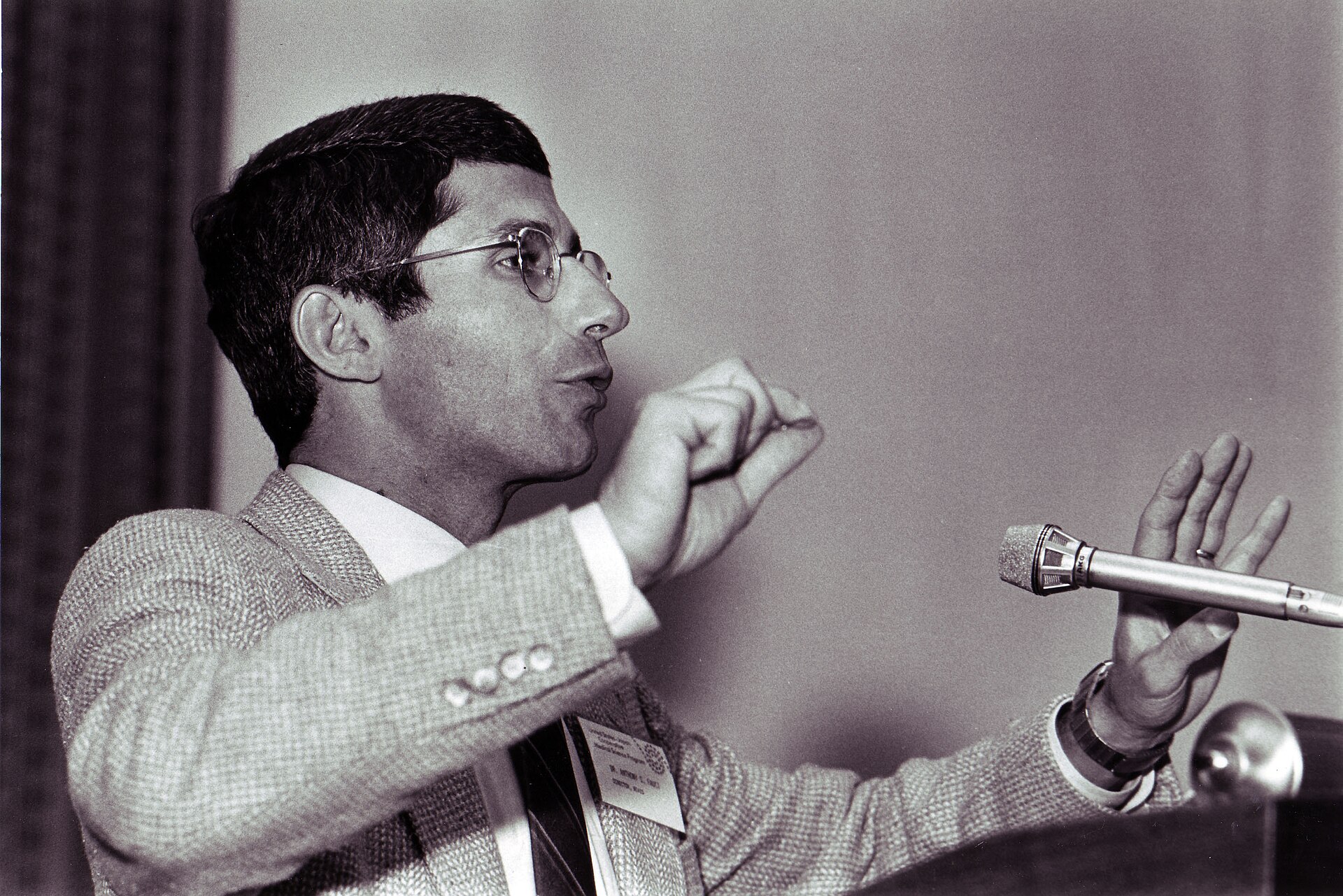
    Anthony Fauci (1985)
    Image: NIAID, via Wikimedia Commons, CC BY 2.0.

    Fauci’s biography in that notice identified him as the former director of the National Institute of Allergy and Infectious Diseases. He held that position from 1984 to 2022 within the National Institutes of Health and the Department of Health and Human Services.

    That long public career helps explain why his appearance was not treated as an isolated event. Fauci was a central federal figure during COVID-19, and years of congressional inquiry have placed his statements, decisions and public role under continuing scrutiny.

    “No other option” signals caution

    According to CNN’s account, Fauci’s team approached the Senate appearance as a high-stakes event requiring extensive preparation. His statement that there was “no other option” suggests the planning was not simply about communicating effectively in public.

    A congressional witness can face competing risks. Speaking broadly may create tension with earlier testimony, documents or later proceedings. Giving limited answers can be portrayed by critics as avoidance. Leaning on legal safeguards can itself become a political story.

    That tension helps distinguish a congressional hearing from a television interview or a routine public appearance. Lawyers and advisers may need to examine prior statements and committee records while the witness weighs where factual explanation ends and legal caution begins.

    Why the Fifth Amendment entered

    CNN’s report framed Fauci’s strategy around Fifth Amendment considerations. In congressional testimony, the Fifth Amendment protects a person from being compelled to provide testimony that could be self-incriminating.

    Invoking the protection is not, by itself, an admission of wrongdoing. Still, in the highly visible setting of a hearing, opponents may cast it as evidence of evasion while supporters may view it as an appropriate constitutional safeguard.

    That disconnect is part of the political hazard surrounding Fauci’s testimony. A legal decision can be interpreted through partisan lenses before the public has fully absorbed the underlying explanation.

    The House inquiry set the stage

    The Senate appearance followed prior House scrutiny. Congress.gov records show Fauci testified on June 3, 2024, before the Select Subcommittee on the Coronavirus Pandemic, part of the House Committee on Oversight and Accountability.

    The House proceeding was tied to a broader investigation into the COVID-19 pandemic. Its stated goals included examining the pandemic, identifying lessons learned, whether positive or negative, and improving readiness for future public-health emergencies.

    Fauci’s testimony was considered alongside thousands of pages of documents and closed-door testimony provided to House Republicans. That existing record raises the stakes in later hearings because answers can be compared with material already gathered by investigators.

    Supporters of continued oversight argue that Congress has a responsibility to examine decisions affecting schools, workplaces, hospitals, travel, vaccines and confidence in public institutions. They see an accounting of who made key decisions, and on what information, as necessary work.

    One witness, sharply divided views

    Fauci remains an unusually polarizing witness because he is both a scientist and a symbol of the federal COVID-19 response. For many Americans, he represented expertise during a frightening public-health emergency. For critics, he became associated with mandates, changing guidance and mistrust of federal agencies.

    Those competing views make plain testimony difficult. A scientific answer describing uncertainty may sound inconsistent to a hostile questioner. A restrained legal answer may appear evasive to some viewers. A political-sounding answer may complicate a witness’s effort to speak as a public-health official.

    The House and Senate can also approach the same topic with different institutional incentives. House Republicans used the COVID inquiry to challenge federal health decisions and scrutinize officials who helped shape the response. A Senate hearing may carry a different tone, but not necessarily less risk for the witness.

    The unresolved question is closure

    It remains unclear how much Fauci’s Senate testimony will add beyond prior House proceedings, documents and private interviews. The public record also does not settle whether senators are primarily seeking new evidence, public accountability or a record for future political fights.

    The pandemic itself involved fast-moving science, incomplete data, decisions across federal and state governments, private-sector pressure and widespread fear. A hearing may clarify parts of that history, but it is unlikely to resolve every dispute about what officials knew, when they knew it or how uncertainty was communicated.

    Fauci’s defenders are likely to argue that repeated hearings can become a personal prosecution of one former official. His critics are likely to argue that his prominence makes his testimony essential because he helped shape policies and messages that affected millions of people. Both the case for oversight and the concern about spectacle remain part of the dispute.

    The lasting significance of Fauci’s strategy may be what it says about the next crisis. If congressional review centers on documents, timelines and decision-making, it could produce lessons for future preparedness. If it centers on confrontation alone, it could deepen distrust and make future public-health officials more wary that every sentence will later be treated as evidence in a political courtroom.

  • Justice Department Will Appeal After 21 Voter-Roll Court Defeats

    Justice Department Will Appeal After 21 Voter-Roll Court Defeats

    The documented next step is continued appeals. Whether the administration changes its voter-data strategy or expands the fight politically remains unknown.

    The Justice Department intends to keep appealing after the Trump administration lost 21 straight federal court cases involving state voter rolls, Reuters reported on August 7, 2026. The cases are tied to the administration’s claims about noncitizen voting and its efforts to obtain voter-roll information from states.

    Reuters said the administration had not won any of the 21 cases it covered. That record establishes a series of legal defeats, but it does not establish what President Donald Trump will choose to do beyond the appeals already announced as the midterm elections approach.

    The confirmed response is an appeal

    The Justice Department’s stated intention to continue appealing is the clearest documented action following the rulings. Appeals are a conventional way for government officials to challenge a judge’s interpretation of the law.

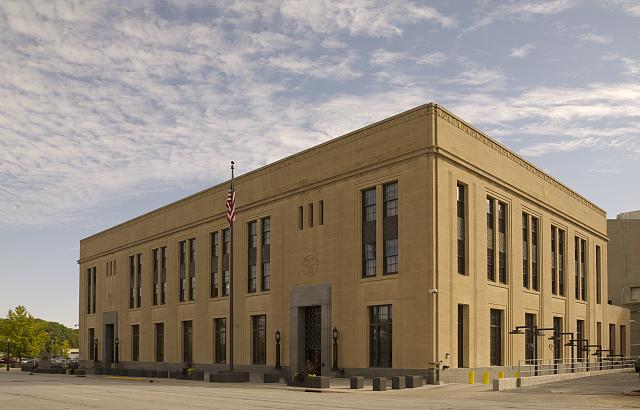
    United States Courthouse, Davenport, Iowa
    Image: Carol M. Highsmith, via Wikimedia Commons, Public domain.

    The administration could also alter its legal theory or make a different, potentially narrower request for information. Those possibilities should not be treated as decisions that have already been made.

    The disputes concern state voter rolls, the official lists used to determine who is eligible to vote. Maintaining those lists is a standard part of election administration, though conflicts can arise over who receives voter data, which registrations should be removed and what evidence is sufficient to investigate claims of ineligible registration.

    What the court record does and does not show

    The 21 losses are significant setbacks in the particular federal cases reported by Reuters. They show that judges repeatedly rejected the administration’s position in those disputes.

    They do not end the underlying policy fight. States generally run elections, while federal law provides certain nationwide protections and requirements. That division can produce conflict when a presidential administration seeks records or action from state election officials.

    Critics of aggressive voter-roll efforts warn that poorly designed purges can remove eligible voters, including people who have moved, changed names or been incorrectly matched in government records.

    Supporters argue that accurate voter rolls are necessary to sustain confidence in elections. From that perspective, federal scrutiny of voter-list accuracy is legitimate election-integrity work, and an appeal is an ordinary response when officials believe a ruling is wrong.

    Political interpretations go beyond the rulings

    Opponents and supporters of the administration draw sharply different conclusions from the losing streak. Critics may cite it as evidence that the administration’s claims lack legal support. Supporters may describe the rulings as resistance from courts and Democratic-led states.

    Neither interpretation changes the narrow documented result: Reuters reported 21 losses. Litigation alone is not proof of misconduct, and an appeal does not by itself establish improper intent.

    Warnings that the losses could prompt Trump to do something “ominous” are interpretations and concerns, not confirmed plans. The available reporting does not identify a specific new action Trump has announced in response to the rulings.

    Democracy advocates and Trump critics worry that pressure surrounding elections can lead leaders to test executive-power limits, attack institutions or portray ordinary court decisions as evidence of a hostile system. Any claim that such an escalation is planned would require evidence beyond a prediction.

    Hungary’s election has become part of the debate

    The voter-roll cases have unfolded amid renewed discussion of Hungarian Prime Minister Viktor Orbán’s reported election defeat. Trump supported Orbán’s reelection effort, and Vice President JD Vance traveled to Budapest to support the incumbent shortly before the vote, according to the Associated Press.

    Orbán has influence among parts of the international right and has drawn praise from some conservatives for his approach to immigration, national identity and government power. Critics have cited Hungary’s record on media freedom, judicial independence and electoral rules.

    Harvard political scientist Steven Levitsky told the AP that opposition movements can succeed even in a tilted political environment. Matt Schlapp, chairman of the American Conservative Union, offered a different takeaway: voters can decide they want change.

    Hungary’s election is not a direct forecast for Trump or the Republican Party. Its relevance is political rather than predictive, adding to debate over whether incumbency and governing power can protect allies from voter backlash.

    What would clarify a shift in strategy

    As the midterms approach, election-rule disputes are likely to receive more attention and partisan messaging. The court record can become campaign material, but filings, appellate decisions and official statements will offer firmer evidence of the administration’s direction than broad forecasts.

    Potential signs of a changed strategy could include revised arguments in the existing cases, narrower requests for voter information, new demands aimed at state election officials or calls from Trump for measures beyond the matters already before courts.

    A serious claim of escalation should identify the proposed action, the legal authority the administration says it has and the institutional limits that could restrain it. For now, Reuters’ reported 21 straight losses and the Justice Department’s plan to appeal are the known facts; any wider political or legal response remains uncertain.

  • Idaho Republican’s ‘Big Trouble’ Remark Points to an Inward GOP Fight

    Idaho Republican’s ‘Big Trouble’ Remark Points to an Inward GOP Fight

    The available material does not identify the Republican or a triggering event. Context from NPR’s 2022 reporting shows a party fight centered on primaries, right-wing activism and what Idaho conservatism should prioritize.

    According to Idaho Public Press, an unnamed, embarrassed Republican said the Republican Party is in “big trouble.” The material does not name the person or identify a specific new event behind the assessment.

    That makes the remark less a proven measure of electoral collapse than a pointer toward a long-running Idaho GOP dispute over ideology, governing priorities and who gets to define Republican politics in a deeply conservative state.

    The conflict described in the available reporting is primarily inside Idaho’s dominant political party, not necessarily a contest showing that Democrats are close to breaking the GOP’s statewide advantage.

    What is actually established

    The phrase “big trouble” is broad. It could refer to party image, candidate disputes, policy fights, factional pressure or difficulty keeping different Republican groups aligned.

    Idaho Volcanic Landscape
    Image: Jon Sullivan, via Wikimedia Commons, Public domain.

    The available material does not establish which concern the unnamed Republican had in mind. It also does not point to a new election result, a verified leadership collapse or a statewide voter shift.

    That distinction is important. A party can remain powerful at the ballot box while still being deeply divided over its leaders, its tone and the agenda it wants to pursue after winning office.

    Why Idaho changes the stakes

    Idaho has long been a Republican stronghold. In that setting, some of the most consequential political contests can happen before the general election, especially in primaries, local party organizations and legislative races.

    Those fights can determine more than nominations. They can influence which faction sets the agenda, which candidates are treated as acceptable Republicans and what conservatism is supposed to look like in practice.

    That is why the remark should not be read automatically as a forecast of a Democratic breakthrough. The more immediate question is whether Idaho Republicans are moving toward a more confrontational, populist politics or a more conventional governing approach.

    The 2022 context behind the split

    NPR reported on April 7, 2022, that Idaho was one of the sharp battlegrounds between Republican moderates and extremists. The report described the state’s primary races as a test of how far to the right the GOP could be pulled.

    Jennifer Ellis, a cattle rancher and lifelong Republican, told NPR that people like her had stayed quiet too long while extremists gained influence. Her concern was that conspiracy theories, inflammatory tactics and ideological purity tests were pulling attention away from practical governing responsibilities.

    Ellis helped form Take Back Idaho, a political action committee aimed at unseating far-right legislators. NPR reported that the group had raised close to $100,000 at the time and was targeting at least 16 lawmakers.

    That effort showed the dispute was not only about defeating the other party. It involved Republicans organizing against fellow Republicans over the direction of the GOP itself.

    Two sides read the pressure differently

    Not every Idaho conservative saw the party’s rightward pressure as a sign of trouble. NPR quoted state GOP delegate Doyle Beck criticizing the status quo and arguing that conservatives had pushed for lower government and business taxes.

    From that view, sharper ideological demands can look like a corrective to an establishment seen as too willing to compromise or too distant from the conservative base.

    Critics see a different risk: that loyalty tests can narrow the party and make governing harder. Republicans deemed insufficiently conservative can be labeled “RINOs,” or Republicans in name only, turning policy disagreement into a challenge to political identity.

    The same conflict can therefore be framed two ways. One side may see a necessary push for conservative priorities, while the other sees a durable coalition being strained by escalation.

    Policy priorities are part of the divide

    The NPR reporting described more than a dispute over campaign style. Ellis cited infrastructure and school funding as issues she believed were getting too little attention amid arguments over conspiracies and symbolic fights.

    NPR also described disputes involving libraries and claims about Canadians crossing the border to vote, an assertion for which the network said there was no evidence.

    For critics of the rightward pull, the concern is that cultural and symbolic battles can crowd out budgets, education, public services and the daily work of state government. Supporters may counter that distrust of institutions, cultural issues and limits on government are central governing concerns, not distractions.

    What the record still cannot answer

    The detailed reporting cited here dates to 2022, so it is useful context rather than a complete account of Idaho’s current political landscape. It documents an established factional conflict, but it cannot confirm the scale, cause or immediate consequence of the unnamed Republican’s remark.

    What the record does support is narrower and still significant: in a state where Republicans remain highly influential, the party’s hardest fight may be over what winning is supposed to accomplish.

  • ICE Airport Arrests Put TSA Passenger Data at Center of Visa Overstay Crackdown

    ICE Airport Arrests Put TSA Passenger Data at Center of Visa Overstay Crackdown

    The reported airport arrests place a routine part of domestic flying at the center of a broader immigration-enforcement strategy. Key details about TSA data-sharing, the scope of screening and how complicated immigration cases are handled remain undisclosed.

    ICE is arresting some visa overstayers during check-ins at U.S. airports, using passenger information before travelers board domestic flights. At least 27 travelers have been arrested at U.S. airports, according to ABC News, which cited Department of Homeland Security documents.

    The arrests reflect a shift from Biden-era limits on domestic air-travel enforcement. DHS says the Trump administration has reversed a policy that allowed people in the country unlawfully to fly within the United States, while TSA data-sharing with ICE has raised unanswered questions about how airport check-ins are becoming enforcement points.

    Passenger data is central

    The most consequential part of the reported strategy may happen before an ICE agent appears at an airport. Airlines and airports gather identifying and itinerary information as passengers check in, creating records that can be compared with immigration information before a traveler reaches the gate.

    American Oversight released a document describing an agreement signed in May 2025 under which the Transportation Security Administration would provide ICE with certain passenger-data elements that ICE may collect and retain. The document brought more attention to how routine travel information can be used in immigration enforcement.

    But the public does not have a complete picture of the arrangement. American Oversight said the appendices identifying the exact information to be shared were heavily redacted. That leaves unclear which specific details are passed between TSA and ICE, how they are used to identify travelers and what safeguards apply when records do not tell a complete story.

    Names, birth dates, routes and identification information can be powerful when linked with immigration databases. The policy dispute is not simply about whether authorities can use information already collected for air travel; it is also about the limits, visibility and accuracy of that use.

    A reversal in domestic flying

    DHS has characterized the airport approach as a deliberate reversal of the Biden-era policy. In a statement reported by the New York Post, the department said it had reversed what it called a Biden-era policy allowing people in the country unlawfully to fly domestically.

    The administration’s position is that people without lawful status should not be able to use domestic air travel unless they are leaving the United States. Under that view, airports are a practical enforcement location because travelers’ identities are already checked as part of the flying process.

    That approach changes the significance of a domestic trip for some people. Immigration status has long been relevant at international borders and arrivals, but the reported policy means a domestic check-in may now also bring immigration consequences for people identified as having overstayed a visa.

    The available reporting does not establish how many travelers have been screened, flagged, questioned or allowed to proceed after review. The reported total of at least 27 arrests confirms that the tactic is being used, but not how broadly it is being applied.

    Arrests reported at major hubs

    DHS has not publicly released a complete list of airports where arrests occurred. Reports have described ICE activity or arrests at Los Angeles International Airport, Harry Reid International Airport in Las Vegas, Nashville International Airport, Denver International Airport and San Francisco International Airport.

    Individual cases show how the policy can unfold at the terminal. Phu Nguyen, an Australian citizen born in Vietnam whose visa reportedly expired in 2015, was arrested at Los Angeles International Airport, according to widely discussed reports.

    Another reported case involved Chantal Morales Rojas, a 27-year-old Ecuadorian woman living in Oakland. She was arrested while preparing to board a flight at Denver International Airport; ICE told The Denver Post that her visa had expired in January 2025.

    Those reports do not answer whether arrests at the named airports resulted from the same procedures or selection criteria. Social-media accounts of some incidents have also circulated before federal agencies provided a fuller public accounting.

    Overstay cases can be complicated

    Visa overstays are distinct from unlawful border crossings in one important respect: many people who overstay entered the United States lawfully after initial screening and then remained longer than their visa permitted.

    Some cases may be straightforward. Others can involve pending immigration filings, administrative delays, humanitarian claims, marriage-based petitions, student-status issues or efforts to leave the country after falling out of status.

    An expired visa therefore may not capture every part of a person’s immigration situation. A traveler may have permission to remain through another process, or may believe they do, even if a federal database produces a different result during airport screening.

    That is why the process for resolving incorrect or incomplete matches is central to the debate. DHS has not publicly detailed how travelers can present documentation when flagged, how records are corrected or how agents distinguish between a person with no lawful status and someone whose status is affected by a pending application or court matter.

    Two sharply different arguments

    Supporters of stronger enforcement are likely to argue that visa overstays have been insufficiently policed and that airports are a logical setting to identify people whose identities are already being verified. DHS and ICE can also contend that using existing travel data is an efficient way to locate people with expired visas or final immigration issues.

    Immigration advocates and civil-liberties groups see a different risk. They can argue that unclear data-sharing rules turn transportation screening into a wider immigration-enforcement system with too little public disclosure, potentially chilling travel and creating fear for mixed-status families or people awaiting decisions on immigration paperwork.

    The arrests fit into a wider Trump administration push to increase immigration arrests and encourage self-deportation. DHS has said the administration aims to ensure that people in the country unlawfully cannot fly unless they are leaving the United States. The New York Post reported that DHS has pointed to millions of departures or deportations since the start of the second Trump administration, including people it says self-deported.

    The unanswered questions remain

    The known facts establish a meaningful policy change: ICE has made arrests involving visa overstayers at U.S. airports, and TSA has an agreement to provide ICE with certain passenger data. The scope of the system, however, is still partly hidden.

    There is no complete public list of airports involved, no disclosed set of criteria for prioritizing travelers and no clear account of the precise TSA data covered by the May 2025 agreement. It is also unclear whether airport enforcement will remain focused on visa overstays or expand to other types of immigration cases.

    For people with overstays, uncertain status or unresolved immigration paperwork, domestic flying may carry more perceived risk than it did under the Biden-era approach. The broader consequence is that a check-in counter can now serve not only as the start of a trip, but also as a point where immigration enforcement may begin.

  • Trump Left Turkey on Older Air Force One, Renewing 747 Retrofit Debate

    Trump Left Turkey on Older Air Force One, Renewing 747 Retrofit Debate

    Questions over the Qatari-donated Boeing 747 now center on the pace and scope of its conversion for presidential travel, after Trump reportedly left Turkey aboard the older Air Force One.

    The debate over the Boeing 747-8 donated by Qatar has moved beyond the aircraft’s luxury and the politics of accepting it from a foreign government. The central issue is whether the newer jet had received the security modifications needed for presidential travel when Donald Trump used it during a period of heightened regional tensions.

    According to The New York Times, Trump arrived in Turkey aboard the newer aircraft but departed Ankara on the older presidential plane after the Secret Service urged a precautionary change. Trump later transferred back to the newer plane in England for the flight to Washington.

    Converting a 747 for presidential travel is a separate task

    Obtaining a newer aircraft and preparing it to serve as Air Force One are different undertakings. A civilian-derived airliner, even one with a high-end interior, requires substantial changes for secure communications, defensive systems, specialized power and wiring, and other protected technology.

    92 9000 Boeing 747 ( VC 25A ) United States Of America ( Air Force One ) (8414490546)
    Image: Aeroprints.com, via Wikimedia Commons, CC BY-SA 3.0.

    The Air Force began work on the aircraft in the United States last summer. Officials said it was being modified for “executive airlift” support at the direction of Defense Secretary Pete Hegseth, but released few additional details because of classification concerns.

    Andrew P. Hunter, a former Air Force official who oversaw the Air Force One program during the Biden administration, told the Times that properly retrofitting a 747 for presidential use would take more than a year.

    Industry and Pentagon officials had estimated that the upgrade could cost as much as $1 billion and take up to two years, according to the Times. Air Force Secretary Troy Meink later gave Congress a lower estimate, saying the modifications would probably cost less than $400 million.

    The older fleet carries specialized capabilities

    The two VC-25A aircraft that now serve as Air Force One entered service in the early 1990s. Their age has made a replacement program important, but the older planes also have systems that distinguish them from a standard 747.

    Air Force materials describe the VC-25 fleet as specially configured with electronic and communications equipment, self-contained baggage loaders, front and aft air-stairs, and in-flight refueling capability. The aircraft also accommodate the president, staff, guests, Secret Service personnel and the news media.

    Reporting has described the older aircraft as having systems intended to counter an incoming antiaircraft missile, including technology designed to confuse or divert a missile. Expected protections can also include hardened electrical systems meant to withstand the effects of an electromagnetic pulse.

    People briefed on the newer aircraft’s capabilities told the Times that it did not have all the features of the older plane. The exact details are not public because many defensive and communications systems on presidential aircraft are classified.

    The Qatar donation brought separate concerns

    The Boeing 747 was donated by Qatar, an arrangement that drew political, ethical and security criticism when it became public. Critics questioned whether accepting a luxury aircraft from a foreign government could create conflicts of interest, even if it was ultimately transferred to the U.S. government and altered for official duties.

    Backers of using the plane have emphasized a practical advantage: it is a newer 747 available while the government’s replacement Air Force One program remains delayed.

    Congressional critics, meanwhile, had warned that an accelerated schedule could leave inadequate time for essential defenses. Their concern was not limited to the aircraft’s appearance or the diplomatic symbolism of a gift from Qatar, but whether pressure to put it into service quickly could run ahead of the technical work required for presidential use.

    The White House says the new aircraft is protected

    White House communications director Steven Cheung said the new Air Force One had “high-level security protocols” to protect Trump and staff.

    Trump offered a separate public explanation for the aircraft change. He said the newer plane could leave early for stops at U.S. military bases, allowing troops to see what he called a “magnificent” aircraft.

    Trump denied that security concerns prompted the swap, while also describing himself as Iran’s top target and saying passengers had likely been told to close window shades because they were on a “dangerous plane.”

    Those statements do not directly settle the Times’ reporting that the Secret Service recommended a precautionary switch. Both accounts could reflect elements of the same travel plan, but the public record does not explain how officials weighed the newer aircraft’s capabilities against the risks of departing Turkey amid regional escalation.

    The Turkey departure made readiness the focus

    The Times reported that the Secret Service urged the precautionary adjustment as hostilities involving Iran resumed and the United States carried out strikes on Iran. Trump was attending a NATO summit in Ankara at the time.

    People briefed on the plans told the Times that the change was a security precaution rather than a response to a particular threat. That distinction does not establish that the Qatari aircraft was unsafe, but it indicates that officials preferred the older aircraft in a more dangerous environment.

    An analyst’s use of the term “fiasco” is a characterization, not an established government conclusion. Supporters of the administration can argue that presidential travel routinely involves layered contingency planning and that choosing the older jet as an added safeguard does not prove the newer aircraft lacked necessary protections. Critics see a possible mismatch between a public rollout and an aircraft whose operational maturity remains unclear.

    No public account has identified the security systems installed on the Qatari-donated Boeing 747, the systems that may remain unfinished, or the specific factors that shaped the Secret Service recommendation in Ankara. Limits on disclosure are expected around presidential security, but they also leave the administration’s assurances and the reported precautionary switch open to sharply different interpretations.

  • Trump Uses Graham’s Prayer-Breakfast Quip to Personalize Cathedral Tribute

    Trump Uses Graham’s Prayer-Breakfast Quip to Personalize Cathedral Tribute

    At a solemn Washington farewell, Trump turned to a prayer-breakfast punch line to remember Graham’s humor and their journey from 2016 rivals to political allies.

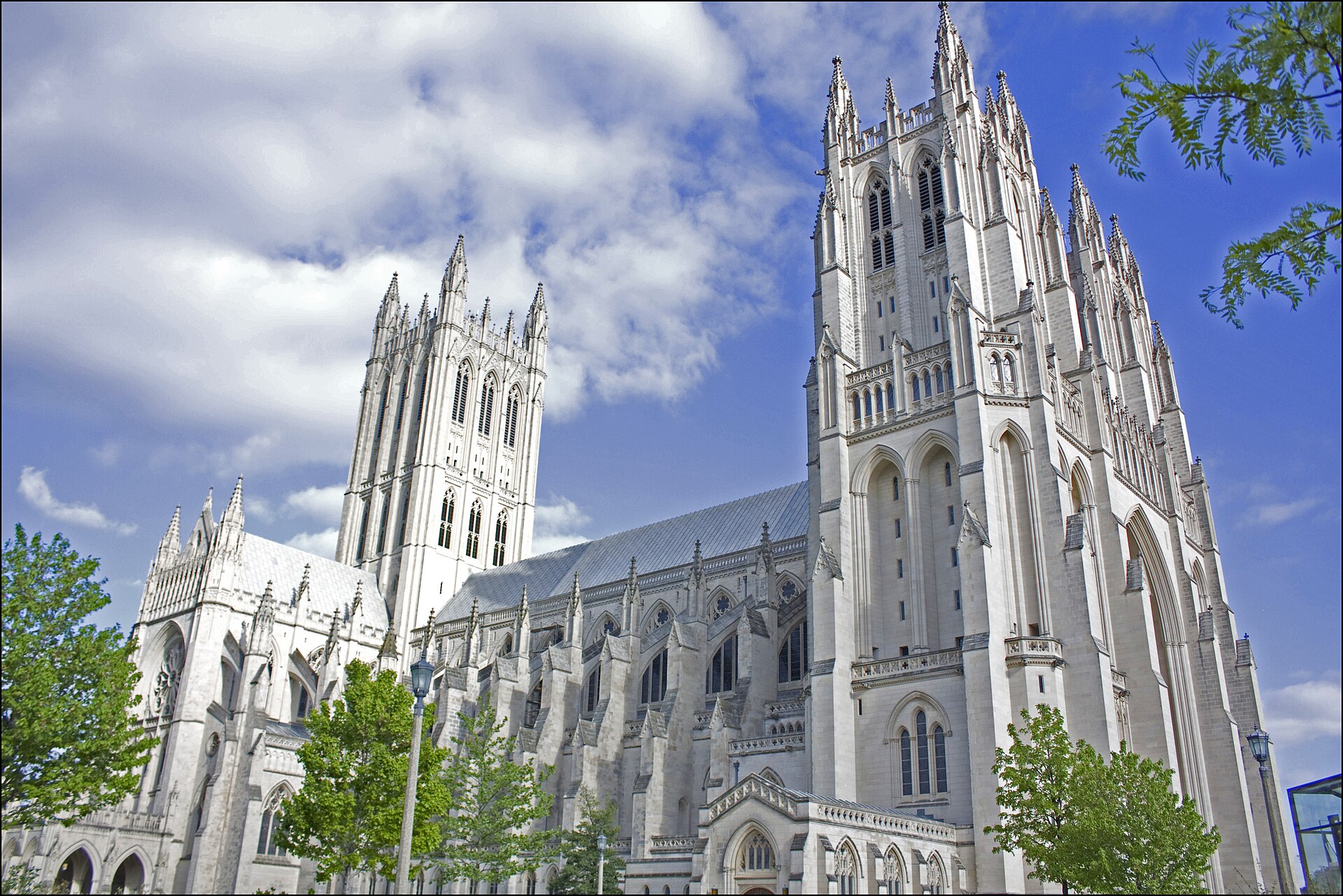
    Donald Trump revived Lindsey Graham’s joke about Jesus returning before 10 a.m. during Graham’s farewell tribute at Washington National Cathedral in Washington, D.C., on Tuesday, July 28. Trump recounted the line — “If Jesus comes back before 10 am, I ain’t going” — to honor Graham with humor while reflecting on a friendship that began in open political conflict.

    The anecdote gave Trump a personal way to remember the late South Carolina Republican. It also condensed the central tension of the tribute: Graham was being celebrated as a senator and ally, but also as a blunt, funny and complicated figure whose political legacy remains a subject of debate.

    A prayer breakfast becomes the refrain

    According to MEAWW News, Trump told mourners that Graham had used the line when declining an invitation from Sen. Tim Scott to an 8:30 a.m. prayer breakfast. The joke was not about policy or Senate procedure; it was a small story about Graham’s resistance to an early start.

    National Cathedral in DC
    Image: Siubo11A, via Wikimedia Commons, CC BY-SA 3.0.

    At a memorial in Washington National Cathedral, that detail carried unusual weight. Trump used it to shift the room away from formality and toward a version of Graham defined by timing, irreverence and an ability to land a punch line.

    Humor can be a difficult choice at a public farewell, especially one attended by leading political figures. In this case, the joke worked as a character sketch: it offered a recognizable, human image of a public official more often associated with high-stakes political fights.

    Trump’s account of a changed alliance

    Trump did not portray his relationship with Graham as an easy or natural friendship. He said the two “did not exactly get off to the best of starts,” referring to their clashes during the 2016 Republican presidential race.

    One of the most visible episodes from that period came after Graham criticized Trump and Trump publicly revealed Graham’s personal cellphone number. During the farewell remarks, Trump said it was something he “shouldn’t have done,” according to the source account.

    That acknowledgment made the tribute more than a conventional list of accomplishments. Trump was recounting a political relationship that moved from rivalry to a close alliance, with Graham later becoming one of his strongest defenders in the Senate.

    Supporters can view that evolution as evidence of Graham’s pragmatism and of a political partnership built over time. Critics may see it differently, pointing to Graham’s shift after years of sharp warnings about Trump. The memorial did not settle those competing readings; it emphasized reconciliation.

    The record Trump chose to highlight

    Trump praised Graham as “a beloved friend, a devoted brother, a respected statesman, a giant of the United States Senate, and a true American original,” according to MEAWW News.

    His account of Graham’s record focused on military funding, border security legislation and the confirmation fight involving Supreme Court Justice Brett Kavanaugh. Trump called Graham’s defense of Kavanaugh “perhaps his finest hour,” the report said.

    Those choices showed which parts of Graham’s Senate career Trump wanted to place at the center of the farewell. The emphasis was on partisan battles, Senate power and the causes that made Graham influential in Republican politics.

    Trump also described Graham as “extremely hawkish” and joked that he “never saw a war that he didn’t like.” He framed that approach as stemming from Graham’s belief in protecting American interests, a description that underscored Graham’s long association with defense and foreign-policy debates.

    A cathedral crowd reflecting his reach

    The setting added to the sense of Graham’s national standing. Washington National Cathedral was the venue for a farewell attended by major political figures and foreign dignitaries, according to the report.

    MEAWW reported that Israeli Prime Minister Benjamin Netanyahu attended, along with Defense Secretary Pete Hegseth, Treasury Secretary Scott Bessent, Secretary of State Marco Rubio and Commerce Secretary Howard Lutnick. Trump told the audience that leaders, presidents and prime ministers from around the world had come to mourn Graham.

    The guest list reflected a career that extended beyond South Carolina. Graham’s work on military issues, Republican coalition-building and foreign policy put him in contact with influential figures in Washington and abroad.

    Yet the day’s most memorable detail was not a roll call of guests or a legislative accomplishment. It was the 10 a.m. line, a reminder that public memorials often leave audiences with an anecdote rather than a policy summary.

    Why the joke carried the tribute

    Graham, who was elected to the Senate in 2002, died suddenly on July 11 from an aortic dissection, according to the report. He was 71. His death prompted tributes that attempted to capture both his institutional role and the force of his personality.

    Trump’s remarks leaned into loyalty, toughness, humor and their shared political history. That framing presented Graham as a valued ally whose willingness to fight and capacity for humor belonged together.

    But a memorial tribute is not the final word on a political career. Graham was admired by allies as energetic and effective, particularly on defense and judicial issues. He was criticized by opponents and some former admirers for the turns he made during the Trump years.

    The prayer-breakfast story did not erase those divisions. It offered Trump a way to make Graham’s memory intimate and funny inside a solemn ceremony — and to tell the broader story of a onetime rival who became a close political friend.

    An anecdote likely to outlast speeches

    “If Jesus comes back before 10 am, I ain’t going” captures a specific version of Graham: stubborn, theatrical and unwilling to adjust his schedule even for an extraordinary occasion. It is also easier to remember than a lengthy account of Senate votes or policy disputes.

    That was the power of Trump’s choice at the cathedral. By centering a joke, he put personality ahead of ceremony and personal history ahead of a polished institutional tribute.

    Graham’s larger legacy remains more complicated than one farewell or one line. The arguments over his alliances, convictions and role in modern Republican politics will continue. For the service in Washington, though, Trump’s version of Graham began with a laugh before 10 a.m.

  • Trump Official Seeks Iran Off-Ramp as Hormuz Pressure Mounts

    Trump Official Seeks Iran Off-Ramp as Hormuz Pressure Mounts

    The reported search for a way to contain the Iran conflict comes as military pressure and commercial disruption intensify. What remains unclear is whether either side has agreed to a real negotiating path.

    A senior Trump administration military official is seeking an off-ramp from the conflict with Iran as the conflict with Iran is escalating, according to reporting highlighted in live updates. The reported effort suggests Donald Trump’s administration is looking for a way to de-escalate or contain the fighting, but public details of the reported effort remain limited.

    That uncertainty is central to the story. There is no publicly confirmed proposal, negotiating timetable, mediator or indication that Iran has received terms, even as pressure builds around the Strait of Hormuz and energy markets.

    An exit route, not a peace deal

    In a military conflict, an off-ramp is not necessarily a sweeping settlement. It can be a narrower arrangement that lets the sides reduce violence, limit particular attacks, open lines of communication or establish conditions for later negotiations without immediately resolving every dispute.

    Possible forms could include direct talks, third-party intermediaries, a limited ceasefire, changes in military posture or practical steps intended to keep a regional clash from spreading. Safer passage for commercial vessels could also become part of a limited arrangement.

    The distinction matters because diplomacy and military action can proceed at the same time. Governments may use force to seek leverage while testing whether an adversary is willing to compromise. A reported search for an off-ramp, therefore, does not establish that a durable peace agreement is close.

    Claims about talks do not align

    Donald Trump has said Iran wants to negotiate, according to BBC live reporting cited in the available research. He said the United States was talking to Iran, while also saying he did not think Tehran was ready.

    Iranian Foreign Minister Abbas Araghchi gave a sharply different account, saying Iran had not asked for a ceasefire. The two public positions leave a major gap between a claim that discussions may be possible and confirmation that both sides accept the same basis for negotiations.

    Available reporting does not establish a publicly verified framework for talks. There is no confirmed list of demands, venue, timetable or announced mediator connected to the reported effort by the senior Trump military official.

    That leaves the effort difficult to evaluate. It remains unclear whether it involves direct U.S.-Iran contact, third-party mediation or internal planning for the circumstances in which Washington could reduce its military role.

    Hormuz raises the urgency

    The Strait of Hormuz has put the wider stakes of the conflict into sharp focus. The waterway is a crucial route for global energy shipments, meaning disruption can affect countries far beyond the Middle East.

    Trump said his administration had discussed a possible coalition with about seven countries to escort ships through the strait, according to the BBC. He named China among the countries approached and called on allies to help protect energy routes important to their own supplies.

    But potential partners appear cautious. Japan’s Prime Minister Sanae Takaichi said Tokyo had not received a formal request, while saying the government was considering an appropriate response. She also said a maritime policing mission would be extremely difficult under Japanese law.

    The response illustrates the bind for Washington: countries may share concerns about shipping security while resisting commitments that could pull them deeper into a direct military confrontation.

    Shipping disruption carries a price

    The economic consequences described in the reporting go beyond military planning. The BBC said oil prices remained near $100 a barrel after the U.S. bombing of Kharg Island, described as Iran’s main oil-export hub.

    At the time of that report, U.S.-traded crude was quoted at $98.14 a barrel and Brent at $103.17. Major countries in the International Energy Agency had pledged to release 400 million barrels from reserves, but prices remained above prewar levels.

    Commercial vessels have also faced direct danger. The BBC reported that the Thai ship Mayuree Naree was hit by suspected Iranian missiles in the Strait of Hormuz, forcing its crew to abandon ship. Thailand said it had formally protested to Iran and sought assistance for three crew members believed to remain aboard.

    Those developments add practical urgency to any effort to limit the conflict. Extended instability can affect fuel costs, trade and airline schedules while complicating the calculations of governments the United States hopes will support maritime protection.

    Pressure and diplomacy can collide

    There are competing arguments over whether sustained military pressure helps or hurts the prospects for an off-ramp. Supporters may argue that Iran is more likely to make concessions if the cost of continued confrontation rises.

    Critics can argue that intensified attacks make negotiation harder, encourage retaliation and increase the risk that a localized conflict becomes a wider regional war. They may view shipping escorts and expanded coalition operations as protective measures that could also produce new confrontations.

    Israel’s stated military objectives add another complication. Israel said it still had thousands of targets in Iran, according to the BBC’s live coverage. A meaningful reduction in tensions would have to account not only for Washington and Tehran, but also for Israel’s aims, Gulf shipping security and the choices facing countries asked to help patrol the waterway.

    What would show real de-escalation

    The available reporting supports the broad picture of a Trump administration seeking ways to end or reduce the conflict. It does not publicly identify the official reportedly pursuing the off-ramp or explain the proposal that person may be advancing.

    The more meaningful signs would be observable steps rather than rhetoric alone: verified contacts, reduced attacks, safer commercial transit or a framework for talks acknowledged by both sides. Iran’s denial that it requested a ceasefire is a reminder that a possible opening should not be treated as an agreed process.

    For now, the reported effort is significant because it recognizes the mounting costs of fighting without a publicly defined endpoint. Whether it becomes a genuine route toward containment depends on details that have not yet been made public.

  • Zohran Mamdani’s 9/11 Role Divides Families Over Attendance

    Zohran Mamdani’s 9/11 Role Divides Families Over Attendance

    The immediate issue is whether Mayor Zohran Mamdani will attend a New York City 9/11 observance. The larger challenge is preserving a ceremony where grieving families feel their voices and choices are respected.

    Mayor Zohran Mamdani is at the center of a dispute over a New York City 9/11 commemoration, and some 9/11 families are weighing whether to attend. Survivors and relatives have urged Mamdani not to take part, saying the controversy has reopened painful wounds around a ceremony intended to honor those killed in the September 11 attacks.

    The question is not only whether Mamdani will be present. It is whether the dispute over his role could change participation in one of New York City’s most solemn annual observances. Mamdani has said he will “proudly honor” the victims of 9/11, while some family members fear people may stay away.

    Attendance is now the immediate test

    A commemorative event can be measured in schedules, speakers and security plans. This disagreement has put a more personal measure at the forefront: whether relatives, survivors and others closely affected by 9/11 feel able to return.

    According to CNN’s reporting, some family members worry that “a lot of people might not go.” That concern shifts the dispute beyond a disagreement over a mayoral appearance. It raises the prospect that an event designed for collective remembrance could be shaped by who decides not to participate.

    For some people, attendance at a memorial is a private act of grief. Choosing not to attend can also communicate that they do not believe the setting reflects or respects their loss. Those two meanings can exist at the same time.

    Mamdani has said he intends to attend

    In a July city transcript, a reporter told Mamdani that a number of 9/11 survivors were calling on him not to go to 9/11 memorial services. Mamdani replied: “I will proudly honor the” victims, according to the excerpt provided by the city.

    His response makes his immediate position clear: he sees taking part in remembrance as part of honoring those who died. It does not resolve the objections from people who believe his presence would undermine a meaningful observance.

    The available material also does not establish what accommodations, if any, may have been discussed between the mayor’s office and families raising concerns. That distinction matters because the public record described here does not provide every allegation, demand or conversation behind the dispute.

    A memorial is not a routine event

    Public officials commonly appear at civic ceremonies. A 9/11 commemoration carries a different weight for families of those killed in the attacks, survivors, first responders and lower Manhattan residents.

    For many, it is among the recurring public occasions when personal grief is acknowledged in a shared setting. Decisions about who attends, who speaks and how the day is presented can therefore carry consequences beyond ordinary political symbolism.

    That does not mean public leaders have no role in memorial events. A mayor represents the city and may regard attendance as an obligation. But when an official’s presence becomes the subject of the dispute, the official is no longer simply a background participant in the ceremony.

    The competing views are difficult to reconcile. Critics calling for Mamdani to stay away appear to regard his attendance as incompatible with an appropriate observance. Mamdani’s statement indicates that he views participation as a way to honor victims. Neither position alone settles how the ceremony can avoid becoming centered on the conflict itself.

    Some families do not speak for all

    The reporting identifies renewed pain and concern among some 9/11 families. It does not describe a single view shared by every relative, survivor or New Yorker affected by the attacks.

    That is an important limit on broad claims about the dispute. The community connected to 9/11 is large and diverse, and relatives and survivors are not politically uniform. A family member who supports Mamdani’s attendance and one who opposes it can both have deeply personal ties to the day.

    Still, a concern voiced by part of that community can materially alter the tone of a memorial. The goal is not necessarily to eliminate every disagreement. It is to ensure that grieving people are not made to feel that their connection to the event is secondary to a public argument.

    City Hall faces unanswered questions

    As the commemoration approaches, key details remain unresolved in the available reporting. It is unclear how broad the objections are, whether organizers have altered any ceremonial plans, and how many relatives might decide not to attend.

    It is also unclear what direct engagement, if any, has occurred between Mamdani’s office and families who object to his role. Those answers could determine whether the disagreement remains limited or becomes a defining feature of the observance.

    For New York City, the challenge is larger than a single attendance decision. The city must recognize the mayor’s civic role while protecting a day that belongs first to people who lost loved ones and to those living with the consequences of 9/11.

    The measure will be room for grief

    Mamdani’s pledge to honor the victims may reassure some New Yorkers. Others may see the controversy as evidence that more listening and repair are needed before a day of remembrance arrives.

    What is clear is that a 9/11 commemoration cannot be treated as an ordinary political appearance. The outcome will depend less on whether every objection disappears than on whether families believe their losses, their voices and their decisions about attendance have been taken seriously.

  • Trump’s “brick wall” claim lacks any specific new setback

    Trump’s “brick wall” claim lacks any specific new setback

    The phrase suggests a specific new setback, but the available research does not identify one. What it does show is why rhetoric can collide with legal, political and institutional limits.

    Donald Trump has been described as having encountered a significant political obstacle that cannot be overcome through his usual public messaging. But the available source material does not identify a current event, decision, court action or electoral development that establishes the specific “brick wall” suggested by that claim.

    That gap matters. A memorable political phrase can travel faster than the underlying evidence, especially when it invokes Trump’s well-known ability to use public statements, rallies and media attention to shape a story.

    The claim is missing a key fact

    The supplied material contains a headline asserting that Trump has finally hit a “brick wall” he cannot talk his way around. Yet the extracted research does not explain what the obstacle is, who created it, when it emerged, or what measurable outcome has followed.

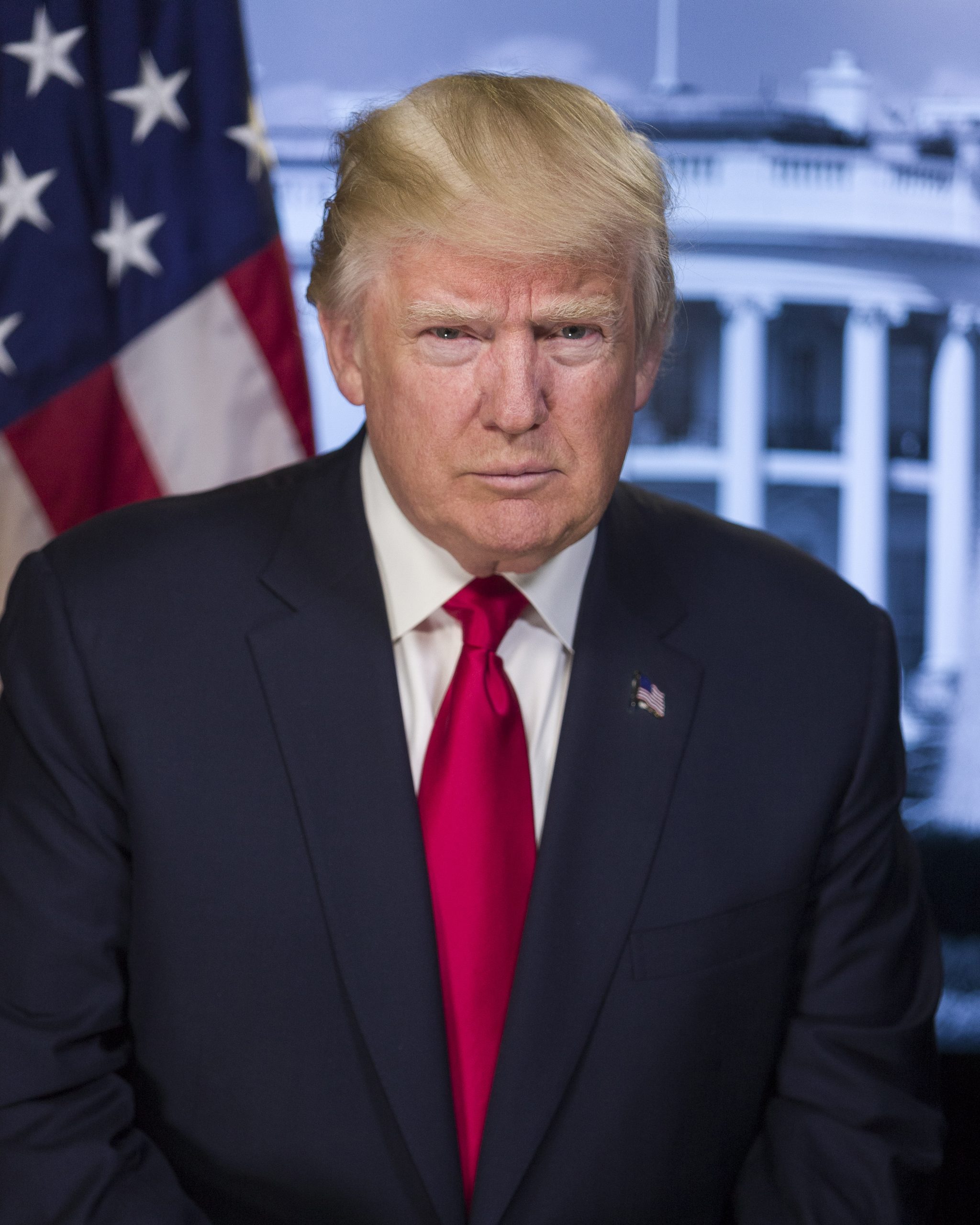
    President Donald J. Trump
    Image: US Department of State, via Flickr, Public Domain Mark 1.0.

    Without those basics, readers cannot fairly judge whether the phrase describes a real political reversal, a legal constraint, a congressional dispute, a polling problem or simply an analyst’s interpretation of Trump’s position.

    Political analysis can be valuable, but analysis is strongest when it distinguishes between a reported event and a conclusion drawn from that event. Here, the conclusion is present; the underlying current evidence is not.

    What the PBS interview actually covers

    The most substantial material provided is a PBS FRONTLINE interview with Sen. Mark Warner. It is not a current report about a newly defined obstacle for Trump. It discusses Trump’s first term, including his posture toward government institutions, the rule of law and the 2017 firing of FBI Director James Comey.

    Warner, a Democrat, argued that Trump had shown unusual disregard for legal and institutional norms. His comments were presented as his assessment, not as a neutral finding that Trump had reached an irreversible political limit.

    The interview includes Warner’s view that Trump could respond to intense political pressure by walking back remarks, while questioning whether such reversals reflected a deeper change in approach. That is useful context for understanding the “can’t talk his way around” framing, but it does not verify a present-day turning point.

    The timing is also essential. An interview discussing events such as Comey’s May 9, 2017 dismissal cannot, by itself, substantiate a claim about Trump’s circumstances in 2026.

    Why messaging has real limits

    Trump’s political career has repeatedly demonstrated the power of message discipline, confrontation and direct communication with supporters. He has often used speeches, interviews and social platforms to contest criticism, set the terms of debate and keep allies focused on his preferred argument.

    But public messaging does not control every lever of government or politics. Courts issue rulings under legal procedures. Congress controls legislation and spending through votes. States administer elections. Federal agencies operate under statutes, regulations and internal processes. Markets, foreign governments and voters also make decisions beyond any one politician’s command.

    That is the stronger, more supportable meaning behind the “brick wall” metaphor: some problems are structural rather than rhetorical. A forceful message may affect public perception, but it cannot itself change a court order, manufacture legislative votes or erase an administrative deadline.

    Supporters of Trump may argue that critics routinely underestimate his ability to turn opposition into political fuel. Critics may counter that institutional constraints become more consequential when they are backed by law, procedure or independent decision-makers. Both points can be true depending on the facts of a particular dispute.

    Rhetoric and power are different tools

    There is an important distinction between winning an argument in public and obtaining a concrete result. A president or political candidate can dominate coverage while still lacking the votes, jurisdiction, evidence or legal authority needed to produce a desired outcome.

    That distinction was central to Warner’s PBS comments. He described concern about pressure placed on institutions and officials, arguing that the rule of law requires limits that do not bend simply because a powerful figure objects loudly or publicly.

    Warner’s account is partisan and should be read as such. Still, the underlying principle is broader than one politician: democratic institutions are designed to divide authority among courts, legislatures, executive agencies, state governments and voters.

    Those checks can frustrate leaders of either party. They can also protect against the idea that communication skill, popularity or political pressure should automatically settle disputes that have formal legal or constitutional paths.

    What would establish a real setback

    A credible report that Trump has reached a significant obstacle should name the obstacle plainly. It should identify the decision or event, the relevant institution or officials, the date, the practical effect and the evidence that public messaging has failed to alter the result.

    • A court ruling would require the case, court, legal issue and operative order.
    • A congressional impasse would require the bill, vote count or negotiation at issue.
    • An electoral setback would require reliable polling, certified results or clearly sourced campaign data.
    • An administrative barrier would require the agency action, policy and concrete consequence.

    Those details do more than satisfy curiosity. They allow readers to separate reporting from prediction and political language from verifiable developments.

    The useful takeaway from an unclear headline

    The available research supports a narrower conclusion than the headline’s certainty suggests. Trump has long faced institutions that public rhetoric alone cannot command, and critics such as Warner have argued that this tension is central to understanding his approach to power.

    It does not support declaring that Trump has now encountered one particular, newly defined political “brick wall.” That would require current, specific reporting that is absent from the supplied material.

    The better test is straightforward: when a political headline promises a decisive turning point, look for the institution involved, the documented action and the measurable result. If those details are missing, the most responsible reading is not that the claim is necessarily false, but that it remains unproven.

  • GAO says DOGE’s $110 billion savings tally lacked support in key cases

    GAO says DOGE’s $110 billion savings tally lacked support in key cases

    The federal watchdog’s review does not challenge the goal of reducing government waste. It challenges whether DOGE’s public accounting gave taxpayers and policymakers enough reliable evidence to measure the results.

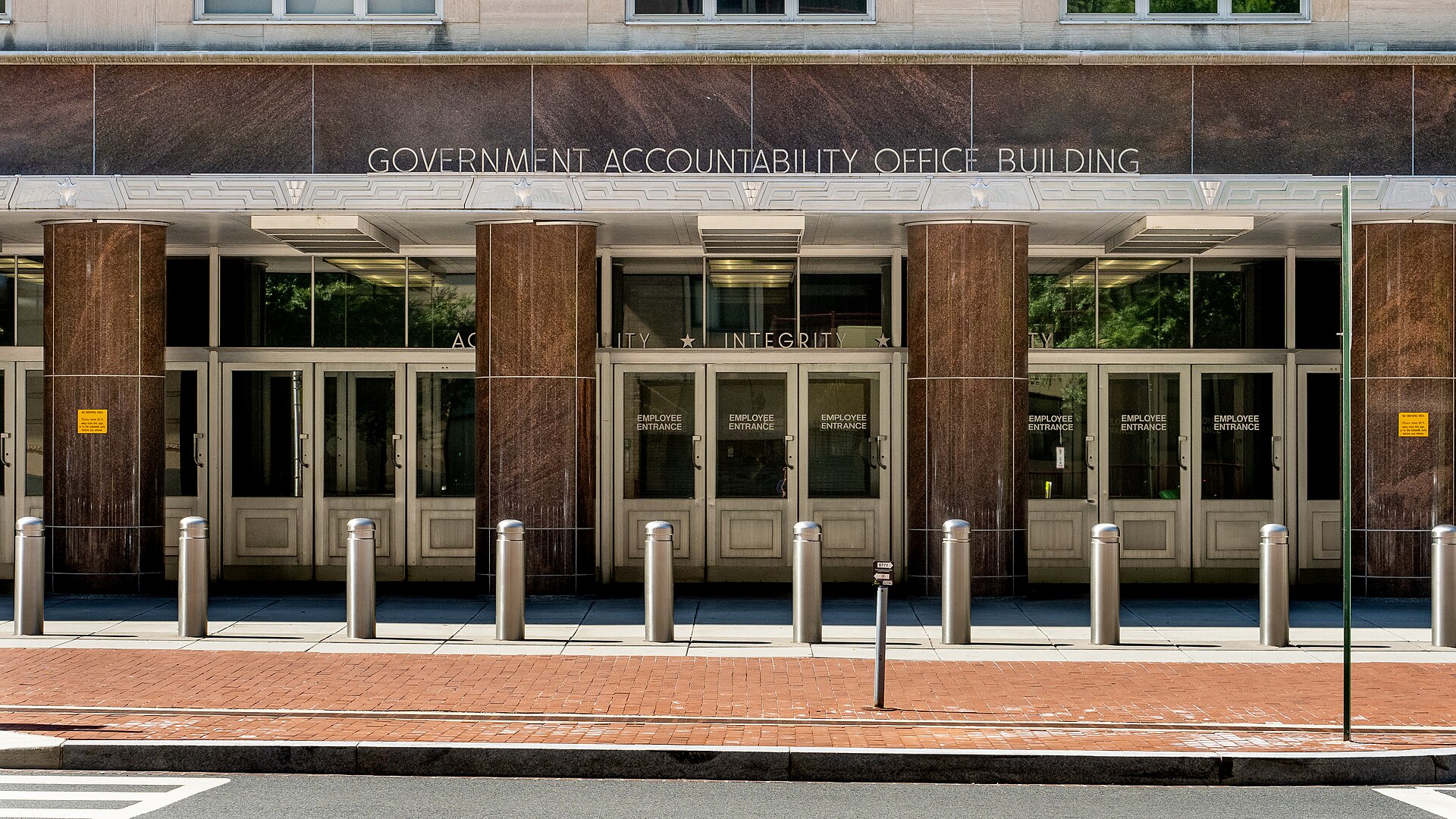
    DOGE’s Wall of Receipts contained inaccurate savings claims, and the Government Accountability Office found inaccuracies and unsupported claims in the Department of Government Efficiency’s public tally. In a review covering Jan. 20, 2025, through July 7, 2026, GAO said $110 billion in DOGE-reported savings from contracts, grants and leases included estimates that were incorrect or lacked supporting evidence.

    The finding matters because DOGE’s Wall of Receipts was designed as a public scorecard for a politically charged effort to cut federal spending. GAO’s review raises a basic accountability question: when the government claims savings, what proof should it provide before those figures are treated as real?

    What GAO found in the tally

    GAO’s review focused on the savings entries DOGE publicly posted for terminated or reduced federal contracts, leases and grants. The watchdog did not say every item was wrong. Its concern was that the overall presentation included significant claims that could not be substantiated or that did not follow DOGE’s stated approach for calculating savings.

    US Government Accountability Office (GAO) (53840039221)
    Image: ajay suresh, via Wikimedia Commons, CC BY 2.0.

    That distinction is important. A contract being identified for review, a lease being scheduled to end, and money actually being saved are not necessarily the same thing. A reliable savings figure needs to account for whether an action occurred, when it occurred, what would have happened otherwise and whether the full listed amount was truly avoidable.

    GAO said the Wall of Receipts did include some underlying information and data sources. But it concluded that the site did not adequately disclose limitations affecting the quality of the numbers. The agency recommended that DOGE prominently display those limitations and data-quality issues.

    Leases already headed for closure

    One of GAO’s clearest examples involved federal leases. Of the 264 leases DOGE said it terminated, 108 were already in the process of being eliminated before DOGE was created in January 2025, according to the watchdog.

    That does not mean ending those leases produced no benefit for the government. It means DOGE may have received credit for savings that were already expected to occur. In budget oversight, that is a major difference: avoiding a future cost through a new decision is not the same as recording a planned cost reduction as a new achievement.

    The issue goes beyond a dispute over labels. If a public savings tracker counts actions already underway, the total can make a program’s direct effect look larger than it was. GAO’s finding points to the need for a clear baseline—what federal agencies would have spent or canceled absent DOGE’s involvement.

    The $1.7 billion contract example

    GAO also flagged a Pentagon Defense Health Agency information-technology contract that DOGE listed as generating $1.7 billion in savings. According to the review, DOGE identified the contract for termination but did not ultimately terminate it or reduce its funding.

    That example highlights the gap between an announced target and an executed cut. Governments frequently explore ending, renegotiating or scaling back contracts. The fiscal result cannot be counted as a completed savings until the underlying action is carried out and the financial impact can be measured.

    For readers trying to assess such figures, the practical test is straightforward: Was the contract actually canceled or reduced? Was the amount saved calculated from future payments that would otherwise have been made? And did the government have to spend money elsewhere to replace the service? Those details determine whether a headline number represents savings, a projection or simply an intention.

    Missing methods cloud grant claims

    GAO found another problem in DOGE’s reporting on grants. The watchdog said DOGE did not provide enough information to verify the calculation method for 96% of the savings it reported from grants.

    A number without a disclosed method is difficult for outsiders to evaluate. A grant can be paused, rescinded, reduced, redirected or subject to legal and administrative limits. Each scenario may carry a different budget consequence, and the reported amount can vary depending on whether the calculation uses total award value, unobligated funds or projected future spending.

    GAO also said DOGE failed to use its own stated methodology for calculating the majority of savings tied to contracts reported as terminated. The criticism is not merely technical. Consistent methods let policymakers compare projects, spot errors and understand whether a total is changing because of real actions or changing assumptions.

    Transparency is the larger test

    DOGE was launched after President Donald Trump took office in January 2025, with Elon Musk overseeing and heavily influencing the initiative in its early months. The Wall of Receipts became one of its most visible products, publishing itemized claims of government savings that were also shared through DOGE’s account on X.

    Supporters of DOGE’s mission can reasonably argue that federal agencies need stronger pressure to identify waste, reduce excess spending and make procurement more efficient. GAO itself said information like the Wall of Receipts can have significant value. A public list can create a useful expectation that officials show their work rather than merely announce a broad total.

    Critics, including the Democratic senators who requested the review, say the weak documentation undermined that purpose. Their argument is that an eye-catching savings total is not enough if the public cannot tell whether the cuts happened, whether they were already planned or how the figure was calculated.

    DOGE did not respond to GAO’s requests for information or interviews, according to the report. That leaves important questions unresolved, including whether the former initiative disputes specific findings, plans to correct the public record or has documentation it did not provide to auditors.

    What happens after DOGE’s closure

    DOGE concluded operations on July 4, while the Trump administration has said agency heads would continue pursuing taxpayer savings. That makes GAO’s findings relevant beyond one office or one online tracker.

    Federal agencies will still make decisions about contracts, grants, property and staffing. If they report savings from those actions, the same standards will apply: clear assumptions, a documented baseline, consistent methods and frank disclosure of uncertainty.

    The clean takeaway from GAO’s review is not that government savings efforts should stop. It is that savings claims need to be auditable. Cutting costs may be politically popular across ideological lines, but public confidence depends on whether the numbers can withstand a close look.