Blog

  • Paxton’s San Antonio Faith Jab Against Talarico Backfires

    Paxton’s San Antonio Faith Jab Against Talarico Backfires

    Ken Paxton sought to challenge James Talarico’s Christian case for climate action. But a heckler’s interruption shifted attention from Talarico’s beliefs to Paxton’s own public personal history.

    Ken Paxton took a jab at James Talarico’s faith at a San Antonio political rally, challenging Talarico’s Christian framing of climate policy and oil and gas. The remark drew an immediate personal rebuke when a heckler shouted an accusation about Paxton’s marriage, shifting a clash over Christianity into a confrontation over Paxton’s own public record.

    The exchange in San Antonio matters because Paxton, Texas’ attorney general, and Talarico, a Democratic state representative and Senate rival, are competing not only over energy policy but also over who can credibly invoke Christian values in Texas politics.

    A joke that changed the frame

    According to reporting by LGBTQ Nation, Paxton told the rally audience that Talarico had said people could not be Christian and support the oil and gas industry. Paxton then joked about finding that idea in Leviticus, prompting laughter from attendees.
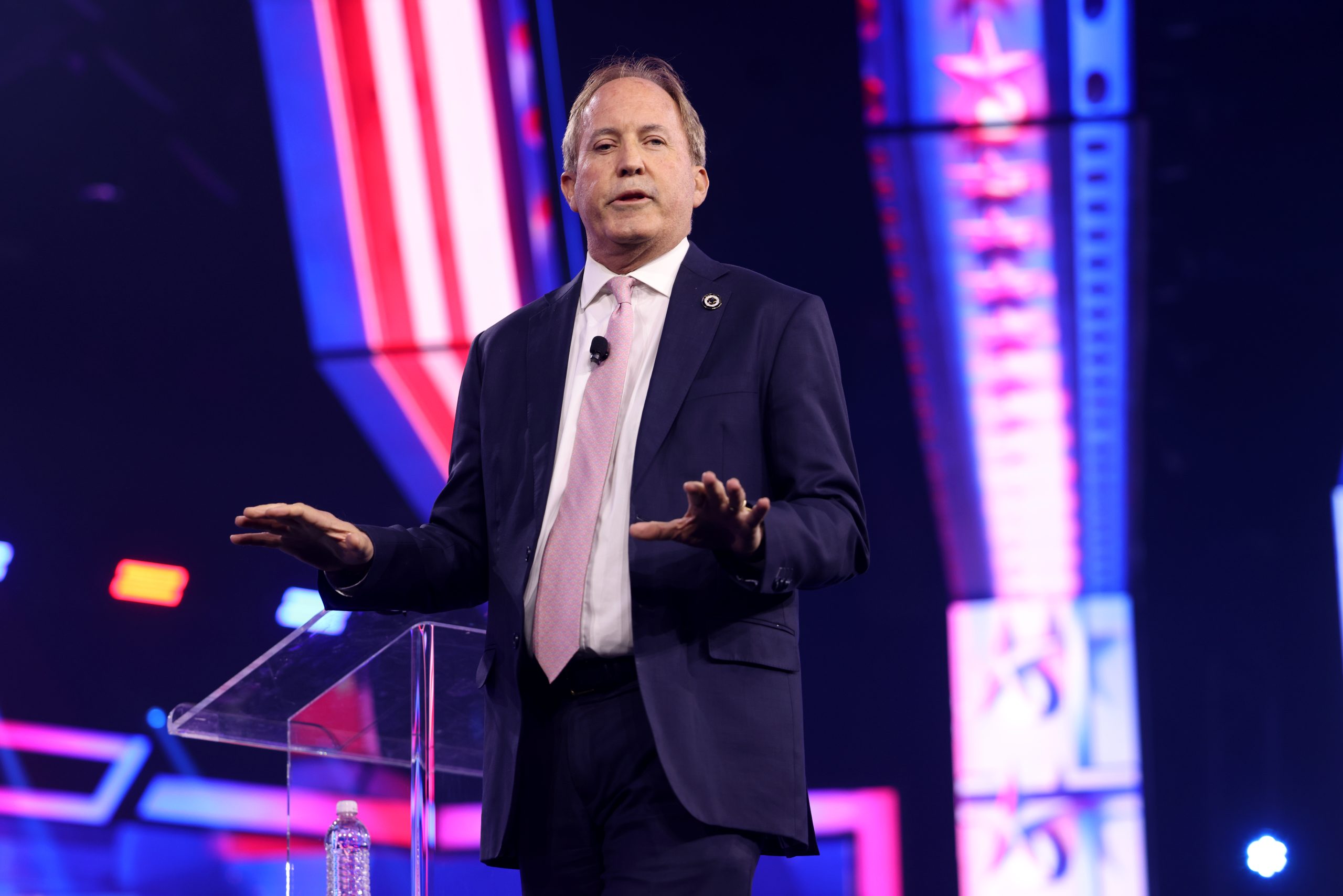
    Ken Paxton
    Image: Gage Skidmore, via Flickr, CC BY-SA 2.0.

    That line gave Paxton a compact political contrast. It presented Talarico as using religion to judge people connected to one of Texas’ defining industries, and it cast Paxton as the candidate defending a more familiar conservative alignment of faith and fossil-fuel politics.

    But the reported exchange turned quickly. As Paxton moved on, someone in the crowd shouted, “You cheated on your wife!” Video and accounts cited by LGBTQ Nation indicate that the crowd groaned, began chanting “USA,” and that the person was escorted from the venue.

    The interruption did not establish a new fact about Paxton. It brought a previously public personal controversy into a moment when Paxton had made biblical authority and Christian conduct central to his criticism of Talarico.

    Talarico’s position is more specific

    Paxton’s description of Talarico’s argument leaves out a key distinction in Talarico’s stated position. Talarico has argued that protecting the Earth and limiting damage from greenhouse-gas emissions are Christian responsibilities.

    That is an argument for environmental stewardship rooted in faith. It is not necessarily a claim that every person who supports the oil and gas industry is outside Christianity.

    The difference may sound theological, but it has direct campaign value. Paxton’s framing turns the question into whether Talarico is excluding Texans from religious belonging because of their views on energy. Talarico’s framing asks whether Christian ethics can support a more forceful response to climate risks and pollution.

    Both approaches use faith as political language, but they aim in opposite directions. Talarico is attempting to challenge the assumption that Christianity naturally belongs alongside fossil-fuel politics. Paxton is defending that traditional association before an audience in a state where oil and gas remain central to the economy, employment base and political identity.

    The heckle revived a public dispute

    The shout at the rally referenced a sensitive matter that requires careful distinction between documented events and wider allegations. In July 2025, Angela Paxton announced that she had filed for divorce from Ken Paxton after 38 years of marriage.

    In her public statement, Angela Paxton said she was filing on “biblical grounds” and referred to recent discoveries, while describing marriage as a sacred covenant. Ken Paxton responded at the time by asking for prayers and privacy.

    The divorce remains unresolved publicly, and Paxton is still married. Broader claims about his private life have circulated in political coverage, but not all have been adjudicated in court.

    That distinction is important. The rally heckler’s accusation should not be treated as proof of a new claim. Its political force came from its timing: Paxton had just questioned an opponent’s Christian consistency, allowing critics to turn the same question of personal conduct back toward him.

    Faith is now part of the contest

    Talarico has made Christianity visible in his public political language even while advancing positions more commonly associated with the Democratic Party’s progressive wing. His stated approach is not to keep religion out of politics, but to argue that faith can support environmental protection, economic fairness and a more inclusive politics.

    That creates an unusual contest. Texas Republicans have long held an advantage with many religious voters, and Paxton’s political message is built for that landscape. Talarico is trying to contest the notion that one party alone can speak for Christian voters.

    Paxton supporters may regard the Leviticus line as a fair reply to what they see as Talarico’s selective use of religion. Talarico supporters may see Paxton’s version as a distortion that transforms a stewardship argument into a test of who qualifies as Christian.

    Neither viewpoint settles the underlying policy dispute over emissions, energy jobs, climate risks or the pace of an energy transition. The San Antonio episode instead showed how readily those substantive questions can get eclipsed when candidates make faith and character part of the argument.

    Why the moment carries risk

    Political rhetoric about religion often favors the shortest and most emotionally direct message. A joke invoking Leviticus can spread more easily than a detailed discussion about greenhouse-gas emissions, environmental stewardship or the economic role of oil and gas.

    A shouted accusation can move even faster. That dynamic gives candidates a reason to make sharp contrasts, but it also means the contrast may not remain under their control.

    For Paxton, the risk is especially clear because his public political coalition includes socially conservative voters who place high value on religious identity, family and personal conduct. For Talarico, the challenge is different: he must persuade voters that his religious language reflects a genuine moral case rather than an opportunistic campaign strategy.

    The available reporting focuses on the rally moment and does not indicate whether Paxton will address the heckler’s accusation directly or whether Talarico will respond. It is also unclear whether the clip will resonate beyond politically engaged audiences. A single interruption does not resolve the contest, but it offers an early illustration of how arguments about faith, energy and personal credibility can collide in the Senate race.

  • Haiti TPS Work Documents Invalidated as Ohio Check-Ins Bring Monitors

    Haiti TPS Work Documents Invalidated as Ohio Check-Ins Bring Monitors

    USCIS has directed employers to reverify certain Haiti TPS workers after the designation ended. Separately, reported ICE appointments in Springfield, Ohio, have brought arrests, conditional releases and electronic monitoring for some people.

    Haiti’s Temporary Protected Status designation ended effective July 27, 2026, and U.S. Citizenship and Immigration Services says certain employment authorization documents issued to Haiti TPS beneficiaries are no longer valid. The change puts employers and workers in the position of addressing work authorization while immigration cases and related litigation remain unresolved.

    In Springfield, Ohio, The Washington Post reported that Haitian immigrants with TPS were called to ICE check-ins and that some were arrested before being conditionally released with electronic monitoring devices. The accounts show two separate effects of the TPS termination: immediate employment-document requirements and enforcement encounters for some people.

    Employers must reverify certain Haiti TPS workers

    USCIS says Employment Authorization Documents in categories A12 or C19 issued to Haiti TPS beneficiaries are no longer valid. The agency directed employers completing Form I-9 to reverify Haiti TPS beneficiaries who presented those documents.

    USCIS also said employers cannot continue to employ a person who does not provide proof of current employment authorization. That can mean workers are removed from schedules or asked for documents they do not have, while employers make staffing decisions in a legally unsettled environment.

    TPS was created by Congress in 1990 as a limited protection for eligible immigrants when conditions in their home countries make return unsafe. It can permit recipients to work legally, but it is not permanent residence, asylum or U.S. citizenship.

    Springfield appointments led to reported arrests and releases

    According to The Washington Post, citing Guerline Jozef, executive director of the Haitian Bridge Alliance, about 50 Haitians with TPS in Springfield were called to Immigration and Customs Enforcement offices. Local attorneys told the Post that people were arrested at those appointments and then conditionally released with electronic monitoring devices.

    A Trump administration official, speaking anonymously to the Post about internal ICE operations, confirmed that Haitians with TPS were being called in, fitted with monitors and released. The official said the check-ins were expected to be scheduled in waves.

    The Post reported that people fitted with monitors were instructed not to travel beyond 75 miles from home. That instruction can affect job sites, medical or legal appointments, family commitments and emergencies.

    A DHS spokesperson told the Post that the department does not discuss ongoing or future operations and conducts enforcement every day. DHS has not publicly spelled out the criteria for who receives a monitor, who is detained or how far the reported practice could extend beyond the initial Springfield group.

    Pending asylum cases and TPS are different legal questions

    Many Haitians who recently received ankle monitors have pending asylum claims and no final deportation orders, The Washington Post reported. A pending asylum claim means an individual is still seeking protection through the immigration system; it does not mean the claim has been decided or guaranteed.

    The absence of a final removal order does not bar an immigration enforcement encounter. TPS, work authorization and asylum are separate legal questions, even when they affect the same person at the same time.

    The Post also reported that ICE officers collected biographical information and fingerprints at recent Ohio appointments. Attorneys said officers mentioned a $2,600 DHS incentive for people who choose to self-deport.

    Immigration attorney Carolyn Marks told the Post that ankle monitors have historically often been used case by case for people with criminal histories, missed hearings or deportation orders. She said the Haitian clients she accompanied had been complying with the law. Advocates view broader monitoring of people without final removal orders as an escalation that may pressure people to leave; the government’s position is that people whose temporary protections ended remain subject to immigration enforcement.

    The termination followed court action and remains tied to litigation

    USCIS says the U.S. Supreme Court issued a favorable decision concerning TPS terminations on June 25, 2026. According to The Washington Post, the decision allowed the Trump administration to proceed with ending temporary protections for about 350,000 Haitians, while a lower-court order connected to the dispute had not yet been lifted.

    The Department of Homeland Security has argued that TPS was intended to be temporary rather than a lasting immigration category. Critics counter that Haiti’s political instability and gang violence make return dangerous, and they argue that removing established workers from local economies harms families and employers.

    For households, the overlap of a terminated TPS designation, work-document rules, court-related questions and ICE appointments can create immediate decisions about employment, travel and family care.

    What remains unknown for families in Springfield and beyond

    It remains unclear how ICE will select people for monitoring, whether additional check-ins will result in more arrests or conditional releases, and how pending cases will develop. Legal help, transportation, childcare and backup plans can become pressing concerns when someone is called to a federal office.

    Springfield had already become a national political flashpoint during the 2024 campaign after false claims about Haitian residents circulated widely. The reported ICE appointments again place the city at the center of a debate whose effects may reach children, workplaces, landlords, schools and community organizations.

    For Haitian immigrants in Springfield and elsewhere, the end of TPS has made federal immigration policy a practical matter of employment authorization, mobility and household stability.

  • Zohran Mamdani Rejects Antisemitism Claims as NYC Hate Crimes Rise 2%

    Zohran Mamdani Rejects Antisemitism Claims as NYC Hate Crimes Rise 2%

    The dispute over Mamdani’s criticism of Israel has become a local test of political speech, public trust and the responsibility to protect Jewish New Yorkers. A reported 2% increase in anti-Jewish hate crimes gives the argument added urgency.

    Mayor Zohran Mamdani is facing backlash over accusations that he is fueling antisemitism, while New York City has reported a 2% rise in anti-Jewish hate crimes. Mamdani has rejected the accusation, but Jewish New Yorkers face heightened safety concerns as the NYPD and the U.S. Department of Justice’s Civil Rights Division investigate a stabbing case on the Upper West Side.

    The controversy is not only about one politician’s position on Israel. It is also about whether political language can reassure residents who feel targeted, and whether New York City can clearly separate protected criticism of a government from conduct or rhetoric that harms Jewish people.

    The safety backdrop shapes the debate

    CBS News New York reported that NYPD data showed about a 2% increase in anti-Jewish hate crimes citywide so far that year. The number does not, by itself, explain every source of fear or every dispute over public rhetoric, but it gives the political argument a pressing real-world context.

    Police statistics capture incidents known to authorities. They can also be affected by reporting patterns, classifications and later investigative changes. Even with those limits, the reported increase helps explain why residents may seek more than broad statements condemning bigotry.

    For Jewish New Yorkers concerned about threats, harassment or alleged bias-motivated violence, the immediate question is how public agencies will respond when incidents are reported. That question has become intertwined with scrutiny of Mamdani’s public comments.

    An Upper West Side case

    According to CBS News New York, Raul Morales, 51, was arraigned on two counts of second-degree attempted murder as a hate crime in connection with the stabbing of a Jewish man and an Asian man on the Upper West Side. Both victims were expected to survive.

    CBS also reported that the NYPD and the Justice Department’s Civil Rights Division were investigating. The case remains subject to the legal process, and the allegations must be reviewed by the courts.

    The stabbing prompted some Jewish New Yorkers to gather in Manhattan’s Upper West Side in July for a rally against antisemitism and hate. The event put neighborhood safety concerns alongside a broader, emotionally charged argument over Israel and New York politics.

    The Netanyahu video became a flashpoint

    At that rally, some participants criticized a video in which Mamdani spoke about Israeli Prime Minister Benjamin Netanyahu. According to CBS, Mamdani said Netanyahu was not welcome in New York City.

    Mamdani also said he lacked the authority to arrest the Israeli leader and instead called for federal action. Critics at the rally characterized the video as inflammatory. One participant told CBS that Mamdani was “throwing gasoline on the fire” and pitting communities against each other.

    Those criticisms do not establish that Mamdani intended to encourage antisemitism. They do show why remarks about a foreign leader can quickly become a local public-safety issue when members of a community already feel exposed to hate.

    Mamdani’s stated line on Israel

    Mamdani has rejected accusations that his rhetoric encourages antisemitism. In comments reported by CBS News New York, he said there was “no tolerance for antisemitism in this city” and that it must be rooted out across all five boroughs.

    His stated distinction is that criticism of Israel or its policies should not become criticism of Jewish people or Judaism. CBS reported that Mamdani said criticism of a nation-state and its policies must remain directed at those things, rather than at a people or a faith.

    That line is central to the disagreement. Critics argue that language aimed at Israel can contribute to anti-Jewish hostility or make Jewish residents feel blamed. Mamdani’s position is that political criticism must be kept separate from prejudice against Jews.

    Jewish voices are not uniform

    Mamdani’s defenders said his comments targeted Zionism and actions of the Israeli government, not Judaism or Jewish people. Rabbi Yisroel Dovid Weiss of Jews United Against Zionism told CBS that Mamdani was trying to make clear that Jewish people should not be blamed for what he described as Zionist actions.

    The competing reactions underscore that Jewish identity, religious practice, Zionism and views on Israeli policy do not align in one uniform way. There are disagreements within Jewish communities, as well as among New Yorkers generally, over how political rhetoric about Israel should be heard.

    That diversity does not resolve the safety concern raised by people who believe anti-Israel language can spill into anti-Jewish hostility. Nor does concern about antisemitism prevent political criticism of a government. The challenge is recognizing both realities without treating either as a reason to dismiss the other.

    City Hall faces a consistency test

    Mamdani has said New York City has no room for antisemitism, hate or bigotry. The practical measure of that commitment will be how consistently that principle is applied when Jewish residents report fear, when investigators pursue alleged hate crimes and when debate over Israel becomes heated.

    For City Hall, that means communicating clearly, cooperating credibly with investigators and distinguishing political speech from conduct that targets people because they are Jewish. It also means acknowledging that public reassurance is judged against residents’ experiences, not only against a politician’s intent.

    One rally, one video and one statement will not settle the argument around Mamdani. But the basic responsibility is clearer: political conflict over Israel cannot become indifference to the safety of Jewish New Yorkers or any other community facing hate.

  • Scarborough blasts Democrats after AOC defends Francesca Hong

    Scarborough blasts Democrats after AOC defends Francesca Hong

    Scarborough argued Democratic leaders should draw firmer lines around rhetoric he considers extreme. Ocasio-Cortez’s comments about Francesca Hong show the competing pressures facing a broad political coalition.

    Joe Scarborough criticized Democrats after Alexandria Ocasio-Cortez responded to questions about Wisconsin gubernatorial candidate Francesca Hong. Scarborough argued that Democrats are failing to challenge rhetoric he considers extreme on the party’s left flank, while Ocasio-Cortez said voters should assess Hong’s current views rather than define her solely by earlier statements.

    The television dispute is about more than one endorsement that did not happen. It has put a familiar question back on the table for Democrats: when a candidate’s past remarks become controversial, is a forceful public break the best political response, or does it give a marginal controversy more national power?

    The exchange centered on Hong

    Hong, described in the source material as a democratic socialist running for Wisconsin governor, became the immediate focus after Ocasio-Cortez was asked during an ABC News appearance why she had not endorsed her.

    According to a New York Post account summarized in the source reporting, Ocasio-Cortez said Hong had moved away from some earlier positions. She encouraged voters to consider what Hong is saying now.

    The Post cited prior statements in which Hong called for abolishing police, prisons and Thanksgiving. The available material does not establish Hong’s full current platform, whether she has formally renounced particular earlier remarks or how Wisconsin voters view those issues.

    Those unanswered details are significant. A state-level campaign can quickly be recast as evidence in a national ideological fight, even when the national figures being asked about it do not manage or endorse the candidate involved.

    Scarborough wanted a clearer break

    Scarborough, the Morning Joe host, said Democratic leaders have allowed people with views he considers far outside the mainstream to gain too much prominence. He said the party was “too woke to call out the obvious.”

    His objection was not simply that Ocasio-Cortez declined to endorse Hong. He argued her response did not directly enough address Hong’s earlier statements.

    Scarborough’s larger case was electoral. In his view, Democrats lose ground when they do not clearly separate widely supported progressive priorities from rhetoric that voters may regard as unacceptable.

    He particularly argued that leaders should be more direct about rhetoric involving public safety, antisemitism and cultural conflict. That remains his political assessment, rather than a formal Democratic Party position.

    A debate over past and present

    Ocasio-Cortez’s position, as described in the source account, rests on a different premise: a candidate’s current platform can be more informative than a past comment. Politicians can change views, modify language and build new coalitions over time.

    Critics of that approach argue that it can sound evasive when prior statements concern subjects that carry strong emotional or political weight. They contend that voters deserve unambiguous answers from party leaders about what conduct and rhetoric they reject.

    Supporters see risks in demanding instant denunciations. They argue that selectively edited clips can distort a politician’s record, that political growth should be possible and that national media attention can turn every internal disagreement into a spectacle.

    Neither argument completely resolves the central problem. Voters may want clarity, while politicians may seek context before permanently tying a candidate to remarks they say no longer reflect their views.

    The 2024 messaging argument

    Scarborough connected the episode to the 2024 presidential election. He argued that Republicans effectively used cultural issues to depict Democrats as out of step with working-class voters.

    He pointed to repeated Republican campaign messaging about transgender health care in prisons as an example. His argument was not that Democrats should abandon progressive economic themes.

    Scarborough said proposals such as higher taxes on billionaires and health-care reform can appeal across ideological lines. His distinction was that Democrats can promote those policies while explicitly rejecting positions that opponents can portray as indifferent to public safety, antisemitism or other concerns voters see as matters of judgment.

    Democrats and allied groups often make the counterargument that Republicans use isolated comments to construct a misleading picture of the entire party. They also contend that electoral wins and losses cannot be reduced to a single cultural-message dispute, given factors including inflation, turnout, local candidates, abortion policy and voter access.

    Party leaders face competing costs

    Scarborough named Senate Minority Leader Chuck Schumer and House Minority Leader Hakeem Jeffries as leaders he believes should be more willing to denounce extreme rhetoric. His proposed approach is a sharper boundary between mainstream Democratic candidates and positions he says alienate voters.

    There is a practical political argument for that approach. A quick, specific response can keep opponents from defining a party first and may reassure voters who agree with Democrats on wages, health care or abortion rights but have reservations about some cultural debates.

    There are costs as well. Public rebukes can deepen internal divisions, amplify little-known figures and make a large coalition appear more fractured than it is. In many contests, the candidates attracting controversy are not national officeholders, and their views may not reflect the positions of Democratic nominees elsewhere.

    The immediate dispute involves Ocasio-Cortez, Hong and Wisconsin. The broader unresolved issue is whether Democrats benefit more from aggressively separating themselves from their leftmost voices or from refusing to let political opponents decide which voices represent the party. Scarborough’s comments do not determine whether Hong’s record will be decisive in Wisconsin or whether prominent Democrats will address it more directly.

  • Judge Voids Johnston’s Seizure of 31 Acres for Public Safety Complex

    Judge Voids Johnston’s Seizure of 31 Acres for Public Safety Complex

    The ruling leaves a proposed affordable housing development in a stronger position, but it does not determine whether Johnston’s public safety complex and town hall plans will proceed elsewhere. The case turns on the legal limits of eminent domain, not which project is better policy.

    On Tuesday, U.S. District Judge Melissa R. DuBose invalidated Johnston, Rhode Island’s seizure of 31 acres on George Waterman Road, finding the town’s eminent-domain action was unlawful. Johnston took the land last year even though it had been planned for a 252-unit affordable housing complex.

    The town had intended to use the site for a public safety complex and town hall. DuBose’s ruling voids that attempted taking, strengthening the position of the proposed housing project while leaving unresolved whether Johnston will appeal, pursue another approach or locate its municipal project elsewhere.

    A dispute over one key parcel

    The 31-acre property was owned by a family-owned homebuilding company and had been identified for a proposed affordable housing development. At the same time, Johnston sought the parcel for facilities town officials said were needed for municipal operations and public safety.

    Those competing plans put two public-interest arguments on the same piece of land. One involved space for a public safety complex and town hall; the other involved a potential 252-unit addition to the local housing supply.

    The source headline characterized the taking as an effort to block the planned development. But the federal ruling described in reporting addressed a more specific legal issue: whether Johnston followed the rules required to take private property through eminent domain.

    Why Judge DuBose voided it

    In a 20-page ruling, DuBose concluded that Johnston exceeded its authority in attempting to take the property. The town, she found, did not satisfy required protections connected to the use of eminent domain.

    DuBose wrote that Johnston had not pledged its “public faith and credit” to provide just compensation. She also found that the town had not established clear procedures for enforcing the taking.

    That combination was decisive. A town’s stated goal for a property may involve a public purpose, but that does not remove the obligation to carry out a taking through the legally prescribed process.

    Eminent domain comes with limits

    Eminent domain is the government power to take private property for public use. The Fifth Amendment links that power to the requirement that the owner receive just compensation.

    Governments can use eminent domain for projects including roads, schools, utilities and public buildings. Yet the power is especially contentious when it displaces an owner’s property or a developer’s plan.

    • Public purpose: A municipality generally must identify a legitimate public use.
    • Just compensation: The owner must receive legally adequate payment for the property.
    • Proper procedure: Government must follow the process required under state and federal law.

    Johnston’s case did not turn simply on whether a public safety complex or town hall could qualify as a public use. The reported ruling found that the town did not take the steps the law required to carry out this particular seizure.

    Housing makes the ruling consequential

    The decision has consequences beyond the legal status of one parcel because the land was tied to a defined residential proposal, not an unused tract without an announced plan. A 252-unit complex would be a substantial potential addition to Johnston’s housing stock.

    Affordable housing projects often bring difficult local debates over density, traffic, schools, infrastructure and neighborhood character. Supporters of additional development argue that limits on building can worsen shortages and force lower-income workers and families farther from jobs and services.

    Those policy disagreements did not decide this lawsuit. Still, they explain why the failed taking carries practical weight: the court’s ruling affected land proposed for homes at a time when housing affordability and supply remain major concerns in Rhode Island.

    The ruling does not pick a winner

    DuBose did not rule that Johnston can never acquire private property for a legitimate public project. Nor did the decision declare that the proposed affordable housing complex will definitely be built exactly as planned.

    Housing projects can still depend on financing, permits, infrastructure coordination and other approvals. The ruling also does not establish how quickly the development could move forward.

    Likewise, it does not settle whether Johnston will appeal or attempt a revised legal path. The town may still face a policy decision about how to pursue municipal facilities, while the developer must still navigate the ordinary steps involved in building a large housing project.

    A process ruling with broad meaning

    The immediate result is narrow but significant: Johnston could not take this 31-acre affordable housing site through the process it used last year. The court did not choose between the town’s preferred public buildings and the developer’s proposed homes.

    For local governments, the decision is a reminder that eminent domain is not a shortcut around difficult land-use negotiations. Public purpose, compensation commitments and enforceable procedures are not technical afterthoughts when private land is at stake.

    For residents and developers, the case shows how legal mechanics can determine the future of a major project. Johnston’s competing visions for George Waterman Road remain part of the local debate, but the federal ruling makes clear that any taking must be carried out lawfully.

  • WNBA Players Report Threats as Online Abuse Shadows League Growth

    WNBA Players Report Threats as Online Abuse Shadows League Growth

    Players’ accounts of racist taunts, threats and manipulated images put the focus on how the WNBA responds as its audience expands.

    As the WNBA’s audience grew, several players said they were dealing with racist, misogynistic, homophobic and threatening abuse online. Their reports raise a practical issue for a league gaining attention: how to support athletes facing targeted harassment while preserving space for ordinary arguments about basketball.

    The accounts include racist taunts, threatening messages, manipulated sexual images and concerns about being identified or followed. They also arrived as rivalries and routine on-court moments were increasingly pulled into disputes about race, fandom and politics.

    Online visibility can carry a cost

    Reporting by The Athletic, published by The New York Times in 2024, described players saying the rise in WNBA attendance and viewership had been accompanied by racist, misogynistic, homophobic and threatening messages online.

    For athletes, withdrawing from social media is not necessarily a simple solution. Some players deactivated accounts or sharply limited engagement, even though those platforms can be important for sponsorship opportunities and professional visibility.

    Phoenix Mercury center Brittney Griner said fans had directed racist taunts at her and other players. Angel Reese, then with the Chicago Sky, said AI-generated nude images of her had circulated online.

    Connecticut Sun guard DiJonai Carrington shared a threatening email containing a racist slur after a playoff incident involving Caitlin Clark. Carrington’s partner, NaLyssa Smith of the Indiana Fever, wrote on X that Carrington had also been followed.

    Players pressed the league for a faster response

    The WNBA eventually released a statement condemning online harassment of players. Several players, however, said the league should have spoken sooner and more forcefully as abusive messages spread.

    New York Liberty guard Sabrina Ionescu said the WNBA should have taken a stance before the problem became so deeply embedded. Las Vegas Aces guard Chelsea Gray similarly said an earlier statement could have offered more protection.

    The league cannot control every post or commentator. But it can set standards, respond more rapidly and support players who receive threats or targeted harassment.

    The concerns described by players extended beyond unpleasant commentary. They included threatening messages, doxxing concerns, manipulated images and pressure to remain active on platforms that can matter for a player’s income and public profile.

    A larger audience changed the conversation

    The reporting came during Clark’s rookie season, when the Indiana Fever guard became a major driver of public interest in the league. Clark is White, while Reese is Black, and their on-court competition and distinct fan bases were repeatedly drawn into arguments that went far beyond basketball.

    New viewers and attention surrounding a star player are not inherently a problem. But some fans and commentators portrayed physical play against Clark as proof that veteran players were jealous of her popularity or deliberately targeting her.

    Players broadly rejected that framing. Routine fouls and ordinary competitive tension were often recast as evidence of a deeper conflict, giving individual plays an unusually large cultural and political meaning.

    Clark criticized people using her name to advance divisive agendas, calling that behavior “disappointing” and “unacceptable,” according to The Athletic’s reporting. New York Liberty forward Jonquel Jones said the problem was a fan base turning basketball into “a race war,” rather than Clark herself.

    Basketball criticism still needs a specific target

    Fans and reporters can examine individual comments, physical play, league discipline, media narratives, business choices and fan behavior. There is also room for disagreement about player rivalries, officiating controversies, marketing, media access and whether the league has responded consistently enough to reports of abuse.

    But a Washington Examiner headline portraying the WNBA as having a “Black entitlement problem” makes a broader claim about Black players and the league’s racial dynamics. The supplied material does not provide supporting article text or reporting that establishes a leaguewide “Black entitlement problem.”

    “Entitlement” is not a neutral description when assigned to a racial group. It suggests that people believe they deserve status, attention or deference they have not earned, a charge that requires evidence tied to identifiable conduct, decisions or policies.

    Black women have long made up a substantial share of the WNBA player base and helped shape its competition, culture and public identity. Treating Black athletes as a single group with a shared attitude is different from scrutinizing particular actions.

    The unresolved test for a growing league

    League statements may not curb the behavior of trolls, and social platforms may not reliably remove threats and racist material. Available reporting also cannot settle every argument about favoritism, physicality or media coverage.

    Still, those unresolved questions do not turn a racialized label into evidence. They do not erase what players have described: racist taunts, threats, harassment and manipulated sexual images.

    The WNBA’s expanding audience can sustain sharp disagreements about basketball. The more consequential challenge is whether the league, its fans and the media can keep those disagreements grounded in identifiable behavior rather than normalize abuse or cast Black players as a collective problem.

  • DOJ Sues New York, Connecticut and Vermont Over College Tuition Rules

    DOJ Sues New York, Connecticut and Vermont Over College Tuition Rules

    The cases put the cost of public college at the intersection of state residency rules and federal immigration law. They could affect eligibility policies if courts grant the relief the Justice Department is seeking.

    The U.S. Department of Justice sued New York, Connecticut and Vermont, challenging in-state college tuition policies for undocumented students. The three lawsuits also challenge related financial-aid and scholarship policies, putting college affordability and immigration policy at the center of a legal dispute over rules that currently treat residency as the key factor.

    The Justice Department is asking courts to block the states’ policies. For students and public colleges, the immediate issue is whether tuition and aid eligibility could change while the litigation proceeds; for the states, the cases test how much authority they retain over public higher-education policy.

    Three states face separate complaints

    According to the Justice Department, the United States filed separate complaints against New York, Connecticut and Vermont. The department says the challenged laws, regulations and policies require colleges and universities to provide in-state tuition to residents regardless of lawful immigration status.

    The complaints reach beyond the tuition bill itself. They also seek to stop financial assistance and scholarship policies for undocumented students that the federal government says are tied to the same residency-based approach.

    In-state tuition is often substantially lower than out-of-state tuition. That difference makes the lawsuits consequential for students who have attended school, lived and built ties in one of the three states but do not have lawful federal immigration status.

    What the Justice Department argues

    The DOJ contends that the policies conflict with federal law. Its position is that the states are giving reduced tuition or aid to undocumented immigrants even though some U.S. citizens cannot obtain the same benefit.

    In its announcement, the department characterized that result as unconstitutional discrimination against citizens and said the policies create incentives for illegal immigration. Associate Attorney General Stanley Woodward said Congress had barred states from putting noncitizens without lawful status ahead of citizens.

    Assistant Attorney General Brett A. Shumate described the dispute as a straightforward question of federal law, with the department arguing that the benefits at issue must be equally available to U.S. citizens.

    Those are the federal government’s arguments in active litigation, not court findings. The filing of a complaint does not establish that a state policy violates federal law, and judges have not yet resolved how the relevant laws apply to the specific rules in New York, Connecticut and Vermont.

    Residency is the core divide

    The legal conflict turns on what states may use to define eligibility for resident tuition. The DOJ says the three states require institutions to offer in-state rates to people who maintain in-state residency, including people who are not lawfully present in the United States.

    Supporters of policies like these generally view them as education and residency measures. They point to local community ties, educational continuity and the circumstances of students who may have spent much of their lives in the state.

    The Justice Department sees the same benefits through a different legal lens: immigration status and federal limits on benefits provided by states. That contrast explains why the dispute is difficult to separate from broader disagreements over immigration policy.

    One view treats resident tuition as a choice for state higher-education systems. The opposing view is that Congress has set a national limit that states cannot override, even when the state’s policy is built around residency rather than immigration status.

    A growing national legal campaign

    The Justice Department says the new cases bring its total number of lawsuits over in-state tuition for undocumented immigrants to 17. The action reaches every state in the Second Circuit, extending a campaign that has already produced litigation across the country.

    The department said earlier cases in Texas, Kentucky, Oklahoma, Nebraska and Illinois resulted in favorable orders permanently enjoining analogous laws, including an order from the Fifth Circuit. It also said cases remain pending in Minnesota, Virginia, California, New Jersey, Kansas, Massachusetts, Rhode Island, Maryland and Colorado.

    Those earlier outcomes may shape the arguments made by both sides, but they do not automatically settle the new lawsuits. Each state has its own laws, regulations and administrative practices, and each court will assess the record and legal claims before it.

    The broader pattern shows that tuition policy has become a recurring test of federal power over state decisions involving public colleges. It is no longer a debate confined to a single campus system or one region.

    What could change for students

    If a court grants an injunction, public colleges could be required to alter eligibility rules for in-state rates, state-funded assistance or scholarships while the larger cases are decided. The Justice Department is specifically seeking to block enforcement of the challenged policies.

    But the department’s announcement does not say when courts might rule, whether the states will seek immediate dismissal, or whether any rules will change before a final decision. It also does not explain how individual colleges would handle students already receiving in-state tuition or state-funded aid if an injunction were issued.

    For now, the major development is the filing of the lawsuits. Existing eligibility systems generally remain in place unless and until a court orders otherwise.

    The court question behind tuition bills

    At issue is a narrow question with broad effects: may a state provide resident tuition and related aid to undocumented students when federal officials say comparable benefits are unavailable to certain U.S. citizens from outside that state?

    The answers will depend on the complaints, the states’ formal responses and judicial interpretations of the relevant federal and state rules. New York, Connecticut and Vermont may defend their systems as residency measures, challenge the DOJ’s interpretation of federal law or raise other constitutional arguments.

    Until those arguments are tested, the cases leave students, colleges and state budgets in a period of uncertainty. The legal fight is over more than a tuition classification; it is also about where state control of public higher education ends and federal immigration authority begins.

  • Trump DOJ Faces Credibility Questions After Court Misconduct Allegation

    Trump DOJ Faces Credibility Questions After Court Misconduct Allegation

    The central issue is not simply a contested Trump-related court argument, but whether the Justice Department can retain judicial trust when serious accusations arise without public records to resolve them.

    An expert alleged that U.S. Department of Justice prosecutors misled a court while advancing Donald Trump’s position, putting Trump’s Justice Department on the defensive over courtroom misconduct. The claim has raised questions about the Justice Department’s credibility because federal lawyers depend on courts accepting their representations of facts and law.

    The allegation is serious, but the available reporting does not identify the expert, court proceeding, disputed statement or any judicial finding that DOJ lawyers intentionally deceived a court. That missing record is crucial to assessing whether this concerns an error, an omission, a contested argument or proven misconduct.

    What the allegation does — and does not — establish

    The available account frames the accusation as an expert assessment: DOJ prosecutors allegedly lied in court while acting for Trump, with the department facing what the report describes as a credibility crisis.

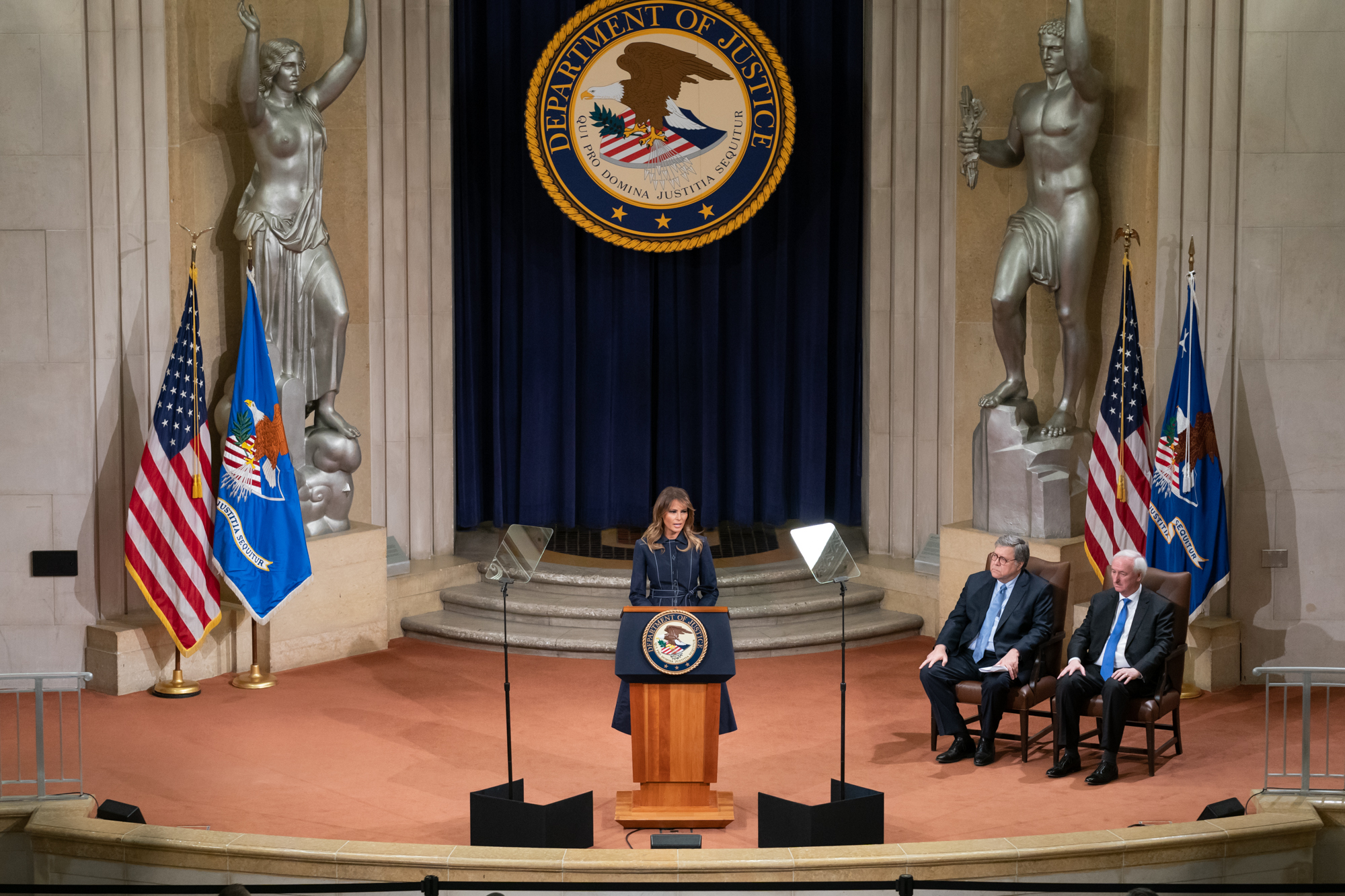
    First Lady Melania Trump at the U.S. Department of Justice National Opioid Summit
    Image: The Trump White House Archived, via Flickr, Public Domain Mark 1.0.

    That is not the same as a court finding. No underlying order, transcript, docket number, filing or named expert is provided in the available material, so the accusation cannot be independently evaluated from the record described.

    In a legal dispute, the distinction is more than a technicality. A lawyer’s statement can be inaccurate, incomplete, based on a disputed reading of facts or law, corrected after new information emerges, or deliberately misleading. Those categories carry very different implications.

    The available reporting also does not establish which DOJ lawyers were involved, what kind of case was at issue or the specific representation said to have misled the court. Although the term “prosecutors” is used in the allegation, DOJ lawyers handle both criminal prosecutions and civil representation of agencies and officials.

    Why judges rely on government lawyers

    Federal litigation depends on a basic working assumption: attorneys will accurately present the record and correct material errors. Judges cannot independently investigate every assertion made in briefs, declarations and oral arguments before deciding urgent motions or managing a case.

    That reliance shapes practical decisions. Courts use lawyers’ representations when setting schedules, considering injunctions, evaluating emergency requests and determining remedies. Candor is therefore not merely a professional ideal; it helps make the court system function.

    Government attorneys occupy a particularly consequential role because they speak for the institution that enforces federal law, investigates crimes and represents the United States in court. A credibility problem involving DOJ lawyers can reach beyond the immediate case if judges become more skeptical of the department’s future representations.

    That larger concern explains why even an unproven allegation can draw attention. Trust is difficult to quantify, but it affects how readily a court accepts assertions and how closely it scrutinizes the government’s account of events.

    An error is not automatically a lie

    Fast-moving litigation can generate mistakes. Dates, citations, evidence summaries and descriptions of agency actions may prove wrong, especially in cases involving extensive records or changing government positions.

    An error can still affect a case. A judge may require a correction, postpone a decision or question whether the government completed an adequate review. But a factual error alone does not establish that an attorney knowingly made a false representation.

    • Inaccuracy: A statement is factually incorrect.
    • Omission: Important context or contrary information is left out.
    • Misleading representation: A statement creates a false impression, even if parts of it are technically true.
    • Knowing falsehood: A lawyer intentionally presents information known to be untrue.

    Intent is often the hardest question. A court weighing a dishonesty claim could consider what the attorney knew at the time, whether contrary information was available, whether the statement mattered to the ruling, whether it was repeated and how quickly any error was corrected.

    Trump cases sharpen institutional concerns

    The allegation carries added weight because it involves lawyers said to be acting for Trump. The Justice Department is expected to represent the United States and enforce federal law, rather than operate as a president’s personal legal team.

    Critics of the Trump administration have repeatedly questioned whether that boundary is being honored. Supporters, meanwhile, can argue that DOJ is entitled to vigorously defend lawful presidential actions. Both perspectives still leave the same legal standard intact: forceful advocacy does not permit misleading a court.

    If a judge were to find that government counsel crossed that line, the finding would matter because it would come from a neutral decision-maker examining a defined record. If the disputed statements instead prove accurate, were promptly corrected or were misunderstood in context, that would also materially change the assessment.

    The strongest answer to either narrative is documentation, not rhetoric. Specific records allow the public to distinguish an adversarial legal disagreement from conduct that warrants discipline.

    What accountability could involve

    A court that finds a material misrepresentation has several potential responses. It may demand sworn declarations, order additional briefing, reject the government’s position, impose sanctions or refer attorneys for disciplinary review.

    The Justice Department also has internal processes for examining allegations of professional misconduct. Yet an internal review may not settle public concerns in politically charged litigation, particularly if it does not provide a clear account of the disputed statement and the relevant evidence.

    A direct DOJ explanation could help clarify whether the allegation concerns an incorrect assertion, a disagreement about the record or conduct requiring corrective action. By contrast, silence or vague denials may leave uncertainty in place even when an allegation has not been proven.

    There is a countervailing risk, too: treating every argument rejected by a judge as proof of corruption would blur the difference between ordinary litigation and intentional deception. Government lawyers, like private attorneys, can lose arguments without acting dishonestly.

    The records that would answer key questions

    The current information raises a legitimate question about Trump’s Justice Department, but it does not resolve it. The available material does not identify the alleged falsehood, the lawyers involved or a judicial finding of intentional deception.

    The most useful evidence would be the relevant complaint or motion, hearing transcript, judicial order, DOJ response and any disciplinary action. Those materials could show whether the dispute involves an error, omitted context, a contested legal position or a knowing falsehood.

    The lasting issue is institutional credibility. The Justice Department can endure hard-fought cases and adverse rulings. What would be far harder to withstand is a well-supported conclusion that a federal lawyer’s reliability in court changes depending on whom the department is representing.

  • Navarro’s Removal Demand Puts Jeanine Pirro’s D.C. Office Under Pressure

    Navarro’s Removal Demand Puts Jeanine Pirro’s D.C. Office Under Pressure

    The public record confirms Navarro’s demand and the criticism directed at Pirro, but key details about the requested personnel action remain unavailable. The dispute has sharpened a wider argument over prosecutorial independence in Washington, D.C.

    Peter Navarro demanded that a prosecutor be removed, and Jeanine Pirro is facing scrutiny over the demand as leader of the U.S. Attorney’s Office for the District of Columbia in Washington, D.C. The episode has put fresh pressure on Pirro’s office after questions about the Reflecting Pool vandalism case, while raising a larger issue: whether politically sensitive charging decisions are being judged on evidence, political expectations, or both.

    What is publicly known is narrower than the political dispute around it. Available reporting does not identify the prosecutor Navarro wants removed, explain his full rationale, or show that the Justice Department has removed, disciplined or formally investigated anyone.

    The demand is clear, details are not

    Navarro’s call for a prosecutor’s removal has become a focal point in criticism of Pirro, whose office handles federal prosecutions in the nation’s capital. It is clear that Navarro made the demand and that Pirro has come under fire in the resulting controversy.

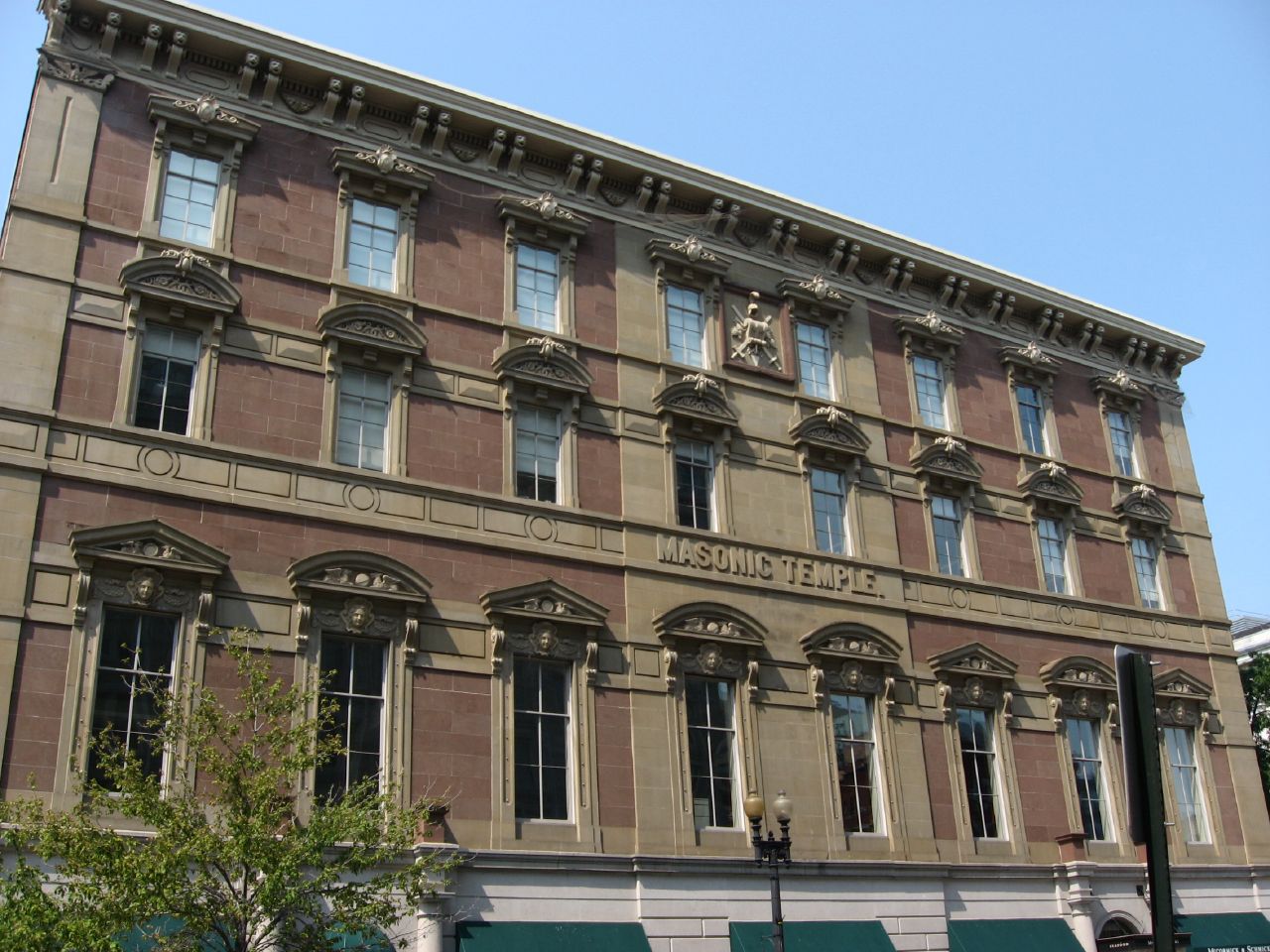
    Penn Quarter Neighborhood, Washington, D.C.
    Image: Ken Lund, via Flickr, CC BY-SA 2.0.

    But a request from a prominent political figure is not the same thing as an official personnel decision. The available public record does not establish that Justice Department leaders acted on Navarro’s demand or concluded that a prosecutor committed misconduct or exercised poor judgment.

    That distinction is at the center of the story. Calls for removal can create immediate political pressure and generate attention, yet they do not by themselves reveal the facts, internal deliberations or legal standards that would govern an actual Justice Department action.

    Pirro leads a highly visible office

    Pirro is the Senate-confirmed U.S. attorney for the District of Columbia, according to the Justice Department. The department says she was confirmed in August 2025 after serving as interim U.S. attorney beginning in May 2025.

    The District of Columbia office occupies an unusually prominent position because it handles federal matters in Washington alongside day-to-day criminal cases. That visibility can make individual decisions especially consequential politically, even when the underlying case record is incomplete.

    Pirro’s office has resisted the idea that one disputed case should define its work. Politico reported that the office pointed to its own figures showing more cases filed in Superior Court, fewer arrests abandoned than under the prior administration, and more than 7,000 convictions since Pirro arrived.

    Those figures describe volume and outcomes, but they do not settle whether any particular charge was adequately supported. Equally, one failed prosecution does not on its own establish a broader pattern across an office handling thousands of cases.

    The Reflecting Pool case fuels criticism

    The controversy follows a case involving alleged vandalism at the Reflecting Pool in Washington. CNN reported that President Donald Trump criticized Pirro’s handling of that matter, saying she had “choked” over the case.

    Politico reported that prosecutors dropped the case after disclosing that they lacked evidence to support the felony charge brought against a man. Former federal prosecutor Randall Eliason told Politico that he believed the evidence had never been sufficient to establish vandalism and that the case would have faced difficulty in court.

    Eliason’s view is a serious critique of the prosecution, but it is not a court finding that Pirro or her office engaged in misconduct. The available reporting also does not establish who made each charging decision, whether there was an internal review, or what communications occurred among Pirro’s office and other Justice Department officials.

    Cases can fall apart for many reasons, including new evidence, weaknesses in the initial facts, witness problems, legal disputes or a conclusion that prosecutors cannot prove a charge beyond a reasonable doubt. The reporting available here does not resolve which factors drove the outcome in this case.

    A debate over enforcement and independence

    The clash illustrates a longstanding tension within the Justice Department. Prosecutors are appointed by political leaders, but charging decisions are expected to rest on law and evidence rather than political messaging.

    Supporters of a tougher approach to enforcement in Washington may regard the failed Reflecting Pool case and Navarro’s demand as a call for accountability. From that perspective, officials should respond more forcefully to conduct involving public order or federal property.

    Critics see a different danger: that visible pressure from political allies could make prosecutors appear to bring or advance symbolically powerful cases before the evidence is strong enough. Even if an office believes its decisions are proper, public confidence can suffer if those decisions are seen as answers to political demands.

    Neither argument establishes what happened in the specific personnel dispute. The public material does not offer a detailed explanation for Navarro’s demand, identify the prosecutor involved or document a formal Justice Department response.

    Key questions remain unresolved

    The unanswered issues are concrete. It remains unclear who Navarro wants removed, what conduct he cited, whether he delivered the request directly to Justice Department leadership, and whether any official acted on it.

    It is also unknown whether the prosecutor remains assigned to related work, whether Pirro has directly addressed the request, or whether Navarro’s demand is tied specifically to the Reflecting Pool case. A spokesperson for Pirro declined to comment to Politico on the criticism described in its report; the office instead cited its statistics.

    For Pirro, the dispute adds another layer of scrutiny to the job of running one of the country’s most watched U.S. attorney’s offices. For the Justice Department, it underscores the difficult balance between forceful law enforcement and evidence-based restraint.

    Until officials provide more information, the political fight is more developed than the public account of the requested removal. That gap is why Navarro’s demand has intensified attention on Pirro without establishing what, if anything, will happen next.

  • Walz Drops Third-Term Bid, Turning Minnesota Race on Fraud Oversight

    Walz Drops Third-Term Bid, Turning Minnesota Race on Fraud Oversight

    Walz’s decision changes Minnesota’s political map and shifts attention toward whether candidates can offer credible answers on public-program oversight. Amy Klobuchar is weighing a bid as Republicans build an accountability-focused case.

    Tim Walz will not seek a third term as Minnesota governor, a decision announced Monday that opens the Minnesota governor’s race as fraud allegations shape the campaign. The scrutiny involves alleged misuse of public funds, including cases tied to hundreds of millions of dollars from COVID-era programs intended to feed children.

    Walz is not accused of wrongdoing, but Amy Klobuchar is considering entering the race to replace him while Minnesota Republicans press concerns about oversight failures. The immediate contest is now about more than an open seat: it is about whether candidates can turn frustration over fraud into a convincing plan for government accountability.

    Walz leaves Democrats without an incumbent

    Walz said he would step away rather than pursue another term, reversing plans he had expressed only months earlier. He framed the move around the time and attention needed to protect Minnesotans from people who exploit public programs, rather than devoting that energy to his own political defense.

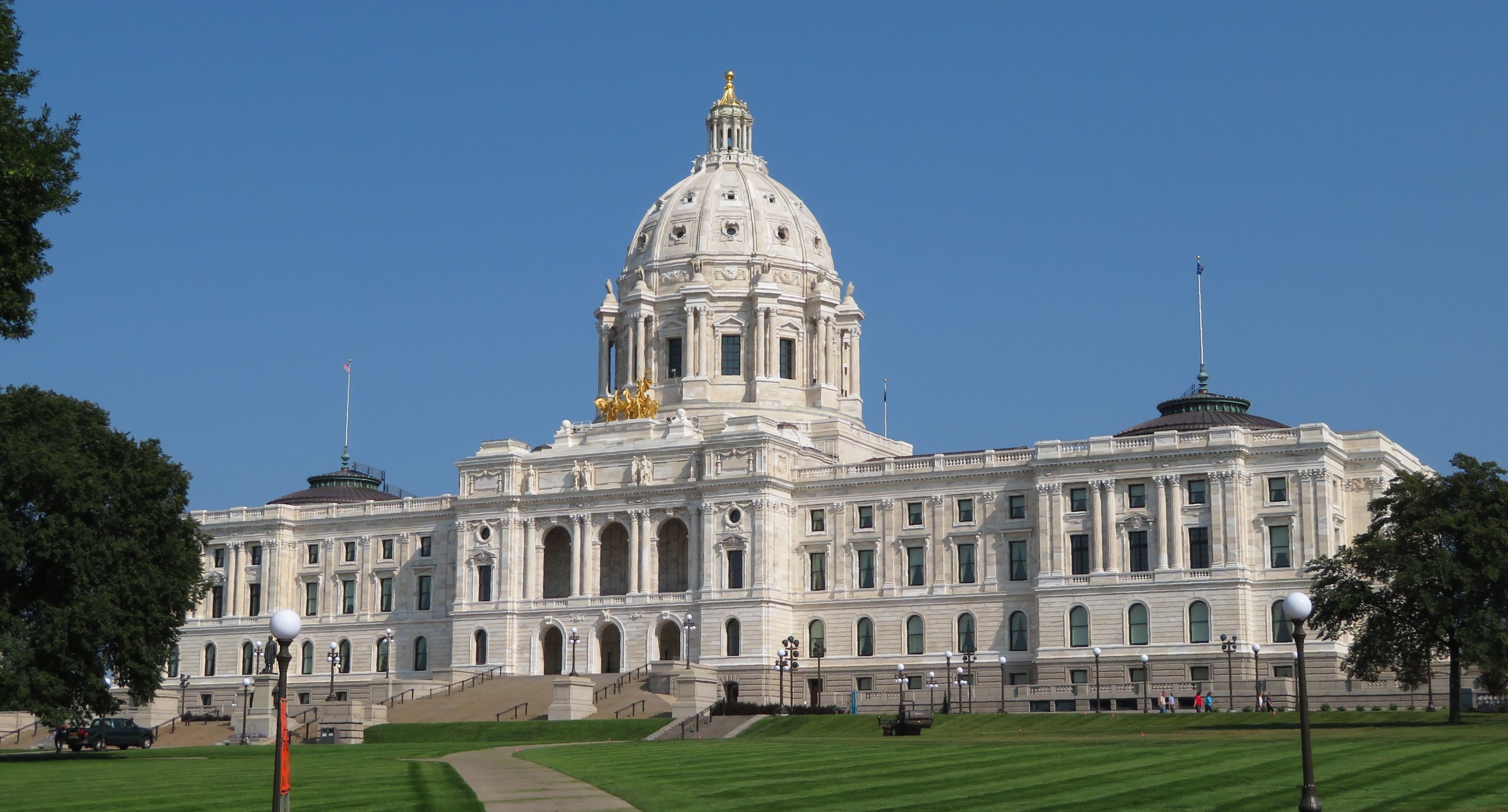
    Minnesota State Capitol, Saint Paul, Minnesota
    Image: Ken Lund, via Flickr, CC BY-SA 2.0.

    His departure is a substantial shift for Minnesota Democrats. Walz had been expected to remain a major party figure and had faced no serious primary challenge, so the party now must choose a standard-bearer without an incumbent at the top of the ticket.

    That changes the basic campaign calculation. A race centered on an incumbent governor’s overall record would have required Walz to defend his administration directly; an open contest asks a new Democratic candidate to preserve the administration’s broader agenda while addressing weaknesses critics associate with it.

    The central dispute is accountability

    The fraud issue comes with an important distinction. Investigations and criminal cases concern people accused of exploiting public programs, not an allegation that Walz personally committed fraud.

    Politico reported that dozens of people have been charged with felonies in connection with the theft of hundreds of millions of dollars from COVID-era programs intended to feed children. NBC News also described heightened scrutiny of Minnesota’s handling of alleged child care fraud.

    Legally, personal culpability and responsibility for administering state programs are different questions. Politically, however, the scale of the allegations has made oversight, enforcement and the state’s response a difficult issue for Walz’s party to avoid.

    Critics argue that alleged losses of that size point to failures in safeguards and intervention. Supporters can counter that criminal conduct by outside operators should not automatically be attributed to elected officials, especially when investigations lead to charges and prosecutions.

    Voters may demand more than blame

    The coming debate could hinge on where voters draw the line between individual misconduct and administrative responsibility. Public-benefit programs are meant to reach families who need help, yet voters can also reasonably expect strong controls to protect public money.

    That leaves candidates with a challenge broader than assigning fault. General calls for accountability may resonate, but the eventual winner may need to explain what would actually change inside state government.

    The practical areas likely to matter include audits, agency leadership, reporting systems, enforcement resources and the speed of intervention when warning signs emerge. Candidates will also face pressure to show how tighter controls could avoid blocking eligible families from receiving services.

    Klobuchar could reshape the field

    Klobuchar has not announced a campaign, but Politico and NBC News reported that she is seriously considering one. Politico reported that Walz met with the U.S. senator on Sunday and that people close to her said she had been encouraged to run.

    She would bring statewide name recognition and a record of winning Minnesota elections by margins stronger than other Democrats, including Walz in some past contests. For Democrats confronting an unexpectedly open race, that could make her a potentially stabilizing candidate.

    But a Klobuchar candidacy would not remove fraud oversight from the campaign. She would still need to explain how Minnesota could strengthen program administration without reducing the issue to partisan blame or suggesting the state should retreat from services intended to help families.

    Her choice has a second political consequence as well. If she runs for governor, her U.S. Senate seat would become open, adding another layer of uncertainty for Minnesota Democrats.

    Republicans already have a shared message

    Minnesota Republicans moved quickly to connect Walz’s decision with the fraud controversy. The Republican Governors’ Association said the eventual Democratic nominee would have to answer for what it called years of mismanagement and misplaced priorities.

    According to Politico, the Republican primary field includes MyPillow CEO Mike Lindell, Minnesota House Speaker Lisa Demuth, state Rep. Kristin Robbins and Minneapolis attorney Chris Madel. A crowded primary can create competing messages, but fraud oversight offers candidates with different backgrounds a common line of attack.

    Republicans are likely to argue for tougher controls before public money is distributed and faster action when potential problems are identified. Democrats are likely to emphasize that prosecuting alleged fraud and strengthening safeguards should not be partisan goals, while seeking specific policy proposals from their opponents.

    The unanswered questions now matter most

    No successor to Walz has been settled on, Klobuchar has not made a decision, and the Republican field remains in development. It is also unclear which reforms candidates will embrace or how directly they will address the difference between administrative failures and the value of the programs involved.

    Walz’s exit ensures that fraud scrutiny will not remain a background controversy. The next governor will inherit pressure to demonstrate that Minnesota agencies can deliver public services while better protecting funds from abuse.

    The race will ultimately decide party control, but its early defining test is trust in government. The candidate who can pair a credible accountability plan with a workable approach to serving eligible Minnesotans may have the clearest answer to the issue now driving the contest.