Blog

  • Supreme Court Let Manhattan Prosecutors Pursue Trump’s Tax Records

    Supreme Court Let Manhattan Prosecutors Pursue Trump’s Tax Records

    The short 2021 order ended Trump’s immediate effort to stop a Manhattan subpoena, but it did not disclose his tax returns or resolve the investigation’s allegations. Here is what the ruling did—and did not—do.

    The Supreme Court rejected Donald Trump’s emergency request to block access to his Manhattan tax and financial records on February 22, 2021, clearing a barrier for Manhattan prosecutors seeking his records. The ruling allowed prosecutors to pursue Trump’s tax returns and related business documents through a subpoena process.

    That is the significance of the order—and also its limit. The Supreme Court did not make Trump’s records public, and it did not decide whether Trump, the Trump Organization or anyone else had committed a crime.

    A short order with real effect

    The court denied Trump’s application without a signed opinion and without recorded dissents. Though brief, the order removed the final immediate obstacle to enforcement of a subpoena for records sought by the Manhattan district attorney’s office.
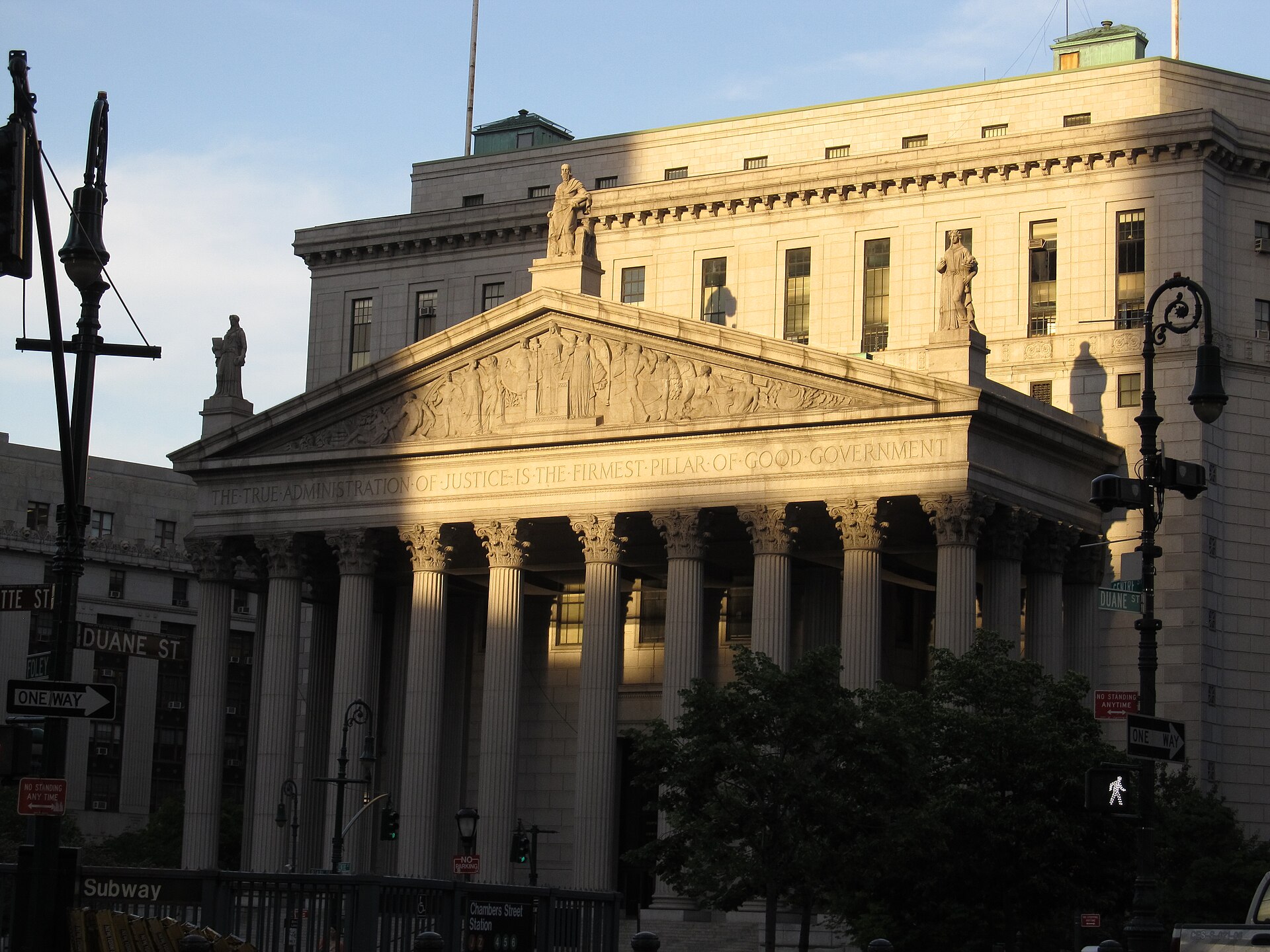
    New York County Courthouse, Manhattan, New York (7237321820)
    Image: Ken Lund from Reno, Nevada, USA, via Wikimedia Commons, CC BY-SA 2.0.

    According to contemporaneous reporting by The New York Times, the subpoena covered eight years of Trump’s personal and corporate tax returns as well as other financial records. It was directed at Trump’s accounting firm.

    The practical result was not a public release of sensitive financial information. It was permission for prosecutors and a grand jury to obtain material through a confidential criminal-investigative process.

    “Emergency” meant a court procedure

    The word “emergency” can give a misleading impression when this episode resurfaces. Trump did not declare a national emergency involving his records, and the order did not involve special presidential authority.

    His lawyers filed an emergency application with the Supreme Court, seeking swift, temporary intervention to halt or delay the subpoena while he continued challenging it. Such applications are a procedural avenue for parties asking the court to preserve the status quo or stop an action before the broader litigation is finished.

    Trump’s request was therefore an attempt to prevent the subpoena from taking effect immediately. The justices’ refusal meant that particular effort had failed.

    The dispute had already reached the court

    The February 2021 order followed an approximately 18-month fight over whether a state prosecutor could obtain a sitting president’s private records. Trump had challenged the Manhattan subpoena on broad grounds, including claims connected to presidential immunity.

    In July 2020, the Supreme Court had rejected the argument that a sitting president was categorically beyond the reach of a state criminal subpoena. The court said a president was not above the ordinary obligation to provide evidence, while allowing Trump to raise more specific objections in lower courts.

    Trump pursued those narrower arguments, contending in part that the subpoena was overly broad and politically motivated. Lower courts rejected those challenges. The emergency application was his final immediate attempt to stop the subpoena from moving ahead.

    That sequence matters because the 2021 order was not a sweeping new constitutional decision. It marked the point at which Trump’s remaining path to pause this subpoena had run out.

    Investigators sought evidence, not publication

    Manhattan District Attorney Cyrus R. Vance Jr.’s office was investigating possible financial crimes involving Trump and the Trump Organization. Prosecutors considered the records potentially relevant to questions about whether property values had been manipulated for lending or tax purposes, according to contemporaneous reporting.

    Those were investigative allegations, not findings of guilt. The Supreme Court’s order did not determine whether the alleged conduct occurred, whether it was unlawful or whether charges should be brought.

    The competing accounts were clear. Prosecutors said they needed the evidence for a legitimate inquiry. Trump condemned the investigation as politically driven and called the subpoena a “fishing expedition.” After the ruling, Vance said, “the work continues.”

    Access was not public disclosure

    The ruling is sometimes misunderstood as an order to release Trump’s tax returns to the public. It was not. The records could be examined by prosecutors and a grand jury, whose materials are generally protected by secrecy rules.

    That distinction carries legal and practical weight. Voters, journalists and Congress were not granted access by this order. The decision instead allowed investigators to review records they believed were important to an ongoing inquiry.

    For Trump, the loss meant the documents would no longer remain outside the subpoena’s reach at that stage of the litigation. For Manhattan prosecutors, it meant their records request could proceed.

    Why the date is essential

    This was a consequential legal milestone, but it is not a new Supreme Court decision. The order was issued on February 22, 2021, and accounts presenting it as current news leave out crucial context.

    Its enduring legal point is narrower than many headlines suggest: presidents and former presidents can challenge subpoenas, but they do not have blanket immunity from state criminal investigations. The order itself settled only whether this subpoena could move forward, leaving the underlying investigative questions to prosecutors and, if charges were ever brought, the courts.
  • Economist’s ‘Anemic’ Trump Economy Warning Focuses on Household Strain

    Economist’s ‘Anemic’ Trump Economy Warning Focuses on Household Strain

    A headline-grabbing GDP number can obscure the pressures households face in grocery aisles, at the doctor’s office and when rent is due. The available economic data point to a more complicated picture than either a boom-or-bust political talking point.

    An economist is alarmed about the U.S. economy under Donald Trump, describing it as “anemic” and warning that Americans are facing severe economic hardship. The warning matters because a growing economy on paper does not automatically mean families can absorb rising bills, find secure work or build savings.

    The available source material does not identify the economist or provide the full underlying argument. But federal data show why a debate over Trump’s economy can turn quickly from a headline GDP figure to a harder question: whether the recovery is reaching households.

    Growth figures tell only part

    The Bureau of Economic Analysis reported that real gross domestic product rose at a 3.8% annual rate in the second quarter of 2025, after falling at a revised 0.6% annual rate in the first quarter. Taken alone, the second-quarter figure does not fit a simple description of a stagnant economy.

    Yet the composition of that growth matters. BEA said the rebound primarily reflected lower imports, which mechanically add to GDP calculations, and increased consumer spending. Investment and exports declined, partly offsetting those gains.

    That distinction is central to the “anemic” argument. A strong top-line number can coexist with concern about whether businesses are investing for future expansion, whether export-oriented industries are gaining ground, and whether consumer spending is being sustained by healthy income growth rather than necessity or debt.

    Why households can still feel squeezed

    GDP measures the value of goods and services produced across the country. It is useful, but it is not a household-budget scorecard. It does not directly answer whether a worker’s pay is keeping pace with food, housing, insurance, child care and borrowing costs.

    For many Americans, financial conditions are experienced month to month. A family may hear that national output increased while still confronting a rent increase, an expensive car repair, a higher credit-card balance or fewer hours at work.

    That is why warnings about people being pushed “to the brink” should be treated seriously but precisely. Severe hardship is not proven by a GDP release alone; it requires evidence from incomes, employment, prices, debt burdens, delinquency rates and access to essential goods and services.

    The broader point is less partisan than it may first appear: aggregate growth and household security can move at different speeds.

    The consumer spending complication

    Consumer spending helped lift second-quarter growth, according to BEA. Supporters of the administration could cite that as evidence that Americans retained the capacity and confidence to spend despite economic uncertainty.

    Critics can read the same fact more cautiously. Spending can rise because households are doing well, but it can also rise because basic necessities cost more, because people are drawing down savings, or because they are leaning more heavily on credit.

    BEA also reported that real final sales to private domestic purchasers—a measure combining consumer spending and private fixed investment—increased at a 2.9% annual rate in the second quarter. That offers a more grounded view of private-sector demand than GDP alone, though it still cannot show how evenly the benefits or costs are distributed.

    Neither side gets a complete answer from one quarter. The meaningful test is whether spending remains resilient without damaging household balance sheets or weakening business investment over time.

    Presidents influence, not control

    It is reasonable to scrutinize Donald Trump’s economic agenda, including tax, trade, immigration, regulatory and spending choices, because presidential policy can affect prices, investment decisions and confidence. It is much harder to assign a single quarterly outcome entirely to one president.

    Economic data also reflect Federal Reserve policy, global demand, energy costs, supply chains, corporate decisions, state and local spending, and developments that began before an administration took office. The BEA release itself describes a mix of factors behind second-quarter growth rather than one political cause.

    That does not let policymakers off the hook. It means claims that Trump alone produced either prosperity or hardship need to be tested against the timing of policies and a wider set of measures.

    What would validate the warning

    A case that the economy is weak in a way that is materially harming Americans would become stronger if several indicators deteriorate together: job growth slowing, unemployment rising, inflation outpacing wages, consumer delinquencies increasing and private investment weakening.

    The opposite case would be strengthened if inflation-adjusted wages improve, labor-market conditions remain solid, business investment recovers and households spend without an escalating reliance on debt. Those are the measures that turn abstract economic growth into a lived improvement.

    • GDP: Shows the economy’s overall output, not each household’s finances.
    • Real wages: Show whether pay is gaining ground after inflation.
    • Employment: Indicates whether people can find and keep work.
    • Investment: Offers clues about businesses’ expectations for future demand.
    • Household debt and delinquencies: Help reveal whether spending is financially sustainable.

    The unanswered question is durability

    The economist’s identity and precise evidence are not available in the supplied source material, so the warning should not be overstated as a settled diagnosis. Still, the concern it raises is legitimate: a rebound in GDP can be real while remaining fragile or uneven.

    For Americans, the practical issue is whether economic gains show up as more secure jobs, purchasing power and room in the monthly budget. For the Trump administration, the challenge is that voters tend to judge the economy not by an annualized GDP rate, but by what is left after the bills are paid.

    The second-quarter 2025 data provide evidence of renewed growth, not a final verdict on economic health. The next rounds of inflation, jobs, income, consumer-credit and investment data will say more about whether the expansion is gaining depth—or merely masking persistent strain.

  • Doug Burgum’s D.C. Repair Portfolio Faces a Reflecting Pool Setback

    Doug Burgum’s D.C. Repair Portfolio Faces a Reflecting Pool Setback

    A high-visibility repair at the Lincoln Memorial Reflecting Pool has shifted attention from Washington improvements to the handling of damage, contractor work and discarded sabotage allegations.

    Doug Burgum has taken on a prominent role in President Donald Trump’s push for visible improvements around Washington, overseeing work that ranges from fountain repairs to the East Potomac golf course. But the Reflecting Pool project has become the most scrutinized part of that portfolio.

    What began as a paint job at one of the city’s best-known public spaces became tied to peeling paint, questions about sealant and nanobubblers, damage to the pool liner, arrests and later-dismissed criminal charges. The episode has put Burgum, Trump’s Interior secretary and the former North Dakota governor, under pressure over how the project was managed.

    A visible project became a problem

    The Reflecting Pool sits beside the Lincoln Memorial and is among Washington’s most recognizable public landmarks. That setting makes repair problems difficult to contain: drainage, surface damage and closures are immediately visible to visitors.

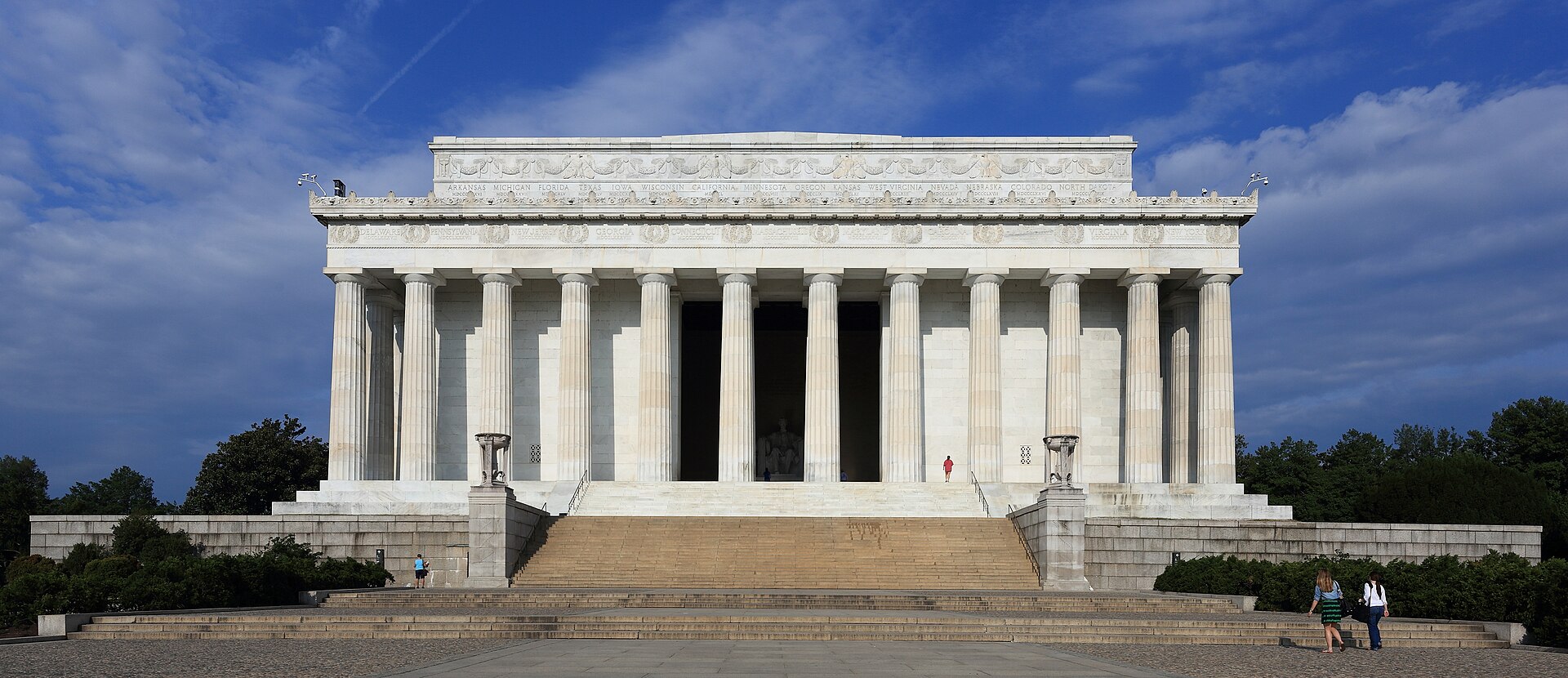
    Lincoln Memorial east side
    Image: Martin Falbisoner, via Wikimedia Commons, CC BY-SA 3.0.

    According to Axios, the pool is partially drained and awaiting another round of repairs. The work was intended to improve a signature National Mall site, but the unfinished condition has instead drawn attention to the project’s setbacks.

    Burgum’s broader Washington assignment includes efforts to revive fountains at Meridian Hill and Columbus Circle. The Reflecting Pool dispute has overshadowed those projects and made a repair effort meant to beautify the capital a source of scrutiny.

    Accounts of the damage changed

    Interior officials initially said vandals had ripped up the Reflecting Pool liner, according to Axios. Federal prosecutors charged several people, including a former U.S. Olympian, in connection with the alleged vandalism.

    Within a month, however, Pirro’s office dropped the criminal charges. The U.S. Attorney’s office attributed the damage to what it called a “botched installation,” undercutting the earlier sabotage account.

    The dropped case does not, by itself, establish every detail of how the initial explanation was reached. But the change from alleged vandalism to flawed contractor work has put focus on the installation, project controls and the assessment of evidence before the charges were filed.

    Scrutiny centers on management and contracting

    The differing descriptions carry different implications for the repair. Sabotage points to alleged criminal wrongdoing by outsiders, while a botched installation points toward contractor performance and project management.

    The available reporting does not fully answer who approved the installation approach, what checks were made before the damage was described as sabotage or how the contractor-work explanation emerged. Those unanswered questions have kept the episode from being treated as a routine maintenance problem.

    A poorly executed repair can require more work and money. A criminal case that is later abandoned raises separate questions about how officials communicated the situation and evaluated the evidence.

    Pirro and Burgum offered competing views

    The matter grew more politically sensitive because of a reported dispute involving D.C. prosecutor Jeanine Pirro and Burgum. Axios reported that Trump criticized Pirro after the charges were dropped, saying she was “folding like an umbrella.”

    Days later, the New York Times reported that Pirro confronted Burgum in the Oval Office and accused him of misleading the president. The Interior Department rejected that alleged accusation.

    An Interior spokesperson told the Times that Burgum “never misled the president” and had been clear in his comments about the pool. Pirro’s reported position and the department’s response leave competing accounts of what Trump was told as the original sabotage theory fell apart.

    Trump’s support has not ended the questions

    Axios reported that Burgum appears to remain in Trump’s good graces. Trump gave him a poster of a freshly painted Reflecting Pool inscribed, “To Doug – Great Job!”

    That support may limit Burgum’s immediate political risk, but it does not resolve questions around the repair or the withdrawn charges. The Reflecting Pool controversy also comes amid criticism of Burgum’s leadership at Interior.

    Politico reported on departures that included the department’s Senate-confirmed legal counsel and longtime staff member Tony Irish, who criticized Burgum’s approach to career employees. An Interior spokesperson disputed those criticisms, describing Burgum’s team as high-performing and saying it leads with “gratitude, humility, curiosity and courage.”

    The repair itself remains the practical measure

    Burgum has indicated, Axios reported, that he would rather spend hours mowing the National Mall in extreme heat than answer questions about the Reflecting Pool. The remark reflects the project’s evolution from a planned showcase into a recurring distraction.

    The immediate question is whether the pool receives a durable repair and reopens without another dispute. A successful repair would not erase the abandoned criminal allegations, but it could reduce the visibility of the controversy.

    A fuller accounting of the damage, installation and abandoned sabotage claims would also address the questions that remain around a project intended to improve one of Washington’s most prominent public spaces.

  • Hoover Dam Faces a 70% Power Cut as Lake Mead Falls

    Hoover Dam Faces a 70% Power Cut as Lake Mead Falls

    The concern is not an immediate regional blackout. It is the loss of a fast-responding power source as the Colorado River’s shrinking supply must also serve cities, farms, tribes and Mexico.

    Hoover Dam is approaching a 70% loss in hydropower capacity if Lake Mead falls to the critical 1,035-foot elevation, a benchmark that shows how the Colorado River crisis is reducing electricity generation. Lake Mead’s water level is falling, leaving Hoover Dam with less pressure to make power for customers connected to the Southwest electric grid.

    The prospect does not mean an overnight blackout across the Southwest. It does mean the region could have less of a valuable power source that can respond quickly when demand spikes, while the same diminishing Colorado River supply remains essential for water users.

    Why elevation changes electricity output

    A dam does not need to run out of stored water to lose much of its ability to generate electricity. Hydropower relies on elevation as well as volume: water moving from a higher point has more force available to turn turbines.

    Page, Arizona and Glen Canyon Dam (14201211482)
    Image: Ken Lund from Reno, Nevada, USA, via Wikimedia Commons, CC BY-SA 2.0.

    At Hoover Dam, water from Lake Mead moves through intake structures and penstocks before spinning turbines and continuing downstream. As the reservoir drops, so does the hydraulic head, the engineering term for the pressure created by water’s vertical drop.

    That makes this a gradual operational problem rather than a simple on-or-off scenario. Hoover Dam can still produce electricity at lower reservoir levels, but it does so less efficiently and with less overall output.

    The meaning of the 1,035-foot mark

    The 1,035-foot elevation at Lake Mead has become a closely watched warning line because Hoover Dam could lose about 70% of its generating capacity at that level. It is a substantial potential reduction, not a claim that the dam would stop working altogether.

    Nor would a loss of that size automatically shut off power across the Southwest. Hoover Dam feeds into a broader Western grid that also draws on natural gas, solar, wind, nuclear generation and electricity imported from neighboring regions.

    Still, replacing Hoover’s output could carry tradeoffs. Depending on market conditions, replacement electricity may cost more or produce higher emissions than hydropower.

    Flexibility is Hoover’s grid value

    Hydropower’s importance is not only the amount of energy it produces over a day or year. Operators can increase its output rapidly when demand rises or when another source of electricity changes unexpectedly.

    That flexibility can be especially useful on hot afternoons, when air-conditioning use climbs, or in the evening as solar output fades. A smaller contribution from Hoover Dam does not by itself create a grid crisis, but it removes part of the region’s ability to manage abrupt swings in supply and demand.

    There are competing assessments of how serious that risk is. One view is that the Western power system is more diverse than it was when Hoover Dam became an emblem of New Deal-era engineering, with expanding solar and battery storage and experienced grid operators.

    The counterargument is that added renewable capacity does not resolve the underlying water shortage, and replacement resources do not always offer the same immediate responsiveness as hydropower. The pressure becomes more consequential when lower generation coincides with extreme heat, high demand and continued water constraints.

    Water decisions now shape power decisions

    Lake Mead is part of a vast, highly managed system rather than an isolated reservoir. It stores Colorado River water behind Hoover Dam, while Lake Powell upstream is held by Glen Canyon Dam.

    The reservoirs reflect a broader mismatch between long-standing demand and a river system affected by persistent drought, hotter temperatures and dry soils that can absorb snowmelt before it reaches streams. The Colorado River serves roughly 40 million people and supports substantial agricultural production across seven U.S. states, tribal communities and Mexico.

    That scale explains why electricity cannot be separated from water negotiations. Releases intended to meet downstream water obligations can affect reservoir elevations and hydropower; efforts to preserve reservoir levels can affect water deliveries.

    The Bureau of Reclamation has used conservation agreements and operating rules in recent years to help protect reservoir levels. Those steps can buy time, but the larger challenge remains adapting to less reliable runoff in a warming basin.

    Lake Powell shows the wider exposure

    Hoover Dam is not the only major facility facing elevation-based limits. At Lake Powell, Glen Canyon Dam’s minimum power pool is 3,490 feet above sea level, the point below which water can no longer pass through its power-generating penstocks.

    Managers at Glen Canyon could face a difficult balance if generation were constrained: releasing enough water to satisfy downstream commitments while maintaining the reservoir’s capacity to make power. Water can still move through river outlets below the power-pool level, but those structures were not designed to replace the penstocks continuously and raise engineering concerns at extremely low levels.

    The two dams have different operating limits, yet together they make the larger point clear. Reservoir levels determine not only how much water is available, but also what some of the West’s most important water infrastructure can physically do.

    What the warning line cannot answer

    A wet year can improve reservoir conditions, but it does not restore certainty about the Colorado River’s long-term usable supply. Durable planning must account for the possibility that heat and aridity will continue to limit runoff.

    States, tribes, cities, farmers, water agencies and federal managers still face competing priorities involving municipal supply, agricultural production, tribal water rights, environmental needs, interstate obligations and hydropower. What remains unclear is whether agreements on cuts and operating rules can move quickly enough to protect Lake Mead and Lake Powell at the required scale.

    For now, the 1,035-foot threshold is less a prediction of sudden collapse than a visible measure of a longer infrastructure emergency. Hoover Dam’s weakening output shows why the Southwest’s water future and electricity future can no longer be treated as separate problems.

  • Trump Backs Hegseth as Signal Reports Draw Pentagon Scrutiny

    Trump Backs Hegseth as Signal Reports Draw Pentagon Scrutiny

    Reports about Pete Hegseth’s Signal use and management of the Pentagon have collided with President Donald Trump’s public support, while the White House disputes that it sought a replacement.

    The questions surrounding Hegseth’s tenure as defense secretary extend beyond a single personnel report. They include accounts of private Signal chats involving military operations, turnover among senior Pentagon advisers and criticism of how authority has been exercised inside the department.

    Trump has publicly defended Hegseth. But NPR’s April 21, 2025, report that the White House had begun looking for a new Pentagon leader, based on an unnamed U.S. official, added to scrutiny that the White House has contested.

    Signal reports focused attention on military operations

    The central allegations involve private Signal group chats in which Hegseth reportedly shared details connected to planned U.S. strikes against Houthi targets in Yemen. NPR reported that one chat included his wife, brother and personal lawyer. A separate group involving senior White House officials accidentally included a journalist.

    Pete Hegseth hosts NATO Secretary General Mark Rutte at the Pentagon, USA on April 24, 2025 3
    Image: U.S. Secretary of Defense, via Wikimedia Commons, Public domain.

    According to NPR’s reporting, the chats contained operational timing and details about airstrikes. Critics said that disclosure of such information before an operation could put U.S. personnel at risk if hostile actors intercepted it.

    CNN later reported that a watchdog found Hegseth risked compromising sensitive military information and potentially endangering U.S. troops. Public reporting does not establish that the information was intercepted or that a particular operation was compromised. The scrutiny has centered on the reported risk rather than proof of a known operational breach.

    Hegseth denied wrongdoing and said hostile coverage and anonymous accounts from former staff were being used to damage his reputation. He has maintained that the allegations do not accurately describe his conduct or the condition of his department.

    The White House disputed the replacement account

    NPR reported on April 21, 2025, that the White House had begun looking for a replacement for Hegseth, citing a U.S. official who was not authorized to speak publicly. The report emerged amid renewed attention to Hegseth’s use of the encrypted messaging app Signal to discuss military operations.

    The White House disputed NPR’s account. Press secretary Karoline Leavitt said Trump “stands strongly” behind Hegseth. Trump called the controversy a “waste of time” and praised the defense secretary’s performance.

    The competing accounts leave no confirmed Cabinet change. A reported search for possible successors, if it occurred, would not by itself establish a decision to remove Hegseth; it could also reflect contingency planning while the administration confronts political or operational concerns.

    Adviser departures added to Pentagon turmoil

    NPR reported that senior Hegseth advisers Dan Caldwell, Colin Carroll and Darin Selnick were escorted from the Pentagon amid accusations that they leaked information to the press.

    The three former advisers denied wrongdoing and said they had not been told what they were accused of leaking. John Ullyot, a former Pentagon spokesperson who resigned, later described the internal situation as a “full-blown meltdown” of infighting, according to NPR.

    Those accounts do not independently resolve the question of Hegseth’s tenure. They do, however, place the Signal controversy alongside broader reports of internal conflict at the Defense Department.

    Washington Post reports described a fight over control

    Separate Washington Post reporting from May 2026 described tensions over Hegseth’s effort to centralize control of significant Pentagon decisions. The Post reported that then-Navy Secretary John Phelan raised concerns with lawmakers that Hegseth and Deputy Defense Secretary Steve Feinberg had asserted unusually rigid control over submarine and shipbuilding decisions.

    In a separate report, The Washington Post said Hegseth had become more confident in his position. That reporting indicated that he believed he had weathered the immediate crisis, even as scrutiny of his department continued.

    Together, the reports have framed the issue as more than a dispute over one messaging platform. They concern reported questions about communications practices, staffing and the exercise of authority across the federal government’s largest department.

    Congressional oversight could seek a fuller record

    Democratic lawmakers have argued that the episode raises broader questions about Hegseth’s readiness to lead an institution responsible for life-and-death military decisions. Sen. Jeanne Shaheen, a member of the Senate Armed Services Committee, said Hegseth should accept responsibility and criticized Trump’s choice to lead the department.

    Hegseth’s supporters and the White House have portrayed the controversy as an effort to elevate anonymous allegations and grievances from former employees. That position challenges the motives and reliability of Hegseth’s critics rather than accepting their accounts of the underlying conduct.

    Lawmakers can seek testimony and records and press the Defense Department about policies governing communications, classification and operational planning. Public reporting has not resolved exactly what information was shared, who approved the communications practices or whether departmental rules were violated.

    Trump’s public backing remains a significant counterpoint to the reports of a possible replacement. Whether that support endures will depend on developments that have not been resolved in the public record.

  • Trump Extends Iran Strait Deadline to April 6 as Brent Crude Jumps 40%

    Trump Extends Iran Strait Deadline to April 6 as Brent Crude Jumps 40%

    A deadline tied to one of the world’s most important energy shipping routes has become a test of whether military pressure can create diplomatic space. The consequences are already reaching oil markets far beyond the Middle East.

    Donald Trump extended Iran’s deadline to reopen the Strait of Hormuz to April 6, according to The Associated Press, while Brent crude rose more than 40% since the war began. The move puts shipping through the vital waterway at the center of the U.S.-Iran standoff, alongside continuing military action and disputed claims about possible peace talks.

    The delay matters because the Strait of Hormuz carries a major share of globally traded oil and natural gas in peacetime. Restrictions affecting tanker traffic have turned a regional conflict into a market concern, adding pressure to oil prices while Washington and Tehran offer sharply different accounts of whether diplomacy is actually underway.

    April 6 becomes a pressure point

    Trump had threatened to target Iranian power plants if Iran did not fully reopen the waterway. AP reported that he postponed that deadline until April 6 and said efforts to end the conflict were going “very well.”

    Trump also said Iran had allowed some oil tankers through as a good-faith gesture. At the same time, he warned Tehran to become serious about talks before it was too late.

    The extension does not remove the earlier threat. It postpones a potential expansion of strikes while keeping the reopening of the strait as a key U.S. demand.

    Shipping restrictions reshape the conflict

    The Strait of Hormuz connects the Persian Gulf and the Gulf of Oman. In normal conditions, about 20% of globally traded oil and natural gas moves through it, according to AP.

    Iran has blocked vessels it considers connected to the U.S. and Israeli war effort while permitting a limited number of other ships to pass, AP reported. That selective approach means the route has not simply been shut or reopened; access has become part of the conflict itself.

    A Gulf Arab bloc said Tehran was charging fees for safe passage. Lloyd’s List Intelligence described the reported system as a de facto toll booth arrangement. Iran has not publicly described its actions in those terms.

    For Iran, restrictions on shipping may offer a way to impose costs without trying to match U.S. and Israeli military power strike for strike. For its opponents, the limits create a practical and economic test of Iran’s willingness to de-escalate.

    Why Brent crude has climbed

    Brent crude, an international oil benchmark, had risen more than 40% since the war began, AP reported. The increase came amid shipping restrictions and attacks on Gulf energy infrastructure.

    That rise reflects more than the movement of individual tankers. When a route used by a large portion of global energy trade becomes less predictable, freight costs can rise, deliveries can become harder to arrange and traders can price in a greater risk of disruption.

    Higher crude prices do not translate dollar for dollar into higher prices at the pump. Refining costs, regional fuel supplies, taxes and retail competition all affect what consumers pay.

    Still, a sustained increase in oil prices can filter into transportation, manufacturing and household expenses. That makes the Strait of Hormuz dispute an issue for energy markets well beyond the immediate military theater.

    Talks exist, but agreement does not

    Washington and Tehran disagree over whether meaningful negotiations are occurring. Trump envoy Steve Witkoff said the United States had sent a 15-point action list through Pakistan as a possible framework for a peace agreement, according to AP.

    Iranian Foreign Minister Abbas Araghchi said on state television that Iran was not taking part in talks to end the war and did not plan to do so. He acknowledged messages had moved through other countries, but said those exchanges did not constitute negotiations.

    Iranian state television said Tehran had its own five-point proposal. Its conditions included reparations and recognition of Iranian sovereignty over the Strait of Hormuz.

    Egypt and Pakistan have been identified as intermediaries. Their involvement indicates that channels for communication are open, but it does not establish that the two sides are nearing a settlement.

    Military activity continues around diplomacy

    The diplomatic claims are unfolding during heavy fighting. AP reported that the USS Tripoli and other ships were moving toward the region with about 2,500 Marines, while at least 1,000 paratroopers from the 82nd Airborne Division had been ordered there.

    Israel has continued operations against Iranian targets and expanded its presence in southern Lebanon against Hezbollah, according to the report. Sirens in Israel warned of incoming Iranian missile barrages, while Gulf nations worked to intercept fire.

    AP also reported heavy strikes in Iran’s capital and other cities. The U.S.-Israeli campaign has struck Iranian military and government targets and killed top leaders, but Iran has continued firing missiles, with no sign of an uprising against its government.

    The competing signals underline the central uncertainty: diplomatic messages may be moving, but military pressure is still increasing in parallel.

    Signals to watch before April 6

    A steadier flow of tankers, fewer reported restrictions and credible direct or indirect talks would support the argument that the deadline extension is creating room for diplomacy.

    New shipping limits, further attacks on energy infrastructure or renewed threats of imminent strikes would point toward escalation instead. The deadline has created a date to watch, but not a clear path to a deal.

    Even if the strait were reopened through an agreement, major disputes would remain over Iran’s missile and nuclear programs, Tehran’s support for armed groups and the security commitments each side would seek.

    For now, the April 6 deadline ties together three unresolved questions: whether the conflict can be contained, whether commercial shipping can move more freely and whether oil markets will see the disruption as temporary or enduring.

  • JD Vance’s Falling-Glass Faith Story Becomes an Online Punchline

    JD Vance’s Falling-Glass Faith Story Becomes an Online Punchline

    A brief story about religion and a falling glass has become a viral argument over how public officials should speak about private belief. The available reactions show online attention, not a measurable shift in voter opinion.

    JD Vance shared a story about a falling glass that he felt was a message from God during a conversation about Christianity. Online critics mocked or criticized the account, turning the vice president’s personal faith anecdote into a fresh political flashpoint.

    The story draws attention because it combines religion, a vivid image and a national political figure. It also raises a broader question: when elected officials describe private spiritual experiences in public, how should voters separate a personal testimony from a political claim?

    A falling glass becomes the focus

    According to an account summarized by Dagens.com and attributed to the Irish Star, Vance described talking with a friend about Christianity when a glass fell from a wall. He said skeptics could see the incident as meaningless, while he experienced it another way.

    March 2026 Official Vice Presidential Portrait of JD Vance (medium crop)
    Image: Emily J. Higgins, via Wikimedia Commons, Public domain.

    “At that moment, it felt like God was trying to send me a message,” Vance said, according to the report, which described the anecdote as coming from a Fox News interview.

    That phrasing is central to the dispute. Vance described what the moment felt like to him; he did not present the falling glass as evidence that others had to accept. Still, a compact visual detail can spread far more easily online than a longer account of belief, conversion or doctrine.

    Why critics seized on it

    Online criticism centered less on Vance’s wider religious journey than on the image of the glass falling. Posts cited by Dagens.com treated falling or shattered glass as an ominous symbol, with one response calling it “not a great sign.”

    Other commenters characterized the story as overly dramatic for a high-ranking elected official. Former French ambassador to the United States Gérard Araud was among those quoted in coverage expressing disbelief.

    Those reactions help explain the story’s visibility, but they do not establish a consensus among voters. The available reporting points to individual social-media responses, not representative polling or evidence that the anecdote has changed public opinion of Vance.

    That distinction matters in a political environment where a joke, repost or short clip can look like a broad public verdict. Viral mockery measures attention and engagement; it does not, by itself, show what a wider electorate believes about a politician’s faith or record.

    Faith is part of Vance’s public story

    The anecdote emerged while Vance was discussing his religious life and, according to Dagens.com, promoting Communion: Finding My Way Back to Faith, a memoir about his adult conversion to Catholicism.

    His faith journey has long been part of his public biography. Vance was raised in an evangelical environment, later described himself as an atheist or skeptic, and entered the Catholic Church as an adult.

    Reuters reported in 2024 that Vance had said he felt “a touch of God” before speaking at the Republican National Convention. The falling-glass account therefore did not introduce religion into his public image so much as return attention to a theme he has discussed before.

    For many believers, finding spiritual meaning in an ordinary occurrence is familiar territory. Religious traditions often leave room for testimony, providence and experiences that may hold personal significance without being verifiable to others.

    Private testimony meets public office

    For skeptics and for people who prefer a clearer line between private faith and political identity, the same account may sound unpersuasive or uncomfortable. That difference in response is not only a disagreement over whether the glass fell by chance.

    Politicians often speak about religion to explain their values, personal history and ties to a community. The tension rises when a figure near the center of federal power shares a spiritual experience, because some listeners may hear it as a suggestion of special authority.

    In the available account, Vance did not say the falling glass instructed a government decision or gave him a divine mandate to govern. That is an important boundary. A personal statement of faith is different from asserting that a policy has been directed or endorsed by God.

    Critics may nevertheless consider the anecdote politically relevant because a public official chose to tell it to a national audience. Supporters, meanwhile, may see the ridicule as a dismissive reaction to an openly held religious conviction.

    What the online reaction cannot show

    There is no indication in the available reporting that the episode has affected Vance’s standing in a measurable way. No broad, representative polling on the falling-glass story was identified.

    It is also unclear how much of the original Fox News conversation focused on this particular incident, or whether reposts and short clips omitted context from a larger discussion of Vance’s conversion. That missing context is a recurring issue when a political conversation is reduced to one memorable line.

    Personal testimony cannot be checked in the same way as a policy statistic or a factual claim. People can reasonably question Vance’s interpretation without claiming to know whether he was sincere, just as supporters can accept his account without treating it as proof of anything beyond his stated experience.

    The episode’s clearest significance is not that it has proven a shift in voter sentiment. It is that Vance’s story gave opponents a vivid symbol for criticism while putting his religious identity back at the center of public discussion.

  • Harry Enten Calls Trump’s Inflation Polling Absolutely Awful

    Harry Enten Calls Trump’s Inflation Polling Absolutely Awful

    Enten’s blunt assessment puts renewed focus on the political power of grocery, gas and housing costs. But the available CNN transcript does not show the surveys or figures behind his conclusion.

    Donald Trump has seen inflation polling take a sharp turn against him, according to CNN analyst Harry Enten, who said the available polling was “absolutely awful for Donald Trump.” The assessment points to inflation polling that is highly unfavorable for Trump and raises a central political question for his presidency: whether voters believe his policies are improving the costs they face.

    Enten’s conclusion was delivered during a CNN segment on “President Trump and Inflation Polls.” It is a significant warning on an issue tied directly to household budgets, though the available transcript does not include the individual surveys, dates, sample sizes, wording or topline figures behind the analysis.

    Enten’s assessment was unequivocal

    The clearest fact from the CNN segment is Enten’s characterization. He said polling on inflation was “absolutely awful for Donald Trump,” describing what appears to be a substantial decline in Trump’s standing on the issue.

    That is a statement about public opinion on inflation, not a finding that any one economic report or survey settles the political picture. Polls may measure approval of a president’s handling of prices, expectations about future costs, or confidence in one party’s economic approach. Those are connected questions, but they do not mean exactly the same thing.

    The distinction matters because the underlying polling data are not available in the CNN excerpt. Without poll names, field dates, question wording, sample sizes or percentages, the available material supports reporting Enten’s conclusion but not assigning a precise size or cause to Trump’s decline.

    Why household costs carry weight

    Inflation has unusual political force because it is experienced in routine purchases. Voters do not encounter it only in a government release; they see it in grocery totals, fuel costs, rent and other monthly bills.

    Even when inflation slows, that does not mean prices have dropped back to earlier levels. It means the pace of price increases has eased. A household can therefore hear that inflation is cooling while still feeling squeezed by a higher overall cost of living.

    That gap helps explain why the issue can remain politically potent. People often judge economic conditions through what they can buy with their income and what they must pay for necessities, rather than through the direction of a single inflation measure.

    Presidents face a blame problem

    The president is the most visible national figure on the economy, which makes the White House an easy focal point for frustration over prices. Weak views of inflation can quickly become weak views of a president’s economic management.

    But responsibility for prices is more complicated than political debate often suggests. A White House can affect portions of the economy through fiscal policy, trade policy, regulation and appointments, yet it does not set the price of every food item, apartment or service.

    Supply disruptions, corporate pricing decisions, interest rates, global energy markets and local housing shortages can all shape what consumers pay. Trump supporters may argue that economic pressures were inherited, reflect Federal Reserve decisions or international developments, or need more time to respond to policy. Critics may view poor inflation polling as evidence that Trump has not delivered on expectations tied to his economic message.

    Both interpretations can exist alongside Enten’s polling assessment. The harder political reality is that explanations for higher prices are rarely as immediate as the experience of paying a larger bill.

    An issue rating is not everything

    Enten’s comments signal a serious vulnerability on inflation, but they are not a complete forecast of Trump’s presidency or of how voters will make political choices. A voter may disapprove of Trump’s handling of prices while supporting him on immigration, foreign policy, taxes or other priorities.

    The reverse can also be true: someone may be dissatisfied overall but still prefer Trump’s approach to economic alternatives. Public opinion can vary sharply by party identification, income, age, region and whether a household has seen changes in wages, debt or major expenses.

    That means a broad polling average can identify dissatisfaction without fully showing which groups are driving it or how durable it will be. The narrow, supportable takeaway is that the inflation polling described by Enten presented a significant problem for Trump.

    What could change the numbers

    Inflation polling is not fixed. It could improve if households feel meaningful relief in everyday expenses, if wage growth alters perceptions of purchasing power, or if voters conclude that Trump’s policies are improving the outlook before prices fully respond.

    It could remain unfavorable if Americans continue to believe necessities are unaffordable. For an administration, the risk is larger than concern about an economic indicator: it is a loss of confidence that leaders understand the pressure facing household budgets.

    What remains unresolved is the full basis for Enten’s conclusion. The available CNN transcript does not reveal whether the movement was sustained across multiple surveys or how the results differed among groups of voters. Those details would be needed to determine the depth and staying power of the decline.

    For now, Enten’s “absolutely awful” description underscores the broader political challenge. Inflation is both measurable and intensely personal, giving it lasting power to shape judgments about Trump’s economic credibility.

  • Trump Gains With Born-Again Protestants as Catholic Approval Falls

    Trump Gains With Born-Again Protestants as Catholic Approval Falls

    The polling complicates the idea of a single Christian voting bloc. It shows contrasting movement among groups important to Trump’s coalition while leaving the causes—and political consequences—unsettled.

    Donald Trump’s approval ratings moved in opposite directions among born-again Protestants and Roman Catholics from January to July in five national Marquette Law School polls. Approval rose from 56 percent to 61 percent among born-again Protestants, while it fell from 54 percent to 45 percent among Catholics.

    A 32-point July net-approval gap separated the two groups: Trump stood at plus 22 among born-again Protestants and minus 10 among Catholics. The polling showed rising approval among born-again Protestants and declining approval among Catholics, highlighting divisions within key Christian blocs without showing why voters moved or predicting how they will vote.

    One religious label, two trends

    Christian voters are often discussed as if they form one stable political constituency. The Marquette series instead points to markedly different trajectories inside that broad label.

    Pope Leo XIV 3 (3x4 cropped) (2)
    Image: Edgar Beltrán, The Pillar, via Openverse, by-sa.

    Trump’s standing strengthened among born-again Protestants across the polling period. His approval was 56 percent in January, 57 percent in April and May, 59 percent in June, and 61 percent in July.

    His net approval among that group rose from plus 12 in January to plus 22 in July. That movement matters because born-again Protestants have remained among Trump’s most dependable constituencies.

    Catholics followed a different path. Approval was 54 percent in January and 53 percent in April, then fell to 45 percent in May and 43 percent in June before recovering slightly to 45 percent in July.

    The July divide in context

    The result was a July net approval rating of minus 10 among Catholics, compared with plus 22 among born-again Protestants. That 32-point difference is the clearest measure of the gap in the Marquette polling analyzed by Newsweek.

    It was not simply a reflection of a sharp national turn in Trump’s standing. Across the same Marquette polls, his overall approval was 42 percent in January, declined to 38 percent in May and June, then reached 40 percent in July.

    That broader pattern was comparatively steadier than the diverging movement in the two religious groups. The data therefore raise a narrower political point: voters who are both Christian may not be responding to the presidency in the same way.

    Mainline Protestants offer another reminder against broad assumptions. Their approval of Trump registered at 47 percent in both January and July, even though it shifted at points between those months.

    Why Catholic movement draws attention

    The sharpest change among Catholics occurred between April and May. That timing is notable, but the surveys do not establish what caused it.

    Newsweek placed the decline in the context of public tensions earlier this year between Trump and Pope Leo XIV over immigration and the war with Iran. Leo called for peace and greater compassion toward migrants, while Trump pushed back against the pontiff’s interventions.

    Those disputes may be part of the political backdrop, but the polling cannot show a direct connection. A voter’s view of a president can reflect economic conditions, immigration policy, foreign policy, party loyalty and reactions to particular events, often at the same time.

    The White House defended Trump’s record in a statement to Newsweek, saying he had protected religious liberty, supported parents’ rights and pardoned anti-abortion activists. That argument speaks to the administration’s appeal to religious conservatives, even as the Catholic results ended the period far below the born-again Protestant numbers.

    Catholics remain an important bloc

    The decline in approval does not mean Catholics have become a uniform political group or that they are moving predictably toward Democrats. The group is politically varied, and a national topline can conceal important internal differences.

    Pew Research Center analysis of validated voters cited by Newsweek found Catholics made up 20 percent of 2024 presidential voters and 22 percent of Trump’s coalition. Trump won Catholic voters overall in 2024 by 55 percent to 43 percent, after the group was much more evenly divided between Trump and Joe Biden in 2020.

    Those election figures help explain why the current approval trend is politically relevant. Catholics are a sizable part of the electorate, particularly in close contests, but the Marquette findings suggest they should not be treated as interchangeable with the evangelical-leaning base.

    For Republicans, the contrast underscores two separate challenges: retaining a major source of strength among born-again Protestants while monitoring whether softer Catholic approval persists. For Democrats, lower Catholic approval of Trump could represent an opening, but it is not evidence of an assured electoral gain.

    What five polls can establish

    The findings come from five separate national Marquette Law School polls, each based on a new sample rather than repeated interviews with the same respondents. Each survey included between 1,002 and 1,514 adults, with overall margins of error ranging from plus or minus 2.7 to 3.5 percentage points.

    That design can identify broad movement over time, but it cannot prove that particular individuals changed their minds between surveys. It also cannot determine the reason behind a change in approval.

    The religious-group figures are based on smaller portions of the full samples, making them potentially more volatile than national results. The nine-point decline in Catholic approval from January to July is a meaningful signal in this series, but later polling is needed to show whether it endures, reflects a particular moment or is partly survey variation.

    Most importantly, presidential approval is not the same as vote choice. The Marquette numbers document an emerging difference within Trump’s Christian coalition; they do not settle how those voters will behave in a future election.

    A coalition with separate pressure points

    The polling’s central lesson is less about one religious community than about the limits of political shorthand. Trump’s gains among born-again Protestants coexist with weaker approval among Catholics, even though both groups are commonly included in discussions of Christian conservative support.

    That distinction may matter as parties refine their messages on immigration, foreign policy, religious liberty and other issues that can resonate differently across faith communities. For now, the evidence supports a careful conclusion: Trump’s religious coalition includes important groups moving in different directions, and the reasons behind that split remain unclear.

  • Ken Paxton’s Texas Senate Tour Draws Hecklers in San Antonio and Allen

    Ken Paxton’s Texas Senate Tour Draws Hecklers in San Antonio and Allen

    The incidents put a spotlight on how quickly a campaign stop can become a viral political confrontation. The available reporting draws an important line between documented disruptions and personal allegations that remain unproven.

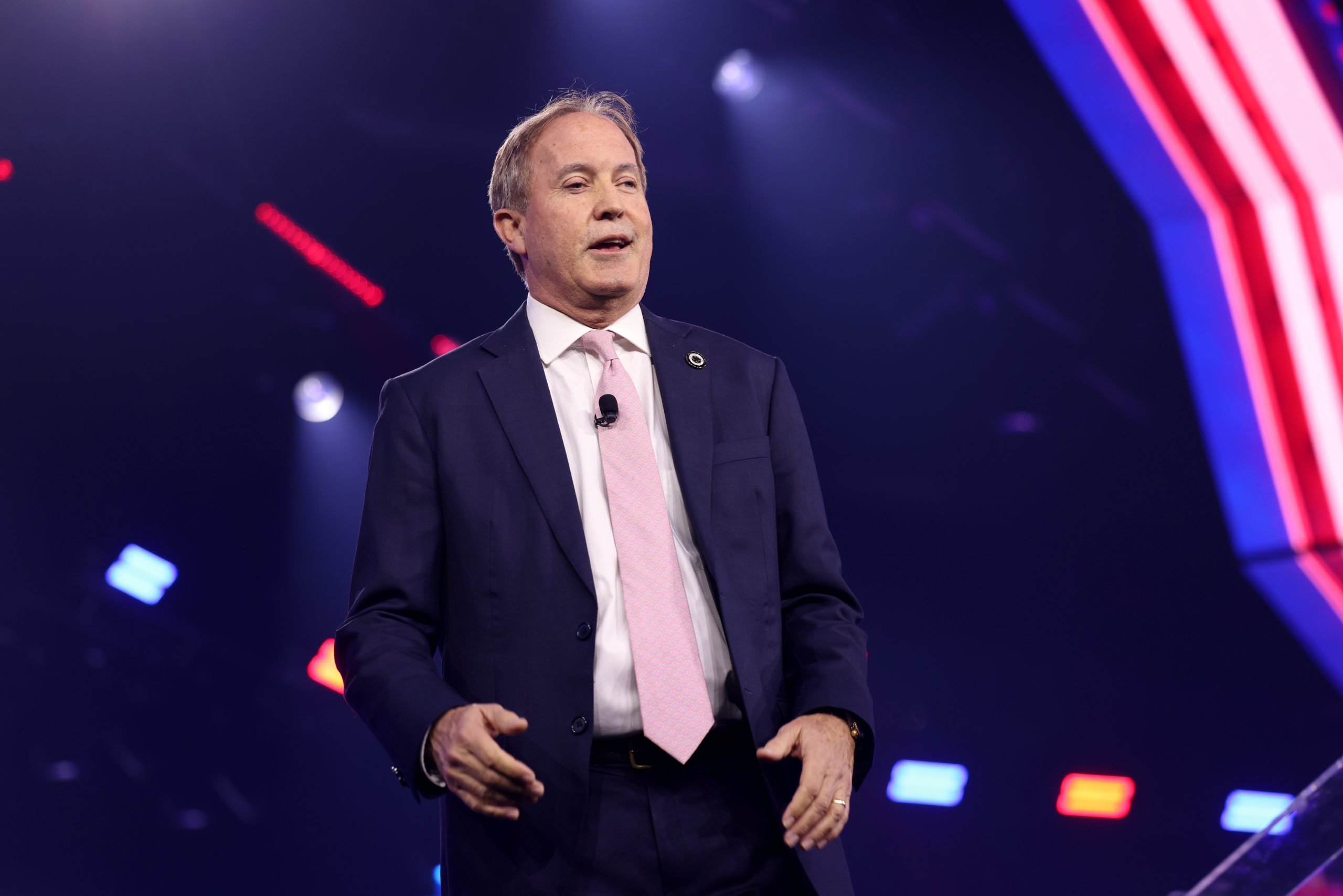
    Ken Paxton was heckled during campaign stops in Texas as he campaigns for a U.S. Senate seat, with disruptions in San Antonio and Allen drawing attention to allegations about his personal conduct. The incidents have been framed in coverage around cheating allegations, but available video and reporting confirm the disruptions more clearly than they establish every claim shouted at the events.

    For Paxton, Texas’ attorney general and a Republican Senate candidate, the confrontations matter because campaign tours are intended to showcase support. Instead, public appearances have created moments opponents and protesters can use to force difficult questions into the open.

    San Antonio stop turns tense

    The San Antonio Current reported that Paxton encountered hecklers at a Saturday appearance at the Angry Elephant, a Republican-themed bar on San Antonio’s North Side. The event was part of his Protecting the Texas Promise tour.

    According to the outlet, Paxton left the stage shortly after reporters asked difficult questions, including one concerning his real-estate holdings. It was his first campaign stop in San Antonio since late May, the San Antonio Current reported.

    Coverage described Paxton as being heckled over cheating allegations. But an allegation voiced at a campaign event is not a finding of fact, and the reporting available does not document a response from Paxton to the specific allegation referenced in that coverage.

    Allen video shows an removal

    A separate confrontation occurred at a Paxton event in Allen, Texas, on Aug. 4. USA Today reported that a woman carrying a sign for Paxton’s Democratic opponent, Texas state Rep. James Talarico, was escorted out while people in the crowd booed.

    A New York Times journalist posted video from the Allen event, USA Today reported. The woman appeared to shout in Paxton’s direction as she was removed, but USA Today said the video did not make clear what she said.

    That distinction is central to understanding the episode. The footage supports that an interruption occurred and that a Talarico supporter was removed; it does not independently verify the exact language used or connect every remark at the event to the cheating allegations mentioned elsewhere.

    What the reporting confirms

    The available accounts point to two separate moments on the campaign trail: heckling at the San Antonio stop and the removal of a Talarico supporter in Allen. Both show a more confrontational setting than campaigns generally seek at public events.

    They do not provide a complete transcript of the San Antonio exchange, a detailed account of the allegation raised there, or a documented answer from Paxton addressing that allegation. The available material also does not establish whether the events were coordinated or whether they will affect the race.

    That narrower conclusion may be less dramatic than a clipped social-media video, but it is the supported one. A short recording can capture a sharp moment without supplying the context needed to evaluate every accusation, response or audience reaction.

    A tour built for visibility

    Paxton is running against Talarico in the November general election, according to USA Today. Both candidates have scheduled tours across Texas, placing them before voters in major cities and smaller communities during a concentrated period of travel.

    Paxton’s Protecting the Texas Promise tour included planned stops in Houston, McAllen and San Antonio, USA Today reported. Talarico announced a New American Dream Tour that included Arlington, Pasadena, Port Arthur, Abilene, Killeen, Austin, Beeville, the Rio Grande Valley, Dallas-Fort Worth and Kerrville.

    Campaign tours are designed to deliver favorable images: packed rooms, familiar messages and candidates connecting with supporters. A disruption can change that calculation quickly, producing video that circulates beyond the event and requiring a campaign to choose whether to respond, dismiss the incident or characterize it as political theater.

    Why personal claims travel fast

    Allegations involving private conduct can carry unusual political force because they speak to character and trust rather than a conventional policy disagreement. They may shape perceptions even when details are disputed, incomplete or only briefly heard at a public event.

    Still, repetition does not turn an allegation into proof. Nor does the lack of an immediate answer resolve the matter. The reporting leaves open larger questions about what evidence is publicly available and whether Paxton will address the specific claims directly.

    Paxton’s supporters may view heckling as an effort to disrupt his message rather than meaningful accountability. Critics may see the incidents as evidence that questions surrounding him cannot be kept outside a controlled campaign appearance. Those views can coexist when the public record does not capture every exchange in full.

    The campaign test ahead

    Paxton is already a prominent Texas political figure because of his role as attorney general and years of political and legal controversy. That familiarity can benefit a candidate with an established base, while also giving opponents more issues to raise in public.

    For now, the verified takeaway is limited but significant: Paxton’s Senate campaign events in Texas have drawn disruptions, including reported heckling tied in coverage to cheating allegations and the removal of a Talarico supporter at a separate Allen stop.

    Whether those scenes become a recurring feature of the Senate contest remains unclear. Their lasting impact may depend on whether future events produce similar confrontations or whether voters refocus on policy, endorsements, fundraising and debates.