The 2016 death of Colin Nathaniel Scott is resurfacing because its details remain shocking. It also illustrates why Yellowstone’s beautiful thermal features are treated as dangerous terrain, not natural swimming pools.
Colin Nathaniel Scott, 23, dipped his finger into a Yellowstone hot spring near Norris Geyser Basin in Wyoming in June 2016, then accidentally fell into the pool and died. Scott and his sister had left the boardwalk in an illegal attempt to soak in Yellowstone National Park’s thermal pools; his remains dissolved in the acidic water and could not be recovered.
The story is often shared for its startling ending, but the essential fact is more practical: Yellowstone’s hot springs are not safe places to test, touch or enter. The conditions that make the park’s geothermal landscape extraordinary can turn a few steps beyond a marked path into a fatal risk.
A fatal fall off the boardwalk
Scott, an Oregon man, was visiting Yellowstone with his sister, Sable Scott, on June 7, 2016. According to accounts based on a Yellowstone incident report, the pair entered a closed or unauthorized thermal area near Norris Geyser Basin while looking for a place to “hot pot,” a term used for soaking in naturally heated water.

He reportedly leaned down to test a pool with his hand or finger, then slipped and fell in. His sister was recording on a cellphone at the time, but park officials did not release the video.
The distinction matters because this was not an accident on a maintained viewing path. It happened after the visitors moved beyond the defined boardwalk in an active geothermal zone where access restrictions were already in place.
Why recovery was not possible
Responders initially located Scott’s body in the spring but were unable to retrieve it because of a lightning storm, according to reporting by CNN and local outlet KULR. When crews returned the next day, no recoverable remains were found.
Yellowstone Deputy Chief Ranger Lorant Veress said at the time that there had been substantial dissolving in a short period. That description is the basis for headlines saying Scott “dissolved,” though it should not be detached from the official context: recovery efforts were interrupted, and the pool’s harsh conditions left nothing that could be retrieved.
The case is disturbing precisely because it is not a conventional water accident. A thermal pool can combine scalding heat, acidic water, unstable ground and limited access for rescuers.
Thermal pools are chemically extreme
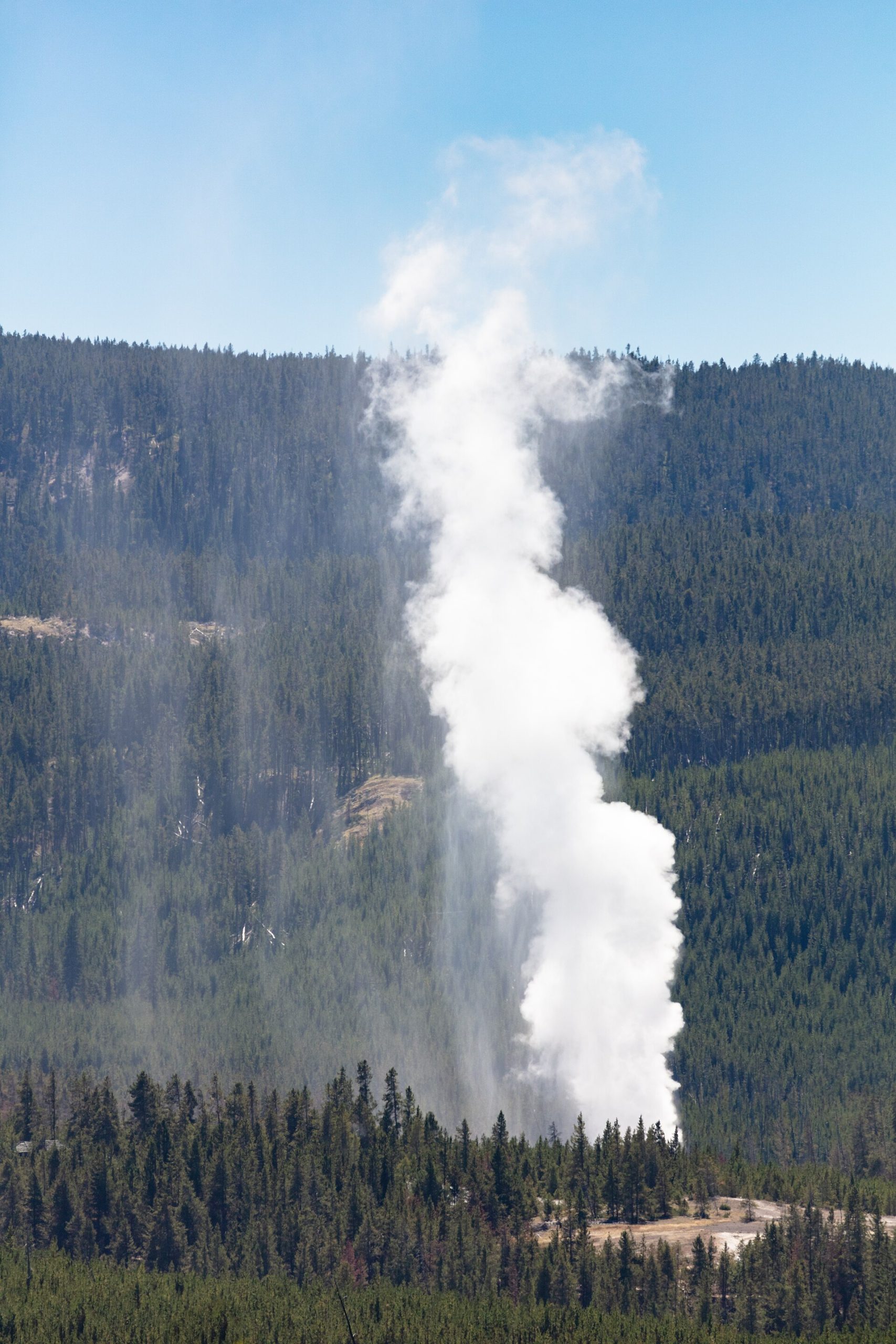
Yellowstone sits atop one of the world’s most active volcanic systems. Its geysers, fumaroles, mud pots and brilliantly colored hot springs are fed by superheated water and gases moving through rock beneath the surface.
Some springs are highly acidic. As CNN explained in its report on Scott’s death, thermal water can carry sulfuric acid produced when microorganisms break down hydrogen sulfide in surrounding rocks and soil. Conditions vary from feature to feature, which is one reason appearance is a poor guide to safety.
A pool can look calm, clear or inviting while being dangerously hot, corrosive or both. The ground around it may also be a thin crust over hot water, mud or steam. A person does not need to enter a pool for a thermal area to become hazardous.
The park’s rules are not cosmetic
Yellowstone directs visitors to stay on boardwalks and designated trails in hydrothermal areas. Those paths are not simply there to protect the landscape or improve traffic flow; they are a barrier between visitors and terrain that can fail without warning.
People sometimes frame such restrictions as a conflict between adventure and regulation. In Yellowstone’s thermal basins, the competing consideration is much less abstract: a closer look may mean stepping onto ground that cannot support a person, approaching water at unsafe temperatures or entering an area where a rescue is difficult or impossible.
Veress described Yellowstone as a wild place whose natural features have not been heavily altered to make them safer. That is central to the park’s appeal, but it also means visitors cannot assume a beautiful spot is a usable one.
Why “hot potting” carries real risks
Natural hot-water soaking may sound like a low-key outdoor activity, and in some settings it is permitted and managed. Yellowstone’s thermal features are different. They are protected geothermal resources, and entering many of them or leaving posted walkways is prohibited.
Scott’s death highlights why the term “hot potting” can soften a serious danger. The goal was reportedly to find a place to soak, but the environment was not a recreational hot spring with known temperatures, stable access and designated entry points.
- Heat: Thermal water can cause severe burns in moments.
- Acidity: Some pools contain highly acidic water capable of rapidly damaging tissue and equipment.
- Unstable surfaces: Thin mineral crusts can break beneath a person’s weight.
- Isolation: Closed areas can make an emergency response slower and more dangerous for rescuers.
A reminder, not a new incident
The case occurred in 2016, not recently, and viral versions of the story do not always make that clear. The verified core is that Scott died after falling into a Yellowstone hot spring during an unauthorized attempt to soak, and officials later could not recover his remains.
What remains unknowable is the exact sequence of movement and footing in the moments before the fall. The public record does not change the broader lesson, however: the safest way to experience Yellowstone’s thermal features is from the marked route, at the distance park staff require.
For travelers, the useful takeaway is simple. Treat every closure, warning sign and boardwalk boundary in a geothermal area as a safety instruction written for conditions that may be invisible from a few feet away.
Leave a Reply