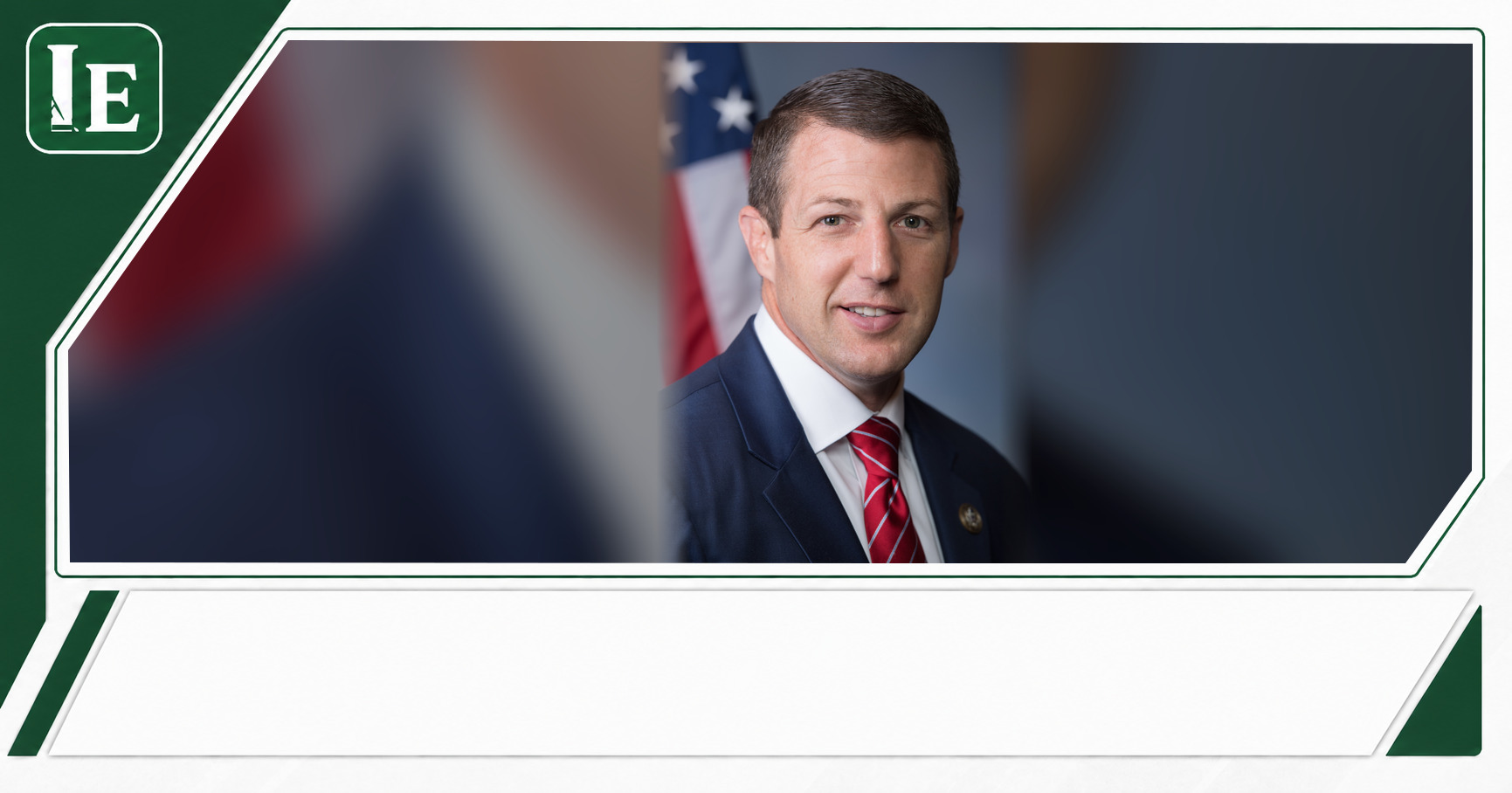
The dispute surrounding Mullin shows how aggressively parts of President Trump’s coalition are policing immigration policy from inside the administration’s own political base. An upcoming Senate decision on his ICE nominee could become the next test.
Markwayne Mullin is facing backlash from MAGA activists over his role and immigration policies at the U.S. Department of Homeland Security just 4½ months after replacing Kristi Noem as secretary. The criticism centers on Mullin’s ICE nominee, Lance Schroyer, his policy reversals and comments about immigration reform, with border czar Tom Homan emerging as a key source of tension.
For Mullin, the fight matters because the objections are coming from within President Trump’s political coalition, not from the administration’s usual opponents. The controversy also puts a spotlight on who gets to shape the direction of immigration enforcement at a department central to Trump’s agenda.
An ICE nomination draws fire
The immediate flashpoint is Mullin’s selection of Schroyer to lead U.S. Immigration and Customs Enforcement. Schroyer is a former Oklahoma state highway trooper who also served on Mullin’s security detail.

According to Axios, Homan opposes the nomination. Homan led ICE during Trump’s first term and has been a major voice on the administration’s immigration enforcement strategy.
Critics have focused on Schroyer’s limited federal immigration background. His relevant experience includes participation in a 287(g) agreement, a program through which state and local law-enforcement officers can assist ICE with certain immigration-enforcement functions.
Mullin defended the choice in an interview with Fox News, saying he conducted a two-month search and interviewed numerous candidates. He argued that Schroyer was both qualified for the job and capable of winning Senate confirmation.
Why MAGA activists are uneasy
The Schroyer dispute comes after several decisions and public comments that immigration hard-liners have interpreted as signs that Mullin is not pursuing a sufficiently uncompromising approach.
At a National Governors Association gathering in Oklahoma, Mullin spoke favorably about immigration reform. Some MAGA activists treated that language as support for amnesty for people living in the country without authorization, an interpretation Mullin’s critics used to sharpen their case against him.
Axios also reported that Mullin supported pausing ICE vehicle stops used to make arrests after fatal officer-involved shootings in Texas and Maine. Trump reversed that pause, with Homan’s support.
Separately, when Temporary Protected Status was ending for Haitians, Mullin said in a June CNN interview that affected people could seek another legal status. That suggestion prompted online outrage from activists, who noted that Haitian nationals faced barriers to ordinary application processes because Haiti was included on Trump’s travel-ban list.
The clash is about enforcement
Behind the individual disputes is a larger argument over what counts as loyalty to Trump’s immigration agenda. For activists focused on mass deportation, the measure is not simply whether the department backs enforcement, but whether it increases deportation numbers and eliminates policies they view as restraints.
Mike Howell, a former DHS attorney who leads the Mass Deportation Coalition, told Axios that Mullin had not given “true believers” confidence that deportation figures would rise. That criticism captures the core political problem: the department’s base wants measurable results and personnel choices that signal a harder line.
Supporters of Mullin can make a different case. Running Homeland Security requires managing enforcement, public safety, legal constraints and Senate-confirmable appointments. A nominee with broad law-enforcement experience, they may argue, does not need to have spent a career in federal immigration agencies to be effective.
The disagreement is also a reminder that “MAGA” is not one unified bloc. Trump’s coalition includes officials who emphasize administrative execution and confirmation politics, as well as activists and media figures who demand ideological certainty on enforcement.
Schroyer still has Senate support
Despite the vocal objections, Schroyer has backing among several Republican senators. Sen. Rick Scott of Florida told Axios that Schroyer appeared to be doing well in meetings on Capitol Hill and said a smart nominee can overcome a learning curve.
Republican Sens. Bernie Moreno of Ohio, Ron Johnson of Wisconsin, James Lankford of Oklahoma and Josh Hawley of Missouri also told Axios that Schroyer’s lack of federal immigration-enforcement experience had not dissuaded them.
That support matters because the nomination will ultimately be decided through the Senate process, not by online criticism or podcast commentary. Still, opposition from figures such as Steve Bannon can shape the political atmosphere around a nominee and create pressure on senators to scrutinize the pick more closely.
A DHS spokesperson said the department stands behind Trump’s nominee and highlighted Schroyer’s nearly 30 years of law-enforcement experience. The White House said Trump has confidence in his Cabinet to carry out the agenda voters endorsed.
The hearing date is the next test
Sen. Rand Paul of Kentucky, who chairs the Senate Homeland Security Committee, had not said when he would schedule Schroyer’s confirmation hearing. Axios reported that Schroyer met with senators from both parties before the August recess.
The timing and tenor of that hearing could reveal how far the backlash has traveled beyond activist circles. Senators may press Schroyer on his federal immigration experience, his approach to interior enforcement and his relationship with Mullin.
For Mullin, the broader question is whether he can turn the dispute into a manageable personnel fight or whether it becomes a continuing referendum on his leadership at Homeland Security. The department’s public support for Schroyer and the White House’s vote of confidence give him institutional backing, but they do not erase the political challenge from immigration hard-liners.
The takeaway: Mullin’s conflict with MAGA activists is less about one nomination than about the limits of acceptable compromise inside Trump’s immigration coalition. The Senate’s treatment of Schroyer will offer the clearest near-term measure of Mullin’s standing.
Leave a Reply