The service honored a New York soldier killed in Jordan during Iranian missile and drone attacks. The dispute over who spoke shows how public mourning can quickly become politically charged.
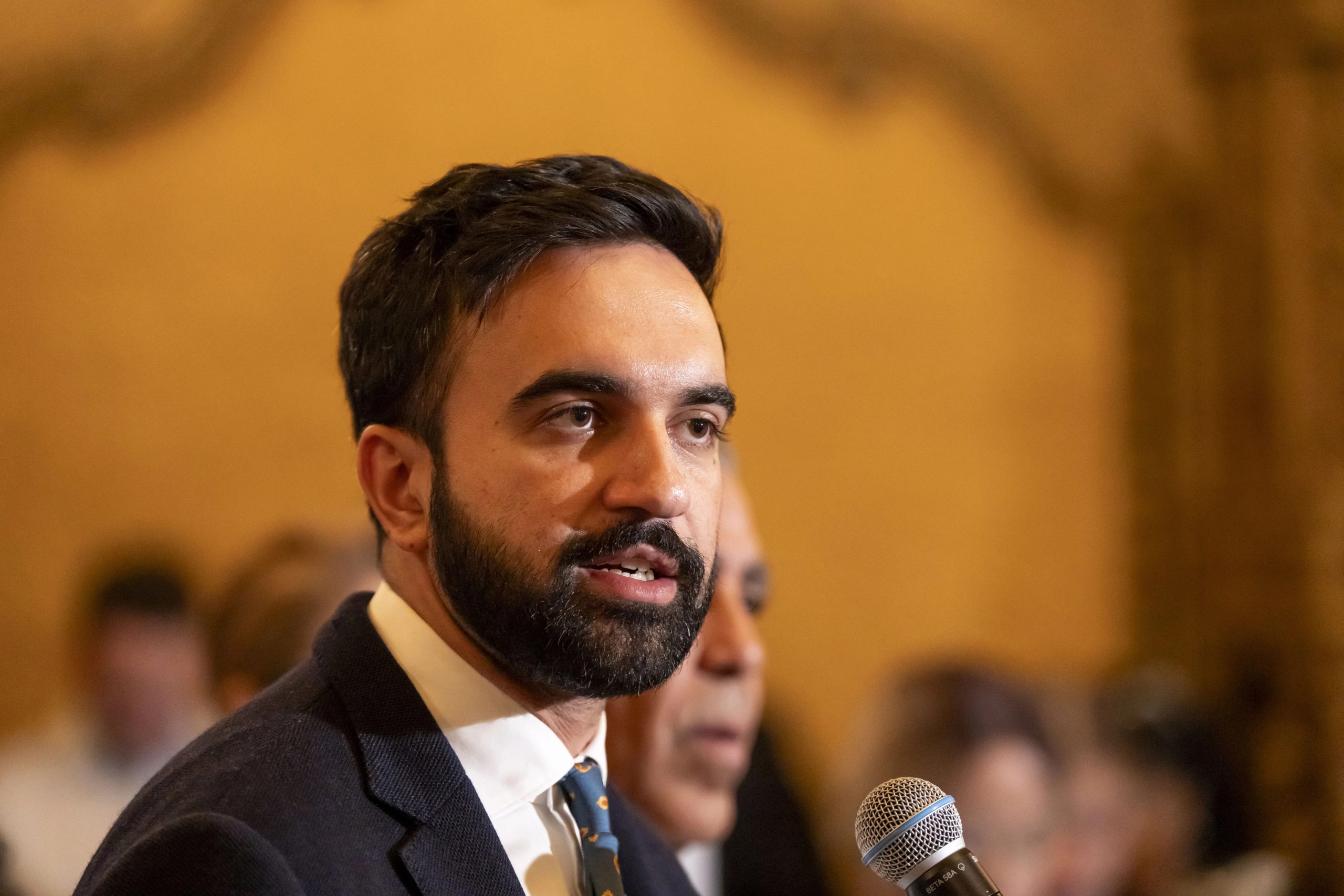
Zohran Mamdani was not called to speak at the New York City funeral for Army Sgt. Angel Sarah Rampersad, a soldier killed in an Iranian attack in Jordan on July 17. Mamdani attended the Friday service in Queens, at a church in Ozone Park, and had prepared remarks, but he was left off the speakers list, according to reports.
The decision matters because the service was both a family farewell and a public military tribute — exactly the kind of moment where grief, politics and protocol can collide.
Mamdani attended, but did not speak
Fox News Digital reported, citing the New York Post, that Mamdani appeared to review prepared remarks on an iPad while other dignitaries addressed mourners. His name was never called.
A source familiar with the funeral told the Post that Rampersad’s family chose not to have Mamdani speak because they wanted to avoid “political distractions.” That attribution is important: the reported explanation came through a source, not a public statement from the family read at the service.
Mamdani’s office later released the remarks he had planned to deliver. In them, he would have said that fallen service members “gave their tomorrows for our today,” and that Rampersad gave up birthdays, ordinary mornings and evenings with loved ones so others could remain “safe and protected.”
New York Gov. Kathy Hochul did speak at the funeral. She said that after reading about Rampersad and admiring her from a distance, the soldier felt like “one of my daughters.”
Who Sgt. Rampersad was
Rampersad was 28 and from Ozone Park, New York, according to the military information cited in the reports. Her funeral in Queens brought her death home to the city in the most personal way: not as a line in a Pentagon update, but as the loss of a daughter, neighbor and soldier.
The department identified in the reports as the Department of War said Rampersad was killed in action during an enemy attack at Muwaffaq Salti Air Base in Jordan. U.S. Central Command said she and two other U.S. service members were killed while CENTCOM and partner forces defended against Iranian ballistic missile and drone attacks.
Rampersad was assigned to the 1st Battalion, 57th Air Defense Artillery Regiment, 52d Air Defense Artillery Brigade, 10th Army Air and Missile Defense Command in Ansbach, Germany. She served as a 25U Signal Operations Support Specialist.
The attack also killed two others
Rampersad was one of three U.S. service members killed in the July 17 attack in Jordan. The other two were identified in the reports as 1st Lt. Tyler James Feehan, 25, of Ewa Beach, Hawaii, and Pvt. Isabella Gonzales, 19, of Carrollton, Texas.
All three were deployed in support of Operation Inherent Resolve, the international campaign against ISIS in Iraq and Syria. Their deaths placed a local New York funeral inside a much larger military and diplomatic context: U.S. troops operating in the Middle East, Iranian attacks on American and partner positions, and the political pressure that follows when service members are killed overseas.
That larger context helps explain why a funeral speaking role could become sensitive. For families, the priority is often the person who died. For elected officials, a military funeral can also be a public act of respect. Those two purposes can coexist, but they do not always sit comfortably together.
Why the speaking list mattered
Funeral programs are usually controlled by families, clergy and organizers, even when public officials attend. A mayor may be welcomed as a representative of the city without being given a microphone. A governor may speak because the family or organizers ask. The difference can carry meaning, but it can also reflect a family’s simple wish to control the tone of the day.
The reported explanation — avoiding political distractions — points to the central tension. Mamdani is a high-profile political figure, and his presence at a military funeral was bound to attract attention. Allowing him to speak could have shifted coverage away from Rampersad’s life and service and toward Mamdani’s record, critics and supporters.
There is another view: public officials often speak at funerals for fallen service members precisely because the community is grieving, and because the government is expected to recognize sacrifice. From that perspective, prepared remarks from the mayor of New York City would not be unusual.
But the family’s wishes are the controlling fact. If the family did not want another political figure at the podium, that choice stands on its own. A funeral is not a campaign stage, a press conference or a test of an elected official’s standing.
What remains unclear
Several details have not been fully established publicly. It is not clear who first told Mamdani or his staff that he might speak, whether he was formally expected to deliver remarks, or when organizers decided his name would not be called.
It is also unclear whether the family communicated directly with the mayor’s office or whether the decision was relayed through funeral organizers. Fox News Digital said it reached out to Mamdani’s office for comment; the reports also said his office released the prepared remarks after the service.
What is clear is that Rampersad’s funeral became the focus of attention for reasons beyond the ceremony itself. That is exactly what the reported decision was meant to prevent.
The cleanest takeaway is also the simplest: Mamdani attended the Queens funeral, but he did not speak; Rampersad’s family reportedly wanted to avoid politics intruding on the service; and the day’s central story remains the death of a 28-year-old New Yorker serving abroad.
Leave a Reply