Blog

  • Trump’s $37.5 Billion Iran War Cost Becomes ACA Coverage Flashpoint

    Trump’s $37.5 Billion Iran War Cost Becomes ACA Coverage Flashpoint

    The fight is not only about foreign policy. It is also about whether Washington treats health coverage as optional when military spending expands.

    A July 30, 2026 USA TODAY opinion column argues that Donald Trump wasted billions on Iran and that money could have kept Americans insured in the United States. The piece says, in plain terms, this was a tradeoff between war spending and health care: Defense Secretary Pete Hegseth told Congress on July 21 that five months of fighting Iran had cost $37.5 billion, while seeking another $67 billion.

    That comparison is landing because Affordable Care Act subsidies have expired, enrollment has dropped, and many households are facing higher premiums. The core question is not just whether Trump “blew billions,” but what Washington chooses to protect first when money is suddenly available for war.

    The numbers behind the argument

    The USA TODAY column centers on a stark budget contrast. Hegseth’s cited figure — $37.5 billion for five months of war with Iran — is roughly the same annual scale as the cost of extending enhanced Affordable Care Act subsidies, based on a Congressional Budget Office estimate cited in the column.

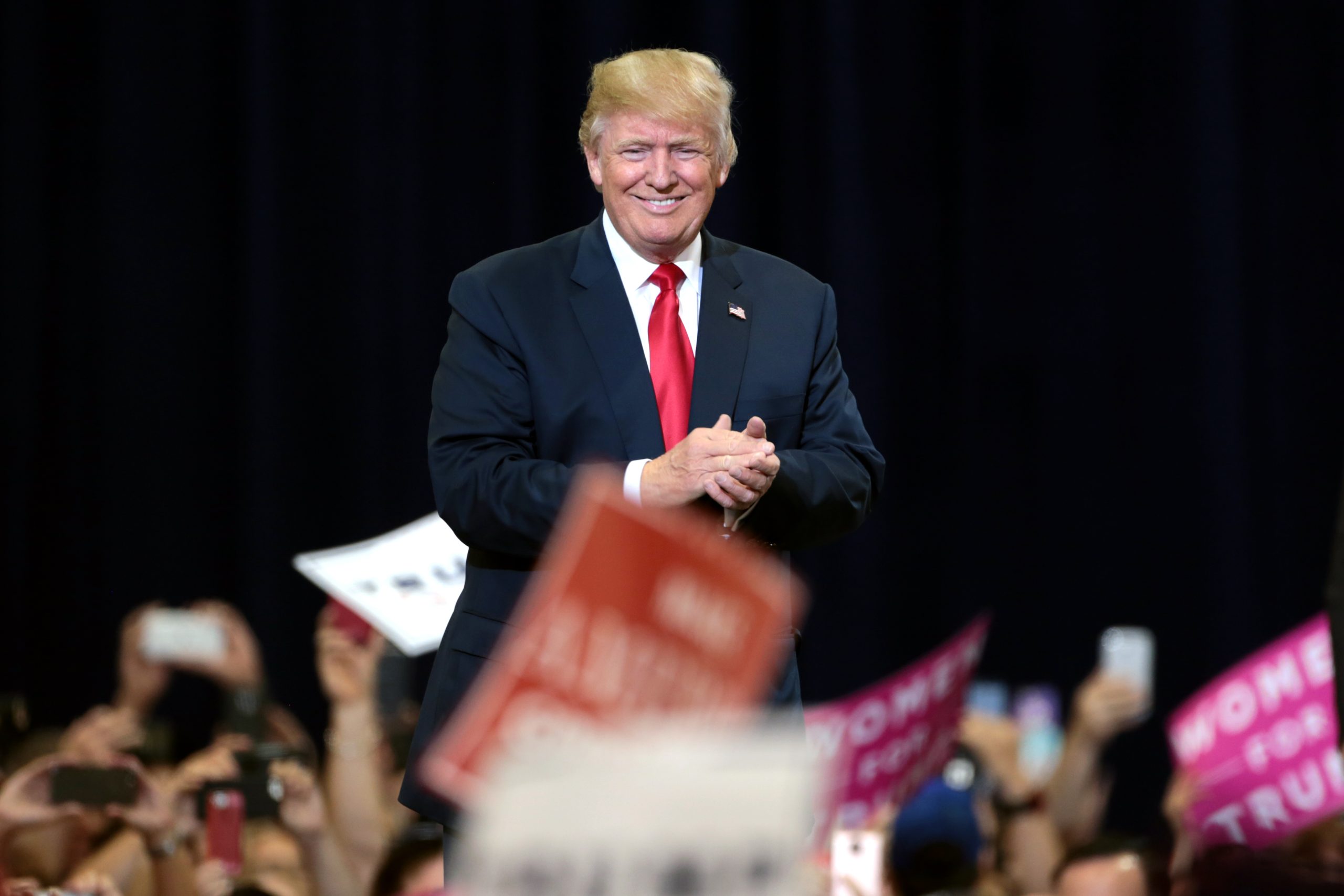
    2026 Donald Trump at the John F. Kennedy Center for the Performing Arts in Washington, D.C. on 6 January (cropped)
    Image: The White House, via Wikimedia Commons, Public domain.

    The CBO estimate said keeping those subsidies in place would increase the deficit by about $350 billion over 10 years, or about $35 billion a year. It also projected that the policy would add 3.8 million people to Obamacare enrollment.

    The column’s argument is simple and intentionally blunt: if the government could spend $37.5 billion in five months on Iran, it could have found comparable money to keep millions of people connected to health insurance for a year.

    That is an opinionated framing, not a formal budget transfer. Defense appropriations and health subsidies do not move through Washington like cash between checking accounts. Still, the comparison is politically potent because federal budgets are statements of priority, not just spreadsheets.

    ACA coverage is already shrinking

    The health care side of the argument rests on real movement in enrollment. The U.S. Department of Health and Human Services recently reported, according to the column, that Obamacare enrollment fell from 24.2 million in 2025 to 19.2 million in February.

    KFF, the health policy nonprofit, had warned that the expiration of enhanced subsidies would sharply raise costs for people buying coverage through Affordable Care Act marketplaces. The column cites KFF’s September projection that premiums for Obamacare enrollees would rise by 114% after the subsidies lapsed.

    KFF also reported July 28 that every state except New Mexico saw a year-over-year enrollment drop. That matters because the ACA marketplaces are not abstract policy machinery; they are where self-employed workers, early retirees, gig workers and people without employer coverage often shop for insurance.

    Premium shocks do not always show up as dramatic public moments. They show up when families quietly choose a cheaper plan, take on a higher deductible, or go uninsured because the monthly bill no longer fits.

    Why Iran spending became the foil

    Iran spending became the comparison point because military costs often appear in Washington with a different sense of urgency than domestic benefits. A war request can be framed as national security. A health subsidy is more likely to be framed as a cost, a deficit driver or a partisan program.

    Trump’s defenders would argue that national security obligations cannot be measured against domestic programs dollar for dollar. If Iran posed a threat to U.S. interests, they would say, the government had to respond regardless of what was happening in the ACA marketplaces.

    Critics counter that this is exactly how expensive wars escape scrutiny. Once fighting starts, the price tag can become secondary to the politics of appearing strong. Health coverage, by contrast, must repeatedly justify its existence, even when millions rely on it.

    That is the tension the column exploits. It does not need readers to believe a perfect one-to-one swap was sitting on the table. It asks why one expense was treated as necessary while another was allowed to lapse.

    Trump’s health care pitch remains thin

    The column also takes aim at Trump’s broader health care posture. It notes that Trump campaigned in 2024 on making health care more affordable, then aligned with Republicans as enhanced ACA subsidies expired at the end of 2025.

    Trump has continued to criticize Obamacare and has referred in speeches to a “great health care plan.” But the details described in the column sound more like a collection of narrower proposals than a full replacement or rescue plan for people losing marketplace affordability.

    A White House official, according to the USA TODAY piece, pointed to several bills involving health care price transparency, prescription costs and access to some over-the-counter medications. Those ideas may affect parts of the system, but they do not directly answer the premium spike created by the subsidy expiration.

    That gap is politically risky. Voters can disagree about the ACA as a brand and still be deeply sensitive to insurance bills. KFF polling cited in the column found that 61% of Americans had a favorable view of the Affordable Care Act in March, compared with 38% unfavorable.

    The politics cut both ways

    The column argues that Trump and Republicans own the consequences because they let subsidies expire while funding war. That is the cleanest political attack line, especially with health care costs rising and midterm pressure building.

    Republicans can respond that the ACA subsidies were expensive, temporary and deficit-increasing. They can also argue that Democrats are using military spending as a rhetorical device while ignoring the long-term cost of open-ended health commitments.

    There is some truth in the complexity. The federal government borrows, reallocates, delays and bundles spending decisions in ways that make any single comparison imperfect. A war bill does not automatically cancel an insurance subsidy, and an insurance subsidy does not automatically prevent military action.

    But political accountability is not only about accounting categories. When leaders approve large sums for one priority and reject large sums for another, voters are entitled to judge the choice.

    The unresolved question

    The biggest unanswered question is whether the health coverage losses are the beginning of a longer slide or a temporary reset after subsidy changes. If premiums remain high and enrollment continues to fall, the argument that Washington knowingly priced people out of coverage will gain force.

    The other question is whether Trump will offer a health care plan substantial enough to compete with the ACA rather than simply attacking it. Price transparency and prescription proposals may be popular, but they do not by themselves replace subsidies that made monthly premiums affordable.

    The Iran comparison gives the debate a sharper edge because it turns an abstract deficit fight into a household question: who gets protected when federal money is tight, and who is told to wait?

    That is why the column is resonating. It is not only an attack on Trump’s Iran policy. It is a reminder that every billion dollars Washington spends carries an opportunity cost — and for millions of Americans, that cost may now be showing up as an insurance bill they cannot pay.

  • GOP Revolt Tests Trump’s Grip and Threatens to Reshape His Agenda

    GOP Revolt Tests Trump’s Grip and Threatens to Reshape His Agenda

    The resistance is less a clean ideological break than a warning sign: Trump’s grip on the GOP is strongest when Republicans see political safety in following him. Some now see risk in doing so without changes.

    Donald Trump is facing a sudden Republican revolt, and Republican lawmakers are breaking with Trump in Congress in ways that could slow or reshape his agenda. The resistance inside the Republican Party matters now because it comes as midterm pressures build and GOP members weigh loyalty to Trump against budget concerns, local political risks and the hard math of passing bills.

    The revolt is not a single uprising with one demand. It is a series of pressure points: conservative anger over spending, swing-district anxiety over health care and taxes, and lawmakers testing how far they can push back without provoking Trump or their own voters.

    Why the break is happening

    Reuters described the dynamic as new Republican resistance in Congress as midterm pressures build, with Republican lawmakers increasingly breaking with Trump on key issues. That framing is important: this is not only about ideology. It is about timing, leverage and survival.

    Mike Johnson and David O. Sacks 2024
    Image: Office of Speaker Mike Johnson, via Wikimedia Commons, Public domain.

    When a party controls Washington, internal arguments that were once campaign slogans become legislative choices. Tax cuts have to be paid for or added to deficits. Spending reductions hit real programs. Immigration enforcement, energy policy and health care changes create winners and losers in specific districts.

    That is where Trump’s power meets congressional reality. He can define the party’s direction, but members of Congress still have to cast votes, answer local criticism and defend those votes in the next election.

    The agenda is hitting friction

    One major flashpoint has been the party’s domestic policy package, including proposals tied to Trump’s tax and budget priorities. The New York Times reported in 2025 that conservative House Republicans revolted over legislation designed to deliver Trump’s domestic agenda, threatening its path through the Budget Committee.

    The objections were not coming only from Trump skeptics. Some were from conservatives who wanted deeper and faster spending cuts. Representative Chip Roy of Texas said the House proposal failed to meet the moment and complained that key savings would not arrive until years later. Representative Ralph Norman of South Carolina also planned to oppose moving the package forward, according to the Times.

    The bill included extensions of Trump’s 2017 tax cuts and temporary versions of campaign pledges such as no tax on tips or overtime pay. It also relied on cuts to Medicaid, food stamps and clean-energy subsidies to partly offset the cost, along with more spending for the military and immigration enforcement.

    That mix created a familiar Republican problem: deficit hawks wanted more cuts, moderates feared backlash from cuts to popular programs, and lawmakers from high-tax states pushed for relief on the state and local tax deduction.

    Johnson’s narrow balancing act

    House Speaker Mike Johnson’s job is to turn that conflict into votes. The Times reported that GOP leaders were trying to satisfy hard-line conservatives demanding bigger spending reductions while protecting vulnerable members who feared being accused of gutting Medicaid or other widely used programs.

    That balancing act is especially difficult because the House Budget Committee’s role can be procedural but still decisive. If enough Republicans refuse to advance a reconciliation package, party leaders cannot simply wish the bill onto the floor.

    The dispute over Medicaid work requirements showed the problem clearly. Some conservatives wanted requirements to start sooner, arguing that delayed savings were budget gimmicks. Leaders, meanwhile, had to consider whether a tougher timeline would give Democrats a potent campaign attack against Republicans in competitive districts.

    Trump’s influence can pressure holdouts, but it does not erase the competing incentives. A member in a safe conservative district may fear a primary challenge for not cutting enough. A member in a suburban swing seat may fear a general-election defeat for cutting too much.

    This is resistance, not divorce

    There is a difference between Republican lawmakers rebelling against Trump and Republican lawmakers trying to renegotiate the terms of Trump’s agenda. Much of the current resistance appears to fall into the second category.

    Many GOP critics are not rejecting Trump’s broader goals. They are demanding different timelines, deeper cuts, more tax relief for their states or fewer political liabilities in the final bill. That makes the revolt serious, but not necessarily fatal.

    Trump still retains enormous influence with the Republican base. For many lawmakers, open defiance remains risky. The calculation is more subtle: push hard enough to change legislation, but not so hard that the fight becomes a personal break with Trump.

    That is why the word revolt can be both accurate and incomplete. The party is resisting parts of the agenda while still largely operating inside Trump’s political universe.

    The midterm pressure changes everything

    The midterms are the force underneath the current friction. Lawmakers who are safe in deeply red seats can treat the debate as a test of conservative purity. Lawmakers in more competitive districts have to worry about attack ads, town halls and whether voters connect national promises to local consequences.

    That divide can make governing messy. A bill that satisfies deficit hawks may alarm moderates. A compromise that protects vulnerable members may anger conservatives who promised to slash spending. A Trump-backed priority can still stall if enough Republicans decide the details are politically dangerous.

    The most important issues driving the resistance include:

    • Deficit concerns: Some conservatives argue tax cuts and delayed savings would add too much to the federal debt.
    • Medicaid and safety-net cuts: Vulnerable Republicans worry Democrats will portray the party as attacking health care and food assistance.
    • State and local tax relief: Republicans from states such as New York and California have pressed for changes that matter to their constituents.
    • Energy tax credits: Some lawmakers have objected to aggressive rollbacks that could affect projects or jobs in their districts.
    • Election-year risk: Members are recalculating how much political cost they are willing to absorb for a White House priority.

    What Trump risks losing

    The immediate risk for Trump is legislative delay. A small group of Republicans can force rewrites, slow committee action or demand concessions before a bill reaches the floor. In a closely divided Congress, that can be enough to change policy.

    The bigger risk is perception. Trump’s central political asset inside the GOP has long been the belief that opposing him is more dangerous than following him. If Republicans learn they can break with him on specific issues and survive, his leverage becomes more conditional.

    That does not mean Trump is losing control of the Republican Party. It means control is being tested in the place where slogans become statutory language. Congress is where personal loyalty, ideology and district politics collide.

    What remains unclear is whether this resistance hardens into a pattern or fades after negotiations. Trump and party leaders may still bring holdouts around with changes, pressure or political incentives. But the current pushback shows that even a Trump-led GOP has limits when lawmakers see their own seats, and the party’s agenda, on the line.

  • Georgia Father Who Gave Son Rifle Before School Shooting Gets 15 Years

    Georgia Father Who Gave Son Rifle Before School Shooting Gets 15 Years

    The Georgia case is part of a small but growing set of prosecutions testing when parents can be held criminally responsible for a child’s mass shooting. Prosecutors said Colin Gray was the person who could have stopped the attack.

    A father was sentenced to 15 years in prison Thursday after his teenage son carried out a school shooting at Apalachee High School in Winder, Georgia. Colin Gray, 55, was punished for his role in the 2024 attack by Colt Gray, then 16, that killed four people: two teachers and two students.

    Georgia prosecutors told the court Colin Gray was legally responsible because he gave his son the rifle used in the shooting and was, in their words reported by the BBC, “the one person who could have prevented” it.

    A 15-year sentence, not 80

    Judge Nicholas Primm handed down the sentence in Barrow County Superior Court, according to reports from the BBC and Reuters. Gray received 15 years for each second-degree murder conviction and 10 years for each involuntary manslaughter conviction, with the terms to run concurrently.

    That means Gray will serve 15 years, not a stacked sentence stretching across decades. Prosecutors had asked for the maximum punishment of 80 years in prison. The defense sought a lighter 10-year sentence.

    The result lands in the middle of a charged argument: how much prison time should a parent face when the shooter is their child, and when the parent did not personally enter the school or pull the trigger?

    The court’s answer was still severe. It treated Gray’s conduct as criminally consequential, not merely negligent parenting with tragic results.

    The shooting behind the case

    The attack at Apalachee High School, outside Atlanta, killed Christian Angulo, 14; Mason Schermerhorn, 14; Richard Aspinwall, 39; and Cristina Irimie, 53, according to the BBC. The victims included two students and two teachers.

    Colt Gray pleaded guilty to murder charges last week, the BBC reported. Reuters reported that Colt, 16, was sentenced Tuesday to life in prison without parole for the 2024 shooting.

    Investigators said the rifle used in the attack was a gift from Colin Gray. That detail became central to the father’s prosecution because it connected the parent not just to the household, but to the weapon.

    School shootings often leave courts to weigh the actions of the attacker alone. This case pushed beyond that line, asking whether a parent’s decisions before the violence can amount to criminal liability after it.

    Why prosecutors blamed the father

    Colin Gray was found guilty in March on charges stemming from the shooting, including murder and manslaughter counts, according to the BBC. Prosecutors argued that he had a unique ability to intervene before the attack.

    Their theory was blunt: the person closest to the teenage shooter, and the person accused of providing the firearm, bore legal responsibility for what followed.

    That does not mean every parent of a violent child faces prison. Prosecutors still have to prove the required mental state and link the parent’s conduct to the crime under state law. The facts of access to the weapon, warnings, knowledge and opportunity to prevent harm matter.

    Defense lawyers, by asking for 10 years instead of the prosecution’s proposed 80, appeared to accept that punishment was coming while arguing that the maximum would go too far. The judge’s concurrent sentence reflected a shorter term than prosecutors wanted, but it did not spare Gray from a long prison sentence.

    A rare kind of prosecution

    The case stands out because prosecutions of parents in school shooting cases remain uncommon. The BBC, citing CBS News, reported that Colin Gray’s prosecution marks the third time a U.S. parent has been held criminally responsible for a mass shooting carried out by their child.

    That rarity is part of why the sentence is drawing national attention. It comes after the Michigan case involving Jennifer and James Crumbley, the parents of the Oxford High School shooter, who were convicted of involuntary manslaughter in a separate prosecution that reshaped public debate over parental accountability.

    Gun safety advocates are likely to see the Gray sentence as another sign that courts may hold adults accountable when firearms are made available to minors despite apparent risks. Some legal experts, as NBC News reported, have said the conviction could signal broader legal jeopardy for parents in future cases.

    Others will worry about the outer limits. Criminal law typically punishes a person for their own acts and intent, not simply for failing as a parent. The difficult question is where reckless access to a deadly weapon becomes criminal responsibility for another person’s mass violence.

    The legal line remains unsettled

    The Gray case does not create a single national rule. State laws vary, and the facts of each case are different. A prosecution in Georgia does not automatically determine what a judge or jury would do in another state.

    Still, the pattern matters. Prosecutors are increasingly willing to examine the adults around a teenage shooter, especially when there are allegations that a parent bought, gifted or failed to secure the firearm later used in an attack.

    That raises practical questions for families, schools and law enforcement. What should happen when a child shows warning signs? When does a parent have a legal duty to remove weapons? How should authorities respond when concerns are reported before violence occurs?

    The answers remain contested. But the sentencing of Colin Gray shows that after a school shooting, the legal focus may no longer stop with the teenager who fired the weapon.

    What happens after sentencing

    Colt Gray’s life-without-parole sentence addresses the direct criminal responsibility for the killings. Colin Gray’s 15-year sentence addresses a different claim: that the father’s choices helped make the attack possible.

    For the families of Christian Angulo, Mason Schermerhorn, Richard Aspinwall and Cristina Irimie, the court proceedings cannot undo the loss. The sentencing does, however, mark one of the final major legal steps in assigning punishment after the Apalachee High School shooting.

    The broader impact will be watched beyond Winder. Prosecutors in future cases may look to Georgia as another example of how to charge adults who allegedly enable a child’s access to a weapon. Defense attorneys will study the same case for arguments about overreach, causation and fairness.

    The clean takeaway is stark: in this Georgia courtroom, a father was not treated as a bystander to his teenage son’s school shooting. He was sentenced as someone the court found bore criminal responsibility for a preventable tragedy.

  • Trump’s Iran Strikes Face 60% Voter Opposition as Midterms Near

    Trump’s Iran Strikes Face 60% Voter Opposition as Midterms Near

    Surveys from Quinnipiac and AP-NORC point to deep public skepticism about the Iran war, even as the White House argues Trump is acting to protect Americans. The numbers could complicate Republican politics before the midterms.

    Donald Trump is losing U.S. support on Iran amid renewed strikes: American support for military action against Iran has fallen sharply. On Wednesday, as Donald Trump announced renewed strikes on Iran, Quinnipiac polling showed 34 percent of registered voters backed U.S. military action and 60 percent opposed it. The White House says the president is acting to keep Americans safe. But polling shows most Americans oppose the war with Iran, making the conflict a political test in the United States as well as a military one in Iran.

    The slide matters because the administration is asking the public to accept an expanding campaign at the same time voters are worried about cost, duration and whether the U.S. is winning.

    A sharp drop in backing

    The Quinnipiac University survey, released Wednesday, found support for U.S. military action in Iran at its lowest point since the polling outlet began asking about the conflict in early March.

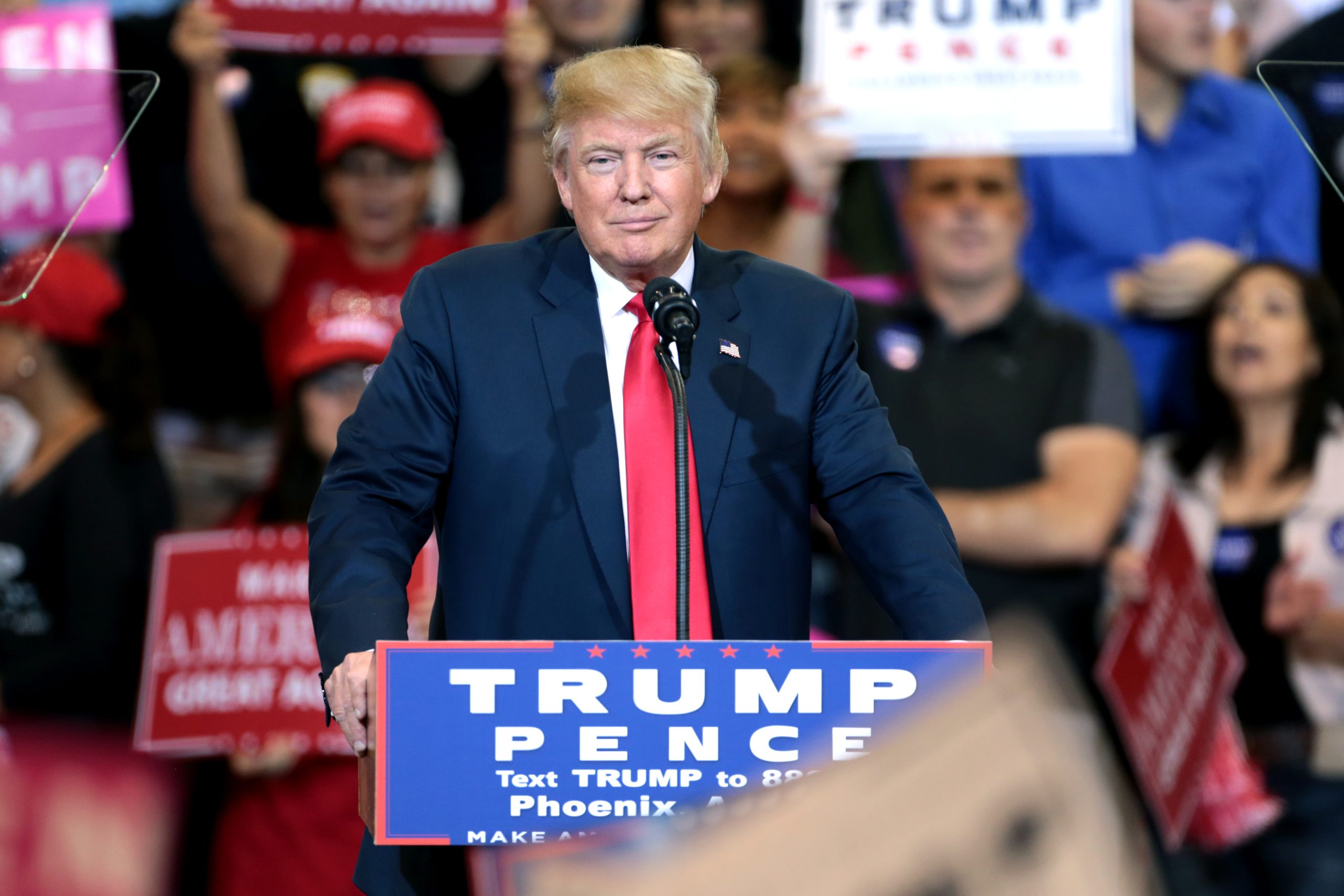
    Donald Trump Signs The Pledge
    Image: Michael Vadon, via Openverse, by-sa.

    The numbers are blunt: 34 percent support the military action, while 60 percent oppose it. Quinnipiac surveyed 963 registered voters from July 23 to July 27, with a margin of error of 4.1 percentage points.

    That finding lands after months of escalation following Trump’s February 28 announcement of Operation Epic Fury. Public opinion was never uniform, but the latest poll suggests the burden of proof has shifted against the administration. Voters are not just uneasy about a single strike package; many appear unconvinced by the larger mission.

    Quinnipiac polling analyst Tim Malloy summarized the mood plainly in the university’s release: “The pushback is evident.”

    The White House digs in

    The White House is not presenting the polling as a reason to slow down. In a statement reported by Newsweek, the administration said: “What matters most to the American people is having a Commander in Chief who takes bold action to keep them safe, which is exactly what President Trump is doing.”

    The statement added that Trump does not make national security decisions based on “fluid opinion polls,” but on what the administration sees as the best interests of the American people. The White House also pointed to Iran killing U.S. soldiers, firing at ships in the Strait of Hormuz and breaking a memorandum of understanding that had paused fighting in June.

    That is the core administration argument: presidents cannot outsource military decisions to surveys, especially when U.S. forces are under threat. It is a familiar wartime claim, and one that can resonate when voters believe a conflict is necessary, limited and winnable.

    The problem for Trump is that the available polling shows many voters do not currently accept those premises.

    Voters see a long war

    One of the most politically damaging findings is not only that voters oppose the war. It is that many expect it to drag on.

    Quinnipiac found that 55 percent of registered voters believe U.S. military action against Iran will last about a year or longer. Twenty percent said about a year, while 35 percent said longer than that.

    That marks a major shift from Quinnipiac’s April 15 poll, when 32 percent expected the conflict to last about a year or longer. A war sold as decisive becomes a much harder sell when voters begin to see it as open-ended.

    The survey also found that 54 percent of voters think the U.S. is not winning the war with Iran, compared with 36 percent who think it is. On the question of whether the war has been worth fighting, 66 percent said no and 31 percent said yes.

    Another poll points the same way

    Quinnipiac is not the only data point showing resistance. A separate Associated Press-NORC Center for Public Affairs Research poll found that 64 percent of U.S. adults believe the war was not worth fighting, compared with 33 percent who said it was.

    That AP-NORC survey was conducted July 23 to July 27 among 1,165 adults and had a margin of error of 3.7 percentage points.

    The partisan split is important. According to the AP-NORC numbers cited in the source reporting, 87 percent of Democrats, 68 percent of independents and 37 percent of Republicans said the war was not worth fighting.

    Trump’s Republican support remains stronger than his national support, but the independent numbers are dangerous for the GOP. They suggest the Iran conflict is not simply another polarized issue where each party retreats to its side. It is becoming a middle-of-the-electorate problem.

    Congress nearly drew a line

    The public backlash is now intersecting with a constitutional fight over who gets to sustain a war. The Senate narrowly rejected a bipartisan war powers resolution that would have required an end to Trump’s military operations against Iran without explicit congressional authorization.

    The measure failed 49-50, one vote short of passage. That allowed the administration’s campaign to continue, but the closeness of the vote showed real unease on Capitol Hill.

    Republican Sens. Rand Paul, Susan Collins and Lisa Murkowski broke with much of their party to support the resolution alongside Democrats. Sen. Bill Cassidy voted against it, staying with the administration’s position.

    Sen. Kirsten Gillibrand, who sponsored the measure, argued on the floor that the conflict had become an unauthorized and costly war. She accused the administration of launching action without a clear plan or coherent strategy, and warned that Iran still possessed nuclear material while gaining leverage through the Strait of Hormuz.

    Why the politics are harder now

    The renewed strikes raise the stakes because they make the war feel less like a contained exchange and more like a cycle. U.S. Central Command announced a “heavy wave” of strikes against Iran in retaliation for attempted ballistic missile attacks on American forces in Jordan, following joint U.S.-Saudi strikes targeting Iranian proxies in Iraq.

    Each step may be defended as a response to the last. To a skeptical voter, though, that can look like escalation without a visible exit.

    The timing is especially uncomfortable for Republicans. The midterm elections are fewer than 100 days away, and voters are already dealing with higher gas prices and anxiety about the broader economy. Foreign policy can dominate headlines, but economic pain often shapes ballots.

    Mark Shanahan, a U.S. politics expert at the University of Surrey, told Newsweek that Trump’s war is hurting the administration because voters see no clear objectives or exit strategy. His point cuts to the political risk: even if Trump is not on the ballot, Republican candidates are running in the shadow of his decisions.

    The unresolved question

    The administration’s strongest case is that Iran’s actions require force and that hesitation would invite more attacks on U.S. personnel and shipping. That argument cannot be dismissed, especially when American forces are involved.

    The opposing case is that the U.S. may be deepening a war that lacks clear authorization, a defined endpoint and majority public support. The latest polling gives that critique measurable weight.

    What remains unclear is whether the White House can change public opinion by showing military success, whether Congress will revisit the war powers fight, and whether Republican candidates will distance themselves from the campaign if the numbers keep worsening.

    For now, the political picture is sharper than the battlefield one: Trump is escalating in Iran while the U.S. public is moving the other way.

  • Trump’s Sub-35% Approval Has Two Clear Pressure Points

    Trump’s Sub-35% Approval Has Two Clear Pressure Points

    Three July 23-27 surveys place Donald Trump below 35 percent approval, but the sharper political problem is what sits underneath those numbers: weak public grades on Iran and the economy.

    AP-NORC, Quinnipiac University and CNN/SSRS each found Trump underwater in late July polling. Their findings use different samples and should not be blended into one master result, but together they show a president facing poll-specific lows or a matched low while voters give him poor marks on foreign policy, gas prices, inflation and the broader economy.

    The risk is the overlap

    A single weak survey can be dismissed as a snapshot. The tougher read for Trump is that the same general weakness appears across several polling operations at once.

    Donald Trump Signs The Pledge
    Image: Michael Vadon, via Openverse, by-sa.

    That does not mean every poll is measuring the same electorate in the same way. AP-NORC and CNN surveyed U.S. adults, while Quinnipiac surveyed registered voters. Question wording, timing and sample design can all move results.

    Still, all three surveys put Trump below 35 percent approval. That shared direction gives the numbers more political weight than any one topline would have on its own.

    Where the approval numbers landed

    CNN’s poll, conducted by SSRS from July 23-27, put Trump at 34 percent approval. According to CNN’s polling series, that matched the career low he last reached at the end of his first term.

    Quinnipiac University’s national poll, fielded July 23-27, found 32 percent of registered voters approved of Trump’s job performance, while 58 percent disapproved. Quinnipiac polling analyst Tim Malloy said it was Trump’s lowest approval rating ever recorded in a Quinnipiac poll across both of his terms.

    AP-NORC, also polling July 23-27, found 33 percent of U.S. adults approved of Trump’s job performance and 66 percent disapproved. That marked his lowest approval rating in AP-NORC polling since the start of his second term.

    Iran is a major drag

    The Iran numbers are especially weak across the surveys. In the CNN poll, 28 percent approved of Trump’s handling of the situation in Iran. About a quarter of respondents said he had a clear plan for the conflict, down from 40 percent at the start of the war, and 62 percent said he was not an effective world leader.

    Quinnipiac found 28 percent of voters approved of Trump’s handling of Iran, while 66 percent disapproved. Its poll also found 34 percent supported U.S. military action against Iran, with 60 percent opposed.

    AP-NORC measured Trump’s Iran approval at 28 percent, with 69 percent disapproving. Its survey found Americans split over the next step, with some favoring continued military action, some wanting it stopped and others preferring a pause while negotiators sought a renewed ceasefire.

    The economy is not helping

    Trump’s economic ratings are also low. In the CNN/SSRS poll, 30 percent approved of his handling of the economy and 70 percent disapproved. His approval on gas prices was 21 percent, and his approval on inflation was 25 percent. Nearly three-quarters of respondents said rising gas prices had caused them at least some hardship.

    Quinnipiac found 34 percent approved of Trump’s handling of the economy, while 62 percent disapproved. A majority of voters described the economy as not so good or poor, and 59 percent said it was getting worse.

    Malloy framed the finding in familiar campaign terms: the answer to whether voters are better off than they were a year ago, he said, comes back as “no.” AP-NORC also found Trump underwater on the economy, with 30 percent approval and 69 percent disapproval.

    How to read the low-point claims

    The phrase “all-time low” needs precision here. These are poll-specific benchmarks, not a single universal record across every survey ever conducted.

    For AP-NORC, the 33 percent mark is the lowest Trump has recorded in that polling since the start of his second term. For Quinnipiac, Malloy described the 32 percent result as Trump’s lowest approval rating ever in the university’s polling across both terms. For CNN, the 34 percent result matched a career low in its polling series.

    Those distinctions matter because different pollsters use different methods. The broader takeaway is not that every survey is identical, but that several separate measures are pointing to a weak position at the same time.

    The midterm signal is early, not final

    Approval ratings are not election results. They are snapshots, and each poll has a margin of error. But sustained approval below 40 percent can be politically damaging if it persists into a midterm environment.

    The historical comparison is one reason the new numbers will get attention. At a similar point in his first term, Trump’s approval was around 40 percent in Gallup polling before Democrats gained 41 House seats in the 2018 midterms.

    History does not repeat mechanically, and foreign policy crises, gas prices and economic perceptions can change. For now, the clearest message from the July surveys is narrower but significant: Trump is below 35 percent in three major polls, with his weakest issue terrain clustered around Iran and household costs.

  • Epstein ‘Flag List’ of Big Names Fuels Fight Over Missing DOJ Files

    Epstein ‘Flag List’ of Big Names Fuels Fight Over Missing DOJ Files

    The dispute is less about one explosive list than about public trust: what was released, what stayed hidden, and who made those calls. DOJ says the omissions were lawful; critics say the records leave too many gaps.

    The DOJ rushed to shut down the Epstein case, according to the allegation now drawing attention after new documents surfaced a “flag list” of big names tied to Jeffrey Epstein records. The Department of Justice’s handling matters now because recent reporting on the Epstein files describes internal FBI and DOJ materials, missing pages and official denials over whether politically sensitive records were withheld.

    The “Scrambling DOJ rushed” frame is a blunt shorthand for a narrower but serious question: did officials move too quickly to close the public controversy while records involving prominent people remained incomplete, redacted or absent?

    A list made the fight bigger

    The phrase “flag list” has become the latest flashpoint in the long-running battle over the Epstein files. According to NPR’s investigation, internal records included a PowerPoint slide deck describing “prominent names” in the Epstein and Ghislaine Maxwell investigations.

    Department of Justice Federal Bureau of Investigation
    Image: sillygwailo, via Flickr, CC BY 2.0.

    NPR reported that the material drew from FBI National Threat Operations Center information and included numerous allegations, many of which agents marked as unverifiable or not credible. That distinction matters. A person appearing in an internal file, lead list or allegation summary is not proof of wrongdoing.

    Still, the existence of a prominent-names review changes the political stakes. The Epstein case has always generated suspicion because it involved wealth, influence, sex trafficking and powerful social circles. Any sign that names were tracked internally but not fully disclosed publicly invites scrutiny over who saw what, when, and why some records did not appear in the public database.

    What the missing-records claim says

    NPR reported that the Justice Department removed or withheld some Epstein files related to allegations involving President Donald Trump. The outlet said its review found files that appeared to be catalogued by DOJ but not shared publicly, including what seemed to be more than 50 pages of FBI interviews and notes tied to a woman who made an allegation dating back decades.

    The allegation, as described in NPR’s report, is unproven and has been denied by Trump’s side. NPR said it does not name victims of sexual abuse, and neither should responsible coverage of the records unless a survivor has chosen to be publicly identified.

    In the documents NPR reviewed, one lead involving that woman was reportedly sent to the FBI’s Washington office for the purpose of setting up an interview. NPR also reported that the specific allegation appeared only in copies of an FBI list of claims and a DOJ slideshow among more than 3 million pages released in recent months.

    That leaves two possibilities at the center of the dispute. DOJ may have withheld or removed records for legitimate legal reasons. Or the omissions may reflect a transparency failure in a case where Congress and the public expected a fuller accounting.

    DOJ denies political filtering

    The Justice Department has rejected the idea that records were withheld to protect reputations or avoid embarrassment. NPR reported that DOJ spokeswoman Natalie Baldassarre said any unpublished documents were privileged, duplicates or related to an ongoing federal investigation.

    Attorney General Pam Bondi and Deputy Attorney General Todd Blanche also addressed the broader issue in a Feb. 14 letter to members of Congress, according to NPR. They wrote that no records were withheld or redacted “on the basis of embarrassment, reputational harm, or political sensitivity,” including sensitivity involving government officials, public figures or foreign dignitaries.

    That denial is central to DOJ’s defense. Agencies routinely withhold records for reasons that can be legitimate: protecting victims, preserving ongoing investigations, avoiding duplicate releases, honoring court orders, or shielding privileged material.

    The problem for DOJ is that the Epstein matter is not an ordinary document release. The public was promised transparency after years of sealed records, conspiracy theories and official missteps. In that environment, even a defensible withholding decision can look suspect if the paper trail is hard to follow.

    Trump response adds politics

    The White House has dismissed the allegations involving Trump. NPR reported that spokeswoman Abigail Jackson said Trump “has done more for Epstein’s victims than anyone before him,” citing the release of thousands of pages of documents, cooperation with a House Oversight Committee subpoena request, the Epstein Files Transparency Act and calls for more investigations into Epstein’s Democratic connections.

    The White House has also pointed to a Justice Department statement describing some Epstein-file claims about the president as “untrue and sensationalist,” according to NPR.

    That political response shows why the document fight is so volatile. Democrats are pressing DOJ over withheld materials. Republicans and Trump allies argue that the file releases have been weaponized to revive unverified allegations. Victims and their advocates, meanwhile, have a different concern: whether the government’s process is protecting survivors while still revealing how Epstein and his associates operated for so long.

    Ghislaine Maxwell’s name adds another layer. Maxwell, Epstein’s convicted co-conspirator, is serving a 20-year sentence for sex trafficking. NPR reported that some documents connected to a separate woman who was a key witness in Maxwell’s criminal trial were removed from public view for a period, with some later restored and others remaining hidden.

    Why timing is under scrutiny

    The phrase “rushed to shut down” captures the suspicion that DOJ was trying to end the Epstein controversy before the records problem fully surfaced. The available reporting does not, by itself, prove an improper motive. It does show a sequence that critics consider troubling: large-scale file releases, gaps spotted through serial numbers and metadata, then official explanations that some material was privileged, duplicative or investigative.

    Rep. Robert Garcia of California, the ranking Democrat on the House Oversight Committee, escalated the issue after NPR’s reporting. NPR said Garcia stated that Oversight Democrats had reviewed unredacted evidence logs at DOJ and believed the department appeared to have illegally withheld FBI interviews with the survivor who accused Trump.

    That claim is significant, but it is also a claim from a political actor in an active oversight fight. DOJ’s legal rationale has not been fully tested in public, and the underlying unredacted logs have not all been made available for independent review.

    For readers trying to separate signal from noise, the key is not whether a big name appears in a file. The key is whether the government followed the law in deciding what to release, whether those decisions were documented, and whether Congress can verify the explanation.

    What remains unanswered

    The Epstein records dispute now turns on a few concrete questions. They are procedural, but they matter more than the slogans.

    • Which specific pages were withheld, removed or restored, and on what dates?
    • Which exemptions or privileges did DOJ apply to each withheld record?
    • Who approved the release decisions involving records tied to prominent names?
    • Did the same standards apply to all public figures mentioned in the files?
    • Can congressional reviewers compare the public database with DOJ’s internal logs?

    Until those questions are answered, the “flag list” will keep functioning as a symbol for a larger mistrust. DOJ says it did not shield powerful people. Critics say the gaps are too specific and too sensitive to accept on faith.

    The clean takeaway is this: the newly surfaced documents do not make every allegation in the Epstein files true. They do make the Justice Department’s release process a legitimate story. In a case built around exploitation, influence and secrecy, the government’s explanation has to be more than “trust us.”

  • ABC Accuses Trump’s FCC of Threatening Licenses in The View Fight

    ABC Accuses Trump’s FCC of Threatening Licenses in The View Fight

    The dispute turns on equal-time rules, broadcast licenses and whether federal oversight is being used to police political speech. ABC says the pressure could chill broadcasters well beyond one daytime talk show.

    ABC accuses the Trump administration’s FCC of trying to censor the broader media industry, saying in a Federal Communications Commission filing this week that pressure over The View threatens free speech and broadcast licenses. Reported Thursday, the clash centers on Donald Trump’s FCC and an equal-time inquiry into the Disney-owned network’s talk show; no April order is identified in the reporting reviewed here.

    ABC says the FCC’s actions amount to retaliation and coercion against broadcasters, while the agency says it is reviewing whether The View qualifies as bona fide news. The stakes are immediate: licensing power can chill broadcast networks before any penalty arrives.

    ABC widens the fight

    ABC’s filing, submitted through Disney-owned station KTRK-TV in Houston, argues that the FCC has moved beyond routine oversight and into a confrontation with protected editorial judgment.

    ABC 77 W66 jeh
    Image: Jim.henderson, via Wikimedia Commons, Public domain.

    According to NBC News, ABC told the FCC that the agency’s order requiring a formal petition was “unprecedented,” “beyond the Commission’s authority” and likely to chill political discussion. The network said the dispute is not only about The View, but about whether regulators can pressure broadcasters over viewpoints the administration dislikes.

    That framing is the core of ABC’s argument. The network is not merely asking the FCC to resolve a technical question about election rules. It is accusing the government of using process itself as punishment.

    The View is the trigger

    The FCC inquiry stems from an appearance by James Talarico, who was then running for the Democratic nomination for U.S. Senate in Texas, on The View. The question is whether that appearance implicated the federal equal-time rule, which generally requires broadcast stations to give comparable access to legally qualified candidates for the same office.

    ABC says The View falls under a long-recognized exemption for bona fide news programming. The network told the FCC that the show has operated under that exemption for more than two decades and that its status has not previously been disputed.

    That matters because the equal-time rule is not supposed to turn news interviews, political panels or editorial programming into mandatory campaign airtime. If the FCC treats a political guest segment on a news-adjacent talk show as a potential violation, broadcasters may have to rethink how they book candidates and discuss campaigns.

    Licenses raise the stakes

    ABC’s concern sharpened after the FCC announced an early review of eight ABC-owned broadcast licenses, including stations in Los Angeles and New York, according to NBC News. Broadcast licenses are the pressure point that makes this fight bigger than one segment on daytime television.

    Networks do not simply publish in the same way a website does. Local broadcast stations operate on public airwaves under federal licenses, and the FCC has authority over those licenses. That authority gives the agency leverage, even when no fine has been issued and no license has been revoked.

    ABC’s filing warns that using licensing scrutiny in the middle of a content dispute can create a chilling effect. A station does not have to lose a license to become more cautious. The threat of costly proceedings, uncertain standards and political scrutiny can shape decisions before the public sees the result.

    The FCC’s stated position

    The FCC has presented the matter differently. In a statement reported by NBC News, the agency said the equal-time law “encourages more speech and empowers voters to decide the outcome of elections.” The FCC said it would review Disney’s claim that The View is exempt as a bona fide news program.

    FCC Chairman Brendan Carr, appointed by President Trump, previously told reporters that the agency had “an enforcement action underway” involving The View. On the separate license review, Carr has said the review is connected to Disney’s diversity, equity and inclusion practices, not speech.

    That distinction is central to the government’s defense. If the FCC is applying election law or reviewing corporate practices within its jurisdiction, it can argue it is doing oversight, not censorship. ABC’s answer is that the sequence and targets of the agency’s actions suggest something more selective.

    ABC alleges selective pressure

    ABC’s filing points to what it calls unequal treatment. The network says the FCC has scrutinized The View while not opening similar inquiries into conservative talk shows hosted by Trump allies such as Mark Levin and Glenn Beck, according to NBC News.

    The network argues that this disparity raises concerns about viewpoint discrimination and retaliatory targeting. In plain terms: ABC says regulators are not neutrally applying a rule, but singling out programming associated with criticism of Trump and his administration.

    The politics around The View make that claim especially charged. Hosts including Whoopi Goldberg and Joy Behar have often criticized Trump. Trump has publicly criticized them in return. ABC is now trying to turn that public hostility into part of a legal and regulatory argument about motive.

    What remains unresolved

    The FCC still has to decide how it will treat ABC’s petition and whether The View remains clearly protected by the bona fide news exemption. It also remains to be seen whether the license review produces any formal findings or becomes part of a broader fight over federal leverage against media companies.

    The dispute has already drawn a sharp response inside the FCC. Anna M. Gomez, the lone Democratic commissioner on the three-member panel, praised Disney for “choosing courage over capitulation” and warned that the public would remember who complied and who fought back.

    The unanswered question is whether this becomes a narrow ruling about one program’s classification or a precedent-setting clash over broadcast independence. ABC wants the FCC to say that political disagreement cannot justify regulatory pressure. The FCC says it is enforcing rules meant to support voter access and fair treatment.

    For viewers, the immediate fight may look like another Washington-media feud. For broadcasters, it is more concrete: if the government can make license reviews and enforcement inquiries follow controversial commentary, the safest programming choice may become silence. That is the chilling effect ABC is trying to put at the center of the case.

  • Giuffre Family Turns Epstein Credibility Fight Back on Former Obama Counsel Kathy Ruemmler

    Giuffre Family Turns Epstein Credibility Fight Back on Former Obama Counsel Kathy Ruemmler

    The dispute puts a former Obama White House counsel’s judgment under scrutiny as Congress examines her contacts with Jeffrey Epstein. It also shows why survivor credibility remains one of the most contested parts of the Epstein fallout.

    Virginia Roberts Giuffre’s family is criticizing Kathy Ruemmler, the former Obama White House counsel, after Ruemmler said Giuffre’s abuse allegations lacked inherent credibility. The comments were tied to a House panel interview about Ruemmler’s connections to Jeffrey Epstein, and the transcript became public Wednesday.

    The clash matters because it is not only about one phrase in testimony. It is about who gets believed in the long aftermath of Epstein’s abuse network, and how powerful lawyers explain past contact with him.

    A credibility fight goes public

    Ruemmler told the House Oversight Committee that she did not know whether Giuffre was a victim of Epstein and Ghislaine Maxwell, according to CNN’s account of the transcript. She added that if Giuffre said she was, Ruemmler did not have a reason to doubt that generally.

    Then Ruemmler drew a sharper line. She said certain allegations Giuffre made were, in her view as a former prosecutor and defense counsel, of a nature that they lacked inherent credibility.

    That distinction did not satisfy Giuffre’s family. Sky and Amanda Roberts, Giuffre’s brother and sister-in-law, said in a statement to CNN that the person who lacked credibility was Ruemmler, accusing her of trying to persuade the public that she did not know Epstein was actively engaged in sex trafficking.

    The family also called Ruemmler’s attempt to cast doubt on Virginia reprehensible, pointing to Giuffre’s public role in encouraging other survivors to come forward.

    Why the family objected

    For Giuffre’s relatives, Ruemmler’s testimony landed as more than legal analysis. It read as a powerful attorney questioning a survivor whose allegations helped keep Epstein and his circle in public view for years.

    Giuffre, one of Epstein’s most prominent accusers, publicly alleged in 2019 that Epstein trafficked her and forced her to have sex with his friends, including Prince Andrew, now Andrew Mountbatten-Windsor, when she was 17. Andrew has repeatedly denied the allegations.

    The family’s statement also accused Ruemmler of benefiting while girls and young women suffered, a claim Ruemmler’s side would strongly dispute. That accusation goes to the emotional core of the fight: whether elite professionals around Epstein were naïve, careless, willfully blind or unfairly judged with hindsight.

    Ruemmler’s representatives pushed back before the family statement was issued. A public relations representative, Jami Schlicher, told CNN that Ruemmler was not broadly dismissing Giuffre’s allegations and was responding to specific claims she believed had not been substantiated.

    Ruemmler’s defense and regrets

    Ruemmler’s side has emphasized that she told the committee she had no knowledge of Epstein’s ongoing criminal activity. Jennifer Connelly, a spokesperson for Ruemmler, told CNN there was not a shred of evidence suggesting otherwise.

    Connelly also said Ruemmler would never turn a blind eye to criminal activity and would have acted if she had seen or heard anything indicating Epstein was harming women or girls.

    Ruemmler told the House panel she now regrets interacting with Epstein and considers it a mistake, according to CNN. That admission is significant, but it does not end the scrutiny because congressional investigators appear focused on the nature, timing and tone of her communications with him.

    Ruemmler is not just any lawyer in this story. She served as White House counsel under President Barack Obama and later held a senior legal post at Goldman Sachs, giving her decisions and associations a level of public significance far beyond a private acquaintance.

    Emails sharpen the scrutiny

    Investigators questioned Ruemmler about a September 2015 email in which she wrote that she wanted to think about whether any counterclaims could be brought against VR, an apparent reference to Virginia Roberts Giuffre, according to the transcript described by CNN.

    At the time, Giuffre had sued Maxwell for defamation after Maxwell called her abuse allegations against Maxwell and Epstein obvious lies. Ruemmler told investigators she had no memory of the email and said she was responding in a generic way to Epstein’s request for her views.

    The committee also asked about a February 2016 email exchange in which Epstein referred to a day of joy and Ruemmler responded with a line about the best massage ever, but not your kind of massage. The question matters because some Epstein victims were initially recruited to provide massages.

    Ruemmler said Epstein had gifted her a spa visit at the Peninsula Hotel in New York City and described her email as an offhanded joke about Epstein’s prior criminal history. She told investigators that, sitting in 2026, the joke was in extraordinarily poor taste.

    Goldman role adds pressure

    Ruemmler’s Epstein ties had already created professional fallout before this transcript became public. CNN reported that she announced in February she would resign as Goldman Sachs’ chief legal officer after stories detailed her connections to Epstein, including reporting from CNN’s KFile.

    She had been expected to leave by the end of June, but Goldman Sachs CEO David Solomon asked her to stay on as an adviser until a successor was named, according to CNN. The bank declined to comment to CNN.

    That timeline gives the House transcript added force. It places Ruemmler’s explanation of her Epstein contacts alongside her recent exit from one of Wall Street’s most prominent legal jobs.

    For critics, the emails show poor judgment by someone who should have understood the risks of proximity to Epstein. For Ruemmler’s defenders, the key question is whether any evidence shows knowledge of ongoing crimes, not whether old messages now look indefensible.

    The unresolved Epstein question

    The Ruemmler-Giuffre dispute fits a larger pattern in the Epstein aftermath: survivors and families continue to demand accountability not only from direct perpetrators, but from institutions and advisers who orbited Epstein after his criminal history was known.

    That demand often collides with a narrower legal defense. Lawyers and executives facing scrutiny tend to focus on what they knew, what they did not know, and whether there is proof tying them to criminal conduct.

    Both frames matter, but they answer different questions. Legal culpability is not the same as moral judgment, and bad judgment is not automatically evidence of a crime.

    What remains unclear is how much more the House Oversight Committee will release and whether Ruemmler’s testimony will lead to new findings. For now, Giuffre’s family has made its position plain: they see Ruemmler’s credibility comments as an attack on Virginia, and they are answering by turning the credibility question back on Ruemmler herself.

  • Fauci Hearing Video Fuels Five Deception Claims Body Language Can’t Prove

    Fauci Hearing Video Fuels Five Deception Claims Body Language Can’t Prove

    The clip-friendly analysis is drawing attention because Fauci’s COVID-era testimony remains politically charged. But body-language reads are interpretation, not evidence on their own.

    A body language expert says Dr. Anthony Fauci showed five signs of deception during a June 3, 2024 hearing before the House Oversight and Accountability Select Subcommittee on the Coronavirus Pandemic. The article describes the specific body language cues the expert identified, including facial tension, eye behavior, pauses or verbal hedging, self-soothing gestures, and posture shifts.

    The claim matters now because Fauci’s behavior and demeanor during the hearing are being recirculated as political shorthand for whether the former NIAID director was candid about COVID-era decisions. The official record shows a congressional hearing; the body-language read is an interpretation layered on top of it.

    The claim getting attention

    The viral framing is simple: a body-language specialist watched Fauci testify and identified five alleged signals of deception. That does not mean a court, Congress, or a scientific panel found Fauci deceptive. It means an outside observer interpreted his movements, expressions and speech patterns that way.

    Rayburn House Office Building 2
    Image: dconvertini, via Wikimedia Commons, CC BY-SA 2.0.

    The five cues being discussed fall into familiar categories used in body-language commentary:

    • Facial tension, such as a tight mouth or strained expression during difficult questioning.
    • Eye behavior, including changes in gaze, blinking or looking away at key moments.
    • Pauses and verbal hedging, where hesitation is treated as possible discomfort or evasion.
    • Self-soothing gestures, such as touching the face, adjusting posture or making small repetitive movements.
    • Posture changes, including leaning back, stiffening or shifting when challenged.

    Those cues can be compelling on video because they give viewers something concrete to watch. They also invite overconfidence. Stress, fatigue, anger, hearing-room pressure, camera awareness and age can all produce the same outward behaviors that commentators sometimes label suspicious.

    What the hearing actually was

    According to Congress.gov, the hearing was formally titled A Hearing with Dr. Anthony Fauci. It took place at 10 a.m. local time on June 3, 2024, in room 2154 of the Rayburn House Office Building in Washington, D.C.

    Fauci appeared as a witness before the House Oversight and Accountability Committee’s Select Subcommittee on the Coronavirus Pandemic. Congress.gov identifies him as the former director of the National Institute of Allergy and Infectious Diseases.

    The hearing record says lawmakers were examining the COVID-19 pandemic and lessons for future pandemic preparation. That broad mandate put Fauci back at the center of disputes over public-health guidance, government credibility, research funding and the political fallout from pandemic restrictions.

    That setting matters. A congressional hearing is not a neutral interview room. It is adversarial, televised and designed for questioning that can be as performative as it is investigative.

    Why demeanor became the story

    Fauci remains one of the most recognizable figures of the pandemic. To supporters, he represents scientific expertise under pressure. To critics, he represents the public-health establishment that they believe overreached, misled the public or resisted scrutiny.

    That divide makes body-language clips unusually potent. A raised eyebrow, a long pause or a clipped answer can be framed as proof of confidence by one side and proof of deception by another.

    Video also travels differently from transcripts. A transcript records words. A clip lets viewers judge tone, facial movement, posture and timing. That gives audiences the feeling that they are seeing something hidden, even when the interpretation is subjective.

    For mobile readers scrolling through politics feeds, the hook is obvious: five visual cues are easier to digest than hours of testimony about pandemic policy. The risk is that the shortcut can replace the substance.

    What science says about deception cues

    Decades of deception research are far more cautious than viral body-language analysis. A major 2003 meta-analysis in Psychological Bulletin found that many popular cues people associate with lying are weak, inconsistent or highly context-dependent.

    Researchers in deception detection often warn that there is no single reliable “tell.” People may avoid eye contact when anxious, but they may also maintain eye contact when trying to appear credible. A pause can signal deception, but it can also signal careful recall, irritation, confusion or an attempt to answer precisely.

    That does not make nonverbal behavior meaningless. Demeanor can help identify moments of stress or discomfort. It can suggest when a follow-up question might be useful. It cannot, by itself, establish that a witness lied.

    This is especially important in a hearing about complex events. Whether an answer was accurate depends on documents, timelines, definitions and sworn testimony — not just whether the witness looked tense while giving it.

    The political stakes underneath

    The body-language claim lands in a much larger fight over pandemic accountability. Republicans on the House panel pressed Fauci and other officials over COVID origins, federal messaging, masking guidance, vaccine-era mandates and National Institutes of Health oversight. Democrats often argued that the hearings risked turning public-health review into political blame.

    Fauci has long defended his public role by saying guidance changed as evidence changed. Critics have argued that some of those shifts damaged public trust and that officials were too dismissive of dissenting views early in the pandemic.

    That is the real dispute beneath the viral clip: not just whether Fauci looked uncomfortable, but whether the government earned the public’s trust during a crisis and whether Congress has produced a clearer account of what went wrong.

    Body-language analysis can intensify that debate. It gives critics a vivid frame and gives defenders a chance to argue that opponents are focusing on theater instead of evidence.

    What remains unresolved

    The key unresolved issue is not whether Fauci shifted in his chair or paused before answering. It is whether the underlying claims about his testimony are supported by the hearing record and related documents.

    It is also unclear how much weight viewers should give to the expert’s method without knowing the full baseline used for comparison. Serious behavioral analysis usually requires context: how a person normally speaks, whether they were tired or under stress, what question was asked, and whether the alleged cue appeared consistently or only in a clipped moment.

    The cleaner takeaway is this: the five alleged deception cues may explain why a video of Fauci’s testimony is being shared, but they do not settle the facts of the hearing. For that, the official transcript, witness statement and committee record matter more than any single read of a facial expression.

    Fauci’s hearing will likely keep circulating because it sits at the intersection of politics, public health and pandemic memory. The smartest way to watch it is with two tracks in mind: what was said under oath, and what commentators want viewers to see in the silence between the words.

  • Trump DOJ Suffers 18th Voter-Roll Loss as Judge Sidelines ‘Hundreds of Federal Crimes’ Claim

    Trump DOJ Suffers 18th Voter-Roll Loss as Judge Sidelines ‘Hundreds of Federal Crimes’ Claim

    The ruling shows how courts are testing the Justice Department’s voter-roll campaign: not just on election-integrity claims, but on relevance, authority and fit.

    A federal judge rejected the Trump Justice Department’s argument in the dispute over voter rolls, carefully disregarding an alert the DOJ framed around “hundreds of federal crimes” as not relevant and extending the government’s voter-roll litigation losing streak to 18. The ruling matters now because the department is still seeking access to state voter registration rolls across the country through lawsuits it says enforce federal election-record laws.

    The immediate takeaway is not that voter-roll maintenance is off limits. It is that judges are asking a narrower question: whether the government’s stated legal hook fits the order it wants in a specific case.

    The court narrowed the fight

    The judge’s move appears procedural, but it is the kind of procedural ruling that can decide election-law disputes. A claim about “hundreds of federal crimes” sounds dramatic. A court still has to decide whether that claim helps answer the question actually before it.

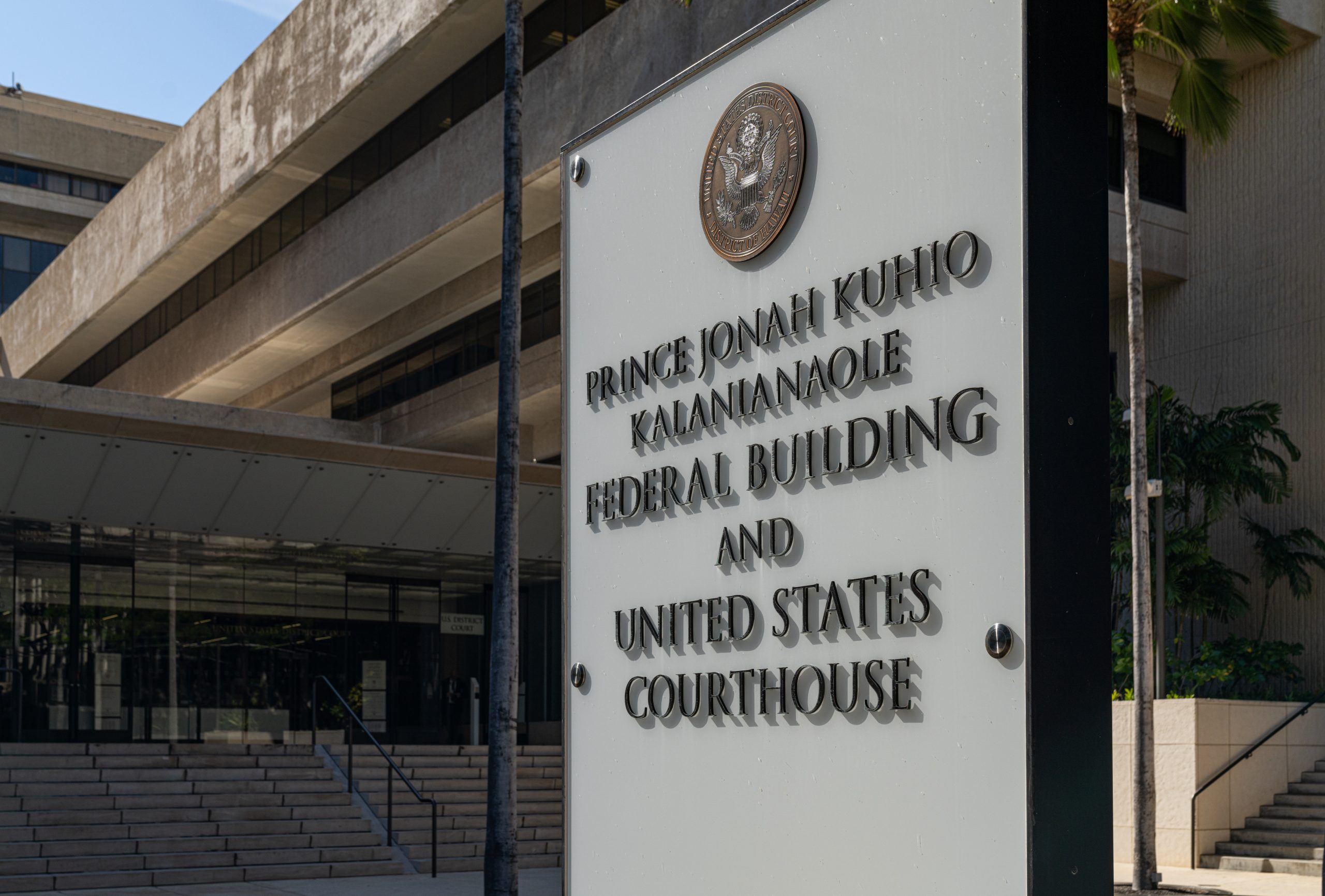
    Prince Kuhio Federal Building District of Hawaii Courthouse, Honolulu
    Image: Tony Webster, via Flickr, CC BY 2.0.

    That is the force of the “not relevant” issue. If a filing does not bear on the legal standard the judge must apply, the court can set it aside without deciding every political or factual argument around it.

    For the Trump DOJ, the setback adds to a reported tally of 18 losses in voter-roll litigation. For states resisting federal demands, it is another sign that broad election-integrity language may not be enough on its own.

    DOJ is pushing nationwide access

    The ruling lands against a much wider Justice Department campaign. In a public release, the department said its Civil Rights Division had sued five additional states — Utah, Oklahoma, Kentucky, West Virginia and New Jersey — for failing to produce full voter registration lists on request.

    That announcement brought the DOJ’s stated nationwide total to 29 states and the District of Columbia. The department says the attorney general has broad authority under the Civil Rights Act of 1960 to request election records, including statewide voter registration lists that can be inspected and analyzed.

    Attorney General Pamela Bondi defended the effort as an election-integrity measure, saying accurate and well-maintained voter rolls are required for secure elections. Assistant Attorney General Harmeet K. Dhillon said the department would continue its oversight role “dutifully, neutrally, and transparently,” while accusing some state election officials of choosing to fight in court rather than “show their work.”

    Why relevance became decisive

    Federal courts do not treat every alarming assertion as legally useful. A judge can accept that the government has oversight responsibilities and still reject a particular argument if it does not connect to the relief being requested.

    That distinction matters in voter-roll cases because the facts are often tangled. The federal government may argue that it needs full registration data to check compliance with federal law. States may argue that a request is overbroad, insufficiently justified, inconsistent with state privacy rules, or not properly tied to the statute being invoked.

    The “hundreds of federal crimes” language raises the temperature of the dispute. The judge’s decision to disregard it as not relevant lowers the temperature back to the legal basics: What law applies, what records were requested, what authority supports the request, and what remedy is available?

    States have practical concerns

    Voter registration rolls are not abstract spreadsheets. They are working election-administration records that can include names, addresses, voting districts, registration status and other fields governed by a mix of federal and state rules.

    Public access to voter data varies by state. Some information is routinely available for campaigns, researchers or election purposes. Other data can be restricted because of privacy, safety or administrative limits.

    That is why disputes over “full” voter registration lists can become high-stakes quickly. The argument is not only whether rolls should be accurate. Nearly everyone in the debate says they should be. The harder question is who gets the data, under what authority, in what form, and with what safeguards.

    The streak changes leverage

    A losing streak of 18 does not end the Justice Department’s campaign by itself. Different judges can rule differently, and cases can turn on venue, timing, the exact request, the record before the court and the remedy sought.

    Still, repeated losses matter. They shape how states evaluate whether to comply, negotiate or litigate. They also signal to the department that courts may demand more than a general appeal to election integrity.

    For the Trump administration, the legal challenge is to show that each request is authorized and appropriately tailored. For state officials, the challenge is to show that resistance is rooted in law and administration, not simply politics.

    What remains unsettled

    The DOJ’s broader voter-roll push is not over. Its own public statements show that the department sees the issue as a national enforcement priority, and the total number of targeted jurisdictions remains large.

    The “hundreds of federal crimes” claim could surface again if the government ties it more directly to a relevant legal issue in another case. This ruling, as reported, is narrower: the judge brushed aside the argument because it did not matter to the question at hand.

    The clean takeaway is that courts are not deciding these fights by slogan. Voter-roll maintenance is a legitimate election-administration concern. So are statutory limits, state responsibilities and voter privacy. The side that wins will likely be the one that connects those principles to the specific law and facts in front of the judge.