Blog

  • Report Alleges MAGA Candidate’s Mother Altered Data Tied to His Fortune

    Report Alleges MAGA Candidate’s Mother Altered Data Tied to His Fortune

    The allegation goes to a politically potent question: whether a candidate’s wealth rests on accurate business claims. But the public materials supplied with the report leave major facts, including the candidate’s identity and the alleged evidence, unverified.

    A report alleges that a MAGA candidate’s mother doctored data connected to the candidate’s personal fortune. The allegation is serious because it suggests that business information may have shaped the wealth now associated with a political candidate, but the material available for review does not identify the candidate, name the mother, or provide the underlying records said to support the claim.

    That missing documentation matters. A headline can flag a potential investigation, but allegations involving financial data, family members and a candidate’s wealth require a clear chain of evidence before they can be treated as established fact.

    What the headline actually alleges

    The central claim is narrow but consequential: a MAGA candidate’s mother allegedly altered, or “doctored,” data, and that alleged manipulation was connected to the candidate’s personal fortune.

    The available source material does not say what kind of data was involved. It does not specify whether the records were scientific, financial, corporate, regulatory, medical, sales-related or connected to another field entirely.

    It also does not explain how the alleged conduct supposedly translated into the candidate’s wealth. That distinction is essential. A claim that someone altered data is not, on its own, proof that a candidate knew about it, benefited from it, participated in it or made misleading statements about it.

    The key facts still missing

    Several basic reporting questions remain unanswered in the materials provided. The candidate is not named, the mother is not named, and the report behind the allegation is not included.

    There is no description of the original documents, the period when the alleged manipulation occurred, the organization that possessed the data, or whether any regulator, court, employer or independent investigator has made findings.

    • Identity: Who is the candidate, and what office is the person seeking?
    • Evidence: What records, witnesses or findings support the allegation?
    • Connection: How is the alleged data manipulation linked to the candidate’s fortune?
    • Knowledge: Is there evidence the candidate knew of, directed or profited from any alleged conduct?
    • Response: Have the candidate, the mother or any relevant organization responded?

    Without answers to those questions, readers cannot fairly assess either the credibility of the allegation or the scope of any potential political relevance.

    Public filings are not a verdict

    The research materials include a Securities and Exchange Commission filing involving Vivek Ramaswamy, a prominent Republican figure whose business wealth has been heavily discussed in national politics. The filing, dated February 13, 2024, reported that Ramaswamy beneficially owned 81,454,521 common shares and related equity interests in Roivant Sciences Ltd.

    That filing is a public disclosure about securities ownership. It does not mention his mother, allege manipulated data or establish any connection to the headline’s accusation.

    Its inclusion illustrates an important limit in wealth reporting. Public filings can help document holdings, corporate roles and transaction dates. They generally do not resolve broader questions about how a business created value, whether data underlying a business decision was sound, or whether a relative’s actions were relevant to a candidate’s wealth.

    It would be inaccurate to use the SEC document as proof of the allegation. It is evidence of a disclosed ownership position, not evidence of wrongdoing by anyone.

    Why the claim carries political weight

    Personal wealth is often part of a candidate’s political brand. Candidates may present business success as evidence of independence, management skill or an outsider’s perspective on government. Opponents may argue that the same fortune deserves scrutiny, especially if it grew from heavily regulated industries or complex corporate transactions.

    That makes claims about the origins of wealth especially combustible. Supporters may see an allegation as an attempt to damage a candidate through family associations. Critics may argue that voters deserve a full accounting when a candidate’s financial success is central to a campaign narrative.

    Both views depend on facts that are not supplied here. Family connection alone does not demonstrate responsibility. At the same time, a well-documented report could raise legitimate questions if it showed a direct financial link, credible evidence of altered records and a meaningful connection to the candidate’s public claims or assets.

    The standard for a stronger report

    For an allegation of doctored data to move beyond a provocative headline, reporting should show readers how the conclusion was reached. That usually means identifying the records, explaining how they were changed, naming knowledgeable sources and distinguishing allegation from confirmed finding.

    A strong account would also include responses from the people accused, the relevant company or institution, and any agencies with oversight authority. If litigation, audits, disciplinary actions or official investigations exist, those records would help establish whether the conduct was alleged, disputed, substantiated or rejected.

    Language matters, too. “Doctored data” implies intentional alteration, a more specific accusation than an error, a disputed interpretation or an incomplete record. The evidence should support that level of certainty.

    What readers can responsibly conclude

    The available material supports one limited conclusion: a report’s headline alleges that a MAGA candidate’s mother manipulated data connected to the candidate’s personal fortune. It does not provide enough information to independently verify who is accused, what was allegedly altered, how the alleged conduct affected wealth or whether the candidate had any involvement.

    Political reporting is strongest when it separates documented financial facts from inference and separates a relative’s alleged conduct from a candidate’s own actions. Until the underlying reporting and evidence are available, the allegation should be understood as unverified, not as a settled account of a candidate’s fortune.

    The unanswered questions are not a technicality. They are the difference between a headline-driven charge and a claim the public can evaluate on the merits.


  • Three Boys, Ages 12, 13 and 16, Charged in Bakersfield Killing

    Three Boys, Ages 12, 13 and 16, Charged in Bakersfield Killing

    The case centers on a father’s account of trying to comfort his son after both were shot near their family’s mailbox. Authorities have not publicly identified a motive or explained why the boys allegedly came to the home.

    Vernon “Wes” Lancaster says he watched his son, Eric Wesley Lancaster, 53, get shot near the family’s mailbox in Bakersfield, California, on July 18. Eric Lancaster was killed and his father was wounded; Wes Lancaster says he held his son’s hand and told him to “stay with us” as Kern County Sheriff’s Office deputies responded.

    Three juvenile boys, ages 12, 13 and 16, were charged with murder in the Bakersfield shooting, along with other alleged offenses. The case has left a family grieving while key questions — including a possible motive — remain unanswered.

    A shooting outside the home

    Deputies were called to the 800 block of Crane Street in east Bakersfield at about 7:30 p.m. July 18 after reports of a shooting, according to the Kern County Sheriff’s Office.

    They found two men with gunshot wounds. One man died at the scene, while the other was transported to a hospital. Authorities identified the man killed as Eric Lancaster, and his father, Wes Lancaster, survived.

    Wes Lancaster later told Bakersfield television station KERO-TV that Eric had been confronted near a mailbox outside the home. He said he had been sitting in the front yard and rushed over when he realized something was wrong.

    “I didn’t see my shooter shoot me, but I seen my shooter shoot my son,” Wes Lancaster told the station. He said Eric had no known connection to the people who attacked him.

    A father’s account of loss

    In his account to KERO-TV, Wes Lancaster described reaching for his son after he fell. He said he held Eric’s hand and repeatedly urged him to remain with the family.

    “When my son fell, I reached over as hard as I could to hold his hand and tell him to stay with us, stay with us,” Lancaster said. “And it was too late.”

    The details make the case particularly harrowing: the father was not only injured himself, but was close enough to witness his son’s final moments. His account is a firsthand description of the scene, not a determination of the facts that prosecutors must prove in court.

    For the Lancaster family, the criminal case will unfold alongside a more immediate reality — the death of a 53-year-old man in front of his home and the survival of his wounded father.

    Charges against three minors

    The three suspects have not been publicly named because they are minors. Officials said the boys, ages 12, 13 and 16, have been charged with murder, attempted murder, conspiracy and participation in a criminal street gang.

    They also face firearm-related allegations, according to reporting citing the Kern County District Attorney’s Office. Charges are accusations, and each defendant is entitled to due process in the juvenile justice system.

    The attempted-murder charge appears to correspond to the shooting of Wes Lancaster, who was wounded but survived. Authorities have not publicly laid out the specific conduct they allege for each of the three boys.

    The extraordinary ages involved are central to public attention around the case. A 12-year-old, a 13-year-old and a 16-year-old charged in the same fatal shooting raises difficult questions about access to guns, group involvement and the systems meant to intervene before violence occurs.

    How the arrests unfolded

    The sheriff’s office said deputies detained the 16-year-old in the surrounding neighborhood on the night of the shooting. He was initially arrested in connection with an unrelated investigation, according to authorities.

    Detectives later identified the two younger boys as suspects, the sheriff’s office said. The 12-year-old and 13-year-old were arrested on July 29 and Aug. 2, respectively.

    That timeline indicates the investigation continued after the initial emergency response, with detectives building the case against the younger suspects over the following two weeks. Public reporting has not detailed what evidence led investigators to identify them.

    Nor have authorities publicly said whether the boys knew one another before the shooting or how they allegedly arrived at the Lancaster home. Those details could become clearer through court proceedings, though juvenile cases often have more limited public access than adult criminal cases.

    The motive remains unannounced

    The largest gap in the public account is why the shooting occurred. The Kern County Sheriff’s Office has not announced a suspected motive or explained what allegedly brought the three boys to the home.

    Wes Lancaster told KERO-TV that his son had no known connection to the alleged assailants. That statement, combined with the absence of a publicly disclosed motive, leaves the basic origin of the confrontation unclear.

    Prosecutors will need to establish the allegations behind the murder and related charges. Defense attorneys, if they have not already done so, will have the opportunity to challenge the evidence and the state’s account in court.

    For now, the verified outline is stark: a father and son were shot outside their Bakersfield home; Eric Lancaster died; Wes Lancaster survived; and three boys face serious criminal charges. The explanation for what led to that moment has not yet been made public.

    A case with wider consequences

    The case is likely to renew attention on youth violence without offering an easy explanation. The ages of the accused may prompt debate over accountability, juvenile rehabilitation, firearms access and whether warning signs were missed.

    Those are separate questions from the legal process. The immediate case concerns what happened on Crane Street, whether the allegations can be proven and what consequences the juvenile court system can impose if the boys are found responsible.

    It also remains a story about the people at the center of it: Eric Lancaster, whose life ended at 53, and his father, who says he tried to keep him present in the aftermath of the shooting.

  • Minnesota sues Trump over ICE surge in federal court

    Minnesota sues Trump over ICE surge in federal court

    Minnesota’s challenge to the Trump administration’s immigration operation is about more than one deployment. It tests how far a state can go in court when federal enforcement changes daily life in its largest city.

    Donald Trump’s administration is sending a surge of U.S. Immigration and Customs Enforcement agents into Minnesota, and Minnesota has sued the Trump administration in federal court to block the deployment. The Trump ICE plan, described by the Department of Homeland Security as Operation Metro Surge, has become an immediate fight over public safety, state authority and whether a federal judge can limit the immigration enforcement operation.

    Minnesota Attorney General Keith Ellison says the deployment has disrupted communities and infringed on the state’s authority to protect people within its borders. The administration says additional agents are needed to remove people in the country illegally and to protect federal personnel during operations.

    Minnesota seeks to stop deployment

    The state’s lawsuit asks a federal court to declare the deployment unlawful and, according to the BBC, seeks emergency relief that could block it while the case proceeds. Minnesota characterizes the operation as an unconstitutional “federal invasion,” language that signals how unusually broad the state believes the federal presence has become.

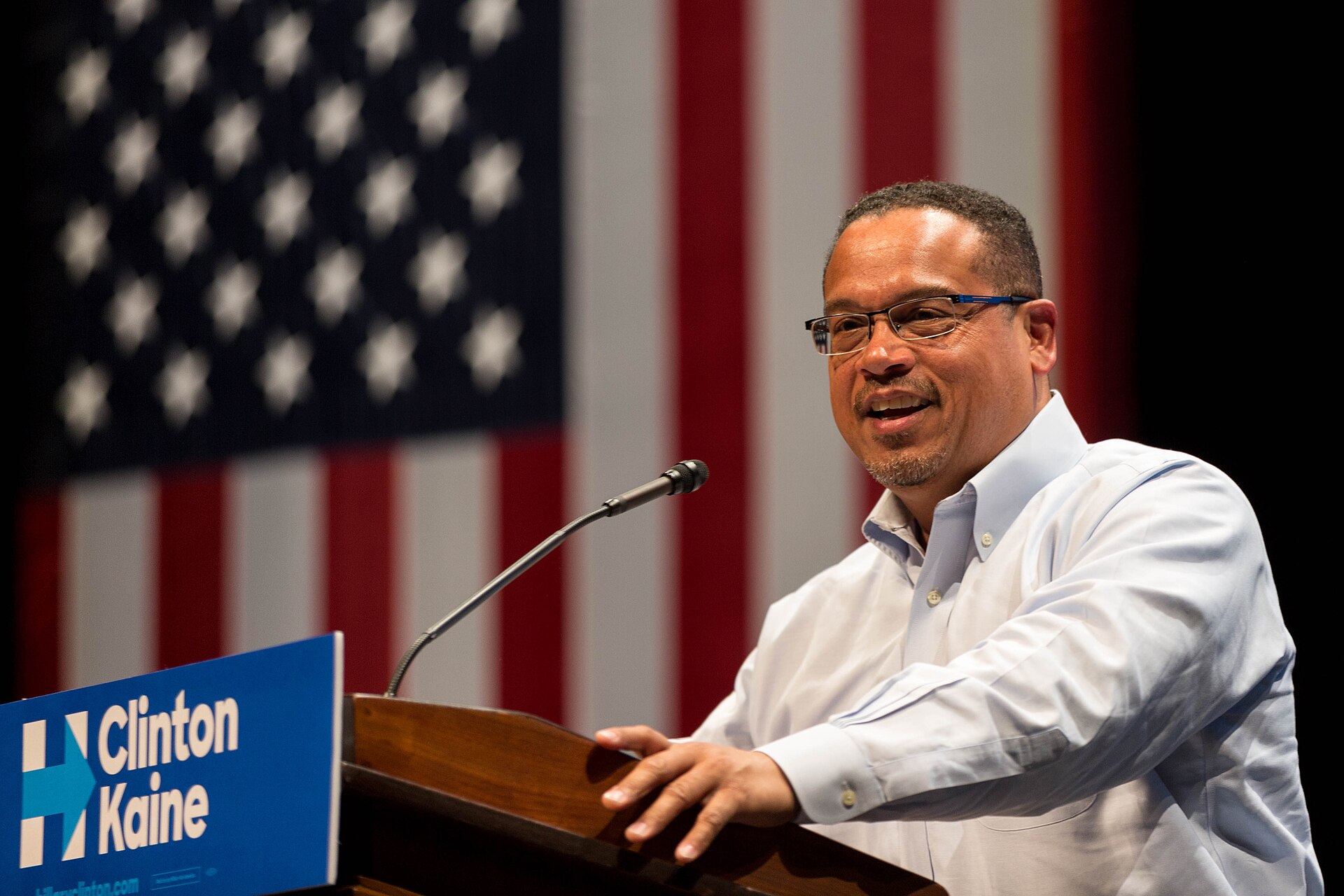
    Keith Ellison 02
    Image: Lorie Shaull, via Wikimedia Commons, CC BY-SA 4.0.

    Ellison has argued that thousands of armed, masked and insufficiently trained federal agents are harming Minnesota. At a news conference announcing the case, he said the enforcement campaign had brought disruption, chaos and violence to communities across the state.

    The legal request matters because it is aimed not simply at a single arrest, detention or agency policy. Minnesota is challenging the federal government’s ability to send and operate a large immigration-enforcement force in the state under the terms of this particular operation.

    Operation Metro Surge is expanding

    The Department of Homeland Security has said it plans to send more personnel to Minnesota through Operation Metro Surge. The BBC reported that DHS estimated about 2,000 agents had already been deployed, while Homeland Security Secretary Kristi Noem said hundreds more would be sent to the area.

    CNN, cited by the BBC, reported that roughly 1,000 Customs and Border Protection personnel could be sent to Minneapolis, based on accounts from two federal law-enforcement sources. Those figures describe overlapping federal deployments, and the precise total number of personnel and their assignments remains unclear.

    For residents, that uncertainty is part of the practical issue. A visible expansion of federal officers can affect workplaces, schools, transit, businesses and the willingness of people to report crimes or cooperate with local authorities, even when they are not targets of an immigration operation.

    Public safety claims sharply diverge

    The Trump administration frames the operation as a public-safety measure. President Trump said federal agents were removing people convicted of serious crimes, while DHS said the additional personnel were needed both to enforce immigration law and to keep officers safe amid resistance and protests.

    DHS spokeswoman Tricia McLaughlin called Minnesota’s case baseless and said the department expected to prevail in court. That response reflects the federal government’s central position: immigration enforcement is primarily a federal responsibility, and states cannot veto it because they oppose the policy or its local effects.

    Minnesota officials do not dispute that federal agencies possess immigration authority. Their argument is that the manner and scale of this deployment cross constitutional and legal lines. Minneapolis Mayor Jacob Frey has alleged that agents have targeted people based on perceived immigration status and racial profiling; federal officials have defended the operation as lawful enforcement.

    Those competing accounts are likely to shape the litigation. A judge will not decide the dispute based on political labels such as “sanctuary state” or “federal invasion,” but on the evidence behind claims of unlawful conduct, injury to the state and the legal authority governing the deployment.

    A shooting intensified local tensions

    The lawsuit follows the death of Renee Good, 37, who was shot by an immigration agent in Minneapolis, according to the BBC. Her death triggered major protests and sharpened scrutiny of how federal officers are operating in the city.

    Federal officials have said Good was trying to drive her vehicle into immigration agents when she was shot. Local officials have disputed that account and said the use of gunfire was unnecessary. The FBI has said it will investigate; local officials have said they have been excluded from the federal investigation.

    That episode is not, by itself, the legal basis for deciding whether Minnesota can stop Operation Metro Surge. It does, however, explain the urgency of the state’s complaint and why arguments about officer safety, civilian safety and accountability are now intertwined.

    The case tests limits of state power

    Immigration policy has long been an area where federal authority is especially strong. That gives the Trump administration a significant legal argument: the Constitution and federal statutes generally place decisions on admission, removal and immigration enforcement with the national government.

    But federal power is not unlimited. States can challenge federal actions when they contend that an agency has violated the Constitution, exceeded statutory authority or imposed a direct and legally recognizable harm. Minnesota’s task will be to show that the alleged harm is concrete enough, and the federal conduct unlawful enough, for a court to intervene.

    Courts also tend to examine whether a requested remedy is too sweeping. A temporary restraining order or preliminary injunction could potentially pause part of an operation, but such orders require a strong initial showing and are often contested intensely by the government.

    What happens after the filing

    The immediate question is whether the federal court will grant emergency relief. Minnesota prosecutors said they would seek a temporary restraining order as early as the next day after announcing the lawsuit, according to the BBC. The administration can respond by challenging the state’s legal standing, its factual claims and the proposed scope of any order.

    The broader result could reach beyond Minnesota. Illinois and Chicago filed a similar case over a separate federal immigration operation, calling it an organized federal “occupation.” Together, the lawsuits show Democratic-led state and local governments trying to use courts to set boundaries around stepped-up federal enforcement.

    For now, the dispute remains unresolved. Minnesota says the ICE surge is destabilizing the state and violating its sovereignty; the Trump administration says the deployment is needed to enforce federal law and protect communities. The court’s early rulings will determine whether Operation Metro Surge continues unchanged while that fundamental conflict is litigated.

  • Republicans’ ‘Darkest Fear’ Claim Lacks the Crucial Outcome

    Republicans’ ‘Darkest Fear’ Claim Lacks the Crucial Outcome

    The claim has attention because it suggests a major shift inside the Republican Party. Yet the available reporting does not establish the feared outcome, making the underlying evidence as important as the rhetoric.

    Republicans and a political strategist are at the center of a claim that Republicans recognize that their “darkest fear” has come to pass. The political outcome Republicans supposedly feared is not identified in the supplied source material, however, and neither is the strategist making the assessment.

    That gap matters now because assertions of party-wide panic can shape perceptions of the Republican Party before readers know whether they refer to an election result, a policy setback, a court decision, voter sentiment or an internal dispute. The available evidence supports discussion of the claim’s political meaning, but not a definitive conclusion about the outcome itself.

    What the available record says

    The underlying trend item presents a forceful proposition: a strategist says Republicans know a feared outcome has occurred. It does not provide the strategist’s name, a direct quotation beyond the headline framing, the event being discussed, a date, polling, election returns or a document supporting the assertion.

    Arizona Republican Party victory party
    Image: Gage Skidmore, via Flickr, CC BY-SA 2.0.

    Those omissions are not small technicalities. In politics, “Republicans” can mean elected officials, party committees, donors, conservative media figures, voters, or one faction within a much larger coalition. Their interests and concerns do not always align.

    The supplied research also includes a PBS NewsHour transcript from the period after Donald Trump’s 2024 election victory. That transcript does not establish the headline claim. Instead, Republican strategist Kevin Madden described Republicans as feeling that they had accumulated substantial political capital after what he called a decisive victory.

    Madden said that party leaders would likely focus on economic issues, trade and border security. His comments portray confidence following an election, not a documented acknowledgment that an unspecified Republican fear had been realized.

    Why an unnamed fear travels

    Political headlines often use a broad phrase such as “darkest fear” because it creates an immediate sense of stakes. Readers can map their own concerns onto it: a party losing support, failing to deliver on promises, facing backlash over an unpopular decision, or seeing divisions grow harder to contain.

    That flexibility also makes the phrase difficult to evaluate. A concrete claim can be tested against specific evidence. If the alleged fear is electoral, relevant evidence might include vote totals, turnout patterns, polling or fundraising. If it is about governing, legislative results, public approval or implementation records could be more useful.

    Without that specificity, the phrase functions more as an interpretation than a reportable fact. A strategist may sincerely believe a political coalition is in trouble, but that does not by itself demonstrate that the entire party shares the view—or that the prediction will hold.

    Strong rhetoric is common across party lines. Democrats and Republicans regularly describe the other side as demoralized, divided or facing a political reckoning. Such language can capture a real tension, but it can also flatten the differences among candidates, regions and voter groups.

    The party’s incentives are mixed

    The PBS discussion offers useful context on why a blanket diagnosis of Republicans requires care. Madden argued that Trump’s 2024 victory gave Republicans an opening to act on issues that resonated with voters, particularly concerns about the economy, housing costs, inflation, trade and border security.

    That is one strategist’s view, not a final verdict on the Republican Party. Still, it illustrates the competing political reality behind any claim of GOP anxiety: a party can be energized by an election result while also worrying about whether it can meet the expectations created by that result.

    Winning coalitions face a familiar challenge. Campaign messages are often broader and easier to unite around than governing decisions. Voters who agree on dissatisfaction with prices or immigration policy may disagree sharply about tariffs, spending, entitlement programs, federal enforcement or the pace of legislative action.

    Opponents of the Republican Party may see those tensions as evidence that a feared setback is already unfolding. Republicans may counter that conflicts over strategy are normal and that election outcomes, policy goals and voter concerns still give the party a durable foundation. Both arguments require facts tied to a defined event.

    What would establish the claim

    To move from provocative language to a reliable political assessment, the report would need to identify the strategist and set out what they meant. A full quotation and the setting in which it was made would help determine whether the person was describing a specific development or making a broader prediction.

    It would also need to name the feared outcome. That could be a measurable result, such as a special-election loss, a polling shift, a failed legislative effort, a fundraising decline or an unfavorable court ruling. Each would demand a different kind of evidence.

    • For an electoral claim: certified results, turnout data and comparisons with prior elections.
    • For a voter-opinion claim: transparent polling methodology, sample size and trend lines rather than a single survey.
    • For a governing claim: the relevant bill, executive action, court decision or agency record.
    • For an internal-party claim: attributable statements from officials, lawmakers, donors or party organizations.

    It would also be important to distinguish between a strategist’s analysis and a verified consensus. Political strategists are paid to read incentives, frame arguments and anticipate public reaction. Their perspectives can be insightful, but they are not neutral measurements of what millions of voters or every party official believes.

    Certainty should follow evidence

    The most defensible takeaway from the material provided is limited: an attention-grabbing claim says Republicans recognize that a feared political outcome has happened, but the central outcome is not established in the available record. The PBS transcript offered as supporting research points to Republican confidence after the 2024 election, rather than confirming the premise of widespread fear.

    That does not prove that Republicans have no concerns or that a later development could not change the party’s political position. Parties routinely reassess their prospects as governing decisions, economic conditions, court rulings and election results unfold.

    It does mean readers should be cautious about treating an emotionally loaded headline as settled fact. The crucial unanswered question is not whether political anxiety exists—it almost always does—but which event supposedly triggered it, who is making the assessment and what independently verifiable evidence shows.

    Until those details are available, the claim is best understood as an unverified piece of political commentary, not a demonstrated account of the Republican Party’s collective state of mind.

  • Rubio Says State Department Revoked 600-Plus Visas in Birth Tourism Push

    Rubio Says State Department Revoked 600-Plus Visas in Birth Tourism Push

    The new enforcement drive focuses on alleged visa deception and organized travel networks, not pregnancy itself. It also lands after the Supreme Court reaffirmed broad birthright citizenship protections for children born in the United States.

    Marco Rubio announced a crackdown on so-called birth tourism on Wednesday, saying the State Department has revoked more than 600 visas in the United States’ latest effort against networks the Trump administration accuses of facilitating travel for childbirth and visa fraud. Rubio said the enforcement drive is meant to target organizers and foreign nationals accused of deception—not alter the current rule that most children born in the United States are citizens.

    The announcement puts a politically charged label on a narrower legal question: when does a visitor’s planned childbirth amount to a misrepresentation in a visa application or at the border? The answer matters because being pregnant, traveling while pregnant, and giving birth in the U.S. are not themselves illegal.

    A task force takes shape

    Rubio said the State Department has created a Birth Tourism Prevention Task Force to investigate visa holders, identify networks that allegedly arrange these trips and pursue enforcement actions. He said the task force acted against hundreds of foreign nationals around the world in its first month.

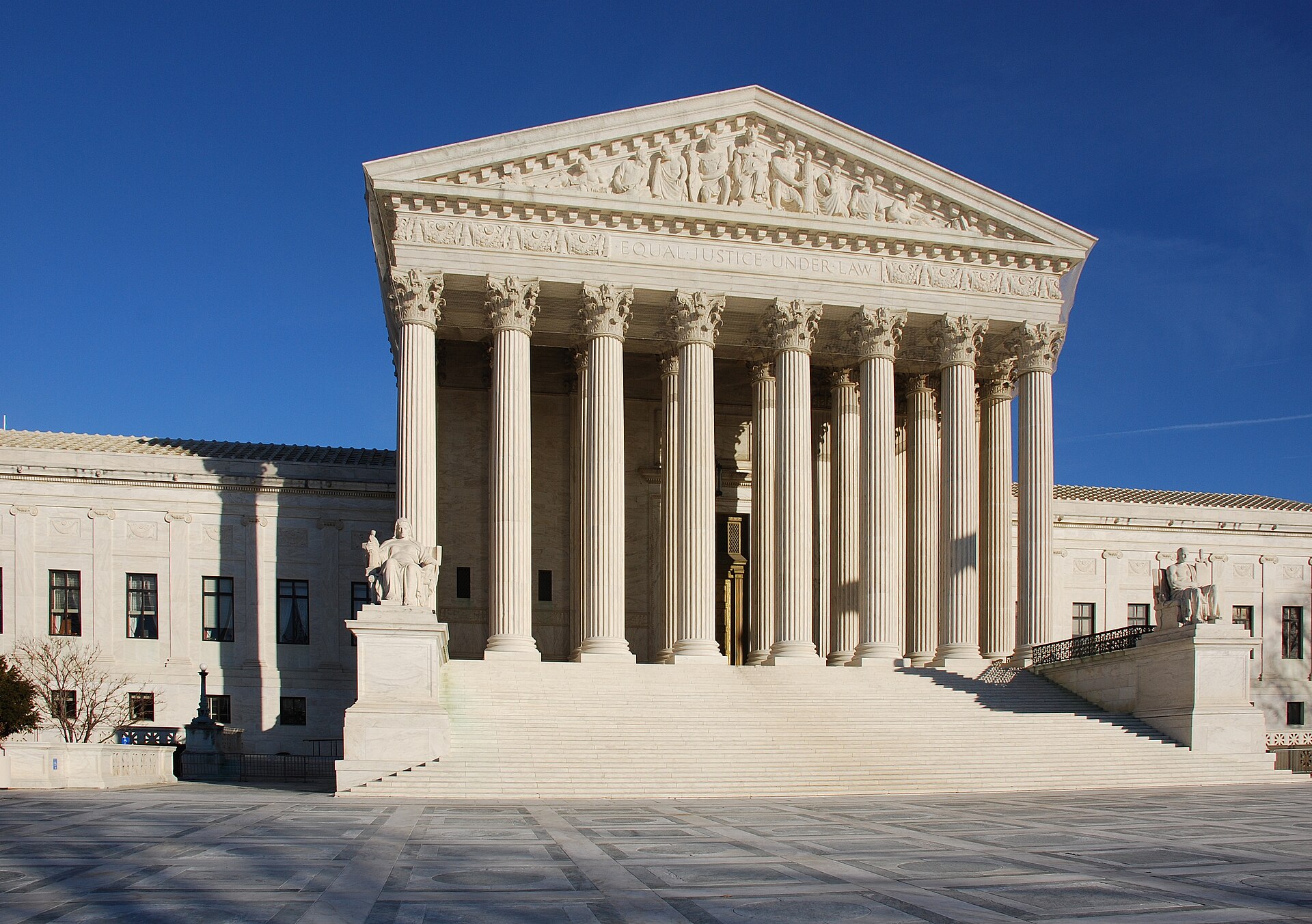
    US Supreme Court corrected
    Image: Jarek Tuszyński, via Wikimedia Commons, CC BY-SA 3.0.

    In a statement, Rubio accused “elaborate birth tourism rings” of coaching travelers to defraud the visa system, arranging housing and travel, and in some cases forging documents. His broader message was blunt: “American citizenship is not for sale.”

    The State Department has not publicly identified the countries tied to the more than 600 visa revocations or named the companies and networks it says are under scrutiny. That leaves a significant gap between the administration’s description of the problem and the public evidence available so far.

    What “birth tourism” means

    The term generally refers to travel to the United States primarily to give birth, with the expectation that a child born here will receive U.S. citizenship. It does not describe every birth to a noncitizen parent, every birth to an undocumented parent, or every pregnancy involving a visitor.

    Colleen Putzel-Kavanaugh, an associate policy analyst at the Migration Policy Institute, told Newsweek that childbirth on U.S. soil is not inherently unlawful. The legal exposure, she said, can arise when a traveler intentionally comes to give birth and uses fraud or deception to obtain a visa, or when companies involved in arranging the trip commit crimes.

    That distinction is central. A consular officer may deny a visitor visa if an applicant’s primary purpose is to give birth in the United States, particularly if the applicant cannot show that medical costs will be covered. But a pregnancy alone is not proof that someone lied about why they planned to travel.

    Visa enforcement is not citizenship law

    The administration’s campaign does not, on its face, change birthright citizenship. The Fourteenth Amendment has long been understood to grant citizenship at birth to nearly all children born in the United States, regardless of their parents’ immigration status.

    That principle was recently reinforced in Trump v. Barbara, in which the Supreme Court ruled 6-3 that children born in the United States to parents who are unlawfully or temporarily present are citizens at birth under the Fourteenth Amendment, according to the source material.

    President Donald Trump had sought through a 2025 executive order to require that a parent be a U.S. citizen or permanent resident before a newborn could receive citizenship. The court’s ruling rejected that approach. As a result, the State Department’s current strategy is focused on stopping alleged fraud before entry, rather than changing a child’s citizenship status after birth.

    That difference will likely shape the legal durability of the new push. Visa issuance is an area where the executive branch has substantial authority, while redefining birthright citizenship has faced major constitutional barriers.

    Why the numbers need context

    The administration says it has revoked more than 600 visas, but it has not released a country-by-country breakdown, case details, the types of visas involved, or the evidence used to connect individual holders to alleged birth-tourism activity. Visa revocation is consequential, but the figure alone does not establish how many cases involved organized fraud, inaccurate applications, or other grounds.

    Reliable estimates of birth tourism itself are difficult to produce. Putzel-Kavanaugh noted that data on births linked to the practice can be hard to pin down. The Centers for Disease Control and Prevention has suggested that less than 1 percent of annual U.S. births may be associated with birth tourism.

    Supporters of tougher enforcement argue that organized services can exploit a system designed for temporary visits. Jeremy Beck, co-president of the immigration-restriction group NumbersUSA, argued that the government should stop alleged birth tourism before travelers enter the country.

    Critics and immigration researchers are likely to press a different concern: whether enforcement decisions can reliably separate deliberate deception from legitimate tourism, family visits, medical care or a pregnancy that simply continues during a trip. The public details released by the State Department will determine how clearly that line can be evaluated.

    Rules have been tightening since 2020

    The United States already has a policy aimed at this issue. Since 2020, consular officers have been directed to deny B visitor visas when they have reason to believe an applicant is traveling primarily to give birth in the United States to secure citizenship for a child.

    That policy did not make pregnancy a disqualifier. It placed added emphasis on an applicant’s purpose of travel and ability to pay for medical treatment. The current task force appears designed to add a more coordinated enforcement layer, particularly against companies or intermediaries alleged to coach applicants or arrange fraudulent paperwork.

    For travelers, the practical takeaway is straightforward: visa applications and border interviews depend heavily on truthful statements about the purpose and conditions of a trip. A visa does not guarantee admission, and false material statements can carry immigration consequences beyond the loss of a visitor visa.

    What remains unanswered

    Rubio has said the State Department will use all available tools to dismantle networks it believes profit from birth tourism. The next test is whether officials provide details that show how the task force selects cases, what conduct triggered the revocations and whether criminal investigations are underway against organizers.

    The policy debate is also unlikely to fade. The Trump administration can intensify visa screening and investigate suspected fraud, but the Supreme Court ruling means the constitutional fight over citizenship at birth remains separate from this enforcement campaign.

    For now, Rubio’s announcement marks a visible escalation in immigration enforcement around visitor visas. Its real scope will be measured less by a single revocation total than by the cases the government eventually documents—and by whether those cases demonstrate organized fraud rather than merely travel during pregnancy.

  • Democrats Press Navy Over USS Abraham Lincoln Food, Plumbing Reports

    Democrats Press Navy Over USS Abraham Lincoln Food, Plumbing Reports

    The inquiry puts a record-length carrier deployment and the Navy’s duty to support roughly 5,000 sailors and Marines under closer scrutiny. Navy officials dispute key claims about current conditions and say the ship has access to clean water, air conditioning and healthy meals.

    Democratic senators demanded answers about conditions aboard the USS Abraham Lincoln after reports of food shortages, plumbing problems and mental-health crises during the aircraft carrier’s unusually long deployment. The senators raised concerns about conditions aboard the aircraft carrier and are seeking accountability from Defense Secretary Pete Hegseth, acting Navy Secretary Hung Cao and Navy leadership.

    At issue is whether sailors aboard the Lincoln have received the supplies, services and support needed during more than 250 days of deployment, including more than 200 consecutive days at sea, according to Sen. Richard Blumenthal. The Navy says the reports do not reflect the ship’s current access to clean water, functional air conditioning and healthy meals.

    What senators want from the Navy

    Blumenthal, a Connecticut Democrat, wrote to Hegseth and Cao seeking an accounting of the conditions on the carrier. His letter cites reports involving shortages of basic supplies, possible water contamination, plumbing failures, deteriorating mental health and safety concerns on the flight deck.

    USS Abraham Lincoln (CVN 72) underway in the Atlantic Ocean on 30 January 2019 (190130 N PW716 1312)
    Image: U.S. Navy photo by Mass Communication Specialist 3rd Class Clint Davis, via Wikimedia Commons, Public domain.

    The central demand is straightforward: explain what the department knew, what it has done to address any problems and how it intends to support a crew enduring a deployment that has kept the ship away from shore for an extended stretch.

    Arizona Democratic Sen. Ruben Gallego added a separate call for a bipartisan congressional delegation to visit the USS Abraham Lincoln and conduct an oversight investigation. That request signals that the dispute is moving beyond individual complaints toward a potential test of Congress’ ability to independently assess conditions at sea.

    A deployment measured in months

    The scale of the deployment is central to the senators’ concern. Blumenthal said the Lincoln has been deployed for more than 250 days and had not come ashore in more than 200 days, a period he described as a record for consecutive days at sea.

    Long deployments can place pressure on the practical systems that shape daily life aboard a carrier: food deliveries, laundry, berthing, sanitation, mail, medical care and opportunities to rest away from the ship. They also strain families, who may receive limited information and have no direct way to judge the situation their relatives are living through.

    The Lincoln carries about 5,000 sailors and Marines when its attached air wing is included, according to reporting cited by CBS News. A problem that may sound routine on land, such as a plumbing failure or delayed delivery, can carry different consequences aboard a ship with thousands of people and little room to spare.

    The Navy disputes key allegations

    A Navy official told CBS News that the USS Abraham Lincoln has been operating in a highly contested environment, where combat action disrupted traditional supply hubs in the Middle East. The official said leaders prioritized resupply in this order: mission-critical needs, food, hygiene items and then mail.

    The same official said current reports from the ship show continuous access to clean water, functional air conditioning and healthy meal options. That response does not address every concern raised in Blumenthal’s letter, but it makes clear that the Navy contests the broad picture of an unsupported crew.

    Hegseth also said during a visit to Panama that the situation had been “completely misrepresented.” He praised sailors serving with fewer port calls and in austere conditions, arguing that the department provides ships and crews with what it can at every moment.

    Those statements frame the emerging disagreement. Senators and family members are pointing to reports of hardship and unanswered questions. The Navy is emphasizing operational constraints, its supply priorities and what it says are the ship’s present living conditions.

    Families bring the pressure ashore

    Family members have added urgency to the congressional inquiry. In two recent meetings, relatives reportedly confronted Navy leaders about difficult conditions, including food shortages, and pressed for a clearer picture of when their loved ones might return home.

    Some families also reported serious mental-health concerns and attempted suicides. Those accounts deserve careful treatment: they are allegations and reports from families, not a public finding that establishes the scale or cause of any crisis.

    The Navy said it had not identified an increase in reported suicidal ideation or suicide attempts aboard the ship based on information available to the command. It said the Lincoln offers deployment-resilience counselors, chaplains, Fleet and Family Support Center services, Military OneSource and medical professionals.

    A sailor assigned to the carrier’s air wing went overboard earlier this month and was recovered safely, the Navy confirmed. The sailor was treated by the ship’s medical department and transferred off the vessel for further care; the circumstances remain under investigation.

    Why oversight matters on a carrier

    This dispute reaches beyond a single ship’s menu or maintenance backlog. Aircraft carriers are major military platforms, but they are also dense, self-contained workplaces where readiness depends on people being fed, rested, safe and able to obtain medical and mental-health care.

    Congress has a role in overseeing how the Defense Department equips and supports service members, particularly when an operation extends beyond its expected rhythm. A congressional visit, if approved, could allow lawmakers to hear directly from sailors, commanders and support personnel rather than relying only on public statements and family accounts.

    There is also a legitimate operational constraint. The Navy may be limited in what it can publicly disclose about a carrier’s location, mission, resupply routes or vulnerabilities. That does not remove the need for accountability, but it can make outside verification more complicated while the ship is operating in a contested region.

    The key question is not whether deployment is inherently difficult; it is whether hardships have crossed into preventable failures of support, communication or care. The available accounts point in different directions, which is precisely why the senators are pressing for fuller answers.

    What remains unanswered

    Public reporting has not yet established how many supply disruptions occurred, how long any specific shortages lasted, whether reported plumbing and water issues were resolved, or whether an independent inquiry will be authorized. It is also unclear whether Hegseth or Cao will provide a detailed written response to Blumenthal’s letter.

    Gallego’s proposal for a bipartisan delegation could become the next meaningful marker. Such a visit would not settle every claim automatically, but it could give Congress a direct view of the carrier’s conditions and the resources available to the crew.

    For now, the USS Abraham Lincoln remains a case study in the tension between mission demands and the everyday realities of life at sea. The Navy says it is meeting the crew’s needs under difficult circumstances. Democratic senators want evidence that those assurances match what sailors and their families are experiencing.

  • Georgia Hyundai Buyer Reportedly Faces a $30,000 Dealer Markup

    Georgia Hyundai Buyer Reportedly Faces a $30,000 Dealer Markup

    The reported dispute is a reminder that the number on an online listing, a vehicle order and a final buyer’s agreement may not always match. In Georgia, dealers can generally charge above MSRP, but required charges must be clearly disclosed in advertising.

    A Georgia woman bought a new Hyundai, but when the Hyundai arrived at the dealership, the dealership reportedly said it would cost $30,000 more than expected. The report frames the increase as a dispute over the vehicle being worth more than initially believed, raising a basic but consequential question for car shoppers: when does a dealer’s changed price become a negotiable markup, and when could it conflict with the price that was advertised or agreed to?

    The available report does not identify the woman, the dealership, the Hyundai model, the original price or the final outcome. Those missing facts matter. Still, the reported Georgia case offers a useful look at how a seemingly settled new-car purchase can become uncertain when delivery day arrives.

    What the reported dispute says

    The central claim is straightforward: a Georgia buyer purchased a new Hyundai, the vehicle reached the dealership, and the dealer then sought another $30,000. According to the headline describing the incident, the explanation was that the vehicle was “better than they thought it was.”

    That phrase leaves major questions unanswered. It could refer to the trim, options, market demand, an appraisal, a trade-in calculation or a misunderstanding about which vehicle was being delivered. Without a purchase order, listing, messages or a response from the dealership, it is not possible to determine which explanation applies.

    It is also unclear whether the buyer had a signed purchase contract, a refundable deposit agreement, a preliminary quote or only an expected price. Those are very different stages of a car deal, and the paperwork can determine how much leverage each side has.

    MSRP is not always final

    Georgia’s Consumer Ed office says dealers generally may charge more than a manufacturer’s suggested retail price, or MSRP. The word “suggested” is important: MSRP is a benchmark set by the manufacturer, not automatically a legal cap on a dealership’s retail price.

    A price above MSRP is often called a market adjustment or dealer markup. Dealers may argue that a particularly scarce vehicle, a popular trim or local demand supports the increase. Buyers may see the same charge as an opportunistic add-on, especially when it appears late in the process.

    That does not mean every surprise charge is acceptable. Georgia Consumer Ed says additional fees beyond government charges, including mandatory options and service packages, must be clearly and conspicuously included in an advertised price. An ad that leaves out a markup or mandatory dealer fee can be considered an unfair or deceptive practice under Georgia law, the agency says.

    The paperwork changes the argument

    A buyer who sees a large increase at delivery should first separate the documents in hand. An online listing, a verbal promise, a deposit receipt, a buyer’s order and a signed retail installment contract do not necessarily carry the same weight.

    For example, a dealer may contend that an online price applied to a different stock number, excluded required add-ons or was subject to availability. A shopper may counter that the listing, sales quote and messages consistently represented a specific vehicle at a specific price. The strength of either position depends on the records.

    • Save the original ad: Capture the full listing, stock number, VIN if shown, timestamp and all disclaimer language.
    • Keep every quote: Preserve emails, texts, worksheets, deposit receipts and finance estimates.
    • Ask for an itemized buyer’s order: It should distinguish vehicle price, dealer-installed products, markup, taxes, title and registration charges.
    • Check the VIN: Confirm that the vehicle being discussed is the one in the listing or order.
    • Do not rely on memory: Ask the dealership to explain any changed figure in writing.

    A $30,000 gap is large enough that a buyer should not treat it as a routine documentation error. But the size of the increase alone does not establish why it occurred or whether it violated an agreement.

    Why a late price change stings

    Car deals are unusually vulnerable to pressure at the finish line. A buyer may have arranged financing, traded in a vehicle, taken time off work, secured insurance or waited months for a particular model. After that investment, walking away can feel difficult even if the new numbers are unacceptable.

    That timing gives a late price change outsized force. The dealership may believe the vehicle can sell to another buyer at a higher price. The customer may believe a dealer is taking advantage of the inconvenience of starting over. Both views can exist in a marketplace where demand changes quickly, but neither replaces the need for transparent pricing.

    Hyundai itself is not identified in the available material as a party to this particular dispute. The issue described is a transaction with a dealership, which is typically independently owned and operates separately from the automaker’s suggested pricing.

    What Georgia buyers can do

    Georgia Consumer Ed recommends that shoppers who believe a dealer omitted markups or other required charges from an advertised price retain the advertisement and sales quote. The agency says consumers may submit a complaint to the Georgia Department of Law’s Consumer Protection Division or report suspected fraud to the Federal Trade Commission.

    Consumers considering legal action should consult a private attorney about the facts of their particular agreement. Consumer Ed explicitly notes that it does not provide legal advice, and a dispute can turn on contract language, representations made by the seller and whether the buyer signed final documents.

    There is also a practical option: pause. Ask whether the dealer will honor the documented price, remove the add-on or put the explanation in writing. If the answer is no and no binding agreement requires the sale, a buyer may decide that leaving is safer than accepting a payment or loan balance built around a price they did not expect.

    The unanswered question is disclosure

    The reported Georgia Hyundai dispute has drawn attention because the alleged increase is so dramatic. Yet the lasting consumer lesson is not that every dealer markup is unlawful. Georgia permits dealers to price above MSRP in many circumstances.

    The harder line concerns transparency. Was the higher price disclosed before the buyer committed? Did the promised Hyundai match the one that arrived? Was the extra $30,000 a markup, a change in vehicle specification or something else entirely? The public information available does not answer those questions.

    Until it does, the clearest takeaway is procedural: treat the advertised price as evidence to preserve, not a number to assume will remain unchanged. Before signing, buyers should compare the final itemized figures against the listing and written quote—especially when a vehicle has been ordered, transferred or delivered after a wait.

  • Patricia Heaton Says Family Gathering Prompted Her to Quit Drinking

    Patricia Heaton Says Family Gathering Prompted Her to Quit Drinking

    The actor’s account is not centered on a dramatic public fallout, but on a small family moment she says made her see her behavior differently. Her story also underscores how life transitions can reshape routines before a person realizes it.

    Patricia Heaton says she stopped drinking after an incident at a family gathering left her feeling completely mortified. The Everybody Loves Raymond star said she decided to quit eight years ago after struggling to say the word “tradition” during a night with her sons and their friends.

    Heaton’s newly shared account matters because she describes no single public scandal or career-ending crisis. Instead, she points to a private moment that made her confront how alcohol had gradually become woven into a period marked by an empty nest, uncertainty about work and a loss of daily structure.

    A private moment changed the routine

    Speaking to Women’s World, Heaton said she had been feeling “rudderless” before the pandemic. Her four sons were no longer at home in the same way, and she did not have a job at the time, two anchors she said had long shaped her everyday life.

    Patricia Heaton (cropped)
    Image: Matt, via Wikimedia Commons, CC BY 2.0.

    She described wine moving from one part of the evening to the next: while cooking, at dinner, during cleanup and while watching television. At one point, she said, she realized she had nearly finished an entire bottle by herself.

    That recognition did not immediately end the habit. But Heaton said she began noticing her own behavior differently, a distinction that is central to her account. As an actor, she said, observing behavior is part of her training; eventually, she turned that attention on herself.

    The family gathering she recalls

    Heaton said she prayed for help in stopping, telling God that she was willing but felt unable to make the change on her own. She said the following day brought the moment she interpreted as an answer.

    At a family night involving her sons and their friends, Heaton said she could not pronounce “tradition” after three attempts. Her youngest son responded by pointing out that she could not speak, she recalled.

    The exchange left her “completely mortified,” Heaton said. The next morning, she said she understood the incident as a message and made the decision to quit drinking.

    It is a striking detail because it is so ordinary. The turning point, in her telling, was not a tabloid-ready confrontation. It was the sudden discomfort of seeing a private pattern reflected back by the people closest to her.

    Why the context matters

    Heaton, 68, is best known to many viewers as Debra Barone on Everybody Loves Raymond and later as Frankie Heck on The Middle. Those familiar roles have often placed her in television families built around comic chaos, but her own account is more restrained and personal.

    She connected her drinking to a difficult transition rather than presenting it as a simple matter of willpower. The loss of a familiar caregiving routine and career uncertainty, she said, created space in her life that alcohol gradually occupied.

    That framing will resonate with people who recognize that routines can change quietly after children leave home, a job ends or a long-held identity shifts. Still, one person’s experience cannot explain everyone else’s relationship with alcohol, and Heaton did not claim that it could.

    Her story also avoids a common celebrity narrative in which recovery is reduced to a dramatic before-and-after reveal. The details she chose to share focus instead on self-awareness, embarrassment and the decision to accept help as she understood it.

    Faith is central to her account

    Heaton’s explanation is explicitly rooted in faith. She said she had prayed for a sign and viewed the family gathering as the answer to that prayer.

    For some people, that language will feel deeply familiar: a decision to change can be tied to spirituality, a support community, family accountability or all three. Others may take a different route, relying on clinicians, treatment programs, peer-support groups or trusted friends and relatives.

    The important point in Heaton’s account is that she did not portray herself as having solved everything in isolation. She said she first acknowledged that she could not simply force the change on her own, then made a decision after the family incident.

    There is no one universal turning point, and a humiliating moment is not required for someone to seek support. But Heaton’s story illustrates how a person’s own threshold for change can arrive in an unexpectedly small, revealing interaction.

    Eight years later, her message is reflective

    Heaton said she has remained sober since quitting eight years ago. Her disclosure arrives as public conversations about drinking have become more open, particularly around habits that may look socially routine before they begin to feel difficult to manage.

    What remains unknown is much of the day-to-day work behind those eight years. Heaton did not publicly detail a treatment plan, a recovery program or whether she sought professional care. Her comments focus on the personal realization that preceded her decision.

    That distinction matters. A celebrity’s story can offer recognition or encouragement, but it is not a substitute for individualized support. People concerned about their own alcohol use or that of someone close to them can consider speaking with a qualified health professional or contacting a local support service.

    For Heaton, the takeaway is clear: the family gathering was painful, but she now sees it as the moment that made a long-building problem visible. The story behind her eight years without alcohol is ultimately about noticing a change, admitting its impact and choosing a different path.

  • Big Bend Bulldozers Spark Texas Pushback Over Border Construction

    Big Bend Bulldozers Spark Texas Pushback Over Border Construction

    Bulldozer activity tied to border-security construction has put one of Texas’ most remote national landscapes at the center of a political and environmental fight. The dispute is also raising questions about public access, habitat damage and whether the region’s terrain already serves as a barrier.

    Bulldozers have entered or disturbed Big Bend National Park as U.S. Customs and Border Protection-backed border-security work moves through the remote Texas region. The activity has sparked anger and growing opposition from sheriffs, Texas leaders and environmental groups, who say sensitive habitat near Santa Elena Canyon could be altered for barriers, roads and related infrastructure.

    The immediate fight is over heavy equipment and land clearing. The larger question is whether a national park defined by canyons, desert and the Rio Grande can absorb new construction without losing the wild character, access and ecological protections that draw visitors there.

    Heavy equipment triggers alarm

    Images shared by the Center for Biological Diversity on August 6 showed heavy equipment in Big Bend National Park, according to USA Today. The National Parks Conservation Association said federal contractors authorized by Customs and Border Protection had begun clearing miles of sensitive habitat near Santa Elena Canyon.

    That location matters. Santa Elena Canyon is among the park’s best-known areas, where the Rio Grande runs beneath towering limestone walls at the U.S.-Mexico border. The broader Big Bend landscape is rugged, isolated and difficult to build through, which is precisely why opponents argue conventional border infrastructure could bring outsized disruption.

    The reported work is part of an administration plan for new border barriers, paved roads and other infrastructure in the Big Bend region. Officials have not publicly laid out, in the reporting available, a complete project map, construction timetable or a detailed account of which park areas could be affected.

    A border plan meets park protections

    Customs and Border Protection has said it coordinates with federal and state agencies while planning border-barrier and technology deployments to meet Border Patrol operational priorities. That framing reflects the federal government’s argument that the border requires tools, routes and infrastructure tailored to operational needs.

    Critics do not necessarily dispute that border management is a federal responsibility. Their objection is that Big Bend presents a different calculation from an urban border corridor: steep mountains, canyon walls, desert expanses and the Rio Grande already make travel through portions of the area exceptionally difficult.

    Sen. John Cornyn, a Texas Republican, relayed that view in an August 11 letter to Homeland Security Secretary Markwayne Mullin. Cornyn wrote that local sheriffs, county judges, landowners and park advocates had raised concerns, and said constituents believe the area’s terrain itself deters large-scale unauthorized crossings.

    His request was not a blanket rejection of security policy. Cornyn urged fuller coordination with affected stakeholders and a clearer explanation of how construction would affect the region and what assessments the department used to support it.

    Why habitat concerns run deep

    For conservation advocates, roads can be as consequential as a physical barrier. A new paved route can fragment habitat, invite further construction, alter drainage and create lasting visual scars in a place managed for natural and cultural preservation.

    The National Parks Conservation Association said the work threatens landscape, wildlife habitat, recreation access and nearby gateway communities. Its president and CEO, Tiernan Sittenfeld, called the reported bulldozing an attack on a major American public land.

    The Center for Biological Diversity raised a related concern: that expanded road building could restrict public access to the Rio Grande. Its public-lands advocate, Laiken Jordahl, described the prospect of extensive roads through Big Bend as destructive and questioned the benefit of the proposed work.

    Those are advocacy groups’ assessments, not a final government determination of damage. But they point to the practical issue at the heart of the fight: in a protected desert environment, even limited construction can have effects that are difficult to reverse once grading, blasting or road cutting begins.

    Texas opposition crosses party lines

    Big Bend has become an unusual point of overlap in Texas politics. Democratic officials have denounced the project in sharper terms, while Cornyn’s letter shows that concern about consultation and the project’s justification reaches beyond one party.

    Democratic candidate James Talarico argued that the Chisos Mountains and the region’s severe terrain already function as a natural wall, while criticizing the cost and environmental footprint of a new barrier. U.S. Rep. Veronica Escobar highlighted a failed House proposal that would have barred Homeland Security funds from being used for barriers inside the national park.

    Rep. Lloyd Doggett, another Texas Democrat, has asked the administration to delay work until more project details are available. He specifically warned that road construction across rugged terrain near Mariscal Mountain could send blasted rock toward Mariscal Canyon, the Rio Grande and Mexico.

    Supporters of more aggressive border construction can reasonably argue that natural obstacles do not eliminate the need for surveillance, mobility and access for law enforcement. The unresolved policy question is whether the particular mix of roads, barriers and technology proposed for Big Bend is proportionate to the operational challenge—and whether less damaging alternatives have been adequately considered.

    What remains unclear at Big Bend

    The reports establish that heavy equipment was seen in the park and that opposition is intensifying. They do not, by themselves, settle the scope of all authorized work, the exact route of future infrastructure, the environmental review process or what mitigation measures may be required.

    Those details will determine whether this becomes a short-lived construction controversy or a broader precedent for development within and around protected federal lands. They also matter to nearby communities that depend on visitors drawn by Big Bend’s remoteness and access to the river and backcountry.

    For now, the pressure on federal officials is growing from several directions: explain what is being built, show why the work is necessary, identify the land that could be changed and demonstrate how damage to habitat and public access would be avoided or minimized.

    Big Bend’s appeal has long been its sense of distance from the rest of Texas. The bulldozer dispute has brought a national border-policy debate directly into that landscape—and made the consequences far more visible.

  • Jimmy Fallon Jokes Karoline Leavitt Could Work Taylor Farms Recall PR

    Jimmy Fallon Jokes Karoline Leavitt Could Work Taylor Farms Recall PR

    The late-night punch line lands at the intersection of a reported White House departure and a real food-safety investigation. Federal agencies say recalled Taylor Farms de Mexico iceberg lettuce was connected to an ongoing Cyclospora outbreak spanning 15 states.

    Jimmy Fallon reportedly joked that Karoline Leavitt could work for Taylor Farms PR after Leavitt resigned from the White House, calling it “an easier job.” The Jimmy Fallon joke came amid a parasite outbreak linked to recalled Taylor Farms de Mexico iceberg lettuce from central Mexico, which was recalled July 17, 2026, and has been associated with illnesses in 15 states.

    The gag turns a reported political staffing change into a late-night line about crisis communications. But the Taylor Farms reference is rooted in an active federal food-safety investigation, not a hypothetical entertainment storyline.

    A joke built on a recall

    According to the entertainment report behind the item, Fallon used Leavitt’s reported White House resignation as the setup for a joke about her taking a public-relations role with Taylor Farms. The punch line was that the food-company assignment would be “an easier job.”

    That framing draws on the reputational challenge companies face when a recall and illness investigation are underway. It also reflects late night’s familiar approach: using a current political figure and a separate national news event to create a pointed comparison.

    There is no indication in the available reporting that Leavitt is pursuing a role with Taylor Farms. The proposed PR job is the premise of Fallon’s joke, not a reported employment development.

    The outbreak behind the reference

    The food-safety issue is considerably more serious than the monologue’s comic setup. The Food and Drug Administration says it is investigating a 15-state outbreak of Cyclospora illnesses tied to exposure to recalled iceberg lettuce from Taylor Farms de Mexico.

    Cyclospora is a parasite that can cause an intestinal infection known as cyclosporiasis. The FDA says people who become ill commonly experience diarrhea, and may also have stomach cramps, bloating, nausea, fatigue, appetite loss and weight loss.

    Symptoms can be prolonged and may return after appearing to improve. The agency says untreated illness can lead to dehydration and, in some cases, complications requiring more intensive care.

    What Taylor Farms recalled

    On July 17, 2026, Taylor Farms de Mexico announced it was voluntarily removing from the U.S. market all iceberg lettuce sourced from central Mexico, according to the FDA. The recall included certain Marketside products sold at Walmart, including Iceberg Salad and Shredded Lettuce items carrying specified July and early-August use-by dates.

    The FDA also identified recalled products distributed to food-service customers. Its investigation said Taylor Fresh Foods distributed affected iceberg lettuce from June 29 through July 16 across a wide group of states.

    • Cases reporting exposure to recalled Taylor Farms de Mexico lettuce were identified in 15 states.
    • Recalled retail products were sold at select Walmart stores in multiple states.
    • The FDA said some Taco Bell locations received recalled lettuce; Taco Bell said it stopped using lettuce from Taylor Farms de Mexico on July 17.

    The FDA’s status designation was ongoing as of its August 5 update. That matters because outbreak counts, exposure locations and the scope of a food investigation can change as interviews and testing information are added.

    Why the line has bite

    Public relations is a natural target for late-night satire because it is often where public-facing explanations, apologies and damage control meet. By suggesting Taylor Farms would be an easier communications job, Fallon’s joke implicitly contrasts the demands of defending a White House message with explaining a food recall.

    Supporters of that style of comedy may see it as a quick way to make a complicated news cycle legible. Critics may argue that folding an outbreak into a political punch line risks making a consumer-health issue feel like mere background material.

    Both readings can be true. The joke is about Leavitt’s reported departure, but it only works because viewers recognize the Taylor Farms outbreak as an active and consequential story.

    Leavitt’s reported departure

    The entertainment item says Leavitt had resigned from the White House before Fallon made the joke. The available research supplied for this article does not include a White House statement confirming the timing, terms or reason for that departure.

    That distinction is important. A late-night monologue can react quickly to a headline, while official personnel details may emerge separately, be disputed, or remain limited.

    Likewise, neither the FDA nor the Centers for Disease Control and Prevention materials on the Cyclospora outbreak discuss Leavitt, Fallon or any public-relations arrangement. Their focus is the recalled lettuce, reported illnesses and consumer guidance.

    The practical takeaway for shoppers

    For consumers, the useful part of this story is not the punch line. The FDA advises people, restaurants and retailers that purchased or received recalled iceberg lettuce distributed by Taylor Fresh Foods to discard it and not eat it.

    People who believe they may have eaten recalled lettuce and develop symptoms consistent with Cyclospora infection should consider contacting a health-care provider, particularly if symptoms are severe, persistent or lead to dehydration. The FDA notes that some infected people may have no symptoms at all.

    Fallon’s line may keep the Taylor Farms story in pop-culture circulation. The unresolved point is the one federal investigators are still working on: the full scope of the outbreak and whether additional cases, states or exposure sites will be identified.