Blog

  • Four minor earthquakes shake California’s Hayward Fault, a major Bay Area hazard

    Four minor earthquakes shake California’s Hayward Fault, a major Bay Area hazard

    A cluster of small tremors has renewed attention on the Hayward Fault beneath the San Francisco Bay Area. The immediate shaking was minor, but the fault’s path through dense communities and its history explain why scientists closely track it.

    Rapid-fire earthquakes struck California along the Hayward Fault in the San Francisco Bay Area, with four minor earthquakes reported in the recent sequence. The Hayward Fault is considered one of America’s most dangerous fault lines because it runs through densely populated East Bay communities and has the potential for a major future earthquake.

    The small tremors do not, by themselves, establish that a large quake is imminent. But they are a timely reminder of a fault whose last major recorded rupture occurred on October 21, 1868—and whose consequences today would reach far beyond the ground directly above it.

    Four small quakes, one big question

    The reported activity involved four minor earthquakes along the Hayward Fault. Small earthquakes are common across California, where crustal plates and fault systems are continually moving, and a short-lived cluster can draw attention without becoming a wider emergency.

    Cooper Creek spring on Hayward fault
    Image: Thewellman, via Wikimedia Commons, CC0.

    The key distinction is between detecting seismic activity and predicting a specific major earthquake. Scientists can map faults, measure motion and estimate long-term hazards, but a handful of small events cannot reliably tell officials the exact time, place or size of a future damaging quake.

    That uncertainty creates two very different public reactions. One view is that any activity on a high-risk fault deserves urgent scrutiny; the other is that treating every minor sequence as a warning of disaster can create needless alarm. Both points can coexist: the events merit monitoring, while their meaning should not be overstated.

    Why the Hayward Fault stands out

    The Hayward Fault runs roughly 74 miles from the San Jose area north along the East Bay Hills toward San Pablo Bay, according to the California Department of Conservation’s Hayward Fault fact sheet. It lies east of, and roughly parallel to, the better-known San Andreas Fault.

    Its risk is closely tied to where it runs. Communities on or near the fault include San Jose, Fremont, Hayward, San Leandro, Oakland, Berkeley, Richmond and Milpitas. A major rupture would not be a distant geological event; it would unfold beneath a heavily built region with homes, schools, roads, utilities and transit lines nearby.

    The department says the fault is considered among the world’s most dangerous because scientists believe it is due for a large earthquake and because it passes beneath a densely populated part of California. That is the practical meaning behind the dramatic label: exposure, not just magnitude, drives the danger.

    The 1868 quake still frames risk

    The largest earthquake on the Hayward Fault in recorded history is estimated at magnitude 7 and struck at 7:53 a.m. on October 21, 1868. The California Department of Conservation says the rupture moved north from the Warm Springs area of Fremont, possibly as far as Berkeley, with maximum horizontal displacement of about six feet.

    Known at the time as the “Great San Francisco earthquake,” the 1868 event damaged nearly every building in Hayward and caused substantial damage in San Francisco, Fremont, San Jose and San Leandro. Thirty people died, according to the state fact sheet.

    The regional stakes have changed radically since then. The greater Bay Area’s population was about a quarter-million in 1868. Today, millions of people live, work, travel and depend on infrastructure near or across the fault zone.

    Old forecasts show the scale

    A Uniform California Earthquake Rupture Forecast, Version 2, released in 2008 and cited by the California Department of Conservation, put the chance of a magnitude 6.7 or greater Hayward Fault earthquake at 31 percent over the following three decades. That figure is a long-term hazard estimate, not a countdown or a prediction tied to the current minor sequence.

    State materials also describe a more severe possibility. The Hayward Fault is thought capable of producing an earthquake as large as magnitude 7.5. Scientists have considered whether it may be connected with the Calaveras Fault to the south and fault systems farther north, a question that could affect the maximum size of a rupture.

    Scenario planning illustrates why officials focus on resilience. A 2008 estimate cited by the department found that a repeat of the 1868 event could affect more than five million people, leave 100,000 or more people homeless and cause $165 billion in residential and commercial property damage. Such scenarios are not forecasts; they are tools for understanding exposure and preparedness needs.

    Infrastructure could amplify disruption

    A large Hayward Fault earthquake could damage more than buildings. The fault crosses or approaches major transportation and utility corridors, including freeways, Bay Area Rapid Transit tracks and the Hetch Hetchy Aqueduct, the department says.

    That raises difficult questions after the shaking stops: whether water remains available for drinking and firefighting, whether hospitals can operate, and how quickly workers can reach damaged areas. The state notes that a sizable event could interrupt water supplies to nearly half of the Bay Area.

    Secondary hazards add to the challenge. Landslides, fires and liquefaction can complicate rescue and recovery, while road closures can isolate neighborhoods and slow repairs. Retrofitting has improved parts of the region, but the scale of interconnected infrastructure means risk cannot be eliminated building by building.

    Fault creep is not a safety valve

    The Hayward Fault also experiences aseismic creep: gradual ground movement that can shift sidewalks, pipelines and other structures by a few millimeters a year. At UC Berkeley’s Memorial Stadium, the state says creep has offset the two sides of the structure by more than a foot since it was built in 1923, requiring expansion joints and retrofitting.

    It can be tempting to assume that this slow movement harmlessly releases all the fault’s strain. The state’s explanation is more cautious: creep accounts for only a small part of the total motion along the fault over geologic time, while earthquakes account for the rest.

    For now, the reported four minor earthquakes are a monitoring event, not proof of a coming major rupture. Their real significance is the reminder they provide: on the Hayward Fault, preparedness for a long-term, well-documented risk matters more than trying to read a precise forecast from a few small shakes.

  • Talarico Takes First Prediction-Market Lead Over Paxton in Texas Senate Contest

    Talarico Takes First Prediction-Market Lead Over Paxton in Texas Senate Contest

    The Democratic candidate’s first prediction-market lead over the Republican is another sign that Texas is being watched as a competitive Senate race. The shifting numbers also show why market prices and polling deserve a closer look, not a victory lap.

    James Talarico moved ahead of Ken Paxton in prediction-market odds for the Texas U.S. Senate race, taking the lead for the first time on both Kalshi and Polymarket. Talarico was priced at roughly 56 percent to Paxton’s 44 percent on Kalshi, while Polymarket showed Talarico at 52 percent and Paxton at 48 percent.

    The shift gives Democrats a notable new data point in Texas, where statewide Republican strength has long made a Senate upset difficult. But prediction-market odds are changing estimates, not votes, and the race remains far from settled.

    Markets now see a tight race

    According to figures reported by Newsweek, Kalshi moved Talarico ahead as the week began, marking the first time the Democrat had led Paxton on that platform. On Polymarket, Talarico’s edge arrived later, after the candidates had previously been tied.

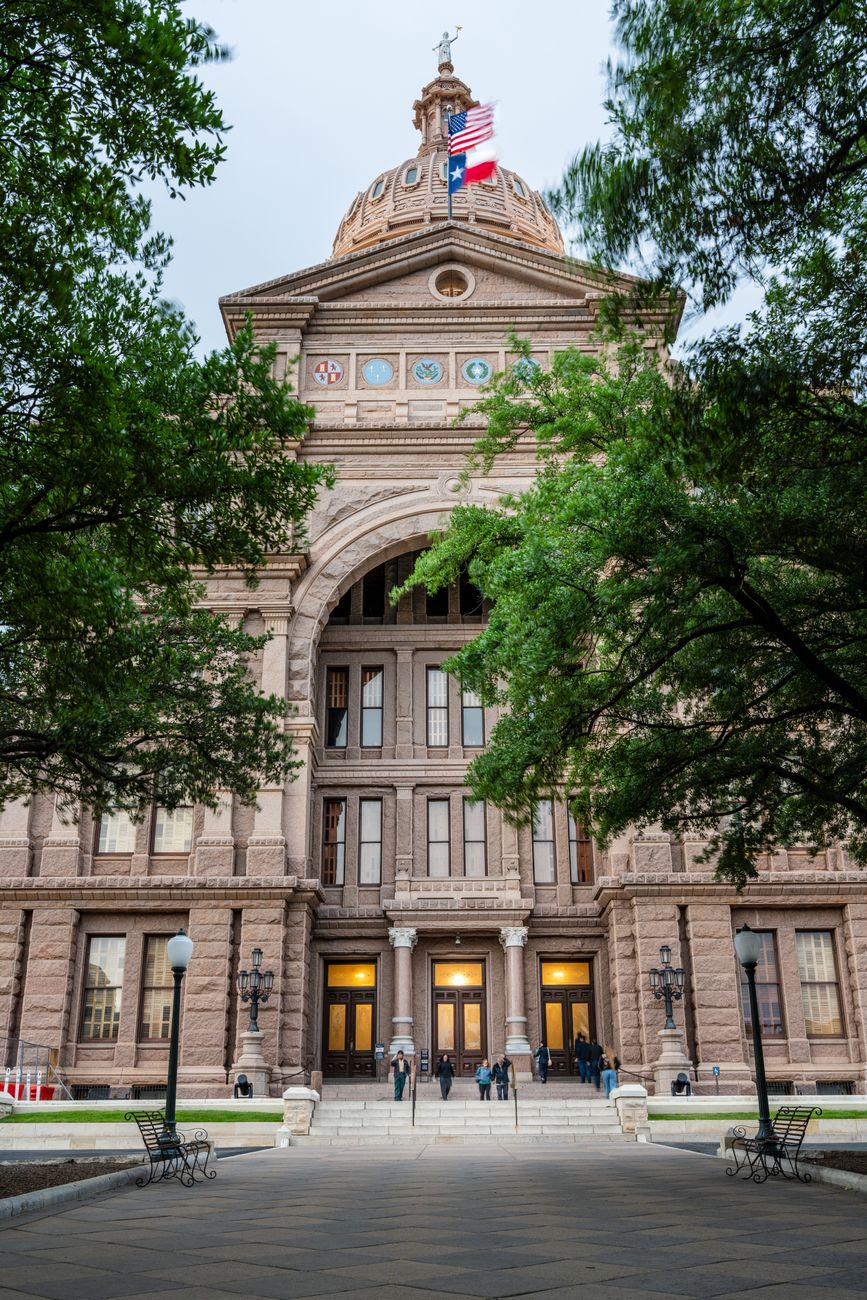
    Front view of the iconic Texas State Capitol building in Austin surrounded by trees.
    Image: Phil Evenden, via Pexels, Pexels License.

    Those prices are created through trading. Participants buy and sell contracts based on what they believe will happen, and the prices move as traders react to polling, campaign news, fundraising reports and their own expectations.

    That gives the numbers immediate appeal: they condense a great deal of political chatter into a simple probability. It also creates a risk of overreading a small movement. A market price can shift quickly, especially in a contest that remains months away from Election Day.

    Why the crossover drew attention

    Talarico’s lead matters because Texas is not routinely treated as a Democratic pickup opportunity. President Donald Trump carried the state by a double-digit margin in the 2024 presidential election, according to Newsweek, and Democrats have not won a Texas U.S. Senate seat in decades.

    Paxton, the Texas attorney general and a Republican backed by Trump, emerged from a hard-fought primary contest involving Sen. John Cornyn. Talarico, a Democratic state representative, is attempting to turn a growing national profile and a better-funded campaign into a statewide coalition.

    The Senate stakes sharpen the attention. Republicans hold a 53-45 edge in the chamber, excluding independents Bernie Sanders and Angus King, who caucus with Democrats. A Texas flip would not alone determine Senate control, but it could materially change the map in a closely divided election year.

    Polls point in the same direction

    The market move did not arrive in isolation. Several recent surveys cited by Newsweek have shown Talarico narrowly ahead, though their results also underline how little room either campaign has for error.

    • A Texas Public Opinion Research survey put Talarico ahead 45 percent to 40 percent.
    • A Fox News poll found a 51 percent to 48 percent Talarico advantage among registered voters, within its 3-point margin of sampling error.
    • A Texas Pulse survey conducted by ReconMR for the Texas A&M Bush School showed Talarico leading 47 percent to 43 percent among likely voters; its margin of error was plus or minus 4.7 points.

    Those are encouraging figures for Talarico, not proof of a durable lead. In particular, polls with margins of error that overlap the gap should be read as evidence of a competitive contest rather than a precise prediction of the final result.

    Forecast outlets are also not delivering one unified verdict. Decision Desk HQ reportedly characterized the race as a toss-up with Talarico narrowly favored, while the Cook Political Report listed it as Lean Republican. That split captures the central reality: current momentum and Texas’s longer-term partisan baseline are pulling in different directions.

    Paxton faces a coalition test

    For Paxton, the question is whether he can consolidate Republican voters while limiting Talarico’s gains among independents and moderates. The Texas Pulse findings cited by Newsweek suggested Talarico had expanded his advantage with independents compared with the pollster’s June survey.

    Paxton also carries political baggage that Democrats are likely to keep highlighting, while Talarico’s campaign has reported substantially stronger fundraising. Money does not decide races by itself, but it can pay for voter outreach, advertising and field operations across a state as large and expensive as Texas.

    There is a competing view, and it is substantial: Republican candidates still begin with a built-in advantage in Texas. A Democrat can lead a survey in midsummer or attract speculative market money and still struggle when turnout rises, partisan messaging intensifies and undecided voters make a final choice.

    What prediction odds cannot settle

    Prediction markets are useful as a measure of sentiment, especially when their prices track multiple polls. They are not substitutes for public polling, campaign finance reports, turnout data or the election itself.

    Political scientists quoted by Newsweek offered both interpretations. Columbia University professor Robert Y. Shapiro said a Texas Democratic win would be a striking change with national implications. University of Kentucky professor D. Stephen Voss cautioned that political-futures investors, like pollsters, can be wrong.

    That caution is particularly relevant when the gap is narrow. Talarico’s 56-44 Kalshi edge and 52-48 Polymarket advantage show that traders currently see him as slightly more likely to win than Paxton. They do not mean either platform has found a hidden certainty about Texas voters.

    The next evidence will matter more

    The durable test is whether Talarico can maintain his position as new surveys arrive and the campaigns define each other for a broader electorate. Watch for independent-voter movement, fundraising totals, turnout signals and whether Republican support coalesces behind Paxton after the primary.

    For now, the first-time prediction-market lead has changed the conversation around the Texas Senate contest. Talarico is no longer appearing only as a candidate with a favorable poll or two; he is being priced by two high-profile markets as the narrow favorite. In a state still widely associated with Republican dominance, that is a meaningful development—even if it is not a final verdict.

  • Seattle Mayor Katie Wilson Faces Recall Review Over Public Safety

    Seattle Mayor Katie Wilson Faces Recall Review Over Public Safety

    The filing puts Seattle’s debate over policing, public safety and surveillance systems into a formal legal process. But the charges still must clear prosecutorial and court review before petitioners can begin seeking signatures for a recall election.

    Recall charges were filed against Seattle Mayor Katie Wilson on Tuesday, August 11, by Seattle residents Melinda Jacobson and Dale Osterud. The charges accuse Wilson of neglecting duties tied to public safety, police leadership and the city’s camera surveillance system, and the King County Prosecuting Attorney’s Office will review them.

    The filing could eventually lead to a recall election in Seattle, King County, Washington, but it is only the opening stage. Before organizers can gather signatures, the allegations must survive legal review and be presented to a Superior Court judge.

    The allegations center on public safety

    Jacobson and Osterud’s filing, as described by KFI AM 640, ties its case to a series of disputes over city leadership and public safety. Their petition cites the forced resignation of Police Chief Shon Barnes, persistent crime and drug-use concerns in North Aurora and the Chinatown International District, and the deactivation of CCTV cameras in certain areas.

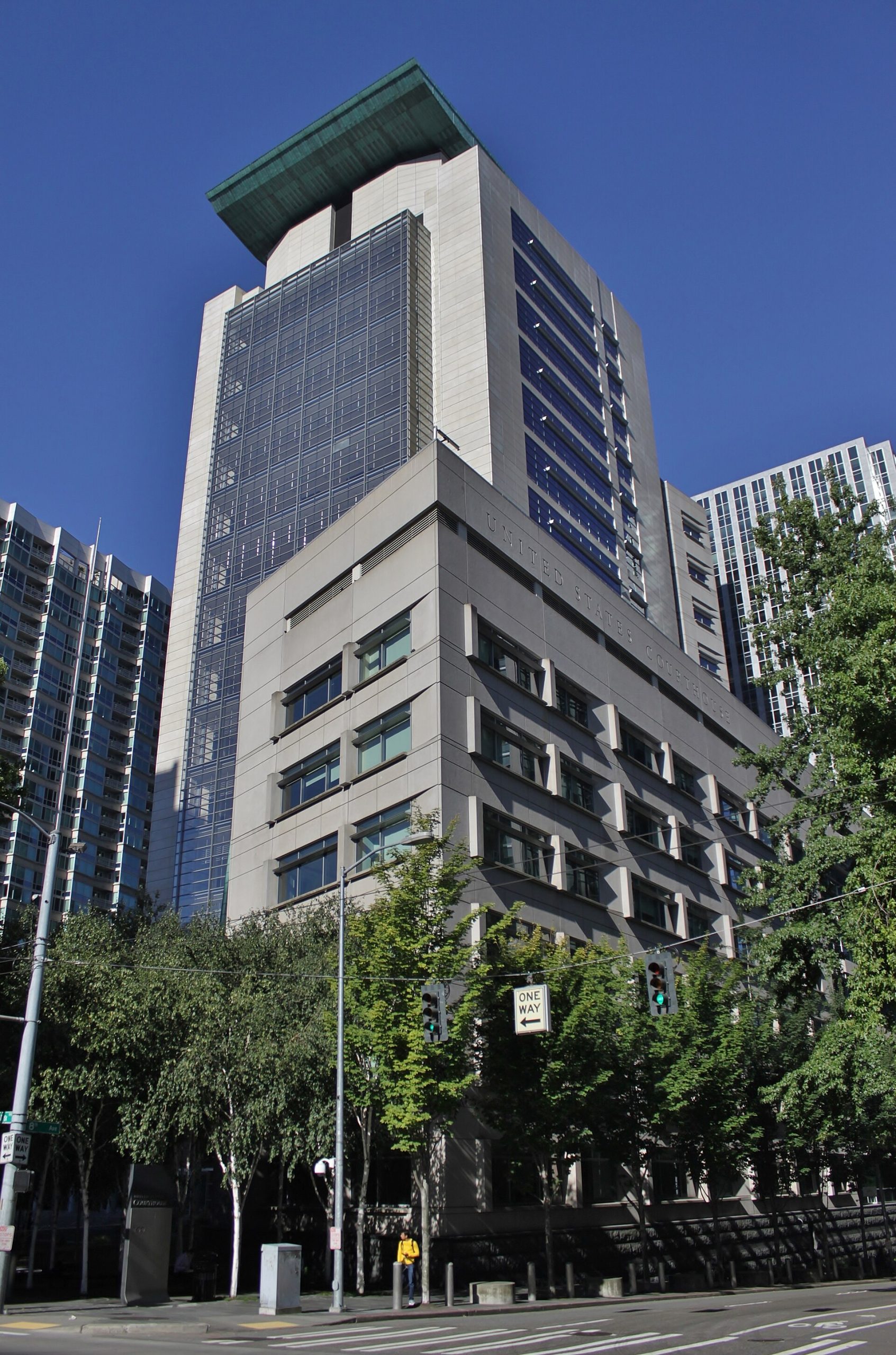
    U.S. Courthouse, Seattle, from street level
    Image: SounderBruce, via Wikimedia Commons, CC BY-SA 2.0.

    The petitioners argue those events show a failure of leadership and fiscal responsibility. Those are allegations by the recall proponents, not findings by a court or the King County Prosecuting Attorney’s Office.

    That distinction matters. A recall case is not simply a vehicle for registering voter dissatisfaction with an elected official’s policy choices. Under Washington law, allegations must be evaluated against legal standards for recall, including misfeasance, malfeasance or violation of an oath of office.

    A filing is not a recall vote

    Calling the document “recall charges” can make the process sound more immediate than it is. Wilson has not been recalled, no ballot has been set, and voters have not yet been asked to decide whether she should remain in office.

    The King County Prosecuting Attorney’s Office is expected to review the charges and prepare a ballot synopsis. That synopsis is then presented to a Superior Court judge, who determines whether the charges are legally and factually sufficient to move forward.

    The key question is not merely whether the petitioners can point to unpopular outcomes or heated policy disagreements. The legal review focuses on whether the claims, if supported, meet Washington’s requirements for a recall action against a public officer.

    That high bar helps explain why recall efforts can generate substantial political attention without ever reaching an election.

    What petitioners must prove next

    If the charges are approved through the review process, the effort would move into its most visible phase: signature gathering. KFI reported that organizers would have 180 days to gather enough valid signatures to force a vote.

    Washington statute sets the threshold for an officer of a city of the first class at signatures from legal voters equal to 25% of the total votes cast for all candidates for that office in the preceding election. It is a substantial requirement designed to show that an effort has broad support before public resources are used for a recall election.

    • First: The prosecutor reviews the submitted charges.
    • Then: A ballot synopsis is developed and goes before a Superior Court judge.
    • After court approval: Petitioners can seek signatures during the 180-day window described in the report.
    • Only if enough valid signatures are filed: A recall election could be scheduled.

    Each stage is consequential. A failed court review ends the effort before signature gathering begins, while a shortfall in valid signatures prevents a ballot regardless of how much attention the campaign receives.

    Why Seattle’s history is relevant

    Seattle has a long political history, but successful mayoral recalls are rare. KFI reported that only two Seattle mayors have been successfully recalled: Hiram Gill in 1911 and Frank Edwards in 1931.

    That record is a reminder that a recall is not an ordinary election campaign with a lower barrier to entry. It is an exceptional legal mechanism, and courts play a central role in deciding whether a petition can advance.

    University of Washington law professor Hugh Spitzer told KFI that recall efforts are often blocked because petitioners do not provide enough evidence of illegal or improper conduct. That does not resolve the Wilson filing; it does frame the obstacle the petitioners face.

    Supporters of the effort may see it as a needed accountability measure over policing, street safety and surveillance policy. Critics may argue that policy disputes should be settled through regular elections rather than a recall process intended for specific misconduct. The court process is where those competing views become legally relevant.

    Surveillance policy adds another fault line

    The references to camera deactivations bring an additional layer to the case. Public cameras can be viewed by supporters as a crime-prevention and investigative tool, particularly in areas where residents and businesses have raised safety concerns.

    Others raise privacy, civil-liberties and oversight questions about surveillance infrastructure. A policy argument over where cameras should operate, who monitors them and how data is used can be politically intense without necessarily establishing grounds for recall.

    For the petitioners, the challenge will be connecting their concerns to the legal allegations in a way that meets Washington’s recall standard. For Wilson, the case may become a test of how her administration explains decisions that critics say have weakened public safety.

    As of KFI’s report, Wilson had not publicly responded to the charges. No response from her office was included in the source material reviewed for this article.

    The next ruling will shape the fight

    The immediate development to watch is the King County Prosecuting Attorney’s Office review, followed by the court’s consideration of the ballot synopsis and charges. Those steps will determine whether the matter remains a filed complaint or becomes an active petition drive.

    Important questions remain unresolved: which allegations will be deemed legally sufficient, what exact ballot language could be approved, and whether organizers could meet the signature threshold if they get that far.

    For now, the recall charges put pressure on Seattle Mayor Katie Wilson and elevate public-safety disputes into a formal challenge. They do not, by themselves, establish wrongdoing or guarantee that Seattle voters will see a recall election.

  • David Crowley Beats Francesca Hong in Tight Wisconsin Democratic Primary

    David Crowley Beats Francesca Hong in Tight Wisconsin Democratic Primary

    Crowley’s win gives Wisconsin Democrats a nominee for a pivotal general-election contest against Republican Tom Tiffany. It also shows how a close primary can turn a colorful campaign anecdote into a bigger story than the result itself.

    Francesca Hong lost the Wisconsin Democratic primary for governor to David Crowley on Aug. 11, 2026, handing Crowley the party’s nomination in a battleground-state race. A viral headline also said Crowley re-entered the race after his wife saw a bird, but the supplied reporting verifies his return to the contest and does not independently substantiate that unusual explanation.

    Crowley, Milwaukee County’s executive, narrowly defeated Hong, a democratic socialist and Madison-area state representative. The close outcome matters because Wisconsin Democrats must now unite behind Crowley before a general-election matchup with Republican U.S. Rep. Tom Tiffany.

    Crowley emerged from a photo finish

    The Associated Press declared Crowley the winner after Hong conceded, according to reporting published by PBS NewsHour. The race was close enough that Hong could have sought a recount because Crowley’s margin was under 1 percentage point.

    David Crowley, Milwaukee County Executive, at the Wisconsin State Capitol, Madison, WI, February 26, 2026 06
    Image: LaShawnda Jones, via Openverse, by-sa.

    Wisconsin rules would have required Hong’s campaign to pay for a recount because the margin was wider than 0.25 percentage points, PBS reported. Her concession removed that possibility and cleared the way for Crowley to become the Democratic nominee.

    Crowley’s campaign framed the result as the start of a broader coalition effort. Campaign manager Garren Randolph said Crowley was focused on winning support from Democrats, Republicans, independents and voters who want government to deliver results.

    The bird story needs caution

    The claim that Crowley returned because his wife saw a bird is the attention-grabbing detail in the trend headline supplied for this article. It should not be treated as an established explanation for a consequential political decision without a direct account from Crowley, his wife or the campaign.

    The independently reported timeline is clearer. Crowley dropped out of the contest in early July, then returned 10 days later with outgoing Democratic Gov. Tony Evers’ endorsement, according to the PBS report.

    That does not prove the bird anecdote is false; it means the available reporting does not verify it. Campaign folklore can be memorable, especially in a fast-moving primary, but readers should distinguish a colorful origin story from the documented facts of a candidate’s decision.

    Hong tested progressive momentum

    Hong’s campaign was closely watched as a measure of whether a democratic socialist could win statewide in Wisconsin, where elections are often decided by narrow margins and moderate or independent voters can be decisive.

    The 37-year-old former line cook and single mother sought to channel frustration with the Democratic establishment, the cost of living, immigration enforcement and U.S. military aid to Israel. Her campaign came amid recent progressive victories elsewhere, including Democratic socialist-aligned candidates in New York City and Abdul El-Sayed’s U.S. Senate primary win in neighboring Michigan.

    But Hong did not receive endorsements from some high-profile national progressive figures, including Sen. Bernie Sanders and Rep. Alexandria Ocasio-Cortez. That absence underscored a broader reality: the progressive movement is active but not politically uniform, and its candidates do not necessarily share the same coalitions or priorities.

    Hong told supporters late on election night that the campaign had built something that would change politics, while her campaign manager, Becky Cooper, said the team was proud of a clean race that created meaningful change for the progressive movement.

    Why Wisconsin Democrats chose Crowley

    Crowley presented himself as the candidate best equipped to beat Tiffany in November. As Milwaukee County executive, he has a record in one of the state’s most consequential Democratic strongholds and could become Wisconsin’s first Black governor if elected.

    For Democrats, the choice was partly about ideology and partly about electability. Some voters and party leaders worried that a candidate associated with democratic socialism could face a tougher path in a statewide contest, particularly against a Republican opponent likely to focus on public safety, taxes and cultural issues.

    Hong’s narrow defeat complicates any claim that Wisconsin Democrats rejected progressivism outright. A candidate from the party’s left nearly won a major statewide primary, signaling that a large part of the Democratic electorate wants sharper answers on affordability, power in politics and dissatisfaction with the status quo.

    The November race changes the stakes

    Wisconsin is a state where national politics and state government often collide. Democrats are hoping to retain the governor’s office and flip both chambers of the Legislature, which would give the party full control of state government for the first time since 2010.

    Republicans, meanwhile, will have a chance to argue that Democratic control in Madison has gone too far. Tiffany, a congressman from conservative northern Wisconsin who has received President Donald Trump’s endorsement, will bring a distinctly different political coalition to the governor’s race.

    Crowley and Hong both said near the end of the primary that Democrats needed to come together to defeat Tiffany. Whether Hong’s progressive supporters enthusiastically consolidate behind Crowley may be one of the campaign’s central unanswered questions.

    A result bigger than one anecdote

    The verified takeaway is straightforward: Crowley won a narrow Democratic primary over Hong and will carry his party’s banner into a competitive Wisconsin governor’s race. His brief exit and return added another twist to an already turbulent contest that saw other prominent candidates leave the field amid scandals.

    The bird claim may continue to travel because it is unusual and easily shared. But it is not the part of this story that determines Wisconsin’s political future. The more consequential test is whether Crowley can hold together a party split by strategy and ideology while persuading the swing voters who so often decide elections in the state.

  • John Feeley Links Trump Meeting to His Panama Resignation

    John Feeley Links Trump Meeting to His Panama Resignation

    Feeley’s resignation was an unusually direct statement of principle from a career diplomat. His account of a Trump meeting adds a personal dimension to a break that had already exposed strains inside the U.S. diplomatic corps.

    John Feeley, who resigned as U.S. ambassador to Panama, has described a meeting with Donald Trump that he says helped lead to his departure. In the account introduced with the phrase “I kid you not,” Feeley said he could no longer serve under Trump, putting fresh attention on a 2018 resignation that was already remarkable for its plain language.

    The key point is not that Feeley simply disagreed with a president’s policies. The career diplomat said he had reached a point where he could no longer carry out his duty to serve the administration in an apolitical way. Public reporting documents that explanation clearly; the precise details, timing and subject of the Trump meeting remain less fully established in the materials available.

    Feeley’s resignation was unusually direct

    Feeley announced in January 2018 that he would leave his Panama posting, with his departure set for March 9. He had been a career Foreign Service officer and a specialist in Latin America, rather than a political appointee brought in from outside the diplomatic service.

    Embajador de Estados Unidos en Panamá John Feeley
    Image: U.S. Embassy Panama, via Openverse, by-nd.

    In language reported by Reuters and quoted by NPR and the BBC, Feeley recalled the oath he took as a junior Foreign Service officer: to serve the president and the administration faithfully and without partisanship, even when he disagreed with policy.

    He said his training also taught that an officer who believed he could no longer meet that obligation was “honor bound to resign.” His conclusion was brief and consequential: “That time has come.”

    That framing matters because it put the focus on institutional duty, not one isolated disagreement. Diplomats routinely represent policies they did not write. Feeley’s statement said he believed he had crossed the line at which he could no longer do so.

    The Trump meeting adds a personal turning point

    Feeley’s description of a meeting with Trump gives the resignation a more immediate human narrative: a former ambassador identifying a personal encounter as part of the path to walking away. It does not, on the available record, replace the broader reason he gave in his resignation letter.

    The public accounts from 2018 did not spell out the full substance of the meeting now associated with his decision. They establish that Feeley resigned because he felt unable to continue serving under Trump; they do not provide a complete transcript, date or official White House account of the encounter.

    That distinction is important in political stories built around a vivid recollection. A firsthand account can illuminate how an official experienced a presidency. It should not be treated as proof of details that have not been independently documented.

    Feeley’s “I kid you not” framing signals the disbelief or intensity he attaches to the episode. But the strongest verifiable takeaway remains his own stated conclusion: the meeting sat within a wider loss of confidence in his ability to serve.

    Why the timing caused confusion

    Feeley’s departure became public amid international outrage over reports that Trump had used a vulgar term in a January 2018 immigration meeting to describe Haiti and African nations. Trump denied making the reported comments.

    News organizations at the time cautioned against treating Feeley’s resignation as a direct response to those remarks. NPR reported that he had tendered his resignation before that meeting took place, while the BBC reported that the State Department had learned of his planned departure in late December.

    That sequence undercuts a simple one-event explanation. Feeley’s public reasoning pointed to a longer-running conflict over whether he could represent the administration, even if later-reported meetings or remarks sharpened the public’s understanding of the divide.

    The State Department, meanwhile, described his exit as being for “personal reasons,” according to contemporaneous reports. That official formulation was far less revealing than Feeley’s own explanation, but it reflected the government’s restrained public posture around a senior diplomat’s departure.

    Diplomats are expected to absorb disagreement

    U.S. ambassadors serve at the direction of the president, and career diplomats are trained to implement elected leaders’ foreign policy regardless of their personal political preferences. That expectation is central to a professional, nonpartisan Foreign Service.

    There is also a limit embedded in that tradition. Officials can resign when they believe continued service would conflict with their oath, conscience or professional responsibilities. Feeley invoked that limit directly rather than offering a conventional, vague retirement explanation.

    Supporters of Feeley’s decision can view it as an act of candor: a diplomat recognizing that his credibility and his duty had come into conflict. Critics might argue that senior officials should remain in place to provide expertise, continuity and internal advice during turbulent periods.

    Neither view eliminates the basic reality of diplomatic service. An ambassador abroad is a public face of the United States. If that representative no longer believes he can faithfully speak for the administration, staying can create its own institutional problem.

    Panama made the departure consequential

    Panama is not a symbolic posting. The country sits at a strategic crossroads for global shipping through the Panama Canal, and the U.S.-Panama relationship carries long historical, commercial and security significance.

    Feeley brought substantial regional experience to the role. His exit therefore drew notice not just as another staffing change but as a loss of a veteran official in a strategically important part of the hemisphere.

    The resignation also came during a period in which the Trump administration faced broader scrutiny over diplomatic vacancies, morale and the role of career officials. Feeley’s letter became a high-profile example of a Foreign Service officer publicly explaining why he would not continue.

    His account of a Trump meeting now revives that moment because it shifts attention from an official document to the private experiences that can precede one. The record supports the larger story of a principled resignation; it is more limited on the encounter’s specific contours.

    What remains clear and unresolved

    Feeley’s core position is not in doubt: he resigned as ambassador to Panama after deciding he could no longer serve under Trump. His resignation letter laid out an ethical and professional rationale grounded in the obligation of a nonpartisan diplomat.

    What remains unclear from the available reporting is exactly what occurred in the meeting Feeley now identifies as part of his decision, when it happened and whether any contemporaneous official accounts corroborate his characterization.

    That gap does not erase his account. It sets its proper weight. The meeting is Feeley’s explanation of a breaking point, while the resignation letter is the contemporaneous document that shows how he publicly justified leaving government service.

    For readers revisiting the episode, that is the lasting significance: a career ambassador made the rare choice to say that serving a president had become incompatible with the standard he believed his oath required.

  • Luke Bronin Ousts John Larson in Connecticut Democratic Primary

    Luke Bronin Ousts John Larson in Connecticut Democratic Primary

    Luke Bronin’s victory over a longtime congressman was about more than age. It tested whether Democratic voters want proven institutional experience or a more visibly confrontational, movement-focused style in Washington.

    John Larson lost the Democratic primary in Connecticut on Tuesday, August 11, 2026, as former Hartford Mayor Luke Bronin defeated John Larson after campaigning on generational change. Larson, 78, had spent 27 years in Congress; Bronin, 46, argued that Democratic voters and the Democratic Party need younger leadership with a different kind of political energy.

    The result matters beyond Hartford. It gives a concrete victory to Democrats who believe experience alone is no longer enough in a party trying to respond to President Donald Trump’s second term and win back voters who have lost confidence in its direction.

    Bronin beat a deeply rooted incumbent

    Larson was not an unknown or isolated House member. He had been a fixture of Connecticut politics for decades, serving in the state Legislature before his long tenure in Congress and previously holding a party leadership role.

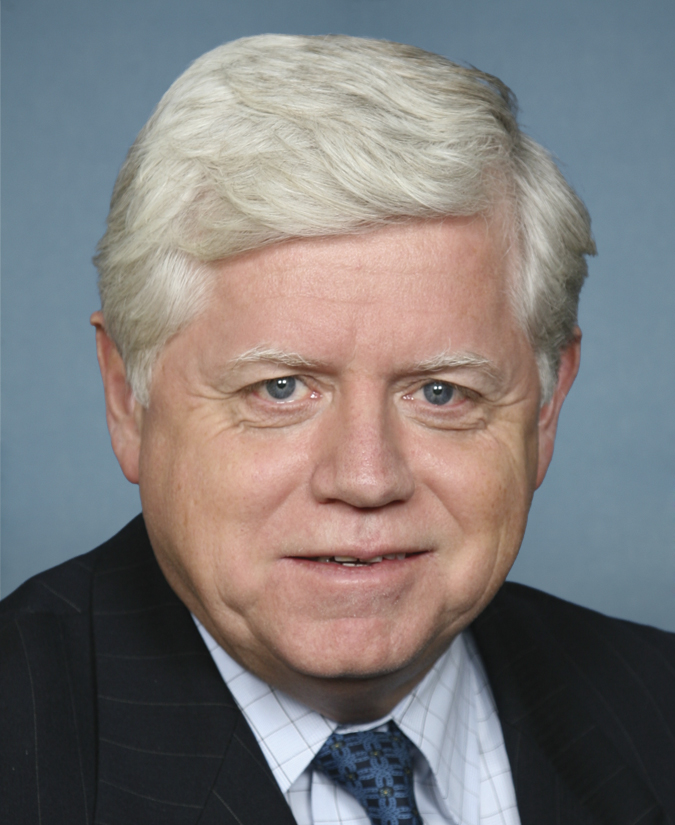
    John B Larson, Official Portrait, circa 111 112th Congress
    Image: US House of Representatives, via Wikimedia Commons, Public domain.

    He also entered the race with prominent support. Connecticut’s congressional delegation, House Minority Leader Hakeem Jeffries and key labor unions backed Larson, according to NBC News.

    That made the outcome a meaningful upset. Incumbent members of Congress generally begin with advantages in name recognition, fundraising networks, constituent service operations and endorsements. Larson had each of those assets, plus a record he repeatedly emphasized during the campaign.

    But endorsements and longevity did not settle the contest. Bronin raised more money than Larson and secured the Connecticut Democratic Party’s endorsement at its state convention, showing that the challenger’s case had support inside as well as outside established party circles.

    A campaign centered on change

    Bronin framed the race as an argument about the kind of representation Democrats need now. His message was not simply that Larson had served a long time; it was that the political moment demanded a new approach.

    In a late-May interview with NBC News, Bronin said a member of Congress has responsibilities beyond work in committee rooms and formal Capitol proceedings. He argued that Democratic lawmakers must use their platforms to build a broader movement and reconnect with people who have become disillusioned with the party.

    That pitch draws a sharp distinction between legislative experience and political visibility. A lawmaker can be effective at navigating Congress, Bronin’s argument suggested, while still falling short of what voters expect from an opposition party confronting a Republican president.

    For supporters of generational change, Bronin’s victory is evidence that this message can break through even against a well-known incumbent. It does not establish that every older Democrat is vulnerable, but it shows the argument can become decisive when a challenger pairs it with organization, money and a credible résumé of his own.

    Larson argued experience still matters

    Larson rejected the idea that a change in personnel was the answer. Speaking on NBC News’ “Meet the Press Now” before the primary, he said the change Democrats needed was continued opposition to Trump and pointed to his own record.

    He highlighted what he described as his accomplishments for constituents and his work on Social Security. Larson’s campaign offered a familiar incumbent case: seniority, relationships and policy expertise can produce results that a newcomer may not be able to match quickly.

    Larson also challenged Bronin’s lack of a congressional record. That criticism gets at a real tension in these races. Voters may want fresh leadership, yet Congress rewards institutional knowledge, coalition-building and an ability to turn public priorities into legislation.

    The primary result does not prove that Larson’s record lacked value. It shows that enough Democratic primary voters preferred Bronin’s promise of a different style and direction over Larson’s argument for continuity.

    The broader Democratic warning sign

    Larson became the 10th House member to lose a primary this year, NBC News reported. Seven of those defeated incumbents were Democrats and three were Republicans.

    Those figures should be read carefully. Primary losses are shaped by local conditions, district boundaries, fundraising, candidate quality and the timing of a challenge. One Connecticut race cannot speak for every Democratic district.

    Still, Larson’s defeat fits a visible debate inside the party over leadership, age and urgency. Some Democrats see veteran lawmakers as indispensable figures who understand how to defend programs, negotiate policy and counter Republican power. Others believe the party has been too cautious and too tied to an older political generation.

    The debate is not only about birthdays. It is also about communication, public organizing and whether Democratic officeholders are meeting a moment in which voters often judge representatives by their ability to project urgency as much as by their committee work.

    What Bronin’s victory does and does not mean

    Bronin now has a primary victory that validates his central campaign theme, but winning the nomination is not the same as proving that generational change is a complete governing strategy. He will face the practical demands attached to serving in Congress: constituent service, complicated federal legislation and the need to work with colleagues who may not share his approach.

    There is also an unresolved question for Democratic leaders. Should they treat Larson’s loss as a call to promote younger candidates more aggressively, or as a reminder that incumbents need to make a clearer case for what their experience delivers in the present?

    Bronin’s campaign suggests challengers can succeed when they make that contrast specific. He did not run only against Larson’s age or tenure; he argued that the party needs lawmakers who can organize, communicate and create momentum outside Washington.

    For Larson, the defeat ends a congressional run that lasted nearly three decades. For Democrats, it adds another data point to an unsettled question: whether the party’s next chapter will be led by experience, by generational turnover, or by candidates able to convincingly combine both.

  • Judge Pauses Mamdani’s NYC Second-Home Tax After Homeowners Sue

    Judge Pauses Mamdani’s NYC Second-Home Tax After Homeowners Sue

    The court pause does not decide whether New York City can tax high-value second homes. It puts the city’s plan, its potential revenue and the practical rules behind it under new scrutiny.

    A judge halted Mamdani’s planned pied-à-terre tax rollout in New York City after homeowners sued over the proposed tax on high-value second homes. The court-ordered pause means the levy cannot proceed on its planned timetable while the legal challenge is considered, leaving the proposal in legal limbo.

    For New York City, the immediate issue is not simply whether affluent owners should pay more. The dispute now centers on whether the city can define, assess and collect a tax on costly non-primary residences in a way that can withstand legal review.

    A pause, not a final ruling

    The judge’s order stops the rollout for now; it does not resolve the underlying fight over the tax’s legality. Homeowners are challenging the rollout, according to CNN’s report, but the available reporting does not establish that a court has ruled on the merits of their claims.

    New York City
    Image: Padmanaba01, via Openverse, by-sa.

    That distinction is crucial. The proposal has not been permanently struck down, and the court pause does not guarantee that the tax will never take effect. It preserves the status quo while the challenge is addressed.

    For owners who could be affected, that creates uncertainty rather than a settled answer. For City Hall, it means revenue tied to the proposal cannot be treated as dependable unless the plan clears this legal hurdle and the city can carry it out.

    The tax targets costly second homes

    A pied-à-terre generally refers to a residence used occasionally rather than as an owner’s primary home. In New York City, the concept has focused on expensive second homes, particularly luxury apartments owned by people who live elsewhere for most of the year.

    Supporters see a case for charging affluent owners more for underused, high-value properties. Their argument is that a city facing housing and budget pressures should not leave costly part-time residences relatively lightly taxed simply because they are not occupied full time.

    Opponents raise a different concern: the city may struggle to apply the tax fairly. A residence does not always fit neatly into a primary-home-or-second-home category, especially when an owner’s living arrangements change or a unit is rented.

    The policy’s central administrative task is therefore also a potential source of conflict. Officials would need workable ways to determine who uses a property as a primary residence, whether it is rented, what value should apply and which owners qualify for exemptions.

    Revenue projections have a wide range

    The New York City comptroller has described a pied-à-terre tax as a potentially meaningful but uncertain revenue source. In a fiscal note reviewing earlier versions of the proposal, the comptroller’s office cited a $500 million estimate associated with roughly 13,000 second homes valued at $5 million or more.

    That eye-catching figure came with substantial qualifications. The fiscal note estimated that a version of the tax could bring in nearly $500 million from a little more than 11,200 properties before accounting for rental exclusions and changes in owners’ behavior.

    After those adjustments, the projected range fell to about $340 million to $380 million. The difference illustrates why the legal pause has implications beyond the property owners who brought the challenge.

    Collections would depend on the ultimate rates, definitions, exemptions, compliance rules and the tax’s legal fate. Revenue could also decline if owners rent homes as primary residences, alter how they use a property or successfully dispute the city’s classification.

    Luxury apartments pose valuation problems

    Determining which properties should be taxed is especially complicated in New York City’s co-op and condominium market. For one-, two- and three-family houses, the earlier legislative framework reviewed by the comptroller used a five-year average market-value threshold of $5 million.

    Co-ops and condos present a different challenge because city assessments do not necessarily match an apartment’s market sale price. The comptroller noted that the valuation rules can make assessed values a rough stand-in for actual market value, particularly in buildings where units differ widely in size and value.

    That creates risks for both sides of the debate. A broad system could draw in homes that owners say do not resemble the luxury properties lawmakers intended to reach. A narrow system could limit revenue and invite criticism that too many high-value residences are excluded.

    Rental status is another difficult line to draw. A unit rented to someone who uses it as a primary residence raises a different policy question from an apartment that is vacant for much of the year. Applying that distinction requires reliable information, clear standards and a way to resolve disputes.

    The court fight tests the design

    The homeowners’ lawsuit moves these policy questions into a legal forum. Courts do not decide whether a tax is politically popular; they examine the authority for it and whether the government followed applicable legal requirements in putting it into effect.

    That makes the halt significant even without a final ruling. A delay can require officials to revise procedures, clarify regulations or reconsider assumptions that were built into budget planning. It also gives opponents time to argue that the measure is unauthorized, improperly structured or unfairly applied.

    Advocates may view the litigation as an expected response to a levy aimed at owners with substantial wealth and expensive real estate. Property owners and business groups may see the case as evidence that thresholds and taxpayer protections need to be more precise before collection begins.

    Neither position decides the case. The outcome will rest on the legal arguments and record before the court, rather than on the broader political argument over whether second-home owners should contribute more.

    Key questions remain unresolved

    The available reporting leaves several important points unanswered: how long the pause will last, which legal claims the court may accept or reject, and whether New York City will alter its implementation plan.

    It is also unclear when the city could begin collecting money if the tax ultimately proceeds. The comptroller’s fiscal note had already warned that legal challenges could affect timing, a caveat that now has immediate consequences.

    The case shows the gap between a simple policy goal and the mechanics needed to execute it. New York City’s proposed levy is intended to raise money from high-value second homes, but its future depends on whether the city can build a legally durable and administratively workable system.

    For now, Mamdani’s pied-à-terre tax remains paused. Its next phase will be shaped not only by the city’s budget debate, but by the court’s review of the homeowners’ challenge.

  • Francesca Hong’s Wisconsin Loss Reveals Limits of the Far Left

    Francesca Hong’s Wisconsin Loss Reveals Limits of the Far Left

    Hong’s loss to Crowley does not settle the Democratic Party’s ideological argument. It does show how quickly a movement’s visibility can collide with the practical demands of winning a statewide race.

    The far left suffered a setback in Wisconsin’s Democratic gubernatorial primary on Tuesday night: democratic socialist Francesca Hong lost to David Crowley. Hong’s defeat revealed limits to the far left’s power in a race that had been cast as evidence of an emerging insurgency inside the Democratic Party.

    Crowley’s win matters beyond one primary because Wisconsin is a closely contested state, where Democratic candidates must assemble broad coalitions. The result undercuts the idea that a left-wing candidate’s activist profile alone can carry a statewide contest — while leaving open a larger fight over what Democratic voters want from their party.

    Crowley wins a closely watched primary

    POLITICO reported that Crowley secured a surprise victory against Hong, ending a campaign that drew national attention because of the ideological contrast between the candidates.

    Tammy Baldwin and David Crowley
    Image: Sen. Tammy Baldwin, via Wikimedia Commons, Public domain.

    Hong, a democratic socialist, had become a focal point for activists who saw her candidacy as a possible breakthrough. Her campaign was closely associated with the argument that Democrats should embrace a more confrontational economic and political agenda.

    Crowley’s victory instead gave Wisconsin Democrats a nominee whose coalition proved broader than many observers expected. The available reporting does not make the result a clean referendum on every issue either candidate supported. Primaries are shaped by candidate familiarity, local networks, spending, turnout and late-breaking events as much as ideology.

    Why Wisconsin was a hard test

    Wisconsin is not simply another blue-state primary laboratory. It is a perennial battleground where statewide candidates face narrow margins and where general-election viability can heavily influence primary voters.

    That setting made the race an unusually demanding test for Hong’s political project. A candidate can generate attention among online supporters, ideological groups and younger activists, yet still face a different electorate when the contest expands across urban, suburban and rural communities.

    POLITICO’s election-night coverage pointed to concerns among progressives about Wisconsin’s razor-thin political margins. Those concerns help explain why some Democratic voters may have prioritized perceived electability, unity or familiarity over a sharper ideological break.

    There is also a basic distinction between influence and control. The left can shape party debate, push issues onto the agenda and produce energetic volunteers without necessarily commanding enough votes to win every high-profile statewide race.

    The insurgency narrative takes a hit

    Hong’s defeat is a setback for the claim that the far left is steadily taking over Democratic primaries. That claim has often rested on highly visible wins by progressive candidates, strong fundraising bursts and the growing prominence of democratic socialist organizations in local and legislative races.

    But political momentum is rarely uniform. A movement can win in districts with a concentrated base and still struggle in races requiring a much larger, more ideologically mixed electorate. Wisconsin’s primary appears to be one of those moments where the coalition required to win was wider than the movement’s core.

    That does not mean progressive priorities have disappeared from Democratic politics. Questions around affordability, wages, housing, health care and corporate power remain central to many Democratic voters. The more immediate lesson is that voters may separate their interest in those issues from their choice of the candidate they believe should lead a statewide ticket.

    The phrase “far left” is itself politically loaded and often used loosely. In this case, it reflects the ideological framing around Hong’s democratic socialist candidacy, not a precise description that can be applied to every progressive voter or policy advocate.

    Even progressives saw risks

    One of the most striking details in POLITICO’s coverage was that some progressives welcomed Hong’s loss. That response suggests the conflict was not simply establishment Democrats versus a united left.

    Some party members may share parts of Hong’s policy vision while worrying that her label, campaign style or perceived ideological positioning would make the general election harder in a swing state. Others may see Crowley’s win as a chance to reduce an internal feud and focus on the next contest.

    Those judgments are political calculations, not proof that progressive ideas lack support. They do reveal a recurring Democratic tension: whether the party should use primaries to make a strong ideological statement or select the candidate most likely to hold together a diverse statewide coalition.

    • For Hong’s supporters: the loss exposes the need to build deeper geographic and institutional support, not just national enthusiasm.
    • For party moderates: Crowley’s win offers evidence that broad-coalition politics still has a strong constituency.
    • For Democratic leaders: the challenge is avoiding a victory lap that alienates voters and activists they will still need.

    Unity is now Crowley’s next test

    After the primary, Crowley moved to emphasize unity, according to POLITICO. That is the expected message, but it carries real strategic importance. A nominee cannot afford to treat a contested primary as though the losing side has no role in the coalition that follows.

    Hong told supporters that they were ready to keep fighting and that she remained confident, according to POLITICO’s live coverage. Her next moves, and those of allied activists, will help determine whether this campaign becomes a temporary disappointment or a catalyst for longer-term organizing.

    Wisconsin Democrats also face practical questions that the primary result alone cannot answer. How much of Hong’s support will transfer to Crowley? Will the party’s ideological divide soften after the nomination fight? And can Crowley’s coalition hold when the electorate becomes larger and more politically mixed?

    A loss, not a final verdict

    It would be premature to treat one Wisconsin primary as the end of the left’s influence. Political movements often grow unevenly, suffering losses in marquee contests while making gains in local offices, issue campaigns and party organizations.

    Still, the outcome is a meaningful corrective to a sweeping narrative of inevitable insurgency. Francesca Hong’s loss to David Crowley showed that in a competitive statewide Democratic primary, visibility and ideological energy may not be enough.

    The far left remains a force in the argument over the party’s future. Wisconsin’s result suggests that turning that force into statewide power will require more than a compelling message: it will require a coalition broad enough to win when every faction of the party is voting.

  • McConnell’s Record Shows One Confirmed Vote Against Paid Sick Leave

    McConnell’s Record Shows One Confirmed Vote Against Paid Sick Leave

    A viral-style claim can turn several separate legislative moments into one simple number. The official Senate record clearly documents one vote by Mitch McConnell against a paid sick leave amendment, while the four-vote assertion needs a fuller list of measures and roll calls to be assessed fairly.

    Mitch McConnell’s U.S. Senate voting record includes a documented vote against a paid sick leave amendment, but the available official record does not by itself prove the claim that he voted against sick leave four times. The Senate roll call shows McConnell voting “Nay” on March 18, 2020, on an amendment aimed at providing Americans paid sick time and paid leave.

    That distinction matters because a precise claim about four votes requires four identifiable legislative actions. One confirmed vote is meaningful evidence about McConnell’s position on that amendment; it is not, on its own, a complete accounting of every sick-leave-related vote attached to his Senate record.

    The vote the Senate recorded

    The official roll call was for an amendment offered by Democratic Sen. Patty Murray of Washington during Senate consideration of H.R. 6201, the Families First Coronavirus Response Act.

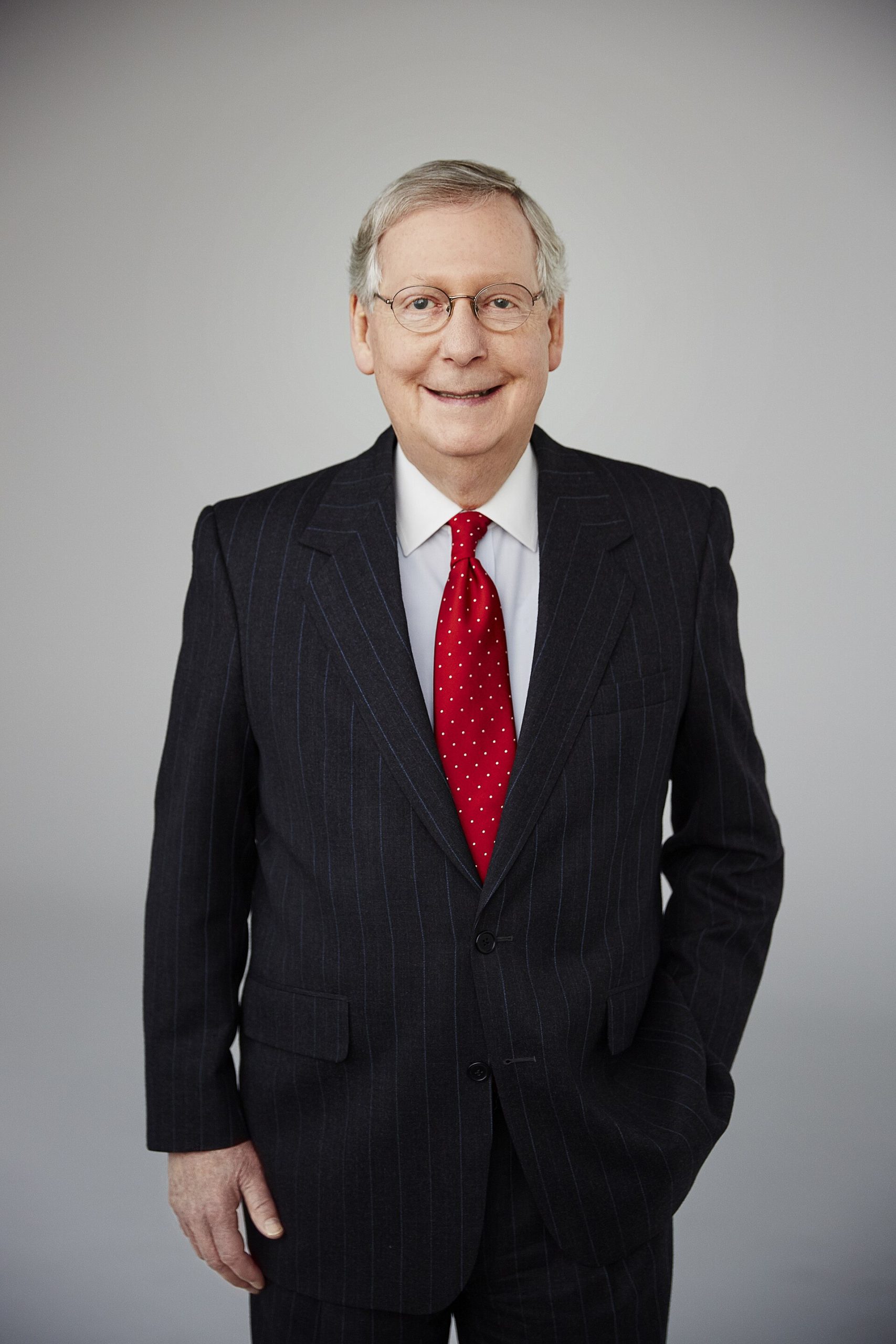
    Mitch McConnell 2016 official photo
    Image: Office of Senator Mitch McConnell, via Wikimedia Commons, Public domain.

    The amendment’s stated purpose was direct: to provide Americans with paid sick time and paid leave so they could address their own health needs and the health needs of family members. The vote took place early in the COVID-19 pandemic, when lawmakers were debating emergency responses to the outbreak’s economic and public-health effects.

    The amendment failed, 47 to 51. McConnell, then the Senate Republican leader from Kentucky, was listed among the 51 senators voting “Nay.”

    What McConnell voted against

    The March 2020 vote was not a generic question asking senators whether they supported workers taking time off when ill. It was a vote on a particular amendment, with its own scope, policy language and legislative setting.

    That is an important limitation in nearly every voting-record dispute. A senator may oppose an amendment because of its cost, drafting, timing, relationship to a larger bill or preferred alternative—even when critics characterize the vote as opposition to the policy goal in broad terms.

    None of those possible considerations changes the roll-call result: McConnell voted against Murray’s paid sick time and paid leave amendment. But they do explain why the wording of a claim deserves scrutiny.

    Why the number four needs evidence

    To verify that McConnell voted against sick leave four times, a fact-check would need to identify each of the four votes and establish that each one genuinely concerned sick leave or paid leave. That means naming the bill or amendment, date, vote number and McConnell’s recorded position.

    The Senate document available here supplies those details for one event: Senate Roll Call Vote 74 in the 116th Congress, second session. It does not provide three additional roll calls.

    So the narrow finding is clear: there is one official, confirmed “Nay” vote on a paid sick leave and paid leave amendment. The broader four-vote claim cannot be established from this record alone.

    How legislative claims get compressed

    Political claims often turn complex procedural votes into shorthand. “Voted against sick leave” may refer to a vote against a standalone paid-leave proposal, an amendment to a broader emergency bill, a procedural motion that affected a proposal’s path, or a final package containing multiple provisions.

    Those categories are not interchangeable. A vote on an amendment can be especially hard to summarize because the amendment may have been offered to alter legislation that later passed in a different form.

    Supporters of an accusation may reasonably point to the policy the measure sought to advance. Defenders may argue that the vote reflected objections to a particular legislative vehicle rather than opposition to all forms of leave. Readers can weigh those arguments, but first need the exact vote being described.

    The pandemic context shaped the vote

    The March 18, 2020, roll call occurred as Congress was moving rapidly on pandemic relief. Paid leave became a central issue because workers who were sick, quarantining or caring for family members could face immediate pressure to remain on the job without job-protected time away.

    In that environment, the Senate’s 47-51 rejection of the Murray amendment reflected a sharp partisan division. All 47 “Yea” votes listed in the Senate roll call came from Democrats and independents who caucused with Democrats, while McConnell and most Republican senators were recorded as voting “Nay.”

    The result also shows why one vote can become politically durable. Paid sick leave touches wages, workplace rules, public health and family care, making it an issue that remains potent long after the immediate legislative fight ends.

    A better way to read voting records

    The most reliable approach is to start with the official question before drawing a broad conclusion. In this case, the question was whether to adopt Murray Amendment 1559, an amendment explicitly intended to provide paid sick time and paid leave.

    From there, the record supports a straightforward statement: McConnell voted no on that amendment, and it was rejected. A claim that he did so four times requires documentation for the other three alleged votes, not just repetition of the number.

    That does not settle every political argument over McConnell’s record on worker protections. It does set a useful standard: specific claims should come with specific roll calls, particularly when a single number is being used to describe a lawmaker’s history.

  • Upstate New York Sheriff Rebukes Hochul Over Sanctuary-Policy Threats

    Upstate New York Sheriff Rebukes Hochul Over Sanctuary-Policy Threats

    A reported dispute between an upstate New York sheriff and Gov. Kathy Hochul centers on sanctuary-policy threats and cooperation with federal immigration authorities. The sharper question is what New York law actually permits local police and sheriffs to do.

    An upstate New York sheriff has criticized Gov. Kathy Hochul over reported sanctuary-policy threats, according to a New York Post item distributed through MSN. The dispute concerns New York sanctuary policies, local law enforcement and whether sheriffs should cooperate with federal immigration enforcement.

    The available source material does not identify the sheriff or provide the full exchange, so the precise policy proposal and Hochul’s stated position cannot be independently confirmed from the materials provided. What is clear is why the confrontation matters: “sanctuary” is politically charged language, but it is not a single legal rule in New York.

    A clash built around “sanctuary”

    The phrase “sanctuary policy” can suggest a straightforward choice between enforcing immigration law and refusing to do so. In practice, it usually describes rules that limit how state or local agencies use their staff, jail space, information or other resources in civil immigration matters.

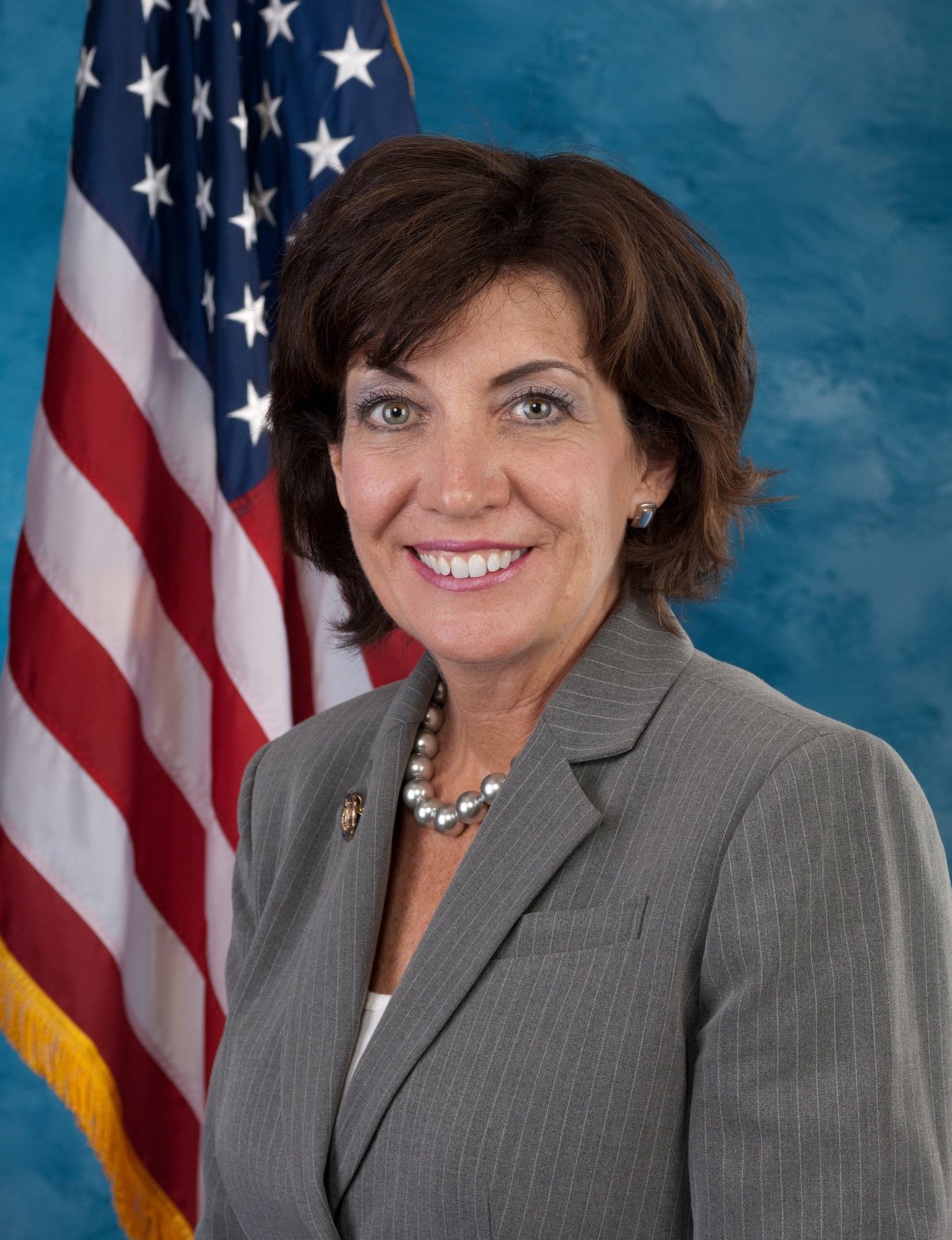
    Kathy Hochul official portrait
    Image: US Congress (Official Photo), via Wikimedia Commons, Public domain.

    New York Attorney General guidance makes an important distinction often lost in political arguments: “sanctuary” has no fixed or uniform legal definition. A county, city, police department or sheriff’s office can have different policies, and the legal questions can change depending on whether an encounter occurs on the street, during a traffic stop or after a person has been booked into jail.

    That leaves room for competing political claims. Officials favoring closer cooperation with Immigration and Customs Enforcement, or ICE, often argue that local agencies should assist in removing people they believe pose public-safety risks. Opponents argue that broad cooperation can divert local resources, undermine trust in police and expose agencies to constitutional liability.

    What sheriffs can and cannot do

    Sheriffs are locally elected law-enforcement officials, but their responsibilities are shaped by state law and constitutional limits. Their departments may run county jails, serve court papers, investigate crimes and work with other agencies. That authority does not turn every civil immigration request into a mandatory local policing duty.

    The New York Attorney General’s immigration-enforcement guidance says that local law-enforcement agencies include sheriff’s departments, local police, corrections personnel, probation officers and certain school safety officers. The guidance focuses heavily on the use of local resources for federal civil immigration enforcement.

    One central issue is the difference between a criminal arrest warrant and an immigration detainer. An ICE detainer is generally a request for a local agency to hold someone longer so federal authorities can take custody. It is not automatically the same as a warrant signed by a neutral judge.

    That distinction matters because holding someone after they would otherwise be released can raise Fourth Amendment concerns. The state guidance cites court decisions and warns that detention based solely on suspected civil immigration violations can create legal exposure for local governments and officers.

    Detainers remain the pressure point

    Immigration detainers have long been one of the most contentious points in the sanctuary-policy debate. Supporters of honoring them say they provide a route for federal authorities to take custody of people already in local custody, particularly those accused or convicted of serious offenses.

    Critics say local agencies should not hold people beyond their scheduled release without a judicial warrant or another sufficient legal basis. They also point out that being in the country unlawfully is generally a civil immigration matter, not by itself a criminal offense.

    New York’s attorney general guidance draws that line explicitly, noting that an immigration official’s administrative paperwork is not equivalent to a judicial warrant. The document also discusses the risk of wrongful or prolonged detention when local agencies hold a person solely on an ICE request.

    That legal tension helps explain why a governor and a sheriff can talk past each other. A sheriff may frame cooperation as a public-safety obligation. State officials and civil-rights advocates may frame limits as a constitutional safeguard and a way to keep local agencies focused on state and local crime.

    Why Albany-county disputes resonate

    The reported upstate dispute lands in a familiar New York political divide. Statewide leaders make policy and issue guidance, while county sheriffs answer directly to voters in their jurisdictions and often have distinct views about crime, borders and the proper role of local government.

    Those differences can become especially visible in upstate communities, where sheriffs may present themselves as the officials closest to residents’ public-safety concerns. Hochul, meanwhile, must balance statewide law, the position of state agencies and the legal consequences of policies applied across a much larger and more diverse population.

    Neither side can simply settle the matter through rhetoric. State law, federal immigration law, court rulings, local policy and the specific facts of an individual detention all affect what is permissible. A broad label such as “sanctuary” can conceal those operational details.

    There is also a practical question beneath the political fight: whether local agencies have the money, staffing and legal protection to take on a larger role in federal immigration enforcement. Those questions affect taxpayers, jail administrators, deputies and people caught in the system.

    The details still need scrutiny

    The source materials available for this report establish that a public dispute was framed as an upstate sheriff pushing back on Hochul over sanctuary-policy threats. They do not provide enough detail to verify which county was involved, what action Hochul allegedly threatened, or whether a formal state policy change was proposed.

    Those missing facts are consequential. A disagreement over an ICE detainer, for example, is different from a dispute about information sharing, access to a county jail, notification of release dates or state funding. Each raises different legal and policy questions.

    Readers should also be cautious with claims that New York is, or is not, a “sanctuary state.” The attorney general’s own guidance says the term lacks a uniform legal meaning. It is more accurate to examine the specific rule at issue and the authority an agency is being asked to exercise.

    The larger fight is not settled

    The clash between an upstate New York sheriff and Hochul reflects a national argument being fought locally: how much should county law enforcement participate in federal immigration enforcement, and who bears the legal risk when an arrest or detention goes wrong?

    For supporters of tougher cooperation, the priority is ensuring that local custody does not prevent federal authorities from acting. For supporters of tighter limits, the priority is protecting due-process rights, preventing unconstitutional detention and keeping local police from becoming immigration agents.

    Until the reported participants provide fuller statements or a specific policy document emerges, the immediate dispute remains short on verified particulars. The underlying stakes, however, are concrete: local control, constitutional limits and the day-to-day decisions made by sheriffs’ departments across New York.