
The claim has attention because it suggests a major shift inside the Republican Party. Yet the available reporting does not establish the feared outcome, making the underlying evidence as important as the rhetoric.
Republicans and a political strategist are at the center of a claim that Republicans recognize that their “darkest fear” has come to pass. The political outcome Republicans supposedly feared is not identified in the supplied source material, however, and neither is the strategist making the assessment.
That gap matters now because assertions of party-wide panic can shape perceptions of the Republican Party before readers know whether they refer to an election result, a policy setback, a court decision, voter sentiment or an internal dispute. The available evidence supports discussion of the claim’s political meaning, but not a definitive conclusion about the outcome itself.
What the available record says
The underlying trend item presents a forceful proposition: a strategist says Republicans know a feared outcome has occurred. It does not provide the strategist’s name, a direct quotation beyond the headline framing, the event being discussed, a date, polling, election returns or a document supporting the assertion.
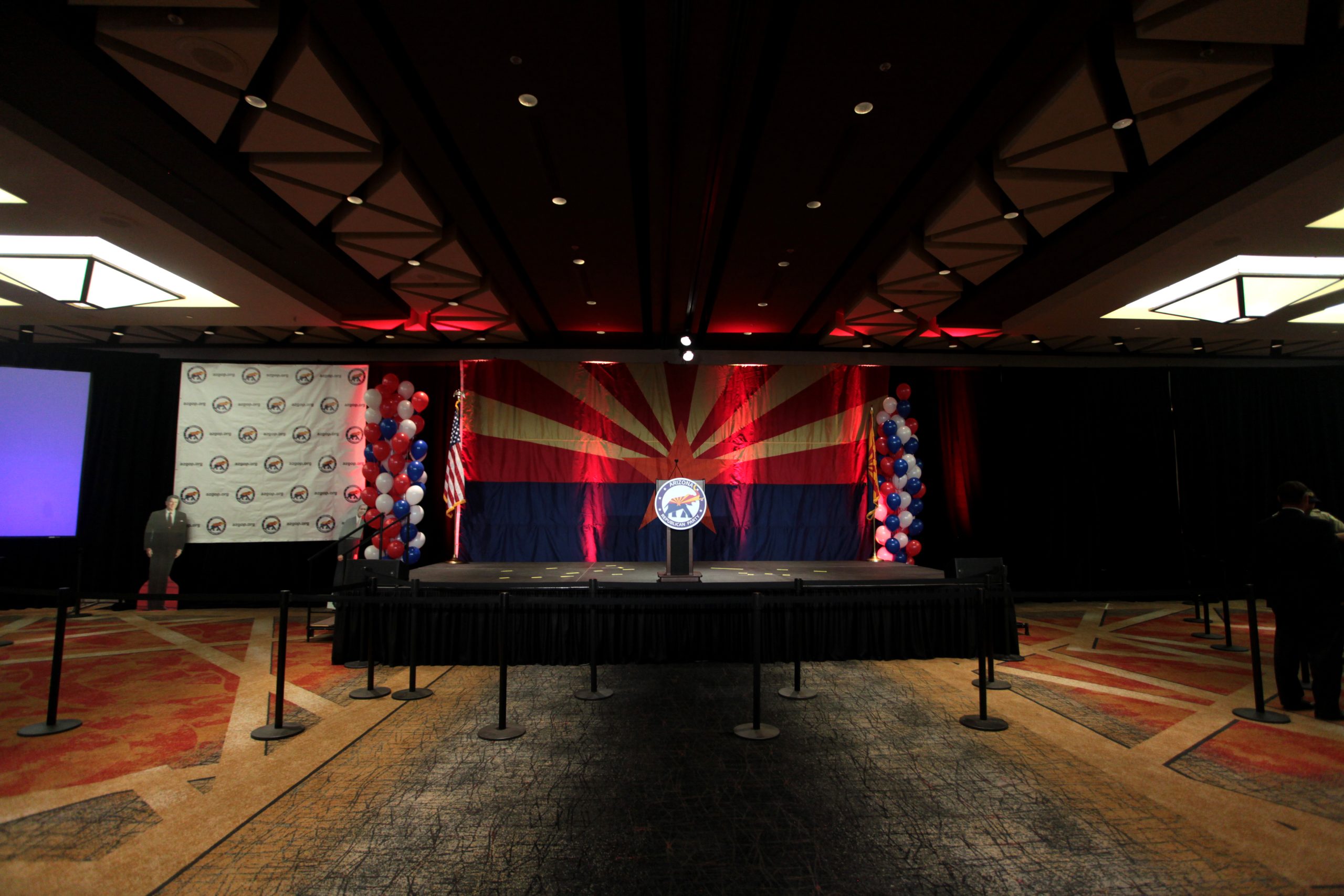
Those omissions are not small technicalities. In politics, “Republicans” can mean elected officials, party committees, donors, conservative media figures, voters, or one faction within a much larger coalition. Their interests and concerns do not always align.
The supplied research also includes a PBS NewsHour transcript from the period after Donald Trump’s 2024 election victory. That transcript does not establish the headline claim. Instead, Republican strategist Kevin Madden described Republicans as feeling that they had accumulated substantial political capital after what he called a decisive victory.
Madden said that party leaders would likely focus on economic issues, trade and border security. His comments portray confidence following an election, not a documented acknowledgment that an unspecified Republican fear had been realized.
Why an unnamed fear travels
Political headlines often use a broad phrase such as “darkest fear” because it creates an immediate sense of stakes. Readers can map their own concerns onto it: a party losing support, failing to deliver on promises, facing backlash over an unpopular decision, or seeing divisions grow harder to contain.
That flexibility also makes the phrase difficult to evaluate. A concrete claim can be tested against specific evidence. If the alleged fear is electoral, relevant evidence might include vote totals, turnout patterns, polling or fundraising. If it is about governing, legislative results, public approval or implementation records could be more useful.
Without that specificity, the phrase functions more as an interpretation than a reportable fact. A strategist may sincerely believe a political coalition is in trouble, but that does not by itself demonstrate that the entire party shares the view—or that the prediction will hold.
Strong rhetoric is common across party lines. Democrats and Republicans regularly describe the other side as demoralized, divided or facing a political reckoning. Such language can capture a real tension, but it can also flatten the differences among candidates, regions and voter groups.
The party’s incentives are mixed
The PBS discussion offers useful context on why a blanket diagnosis of Republicans requires care. Madden argued that Trump’s 2024 victory gave Republicans an opening to act on issues that resonated with voters, particularly concerns about the economy, housing costs, inflation, trade and border security.
That is one strategist’s view, not a final verdict on the Republican Party. Still, it illustrates the competing political reality behind any claim of GOP anxiety: a party can be energized by an election result while also worrying about whether it can meet the expectations created by that result.
Winning coalitions face a familiar challenge. Campaign messages are often broader and easier to unite around than governing decisions. Voters who agree on dissatisfaction with prices or immigration policy may disagree sharply about tariffs, spending, entitlement programs, federal enforcement or the pace of legislative action.
Opponents of the Republican Party may see those tensions as evidence that a feared setback is already unfolding. Republicans may counter that conflicts over strategy are normal and that election outcomes, policy goals and voter concerns still give the party a durable foundation. Both arguments require facts tied to a defined event.
What would establish the claim
To move from provocative language to a reliable political assessment, the report would need to identify the strategist and set out what they meant. A full quotation and the setting in which it was made would help determine whether the person was describing a specific development or making a broader prediction.
It would also need to name the feared outcome. That could be a measurable result, such as a special-election loss, a polling shift, a failed legislative effort, a fundraising decline or an unfavorable court ruling. Each would demand a different kind of evidence.
- For an electoral claim: certified results, turnout data and comparisons with prior elections.
- For a voter-opinion claim: transparent polling methodology, sample size and trend lines rather than a single survey.
- For a governing claim: the relevant bill, executive action, court decision or agency record.
- For an internal-party claim: attributable statements from officials, lawmakers, donors or party organizations.
It would also be important to distinguish between a strategist’s analysis and a verified consensus. Political strategists are paid to read incentives, frame arguments and anticipate public reaction. Their perspectives can be insightful, but they are not neutral measurements of what millions of voters or every party official believes.
Certainty should follow evidence
The most defensible takeaway from the material provided is limited: an attention-grabbing claim says Republicans recognize that a feared political outcome has happened, but the central outcome is not established in the available record. The PBS transcript offered as supporting research points to Republican confidence after the 2024 election, rather than confirming the premise of widespread fear.
That does not prove that Republicans have no concerns or that a later development could not change the party’s political position. Parties routinely reassess their prospects as governing decisions, economic conditions, court rulings and election results unfold.
It does mean readers should be cautious about treating an emotionally loaded headline as settled fact. The crucial unanswered question is not whether political anxiety exists—it almost always does—but which event supposedly triggered it, who is making the assessment and what independently verifiable evidence shows.
Until those details are available, the claim is best understood as an unverified piece of political commentary, not a demonstrated account of the Republican Party’s collective state of mind.
Leave a Reply