
Minnesota’s challenge to the Trump administration’s immigration operation is about more than one deployment. It tests how far a state can go in court when federal enforcement changes daily life in its largest city.
Donald Trump’s administration is sending a surge of U.S. Immigration and Customs Enforcement agents into Minnesota, and Minnesota has sued the Trump administration in federal court to block the deployment. The Trump ICE plan, described by the Department of Homeland Security as Operation Metro Surge, has become an immediate fight over public safety, state authority and whether a federal judge can limit the immigration enforcement operation.
Minnesota Attorney General Keith Ellison says the deployment has disrupted communities and infringed on the state’s authority to protect people within its borders. The administration says additional agents are needed to remove people in the country illegally and to protect federal personnel during operations.
Minnesota seeks to stop deployment
The state’s lawsuit asks a federal court to declare the deployment unlawful and, according to the BBC, seeks emergency relief that could block it while the case proceeds. Minnesota characterizes the operation as an unconstitutional “federal invasion,” language that signals how unusually broad the state believes the federal presence has become.
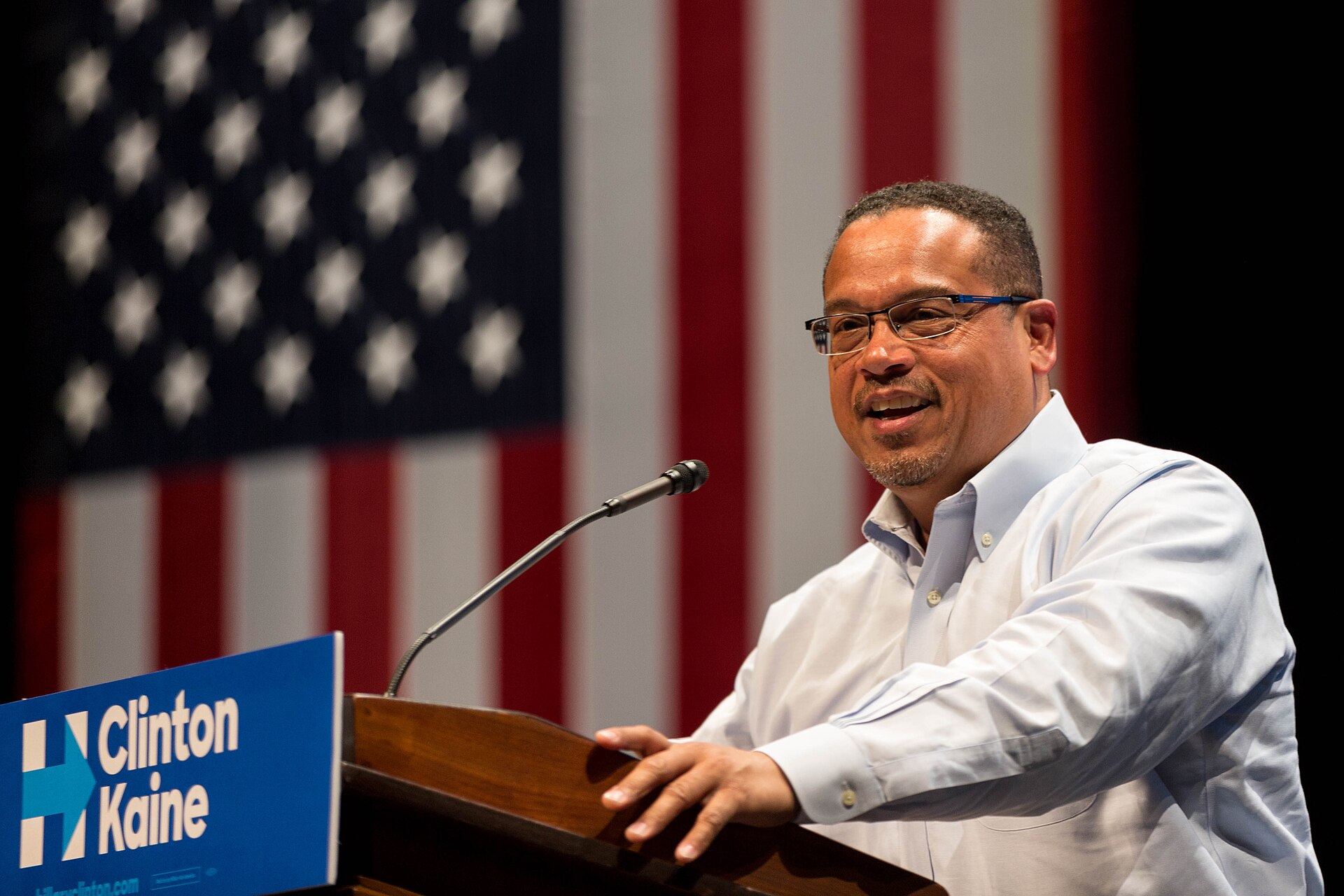
Ellison has argued that thousands of armed, masked and insufficiently trained federal agents are harming Minnesota. At a news conference announcing the case, he said the enforcement campaign had brought disruption, chaos and violence to communities across the state.
The legal request matters because it is aimed not simply at a single arrest, detention or agency policy. Minnesota is challenging the federal government’s ability to send and operate a large immigration-enforcement force in the state under the terms of this particular operation.
Operation Metro Surge is expanding
The Department of Homeland Security has said it plans to send more personnel to Minnesota through Operation Metro Surge. The BBC reported that DHS estimated about 2,000 agents had already been deployed, while Homeland Security Secretary Kristi Noem said hundreds more would be sent to the area.
CNN, cited by the BBC, reported that roughly 1,000 Customs and Border Protection personnel could be sent to Minneapolis, based on accounts from two federal law-enforcement sources. Those figures describe overlapping federal deployments, and the precise total number of personnel and their assignments remains unclear.
For residents, that uncertainty is part of the practical issue. A visible expansion of federal officers can affect workplaces, schools, transit, businesses and the willingness of people to report crimes or cooperate with local authorities, even when they are not targets of an immigration operation.
Public safety claims sharply diverge
The Trump administration frames the operation as a public-safety measure. President Trump said federal agents were removing people convicted of serious crimes, while DHS said the additional personnel were needed both to enforce immigration law and to keep officers safe amid resistance and protests.
DHS spokeswoman Tricia McLaughlin called Minnesota’s case baseless and said the department expected to prevail in court. That response reflects the federal government’s central position: immigration enforcement is primarily a federal responsibility, and states cannot veto it because they oppose the policy or its local effects.
Minnesota officials do not dispute that federal agencies possess immigration authority. Their argument is that the manner and scale of this deployment cross constitutional and legal lines. Minneapolis Mayor Jacob Frey has alleged that agents have targeted people based on perceived immigration status and racial profiling; federal officials have defended the operation as lawful enforcement.
Those competing accounts are likely to shape the litigation. A judge will not decide the dispute based on political labels such as “sanctuary state” or “federal invasion,” but on the evidence behind claims of unlawful conduct, injury to the state and the legal authority governing the deployment.
A shooting intensified local tensions
The lawsuit follows the death of Renee Good, 37, who was shot by an immigration agent in Minneapolis, according to the BBC. Her death triggered major protests and sharpened scrutiny of how federal officers are operating in the city.
Federal officials have said Good was trying to drive her vehicle into immigration agents when she was shot. Local officials have disputed that account and said the use of gunfire was unnecessary. The FBI has said it will investigate; local officials have said they have been excluded from the federal investigation.
That episode is not, by itself, the legal basis for deciding whether Minnesota can stop Operation Metro Surge. It does, however, explain the urgency of the state’s complaint and why arguments about officer safety, civilian safety and accountability are now intertwined.
The case tests limits of state power
Immigration policy has long been an area where federal authority is especially strong. That gives the Trump administration a significant legal argument: the Constitution and federal statutes generally place decisions on admission, removal and immigration enforcement with the national government.
But federal power is not unlimited. States can challenge federal actions when they contend that an agency has violated the Constitution, exceeded statutory authority or imposed a direct and legally recognizable harm. Minnesota’s task will be to show that the alleged harm is concrete enough, and the federal conduct unlawful enough, for a court to intervene.
Courts also tend to examine whether a requested remedy is too sweeping. A temporary restraining order or preliminary injunction could potentially pause part of an operation, but such orders require a strong initial showing and are often contested intensely by the government.
What happens after the filing
The immediate question is whether the federal court will grant emergency relief. Minnesota prosecutors said they would seek a temporary restraining order as early as the next day after announcing the lawsuit, according to the BBC. The administration can respond by challenging the state’s legal standing, its factual claims and the proposed scope of any order.
The broader result could reach beyond Minnesota. Illinois and Chicago filed a similar case over a separate federal immigration operation, calling it an organized federal “occupation.” Together, the lawsuits show Democratic-led state and local governments trying to use courts to set boundaries around stepped-up federal enforcement.
For now, the dispute remains unresolved. Minnesota says the ICE surge is destabilizing the state and violating its sovereignty; the Trump administration says the deployment is needed to enforce federal law and protect communities. The court’s early rulings will determine whether Operation Metro Surge continues unchanged while that fundamental conflict is litigated.
Leave a Reply