Blog

  • DOJ Defends Trump Miami Library Land Deal, Citing Obama and Biden

    DOJ Defends Trump Miami Library Land Deal, Citing Obama and Biden

    The dispute over a downtown Miami parcel is about more than a presidential library. It puts the value of public land, the prospect of a hotel and the limits of constitutional protections for sitting presidents before the court.

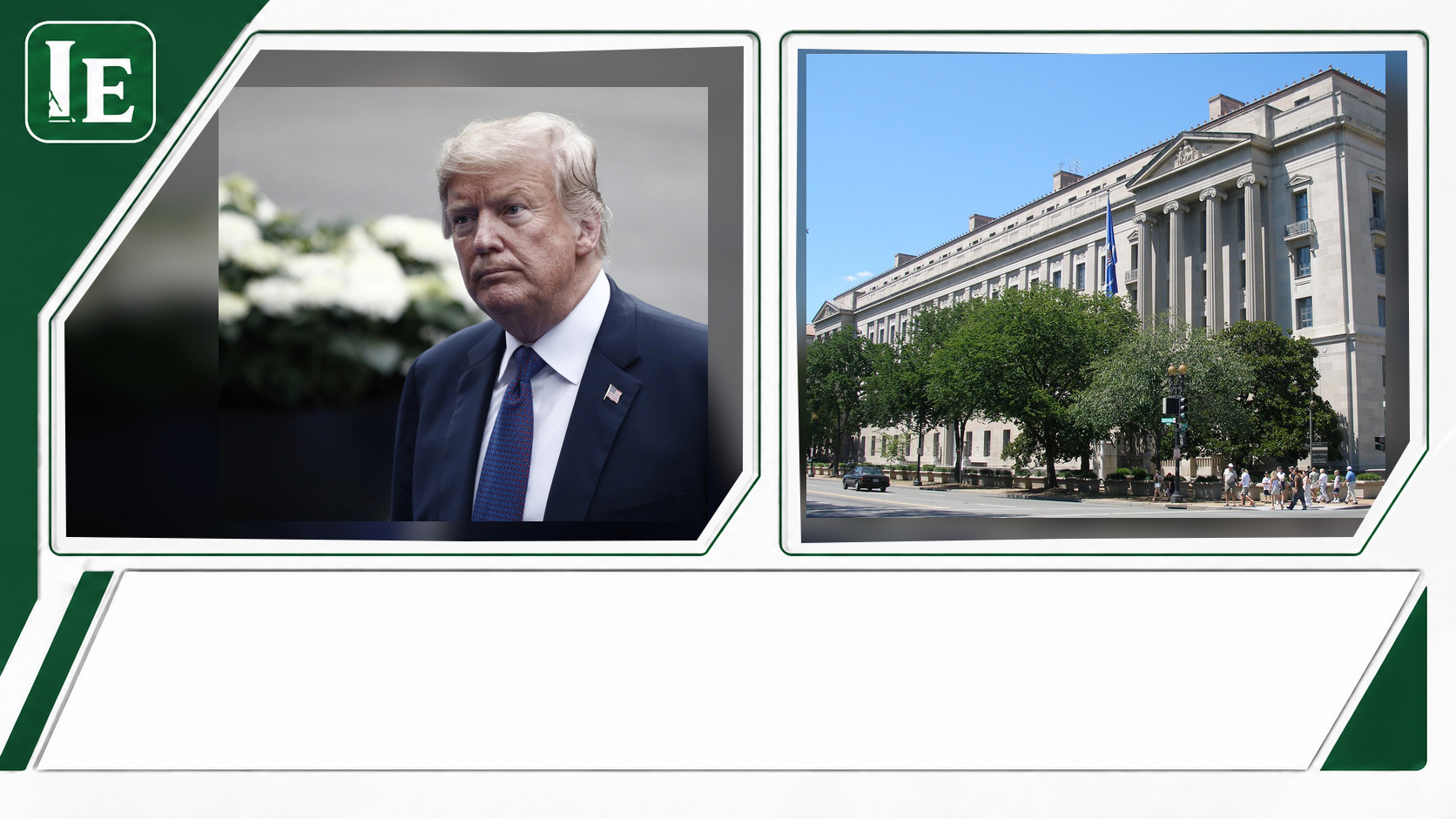
    The U.S. Department of Justice is responding to a lawsuit over land for Donald Trump’s Miami presidential library, saying the challengers’ constitutional theory could also implicate Barack Obama and Joe Biden. The lawsuit challenges the proposed Miami Library land deal on constitutional grounds, and the DOJ says treating it as unconstitutional would reach beyond Trump’s project.

    The case concerns a proposed transfer of a 2.63-acre downtown Miami parcel to Trump’s presidential library foundation. The central question is whether providing valuable public land to a sitting president’s foundation amounts to a prohibited financial benefit—or whether it fits within the established model of presidential libraries.

    A fight over valuable public land

    The disputed parcel is owned by Miami Dade College and sits beside the Freedom Tower, a prominent downtown Miami landmark. The building once served as a resource center for Cuban refugees and is now operated by the college as a museum.

    According to the Associated Press, Florida Gov. Ron DeSantis moved in September 2025 to transfer the property to Trump’s presidential library foundation. The Miami-Dade County property appraiser assessed the site at roughly $67 million in 2025, while real-estate appraisers cited in the lawsuit suggested it could sell for substantially more.

    That valuation is central to the challengers’ concerns. They argue a major public asset could be removed from potential use by Miami Dade College students or the broader downtown community. One plaintiff organization had hoped the site could become an urban farm.

    The constitutional claim at issue

    Miami residents, a Miami Dade College student and a local nonprofit filed suit against Trump, Miami Dade College and Florida officials, including DeSantis. The lawsuit was filed May 13, 2026, and was publicly reported the following day.

    The complaint alleges that donating the land violates the Constitution’s Domestic Emoluments Clause, which bars states from giving a sitting president a financial benefit. The plaintiffs’ argument is not limited to the land’s price tag.

    They contend that a transfer to Trump’s library foundation could personally enrich Trump while he is president, particularly if the development ultimately includes commercial operations. Their position is that a foundation’s separate legal status would not necessarily settle the constitutional issue if Trump stands to gain financially.

    Why a hotel changes the debate

    The proposed project has attracted attention because it may extend well beyond a conventional presidential archive or museum. According to the AP, Trump and his son Eric Trump have shared plans for a large tower that would house the library.

    An AI-generated promotional video released in March depicted a presidential jet in the lobby, a gold escalator, a ballroom, a replica Oval Office, rooftop gardens and a large gold statue of Trump. The images are not construction plans and do not establish that each feature will be built, but they illustrate the scale of the vision presented around the project.

    Trump also told reporters in March that the concept could be an office but was “most likely going to be a hotel with a beautiful building underneath.” For the plaintiffs, that prospect matters because a hotel could create a direct for-profit connection to a land transfer made during Trump’s presidency.

    Supporters can point to the public-facing purposes typically associated with presidential libraries: preserving records, presenting a president’s legacy and potentially bringing visitors, jobs and development. The unresolved legal issue is whether those potential benefits are enough if the arrangement also offers a financial benefit to the sitting president.

    DOJ points to past presidents

    The Justice Department has described the challengers’ constitutional theory as “illogical,” arguing that it would also implicate Obama and Biden through arrangements tied to their own presidential libraries. The DOJ’s response seeks to show how broadly the plaintiffs’ reading of the clause could apply.

    That comparison does not mean the government is claiming every presidential library arrangement is identical to the proposed Miami development. Rather, its argument is that presidential libraries have long involved private foundations, fundraising, land and relationships with public institutions and officials.

    From the DOJ’s perspective, a rule that treats this kind of government assistance as an unconstitutional state benefit could call earlier presidential-library arrangements into question. The government’s position is, in effect, that the proposed standard is too broad to be workable.

    The plaintiffs are likely to say the differences are the point. They have focused on Trump’s status as a sitting president, the property’s substantial value, the role of Florida officials and the possibility that the site could include a hotel or other commercial enterprise.

    Details the court has not resolved

    The case is still at an early stage. No court has decided whether the proposed land transfer violates the Constitution, and threshold issues—including whether each plaintiff has standing to challenge the arrangement—may be considered before the merits are resolved.

    Several consequential facts also remain unsettled in the public record. They include the final design, the project’s ownership structure, the extent of commercial operations and the financial relationship, if any, between Trump and the library foundation.

    Those details could be more important than the label “library.” A court may examine ownership, control, financing and whether Trump could receive a direct economic benefit from the project.

    The White House did not respond to the AP’s request for comment when the lawsuit was filed. For Miami Dade College and Florida officials, the litigation also brings scrutiny to how a highly valuable downtown property is being allocated.

    The dispute’s larger test

    The case presents two competing views of a presidential library. The challengers see a potentially valuable state-backed benefit for a sitting president, with commercial possibilities that could make the arrangement constitutionally suspect.

    The Justice Department sees a legal theory that, if accepted, could sweep in Obama, Biden and longstanding practices surrounding presidential-library foundations. The court’s eventual assessment may depend on the specific arrangement in Miami rather than on broad assumptions about what presidential libraries normally are.

    For now, the proposed transfer remains contested, and the key question is unresolved: whether the Miami parcel serves a public historical institution legally separate from Trump, or provides a constitutionally prohibited benefit to him while he is in office.

  • Jimmy Fallon laughs as audience cheers Karoline Leavitt’s exit

    Jimmy Fallon laughs as audience cheers Karoline Leavitt’s exit

    A spontaneous cheer briefly overtook Jimmy Fallon’s monologue about Karoline Leavitt’s White House departure. The moment turned a routine late-night joke into a reminder of how quickly politics can spill into entertainment.

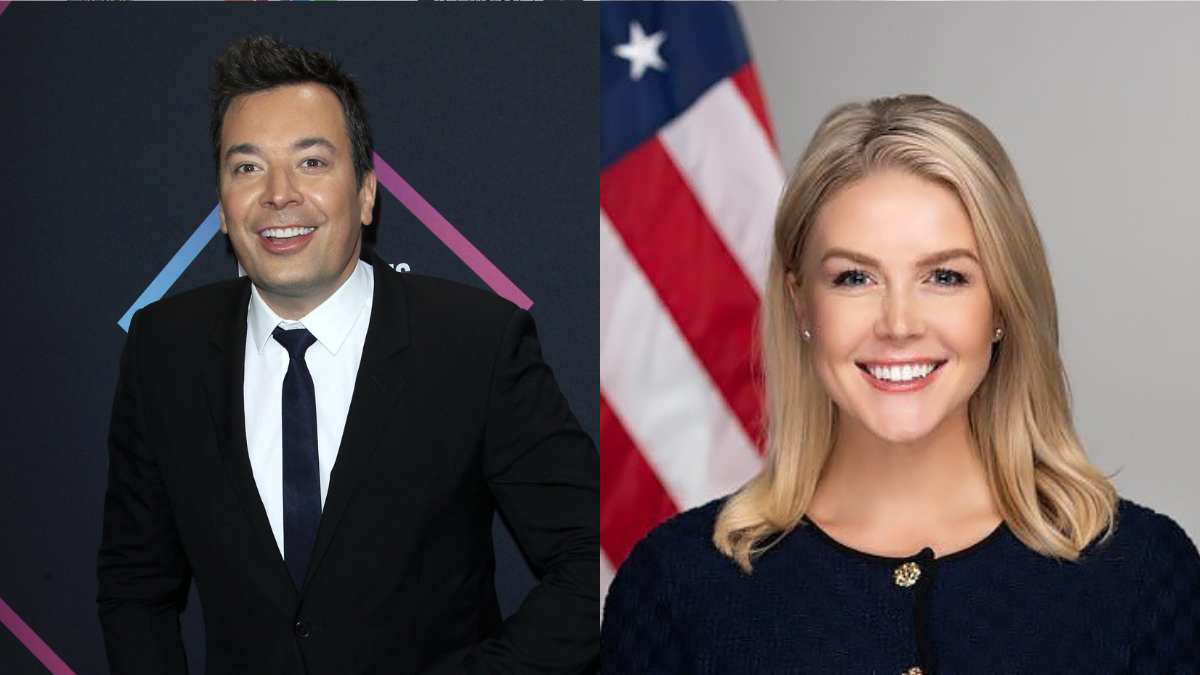
    Jimmy Fallon burst out laughing during an Aug. 12 Tonight Show segment after an audience member cheered Karoline Leavitt’s departure. Fallon was discussing the news that Leavitt was leaving her position as White House press secretary when the shout interrupted his setup and prompted a wider audience reaction.

    The exchange was brief, but it became the real joke of the segment: an unscripted crowd response that Fallon appeared unable to ignore. It also arrived as Leavitt publicly described her decision to leave the White House as a difficult family-driven choice following the birth of her second child.

    The cheer that changed the bit

    According to the Daily Express US account of the broadcast, Fallon introduced the news of Leavitt’s resignation during his monologue before getting to the prepared punchline. An audience member loudly cheered, and other people in the studio joined in.

    Fallon then laughed for an extended beat before regrouping and continuing the monologue. The host’s reaction, rather than a line written for the show, is what gave the clip its traction.

    Late-night comedy depends on that kind of collision between script and room. A host can anticipate a laugh at a joke; a spontaneous cheer is harder to time, harder to control and often more revealing of the live audience’s mood in that moment.

    Fallon returned to the jokes

    Once he recovered, Fallon went back to his prepared material, including a joke that Leavitt was moving to an “easier job” as press secretary for Taylor Farms Lettuce. The gag referenced a cyclosporiasis outbreak linked in news coverage to lettuce products.

    The segment placed a consequential White House personnel change inside the familiar rhythm of a monologue: a news headline, a sharp turn and a joke designed for the studio crowd. The unexpected cheering made the transition more conspicuous than usual.

    It is worth separating the two parts of the moment. Fallon’s laughter signaled that he found the interruption funny. It did not establish a broader verdict on Leavitt, the White House or public opinion beyond the people in that studio.

    Leavitt described a family decision

    Leavitt confirmed her departure in a social-media statement, calling her time in the role an “honor and adventure of a lifetime,” according to the Daily Express US. She said she had weighed the demands of one of the administration’s most visible jobs against the needs of her two young children.

    She wrote that, after returning to the White House following the birth of her daughter Viviana, she felt she could not give both her children and the press secretary position the constant time and energy each required. She described leaving as a bittersweet decision and said she was beginning a new chapter.

    Donald Trump said Leavitt would step down at the end of the month to spend more time with her family. Leavitt also has a son, Nicholas, and has spoken publicly about the pressures of combining parenthood with a demanding public role.

    A high-profile job invites reactions

    The White House press secretary is one of the administration’s most public-facing positions. The role involves regular briefings, rapid responses to breaking news and acting as a principal messenger for the president’s agenda.

    That visibility can make a departure feel larger than a typical staffing announcement, especially when it lands in political comedy. Leavitt, who was described in coverage as the youngest person to hold the job, had become a familiar figure in daily media coverage of the White House.

    For supporters, her statement centered on a personal and understandable decision about family. For critics, a late-night audience cheer offered an outlet for a political reaction. Both perspectives can exist around the same event, though neither is fully represented by one studio audience.

    One crowd is not a referendum

    The clip’s appeal is its immediacy. Viewers can see a live performer lose his composure because someone in the room reacted faster and more loudly than expected. That is a cleaner entertainment story than a carefully packaged political statement.

    Still, viral late-night moments can flatten the context behind them. The audience’s cheer does not explain why Leavitt resigned, and it does not reliably measure how voters or the public at large view her tenure.

    Leavitt’s own words provide the clearest explanation available: she said the balance between motherhood and the all-consuming demands of the White House press secretary job led her to depart. Fallon’s monologue showed how, once that news reaches television, even a personal career decision can become a national punchline.

    The unanswered White House question

    The broadcast focused on Leavitt’s exit, not on the administration’s next choice. The reporting reviewed here does not identify a confirmed successor or set out a detailed transition plan.

    That leaves the substantive political question separate from the entertainment clip: who will take on one of the White House’s most visible communications jobs, and how soon. Fallon’s laughter may be the memorable image, but the vacancy is the development with consequences beyond the studio.

  • Canal Street ICE Raid Spurs Fear and Documentation Push in New York City

    Canal Street ICE Raid Spurs Fear and Documentation Push in New York City

    A reported ICE raid on Canal Street has renewed fears among residents in immigrant neighborhoods and raised questions about federal enforcement in the city. New York’s attorney general is asking witnesses to preserve evidence of what they saw.

    New York City residents say U.S. Immigration and Customs Enforcement has arrived in the city and that reported ICE activity is causing “unacceptable terror” in immigrant neighborhoods. The concern centers on a reported ICE raid on Canal Street, where fear and anger followed a visible federal immigration enforcement action. It matters because New York Attorney General Letitia James is now collecting photos and videos from witnesses as her office assesses reports of possible legal violations.

    The competing realities are stark: ICE is a federal agency charged with immigration enforcement, while city and state officials say New Yorkers should be able to go about their lives without intimidation or unlawful detention. What happened on Canal Street has become a test of how those forces collide in one of the city’s busiest immigrant commercial areas.

    Canal Street becomes a flashpoint

    James said on October 22, 2025, that her office had launched an online portal for people to submit documentation after an ICE raid on Canal Street the day before. Her announcement did not offer a complete public account of the operation, including how many people were approached, arrested, or detained.

    That missing information matters. A law-enforcement action can look very different to the people conducting it, the people targeted by it, nearby workers, shoppers, and families watching from the street.

    Residents quoted in reporting about the episode described fear that the federal government was threatening people in immigrant neighborhoods. The phrase “unacceptable terror” is an allegation and a description of residents’ experience, not an official finding about the conduct of every agent involved.

    Why visibility changes the impact

    Immigration enforcement does not affect only the person an agent may seek to question or detain. A public operation can alter how neighbors decide whether to report to work, visit a business, take children to school, or seek help from public institutions.

    That wider effect is at the core of residents’ reaction in New York City. In neighborhoods where many households include immigrants or mixed-status families, uncertainty about an encounter can travel faster than verified information.

    It can also create a difficult information gap. Videos may show part of an interaction but not what preceded it. Official statements can explain an agency’s purpose but may not answer what bystanders experienced. That is one reason documentation, timestamps, and full recordings can become important.

    James asks witnesses to preserve evidence

    The attorney general’s portal is intended to collect photos, videos, and other accounts of federal immigration enforcement activity in New York. James said her office would review submissions and assess whether any laws were violated.

    “Every New Yorker has the right to live without fear or intimidation,” James said in the announcement. She also said no one should face unlawful questioning, detention, or intimidation.

    The portal is not a declaration that misconduct occurred. It is a mechanism for gathering material that could help officials evaluate specific claims. That distinction is important when accounts are still emerging and the public record is incomplete.

    For witnesses, documentation is most useful when it preserves context: the location, approximate time, what was directly seen or heard, and whether the recording captures the full interaction. People should also be cautious about publicly sharing identifying details that could expose vulnerable individuals.

    City guidance sets basic boundaries

    New York City’s public guidance says city agencies generally do not ask about immigration status or share personal information with immigration enforcement authorities. Under local law, the city says agencies, including the NYPD, do not cooperate with ICE except in limited circumstances.

    The city also outlines rights people may have during an ICE encounter. Its guidance says a person has the right to remain silent, may decline to consent to a search of pockets or belongings, may request an interpreter, and may ask to speak with an attorney before signing documents or answering questions.

    At a workplace, ICE agents may enter public areas without a warrant, according to the city guide. The guide says entry into private areas generally requires a judicial warrant signed by a judge or magistrate, or the employer’s permission.

    For a home encounter, the city advises people that they do not have to open the door simply because an agent is outside. The guidance says residents can ask to see a warrant and speak through the door. Individual situations can be legally complex, so city guidance is not a substitute for advice from a qualified immigration attorney.

    Federal authority meets local limits

    ICE operates under federal authority, and New York City cannot eliminate federal immigration enforcement within its borders. At the same time, city policy limits how municipal agencies interact with federal immigration authorities and emphasizes access to services regardless of immigration status.

    That divide helps explain why a Canal Street operation can generate such a sharp reaction. Supporters of tougher federal enforcement may view visible operations as necessary to carry out immigration law. Critics argue that broad, conspicuous enforcement undermines trust, fuels fear, and can discourage people from seeking help or cooperating with local institutions.

    Neither view resolves the factual questions surrounding a specific raid. Those require reliable records, official explanations, and careful review of individual encounters rather than assumptions based solely on a clip, a rumor, or a headline.

    Questions that remain after the raid

    Publicly available material establishes that James responded to a reported Canal Street ICE raid by seeking evidence from New Yorkers. It does not, by itself, establish the full scope of the operation or determine whether any particular officer acted unlawfully.

    Key unanswered questions include what ICE was seeking to accomplish, how many people were affected, what legal documents agents carried, and whether witnesses’ accounts will produce evidence of conduct requiring state action.

    For now, the episode has left New York City residents with a practical message from local officials: know the limits of an agent’s access, avoid signing documents without understanding them, seek legal help when possible, and preserve accurate records of what occurs. The broader debate over immigration enforcement will continue, but the immediate stakes are being felt block by block in immigrant neighborhoods.

  • Karoline Leavitt, Donald Trump and the Unidentified Aide in a Final Photo

    Karoline Leavitt, Donald Trump and the Unidentified Aide in a Final Photo

    The image has drawn attention because of Leavitt’s role in Trump’s communications operation. But the available record supports a narrow reading of the photograph, not conclusions about White House relationships or personnel.

    A final photograph shows Karoline Leavitt and Donald Trump with an unidentified younger aide. Leavitt looks toward Trump while Trump is focused on the younger aide, but the aide, setting, date and context are not identified in the available material.

    That limited description has prompted attention because Leavitt is a highly visible White House communications figure. It does not, however, establish what the three people were discussing, why the image was taken or whether the moment reflected anything beyond a brief interaction.

    The image offers a narrow record

    The available description centers on the direction of attention in a single frame: Leavitt is described as gazing toward Trump, while Trump is described as occupied with a younger staff member.

    Those details can make the scene feel suggestive. A viewer can see who appears to be looking at whom, where people are positioned and perhaps an expression caught in passing. But none of those visual cues supplies the missing circumstances around the image.

    There is no accompanying account in the supplied material identifying the occasion. It does not provide a caption, a photographer’s explanation, a location, a date or an official description of the event.

    That leaves the photograph as a record of a visible moment, rather than a verified account of the conversation or the relationships behind it.

    Four central facts remain unknown

    The biggest limitation is not what the photograph may appear to show; it is what the available material does not establish.

    • The younger aide is not named.
    • The aide’s role, age, connection to Leavitt and reason for speaking with Trump are not identified.
    • The image’s setting and date are not provided.
    • No transcript, official explanation or independent account explains the exchange.

    There is also no material connecting the photograph to a policy announcement, a staffing development or a change in White House access. Without that context, assigning a larger meaning to the interaction would go beyond the evidence available.

    The description of Trump as “engrossed” with the aide is best understood as a characterization of apparent attention in the photograph. It does not prove the subject, duration or importance of any conversation.

    Why Leavitt’s presence draws interest

    Leavitt’s place in the frame is notable because of her role around Trump. The Archives of Women’s Political Communication at Iowa State University says she has served as White House press secretary in Trump’s second administration since January 2025 and was the youngest person to hold that job.

    Her professional relationship with Trump predates her service as press secretary. According to the Iowa State archive, she previously worked for Trump as a presidential writer and assistant press secretary, then became communications director for Rep. Elise Stefanik after the 2020 election.

    That background helps explain why viewers may treat a photograph of Leavitt beside Trump as more than a routine image. A press secretary is a public-facing spokesperson, but also part of an administration’s broader communications operation.

    Still, visibility and proximity do not turn a single image into a reliable measure of influence. The photograph does not, on its own, document approval, disagreement, exclusion, loyalty or a shift in Leavitt’s standing.

    One frame can invite competing readings

    Political photographs often become shorthand for access and hierarchy. Some observers regard small visual details as useful clues about the people closest to a president and the dynamics playing out around them.

    A more skeptical reading is that a still image can be made to carry more narrative weight than it can bear. Crowded events, travel stops, ceremonies and unscripted exchanges can all produce moments that appear meaningful once removed from their wider setting.

    Both views begin with a reasonable premise: physical proximity to a president can matter politically. The difference is whether one photograph, without a known setting or corroborating reporting, can demonstrate why that proximity mattered at that particular moment.

    Here, the material does not resolve that question. No official announcement, confirmed personnel change, White House statement or separately reported account is included to explain the scene.

    Language can shape the takeaway

    Words attached to a photograph influence what viewers notice. Terms such as “gazing” and “engrossed” direct attention toward the contrast between Leavitt looking at Trump and Trump concentrating on the unidentified aide.

    The wording is not necessarily inaccurate as a description of the composition. Yet it is still interpretive: it selects particular lines of sight and gives them prominence, while the broader circumstances remain unavailable.

    A careful reading separates three categories. First is what can be visually described in the image. Second is the narrative suggested by its framing. Third is what outside reporting can independently confirm.

    For this photograph, the supplied material meaningfully supports the first two categories but not the third. It establishes an attention-grabbing image involving Trump, Leavitt and an unidentified younger aide; it does not establish the private or political significance of the interaction.

    The responsible conclusion is limited

    The final photograph is described as showing Leavitt looking toward Trump while he focuses on a younger aide. Given Leavitt’s role and history working in Trump’s orbit, that image naturally invites scrutiny.

    But the most important details remain unresolved: who the aide is, where and when the picture was taken, what prompted the exchange and whether it had any significance beyond the instant captured.

    Until evidence answers those questions, the photo should not be treated as proof of a dispute, a staffing move or a rearrangement of influence inside the White House. It is a visually notable frame, not a documented explanation of what it meant.

  • 124-73 Split Leaves Gianni Infantino’s FIFA Re-Election in Doubt

    124-73 Split Leaves Gianni Infantino’s FIFA Re-Election in Doubt

    The apparent split is not a final election count, but it has changed the political outlook for FIFA’s president. Whether opponents can unite behind one challenger may matter more than the current headline numbers.

    Gianni Infantino faces divided support and opposition among FIFA members as he seeks re-election, with 124 of FIFA’s 210 voting member associations assessed as opposing him, 73 supporting him and 13 undecided. The Split Among FIFA Members emerged after backlash over Infantino’s abandoned plan to sell stakes in World Cup and other competitions to private investors.

    The fluid tally, assessed by BBC Sport, has cast doubt on Infantino’s expected FIFA re-election and changed a race that only recently appeared to lack a serious contest. But a larger apparent opposition bloc does not automatically mean a leadership change: the decisive issue is whether those associations can settle on one credible rival.

    The numbers are not a final count

    The 124-73 assessment is a snapshot of a fast-moving political dispute, not a formal election result or a complete public declaration from every national association.

    BBC Sport’s country-by-country accounting draws on a mix of public positions, direct responses from associations and, in some cases, the stated position of a continental confederation. That means the current map should be read as an indication of shifting alliances rather than a settled whip count.

    The distinction matters because individual associations hold the votes. A confederation can take a strong collective stance while some of its members continue to support Infantino, remain uncommitted or decline to say publicly where they stand.

    That is why the 13 undecided associations carry unusual weight. Their eventual choices, along with any movement by members now counted with a regional bloc, could quickly reshape the apparent balance.

    A commercial plan became a trust test

    The immediate catalyst was a proposal to sell private-investor stakes in FIFA’s most valuable competitions, including the World Cup. The plan was abandoned, but the dispute did not end with its withdrawal.

    Instead, the episode became a broader argument about whether FIFA’s leadership had been sufficiently open with its members about decisions involving marquee competitions and future revenues.

    UEFA, Concacaf and the Asian Football Confederation joined in a letter accusing Infantino and FIFA of breaking trust “through deception” over the investment proposal. Their intervention moved the debate beyond a single business plan and toward a direct challenge to the president’s standing.

    Together, those three confederations account for 136 associations: 55 in UEFA, 46 in the AFC and 35 in Concacaf. Yet their combined total should not be confused with 136 confirmed votes against Infantino.

    Regional criticism has clear limits

    England and Wales have formally withdrawn letters supporting Infantino that they had submitted in connection with next year’s election. Other associations, however, have drawn a narrower line between supporting criticism of the proposal and explicitly seeking his removal.

    The United States and Canada, for example, supported Concacaf’s latest statement but had not publicly declared that they wanted Infantino out. That difference could become crucial once the campaign moves from public dissatisfaction to a private ballot.

    There are also visible breaks inside the AFC, despite the confederation’s role in the joint letter. Bhutan, the Philippines and the United Arab Emirates have backed Infantino. Mexico has similarly supported him while breaking from the wider Concacaf direction.

    Infantino also retains meaningful support in Africa and South America. FIFA’s member-development spending since he took office roughly a decade ago has helped build goodwill among associations that have received funding and support through programs including FIFA Forward, which has distributed billions of dollars for football projects.

    Asia and Oceania could swing it

    The AFC is the most consequential unsettled bloc. Its 46 votes are large enough to alter the contest if its members move decisively toward either Infantino or a challenger.

    Saudi Arabia’s position is particularly closely watched. It had not taken a public stance in the BBC Sport assessment, while its football leadership was due to hold elections in August. Saudi Arabia was awarded the 2034 World Cup during Infantino’s presidency, adding broader significance to its eventual direction.

    Oceania is still consulting its members as well. The Oceania Football Confederation said it began that process on July 30 and expected a position after an executive committee meeting in Fiji.

    Its 11 votes are comparatively small, but they could matter in a tight contest. The uncertainty offers neither camp a guaranteed advantage: Infantino can still rebuild support, while opponents must convert objections to the abandoned investment plan into backing for a new leader.

    Election rules favor a united challenger

    If only two candidates run, the winner needs a simple majority of 106 votes from the 210 eligible associations. Nepal is FIFA’s 211th member but is suspended and does not currently have voting rights.

    If three or more candidates enter, a candidate needs two-thirds of the vote to win in the first round. If no one reaches that mark, the election proceeds to a second round, where a simple majority is enough.

    Those rules mean that opposition numbers alone do not resolve the race. A divided field could work to Infantino’s advantage even if a large number of associations remain unhappy with his leadership. One broadly backed opponent would create a much clearer referendum on his tenure.

    No challenger had formally declared at the time of the BBC report. Candidates have until November to announce their intention to run, leaving time for alliances to harden, unravel or be reorganized.

    A council push looks harder

    There is a separate route that could end Infantino’s tenure before an election: an emergency FIFA Council meeting seeking his resignation. It must be held within two weeks if 19 of the 37 council members demand it.

    That is a difficult threshold because the council reflects many of the same regional divisions playing out across FIFA’s membership. It includes nine UEFA representatives, seven from the AFC, six from Africa, five each from Concacaf and South America, three from Oceania, plus Infantino and FIFA secretary general Mattias Grafstrom.

    For now, an electoral challenge appears more plausible than a council effort. The key unresolved question is whether UEFA, Concacaf and the AFC can agree on a candidate, rather than simply agree that trust in FIFA’s leadership has been damaged.

    The current count shows that Infantino is no longer moving comfortably toward another term. It does not yet show that his opponents have assembled the coalition needed to defeat him.

  • Trump’s AI Posts Put Comedians and Journalists at Center of Media Fight

    Trump’s AI Posts Put Comedians and Journalists at Center of Media Fight

    Trump’s AI-generated images are part of a broader, meme-heavy communications style that rewards instant reaction. The dispute raises different concerns when the target is a comedian versus a journalist.

    Donald Trump is posting AI-generated images targeting late-night comedians and journalists, turning media criticism and political grievance into shareable political content. The posts matter because this AI image spree shows how a political media fight can now move through synthetic visuals built for immediate reaction rather than through a statement, interview or edited video.

    The images are being read as more than a familiar Trump-versus-media exchange. They illustrate a fast-moving style of political communication in which satire, scrutiny and online outrage can be recast as a meme and distributed almost instantly.

    Images make conflict travel faster

    Trump has long had a combative relationship with both the press and late-night television. Comedians make him the subject of jokes and monologues, while journalists scrutinize his administration, his public statements, and his political and legal fights.

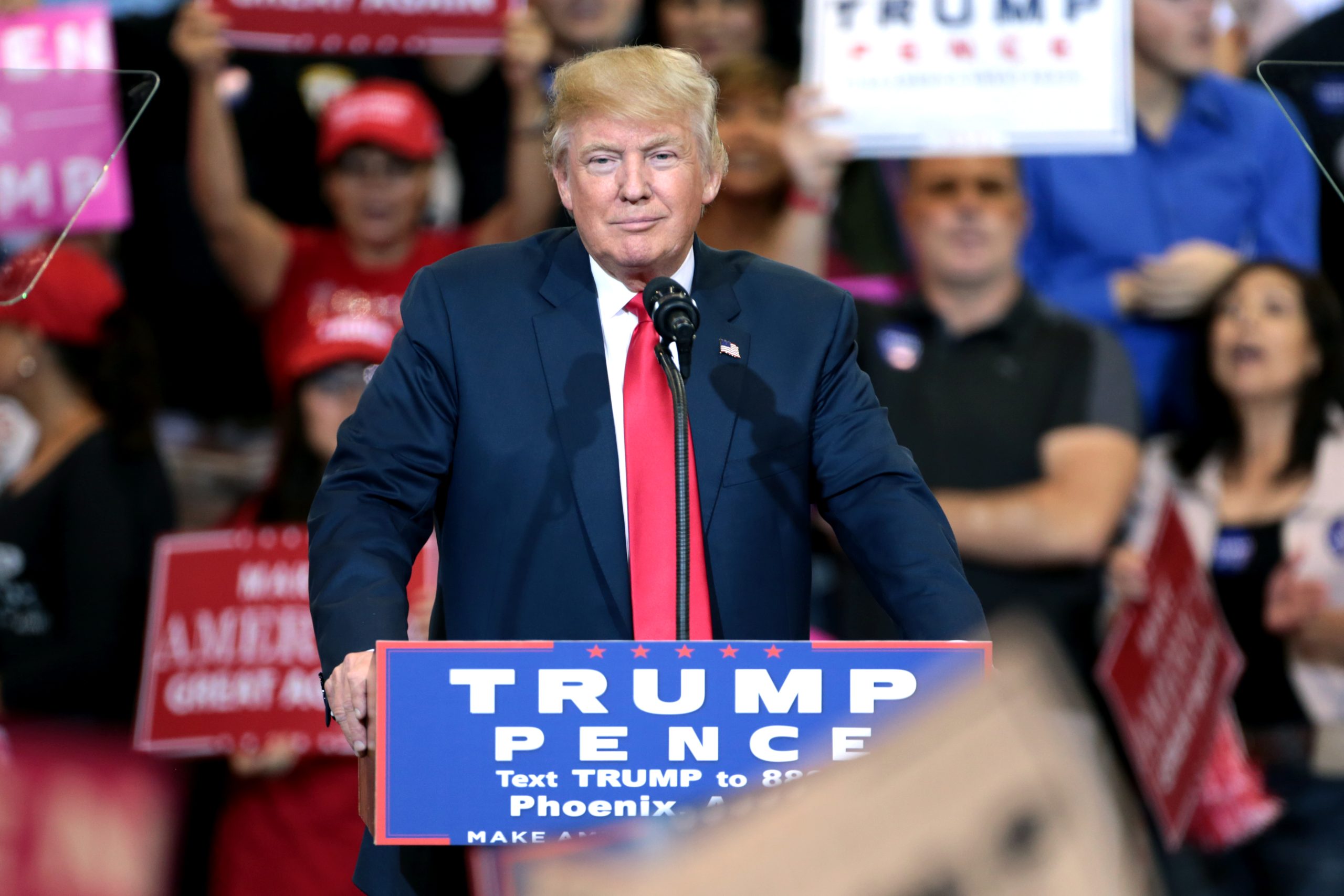
    Donald Trump
    Image: Gage Skidmore, via Flickr, CC BY-SA 2.0.

    Trump has often portrayed both groups as hostile actors rather than as entertainers or neutral observers. AI-generated imagery gives that conflict a compact visual form: an image can present a critic, institution or grievance as a caricature before a viewer has read a full argument.

    That speed is central to the appeal. On a mobile feed, a synthetic image competes with entertainment, sports, weather and breaking news, and it can be understood in seconds. The intended result is not necessarily traditional persuasion; it can be laughter from supporters, anger from opponents, news coverage and repeated reposting.

    In that sense, the post itself is only the start. Attention generated around the image can keep the message circulating long after its original upload.

    AI adds volume and ambiguity

    Political cartoons, manipulated photographs and parody videos all predate generative AI. The change is the speed, volume and potential realism of the new tools, which make it easier to create and distribute polished visual material at scale.

    The Associated Press has reported on broader use of AI portraits by Trump and his administration, including depictions of Trump as a Star Wars-style Jedi, a pope, a king and in other overtly fantastical scenes. AP characterized the material as part of a less formal public image coming from Trump’s accounts and administration channels.

    Some images are plainly artificial and appear designed as fantasy or humor. Others can be polished enough to confuse audiences, particularly if they are reshared without their original caption or context.

    Trump acknowledged that ambiguity at a news conference earlier this month, according to AP. “It works both ways,” he said of AI-generated content, adding, “If something happens that’s really bad, maybe I’ll have to just blame AI.”

    A meme strategy from official channels

    AI imagery fits a political style already built around conflict, dominance and spectacle. It can depict a leader as heroic, portray a critic as ridiculous or cast an institution as weak or corrupt without needing a detailed written case.

    Political historian Evan Cornog told AP that political images work because audiences process them nearly immediately. “By the time you’ve seen it, you’ve understood it,” Cornog said.

    The White House has embraced that online logic. AP reported that official administration accounts have used meme-style posts and joked on X, “Nowhere in the Constitution does it say we can’t post banger memes.” A White House official told NBC News that administration social accounts had added more than 16 million followers across platforms since Inauguration Day, according to AP.

    Supporters may see the approach as a politically fluent use of internet culture rather than the more formal language of traditional press releases. Critics see a different implication: government power using the language and tactics of online trolling.

    Comedians and reporters face different stakes

    Late-night performers are in the business of provocation, exaggeration and ridicule, especially when the subject is a powerful political figure. An AI image aimed at a comedian can resemble a familiar attention cycle: a host makes a joke, Trump responds, and both sides gain visibility.

    Journalists are in a different position. Even when a reporter is publicly recognizable, reporting is not the same kind of performance. Synthetic images aimed at journalists can frame professional scrutiny as personal or partisan opposition and encourage audiences to treat reporting as just another combatant in a political feud.

    That does not mean every AI image targeting a journalist amounts to misinformation or harassment. The context matters: whether an image is clearly identified as artificial, whether it depicts an event that did not occur, whether it contains threats, and whether official or campaign-aligned accounts amplify it.

    Still, the report points to a real imbalance of reach. A president’s social-media audience can make an individual reporter, editor or host a national target faster than a correction or explanation can spread.

    Why obvious fakes can still work

    Not every influential AI image is trying to masquerade as documentary evidence. Some are effective precisely because they express an emotion or grievance that a sympathetic audience already feels.

    AI expert Henry Ajder told AP that viewers can treat clearly fake material as a “revelatory” image: not literally true, but emotionally satisfying. A person may recognize that an image is manufactured and still believe it captures a larger truth about its subject.

    That helps explain the usefulness of synthetic images in disputes involving journalists and comedians. They can flatten complicated roles into quick symbols: a smug host, a corrupt reporter, a heroic leader or an unfair media machine.

    The same post can therefore produce opposite readings. To one audience, it is an obvious joke. To another, it is an attack presented as humor.

    Key details remain unresolved

    The available reporting does not establish every image included in the posting spree, which AI tools were used, who created each image or whether platforms attached labels to them. Those details would affect how individual posts should be understood.

    They could help distinguish between parody, political advertising, harassment and misinformation. They also matter in the wider debate over whether obviously fabricated political content should carry labels when it is still intended to shape public attitudes.

    Trump’s posts show how quickly the boundary between political messaging, entertainment and media criticism can blur online. The next confrontation between a politician, a late-night comedian and a journalist may begin not with a quote or a clip, but with an image made to feel persuasive before viewers stop to ask whether it happened.

  • Jennifer Garner and John Miller Reportedly Build Trust Around Ben Affleck Co-Parenting

    Jennifer Garner and John Miller Reportedly Build Trust Around Ben Affleck Co-Parenting

    Jennifer Garner and John Miller have kept much of their relationship out of public view since 2018. Recent anonymous-source reports suggest that making room for Garner’s co-parenting relationship with Ben Affleck is a central part of that stability.

    Jennifer Garner and John Miller have a private romantic bond that reportedly centers in part on Garner’s co-parenting with Ben Affleck. The couple, first linked in 2018, are said to have built stability by making room for Garner and Affleck’s ongoing responsibility to co-parent their three children.

    That reported arrangement matters because it shifts the focus away from speculation about Garner and Affleck spending time together. According to anonymous sources cited by Entertainment Tonight, Miller is comfortable with the co-parenting reality—and that acceptance is portrayed as a key part of his relationship with Garner.

    Co-parenting is not a side issue

    Garner and Affleck divorced in 2018, but their family connection did not end with their marriage. They continue to co-parent their children, making contact and time together part of an established family routine.

    Jennifer Garner
    Image: Karon Liu, via Wikimedia Commons, CC BY-SA 2.0.

    The recent reporting suggests Miller does not see that arrangement as a threat to his relationship with Garner. A source cited by Entertainment Tonight said he is “completely comfortable” with Garner spending time with Affleck and that there is no jealousy around it.

    The same account said Garner would not be in a relationship that could not accommodate her co-parenting responsibilities. If accurate, that is less a dramatic revelation than a description of a practical boundary: her children and the responsibilities attached to raising them remain nonnegotiable.

    Celebrity coverage can turn photographs of friendly former spouses into a suggestion of unresolved romantic tension. The reports about Garner, Miller and Affleck point in another direction, portraying cooperation between exes as a normal feature of family life rather than evidence of a complication.

    What sources say about Miller

    The strongest claim in the latest coverage is that Garner and Miller reportedly view their relationship as “unbreakable.” That description comes from unnamed sources, not from Garner or Miller themselves, and should be understood as characterization rather than confirmation from the couple.

    An insider speaking to Entertainment Tonight described Miller as supportive during difficult moments and called him kind, dependable and solid. Those terms are broad, but they align with the more specific claim that he respects the circumstances of Garner’s family life.

    A source who spoke to People in July 2025 similarly said the pair had found their stride and were more solid and connected than ever. Neither report provides a complete view of a private relationship, but both describe a partnership grounded in steadiness instead of spectacle.

    That is the notable distinction in these reports. There is no account of a public gesture, a major announcement or a single turning point. The suggested reason for their longevity is more routine: reliable support paired with clear expectations.

    A relationship designed to stay private

    Garner and Miller have been publicly connected since 2018, yet they have largely avoided turning their relationship into a constant celebrity storyline. Miller, the CEO of CaliGroup, has generally remained outside the spotlight surrounding Garner.

    That lower-profile approach also means there is limited verified information about their day-to-day lives. The reports offering insight into their relationship rely on unnamed sources, so the public cannot know the full picture or treat descriptions of their bond as direct statements.

    Still, their privacy has become part of the story. The relationship has endured years of public attention, occasional breakup reports and renewed interest whenever they are seen together.

    A recent dog-walking sighting in Brentwood, California, was among their limited public appearances this year. For a couple that rarely turns outings into public events, even an ordinary walk can produce new questions about their status.

    Family inclusion has boundaries

    The anonymous-source accounts describe Miller as accepting Garner’s family life while also respecting her children’s space. Those are related ideas, but they are not the same thing.

    Being supportive of a partner who has children does not mean attempting to replace a parent or take control of routines already shaped by two co-parents. The reporting instead presents Miller as someone willing to fit within an existing structure.

    Garner has long protected her children’s privacy despite continuing public attention on her career and her past marriage. In that context, a partner’s willingness to respect boundaries may carry more weight than public appearances, red-carpet visibility or social-media displays.

    There is a reasonable counterpoint: anonymous-source reporting can make private relationships seem more certain or more settled than outsiders can truly know. A positive account of a relationship does not prove that a couple faces no ordinary difficulties.

    Why the reported dynamic stands out

    The available reporting does not indicate that Garner and Miller are announcing an engagement, changing their family arrangement or marking a new public milestone. The update is about the terms of a relationship that has reportedly lasted by remaining largely private.

    Those terms appear to be straightforward. Garner’s children come first, co-parenting with Affleck remains part of her life, and Miller is reportedly at ease with both realities.

    For many blended families, the challenge is not erasing a former partner from the picture. It is establishing enough trust and clarity for ongoing parenting responsibilities to function without becoming a source of conflict. The reports describe Garner and Miller’s relationship through that lens.

    Whether “unbreakable” is an accurate label is something only Garner and Miller can know. What the recent source accounts consistently suggest is a quieter explanation for their reported durability: a private partnership built around support, family boundaries and acceptance of a co-parenting arrangement that is meant to continue.

  • Trump’s Israel-Iran ceasefire outburst tests presidential speech norms

    Trump’s Israel-Iran ceasefire outburst tests presidential speech norms

    Trump’s frustration over the Israel-Iran ceasefire became a story about more than diplomacy when he used an expletive before cameras. The episode highlights a changing standard for presidential speech, while leaving its political effect unproven.

    Donald Trump used an expletive on camera on June 24, 2025, while discussing the Israel-Iran ceasefire, and the incident tested presidential norms in an unusually public way. His remark, made as he voiced frustration with Israel and Iran, renewed scrutiny of presidential language because it came during a foreign-policy crisis rather than in a private or accidental setting.

    The central question is not simply whether the language was offensive. It is whether a president’s public profanity still carries political weight—and whether there is evidence that this particular moment changed anything beyond the day’s coverage.

    A ceasefire dispute became the focus

    According to NPR’s June 24 report, Trump spoke to reporters before leaving the White House for a NATO summit in The Hague. He was reacting after Israel and Iran appeared to violate a ceasefire that he had celebrated.

    Donald Trump
    Image: Gage Skidmore, via Flickr, CC BY-SA 2.0.

    “We basically have two countries that have been fighting so long and so hard that they don’t know what the f*** they’re doing,” Trump said, according to NPR.

    The bluntness of the statement drew attention partly because of its setting. Presidents can be angry, informal and even profane away from public view. Here, the wording was delivered openly, recorded on camera and attached to a volatile international issue.

    That combination shifted attention from the substance of Trump’s complaint to the language he chose to make it. The debate became a test of what the public expects from a president when speaking about war, diplomacy and failed ceasefire commitments.

    Why the public setting matters

    NPR described the on-camera use of that particular expletive as potentially unprecedented for a president. Russell Riley, a presidential historian at the University of Virginia’s Miller Center, told NPR he could not recall a president openly using the term in a public forum.

    That does not mean U.S. presidents have never sworn. Presidential profanity has surfaced in private conversations, recordings and less formal environments, and public figures have had accidental hot-mic moments. The distinction is that Trump’s words were not presented as an overheard aside.

    Joe Biden’s 2010 remark to Barack Obama that the Affordable Care Act was a “big f***ing deal” is one well-known example of a memorable profane moment. But Biden was vice president at the time, and the comment was not equivalent to a president deliberately using the word before reporters during a live foreign-policy dispute.

    Riley also indicated that the episode was not wholly out of character for Trump, whose political identity has long included challenges to the constraints and etiquette traditionally associated with the presidency. That history can make a new breach of convention feel less startling to people who already know his style.

    Two views of presidential restraint

    Critics can reasonably see the episode as more than a manners dispute. A president’s language can signal judgment, self-control and the seriousness with which an administration addresses a dangerous international situation. In that view, profanity during a public exchange about Israel and Iran can reinforce concerns about temperament or presidential conduct.

    Supporters may see the same moment differently. For voters drawn to Trump’s confrontational and unvarnished approach, the remark may read as frustration stated plainly rather than a disqualifying breach of decorum. They may judge the president chiefly on wider results, not whether his phrasing matches older conventions.

    Those positions reveal why the issue is difficult to reduce to one word. The dispute is partly about whether restraint remains an essential marker of leadership, and partly about whether voters regard traditional presidential etiquette as meaningful at all.

    Trump’s comment therefore offers a narrow but vivid example of a broader shift: conduct that once might have dominated a political cycle can now be absorbed by audiences whose views of a political figure are already firmly formed.

    Coverage is not proof of fallout

    A source headline characterized Trump’s swearing as something that could backfire and suggested that time was running out for him. But the supplied reporting does not establish that the remark caused a measurable political cost.

    For “backfire” to be more than a forecast, it would need a clear definition and supporting evidence. It could mean a decline in approval, changed views among persuadable voters, a loss of political support, a distraction from the administration’s policy message or an adjustment in White House strategy.

    None of those outcomes can be assumed from a single public outburst. The available source material includes no polling, campaign data, identified expert assessment in full or documented change in strategy connected to the statement.

    That absence matters because high-profile political language often generates intense discussion without changing votes, approval ratings or policy outcomes. For some audiences, the incident may simply affirm an existing opinion of Trump—positive or negative—rather than move it.

    Why the exact words are news

    News organizations generally have reasons to be cautious with vulgar language. The Associated Press explained in a 2018 editorial note that it usually avoids obscenities and vulgarity unless they appear in direct quotation and there is a compelling reason to include them.

    AP said in the case it addressed that a president’s use of the word was itself news because it occurred during a consequential policy conversation. It also said editors were warned about the language.

    That standard helps explain why Trump’s quote received attention without requiring the conclusion that the profanity damaged his presidency. In a significant public setting, the choice of words can be part of the event being reported, not merely colorful language stripped from context.

    The same principle applies here. Trump was discussing a ceasefire involving Israel and Iran, not trading insults in an entertainment setting. The context gave his expression of frustration added significance, even if its longer-term political consequences remain unknown.

    The evidence still needed

    The strongest criticism is not that one profane sentence determines a presidency. It is that repeated breaks from presidential convention could make it harder to appeal to people who want forceful leadership but also expect discipline during consequential moments.

    The strongest defense is equally straightforward: conventional etiquette is not the same as governing effectiveness, and a voter may weigh foreign policy, economic concerns and other outcomes more heavily than one on-camera remark.

    For now, the verified conclusion is limited. Trump publicly used an expletive while discussing the Israel-Iran ceasefire, and a presidential historian told NPR he could not recall a president using that term openly in a public forum.

    Whether the moment ultimately matters politically remains unresolved. A demonstrated backlash would require evidence such as measurable shifts in opinion, visible political consequences or a more fully documented explanation for claims that the episode will backfire.

  • USS Abraham Lincoln Rescue Fuels Scrutiny of Record-Length Deployment

    USS Abraham Lincoln Rescue Fuels Scrutiny of Record-Length Deployment

    The confirmed rescue is separate from unverified reports of other attempted jumps, but both have focused attention on living conditions and mental-health support aboard the carrier. Navy officials dispute that there has been a broader increase in suicidal ideation or attempts.

    A sailor was rescued after going overboard from the USS Abraham Lincoln, and the incident prompted scrutiny of conditions aboard the aircraft carrier. The U.S. Navy has responded to separate reports that USS Lincoln sailors were trying to jump overboard, while maintaining it has not seen an increase in suicidal thoughts or attempts aboard the ship.

    The confirmed rescue, reports from sailors and relatives, and concerns raised by families have converged during an unusually long deployment. The central question is not whether the August 3 rescue occurred, but whether it signals a wider safety and mental-health problem that Navy leaders say their data does not show.

    A deployment with few breaks

    The Abraham Lincoln left its San Diego home port in November and was later redirected to the Middle East to support U.S. operations in the Iran war. CNN reported that the aircraft carrier had been deployed for more than 250 days.

    US Navy 111216 N KQ416 132 The Nimitz class aircraft carrier USS Abraham Lincoln (CVN 72) is underway on deployment to the 5th and 7th Fleet areas
    Image: U.S. Navy photo by Mass Communication Specialist Seaman Zachary S. Welch, via Wikimedia Commons, Public domain.

    More than 5,000 sailors and Marines are aboard, according to CNN. Sen. Richard Blumenthal, a Connecticut Democrat and member of the Senate Armed Services Committee, said the ship had spent more than 200 consecutive days without a port call, which he described as a modern-day record.

    A lengthy deployment alone does not establish unsafe living conditions or a mental-health crisis. Still, prolonged time at sea can intensify challenges including reduced privacy, maintenance demands, limited contact with home and delayed mail for people working and living in a confined environment.

    A U.S. official told CNN that the USS George Washington carrier group was headed to the Middle East as part of a previously planned rotation to replace the Lincoln. It was not clear when that replacement would arrive.

    What happened on August 3

    Three U.S. officials told CNN that a sailor assigned to an air wing aboard the Abraham Lincoln went overboard in rough seas on August 3. One official said the sailor was wearing a life vest and was not injured.

    An air-wing search-and-rescue helicopter recovered the sailor within an hour, CNN reported. The sailor was treated by the carrier’s medical department and transferred off the ship for follow-on care.

    One official characterized the event as involving mental health. That account concerns the confirmed rescue, but it does not resolve the separate claims that other crew members may have tried to go overboard.

    Competing accounts of crew welfare

    Stars and Stripes and Navy Times reported accounts from sailors and family members suggesting there had been multiple attempts by crew members to go overboard during the deployment. Stars and Stripes said its reporting included interviews with active-duty sailors and relatives, as well as public social-media posts and comments from crew members.

    The Navy’s position differs. In a statement to CNN, the service said it had not observed an increase in suicidal ideation or attempts aboard the ship and said it takes service members’ well-being seriously.

    The Navy said religious, medical and mental-health professionals are available to assess and address concerns. A U.S. official told CNN that internal tracking showed reports of suicidal ideation aboard the carrier had declined in recent months and that the service does not see a connection between deployment length and thoughts of self-harm.

    Those statements do not negate the gravity of the family and sailor reports. But the confirmed August 3 incident, allegations of other attempted jumps and the Navy’s broader statistical assessment are distinct claims and should not be treated as interchangeable.

    Families cite basic shipboard problems

    About 200 relatives of Lincoln crew members raised concerns with Acting Navy Secretary Hung Cao and other senior officials at town hall meetings in San Diego, according to Navy Times and Stars and Stripes.

    Families cited deteriorating mental health, shortages of basic supplies, water contamination, plumbing problems, food availability and mail disruptions, according to CNN and MS NOW. These were reports from sailors and families, not public Navy findings that every alleged condition happened as described.

    Rep. Mike Levin, a California Democrat, said families described moldy showers, broken toilets, a lack of hot water and limited meals. He also relayed one family member’s account that a ship doctor had said the crew needed to reach port soon.

    According to MS NOW, Vice Adm. Joseph Cahill, commander of Naval Surface Forces, acknowledged at one meeting that leaders had heard concerns about effects on service members, families and the force’s long-term ability to sustain its health.

    Congress seeks clearer answers

    Blumenthal wrote to Defense Secretary Pete Hegseth and the acting Navy secretary seeking answers about living conditions on the carrier and the growing duration of deployments. His letter cited reports of supply shortages, water contamination, plumbing issues, deck-safety concerns, mental-health problems and lost care packages.

    Hegseth rejected the broader portrayal of conditions, telling reporters that the Lincoln’s situation had been “completely misrepresented.” He praised sailors serving with fewer port calls in austere conditions and said the military works to ensure ships, crews and captains receive what they need.

    The disagreement leaves Navy leaders facing a practical transparency test. The crew may be carrying out a demanding mission under difficult circumstances, while individual sailors and families may also be experiencing acute distress or failures that deserve attention.

    What remains unclear is whether the reported problems are isolated, systemic or being addressed before the Lincoln’s rotation ends. The overboard rescue has made that question harder to dismiss because it places a verified emergency alongside broader, still-disputed concerns about the human cost of extended time at sea.

    Why careful reporting matters

    Claims involving possible self-harm require precision, particularly when reports circulate faster than official information. Protecting privacy and distinguishing verified events from allegations are both essential.

    The available reporting establishes that a sailor was rescued on August 3 and that the Navy disputes a broader increase in suicidal ideation or attempts. It also establishes that families, lawmakers and some sailors have raised serious concerns about morale, conditions and deployment strain.

    If you or someone you know is in immediate danger or struggling with thoughts of self-harm, call or text 988 in the United States to reach the Suicide & Crisis Lifeline.

  • Andy Baker’s Expected White House Exit Could Complicate Iran Policy Handoff

    Andy Baker’s Expected White House Exit Could Complicate Iran Policy Handoff

    Baker’s reported departure is not publicly linked to a policy dispute, but it would remove an official familiar with the administration’s Iran work during a consequential period. The larger question is how quickly the White House can preserve continuity on diplomacy and maritime security.

    Andy Baker is expected to leave the Trump White House within weeks, according to reporting cited by The Blast, as tensions involving Iran are mounting and commercial-shipping disruptions persist in the Strait of Hormuz. The reported exit of Donald Trump’s deputy national security adviser matters because Baker has been involved in an Iran portfolio now facing pressure from unsettled diplomacy and maritime-security concerns.

    Baker’s departure would be another prominent personnel change for the Trump White House, following press secretary Karoline Leavitt’s plan to step down at the end of August. Neither Baker nor the White House has publicly connected his expected exit to disagreement over Iran policy, but the transition could test continuity inside an administration confronting difficult choices abroad.

    A transition at a difficult moment

    The timing is central to why Baker’s expected departure is drawing attention. He reportedly helped shape Trump’s foreign policy during the first 18 months of the president’s second term, including work related to China and Iran.

    Strait of Hormuz
    Image: eutrophication&hypoxia, via Flickr, CC BY 2.0.

    According to reporting cited by The Blast, Baker confirmed his planned departure in a statement to Axios. He said he was proud of the administration’s work and grateful to Trump, Vice President JD Vance and Secretary of State Marco Rubio.

    Sources cited by Axios said Baker remained in the job longer than originally expected to help ensure an orderly transition. Reporting described his reason for leaving as personal: he has told people close to him that he wants more time with family and is expected to move to the private sector.

    That reported explanation is significant. Available reporting does not establish that Baker is departing because he opposed Trump’s approach to Iran, the Strait of Hormuz or diplomacy with Tehran.

    Why Baker’s role carries weight

    A deputy national security adviser operates largely out of public view, but the job can connect major policy centers across government. Such officials can help coordinate information and options among the White House, State Department, Pentagon and intelligence agencies as a president weighs diplomatic, military, sanctions and allied-response decisions.

    Baker brought experience from earlier work as a State Department foreign service officer and later as an adviser to Vance during Vance’s time in the Senate. That connection reportedly made him an influential figure in Trump’s second administration.

    He was described as a China hawk, though his responsibilities reportedly extended beyond one region. His portfolio included policy concerning China and Iran, according to the reporting.

    Baker was also reportedly involved in the administration’s approach to the U.S. naval blockade involving Iran and the Strait of Hormuz. If that account is accurate, the next official assigned to his work would inherit a demanding set of responsibilities, not a routine personnel handoff.

    Iran talks remain uncertain

    The personnel shift comes against an unsettled diplomatic backdrop. The Blast reported that Baker participated in negotiations and helped draft a June memorandum of understanding intended to create a framework for ending the conflict and continuing talks over Iran’s nuclear program and sanctions relief.

    That process reportedly stalled after Tehran stepped away from the arrangement, while the United States sought to bring Iran back to negotiations. The reporting left several central matters unresolved: whether a ceasefire effort can move forward, what terms either side might accept and how renewed talks could take shape.

    Supporters of the administration’s approach could reasonably argue that a departure does not automatically produce a policy shift. Trump can choose a successor with similar views, and Rubio, Vance and other senior officials remain positioned to shape the broader strategy.

    Critics may see a different risk: a loss of institutional knowledge at a point when private understandings, negotiating details and relationships may matter. A successor can be briefed on the file, but may not immediately possess the same familiarity with the people and compromises involved.

    Hormuz disruption adds pressure

    The Strait of Hormuz is a narrow passage linking the Persian Gulf and the Gulf of Oman, and it is among the world’s most consequential shipping routes. Threats to commercial traffic there can affect energy markets, insurance costs and the calculations of governments well beyond the Middle East.

    Reuters reporting cited by The Blast said the United Arab Emirates accused Iran of using drones to attack two vessels operated by the state-owned Abu Dhabi National Oil Company. The ships reportedly sustained minor damage, and no casualties were reported.

    The UAE characterized the alleged incidents as piracy and warned that attacks on commercial vessels threaten regional stability and global energy security. Iran had not publicly responded to the allegation at the time of Reuters’ report.

    For Washington, the competing objectives are difficult: protect shipping and deter further attacks while avoiding steps that could widen a conflict or close off channels for diplomacy. Personnel continuity cannot resolve those policy tensions, but it can influence the speed and coherence of the White House response.

    Leavitt’s exit compounds continuity concerns

    Baker’s expected departure follows Leavitt’s announcement that she plans to leave as White House press secretary at the end of August to focus on raising her children. She returned from maternity leave in July after giving birth to a daughter in May, according to the report.

    The two roles are fundamentally different. Baker’s work was tied to policy development and coordination, while Leavitt has been responsible for explaining and defending the administration’s decisions in public.

    Still, both vacancies matter during a period of international tension. A White House dealing with Iran, maritime-security risks and uncertain diplomacy must manage choices behind closed doors and communicate its decisions clearly when they become public.

    Trump had not announced a permanent replacement for Leavitt at the time of the report. It also remained unclear who would assume Baker’s responsibilities, when either opening would be permanently filled or whether interim officials would take on expanded duties.

    The real test is the handoff

    White House turnover is often interpreted as a political signal. In Baker’s case, however, the available reporting does not support treating his expected departure as evidence of a break within Trump’s Iran team.

    The immediate test is practical: who takes over Baker’s work, how much authority that person receives and whether the transition affects the pace of decisions involving Iran, possible negotiations and Strait of Hormuz security.

    The administration’s response will be measured less by the fact of one departure than by what follows it. A clearly chosen successor, a defined Iran strategy and an orderly handoff could limit disruption; uncertainty around any of those elements would sharpen concerns about continuity at a volatile moment.