Blog

  • Andy Baker’s Expected White House Exit Could Complicate Iran Policy Handoff

    Andy Baker’s Expected White House Exit Could Complicate Iran Policy Handoff

    Baker’s reported departure is not publicly linked to a policy dispute, but it would remove an official familiar with the administration’s Iran work during a consequential period. The larger question is how quickly the White House can preserve continuity on diplomacy and maritime security.

    Andy Baker is expected to leave the Trump White House within weeks, according to reporting cited by The Blast, as tensions involving Iran are mounting and commercial-shipping disruptions persist in the Strait of Hormuz. The reported exit of Donald Trump’s deputy national security adviser matters because Baker has been involved in an Iran portfolio now facing pressure from unsettled diplomacy and maritime-security concerns.

    Baker’s departure would be another prominent personnel change for the Trump White House, following press secretary Karoline Leavitt’s plan to step down at the end of August. Neither Baker nor the White House has publicly connected his expected exit to disagreement over Iran policy, but the transition could test continuity inside an administration confronting difficult choices abroad.

    A transition at a difficult moment

    The timing is central to why Baker’s expected departure is drawing attention. He reportedly helped shape Trump’s foreign policy during the first 18 months of the president’s second term, including work related to China and Iran.

    Strait of Hormuz
    Image: eutrophication&hypoxia, via Flickr, CC BY 2.0.

    According to reporting cited by The Blast, Baker confirmed his planned departure in a statement to Axios. He said he was proud of the administration’s work and grateful to Trump, Vice President JD Vance and Secretary of State Marco Rubio.

    Sources cited by Axios said Baker remained in the job longer than originally expected to help ensure an orderly transition. Reporting described his reason for leaving as personal: he has told people close to him that he wants more time with family and is expected to move to the private sector.

    That reported explanation is significant. Available reporting does not establish that Baker is departing because he opposed Trump’s approach to Iran, the Strait of Hormuz or diplomacy with Tehran.

    Why Baker’s role carries weight

    A deputy national security adviser operates largely out of public view, but the job can connect major policy centers across government. Such officials can help coordinate information and options among the White House, State Department, Pentagon and intelligence agencies as a president weighs diplomatic, military, sanctions and allied-response decisions.

    Baker brought experience from earlier work as a State Department foreign service officer and later as an adviser to Vance during Vance’s time in the Senate. That connection reportedly made him an influential figure in Trump’s second administration.

    He was described as a China hawk, though his responsibilities reportedly extended beyond one region. His portfolio included policy concerning China and Iran, according to the reporting.

    Baker was also reportedly involved in the administration’s approach to the U.S. naval blockade involving Iran and the Strait of Hormuz. If that account is accurate, the next official assigned to his work would inherit a demanding set of responsibilities, not a routine personnel handoff.

    Iran talks remain uncertain

    The personnel shift comes against an unsettled diplomatic backdrop. The Blast reported that Baker participated in negotiations and helped draft a June memorandum of understanding intended to create a framework for ending the conflict and continuing talks over Iran’s nuclear program and sanctions relief.

    That process reportedly stalled after Tehran stepped away from the arrangement, while the United States sought to bring Iran back to negotiations. The reporting left several central matters unresolved: whether a ceasefire effort can move forward, what terms either side might accept and how renewed talks could take shape.

    Supporters of the administration’s approach could reasonably argue that a departure does not automatically produce a policy shift. Trump can choose a successor with similar views, and Rubio, Vance and other senior officials remain positioned to shape the broader strategy.

    Critics may see a different risk: a loss of institutional knowledge at a point when private understandings, negotiating details and relationships may matter. A successor can be briefed on the file, but may not immediately possess the same familiarity with the people and compromises involved.

    Hormuz disruption adds pressure

    The Strait of Hormuz is a narrow passage linking the Persian Gulf and the Gulf of Oman, and it is among the world’s most consequential shipping routes. Threats to commercial traffic there can affect energy markets, insurance costs and the calculations of governments well beyond the Middle East.

    Reuters reporting cited by The Blast said the United Arab Emirates accused Iran of using drones to attack two vessels operated by the state-owned Abu Dhabi National Oil Company. The ships reportedly sustained minor damage, and no casualties were reported.

    The UAE characterized the alleged incidents as piracy and warned that attacks on commercial vessels threaten regional stability and global energy security. Iran had not publicly responded to the allegation at the time of Reuters’ report.

    For Washington, the competing objectives are difficult: protect shipping and deter further attacks while avoiding steps that could widen a conflict or close off channels for diplomacy. Personnel continuity cannot resolve those policy tensions, but it can influence the speed and coherence of the White House response.

    Leavitt’s exit compounds continuity concerns

    Baker’s expected departure follows Leavitt’s announcement that she plans to leave as White House press secretary at the end of August to focus on raising her children. She returned from maternity leave in July after giving birth to a daughter in May, according to the report.

    The two roles are fundamentally different. Baker’s work was tied to policy development and coordination, while Leavitt has been responsible for explaining and defending the administration’s decisions in public.

    Still, both vacancies matter during a period of international tension. A White House dealing with Iran, maritime-security risks and uncertain diplomacy must manage choices behind closed doors and communicate its decisions clearly when they become public.

    Trump had not announced a permanent replacement for Leavitt at the time of the report. It also remained unclear who would assume Baker’s responsibilities, when either opening would be permanently filled or whether interim officials would take on expanded duties.

    The real test is the handoff

    White House turnover is often interpreted as a political signal. In Baker’s case, however, the available reporting does not support treating his expected departure as evidence of a break within Trump’s Iran team.

    The immediate test is practical: who takes over Baker’s work, how much authority that person receives and whether the transition affects the pace of decisions involving Iran, possible negotiations and Strait of Hormuz security.

    The administration’s response will be measured less by the fact of one departure than by what follows it. A clearly chosen successor, a defined Iran strategy and an orderly handoff could limit disruption; uncertainty around any of those elements would sharpen concerns about continuity at a volatile moment.


  • New York’s ICE Fight Turns on Formal 287(g) Partnerships

    New York’s ICE Fight Turns on Formal 287(g) Partnerships

    Hochul’s directive targets formal agreements that delegate certain immigration-enforcement duties to local officers, not every interaction between New York law enforcement and ICE.

    New York Gov. Kathy Hochul says state law bars law-enforcement agencies from entering formal agreements with U.S. Immigration and Customs Enforcement, or ICE. Her administration has directed seven agencies to unwind 287(g) arrangements within 11 days, with possible legal action if they do not comply.

    The dispute places local sheriffs between a federal immigration-enforcement partnership and what the state describes as an existing restriction under New York law. It is not presented as a new statewide prohibition created by the deadline.

    What Hochul says state law prohibits

    Hochul’s position focuses on the formal agreement itself. Her administration says New York law prohibits law-enforcement agencies from entering 287(g) agreements with ICE, even if local officials believe those partnerships serve a public-safety purpose.

    Kathy Hochul (52347162037) (1)
    Image: US Department of Labor, via Wikimedia Commons, CC BY 2.0.

    The governor announced the directive during an immigration-focused appearance with New York City Mayor Zohran Mamdani and state Attorney General Letitia James. Hochul framed the move as part of a wider response to what she called aggressive federal immigration enforcement.

    For the state, the immediate issue is whether local agencies formally take on delegated federal immigration-enforcement functions. That is narrower than a question of whether ICE may operate in New York.

    How 287(g) agreements work

    The arrangements at the center of the dispute are known as 287(g) agreements, named for a section of federal immigration law. Under the program, ICE can delegate limited immigration-enforcement responsibilities to state or local officers who receive training and operate under federal supervision.

    The agreements can work differently by location. Some involve jail settings, where local officials may help identify people in custody whom ICE might seek to place in immigration detention. Others can involve officers working more directly with ICE outside a jail environment.

    ICE describes the program as allowing state and local agencies to enforce certain aspects of immigration law under ICE oversight. The state’s objection, according to Hochul’s administration, is to local agencies entering the formal partnerships.

    What the directive does not automatically decide

    Ending a 287(g) agreement would terminate a formal delegation of immigration-enforcement duties, but it would not necessarily end all routine contact between a sheriff’s office and ICE.

    Local agencies may still encounter ICE requests, immigration detainers or federal agents seeking access to people held in custody. The immediate conflict concerns contracts through which local agencies formally assume delegated ICE functions, rather than every form of communication with the federal government.

    Federal law gives ICE authority to administer its immigration-enforcement programs, while states have broad authority over their own agencies and local subdivisions. If the dispute reaches court, a central question may be whether New York can direct its local agencies not to participate in these specific formal partnerships.

    Seven agencies have 11 days remaining

    Twelve New York law-enforcement agencies were notified by the state. According to the reported figures, five said they intended to comply with state law, leaving seven agencies with 11 days to formally unwind their ICE arrangements.

    Hochul and James said the remaining agencies include the Nassau County Sheriff’s Office and Police Department. The administration’s public transcript described an initial 13-day period to end the agreements; by the time the ultimatum was reported, the seven remaining agencies had 11 days left.

    Available information does not spell out how every agency will respond, whether each agreement has identical terms or whether any local officials will challenge the state’s interpretation of the law. Those unanswered points could determine whether the deadline ends with paperwork or litigation.

    Public safety arguments and legal action remain central

    Hochul’s administration argues that separating local policing from federal immigration enforcement can strengthen trust among residents who may otherwise fear that reporting crime or assisting an investigation could carry immigration consequences. That concern is a core argument behind sanctuary-style policies.

    Critics of 287(g) agreements say the arrangements can blur the boundary between local policing and immigration enforcement and can affect people who have no criminal conviction. Supporters of cooperation with ICE argue that information-sharing and access to federal detention processes can improve public safety, particularly when a person in local custody has been accused or convicted of a serious crime.

    Hochul said agencies that do not comply may face legal action. A lawsuit could examine the reach of New York’s law, the authority of the state over locally elected sheriffs and the specific obligations contained in each 287(g) arrangement. It could also require agencies to show whether they have ended their participation.

    At the same event, Hochul announced $7.25 million in legal-services funding for about 1,400 unaccompanied immigrant children and young people facing active removal proceedings in New York. For the seven agencies, the immediate question is whether they provide evidence that their formal ICE agreements have been terminated or otherwise unwound.

  • Trump’s 2024 grocery photo becomes a midterm test for Republicans

    Trump’s 2024 grocery photo becomes a midterm test for Republicans

    A campaign moment built around frustration over grocery bills now carries a more difficult message for Republicans. The key political divide is whether slower price growth feels like meaningful relief to households.

    Donald Trump’s 2024 grocery photo opportunity is back in focus as food prices continue to rise and Republicans prepare for the U.S. midterm elections. The campaign image tied Trump directly to frustration over grocery bills, and it now creates a visible political test of whether voters believe the promised economic relief has arrived.

    In the United States, the argument is not simply about one photograph or one month of prices. Republicans must defend the administration’s economic record and its 2024 messaging while many households continue to see higher costs when they shop for food.

    The photo now carries expectations

    Trump’s grocery-related appearance in 2024 turned a broad economic concern into an easily understood campaign message. Food bills offered a daily, personal measure of the cost-of-living squeeze, without requiring voters to follow economic reports or compare national indicators.

    Happy African American lady in casual outfit with shopping basket in hand choosing food from products in small supermarket among colorful boxes on shelves and smiling with mouth opened
    Image: RF. .studio, via Pexels, Pexels License.

    That simplicity is also what makes the image difficult for Republicans to leave behind. A photo opportunity cannot determine an election on its own, but it can become a lasting reminder of the expectations a campaign created.

    In this case, the implied standard was concrete: if a change in leadership would ease pressure on household budgets, voters could look to their grocery carts for evidence. Opponents can now point to the same image and argue that the issue it represented remains unresolved.

    Prices are rising at a slower pace

    The latest Food Price Outlook from the U.S. Department of Agriculture’s Economic Research Service found that overall food prices in June 2026 were 3.0% higher than a year earlier. Food bought for home consumption, the category most closely associated with supermarket purchases, was up 2.7% year over year.

    The USDA also reported variation across the store. Average prices increased in 10 of the 15 food-at-home categories it tracks from May to June, while five categories declined.

    Beef and veal, other meats, dairy products, fats and oils, and sugar and sweets each recorded monthly average price increases of at least 1%. The agency forecast that food-at-home prices would rise 2.7% on average in 2026.

    Those figures are well below 2022, when overall food prices rose 9.9%. But slower inflation is not the same thing as lower prices, and that distinction sits at the center of the political dispute.

    Inflation moderation is not relief

    When inflation slows, prices are still rising, just less quickly. It does not mean the total price of a grocery basket has returned to where it stood before the recent inflation surge.

    That difference may sound technical, yet it is highly relevant to how voters assess economic claims. A family facing a bill that remains noticeably higher than it remembers may not experience a reduced rate of increase as the kind of relief suggested by campaign rhetoric about making groceries cheaper.

    Republicans can argue that the pace of food-price increases has moderated and that structural pressures take time to address. Critics can counter that moderation falls short of the broad rollback many consumers could reasonably associate with a promise of lower grocery costs.

    The disagreement is therefore likely to focus less on whether inflation is lower than its peak and more on what voters expected after 2024.

    No president sets every food price

    Neither party can credibly attribute grocery prices to a single White House decision. Food costs can be shaped by weather, animal disease, energy and transportation expenses, labor costs, global commodity markets, supply chains, and decisions by producers, processors and retailers.

    The USDA’s category-level figures underscore that complexity. A change in beef prices may arise from different forces than a change in fresh vegetables or beverages, and shoppers’ experiences vary according to what they buy, where they live and whether they eat more meals at home or away from home.

    Republican candidates may emphasize those limits on presidential control, along with broader measures of economic performance. But that defense can be harder to communicate because Trump’s 2024 message was designed to be direct and tangible.

    Democrats, for their part, have reason to portray continuing food inflation as evidence that Republican promises went further than government policy could quickly deliver. They still face uncertainty over where voters will assign blame, including to the prior administration, supply disruptions, corporate pricing decisions or other causes.

    The midterm fight reaches checkout

    Grocery costs have unusual political force because they are visible and recurring. People may encounter economic statistics occasionally, but food prices appear in routine household decisions involving milk, meat, produce and pantry staples.

    That gives Republicans a difficult balance in the midterm campaign. The party long argued that Democratic economic policy contributed to higher living costs, and Trump’s 2024 grocery message reinforced that critique. Once Republicans made grocery bills a central proof point, voters could also use them to judge Republicans in power.

    Food prices may not remain the dominant issue through Election Day. Wages, employment, housing, health care, tariffs or another economic concern could take greater prominence. The USDA forecast provides a national outlook, not a prediction of how individual voters will evaluate their finances.

    Still, Trump’s 2024 grocery photo remains relevant because it condensed a complicated economic debate into a familiar scene. For the midterms, the question is not whether one picture explains the economy. It is whether shoppers feel enough improvement in their weekly bills to see the promise behind it as fulfilled.

  • Trump Faults Pirro as Reflecting Pool Case Shifts to Contractor Work

    Trump Faults Pirro as Reflecting Pool Case Shifts to Contractor Work

    The dropped charge has shifted attention from an alleged act of vandalism to a rushed renovation at one of Washington’s most visible landmarks. It also leaves questions about how a serious criminal case proceeded before key installation evidence emerged.

    Donald Trump criticized U.S. Attorney Jeanine Pirro after prosecutors dropped the vandalism charge connected to the Lincoln Memorial Reflecting Pool in Washington, D.C. The reversal came after prosecutors said contractor work was the likely cause of the damage, not the conduct alleged against former Olympian David Hearn.

    Trump faulted Pirro for abandoning the case, even though a court filing from her office said newly produced information pointed to a rushed, flawed installation. The dispute over the Reflecting Pool vandalism case now reaches beyond Trump’s criticism of Pirro: it concerns how a major repair project and an initial accusation against a visitor became intertwined.

    A case built on a different theory

    Hearn, a former U.S. Olympic canoeist and champion athlete, had been charged after an incident at the Reflecting Pool. He said he had reached down and touched the pool following a bike ride in the area.

    He denied destroying, ripping, tearing, peeling or removing material from the structure. BBC News reported that he faced up to 10 years in prison if convicted.

    That potential consequence is central to the significance of the dismissal. Prosecutors did not merely reassess a minor allegation; they concluded the available evidence did not support continuing the charge against Hearn.

    His lawyers have argued that the case should never have been filed. They called the government’s approach “Ready, fire, aim,” an advocacy argument rather than a court finding, while saying the dismissal does not undo the arrest, charge and public accusations.

    New documents changed the picture

    According to the court filing, information supplied by the Department of the Interior strongly suggested the June damage resulted from flawed contractor work rather than the conduct initially described as vandalism.

    The government said prosecutors did not receive the relevant information pointing to a botched installation until documents were produced later. That explanation reframed a case that had initially been presented publicly as a clear-cut act of damage by visitors.

    The installation had reportedly been rushed so the project could be completed before events connected to the America 250 celebration around Independence Day 2026. The public reporting does not establish a complete division between damage that may have resulted from contractor work and any damage allegedly tied to visitors.

    What the filing does establish is narrower but consequential: the evidence did not justify pursuing the case against Hearn. It does not, by itself, resolve every allegation involving other people at the site.

    Trump’s break with Pirro

    Trump did not describe the dropped charge as an ordinary prosecutorial correction. Speaking Monday, he said Pirro had “choked” and “folded like a cheap umbrella” when her office moved to dismiss the allegation against Hearn, according to PBS NewsHour.

    Pirro, a former Fox News host serving as U.S. attorney for Washington, D.C., filed the document explaining why prosecutors no longer believed the charge could stand. Trump said he did not know what had happened and declined to say whether he would seek to remove her.

    The criticism was striking because it was aimed at an official in his own administration. Trump had previously characterized the damage to the refurbished pool as vandalism and described what he called major destruction.

    After the filing, Trump acknowledged there may have been contractor-related problems but continued to contend that vandals were responsible for substantial damage. That position leaves him at odds with the filing’s identification of flawed installation as the likely cause of the damage underlying Hearn’s charge.

    The renovation now faces scrutiny

    The Reflecting Pool had undergone a multi-million-dollar resealing and painting project, part of broader work to improve prominent sites in the nation’s capital. Reporting cited an estimated cost of about $16 million.

    The pool had long experienced structural and leaking problems, meaning repairs were needed before this controversy. But the new paint reportedly began peeling, and the pool was drained again in July.

    Those developments have raised questions about whether the renovation was ready for public use and whether the push to meet the July 4 timeline produced avoidable problems. Trump has said the contractor was rushing to meet that deadline.

    He also said he did not know the company involved, although PBS noted that appeared to conflict with an April comment in which Trump said he selected the firm because it had worked at his Virginia golf course. The contractor had not publicly addressed the allegations in reporting cited by the BBC.

    Other allegations remain unresolved

    Hearn was not the only person swept into the initial response. Court records cited by the BBC indicate that at least three other people were charged in connection with alleged vandalism, and several more received police citations.

    It remains unclear whether every charge or citation connected to the Reflecting Pool episode has been withdrawn. The reported dismissal concerns Hearn’s case, and the available accounts do not show that all other allegations have been resolved the same way.

    That distinction matters for both sides of the debate. The new evidence does not answer every question about each individual’s conduct, but it weakens the early, confident portrayal of the entire episode as straightforward vandalism.

    The larger accountability question

    Supporters of the administration could view the dismissal as prosecutors adjusting appropriately after receiving new evidence. Critics are likely to focus on why information about the installation was not identified before arrests and charges were made, and why officials spoke so definitively before the evidence was fully developed.

    For Hearn, the immediate criminal case has ended. He has not publicly said whether he plans to pursue legal action, while his lawyers have said the government owes him an apology.

    For the administration, Trump’s dispute with Pirro may draw the most immediate attention. Yet the longer-running issue is whether contractor oversight, project deadlines and investigative decisions allowed a visible repair failure at a national landmark to become a criminal accusation against a visitor.

  • Iran Holds Firm on Hormuz as U.S. Gas Hits $4.39

    Iran Holds Firm on Hormuz as U.S. Gas Hits $4.39

    The national average gasoline price has reached $4.39 a gallon as disruption around a vital oil route persists. Trump says prices will fall when the war ends, but energy analysts warn supplies may take far longer to normalize.

    Iran remains defiant over the Strait of Hormuz as Donald Trump tells Americans to accept high gas prices, with the U.S. national average reaching $4.39 per gallon. The confrontation matters well beyond the Persian Gulf: disruption around the strategic waterway is contributing to rising U.S. gas prices, testing Trump’s argument that a war-ending deal would quickly bring relief to drivers.

    Trump said gasoline prices would come down once the war ends. But the route from a diplomatic or military breakthrough to cheaper fuel is not automatic, because oil shipments, refinery supply and retail gasoline prices move on different timelines.

    Hormuz is the pressure point

    The Strait of Hormuz is a narrow passage between Iran and Oman connecting the Persian Gulf to the Gulf of Oman. It is one of the world’s most consequential energy chokepoints because major oil and liquefied natural gas producers rely on it to reach global buyers.

    That makes any threat to shipping through the strait a global market problem, not simply a regional security dispute. Traders price in the possibility that fewer cargoes will move, that voyages will be delayed or that insurance and freight costs will rise.

    For the United States, which produces substantial oil of its own, the exposure is still real. Oil is largely priced in a global market, so a supply shock overseas can lift the cost of crude bought by U.S. refiners and eventually raise prices at American pumps.

    Iran’s defiant stance is therefore significant even before there is clarity on how long disruptions might last. Markets often react to risk and uncertainty ahead of confirmed shortages.

    Drivers are already seeing the impact

    NBC News reported that the national average gas price climbed to $4.39 per gallon, following a seven-cent increase and then a further nine-cent overnight jump. It said the average price had risen more than 47% since the war began.

    Crude prices have moved sharply as well. NBC reported U.S. crude closing around $102 a barrel and Brent, the widely watched international benchmark, ending the week near $108.

    Gasoline prices do not mirror oil prices penny for penny or hour for hour. Refiners buy crude at different times, turn it into fuel on their own schedules and sell into regional markets with different tax rates, transportation constraints and supply conditions.

    Still, higher crude is the central cost pressure. If it persists, drivers can feel the consequences even in states far from ports or the Persian Gulf.

    Trump’s message meets market reality

    Trump framed the fuel-price problem as temporary. According to NBC News, he said, “Now gasoline is high,” and added that prices would come down as soon as the war ends.

    That position carries an understandable political logic: if the disruption is tied to a conflict, ending the conflict should ease the disruption. It also offers consumers a clear benchmark by which to judge whether the administration’s strategy is working.

    Energy analysts cited by NBC offered a more cautious view. Their concern is that even a cessation of fighting would not immediately restore confidence, shipping patterns and physical supply flows through Hormuz.

    The disagreement is not only over whether prices can fall. It is over timing. A quick political settlement could reduce the risk premium embedded in oil prices, while actual barrels may still take weeks or months to travel, be processed and reach fuel retailers.

    Reopening the route would take time

    Exxon Mobil chief executive Darren Woods told CNBC, as reported by NBC, that if the strait reopens, it could take up to two months for oil flows to return to normal and roughly another month for that oil to reach customers.

    That estimate illustrates why a headline announcing progress would not necessarily produce an immediate reset at gas stations. Retail prices can fall after oil markets settle, but the pace depends on inventories, refinery operations and whether producers believe the route will remain secure.

    Citigroup analysts also warned that Brent could reach $150 a barrel if the strait stayed closed through the end of June, according to NBC. That is a scenario, not a forecast of certainty, but it shows how much rests on the duration of the disruption.

    Chevron chief executive Mike Wirth described the global energy system as under extreme stress and warned that, without restored supply, demand may have to fall across sectors of the economy. That can mean pressure not only on household fuel budgets but also on freight, travel and business costs.

    Iran’s leverage has limits too

    Trump has argued that pressure on Iran’s oil income will push Tehran toward an agreement. But Kpler analysts told NBC that a U.S. blockade of Iranian ports may not affect Iran’s immediate revenue because cargoes can take about two months to reach northeastern China, followed by a payment period.

    That analysis complicates the idea that economic pressure will force an instant decision. It suggests Iran could retain room to maneuver in the near term, while the consequences of disrupted oil trade spread more quickly through world energy markets.

    Iran’s ability to interfere with shipping also gives it leverage disproportionate to the country’s own oil output. The strategic value lies in geography: Hormuz is a passage used by multiple exporters, so disruption can affect supplies from across the Gulf.

    What remains unclear is whether negotiations, military developments or changes in maritime security can deliver a durable reopening. A temporary lull may calm markets; a credible and sustained return of shipping is what would matter most for supply.

    The test is price relief, not rhetoric

    For U.S. drivers, the immediate calculation is simple: $4.39 gasoline strains household budgets regardless of the geopolitical explanation. For the White House, the problem is harder because the key variables include Iranian decisions, regional security and a global oil market it cannot directly control.

    Trump’s claim that prices will decline when the war ends may prove directionally right if risk recedes and Hormuz traffic normalizes. The available market assessments suggest the more important question is how complete and durable that normalization is.

    Until then, Iran’s position on the Strait of Hormuz will remain tied to what Americans pay at the pump. The next movement in oil prices may come from diplomacy or shipping conditions as much as from any decision made in Washington.

  • Cooper Takes Double-Digit Lead in Early North Carolina Senate Polls

    Cooper Takes Double-Digit Lead in Early North Carolina Senate Polls

    The former governor has an early advantage in a major Senate battleground, helped by strong support among unaffiliated voters. North Carolina’s record of electing Republicans to the Senate, however, gives Whatley’s campaign a clear argument that the race is far from settled.

    Roy Cooper leads Michael Whatley by double digits in two North Carolina Senate polls, giving Democrats an early advantage in the competitive 2026 race for a Republican-held seat. The results are encouraging for Cooper, the former Democratic governor, but they are an early measurement—not a prediction of the November outcome.

    The two surveys put Cooper ahead by 12.5 points and 11 points. They point to a real opening for Democrats in North Carolina, while also highlighting the challenge ahead: the state has repeatedly elected Republicans in recent U.S. Senate contests.

    Two surveys favor Cooper

    A Carolina Journal poll found Cooper leading Whatley, the former chair of the Republican National Committee, 51.5% to 39%. That is a 12.5-point margin.

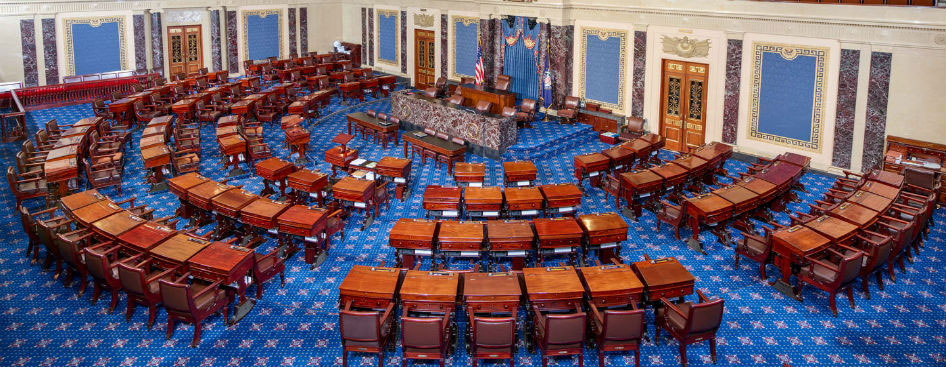
    United States Senate Floor
    Image: United States Senate, via Wikimedia Commons, Public domain.

    The survey questioned 600 respondents on August 9 and 10 and reported a margin of error of plus or minus 4 percentage points. In that poll, 4.7% supported other candidates and 4.8% said they were undecided.

    An Elon University poll also showed a double-digit Cooper advantage, with Cooper at 53% and Whatley at 42%. Conducted from July 23 through July 31 among 800 North Carolina voters, it had a reported margin of error of plus or minus 5.6 percentage points.

    Two polls with similar results carry more weight than one unusual outlier. Still, they are not interchangeable: voter screens, question wording and methodology can all produce different snapshots of a race.

    Unaffiliated voters shape the gap

    The Elon poll offers a clue to Cooper’s early strength. It found independents backing him over Whatley by 49% to 22%.

    That group matters especially in North Carolina. State election board figures as of August 8 showed about 3.13 million unaffiliated voters, compared with roughly 2.32 million registered Republicans and 2.32 million registered Democrats.

    Registration totals do not determine how people will vote. They do show why candidates who can reach beyond their own party have an important potential advantage in a closely divided statewide contest.

    Cooper begins with broad recognition from his years as governor. Whatley’s campaign has argued that Cooper benefited from near-universal name recognition and significant biographical advertising, while Whatley has been traveling to all 100 counties as he builds his statewide profile.

    Other polling shows a tighter race

    The recent double-digit margins are not the only public indicators that Cooper is ahead, though other surveys have shown a narrower spread.

    • A Fox News poll conducted in late July put Cooper ahead 53% to 44% among registered voters, a 9-point lead.
    • A New York Times/Siena University poll conducted in June among likely voters showed Cooper ahead 50% to 43%, a 7-point edge.

    Those findings reinforce the direction of the polling: Cooper has led Whatley in the recent surveys cited. But the differing margins are also a warning against treating a single number as a settled verdict.

    Prediction markets favored Cooper at the time of the report, giving him a 91% chance of winning on Kalshi and Polymarket. Those prices represent traders’ views and wagers, not a scientific reading of voter intent, and can change quickly with new polling, campaign developments or shifts in the political climate.

    North Carolina’s Senate history complicates the picture

    Democrats have reason to see Cooper as an unusually strong candidate. Josh Stein, who succeeded Cooper as governor, won North Carolina’s 2024 gubernatorial race by nearly 15 points.

    Federal elections have told a different story. Democrat Cheri Beasley lost to Republican Ted Budd by about 3 points in the 2022 Senate race. Republican Sen. Thom Tillis beat Democrat Cal Cunningham by less than 2 points in 2020, and Republican Richard Burr defeated Democrat Deborah Ross by nearly 6 points in 2016.

    The last Democrat to win a North Carolina Senate race was Kay Hagan in 2008, when Barack Obama also carried the state. President Donald Trump has won North Carolina in each of his three presidential campaigns, albeit by relatively narrow margins.

    That split record is central to interpreting Cooper’s lead. His personal standing may be stronger than that of a typical Democratic Senate candidate, particularly in growing suburban areas around Charlotte and Raleigh. Republicans, meanwhile, remain deeply competitive in rural parts of the state and have a recent record of winning federal races.

    The Senate stakes are national

    Republicans hold a 53-47 Senate majority, making North Carolina more than a symbolic contest for Democrats. A Democratic pickup alone would not decide control of the chamber, but it could be important in a national map with limited opportunities to gain seats.

    Democrats see a favorable early combination: Cooper’s name recognition, the large unaffiliated electorate and a political environment in which views of Trump could influence down-ballot choices. The Carolina Journal poll found more respondents disapproving than approving of Trump’s job performance, 56.7% to 41.2%.

    Cooper’s campaign manager, Jef Allen, has nonetheless described the contest as likely to be very close and said the campaign plans to compete for every vote. That restraint reflects the state’s recent Senate history as much as the uncertainty inherent in polling more than a year before Election Day.

    What the polls cannot settle

    Whatley’s team rejects the idea that a summer advantage decides the race. Its case is that Democrats have led in earlier stages of past cycles only to lose in November, and that Whatley’s visibility will grow as voters focus more closely on the contest.

    The existing surveys cannot show whether Cooper’s support will hold after sustained Republican advertising, sharper contrasts between the candidates and greater public familiarity with Whatley. They also cannot yet resolve the effects of national issues, presidential approval, turnout or late-breaking events.

    Voter interest appears substantial. In the Elon poll, 63% of registered voters said they were absolutely certain to vote, while another 20% said voting was very likely. High engagement could help either party depending on which voters are most motivated by Election Day.

    For now, the narrowest and strongest conclusion is that Cooper has a meaningful early lead, including two double-digit polling advantages. Turning that opening into a Democratic Senate victory would require overcoming a North Carolina pattern that has favored Republicans in federal races for nearly two decades.

  • Judge Calls Trump’s $10 Billion IRS Lawsuit an Improper Use of Court

    Judge Calls Trump’s $10 Billion IRS Lawsuit an Improper Use of Court

    The ruling focuses on a basic requirement of federal court: opposing sides must have genuinely conflicting interests. It also leaves unresolved questions about a proposed settlement and a referral for possible lawyer discipline.

    Donald Trump’s $10 billion lawsuit against the Internal Revenue Service was rebuked by U.S. District Judge Kathleen Williams, who found the case had been filed for an “improper purpose.” Williams concluded that Trump and the executive-branch agencies he sued were not functioning as genuinely opposing parties, and she referred a lawyer for possible disciplinary action.

    The ruling puts an unusual legal question at the center of Trump’s IRS case: can a sitting president use a federal lawsuit involving agencies he oversees to secure court approval for an agreement involving public money and immunity? The case had already been voluntarily dismissed, but Williams’ findings could still shape how its proposed settlement is described or defended.

    Why the IRS lawsuit drew scrutiny

    Trump’s complaint accused the IRS and Treasury Department of failing to prevent his tax information from being disclosed to news organizations between 2018 and 2020. He sought $10 billion in damages.

    First Lady Melania Trump at the U.S. Department of Justice National Opioid Summit
    Image: The Trump White House Archived, via Flickr, Public Domain Mark 1.0.

    On its face, that is the kind of claim a private citizen might bring against the government. The legal posture changed, however, after Trump returned to the White House.

    As president, Trump leads the executive branch, which includes the IRS, Treasury Department and Justice Department. The Justice Department represents the government in federal court, meaning the plaintiff and the agencies defending the case all sat within the same branch of government.

    That arrangement led Williams to focus on a foundational question: whether the parties had genuinely adverse interests, as federal litigation ordinarily requires.

    A court needs real opponents

    Federal courts are designed to resolve actual disputes. Each side is expected to press its own interests, test the other side’s evidence and arguments, and give the judge a contested record on which to rule.

    Williams determined that this case did not meet that standard. She found that the litigation was being used to give legal force to an agreement the relevant parties had already reached, rather than to resolve a true conflict.

    According to the Associated Press, Williams raised concerns about possible conflicts from the beginning and appointed attorneys to examine them. Her ruling rejected the administration’s effort to distinguish Trump’s role as a private plaintiff from his authority as president.

    Williams wrote that the court would not accept what she called a “credulous exercise” of separating Trump’s current office from the circumstances surrounding the lawsuit. Her concern was institutional: courts must ensure they are being used for the constitutional purpose of resolving genuine legal disputes.

    The judge rejected a routine-case defense

    A Trump Justice Department lawyer defended the matter as a normal legal dispute, but that framing drew scrutiny as the court examined the case’s structure and the parties’ conduct. The lawyer was also criticized in court for a perceived lack of respect.

    Williams said the record showed an effort to use judicial proceedings to provide legitimacy to an agreement involving immunity and public funds. In her view, executive-branch officials could not simply present themselves as adversaries and obtain the validating effect of a court proceeding.

    The decision does not mean a president can never pursue a personal claim against a federal agency. Instead, it signals that judges may closely examine whether the legal positions are truly independent when the president, government lawyers and defendant agencies all fall within the executive branch.

    The administration’s implicit position is that officeholders and agencies can retain legally separate roles even when they are part of the same branch. A president may have personal claims, and agencies may have their own obligations or legal positions. Williams found that distinction unpersuasive in this case.

    A lawyer referral is not discipline

    Williams referred one lawyer involved in the case for possible disciplinary action. That referral is significant, but it is not itself a final finding that the lawyer committed professional misconduct.

    The available reporting does not establish whether discipline will be imposed, what form a review might take, or when any review could be resolved. Those questions remain open.

    The referral nevertheless adds pressure to the Justice Department’s role in the case. The dispute comes ahead of a Senate Judiciary Committee confirmation hearing for Acting Attorney General Todd Blanche, giving the department’s legal strategy added political as well as institutional importance.

    The settlement is still in question

    The lawsuit was voluntarily dismissed months before Williams issued her rebuke. That means her ruling has limited immediate effect on the dismissed case itself, but it does not erase her conclusions about how the litigation was used.

    In May, the administration announced a settlement that included a proposed $1.776 billion fund for people who said they had been unfairly targeted by the criminal justice system. According to the Associated Press, that fund was later shelved after bipartisan backlash.

    The administration has said it still intends to pursue another part of the agreement: protections from tax audits for Trump and his family members. Williams did not expressly void the arrangement that would shield them from tax scrutiny.

    She did, however, say the government could not represent in official proceedings that the agreement resulted from a legitimate legal process. That distinction could matter if the agreement is later enforced, challenged or cited in related litigation.

    What the ruling means beyond Trump

    For Trump’s critics, Williams’ decision supports the argument that the administration tried to use the courts to insulate the president and his allies from ordinary oversight. They see the lawsuit as an attempt to turn a judicial proceeding into a mechanism for approving an executive-branch outcome.

    Supporters can point to the underlying allegation that Trump’s taxpayer information was improperly disclosed, a serious claim that would ordinarily warrant legal examination. They may also argue that Williams went too far in her assessment of the administration’s litigation strategy.

    The narrower legal takeaway is that federal courts are not required to treat a lawsuit as ordinary simply because the filings label the parties as opponents. When a sitting president sues agencies he oversees, a judge may look beyond the caption and ask whether there is a genuine dispute to decide.

    What happens next remains unclear: the future of the audit-protection arrangement, the outcome of the lawyer referral and the possibility of further litigation over the settlement are all unresolved. Williams’ ruling, though, makes clear that this $10 billion IRS case cannot be treated as routine litigation.

  • What Is Verified About the Sophie Cunningham Rumor and Fever Protests

    What Is Verified About the Sophie Cunningham Rumor and Fever Protests

    The online claim has outpaced the available evidence. Here is the documented record surrounding Cunningham, the Indiana Fever and demonstrations tied to the debate over transgender athletes in women’s sports.

    Sophie Cunningham was linked to an unverified rumor as demonstrations continued at recent Indiana Fever games, but the available reporting does not establish the claim’s details or a direct connection to the team controversy. The documented story is narrower: Cunningham’s comments about transgender participation in women’s sports prompted rallies in Seattle and Portland, while an online allegation lacks credible proof.

    That distinction matters because confirmed events surrounding the Indiana Fever have created a setting where unsupported claims can appear more solid than they are. The record includes protests, a courtside exchange, WNBA discipline and Cunningham’s own comments—not verification of a separate new allegation.

    The claim has no supporting record

    The trend item describing a “new Sophie Cunningham rumor” does not identify a specific allegation, provide source documents or offer independently verifiable evidence. Without those elements, there is no basis to present the claim as confirmed news.

    Sophie Cunningham Fever 2
    Image: John Mac, via Openverse, by-sa.

    Available reporting also does not show that the rumor grew directly out of the Seattle incident, the protests, or an action by Cunningham, the Fever or the WNBA. It remains an unsupported online claim rather than a documented development.

    That does not erase the controversy around Cunningham. It means the established facts and the additional rumor need to be treated separately.

    Rallies followed Cunningham’s comments

    Associated Press reporting published Aug. 1 described rallies outside recent Fever games in Seattle and Portland supporting Cunningham and her recent comments about transgender athletes. The demonstrations were real, even if the broader claims circulating online have not been substantiated.

    Cunningham told the AP she was not concerned that the attention would become a distraction for Indiana. She said her focus was to do her job and play basketball, adding that she would not “hide” or “dim” herself because some people disagreed with her views.

    She also said she had “honestly had nothing to do” with the demonstrations. Cunningham characterized the rallies as supporters exercising free-speech rights, not an effort she organized or directed.

    The AP reported that the events drew roughly two dozen participants, as well as onlookers. At the Portland game, some fans waved transgender flags and booed when Cunningham entered the court.

    Seattle exchange brought league discipline

    The most clearly documented flashpoint occurred around a Fever game in Seattle. Two Cunningham supporters were seated courtside holding signs, and an exchange involving them later resulted in discipline for Seattle Storm co-owner Celeste Keaton.

    According to the AP, the WNBA fined Keaton an undisclosed amount and suspended her for five games. The Seattle Storm later apologized and said it remained committed to a welcoming and respectful environment for everyone attending games.

    The Storm did not publicly detail the exchange. That limit is important: the confirmed outcome is league discipline and a team apology, not every interpretation that has been attached to the incident online.

    The Seattle episode became part of a larger stretch of scrutiny around Cunningham and the Fever. But the existence of a documented incident does not validate a separate claim that has not been supported with evidence.

    A policy fight reached the arena

    The rallies centered on the contentious debate over transgender participation in girls’ and women’s sports. Cunningham’s supporters have framed restrictions as a matter of fairness and protections for female athletes.

    Opponents take a different view, arguing that excluding transgender athletes causes harm and that broad political conflicts are being carried into venues where players and fans should be able to participate respectfully. The competing perspectives have turned Fever games into a visible forum for a debate that extends beyond basketball.

    The Fever are not the decision-makers on statewide policy or the wider rules governing youth sports. Still, Cunningham’s public stance and the team’s national profile have made Indiana games a focal point for supporters and critics.

    That context helps explain why the protests drew attention. It does not supply evidence for the separate rumor involving Cunningham.

    Indiana tried to keep basketball central

    Fever coach Stephanie White said she was frustrated that the conversation was being pulled away from basketball. At the same time, she described the moment as part of the WNBA’s growth and said the league needed to manage it, protect players where possible and lead with conversation.

    For the Fever, the challenge is practical as well as public-facing. The team cannot fully control outside demonstrations, social-media reactions or political associations connected to individual players. It can set expectations for conduct, safety and focus within its own organization.

    Indiana continued to win during the stretch covered by the AP report. The Fever beat the Portland Fire 112-98 for their fifth straight victory, with Cunningham scoring 13 points.

    Caitlin Clark had 26 points, 10 rebounds and 10 assists in that game for her fourth career triple-double. Those on-court results show the team continued competing while the surrounding debate commanded attention.

    What remains unresolved

    The central unanswered issue is not complicated: the supplied material does not say precisely what the new rumor alleges, nor does it provide evidence that would substantiate it. It also does not show a response from Cunningham, the Fever or the WNBA to a newly alleged development.

    What can be confirmed is more limited but still significant. Cunningham made public comments that became a flashpoint; supporters rallied outside Fever games; a Seattle courtside exchange led to WNBA discipline for Keaton; and the Storm apologized afterward.

    Everything beyond that requires a higher standard than repetition online. On-the-record statements, official documentation or reliable independent reporting would be needed before an undefined allegation could move from rumor to verified news.

    For now, the clearest account is that an active public debate has followed Cunningham and the Fever, while the separate rumor remains unverified.

  • McConnell’s Absence Keeps Disclosure Debate in Focus After Jennings Call

    McConnell’s Absence Keeps Disclosure Debate in Focus After Jennings Call

    Scott Jennings said Mitch McConnell remains engaged with politics and Senate business during his recovery. His account does not establish when, or whether, McConnell will resume the full demands of serving in Washington.

    As Mitch McConnell recovers away from public view, the debate over how directly he should update Kentucky voters remains unresolved. Kentucky Gov. Andy Beshear, a Democrat, has argued that McConnell should speak to the public about his recovery and ability to serve, while CNN commentator Scott Jennings has defended the senator’s limited discussion of his health.

    Jennings’s recent account of a phone call with McConnell adds a narrow but notable detail to the public picture: he said the Kentucky senator was recovering at home, sounded improved and remained focused on political and legislative matters. The account was not a medical briefing, and it did not guarantee McConnell’s return to Senate duties.

    A dispute over public communication

    Beshear has argued that McConnell should directly address constituents. His position is not primarily that the senator must disclose private medical information; it is that Kentucky voters deserve a brief assurance about his recovery and ability to serve.

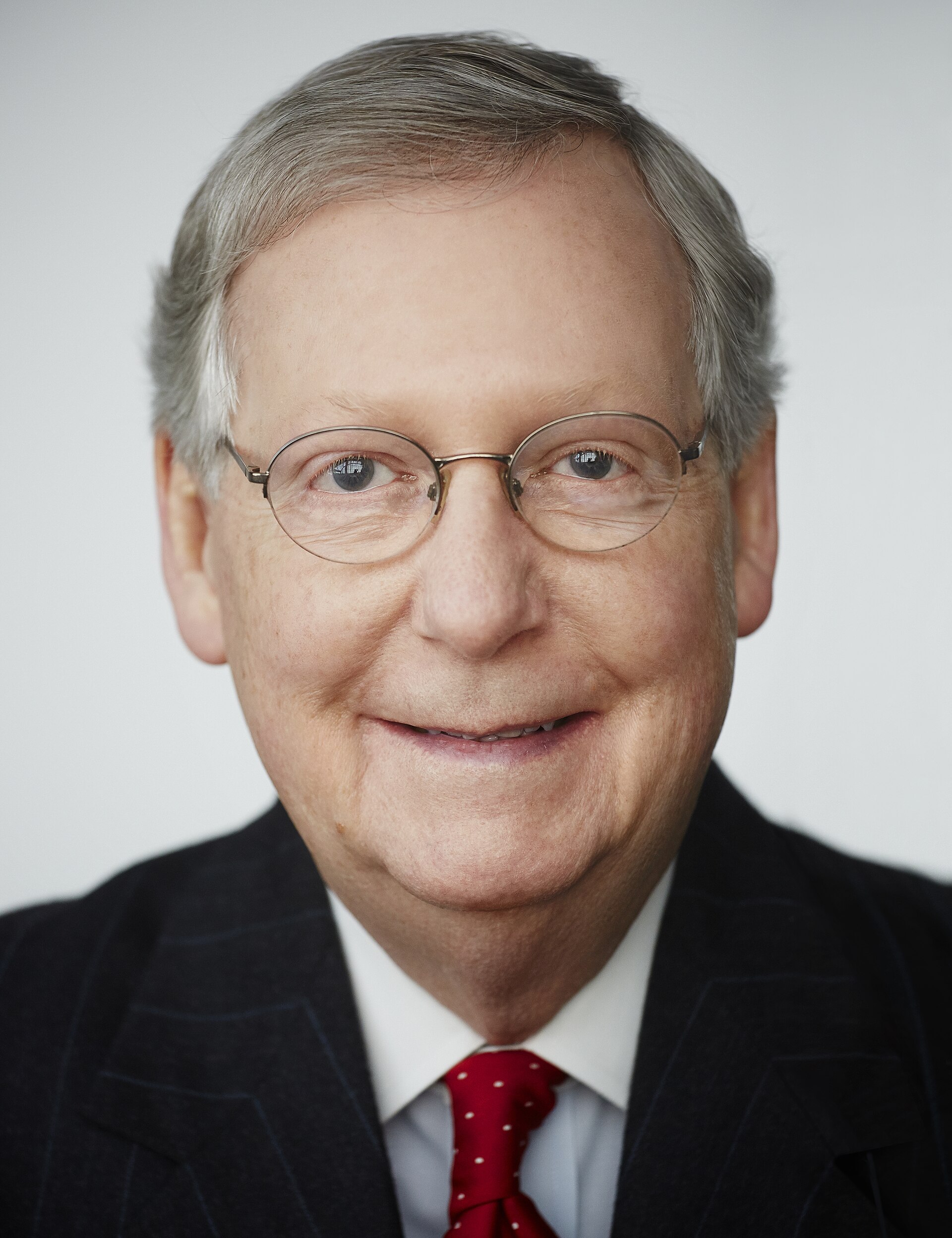
    Mitch McConnell close up
    Image: U.S. Government, via Wikimedia Commons, Public domain.

    Jennings has pushed back, portraying McConnell’s limited public discussion of his health as consistent with his personality and generation. McConnell is a polio survivor, and Jennings said he has long been intensely private about health matters.

    Medical privacy applies to elected officials as it does to anyone else. At the same time, McConnell remains a sitting U.S. senator, and his extended absence affects representation for Kentucky.

    The question, then, is not simply about a diagnosis. It is also about the level of public communication voters can reasonably expect while an officeholder has been away from the Capitol for an extended period.

    What Jennings said about the call

    Speaking on CNN’s The Arena, Jennings said McConnell called him from his own phone and sounded noticeably better than he had during an earlier conversation after the senator’s hospitalization.

    Jennings described McConnell as alert, informed and focused on the issues before the Senate. He said they discussed the Michigan and Maine Senate races, the wider Republican electoral map, the farm bill, the National Defense Authorization Act and the Senate filibuster.

    Jennings also said McConnell has been speaking with Senate colleagues, meeting with staff and receiving visitors. His description suggests McConnell is following events and communicating with people in his political circle.

    But Jennings’s remarks are an account from an ally, not a formal medical statement or an independent assessment of McConnell’s capacity to carry out Senate duties.

    Recovery information remains limited

    McConnell has largely stayed out of public view since a June 14 fall at his Washington, D.C., home that left him unconscious and resulted in hospitalization. His office said he was later discharged from a rehabilitation facility and continued recovering at home.

    He has not publicly addressed reporters or constituents about his condition. Public information has largely come from his office and from people, including Jennings, who say they have spoken with him.

    Jennings said McConnell told him that doctors had found no life-threatening issues. That characterization came through Jennings’s retelling on CNN, rather than a public statement from McConnell’s medical team.

    There has been no public medical briefing on the nature of McConnell’s injuries, the course of his rehabilitation or what doctors expect in the weeks ahead. Recovery and readiness for Senate work are related but not identical questions.

    September 14 remains a target

    According to Jennings, McConnell hopes to return when the Senate reconvenes on September 14. Jennings presented the date as a goal, not a guarantee.

    A return to the Capitol would depend on recovery, medical advice, travel and the practical demands of Senate service. Neither Jennings’s comments nor the public information available establishes a firm timetable.

    McConnell has not cast Senate votes since June. Following policy discussions by phone is different from returning to voting, meetings, travel and the full pace of work on Capitol Hill.

    Whether McConnell appears when the Senate reconvenes, or whether his office issues a direct update beforehand, will provide the next public marker. Until then, September 14 remains a target rather than a confirmed return date.

    The remaining months of his term

    McConnell is in the final stretch of a Senate career that began in 1985. He announced earlier this year that he would not seek reelection, and Kentucky voters will choose his successor in November.

    Even after stepping down as Senate Republican leader, McConnell remains a central Republican voice and holds a consequential vote as the chamber confronts major policy fights.

    Jennings’s description of their conversation suggests McConnell wants to remain connected to debates over the farm bill, defense legislation and the filibuster before leaving office in January. It does not establish whether he will be physically able to participate in those matters at the Capitol.

    For now, Jennings’s CNN remarks offer a limited update: he said McConnell is recovering at home, communicating and staying engaged. Questions about a return date, his capacity for full Senate duties and whether he will address Kentuckians directly remain open.

  • Trump DOJ submits unredacted Epstein records after Katie Phang court win

    Trump DOJ submits unredacted Epstein records after Katie Phang court win

    The filing is a procedural step in a larger fight over Epstein records, transparency and victim privacy. It does not automatically mean the same documents will become public in full.

    The Justice Department submitted unredacted Jeffrey Epstein records to a judge. The filing followed a court victory for Katie Phang, in which a federal judge ordered the Justice Department to unredact additional Epstein files for court review. The department then filed records in court, putting the Trump DOJ’s handling of sealed Epstein material back under scrutiny.

    Put plainly, when the DOJ hands a judge a fuller file, it does not mean the public immediately gets the same thing. It means President Donald Trump’s Justice Department must answer to the court while balancing transparency, victim privacy and secrecy rules around the Epstein record.

    A fuller file reaches court

    The immediate significance is procedural but important: a judge now has access to unredacted material that had previously been withheld or blacked out in some form. That gives the court, not just the Justice Department, a role in assessing whether the government is complying with disclosure obligations.

    Phang’s court win matters because it appears to have forced movement from the department. In records fights, that kind of order can change the power dynamic. Agencies often control what the public sees through redactions; judges can require the government to justify those redactions or provide cleaner copies for review.

    The key distinction is between a court filing and a public release. Unredacted records submitted to a judge may remain sealed, partially sealed or later released with redactions. The fact that the judge has the fuller version does not mean names, identifying details or sensitive evidence will be published as-is.

    What the Epstein records include

    The broader Epstein record is not one single file. According to Associated Press reporting on related court proceedings, the government’s Epstein materials may include FBI notes and reports, transcripts of witness interviews, photographs, videos, travel records, flight logs, an autopsy report and other evidence gathered in investigations.

    Some of the most closely watched materials are grand jury records. Those are normally secret because grand juries hear evidence before charges are brought, and secrecy rules are meant to protect witnesses, victims, uncharged people and the integrity of investigations.

    That is why even judges who approve unsealing have cautioned against expecting a dramatic single revelation. In one related ruling, U.S. District Judge Richard M. Berman described roughly 70 pages of Epstein grand jury material as limited and not especially revelatory, according to AP.

    AP also reported that the Epstein grand jury presentation involved testimony from an FBI agent, a PowerPoint slideshow and four pages of call logs. The agent, the judge noted, did not have direct knowledge of the underlying facts, making the material less sweeping than many online theories suggest.

    Unredacted does not mean public

    The word unredacted is doing a lot of work here. In a court context, it can mean the judge receives a version without black boxes so the court can decide what should remain sealed. It does not automatically mean the public gets the same version.

    Courts routinely draw lines between what judges may review and what the public may inspect. That is especially true when records involve sexual abuse victims, minors, medical details, witness identities or people who were mentioned in investigations but not charged with crimes.

    Victims’ lawyers have pushed for transparency while also warning that survivors must be protected. AP quoted attorney Brad Edwards, who represents Epstein victims, as supporting unsealing so long as victim privacy is protected. That balance is now central to every Epstein records dispute.

    The tension is clear: the public has a legitimate interest in knowing how Epstein operated, who enabled him and how law enforcement handled the case. Survivors have an equally serious interest in not being exposed again through careless document releases.

    The transparency law changed leverage

    The court fight is unfolding against the backdrop of the Epstein Files Transparency Act, a law that AP reported requires the Justice Department to disclose Epstein-related material to the public by Dec. 19. The law created a narrow exception to secrecy rules that usually keep grand jury material locked down.

    That law appears to have shifted the posture of several courts. AP reported that Judge Berman reversed an earlier decision and allowed secret grand jury transcripts from Epstein’s 2019 sex trafficking case to be made public. Other judges have also approved releases tied to Epstein or Ghislaine Maxwell proceedings.

    Still, the law does not erase all limits. Judges have emphasized privacy provisions, especially for victims and identifying information. Berman wrote that the law supersedes normal grand jury secrecy in this context, but he also urged careful compliance with protections for victims.

    That is the practical meaning of the current filing: the government is under pressure from statute, judges and litigants to move more material into the open, but each release still has to pass through legal filters.

    Politics raised the temperature

    Epstein records have become a political test for Trump’s Justice Department because Trump and his allies previously called for more disclosure. When the administration released some Epstein-related material that critics said was largely already public, pressure increased from both opponents and disappointed supporters.

    That makes any new filing politically charged, even when the court action itself is technical. To transparency advocates, an unredacted submission to a judge is a sign that outside pressure can force the government to produce more. To skeptics, it is only meaningful if the court ultimately permits public access to new information.

    There is also a risk of overpromising. The public phrase Epstein files often suggests a hidden master list of powerful people. Court records reviewed so far in related proceedings have not always matched that expectation.

    In Maxwell’s case, AP reported that U.S. District Judge Paul A. Engelmayer said certain grand jury materials did not identify anyone other than Epstein and Maxwell as having sexual contact with a minor and did not reveal unknown methods of their crimes. That warning matters as more records move toward possible release.

    What remains unresolved

    The next question is what the judge does with the unredacted records. The court could order additional public disclosure, approve limited redactions, keep some material sealed or ask the Justice Department to explain its redaction choices in more detail.

    Another open issue is timing. A court may move quickly on a narrow records dispute, but broader Epstein disclosures could unfold in batches, with different courts handling different categories of material. That creates room for confusion, especially when one ruling involves grand jury transcripts and another involves agency files or discovery records.

    The filing after Katie Phang’s win is therefore best understood as a pressure point, not the finish line. It puts a fuller version of Epstein-related records before a federal judge and tests whether the Trump DOJ can satisfy both disclosure demands and privacy obligations.

    The clean takeaway: this is a meaningful step toward court-supervised transparency, but not an immediate public dump of unredacted Epstein files. The judge now has more to review. The public is still waiting to learn what can legally, safely and honestly be released.