Blog

  • Crowley’s Wisconsin primary win tests Hong’s progressive appeal

    Crowley’s Wisconsin primary win tests Hong’s progressive appeal

    Hong’s close loss does not erase progressive energy in Wisconsin, but it underscores the challenge of turning that energy into a winning statewide coalition. Crowley now faces the larger test: uniting Democrats for the general election.

    Francesca Hong lost the Democratic primary for Wisconsin governor to Milwaukee County Executive David Crowley, a narrow result that immediately became a test of the Democratic Party’s progressive movement. Crowley defeated Hong by less than 1 percentage point, according to reporting from The Associated Press carried by PBS, showing that Hong’s left-wing campaign had real statewide reach even as it fell short.

    Hong’s loss matters because Wisconsin is a closely divided state, where Democrats believe they have an opening to hold the governor’s office and where the party’s ability to unite could shape the November contest against Republican Rep. Tom Tiffany. The primary did not settle the argument over progressives’ electoral strength; it made that argument harder to simplify.

    A close race, not a collapse

    The most important fact about the Wisconsin result is its closeness. The AP called the race for Crowley after Hong conceded, removing the prospect of a recount. Hong could have sought one because the margin was under 1 percentage point, but it was wider than 0.25 points, meaning her campaign would have had to cover the cost.
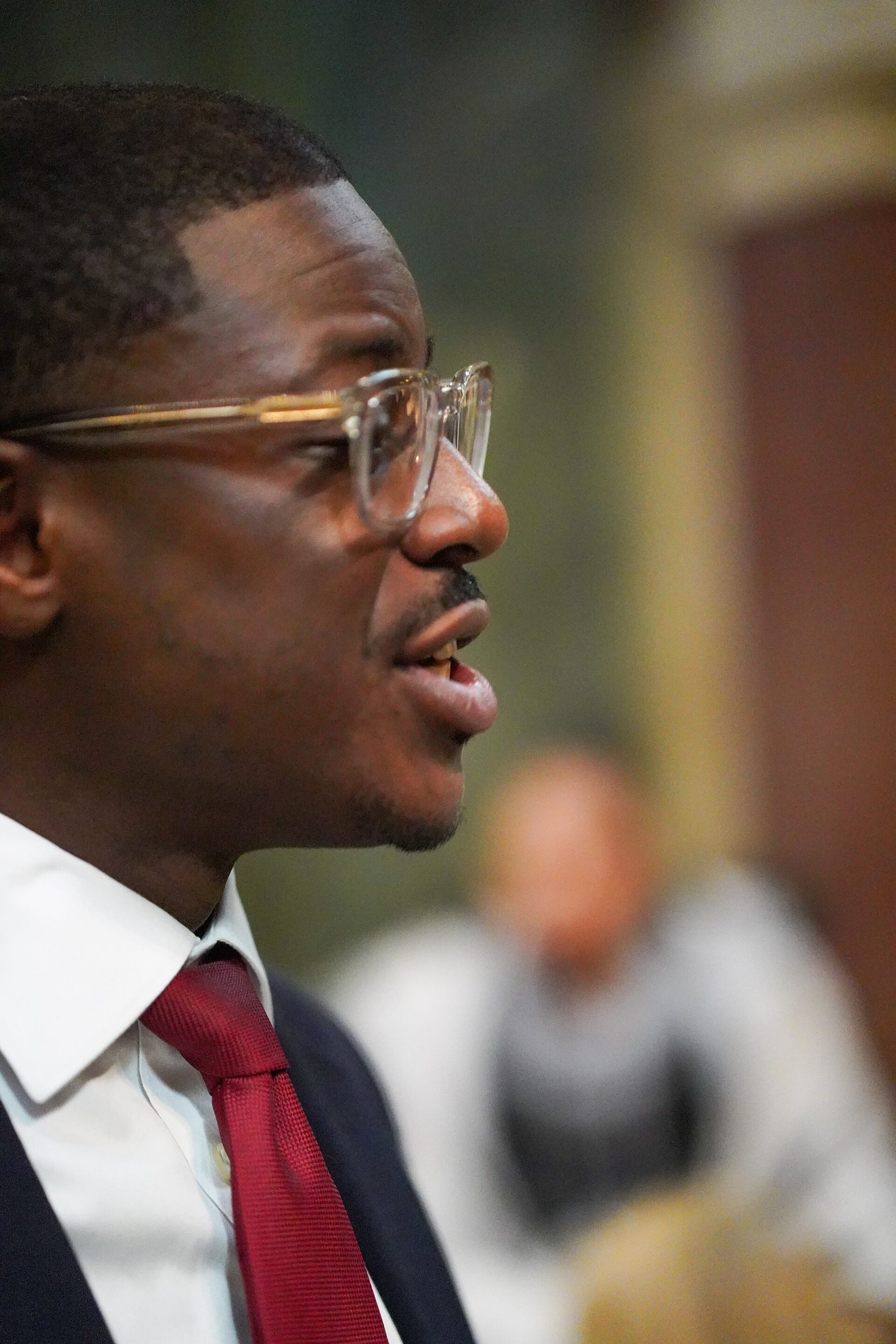
    David Crowley, Milwaukee County Executive, at the Wisconsin State Capitol, Madison, WI, February 26, 2026 05
    Image: LaShawnda Jones, via Wikimedia Commons, CC BY-SA 4.0.

    That is a loss, and it denies progressives the statewide victory they wanted. But a democratic socialist running competitively for governor in a battleground state is not evidence that the movement lacks voters. It is evidence that it can command a meaningful share of a Democratic primary electorate.

    Hong framed her campaign as bigger than one result while addressing supporters on election night. Her campaign manager, Becky Cooper, said the team had made “meaningful change for the progressive movement.” Those are campaign assessments, not a measure of future votes, but they reflect why the race is likely to remain a reference point for activists.

    Crowley ran on electability

    Crowley presented himself as the Democrat best equipped to beat Tiffany in November. His campaign said after the primary that he was focused on bringing together Democrats, Republicans, independents and voters who wanted practical results.

    That message addressed a familiar concern inside Democratic primaries: whether an ideologically sharper candidate can carry the moderate and independent voters who often decide Wisconsin elections. A retired Madison professor interviewed by the AP said Hong’s general-election prospects worried him, reflecting the calculation that helped Crowley.

    Crowley’s win also carries historic significance. He is seeking to become Wisconsin’s first Black governor. Yet his coalition-building message, rather than biography alone, appears central to the post-primary task: bringing Hong’s supporters into a campaign that must compete statewide against a Republican endorsed by President Donald Trump.

    Hong energized the party’s left

    Hong, a 37-year-old state representative, former line cook and single mother, ran as a democratic socialist with an unmistakably different pitch. She called for free child care and health care and proposed a moratorium on artificial-intelligence data-center construction.

    Her campaign also drew on Democratic frustration with party leadership, the cost of living, immigration enforcement and U.S. military aid to Israel. Those concerns have connected a range of progressive candidates around the country, even when they do not share every ideology, endorsement or policy position.

    But Hong carried vulnerabilities into the race. She had to answer for earlier support for defunding police, telling voters at the campaign’s only debate that she would not support cutting law-enforcement funding. She also faced scrutiny over past social-media posts, which she later characterized as jokes.

    The tension is central to what Wisconsin revealed. Progressive candidates can activate voters who feel overlooked by conventional Democratic politics. The same campaign language and past positions can also give opponents, and uneasy Democrats, material to question their general-election reach.

    National leaders stayed on the sidelines

    Hong did not receive endorsements from two of the movement’s most prominent national figures, Sen. Bernie Sanders of Vermont and Rep. Alexandria Ocasio-Cortez of New York. Their decision to stay out matters because a high-profile endorsement operation might have changed the race’s organization, attention and turnout dynamics.

    It also highlights a limit of describing “the progressive movement” as one disciplined bloc. Progressive candidates often share broad grievances about economic inequality, political money and party establishment power, but they do not always have the same strategy, alliances or local appeal.

    Recent races have fueled the idea that the left is gaining ground. PBS noted that Abdul El-Sayed’s Michigan Senate primary victory, along with New York City Democratic primary wins by two democratic socialists and a progressive, had boosted confidence among activists. Hong’s defeat interrupts a clean victory narrative without reversing those results.

    Wisconsin puts coalition politics first

    The governor’s race began after Democratic Gov. Tony Evers chose not to seek a third term. It was a turbulent primary: several Democrats entered, two major candidates dropped out amid scandals, and Crowley himself briefly left the race before returning with Evers’ endorsement.

    That unusual backdrop makes it risky to treat the final margin as a pure ideological referendum. Candidate familiarity, campaign timing, endorsements, local organization and perceived November viability all shape a primary. Crowley and Hong both spent the closing days arguing that Democrats would need to come together afterward.

    Wisconsin Democrats hope to retain the governor’s office and flip both legislative chambers, which would give them full control of state government for the first time since 2010. Those ambitions depend on winning voters beyond the party’s most committed factions.

    The next test is November unity

    Crowley’s nomination gives Democrats a candidate who explicitly campaigned on broad appeal. Hong’s near-win gives progressives leverage to insist that the party not dismiss the voters drawn to her agenda.

    Both realities can be true. The primary showed that a pragmatic, electability-centered message can still win in Wisconsin. It also showed that progressive politics cannot be written off as a fringe force when its candidate came within a fraction of a point of winning a statewide nomination.

    What remains unclear is how fully Hong’s coalition will transfer to Crowley, and whether Crowley can preserve his moderate appeal while incorporating some of the economic urgency that powered her campaign. The answer will matter more in November than any shorthand about which Democratic faction “won” the primary.


  • New York Judge Invalidates RFK Jr.’s Ballot Petition Over Residency

    New York Judge Invalidates RFK Jr.’s Ballot Petition Over Residency

    The fight over Robert F. Kennedy Jr.’s New York ballot access turned on a basic but consequential question: where did he actually live? The ruling’s reach, and its potential effect beyond New York, became central to his campaign’s legal response.

    Robert F. Kennedy Jr. said a judge’s ruling left him unable to vote after the decision invalidated Kennedy’s New York ballot petition. The New York ruling affected Kennedy’s voting eligibility because Justice Christina Ryba found that the Katonah address he used for political and voting purposes was not his actual residence.

    The immediate legal outcome was clear: Kennedy’s independent presidential petition was thrown off New York’s ballot. His broader claim about being unable to vote points to the same residency dispute, but the court decision described in reporting focused on his ballot petition rather than issuing a standalone order permanently taking away his right to cast a ballot.

    The address at the center

    The case centered on a room Kennedy said he rented in Katonah, a well-off New York suburb. He used that address on nominating petitions and was registered to vote there.

    Challengers argued that Kennedy’s true residence was in Los Angeles, where he lived with his wife, actor Cheryl Hines. Kennedy testified that he had moved to California about a decade earlier to be with Hines, while maintaining that he planned to return to New York.

    That distinction mattered under New York election law. A person may have strong personal, professional or political ties to a place, but a court assessing residency is looking for more than an asserted future intention to return.

    Ryba concluded that Kennedy had used a friend’s address for political and voting purposes while barely being at the property. In the judge’s view, that did not meet the state-law definition of residency.

    Why the petition was invalidated

    The lawsuit was brought by several voters and supported by Clear Choice Action, a group aligned with Democrats. It challenged the validity of Kennedy’s nominating petition, the document an independent candidate needs to get on the state ballot.

    The petition did not fail because New York voters rejected Kennedy at the polls. It failed because the court concluded the residence information underlying his filing was improper.

    That is an important distinction in the rhetoric around the case. Ballot access and the right to vote are connected through residency rules, but they are not identical legal questions. A ruling that removes a candidate’s petition from a ballot can create serious consequences for voter registration claims without necessarily resolving every issue related to a person’s ability to vote in every setting.

    Kennedy framed the dispute as a fight over democratic competition and voter rights. His statement announcing an appeal criticized the modern Democratic Party and argued that open competition on the ballot is essential to democracy.

    Kennedy challenged the legal theory

    Kennedy’s attorneys appealed the decision and said they would seek injunctive relief in federal court in New York City. Their argument was that the U.S. Constitution’s 12th Amendment, rather than state law, governs residency requirements for presidential and vice-presidential candidates.

    That argument puts two separate questions into focus. One is whether New York properly applied its own election law to the address on Kennedy’s petition. The other is whether a state requirement can be applied in this way to a candidate for federal office.

    Supporters of Kennedy’s position can argue that strict state residency rules should not become a tool for blocking an independent presidential candidate. They also point to the fact that candidates often maintain homes, work obligations and family ties in more than one state.

    Opponents respond that election systems depend on accurate filings and that candidates should be held to the same address and residency standards that apply to other participants in the process. The court accepted that view at the initial stage of the New York case.

    The ruling reached beyond New York

    New York was one of more than a half-dozen states where Kennedy faced ballot-access challenges during his 2024 independent presidential campaign. The disputes involved different state laws and allegations, including questions about addresses and the signatures gathered to qualify for ballots.

    Reporting by PBS, based on Associated Press coverage, said Clear Choice Action claimed Kennedy listed the same New York address on nominating petitions in 17 other states. That does not mean those states would automatically remove him from their ballots; each state has its own statutes, procedures and deadlines.

    Keith Gaddie, a Texas Christian University political science professor, said other election officials could pay attention to the final outcome of the New York litigation where similar requirements apply. His point was not that one ruling controls every state, but that it could offer a roadmap for comparable challenges.

    Richard Winger, editor of Ballot Access News and an advocate for minor-party access, offered a more restrained view. He said fresh challenges might be difficult to bring late in the process and questioned whether other states would place as much weight on a candidate’s address.

    Ballot rules can shape campaigns

    Kennedy’s campaign said it had collected enough signatures to seek ballot access in all 50 states and was officially on the ballot in 17 states at the time of the New York dispute. For an independent candidate, that state-by-state work is often as decisive as national polling or television advertising.

    Major-party nominees generally begin with automatic ballot lines. Independent candidates must navigate separate filing dates, signature thresholds, residency rules and administrative challenges in every state. A defect in a filing can therefore become a campaign-defining issue.

    The stakes were political as well as procedural. Kennedy’s candidacy drew concern from Democrats and Republicans who believed he could draw votes from their preferred candidate. That created an environment in which ballot-access litigation was likely to be viewed through a partisan lens, even when courts were deciding technical election-law issues.

    Still, a court’s job is narrower than a campaign’s messaging war. The New York ruling turned on evidence about residence and the requirements attached to a nominating petition.

    What remains unresolved

    Kennedy’s appeal meant the New York decision was not necessarily the final word. The outcome of that appeal, along with any federal court action, would determine whether the petition ruling stood.

    It also remained unclear how any finding about Kennedy’s New York residence would be applied to his voter registration or to ballot filings in other states. Those issues depend on the specific records, laws and challenges before each jurisdiction.

    The durable lesson is that the phrase “unable to vote” can obscure the legal sequence. The ruling invalidated Kennedy’s New York ballot petition after a judge found his listed address was a sham residence under state election law. Kennedy said the decision also left him unable to vote; the litigation over what follows from that residency finding is where the broader consequences lie.

  • Siena poll shows Hochul ahead 49%-39%, but Blakeman narrows gap

    Siena poll shows Hochul ahead 49%-39%, but Blakeman narrows gap

    Kathy Hochul is ahead, but she remains below 50% in Siena’s first likely-voter survey of the cycle. Bruce Blakeman’s stronger standing with independents and in the suburbs shows why the race is not settled.

    Bruce Blakeman’s chances of defeating Kathy Hochul in the New York governor’s race are improving but still trail the incumbent, according to a new Siena Poll. Among likely New York voters, Hochul leads Blakeman 49% to 39%, a 10-point lead that indicates Blakeman has not yet flipped New York.

    The result gives Hochul a clear advantage with less than three months until Election Day, while also leaving her short of majority support. For Blakeman, the Nassau County executive, the poll points to a viable path only if he can turn regional and independent-voter strengths into broader statewide support.

    Hochul leads, but remains below 50%

    Siena Research Institute’s survey is its first poll of likely New York State gubernatorial voters this election cycle. It puts Democratic Governor Kathy Hochul at 49% and Republican Bruce Blakeman at 39%.

    That is a notable improvement for Blakeman compared with Siena’s June survey of registered voters, when Hochul led 52% to 32%. The surveys do not measure exactly the same electorate, so the figures are not a clean one-to-one trend line. Still, the new likely-voter result presents a substantially tighter contest.

    Siena pollster Steven Greenberg highlighted another important distinction: Hochul’s 49% does not clear the 50% threshold. A candidate can win with less than a majority in a two-candidate matchup only if support shifts, turnout changes, or minor-party dynamics alter the final vote. But the result leaves Hochul with less cushion than a 52% or 53% showing would provide.

    At the same time, a 10-point deficit is not a small hurdle. Blakeman would need to consolidate Republican backing, protect his slim advantage with independents and persuade voters who have not formed a firm opinion of him.

    Independent voters offer Blakeman an opening

    The candidates are overwhelmingly supported by their own parties. Hochul leads among Democrats 80% to 8%, while Blakeman leads among Republicans 84% to 9%, according to Siena.

    The more competitive group is independents. Blakeman leads Hochul 45% to 40% among likely independent voters, a narrow edge that matters in a state where both parties begin with large and dependable bases.

    That finding helps explain why the race is closer than the overall statewide number alone suggests. It also exposes the limits of Blakeman’s current position: winning independents by five points has not offset Hochul’s commanding Democratic advantage.

    For Hochul, the central challenge is less about holding her party than preventing independent voters from drifting further toward her opponent. For Blakeman, the task is converting a modest independent edge into a larger statewide coalition without losing the voters who already back him.

    New York City anchors Hochul’s advantage

    Regional results show where Hochul’s 10-point lead is built. She holds a 64% to 19% advantage in New York City, an enormous margin in the state’s largest population center.

    Blakeman performs better in the downstate suburbs, where he leads 49% to 41%. He also runs virtually even with Hochul upstate, Siena said. Those results give the Republican a clear geographic argument: he is competitive outside the city and ahead in a politically important suburban region.

    But New York City’s Democratic margin remains a formidable obstacle. A suburban gain matters, yet it must be large enough to counter the city’s overwhelming numbers and avoid losses in upstate areas where the poll currently shows a near tie.

    The regional picture also explains why turnout will be a major factor. Neither campaign can treat its natural strongholds as automatic; each needs to maximize participation where it already has an advantage while limiting losses elsewhere.

    Housing is Hochul’s clearest issue edge

    Likely voters give Hochul her strongest policy advantage on increasing the supply of affordable housing. They pick her over Blakeman by 51% to 35%, a 16-point margin.

    Her leads are much narrower on other issues. Hochul is ahead 48% to 41% on making prices more affordable for average New Yorkers and 47% to 42% on developing the state’s energy future.

    On keeping New Yorkers safe, the margin is 47% to 44%. On addressing undocumented immigrants living in New York, it is 45% to 44%. Those close numbers suggest that Blakeman has room to contest issues that often animate Republican and independent voters, even as Hochul has the overall advantage.

    Independents sharpen that contrast. Siena said they favor Hochul by nine points on housing, but favor Blakeman by between eight and 15 points on affordability, energy, public safety and immigration. The question is whether those issue preferences become decisive voting priorities or remain secondary to party identification and broader views of the candidates.

    Character ratings complicate the race

    Blakeman outperforms Hochul on the four character measures Siena tested. Likely voters give Blakeman a positive net rating for being tough, honest and someone who gets things done; Hochul’s net ratings on those measures are weaker.

    Specifically, voters say “tough” describes Blakeman by a 25-point margin, while Hochul is only two points positive. Blakeman is five points positive on honesty, eight points positive on getting things done and four points negative on being in touch with average New Yorkers.

    Hochul is two points negative on honesty, five points negative on getting things done and 12 points negative on being in touch with average New Yorkers, according to the poll. These impressions are a potential vulnerability for an incumbent who is otherwise ahead on the ballot test.

    Yet Blakeman has a major name-recognition gap. His favorability rating is 33% favorable and 26% unfavorable, while 40% of likely voters say they do not know enough to offer an opinion. Hochul’s rating is 46% favorable and 49% unfavorable, reflecting a much more defined public image.

    The poll is a starting point, not a forecast

    Siena’s comparison with the 2022 governor’s race offers a reason to avoid treating August numbers as a final verdict. In August 2022, Hochul led Republican Lee Zeldin 53% to 39% among likely voters, a 14-point advantage. She ultimately won 53% to 47%, a six-point margin.

    That history does not predict a repeat result. It does show that campaigns can tighten significantly in the final stretch, particularly when a challenger can focus attention on issues where the incumbent’s advantage is narrow.

    Hochul begins this stage of the campaign ahead statewide, dominant in New York City and stronger on affordable housing. Blakeman’s route is narrower but visible: hold Republicans, expand his independent support, press his suburban advantage and turn close issue ratings into votes.

    For now, the Siena Poll says the same thing in two ways. Hochul is the favorite at 49% to 39%, but New York’s governor’s race is closer than Siena’s June registered-voter survey suggested—and not yet a closed case.

  • Trump Urges Permanent Daylight Saving Time, Citing Lower Murder Rates

    Trump Urges Permanent Daylight Saving Time, Citing Lower Murder Rates

    Trump’s push to stop changing the clocks now includes a claim about crime. The proposal has bipartisan frustration behind it, but experts remain divided over whether permanent daylight saving time is the best answer.

    Donald Trump said permanent daylight saving time could cause the murder rate to fall, linking later evening daylight to public safety as he urged Congress to make daylight saving time permanent. His proposal would end the twice-yearly clock changes for much of the United States, but the claimed effect on murders is not established by the legislative debate now before Congress.

    The political appeal is easy to see: no more lost hour in spring, more light after work and school, and a possible crime-prevention argument. The harder question is whether permanent daylight saving time, rather than permanent standard time, would produce the best overall result.

    Trump adds crime to clock debate

    Trump has argued that the House and Senate should pursue “more Daylight at the end of a day.” In an earlier Truth Social post reported by NPR, he called the clock changes an inconvenience and a costly event for government.

    The newer claim that permanent daylight saving time could bring down the murder rate broadens the case beyond convenience. It rests on a common-sense proposition: more people are out in daylight during the evening, and some types of crime may be less likely or easier to deter when streets and public spaces are brighter.

    That is a plausible policy question, but it should not be confused with a demonstrated national prediction. Murder rates move with many factors, including local policing, gun availability, economic conditions, demographics, reporting practices and broader crime trends. Changing the clock would be only one variable among many.

    What permanent daylight saving time means

    Daylight saving time shifts clocks ahead by one hour, creating later sunset times by the clock during the warmer part of the year. Making it permanent would mean keeping that later clock setting through winter instead of returning to standard time.

    For many Americans, the immediate benefit would be the end of the spring-forward and fall-back routine. Supporters say that would make schedules more predictable and preserve usable light later in the day, when people commute, exercise, shop or spend time outdoors.

    But the tradeoff is especially sharp in winter. Permanent daylight saving time would push sunrise later in many places, meaning some children would travel to school and some workers would begin their day in darker conditions.

    • Permanent daylight saving time: more evening light by the clock, with darker winter mornings.
    • Permanent standard time: earlier winter sunrise, with earlier evening darkness.
    • The current system: a seasonal switch that offers later light in spring and summer but disrupts schedules twice a year.

    The legislation has stalled before

    Congress has considered versions of this idea for years. The Sunshine Protection Act was introduced again in the House by Florida Rep. Vern Buchanan and in the Senate by Florida Sen. Rick Scott, according to NPR. Then-Sen. Marco Rubio had championed earlier versions.

    The Senate passed the measure unanimously in 2022, but the House did not bring it to a vote. That history is a reminder that widespread annoyance with clock changes does not automatically settle the more difficult question of which time system should replace them.

    Federal action matters because states cannot simply choose permanent daylight saving time on their own under current law. States may opt out of daylight saving time and remain on standard time all year, but a nationwide or state-level shift to year-round daylight saving time requires Congress to change the rules.

    Hawaii and most of Arizona do not observe daylight saving time. The Navajo Nation, which extends into Arizona, is an exception. Several U.S. territories also stay on standard time year-round.

    Why crime research needs caution

    Research on light and crime can produce narrower findings than a claim about the national murder rate suggests. Studies have examined whether additional daylight affects specific offenses, locations or hours of the day. Those findings can be useful without proving that a permanent time policy would reduce homicides across the country.

    Property crimes and street offenses may be more responsive to visibility and foot traffic than murders, which often occur in private settings or involve circumstances that daylight alone cannot explain. Even where later daylight is associated with lower crime at certain times, researchers must separate the effect of light from weather, seasonality, local activity and policing.

    There is also an important distinction between fewer crimes occurring in an hour that becomes brighter and an overall decline in annual crime. A shift in timing is not necessarily a reduction in total harm.

    Trump’s statement may prompt supporters to emphasize the potential public-safety upside of lighter evenings. Critics can reasonably respond that the available debate, at least from the information publicly described around the proposal, does not establish a direct causal link between permanent daylight saving time and a lower murder rate.

    Sleep experts favor another option

    The dispute is not simply between keeping the clock changes and ending them. Many sleep and medical experts oppose the twice-yearly switch but favor permanent standard time over permanent daylight saving time.

    Dr. Karin Johnson, medical director of the Baystate Regional Sleep Medicine Program, told NPR that permanent standard time is more closely aligned with the sun and better for overall health and well-being. The concern is that later winter sunrises can worsen the mismatch between social schedules and the body’s internal clock.

    At a Senate hearing on the issue, Texas Sen. Ted Cruz described the clock changes as outdated and harmful, while Delaware Sen. Lisa Blunt Rochester said the back-and-forth should stop. Their remarks reflected a broad point of agreement: the current switching system has costs. The disagreement is over the replacement.

    That leaves Trump’s proposal with a politically attractive message but unresolved evidence questions. Ending clock changes may have support across party lines, yet Congress would still need to decide whether more evening daylight, darker mornings, potential health effects and uncertain crime outcomes add up to a policy worth making permanent.

    The central choice remains unsettled

    The strongest case for permanent daylight saving time is practical: people may value later light after school and work, and they may welcome an end to clock changes. Trump’s murder-rate claim adds a potentially powerful argument, but it is a claim that requires more evidence than a simple appeal to brighter evenings.

    The central policy choice is therefore bigger than a preference for sunrise or sunset. Congress would be choosing which part of the day gets the extra hour of light by the clock, and which risks or benefits deserve the most weight. Until lawmakers move a bill through both chambers, Americans will continue changing their clocks while that decision remains unresolved.

  • Virginia State University shooting leaves five wounded, one critical

    Virginia State University shooting leaves five wounded, one critical

    The shooting came just before Virginia State University’s fall semester was set to begin, placing campus safety and unanswered questions at the center of the response. Authorities had not announced arrests in the initial hours after the incident.

    Five people were shot at Virginia State University, and one person was in critical condition after an early-morning shooting outside campus residence halls on Saturday, Aug. 15. The Virginia college incident prompted a lockdown that was lifted at 8:22 a.m., while Chesterfield County Police began an investigation with no suspects in custody as of early afternoon.

    The shooting arrived days before Virginia State University’s fall 2026 semester was scheduled to start, raising urgent questions for students, families and staff about safety measures on a campus preparing to welcome students back.

    Shots reported near residence halls

    Virginia State University said officers responded at about 1:29 a.m. to the 3300 block of Boisseau Street. They found five people with gunshot wounds outside VSU residence halls.

    The university is a public historically Black university located south of Richmond. What began as an overnight emergency quickly became a wider concern for a campus community on the verge of a new academic term.

    A freshman, Julia Lewis, described hearing numerous gunshots and then seeing police and people running outside after she opened her window, according to the Petersburg Progress-Index. Her account illustrates the immediate confusion that can follow violence in an area where students live and sleep.

    Victim information changed during morning

    Early university messaging said none of the injuries appeared life-threatening. Later updates said one of the five people shot was in critical condition.

    The other four victims had injuries described as not life-threatening, according to the university. Officials confirmed that one of those victims was a VSU student and said that student had been released from the hospital by the time of a 12:53 p.m. update.

    In a developing incident, preliminary information can shift as medical assessments and police interviews continue. The differing updates are a reminder that the early public account may not capture the full picture of victims’ conditions or the sequence of events.

    Police search for suspects

    The Chesterfield County Police Department is leading the investigation. Virginia State University police, the federal Bureau of Alcohol, Tobacco, Firearms and Explosives, and the Hanover County Sheriff’s Office are assisting, the university said.

    An initial VSU post referred to multiple suspects. But Chesterfield County police had no suspects in custody shortly before 1 p.m. Saturday, Lt. James Lamb told USA TODAY.

    Authorities had not publicly detailed a possible motive, identified the people who fired the shots, or said whether the victims were targeted. Those gaps matter because they shape the assessment of any continuing risk around campus and the surrounding community.

    Lockdown lifted, security increased

    University officials lifted the campus lockdown at 8:22 a.m. and asked community members to avoid the affected area while investigators worked. VSU also said police would maintain an increased presence on campus as the investigation continued.

    That approach addresses the immediate need for visibility and reassurance, but it does not answer every concern students and parents may have before move-in and classes. A police presence can help manage access and provide a sense of order; it is not, by itself, an explanation of how the shooting occurred or whether further safety changes will follow.

    VSU said students should watch their university email for additional safety measures and information about support services. The school also said the safety and well-being of students remained its highest priority.

    A difficult moment before classes

    Virginia State University’s online calendar listed the fall 2026 semester as beginning Monday, Aug. 17, only two days after the shooting. That timing puts practical pressure on administrators to communicate clearly about access, security and available support.

    For students returning to campus, the central questions are likely to be straightforward: which areas are open, whether scheduled events or move-in plans will change, and what steps police and university leaders are taking while the investigation remains active.

    There is also a broader tension common after campus violence. Institutions must share credible safety information quickly without compromising an active investigation or speculating about details that have not been verified. The most useful updates will distinguish confirmed facts from leads still being examined.

    What remains unknown

    As of the latest information provided Saturday, investigators had not announced arrests or publicly released details about a motive. Officials also had not said how many people they believe fired shots, whether all victims had a connection to VSU, or what led up to the gunfire outside the residence halls.

    The confirmed facts are stark: five people were wounded at Virginia State University, one was in critical condition, and a major multi-agency investigation was underway. For now, the next meaningful developments will be police updates on suspects and the university’s decisions about safety operations as the semester approaches.

  • Trump Says 9 Million Barrels Still Pass Hormuz as Iran Claims Shutdown

    Trump Says 9 Million Barrels Still Pass Hormuz as Iran Claims Shutdown

    Oil can still move through a waterway that is politically or militarily described as closed. The central issue is whether remaining traffic through the Strait of Hormuz can be sustained safely and reliably.

    Iran says the Strait of Hormuz is shut down, while the Trump administration says 9 million barrels of oil a day are still leaving through the waterway between Iran and Oman. The conflicting claims concern oil shipments through the Strait of Hormuz, and they matter because disruptions there can affect global oil supplies and energy markets.

    The available information points to a more complicated reality than either a total closure or normal shipping. Oil may still be moving, but the reported volume, the conditions of passage and the durability of those flows remain unclear.

    A shutdown does not mean empty waters

    A strategic waterway can be called shut down even when some tankers continue to pass. Iran’s declaration can describe its claimed control over the route, the military and security danger of navigating it, or its ability to interrupt traffic.

    The Trump administration’s figure of 9 million barrels a day describes a different question: how much oil it says is still getting out. That number could reflect tracked cargo, vessels already moving through the area, or limited shipping under altered security conditions.

    Those claims are not necessarily measuring the same thing. The practical test for markets is not simply whether a ship can make one crossing, but whether cargo can move regularly, safely and on terms that shipping companies, crews and insurers will accept.

    The 9 million-barrel figure needs context

    Nine million barrels of oil a day is a major volume. Yet it would be far below the strait’s recent normal throughput if compared with the U.S. Energy Information Administration’s estimate that about 20 million barrels a day passed through Hormuz on average in 2024.

    That 2024 flow represented roughly 20% of global petroleum-liquids consumption and more than one-quarter of worldwide seaborne oil trade, according to the EIA. Using that benchmark only for comparison, 9 million barrels a day would be less than half the usual volume.

    That helps explain the apparent contradiction. Iran can portray a sharp reduction in traffic as a consequential disruption. The U.S. administration can point to continuing exports as evidence that the strait has not been completely sealed. Neither position establishes whether the remaining flow is dependable.

    Ships moving are not normal trade

    A vessel appearing on a tracking map does not show the full condition of the energy supply chain. A tanker may be loaded or empty, waiting offshore, changing its destination, traveling slowly, or facing a delay before it can finish a voyage.

    Likewise, a barrel estimate does not show how much oil may be backed up at export terminals, how many carriers are avoiding the route, or whether insurers have changed the terms under which they will cover a voyage. Those details can determine whether a shipping lane is functioning commercially even when vessels are still underway.

    The New York Times reported that President Donald Trump said more than 200 commercial vessels had safely traveled through the strait, while also describing oil traffic as far below levels seen before the conflict. The Wall Street Journal reported that Iran and Oman were discussing a temporary channel for ships to pass safely.

    A temporary passage arrangement could allow some traffic without restoring ordinary operations. Carriers, insurers and crews may still judge the risk too high, and an arrangement that works for a limited number of crossings may not provide lasting confidence for exporters and buyers.

    Hormuz has few easy alternatives

    The Strait of Hormuz links the Persian Gulf with the Gulf of Oman and the Arabian Sea. Major Gulf producers rely on it to send crude oil, petroleum products and liquefied natural gas to overseas customers, making it one of the world’s most important energy chokepoints.

    Some oil can bypass the strait through pipelines, but those options cannot replace all of the supply normally shipped by sea. Saudi Arabia, for example, has used its East-West pipeline to move some crude to Red Sea ports. The EIA said disruptions around the Bab al-Mandab Strait helped prompt such shifts in 2024.

    Pipeline capacity, cargo type and destination logistics all limit how much can be redirected. The vulnerability also reaches beyond crude oil: the EIA said around one-fifth of global liquefied natural gas trade passed through Hormuz in 2024, with Qatar a major source of those shipments.

    That means a prolonged disruption could touch electricity and heating markets as well as gasoline and diesel prices. For U.S. households, the effect is indirect because domestic production and refinery operations reduce direct reliance on Gulf imports, but crude oil is priced in a global market.

    Risk can raise prices before shortages

    Energy markets respond to the possibility of disruption, not only to a confirmed loss of supply. Shipping costs, insurance terms and the risk of delays can all change before a formal closure prevents traffic altogether.

    In a June 2025 analysis, the EIA noted that Brent crude rose from $69 a barrel on June 12 to $74 on June 13 amid regional tensions, even though maritime traffic had not then been blocked. The episode showed how concern about future access can affect prices before physical flows stop.

    Sustained trouble at Hormuz could feed through to fuel, freight, plastics and other oil-linked goods. The timing and size of any effect would depend on the length of the disruption, the volumes that continue moving and the ability of exporters to use alternatives.

    The unanswered question is reliability

    Several facts remain unresolved: whether 9 million barrels a day is a current verified flow, how the number is being measured, which countries’ exports it includes, and whether the volume is rising, falling or moving in irregular bursts.

    The most meaningful evidence will be sustained tanker movements, independently tracked cargo volumes, freight and insurance costs, official maritime safety notices, and proof that alternative export routes can operate at scale. One vessel passage or one political declaration cannot settle the wider question.

    For now, Iran’s shutdown claim and the Trump administration’s 9 million-barrel figure can both point to the same unsettled condition: some oil may be getting through the Strait of Hormuz, but the route may not be operating normally. The distinction between partial access and reliable access will shape the economic consequences.

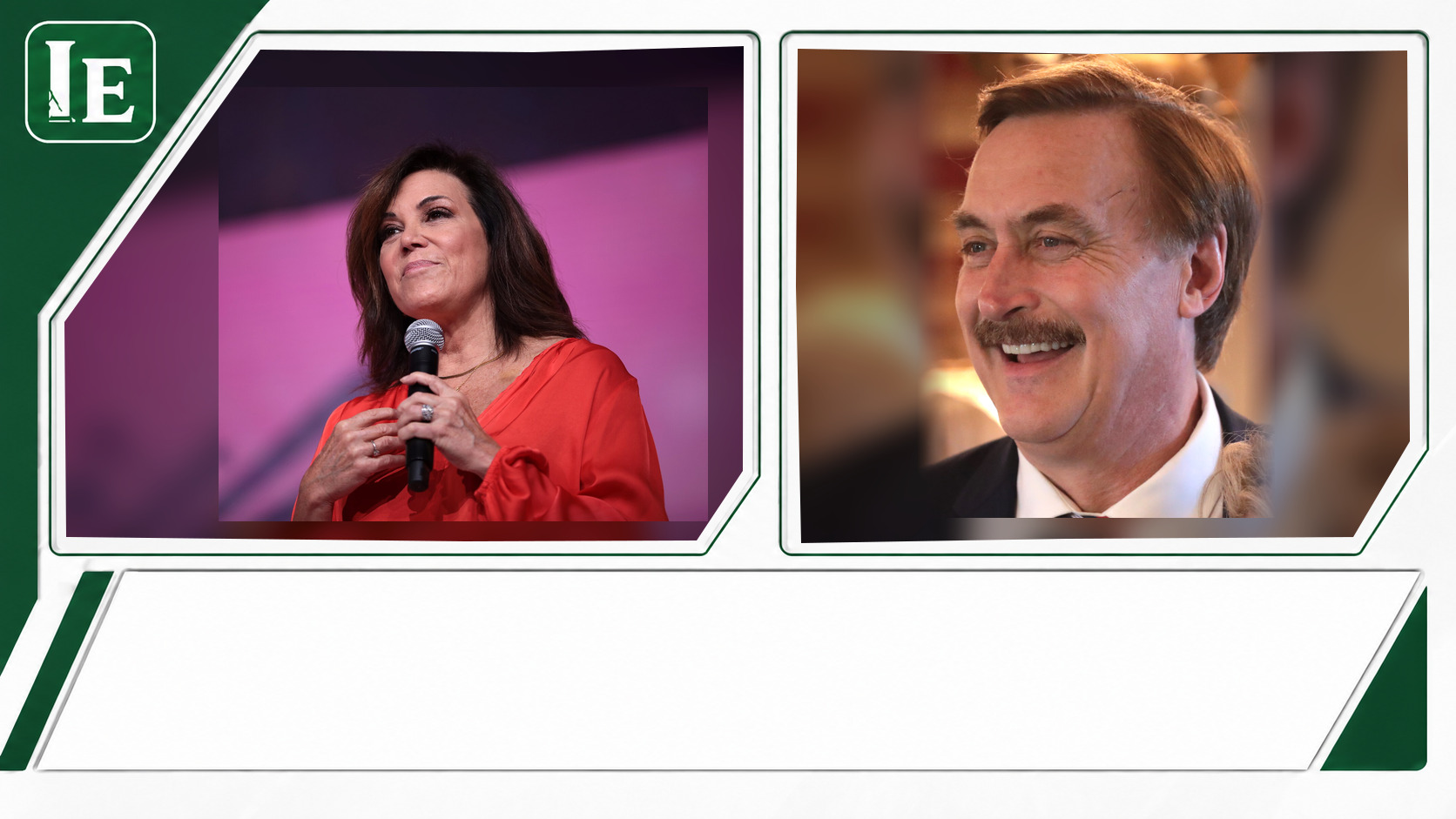
  • Michele Tafoya Takes Minnesota GOP Senate Nomination as Mike Lindell Loses Primary

    Michele Tafoya Takes Minnesota GOP Senate Nomination as Mike Lindell Loses Primary

    Minnesota Republicans have chosen Michele Tafoya as their Senate nominee after a decisive primary result. Mike Lindell’s defeat underscores that national visibility alone did not settle the state’s GOP contests.

    Michele Tafoya won Minnesota’s Republican Senate primary on Tuesday, August 11, 2026, with 52 percent of the vote, while Mike Lindell fell short in his own Minnesota primary bid. The result gives Minnesota Republicans a Senate nominee for the general election and ends Lindell’s latest campaign for office.

    Tafoya’s victory puts a former sports broadcaster and conservative political media figure at the center of the GOP’s statewide strategy. Lindell’s loss, meanwhile, leaves a clear result but not a complete answer about why a nationally prominent candidate did not prevail.

    Tafoya secures the Senate nomination

    NBC News projected Tafoya as the winner of Minnesota’s Republican Senate primary, reporting that she received 52 percent. The vote settles the party’s nomination contest and moves Tafoya from candidate to the Republican standard-bearer in the Senate race.

    For a primary electorate, the immediate choice was about selecting a nominee for the fall campaign. Tafoya now carries the party’s formal backing into a broader contest that will require more than a winning coalition within the GOP.

    Her victory was decisive, but it does not determine the general election. A primary result shows which candidate Republican voters selected; it does not predict how independents, Democratic voters or less frequent voters will respond in November.

    A public profile meets statewide politics

    Tafoya comes to the Senate race with an unusually recognizable background for a first-time federal nominee. Many voters know her from years as a prominent NFL sideline reporter, and she later became more visible in conservative political media.

    That recognition may help a candidate introduce herself across a large state, beyond party activists and the biggest metropolitan areas. It can also bring closer scrutiny, because a statewide Senate campaign demands a sustained argument about policy, organization and appeal to voters beyond a candidate’s existing audience.

    Supporters can interpret Tafoya’s result as a preference for a candidate with communication skills and a public profile that could extend beyond the party’s most committed voters. Critics may argue that the general election will test whether familiarity from television translates into confidence on the issues associated with the Senate.

    Lindell’s campaign ends in defeat

    Lindell lost his Minnesota primary race, according to the reported results. The MyPillow founder has long been a conspicuous figure in national conservative politics, particularly through his false claims about the 2020 presidential election and his support for efforts challenging that result.

    His name recognition ensured that his candidacy drew attention. But attention is not the same as the support needed to win a statewide primary, where organization, endorsements, donors, local officials and voters’ views of a candidate’s November prospects can all matter.

    The available result establishes that Lindell lost, not precisely why each voter made that choice. It cannot by itself show whether concerns were centered on ideology, campaign strategy, personal reputation or the office he sought.

    Still, the outcome limits Lindell’s ability to claim a statewide electoral mandate in Minnesota. Whether he remains active as a donor, media figure or political advocate is separate from the result voters delivered on August 11.

    Two kinds of political visibility

    Tafoya and Lindell entered Minnesota’s primary contests with broad public recognition, but it came from different sources. Tafoya built her profile in mainstream sports television before expanding into political commentary. Lindell became widely known through a consumer brand and then through his high-profile role in election conspiracy theories.

    The results do not mean public prominence was irrelevant. They show, instead, that recognition alone did not settle either contest. Tafoya translated her visibility into a Senate nomination; Lindell did not clear his own primary.

    There is room for competing readings of Lindell’s defeat. It may be seen as a rejection of a candidate strongly associated with election falsehoods, or more narrowly as the outcome of one candidate’s campaign in one race. The primary cannot settle that larger argument, though it provides a concrete measure of voter preference when ballots were counted.

    The challenge shifts to November

    Minnesota’s Senate contest now moves beyond an internal Republican fight. Winning a primary requires motivating a party base; winning statewide requires building a larger coalition across a more varied electorate.

    Minnesota has a record of close, expensive and nationally watched elections. Senate contests can bring outside money, heavy advertising and close attention to turnout in the Twin Cities, suburbs, regional centers and rural counties.

    The matchup, campaign messages and spending picture will become clearer as the parties organize around their nominees. Tafoya’s 52 percent has answered the GOP’s immediate nomination question, but it has not erased differences within the Republican coalition or resolved what combination of endorsements, fundraising and activist energy will shape the fall campaign.

    What the primary result settles

    The clearest takeaway is straightforward: Minnesota Republicans selected Tafoya as their Senate nominee, and Lindell’s latest bid for office ended in defeat.

    For Tafoya, the next test is whether a clear intraparty win can become a statewide coalition. For Lindell, the primary result separates national political visibility from a victory at the ballot box in Minnesota.

  • Trump’s Iran Buildup Puts Unconfirmed Warship Report Under Scrutiny

    Trump’s Iran Buildup Puts Unconfirmed Warship Report Under Scrutiny

    The key split is between what is known and what is not: the Pentagon’s major naval and air buildup is documented, while the reported shipboard crisis has not been publicly identified or confirmed in basic detail.

    The safest reading of the Middle East warship report is a split-screen one. A report carried by The Independent via MSN says a crisis is unfolding aboard a U.S. warship associated with President Donald Trump’s regional deployment decisions. But the public record available for this article does not identify the vessel, its location, its crew or the nature of the alleged problem.

    At the same time, the broader U.S. military movement is much clearer. PBS NewsHour, citing Associated Press reporting, described the Pentagon as sending the largest force of American warships and aircraft to the Middle East in decades, including two aircraft carrier strike groups, as Trump warns of possible military action against Iran if nuclear talks fail.

    Those two facts should not be fused into one conclusion. The buildup is verified; the reported warship crisis remains unresolved. Without confirmation of the ship or circumstances, there is no verified basis to say whether the incident has affected U.S. operations.

    Start with the missing basics

    The warship report does not publicly establish the name of the vessel, the precise operating area, the type of emergency alleged or whether anyone was injured. It also does not confirm damage, a mission change or a wider operational consequence.

    Those gaps matter because very different events can sound similar in shorthand. A personnel emergency, mechanical problem, medical incident, security concern or combat-related event would carry different implications for the crew and for the wider deployment.

    No official Pentagon statement, U.S. Central Command update or Navy release in the reporting available for this article identified a specific shipboard incident. That leaves the report notable but not yet independently defined in public detail.

    The phrase “Trump’s warship” also requires care. It is not a formal military term and does not mean Trump owns, commands or is aboard the ship. In this context, it refers to a vessel politically associated with his administration’s Middle East military posture.

    The confirmed force picture is larger than one ship

    The better-documented development is the size of the U.S. force moving through or toward the region. According to PBS NewsHour’s AP-based account, the deployment includes two aircraft carrier strike groups along with additional warships and aircraft.

    The USS Abraham Lincoln and three guided-missile destroyers had been operating in the Arabian Sea after being redirected from the South China Sea. That carrier strike group added roughly 5,700 service members to a smaller U.S. naval presence already in the region.

    Trump later ordered the USS Gerald R. Ford, described as the world’s largest aircraft carrier, and three destroyers toward the Middle East. PBS reported that the combined naval force was expected to reach 14 ships.

    None of that identifies the ship referenced in the unconfirmed report. It does, however, explain why any unresolved claim involving a U.S. warship would draw attention during a major air-and-sea buildup.

    Iran is the pressure point behind the posture

    The deployment is tied to Trump’s public warnings that military action could follow if negotiations over Iran’s nuclear program fail. Trump has said he wants a meaningful agreement while cautioning that consequences could follow without one.

    Military analysts cited by PBS said the force package appears designed to give Washington strike options while also helping protect U.S. forces and regional partners from retaliation. Carrier strike groups bring combat aircraft, escorts, missile-defense capacity and support for sustained operations.

    Ali Vaez of the International Crisis Group told PBS that a limited U.S. strike could be difficult to keep limited if Iran responded more broadly. Behnam Ben Taleblu of the Foundation for Defense of Democracies pointed to Iran’s remaining missile capabilities as an ongoing threat to U.S. interests and allies.

    PBS also reported that, after U.S. strikes on Iranian nuclear sites in June, Iran fired more than a dozen missiles at Al Udeid Air Base in Qatar. That response caused limited damage after advance signaling and air-defense preparations, but analysts have cautioned that a future exchange might not follow the same pattern.

    The buildup is not the same as an invasion force

    The size of the naval and air deployment does not, by itself, indicate preparations for a major ground invasion. Defense analyst Seth Jones told PBS that the United States is not moving a major ground invasion force.

    The composition of the buildup points instead toward air and maritime options. Carrier groups can support strikes, defend U.S. personnel and regional partners, and maintain a sustained presence without signaling the same type of occupation planning associated with a large land campaign.

    That distinction does not remove the risk. Iran has drones, cruise missiles and ballistic missiles that can threaten military bases, naval assets, shipping routes and other targets around the Gulf and Arabian Sea.

    The Strait of Hormuz adds another layer of concern because it is a narrow waterway used by a significant share of global oil and gas shipments. Any serious disruption there could have effects far beyond the immediate military theater.

    What would change the story

    The unanswered warship report would become more consequential if officials or credible reporting identified the vessel, confirmed an incident, described injuries or damage, or explained any effect on the ship’s mission.

    Military officials may withhold details to protect personnel, avoid exposing vulnerabilities or preserve an investigation, especially near a potential conflict zone. Even so, the absence of basic public facts leaves room for speculation.

    For now, the public picture remains divided. Trump’s major U.S. naval and air buildup in the Middle East is the confirmed development. The reported crisis aboard a U.S. warship remains unresolved, with its cause, scale and outcome not publicly established.

  • George and Amal Clooney’s Lake Como Benefit Included Twins Ella and Alexander

    George and Amal Clooney’s Lake Como Benefit Included Twins Ella and Alexander

    Ella and Alexander Clooney joined their parents for a benefit dinner tied to the family’s advocacy work. The outing was notable not just for the setting, but for how rarely the twins are seen at public events.

    George and Amal Clooney brought their twins to a Lake Como fundraiser for the Clooney Foundation for Justice, giving the public a rare look at Ella and Alexander Clooney alongside their parents. The appearance was a rare public glimpse of the Clooney family together at a benefit dinner in Italy.

    The 8-year-old twins attended the event at Villa Passalacqua with George and Amal Clooney, who arrived by boat, according to Page Six. Their presence put an unusual family moment alongside the couple’s long-running legal and human-rights advocacy.

    A family appearance with limits

    George and Amal Clooney are accustomed to public life. He is regularly seen at premieres and major entertainment events, while Amal Clooney’s work as an international human-rights lawyer has placed her at high-profile advocacy gatherings around the world.

    Ella and Alexander, born in 2017, have been kept much more firmly outside that visibility. That is what made their appearance at the Lake Como dinner stand out: it was not a film premiere, fashion event or promotional stop, but an occasion connected directly to their parents’ charitable work.

    Photos published by Page Six showed Amal Clooney holding Alexander’s hand as George Clooney walked beside Ella during the family’s arrival at the lakeside property.

    The outing does not necessarily mark a change in the couple’s approach to privacy. The Clooneys have occasionally appeared with their children, but such moments have generally been infrequent and connected to personal occasions or causes close to the family.

    The benefit’s purpose came first

    The dinner was held for the Clooney Foundation for Justice at Villa Passalacqua in Lake Como. The location has obvious celebrity associations, given George Clooney’s longtime connection to the area, but the event’s stated purpose was to support the organization founded by the couple.

    That creates the familiar dual role of a celebrity fundraiser. The high-profile arrival and glamorous backdrop can generate public interest, while that attention can also extend the reach of the nonprofit’s work.

    • Who attended: George and Amal Clooney with Ella and Alexander
    • Where: Villa Passalacqua in Lake Como, Italy
    • When: Tuesday
    • Why: A benefit dinner for the Clooney Foundation for Justice

    The family’s appearance naturally became a focal point because the twins are rarely photographed publicly. Still, the event was centered on a foundation that has become a major part of George and Amal Clooney’s shared public work.

    What the foundation supports

    George and Amal Clooney founded the Clooney Foundation for Justice in 2016. The organization says it provides free legal support defending free speech and women’s rights in more than 40 countries.

    Its work has focused on press freedom, women’s rights, accountability for war crimes and support for people facing persecution. Amal Clooney has made questions of legal accountability central to her public career, and the foundation provides a vehicle for that advocacy.

    Seen in that context, the Lake Como event was more than a celebrity family photograph. Ella and Alexander’s attendance briefly joined two sides of the Clooneys’ lives that are usually kept separate: their private family life and the public-facing legal work their parents support.

    There are competing ways to view the attention surrounding such an event. Celebrity coverage can concentrate on the clothes, photographs and arrival, while supporters of high-profile fundraising may see that visibility as a practical way to direct notice toward issues that often receive less mainstream coverage.

    Why the twins remain private

    George Clooney has spoken openly about wanting a childhood for his children that is less shaped by fame. In an Esquire interview published last year, he said he was concerned about raising children in Los Angeles amid Hollywood culture, paparazzi attention and comparisons with other famous children.

    The family spends significant time in France, where George Clooney has said Ella and Alexander have a more ordinary daily rhythm. He has described a home life built around shared dinners and responsibilities rather than screens and celebrity culture.

    Amal Clooney has also discussed protecting private family time. Together, their public record suggests a deliberate balance: both parents can remain highly visible in their professional roles without turning their children into regular fixtures of their public image.

    That boundary helps explain why this single appearance drew such interest. A rare public moment can feel especially notable when it comes from parents who have consistently resisted making family access part of their celebrity profile.

    The details behind the photos

    For the dinner, George Clooney wore a gray suit, while Amal Clooney wore a black floral dress with sunglasses and strappy heels, Page Six reported. Alexander wore a tan blazer and Ella wore a gold dress.

    Those details are likely to dominate coverage of a family that is not often photographed together. But the simpler image of the evening was the family traveling together by boat to support an event linked to George and Amal Clooney’s own foundation.

    It was a carefully bounded public moment rather than a broad introduction of Ella and Alexander to celebrity culture. The children attended a fundraiser associated with their parents’ work, and there was no indication that either twin spoke publicly or had a formal role in the benefit.

    No sign of a new pattern

    Nothing from the event indicates that the Clooneys plan to bring their children into public life more often. The family has not suggested that the Lake Como dinner signals a new pattern of appearances for Ella and Alexander.

    For now, the clearest takeaway is narrow but meaningful: George and Amal Clooney included their twins in an evening supporting the Clooney Foundation for Justice, while preserving the private posture they have long maintained around their children.

    That balance is what separates this from a routine celebrity sighting. At Villa Passalacqua, the couple’s fame, family life and advocacy work briefly intersected—without erasing the limits they have placed around their twins’ visibility.

  • DOJ Defends Trump Miami Library Land Deal, Citing Obama and Biden

    DOJ Defends Trump Miami Library Land Deal, Citing Obama and Biden

    The dispute over a downtown Miami parcel is about more than a presidential library. It puts the value of public land, the prospect of a hotel and the limits of constitutional protections for sitting presidents before the court.

    The U.S. Department of Justice is responding to a lawsuit over land for Donald Trump’s Miami presidential library, saying the challengers’ constitutional theory could also implicate Barack Obama and Joe Biden. The lawsuit challenges the proposed Miami Library land deal on constitutional grounds, and the DOJ says treating it as unconstitutional would reach beyond Trump’s project.

    The case concerns a proposed transfer of a 2.63-acre downtown Miami parcel to Trump’s presidential library foundation. The central question is whether providing valuable public land to a sitting president’s foundation amounts to a prohibited financial benefit—or whether it fits within the established model of presidential libraries.

    A fight over valuable public land

    The disputed parcel is owned by Miami Dade College and sits beside the Freedom Tower, a prominent downtown Miami landmark. The building once served as a resource center for Cuban refugees and is now operated by the college as a museum.

    According to the Associated Press, Florida Gov. Ron DeSantis moved in September 2025 to transfer the property to Trump’s presidential library foundation. The Miami-Dade County property appraiser assessed the site at roughly $67 million in 2025, while real-estate appraisers cited in the lawsuit suggested it could sell for substantially more.

    That valuation is central to the challengers’ concerns. They argue a major public asset could be removed from potential use by Miami Dade College students or the broader downtown community. One plaintiff organization had hoped the site could become an urban farm.

    The constitutional claim at issue

    Miami residents, a Miami Dade College student and a local nonprofit filed suit against Trump, Miami Dade College and Florida officials, including DeSantis. The lawsuit was filed May 13, 2026, and was publicly reported the following day.

    The complaint alleges that donating the land violates the Constitution’s Domestic Emoluments Clause, which bars states from giving a sitting president a financial benefit. The plaintiffs’ argument is not limited to the land’s price tag.

    They contend that a transfer to Trump’s library foundation could personally enrich Trump while he is president, particularly if the development ultimately includes commercial operations. Their position is that a foundation’s separate legal status would not necessarily settle the constitutional issue if Trump stands to gain financially.

    Why a hotel changes the debate

    The proposed project has attracted attention because it may extend well beyond a conventional presidential archive or museum. According to the AP, Trump and his son Eric Trump have shared plans for a large tower that would house the library.

    An AI-generated promotional video released in March depicted a presidential jet in the lobby, a gold escalator, a ballroom, a replica Oval Office, rooftop gardens and a large gold statue of Trump. The images are not construction plans and do not establish that each feature will be built, but they illustrate the scale of the vision presented around the project.

    Trump also told reporters in March that the concept could be an office but was “most likely going to be a hotel with a beautiful building underneath.” For the plaintiffs, that prospect matters because a hotel could create a direct for-profit connection to a land transfer made during Trump’s presidency.

    Supporters can point to the public-facing purposes typically associated with presidential libraries: preserving records, presenting a president’s legacy and potentially bringing visitors, jobs and development. The unresolved legal issue is whether those potential benefits are enough if the arrangement also offers a financial benefit to the sitting president.

    DOJ points to past presidents

    The Justice Department has described the challengers’ constitutional theory as “illogical,” arguing that it would also implicate Obama and Biden through arrangements tied to their own presidential libraries. The DOJ’s response seeks to show how broadly the plaintiffs’ reading of the clause could apply.

    That comparison does not mean the government is claiming every presidential library arrangement is identical to the proposed Miami development. Rather, its argument is that presidential libraries have long involved private foundations, fundraising, land and relationships with public institutions and officials.

    From the DOJ’s perspective, a rule that treats this kind of government assistance as an unconstitutional state benefit could call earlier presidential-library arrangements into question. The government’s position is, in effect, that the proposed standard is too broad to be workable.

    The plaintiffs are likely to say the differences are the point. They have focused on Trump’s status as a sitting president, the property’s substantial value, the role of Florida officials and the possibility that the site could include a hotel or other commercial enterprise.

    Details the court has not resolved

    The case is still at an early stage. No court has decided whether the proposed land transfer violates the Constitution, and threshold issues—including whether each plaintiff has standing to challenge the arrangement—may be considered before the merits are resolved.

    Several consequential facts also remain unsettled in the public record. They include the final design, the project’s ownership structure, the extent of commercial operations and the financial relationship, if any, between Trump and the library foundation.

    Those details could be more important than the label “library.” A court may examine ownership, control, financing and whether Trump could receive a direct economic benefit from the project.

    The White House did not respond to the AP’s request for comment when the lawsuit was filed. For Miami Dade College and Florida officials, the litigation also brings scrutiny to how a highly valuable downtown property is being allocated.

    The dispute’s larger test

    The case presents two competing views of a presidential library. The challengers see a potentially valuable state-backed benefit for a sitting president, with commercial possibilities that could make the arrangement constitutionally suspect.

    The Justice Department sees a legal theory that, if accepted, could sweep in Obama, Biden and longstanding practices surrounding presidential-library foundations. The court’s eventual assessment may depend on the specific arrangement in Miami rather than on broad assumptions about what presidential libraries normally are.

    For now, the proposed transfer remains contested, and the key question is unresolved: whether the Miami parcel serves a public historical institution legally separate from Trump, or provides a constitutionally prohibited benefit to him while he is in office.