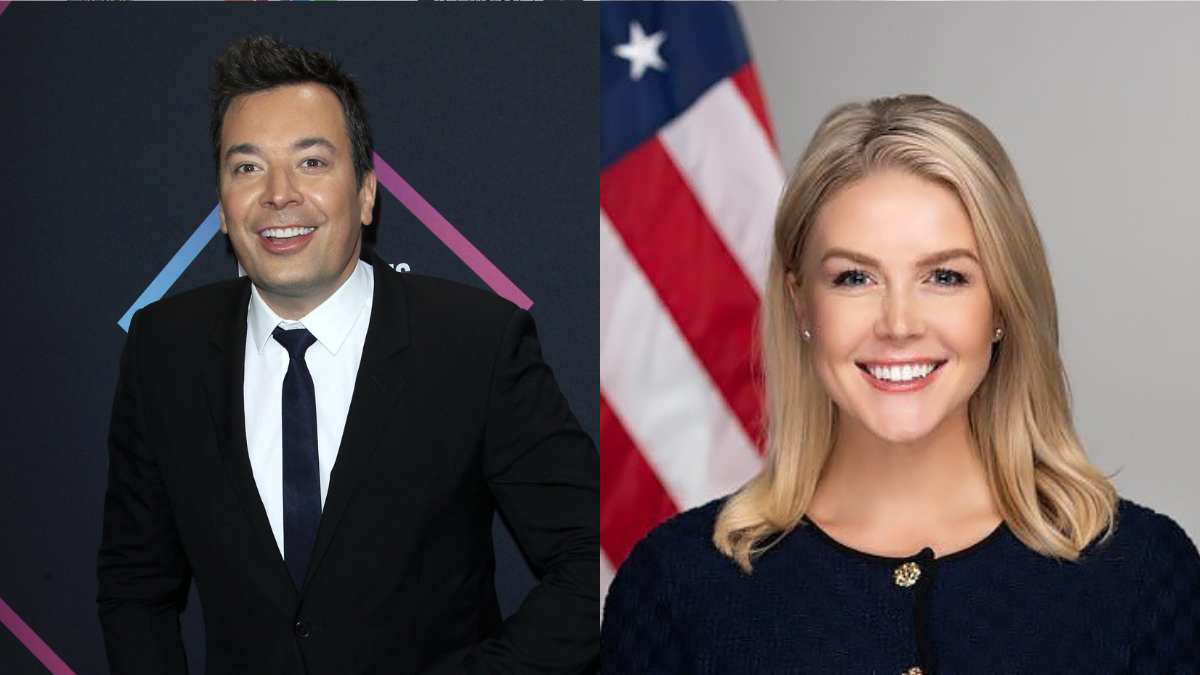
A spontaneous cheer briefly overtook Jimmy Fallon’s monologue about Karoline Leavitt’s White House departure. The moment turned a routine late-night joke into a reminder of how quickly politics can spill into entertainment.
Jimmy Fallon burst out laughing during an Aug. 12 Tonight Show segment after an audience member cheered Karoline Leavitt’s departure. Fallon was discussing the news that Leavitt was leaving her position as White House press secretary when the shout interrupted his setup and prompted a wider audience reaction.
The exchange was brief, but it became the real joke of the segment: an unscripted crowd response that Fallon appeared unable to ignore. It also arrived as Leavitt publicly described her decision to leave the White House as a difficult family-driven choice following the birth of her second child.
The cheer that changed the bit
According to the Daily Express US account of the broadcast, Fallon introduced the news of Leavitt’s resignation during his monologue before getting to the prepared punchline. An audience member loudly cheered, and other people in the studio joined in.
Fallon then laughed for an extended beat before regrouping and continuing the monologue. The host’s reaction, rather than a line written for the show, is what gave the clip its traction.
Late-night comedy depends on that kind of collision between script and room. A host can anticipate a laugh at a joke; a spontaneous cheer is harder to time, harder to control and often more revealing of the live audience’s mood in that moment.
Fallon returned to the jokes
Once he recovered, Fallon went back to his prepared material, including a joke that Leavitt was moving to an “easier job” as press secretary for Taylor Farms Lettuce. The gag referenced a cyclosporiasis outbreak linked in news coverage to lettuce products.
The segment placed a consequential White House personnel change inside the familiar rhythm of a monologue: a news headline, a sharp turn and a joke designed for the studio crowd. The unexpected cheering made the transition more conspicuous than usual.
It is worth separating the two parts of the moment. Fallon’s laughter signaled that he found the interruption funny. It did not establish a broader verdict on Leavitt, the White House or public opinion beyond the people in that studio.
Leavitt described a family decision
Leavitt confirmed her departure in a social-media statement, calling her time in the role an “honor and adventure of a lifetime,” according to the Daily Express US. She said she had weighed the demands of one of the administration’s most visible jobs against the needs of her two young children.
She wrote that, after returning to the White House following the birth of her daughter Viviana, she felt she could not give both her children and the press secretary position the constant time and energy each required. She described leaving as a bittersweet decision and said she was beginning a new chapter.
Donald Trump said Leavitt would step down at the end of the month to spend more time with her family. Leavitt also has a son, Nicholas, and has spoken publicly about the pressures of combining parenthood with a demanding public role.
A high-profile job invites reactions
The White House press secretary is one of the administration’s most public-facing positions. The role involves regular briefings, rapid responses to breaking news and acting as a principal messenger for the president’s agenda.
That visibility can make a departure feel larger than a typical staffing announcement, especially when it lands in political comedy. Leavitt, who was described in coverage as the youngest person to hold the job, had become a familiar figure in daily media coverage of the White House.
For supporters, her statement centered on a personal and understandable decision about family. For critics, a late-night audience cheer offered an outlet for a political reaction. Both perspectives can exist around the same event, though neither is fully represented by one studio audience.
One crowd is not a referendum
The clip’s appeal is its immediacy. Viewers can see a live performer lose his composure because someone in the room reacted faster and more loudly than expected. That is a cleaner entertainment story than a carefully packaged political statement.
Still, viral late-night moments can flatten the context behind them. The audience’s cheer does not explain why Leavitt resigned, and it does not reliably measure how voters or the public at large view her tenure.
Leavitt’s own words provide the clearest explanation available: she said the balance between motherhood and the all-consuming demands of the White House press secretary job led her to depart. Fallon’s monologue showed how, once that news reaches television, even a personal career decision can become a national punchline.
The unanswered White House question
The broadcast focused on Leavitt’s exit, not on the administration’s next choice. The reporting reviewed here does not identify a confirmed successor or set out a detailed transition plan.
That leaves the substantive political question separate from the entertainment clip: who will take on one of the White House’s most visible communications jobs, and how soon. Fallon’s laughter may be the memorable image, but the vacancy is the development with consequences beyond the studio.
Leave a Reply