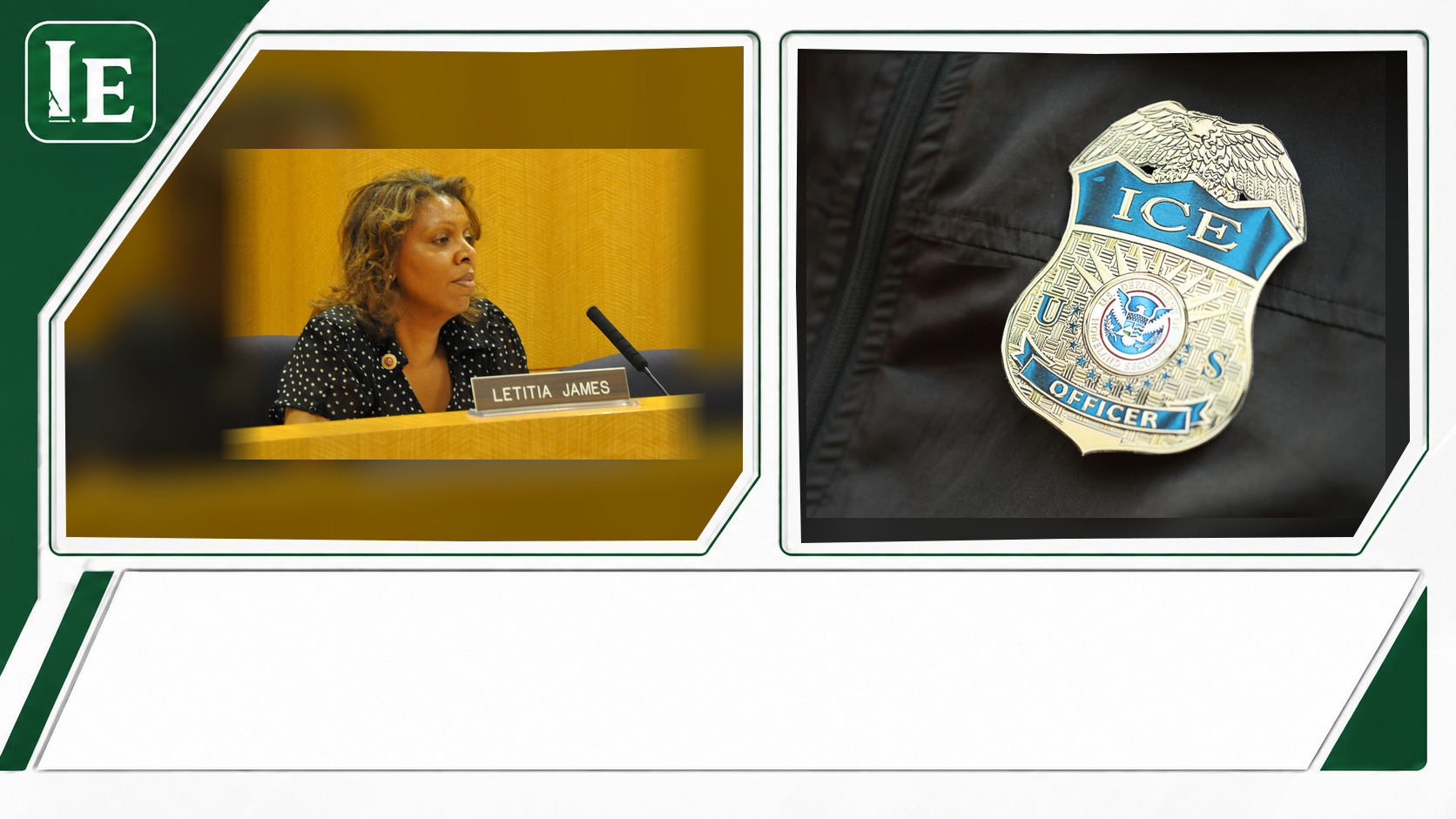
A reported ICE raid on Canal Street has renewed fears among residents in immigrant neighborhoods and raised questions about federal enforcement in the city. New York’s attorney general is asking witnesses to preserve evidence of what they saw.
New York City residents say U.S. Immigration and Customs Enforcement has arrived in the city and that reported ICE activity is causing “unacceptable terror” in immigrant neighborhoods. The concern centers on a reported ICE raid on Canal Street, where fear and anger followed a visible federal immigration enforcement action. It matters because New York Attorney General Letitia James is now collecting photos and videos from witnesses as her office assesses reports of possible legal violations.
The competing realities are stark: ICE is a federal agency charged with immigration enforcement, while city and state officials say New Yorkers should be able to go about their lives without intimidation or unlawful detention. What happened on Canal Street has become a test of how those forces collide in one of the city’s busiest immigrant commercial areas.
Canal Street becomes a flashpoint
James said on October 22, 2025, that her office had launched an online portal for people to submit documentation after an ICE raid on Canal Street the day before. Her announcement did not offer a complete public account of the operation, including how many people were approached, arrested, or detained.
That missing information matters. A law-enforcement action can look very different to the people conducting it, the people targeted by it, nearby workers, shoppers, and families watching from the street.
Residents quoted in reporting about the episode described fear that the federal government was threatening people in immigrant neighborhoods. The phrase “unacceptable terror” is an allegation and a description of residents’ experience, not an official finding about the conduct of every agent involved.
Why visibility changes the impact
Immigration enforcement does not affect only the person an agent may seek to question or detain. A public operation can alter how neighbors decide whether to report to work, visit a business, take children to school, or seek help from public institutions.
That wider effect is at the core of residents’ reaction in New York City. In neighborhoods where many households include immigrants or mixed-status families, uncertainty about an encounter can travel faster than verified information.
It can also create a difficult information gap. Videos may show part of an interaction but not what preceded it. Official statements can explain an agency’s purpose but may not answer what bystanders experienced. That is one reason documentation, timestamps, and full recordings can become important.
James asks witnesses to preserve evidence
The attorney general’s portal is intended to collect photos, videos, and other accounts of federal immigration enforcement activity in New York. James said her office would review submissions and assess whether any laws were violated.
“Every New Yorker has the right to live without fear or intimidation,” James said in the announcement. She also said no one should face unlawful questioning, detention, or intimidation.
The portal is not a declaration that misconduct occurred. It is a mechanism for gathering material that could help officials evaluate specific claims. That distinction is important when accounts are still emerging and the public record is incomplete.
For witnesses, documentation is most useful when it preserves context: the location, approximate time, what was directly seen or heard, and whether the recording captures the full interaction. People should also be cautious about publicly sharing identifying details that could expose vulnerable individuals.
City guidance sets basic boundaries
New York City’s public guidance says city agencies generally do not ask about immigration status or share personal information with immigration enforcement authorities. Under local law, the city says agencies, including the NYPD, do not cooperate with ICE except in limited circumstances.
The city also outlines rights people may have during an ICE encounter. Its guidance says a person has the right to remain silent, may decline to consent to a search of pockets or belongings, may request an interpreter, and may ask to speak with an attorney before signing documents or answering questions.
At a workplace, ICE agents may enter public areas without a warrant, according to the city guide. The guide says entry into private areas generally requires a judicial warrant signed by a judge or magistrate, or the employer’s permission.
For a home encounter, the city advises people that they do not have to open the door simply because an agent is outside. The guidance says residents can ask to see a warrant and speak through the door. Individual situations can be legally complex, so city guidance is not a substitute for advice from a qualified immigration attorney.
Federal authority meets local limits
ICE operates under federal authority, and New York City cannot eliminate federal immigration enforcement within its borders. At the same time, city policy limits how municipal agencies interact with federal immigration authorities and emphasizes access to services regardless of immigration status.
That divide helps explain why a Canal Street operation can generate such a sharp reaction. Supporters of tougher federal enforcement may view visible operations as necessary to carry out immigration law. Critics argue that broad, conspicuous enforcement undermines trust, fuels fear, and can discourage people from seeking help or cooperating with local institutions.
Neither view resolves the factual questions surrounding a specific raid. Those require reliable records, official explanations, and careful review of individual encounters rather than assumptions based solely on a clip, a rumor, or a headline.
Questions that remain after the raid
Publicly available material establishes that James responded to a reported Canal Street ICE raid by seeking evidence from New Yorkers. It does not, by itself, establish the full scope of the operation or determine whether any particular officer acted unlawfully.
Key unanswered questions include what ICE was seeking to accomplish, how many people were affected, what legal documents agents carried, and whether witnesses’ accounts will produce evidence of conduct requiring state action.
For now, the episode has left New York City residents with a practical message from local officials: know the limits of an agent’s access, avoid signing documents without understanding them, seek legal help when possible, and preserve accurate records of what occurs. The broader debate over immigration enforcement will continue, but the immediate stakes are being felt block by block in immigrant neighborhoods.
Leave a Reply