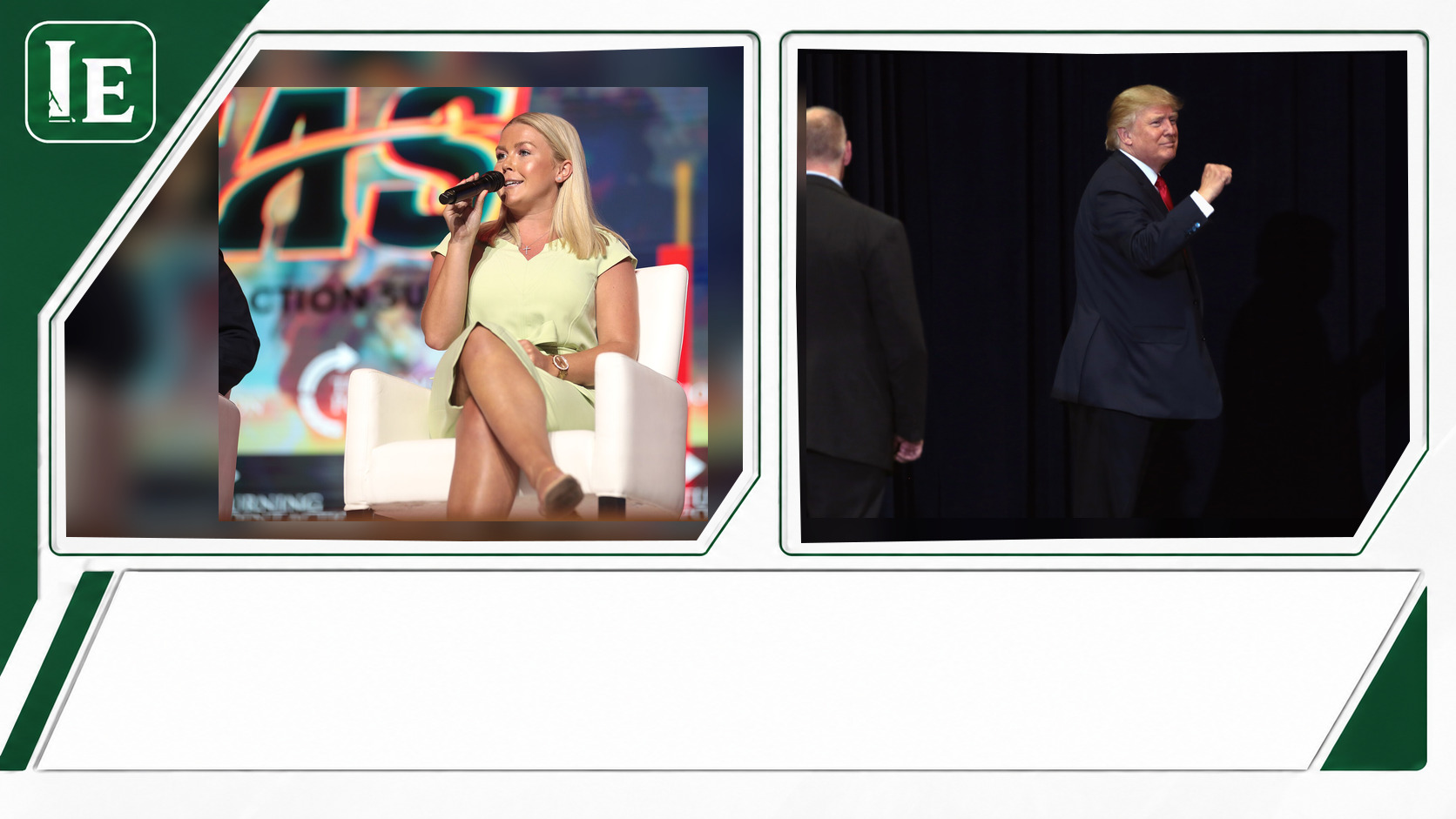
The image has drawn attention because of Leavitt’s role in Trump’s communications operation. But the available record supports a narrow reading of the photograph, not conclusions about White House relationships or personnel.
A final photograph shows Karoline Leavitt and Donald Trump with an unidentified younger aide. Leavitt looks toward Trump while Trump is focused on the younger aide, but the aide, setting, date and context are not identified in the available material.
That limited description has prompted attention because Leavitt is a highly visible White House communications figure. It does not, however, establish what the three people were discussing, why the image was taken or whether the moment reflected anything beyond a brief interaction.
The image offers a narrow record
The available description centers on the direction of attention in a single frame: Leavitt is described as gazing toward Trump, while Trump is described as occupied with a younger staff member.
Those details can make the scene feel suggestive. A viewer can see who appears to be looking at whom, where people are positioned and perhaps an expression caught in passing. But none of those visual cues supplies the missing circumstances around the image.
There is no accompanying account in the supplied material identifying the occasion. It does not provide a caption, a photographer’s explanation, a location, a date or an official description of the event.
That leaves the photograph as a record of a visible moment, rather than a verified account of the conversation or the relationships behind it.
Four central facts remain unknown
The biggest limitation is not what the photograph may appear to show; it is what the available material does not establish.
- The younger aide is not named.
- The aide’s role, age, connection to Leavitt and reason for speaking with Trump are not identified.
- The image’s setting and date are not provided.
- No transcript, official explanation or independent account explains the exchange.
There is also no material connecting the photograph to a policy announcement, a staffing development or a change in White House access. Without that context, assigning a larger meaning to the interaction would go beyond the evidence available.
The description of Trump as “engrossed” with the aide is best understood as a characterization of apparent attention in the photograph. It does not prove the subject, duration or importance of any conversation.
Why Leavitt’s presence draws interest
Leavitt’s place in the frame is notable because of her role around Trump. The Archives of Women’s Political Communication at Iowa State University says she has served as White House press secretary in Trump’s second administration since January 2025 and was the youngest person to hold that job.
Her professional relationship with Trump predates her service as press secretary. According to the Iowa State archive, she previously worked for Trump as a presidential writer and assistant press secretary, then became communications director for Rep. Elise Stefanik after the 2020 election.
That background helps explain why viewers may treat a photograph of Leavitt beside Trump as more than a routine image. A press secretary is a public-facing spokesperson, but also part of an administration’s broader communications operation.
Still, visibility and proximity do not turn a single image into a reliable measure of influence. The photograph does not, on its own, document approval, disagreement, exclusion, loyalty or a shift in Leavitt’s standing.
One frame can invite competing readings
Political photographs often become shorthand for access and hierarchy. Some observers regard small visual details as useful clues about the people closest to a president and the dynamics playing out around them.
A more skeptical reading is that a still image can be made to carry more narrative weight than it can bear. Crowded events, travel stops, ceremonies and unscripted exchanges can all produce moments that appear meaningful once removed from their wider setting.
Both views begin with a reasonable premise: physical proximity to a president can matter politically. The difference is whether one photograph, without a known setting or corroborating reporting, can demonstrate why that proximity mattered at that particular moment.
Here, the material does not resolve that question. No official announcement, confirmed personnel change, White House statement or separately reported account is included to explain the scene.
Language can shape the takeaway
Words attached to a photograph influence what viewers notice. Terms such as “gazing” and “engrossed” direct attention toward the contrast between Leavitt looking at Trump and Trump concentrating on the unidentified aide.
The wording is not necessarily inaccurate as a description of the composition. Yet it is still interpretive: it selects particular lines of sight and gives them prominence, while the broader circumstances remain unavailable.
A careful reading separates three categories. First is what can be visually described in the image. Second is the narrative suggested by its framing. Third is what outside reporting can independently confirm.
For this photograph, the supplied material meaningfully supports the first two categories but not the third. It establishes an attention-grabbing image involving Trump, Leavitt and an unidentified younger aide; it does not establish the private or political significance of the interaction.
The responsible conclusion is limited
The final photograph is described as showing Leavitt looking toward Trump while he focuses on a younger aide. Given Leavitt’s role and history working in Trump’s orbit, that image naturally invites scrutiny.
But the most important details remain unresolved: who the aide is, where and when the picture was taken, what prompted the exchange and whether it had any significance beyond the instant captured.
Until evidence answers those questions, the photo should not be treated as proof of a dispute, a staffing move or a rearrangement of influence inside the White House. It is a visually notable frame, not a documented explanation of what it meant.
Leave a Reply