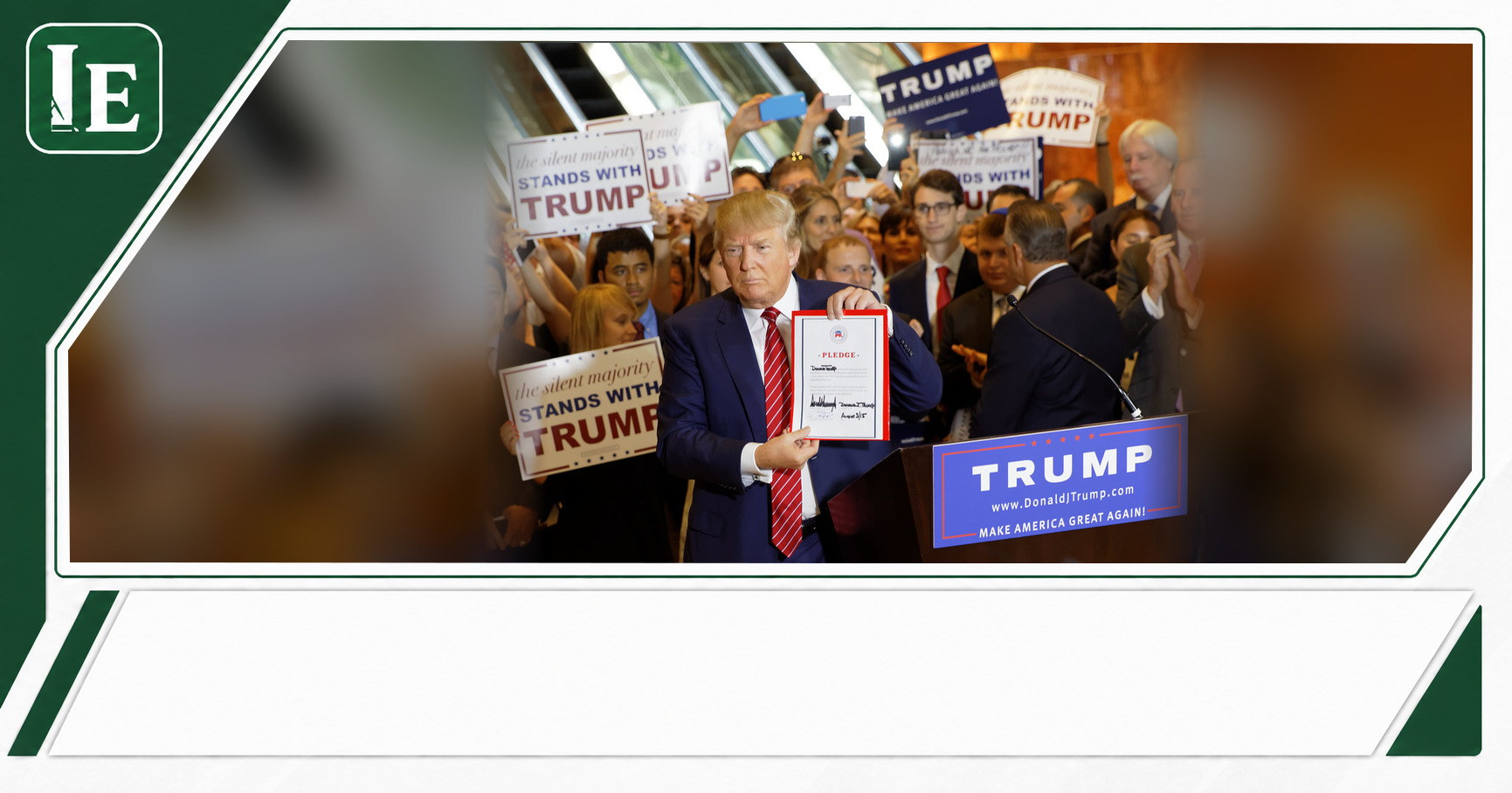
The headline’s language suggests a major political revelation, yet the supplied reporting record leaves core details unresolved. That gap matters when claims about presidential misconduct move faster than the evidence behind them.
An unnamed expert flagged a scandal as potentially presidency-ending and said it “should be huge,” according to the trend headline. But the scandal identified by the expert is not described in the available source record, meaning the claim’s political significance cannot be established from the materials provided.
What is documented is a public dispute involving President Donald Trump, Iran and control of the Strait of Hormuz. The White House said Trump claimed the United States had “total” control of the waterway, while Reuters reported competing claims from Iran. That is a serious foreign-policy issue, but it is not, on its own, proof of a presidency-ending scandal.
The central allegation is missing
“Presidency-ending scandal” is an exceptionally consequential label. It implies conduct grave enough to trigger a sustained political collapse, congressional action, a legal investigation, resignation pressure or a decisive public break with a president.
None of those elements is identified in the available source brief. The expert is unnamed. The alleged scandal is unnamed. There is no description of conduct, no documentation, no cited investigation, no statement from a government agency and no indication of which law, policy or ethical standard may have been violated.
That does not establish that the underlying claim is false. It means readers do not yet have enough information to evaluate it responsibly. A strong assertion is not a substitute for knowing who made it, what they are alleging and what evidence supports the allegation.
What the available reporting does show
The related reporting supplied with the brief centers on the Strait of Hormuz, a strategically vital shipping route. Reuters reported that Iran and the United States made competing assertions over control of the strait, with Trump saying the U.S. had “total control” of the waterway.
A White House release described Trump’s comments in more detail. It said he asserted that the United States had a blockade in place and that Iran did not control the strait. The release also included his acknowledgment that mines could disrupt shipping, even as he maintained that U.S. naval power controlled access.
Those are major military and diplomatic claims. They raise questions about the status of operations, the scope of presidential authority, possible effects on commercial shipping and the risk of escalation. Yet the White House statement is an account of the administration’s position, not independent confirmation that those assertions are accurate.
Reuters’ reference to competing Iranian claims underscores the basic problem: events in a conflict zone can be contested, and official claims from any side require corroboration.
Why the wording carries weight
Political headlines often use dramatic shorthand, especially when an issue involves a president, national security or allegations of misconduct. But “scandal” has a particular meaning beyond a policy dispute or a controversial statement.
A genuine presidential scandal generally involves identifiable facts: a documented action, an implicated official, evidence that can be assessed and a clear explanation of why the conduct may breach law, ethics, public trust or constitutional norms. It also normally produces a visible response from institutions such as Congress, inspectors general, courts, prosecutors or oversight committees.
The existing record does not provide those building blocks. A reader can reasonably regard the Strait of Hormuz claims as politically important and still conclude that the “presidency-ending” characterization is unsupported until more is known.
Competing interpretations remain possible
Supporters of Trump may view his statements as an attempt to project deterrence and reassure allies and shipping interests that the United States can protect a critical maritime passage. From that perspective, forceful rhetoric is part of a broader strategy of military pressure and negotiation.
Critics may argue that sweeping claims of control over a contested waterway deserve close scrutiny, especially if they influence military decisions, public understanding of a conflict or global energy markets. They may also question whether public statements accurately reflect conditions on the ground.
Both views can coexist with a basic reporting standard: claims should be distinguished from verified facts. An administration statement, an adversary’s response and an analyst’s opinion are different forms of information. Treating them as interchangeable can turn uncertainty into apparent certainty.
What evidence would clarify the claim
For the alleged scandal to be evaluated on its merits, several details would need to be publicly established:
- The expert’s identity and qualifications: Readers should know whether the person is a legal analyst, national-security specialist, former official, journalist or partisan commentator.
- The specific allegation: The claim should identify the action or decision being challenged rather than rely on a broad label.
- Verifiable supporting material: Documents, sworn testimony, official records, credible on-the-record reporting or independently confirmed evidence would allow scrutiny.
- The relevant standard: It should be clear whether the concern involves domestic law, international law, constitutional authority, ethics rules or political judgment.
- An accountable response: The White House, relevant agencies and oversight bodies should have an opportunity to address a defined allegation.
Without those basics, a reader is being asked to accept the conclusion before seeing the case.
The responsible takeaway for now
The available materials support reporting on a dispute over U.S. and Iranian claims in the Strait of Hormuz. They do not support a definitive account of a presidency-ending scandal, because the alleged scandal and the expert behind the warning have not been identified in the source record.
That distinction matters most when political rhetoric is at its hottest. A claim can be newsworthy because people are discussing it, but its news value is not the same as proof. The next meaningful development would be specific evidence, a named source or documented official scrutiny—not a louder version of the same label.
Leave a Reply