
Laura Loomer’s claim puts a familiar White House tension—access to the president—at the center of renewed attention on Natalie Harp. The accusation is unproven, but it highlights why Harp’s role has become a subject of intense interest.
Laura Loomer claimed that White House staff are leaking stories about Natalie Harp, President Donald Trump’s executive assistant, including negative or “nasty” stories about Harp. Loomer said the alleged leaks from the West Wing stem from professional jealousy among staff who are unhappy with Harp’s proximity to Trump.
The allegation has not been independently verified, and the White House had not publicly substantiated Loomer’s account. Still, her comments arrive as Harp’s role, visibility and access to the president have drawn growing scrutiny.
Loomer points to jealousy
In a post on X cited by The Independent, Loomer argued that detailed accounts of Harp’s work and conversations with Trump could only have reached reporters through people working alongside her.
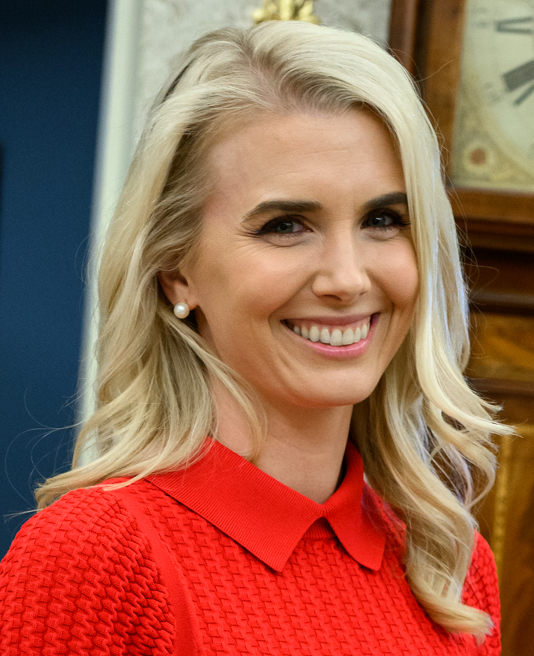
She said staff members were “bothered by loyalty” and suggested that someone who works with Harp may want her job. Loomer also argued that the administration has too many leakers and framed the episode as a failure of personnel vetting.
Those are allegations from Loomer, not findings from an investigation. She did not publicly identify any purported leakers, provide documents, or offer evidence tying a particular White House employee to a particular news report.
The distinction matters. Washington leaks can range from an official’s on-the-record rebuttal to anonymous sourcing, private gossip, secondhand accounts or information shared by people outside an administration. Without specifics, it is not possible to determine whether Loomer’s claim describes an organized effort, isolated conversations or simply reporting based on sources who know Harp.
Harp’s access fuels attention
Harp, 35, has been described as a close Trump aide who helps manage his Truth Social account and handles administrative work for the president. Her frequent presence around Trump has made her a conspicuous figure in a White House where proximity can signal influence.
Reporting in recent months has focused on that unusually close working relationship. A book by New York Times reporters Maggie Haberman and Jonathan Swan said Harp left Trump admiring notes, including one quoted as saying, “You are all that matters to me.” The book’s authors said they interviewed numerous Washington insiders.
Haberman has separately characterized Harp as an important conduit of information to Trump, saying she is present in an exceptionally large number of meetings. That kind of access naturally makes an aide relevant to journalists trying to understand what reaches the president and who may be shaping his daily environment.
But intense interest in a presidential aide does not itself prove internal hostility. It can also reflect the ordinary scrutiny that follows any staffer viewed as unusually influential, particularly in an administration defined by strong personal loyalty to the president.
The White House has defended her
The White House has previously responded forcefully to criticism and reporting about Harp. In a statement quoted by The Independent, a spokesperson said Trump had cultivated exceptional loyalty among staff and described Harp as a “beloved White House Official.”
The spokesperson also attacked what it called “Fake News Media” coverage, saying critics did not understand the level of trust and admiration she receives. That response did not address Loomer’s specific accusation that staff were feeding unfavorable accounts to the press.
At the time of the report, The Independent said it had contacted the White House for comment. No public evidence cited in the report established who, if anyone, supplied reporters with information about Harp.
That leaves two competing narratives. Loomer sees the coverage as evidence of resentment from inside the building. Critics and reporters may view the stories as a predictable result of Harp’s high-profile access and the administration’s interest in controlling information around Trump.
Access is a White House currency
Every White House develops internal hierarchies, whether they are formalized in titles or built through personal relationships. The people who control schedules, messages, documents, calls and informal conversations often hold influence that is difficult to measure from outside the building.
Executive assistants can be especially important because their work sits at the intersection of logistics and access. A trusted aide may know who is seeking time with the president, what he is reading and hearing, and what issues are likely to reach his desk.
That does not mean Harp has authority over policy or personnel decisions. The public record described in the reporting is clearer about her access than it is about her formal portfolio or decision-making power.
It does explain why perceptions around her role can become politically charged. If colleagues believe one aide has an unusually direct channel to the president, small disagreements can be interpreted as battles over status, influence or loyalty.
Recent episodes widened the spotlight
Harp’s visibility increased after reports that she was among a small group of aides who accompanied Trump aboard a military aircraft leaving Turkey. The episode later became part of a political exchange when Democratic Sen. Jon Ossoff referenced Harp at a rally.
Several conservatives defended her after Ossoff’s remarks, including White House communications director Steven Cheung and CNN commentator Scott Jennings. Jennings called Harp a loyal public servant and noted that she is a cancer survivor who has credited Trump’s right-to-try law with helping save her life.
Other Trump-aligned voices were less inclined to treat the criticism as a major offense. Fox News host Jesse Watters said he was not especially troubled by Ossoff’s comment, while also noting Trump’s own history of harsh rhetoric about opponents.
The differing reactions show that support for Harp is not neatly divided between Trump allies and Trump critics. Some see criticism of her as an unfair personal attack; others see public scrutiny as unavoidable for an aide with a visible place near the president.
What remains unproven
Loomer’s claim may resonate because White House leaks are a familiar feature of presidential administrations. Yet familiarity is not confirmation. The available reporting does not establish that White House staff deliberately coordinated negative stories about Harp or that jealousy was the motive.
It also remains unclear whether the administration will respond directly, investigate the allegation internally, or simply dismiss it as another round of media conflict. No alleged leaker has been publicly named, and no specific story has been conclusively traced to a West Wing source.
For now, the episode is best understood as an unverified accusation attached to a larger, well-documented reality: Natalie Harp has become an unusually watched aide in Trump’s orbit, and attention on the people closest to a president often exposes the tensions that access can create.
Leave a Reply