
At a solemn Washington farewell, Trump turned to a prayer-breakfast punch line to remember Graham’s humor and their journey from 2016 rivals to political allies.
Donald Trump revived Lindsey Graham’s joke about Jesus returning before 10 a.m. during Graham’s farewell tribute at Washington National Cathedral in Washington, D.C., on Tuesday, July 28. Trump recounted the line — “If Jesus comes back before 10 am, I ain’t going” — to honor Graham with humor while reflecting on a friendship that began in open political conflict.
The anecdote gave Trump a personal way to remember the late South Carolina Republican. It also condensed the central tension of the tribute: Graham was being celebrated as a senator and ally, but also as a blunt, funny and complicated figure whose political legacy remains a subject of debate.
A prayer breakfast becomes the refrain
According to MEAWW News, Trump told mourners that Graham had used the line when declining an invitation from Sen. Tim Scott to an 8:30 a.m. prayer breakfast. The joke was not about policy or Senate procedure; it was a small story about Graham’s resistance to an early start.
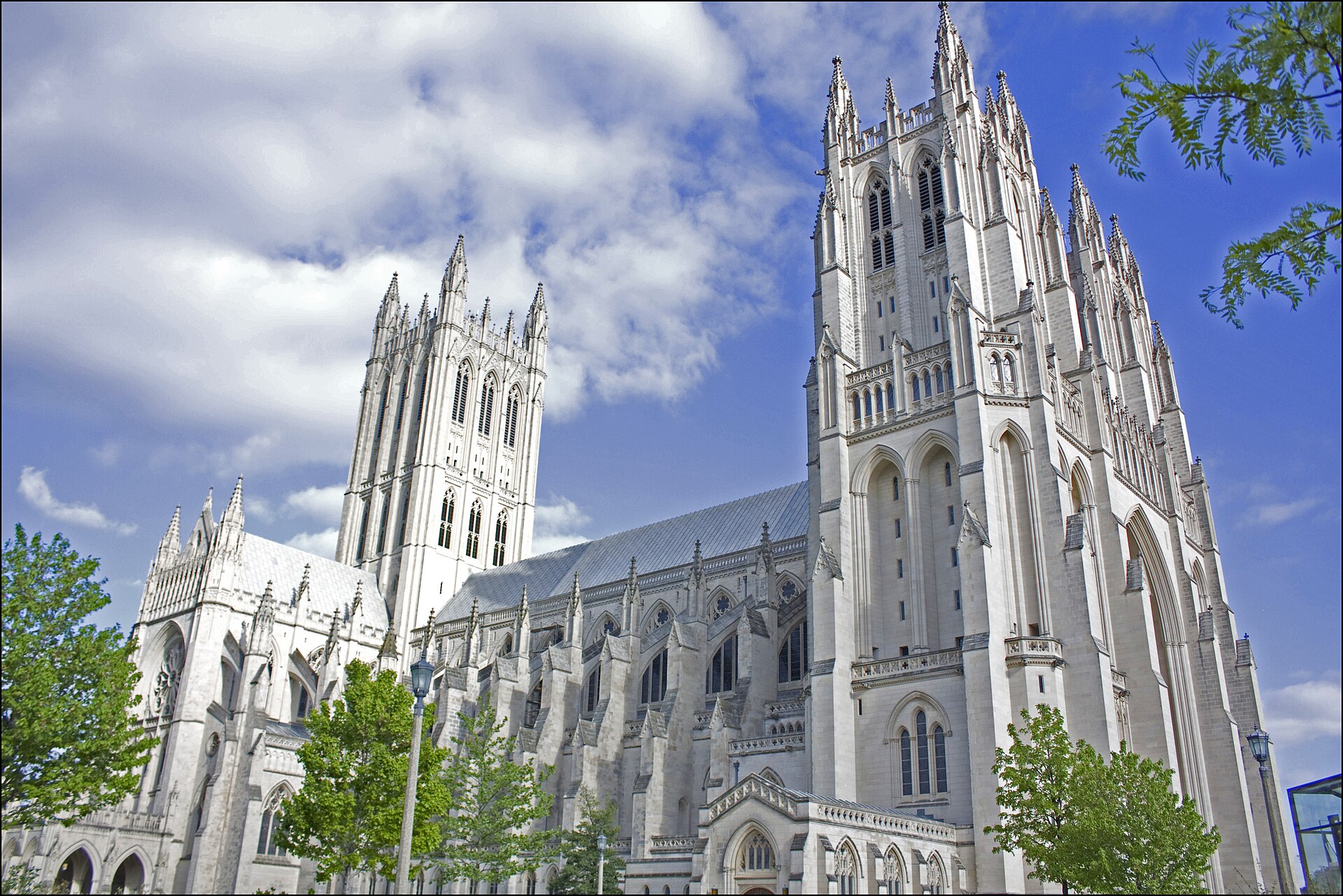
At a memorial in Washington National Cathedral, that detail carried unusual weight. Trump used it to shift the room away from formality and toward a version of Graham defined by timing, irreverence and an ability to land a punch line.
Humor can be a difficult choice at a public farewell, especially one attended by leading political figures. In this case, the joke worked as a character sketch: it offered a recognizable, human image of a public official more often associated with high-stakes political fights.
Trump’s account of a changed alliance
Trump did not portray his relationship with Graham as an easy or natural friendship. He said the two “did not exactly get off to the best of starts,” referring to their clashes during the 2016 Republican presidential race.
One of the most visible episodes from that period came after Graham criticized Trump and Trump publicly revealed Graham’s personal cellphone number. During the farewell remarks, Trump said it was something he “shouldn’t have done,” according to the source account.
That acknowledgment made the tribute more than a conventional list of accomplishments. Trump was recounting a political relationship that moved from rivalry to a close alliance, with Graham later becoming one of his strongest defenders in the Senate.
Supporters can view that evolution as evidence of Graham’s pragmatism and of a political partnership built over time. Critics may see it differently, pointing to Graham’s shift after years of sharp warnings about Trump. The memorial did not settle those competing readings; it emphasized reconciliation.
The record Trump chose to highlight
Trump praised Graham as “a beloved friend, a devoted brother, a respected statesman, a giant of the United States Senate, and a true American original,” according to MEAWW News.
His account of Graham’s record focused on military funding, border security legislation and the confirmation fight involving Supreme Court Justice Brett Kavanaugh. Trump called Graham’s defense of Kavanaugh “perhaps his finest hour,” the report said.
Those choices showed which parts of Graham’s Senate career Trump wanted to place at the center of the farewell. The emphasis was on partisan battles, Senate power and the causes that made Graham influential in Republican politics.
Trump also described Graham as “extremely hawkish” and joked that he “never saw a war that he didn’t like.” He framed that approach as stemming from Graham’s belief in protecting American interests, a description that underscored Graham’s long association with defense and foreign-policy debates.
A cathedral crowd reflecting his reach
The setting added to the sense of Graham’s national standing. Washington National Cathedral was the venue for a farewell attended by major political figures and foreign dignitaries, according to the report.
MEAWW reported that Israeli Prime Minister Benjamin Netanyahu attended, along with Defense Secretary Pete Hegseth, Treasury Secretary Scott Bessent, Secretary of State Marco Rubio and Commerce Secretary Howard Lutnick. Trump told the audience that leaders, presidents and prime ministers from around the world had come to mourn Graham.
The guest list reflected a career that extended beyond South Carolina. Graham’s work on military issues, Republican coalition-building and foreign policy put him in contact with influential figures in Washington and abroad.
Yet the day’s most memorable detail was not a roll call of guests or a legislative accomplishment. It was the 10 a.m. line, a reminder that public memorials often leave audiences with an anecdote rather than a policy summary.
Why the joke carried the tribute
Graham, who was elected to the Senate in 2002, died suddenly on July 11 from an aortic dissection, according to the report. He was 71. His death prompted tributes that attempted to capture both his institutional role and the force of his personality.
Trump’s remarks leaned into loyalty, toughness, humor and their shared political history. That framing presented Graham as a valued ally whose willingness to fight and capacity for humor belonged together.
But a memorial tribute is not the final word on a political career. Graham was admired by allies as energetic and effective, particularly on defense and judicial issues. He was criticized by opponents and some former admirers for the turns he made during the Trump years.
The prayer-breakfast story did not erase those divisions. It offered Trump a way to make Graham’s memory intimate and funny inside a solemn ceremony — and to tell the broader story of a onetime rival who became a close political friend.
An anecdote likely to outlast speeches
“If Jesus comes back before 10 am, I ain’t going” captures a specific version of Graham: stubborn, theatrical and unwilling to adjust his schedule even for an extraordinary occasion. It is also easier to remember than a lengthy account of Senate votes or policy disputes.
That was the power of Trump’s choice at the cathedral. By centering a joke, he put personality ahead of ceremony and personal history ahead of a polished institutional tribute.
Graham’s larger legacy remains more complicated than one farewell or one line. The arguments over his alliances, convictions and role in modern Republican politics will continue. For the service in Washington, though, Trump’s version of Graham began with a laugh before 10 a.m.
Leave a Reply