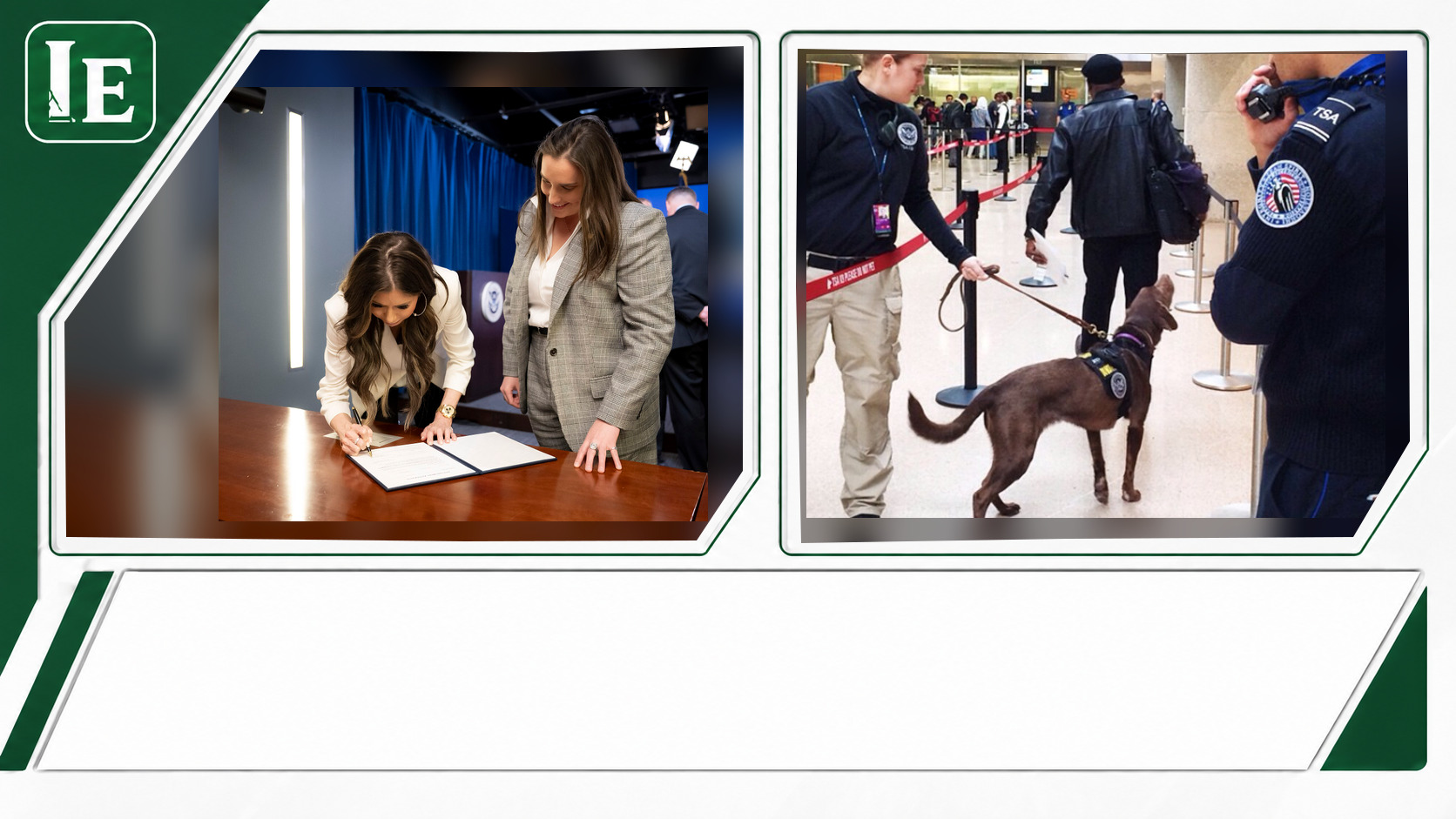
The reported airport arrests place a routine part of domestic flying at the center of a broader immigration-enforcement strategy. Key details about TSA data-sharing, the scope of screening and how complicated immigration cases are handled remain undisclosed.
ICE is arresting some visa overstayers during check-ins at U.S. airports, using passenger information before travelers board domestic flights. At least 27 travelers have been arrested at U.S. airports, according to ABC News, which cited Department of Homeland Security documents.
The arrests reflect a shift from Biden-era limits on domestic air-travel enforcement. DHS says the Trump administration has reversed a policy that allowed people in the country unlawfully to fly within the United States, while TSA data-sharing with ICE has raised unanswered questions about how airport check-ins are becoming enforcement points.
Passenger data is central
The most consequential part of the reported strategy may happen before an ICE agent appears at an airport. Airlines and airports gather identifying and itinerary information as passengers check in, creating records that can be compared with immigration information before a traveler reaches the gate.
American Oversight released a document describing an agreement signed in May 2025 under which the Transportation Security Administration would provide ICE with certain passenger-data elements that ICE may collect and retain. The document brought more attention to how routine travel information can be used in immigration enforcement.
But the public does not have a complete picture of the arrangement. American Oversight said the appendices identifying the exact information to be shared were heavily redacted. That leaves unclear which specific details are passed between TSA and ICE, how they are used to identify travelers and what safeguards apply when records do not tell a complete story.
Names, birth dates, routes and identification information can be powerful when linked with immigration databases. The policy dispute is not simply about whether authorities can use information already collected for air travel; it is also about the limits, visibility and accuracy of that use.
A reversal in domestic flying
DHS has characterized the airport approach as a deliberate reversal of the Biden-era policy. In a statement reported by the New York Post, the department said it had reversed what it called a Biden-era policy allowing people in the country unlawfully to fly domestically.
The administration’s position is that people without lawful status should not be able to use domestic air travel unless they are leaving the United States. Under that view, airports are a practical enforcement location because travelers’ identities are already checked as part of the flying process.
That approach changes the significance of a domestic trip for some people. Immigration status has long been relevant at international borders and arrivals, but the reported policy means a domestic check-in may now also bring immigration consequences for people identified as having overstayed a visa.
The available reporting does not establish how many travelers have been screened, flagged, questioned or allowed to proceed after review. The reported total of at least 27 arrests confirms that the tactic is being used, but not how broadly it is being applied.
Arrests reported at major hubs
DHS has not publicly released a complete list of airports where arrests occurred. Reports have described ICE activity or arrests at Los Angeles International Airport, Harry Reid International Airport in Las Vegas, Nashville International Airport, Denver International Airport and San Francisco International Airport.
Individual cases show how the policy can unfold at the terminal. Phu Nguyen, an Australian citizen born in Vietnam whose visa reportedly expired in 2015, was arrested at Los Angeles International Airport, according to widely discussed reports.
Another reported case involved Chantal Morales Rojas, a 27-year-old Ecuadorian woman living in Oakland. She was arrested while preparing to board a flight at Denver International Airport; ICE told The Denver Post that her visa had expired in January 2025.
Those reports do not answer whether arrests at the named airports resulted from the same procedures or selection criteria. Social-media accounts of some incidents have also circulated before federal agencies provided a fuller public accounting.
Overstay cases can be complicated
Visa overstays are distinct from unlawful border crossings in one important respect: many people who overstay entered the United States lawfully after initial screening and then remained longer than their visa permitted.
Some cases may be straightforward. Others can involve pending immigration filings, administrative delays, humanitarian claims, marriage-based petitions, student-status issues or efforts to leave the country after falling out of status.
An expired visa therefore may not capture every part of a person’s immigration situation. A traveler may have permission to remain through another process, or may believe they do, even if a federal database produces a different result during airport screening.
That is why the process for resolving incorrect or incomplete matches is central to the debate. DHS has not publicly detailed how travelers can present documentation when flagged, how records are corrected or how agents distinguish between a person with no lawful status and someone whose status is affected by a pending application or court matter.
Two sharply different arguments
Supporters of stronger enforcement are likely to argue that visa overstays have been insufficiently policed and that airports are a logical setting to identify people whose identities are already being verified. DHS and ICE can also contend that using existing travel data is an efficient way to locate people with expired visas or final immigration issues.
Immigration advocates and civil-liberties groups see a different risk. They can argue that unclear data-sharing rules turn transportation screening into a wider immigration-enforcement system with too little public disclosure, potentially chilling travel and creating fear for mixed-status families or people awaiting decisions on immigration paperwork.
The arrests fit into a wider Trump administration push to increase immigration arrests and encourage self-deportation. DHS has said the administration aims to ensure that people in the country unlawfully cannot fly unless they are leaving the United States. The New York Post reported that DHS has pointed to millions of departures or deportations since the start of the second Trump administration, including people it says self-deported.
The unanswered questions remain
The known facts establish a meaningful policy change: ICE has made arrests involving visa overstayers at U.S. airports, and TSA has an agreement to provide ICE with certain passenger data. The scope of the system, however, is still partly hidden.
There is no complete public list of airports involved, no disclosed set of criteria for prioritizing travelers and no clear account of the precise TSA data covered by the May 2025 agreement. It is also unclear whether airport enforcement will remain focused on visa overstays or expand to other types of immigration cases.
For people with overstays, uncertain status or unresolved immigration paperwork, domestic flying may carry more perceived risk than it did under the Biden-era approach. The broader consequence is that a check-in counter can now serve not only as the start of a trip, but also as a point where immigration enforcement may begin.
Leave a Reply