Blog

  • Musk Responds After Reported Mamdani Staffer Calls Him a ‘Valid Military Target’

    Musk Responds After Reported Mamdani Staffer Calls Him a ‘Valid Military Target’

    The reported exchange has drawn attention because it involves a politically charged phrase and a high-profile target. But the available account leaves major questions about the original statement, the person’s role and the nature of Musk’s response.

    Elon Musk issued a counter-threat, according to a report by The Western Journal, after a Mamdani team member reportedly described Musk as a “valid military target.” The outlet characterized the person as a former staffer for New York City Democratic Mayor Zohran Mamdani who now lives in China, but the available reporting does not establish the full context of the alleged remark or Musk’s precise response.

    The dispute matters because language about a “valid military target” can carry an unmistakably violent implication when directed at a prominent individual. It also raises basic questions about attribution, political responsibility and how quickly an incendiary claim can travel before the underlying evidence is clear.

    What the available report says

    The Western Journal’s headline said Musk issued a “stark counter-threat” after a member of Mamdani’s team declared him a “valid military target.” Its available article description said Musk responded to a person it identified as a former staffer for Mamdani and described the alleged statement as a threat against Musk’s life.

    Central Park New York City New York 23 cropped
    Image: Jet Lowe, via Wikimedia Commons, Public domain.

    That is the core of the report. The research provided with the story does not include the full underlying social-media post, a transcript of Musk’s response, a date for either message or a direct statement from the person involved.

    Those omissions are important. A headline can describe an exchange in broad terms, but readers need the original wording, surrounding conversation and account history to judge whether a statement was literal, rhetorical, sarcastic or taken out of context.

    The role of the Mamdani connection

    The report uses language that can suggest a current connection to Mamdani’s political operation, while its available description calls the person a former staffer. Those are materially different descriptions.

    A former staffer’s personal online remarks do not automatically represent the views of a mayor, campaign or administration. On the other hand, former political affiliations can become part of the public story when the speaker’s comments are directed at a well-known political or business figure.

    Without a response from Mamdani’s office or more detail about when the person worked with him, it is not possible to determine whether there was any current professional relationship or whether anyone associated with Mamdani had endorsed, condemned or addressed the alleged language.

    That distinction should not be treated as a technicality. Political stories often flatten connections into affiliations, and that can turn an individual’s statement into a claim about an entire team before the facts support it.

    Why the phrase draws scrutiny

    “Valid military target” is not casual language. In armed-conflict settings, similar terms have specific legal and operational associations. In ordinary political argument, using the phrase about a private citizen or public figure can reasonably be understood as invoking the possibility of violence.

    That does not mean every use of the phrase is an actionable threat. Context is decisive: who said it, where it was posted, whether it was directed at a person, whether it urged action, and whether it included details that could signal intent or capability.

    The available report does not provide enough evidence to make those determinations. It is therefore more accurate to say that the outlet reported an alleged threatening statement than to state as established fact that a criminal threat occurred.

    Musk’s immense public profile makes the episode especially combustible. His businesses, ownership of X and frequent participation in political debates make him a recurring subject of intense praise and criticism. That visibility does not make dehumanizing or violent rhetoric routine—or remove the need to report it precisely.

    Counter-threat claims need context too

    The report says Musk answered with a counter-threat, but the material available here does not provide his exact words. That leaves a crucial gap in understanding the exchange.

    A response described as a counter-threat could range from a statement about consequences or legal action to language that itself escalates the confrontation. Those possibilities carry very different implications, and no responsible account should collapse them into one category without the text.

    The absence of a direct quote also makes it difficult to assess whether Musk was addressing the alleged remark itself, the speaker’s personal circumstances, a political group or a broader issue. The headline’s framing may accurately reflect the outlet’s interpretation, but interpretation is not a substitute for primary-source evidence.

    Public rhetoric has real consequences

    The broader lesson is not limited to Musk or Mamdani. Political figures, former staffers, online influencers and major platform owners increasingly communicate in an environment where provocative phrases are rapidly clipped, reposted and reframed.

    That speed rewards the sharpest possible wording, even when the evidence is incomplete. It can also blur the line between criticism of power and rhetoric that personalizes a dispute in dangerous terms.

    There are competing concerns here. People have wide latitude to criticize wealthy executives and elected officials, particularly when those figures influence public policy and the online public square. But criticism is strongest when it is specific, grounded in facts and does not rely on language that can be read as authorizing harm.

    Likewise, reports about alleged threats should preserve the distinction between an accusation, a verified post and a confirmed finding by authorities. That standard protects everyone involved, including the target of the alleged threat and the person accused of making it.

    What remains to be established

    The available account leaves several central questions unanswered: the identity of the former staffer, the exact language and context of the alleged statement, the exact content of Musk’s response, and whether Mamdani’s office has addressed the matter.

    It is also unclear whether either side has sought clarification, removed posts, contacted law enforcement or made a public statement beyond the exchange described in the report. No such actions are established in the materials available for this article.

    Until original posts and direct responses are available, the most defensible reading is narrow: a report says Musk responded after a person with a reported past connection to Mamdani used language describing him as a “valid military target.” The rhetoric is serious enough to warrant scrutiny, but the public record presented so far does not settle the larger claims around it.
  • Trump Pushes Senate to Lock In Daylight Saving After 308-117 House Vote

    Trump Pushes Senate to Lock In Daylight Saving After 308-117 House Vote

    The proposal would stop Americans from changing clocks twice a year, but it would also choose permanent daylight saving time over standard time. That trade-off is where a seemingly simple idea gets politically complicated.

    Donald Trump urged the Senate to pass legislation making daylight saving time permanent on Monday in Michigan, after the House passed the Sunshine Protection Act by a 308-117 vote. The bill would end the twice-yearly clock changes nationwide, and the legislation has now moved from the House to the Senate.

    That puts senators in charge of a deceptively familiar fight. Many Americans dislike changing clocks, but the bill does more than stop the ritual: it would lock the country into year-round daylight saving time.

    Trump turns up Senate pressure

    Trump raised the issue while speaking to a crowd in Michigan, according to CNN, after an unrelated reference to clocks. His message was brief and direct: “Let’s get rid of Daylight Saving Time stuff,” he said.

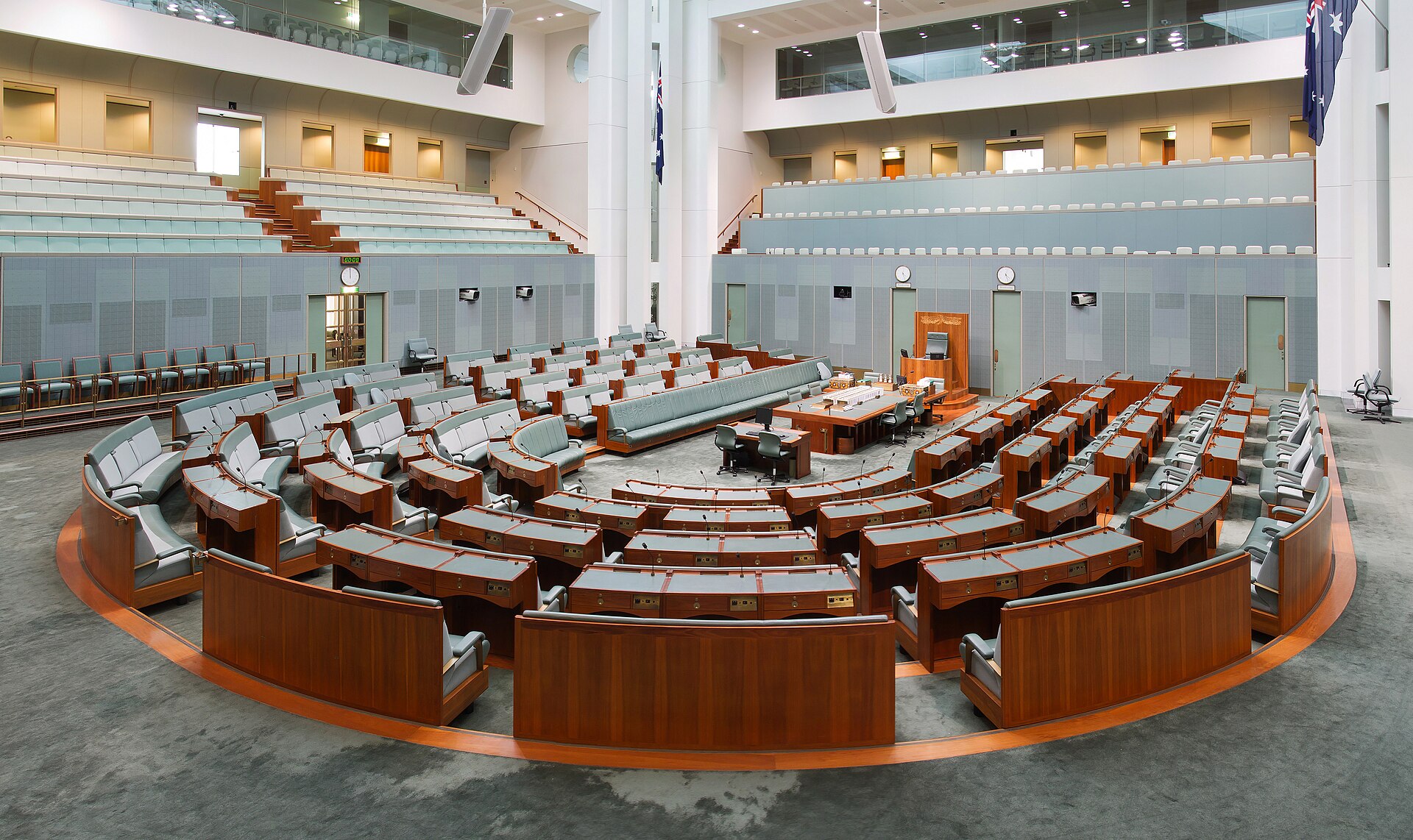
    Australian House of Representatives Parliament of Australia
    Image: JJ Harrison (https://www.jjharrison.com.au/), via Wikimedia Commons, CC BY-SA 3.0.

    He added that he hoped the Senate would approve the measure because “the House approved it.” The remarks were not presented as a detailed policy plan, but they gave the issue a higher-profile push at the moment when the Senate decides whether the bill advances or stalls.

    The legislation is H.R. 139, the Sunshine Protection Act. If enacted in its current form, it would establish year-round daylight saving time across the United States.

    A lopsided House vote

    The House has already supplied supporters with their strongest argument: a large bipartisan margin. The Office of the Clerk of the U.S. House of Representatives lists the Sunshine Protection Act as passed on July 14, 2026, at 5:17 p.m. during the 119th Congress.

    The final vote was 308 in favor and 117 against, with no members voting present and six members not voting.

    • 193 Republicans voted yes.
    • 114 Democrats voted yes.
    • One independent voted yes.
    • 22 Republicans voted no.
    • 95 Democrats voted no.

    That breakdown makes the politics less tidy than a standard party-line fight. Trump framed the measure in May as something he wanted to see signed into law and, in a Truth Social post reported by CNN, called it a potential win for Republicans. But the House vote also relied on Democratic support.

    What permanent daylight saving means

    The Sunshine Protection Act would stop Americans from moving clocks forward in the spring and back in the fall. Phones, watches, school schedules, work shifts and household routines would no longer be disrupted twice a year by the federal time change.

    For supporters, the appeal is practical. Families would avoid the sleep disruption that comes with the clock shift. Parents of young children would not have to reset routines twice a year. Businesses, travelers and schools would have one less recurring complication.

    CNN reported that proponents say the current time changes can disrupt children’s sleep and may worsen seasonal mood issues for some people. Supporters also point to the appeal of more evening light, especially during darker months when sunset can arrive before many people are finished with work or school obligations.

    But ending clock changes is not the same as avoiding a choice. The bill chooses daylight saving time as the permanent setting, rather than standard time.

    Why critics object

    Much of the opposition is not rooted in affection for changing clocks. Critics can agree that the current system is annoying while still opposing permanent daylight saving time as the replacement.

    The main concern is darker mornings. Year-round daylight saving time would mean later sunrises in many parts of the country, especially in winter and particularly toward the western edges of time zones.

    That could affect children waiting for buses, workers starting early shifts and communities where the day already begins before sunrise for parts of the year. CNN noted that critics have also raised potential economic concerns, including for farmers who may face later sunrises.

    There is also a health and sleep argument from advocates of permanent standard time. They argue that morning light better aligns with human circadian rhythms, while more light later in the evening can delay sleep. The Sunshine Protection Act does not settle that debate; it takes the daylight-saving side of it.

    The Senate is the bottleneck

    The House vote does not change anyone’s clock on its own. The Senate can take up the House-passed bill, leave it dormant, amend it or use it as the starting point for a different approach to clock-change policy.

    CNN reported that the legislation’s prospects remain uncertain. A 308-117 House vote creates momentum, but Senate action depends on floor time, leadership priorities and whether individual senators raise objections.

    If the Senate passes the same version approved by the House, the measure would go to Trump for his signature. If senators change the bill, the House and Senate would have to resolve the differences before it could become law.

    A simple promise, an unresolved trade-off

    The politics are easy to understand because the annoyance is nearly universal. Twice a year, the clock change reaches into alarms, commutes, school mornings, sleep schedules and the timing of evening light.

    That is why the issue can attract unusual coalitions and why Trump’s public push matters. It turns a procedural Senate question into a visible test of whether lawmakers are willing to finish what the House started.

    For now, the outcome remains unfinished. Trump is urging the Senate to approve permanent daylight saving time, the House has passed the Sunshine Protection Act by a wide 308-117 margin, and Americans are still waiting to see whether Congress will finally end the twice-yearly clock change — and, if so, which version of time the country will keep.

  • Trump Plan Would End Medicare Drug Premium Cushion After 2026

    Trump Plan Would End Medicare Drug Premium Cushion After 2026

    The change would not end Medicare drug coverage or Extra Help, but it could influence what beneficiaries see in future monthly premiums.

    The Trump administration plans to end a Medicare Part D subsidy program after 2026, according to reports by Reuters and The Wall Street Journal. The subsidy helps keep Medicare prescription drug plan premiums stable. This article explains what the change could mean for future premiums and beneficiaries, without confusing it with an end to Medicare drug coverage.

    The practical issue is not whether Part D disappears. It is what happens when officials drop Medicare Part D premium support as plans, beneficiaries and taxpayers prepare for 2027 pricing signals that will show who absorbs more of the cost.

    A narrow change with wide stakes

    The reported plan concerns a specific subsidy aimed at Medicare prescription drug plans. It is a plan-facing payment structure designed to cushion premiums, not a decision to eliminate Medicare Part D itself.

    Part D is the Medicare program that helps pay for outpatient prescription drugs through private plans approved by Medicare. Tens of millions of Medicare beneficiaries get drug coverage through either a stand-alone Part D plan or a Medicare Advantage plan that includes prescription drug coverage.

    That distinction matters because the word subsidy can make the policy sound broader than it is. The reported change is about how premiums are stabilized for plans during a period of major drug-benefit changes.

    The Wall Street Journal described the program as one that helped hold down premiums for Medicare Part D prescription drug plans. Reuters reported that the program was meant to keep premiums stable and would end after 2026.

    How the premium cushion works

    Medicare Part D premiums are not built from one national sticker price. Private insurers submit bids, federal formulas come into play, and beneficiaries compare plans that can differ by monthly premium, covered drugs, pharmacy network and cost-sharing rules.

    A premium-stabilization subsidy gives the federal government a way to soften sudden changes in what enrollees pay each month. In practical terms, it can function like a buffer while plans adjust to new rules.

    That matters now because Part D has been going through major changes tied to the drug benefit redesign. When the structure of who pays for prescription drugs changes, insurers can change their bids. When bids change, premiums can move too.

    If the reported plan proceeds, the government would stop using that particular premium cushion after 2026 unless Congress or the administration takes a different path. The actual impact would depend on plan bids, CMS rules, insurer strategy and competition in each local market.

    Not the same as Extra Help

    One of the easiest mistakes is to treat every Medicare drug subsidy as the same thing. The reported Trump administration change involves a subsidy connected to Medicare prescription drug plans and their premiums.

    It should not be confused with the Low-Income Subsidy, widely known as Extra Help. Medicare.gov describes Extra Help as a Medicare program for people with limited income and resources that helps pay Part D premiums, deductibles, coinsurance and other costs.

    CMS also identifies the Low-Income Subsidy as available under the Medicare Part D prescription drug program and explains eligibility, automatic qualification and redetermination. The reports cited here do not say the Trump administration is ending Extra Help.

    That difference is crucial for beneficiaries trying to understand their own coverage. A premium-stabilization subsidy for plans and an individual assistance program for people with limited income and resources are separate pieces of the Medicare drug system.

    Why premiums become political fast

    Prescription drug costs are among the most visible parts of Medicare because beneficiaries see them in two places: monthly plan bills and pharmacy-counter costs. Even a technical policy change can become politically explosive if premiums rise.

    Supporters of ending a temporary subsidy can argue that premium support should not become a permanent taxpayer backstop for insurers. If the program was meant to help the market transition, they may say it should expire rather than hide the true cost of the benefit.

    Critics are likely to see the risk differently. If the subsidy helped keep premiums stable while Part D rules were changing, removing it could expose beneficiaries to larger increases in monthly charges.

    There is also a budget trade-off. Federal payments can reduce what beneficiaries see in premiums, but taxpayers fund that support. Ending the subsidy may reduce federal spending tied to that policy while shifting pressure into plan pricing or beneficiary premiums.

    What beneficiaries should watch

    No one should panic-change coverage based only on a reported policy plan for after 2026. Medicare choices are made during enrollment windows, and the numbers that matter are the actual premiums, deductibles, formularies and pharmacy rules available for a given year.

    The key moment will come when 2027 plan information becomes available. That is when beneficiaries and advisers can compare what plans actually charge if the subsidy is no longer in place.

    • Monthly premiums: Check changes for a current Part D plan or Medicare Advantage drug plan.
    • Formularies: Review whether specific prescriptions remain covered.
    • Preferred pharmacy networks: Network changes can affect out-of-pocket costs even when premiums look appealing.
    • Extra Help eligibility: People with limited income and resources should watch this separate assistance program.
    • Annual notices of change: These explain how a current plan will differ in the next year.

    For people who qualify, Extra Help can remain central to affordability. Medicare.gov says some people qualify automatically, including people with full-benefit Medicaid, help from a state paying Part B premiums through a Medicare Savings Program, or Supplemental Security Income payments from Social Security.

    The 2027 unknown

    The unresolved question is not whether the reported policy matters. It does. The open question is how much premiums would change after 2026, which plans would change most, and which beneficiaries would feel it.

    Effects could vary widely by plan and region. Some insurers may absorb more of the shift to stay competitive. Others may raise premiums, adjust benefits or reconsider plan offerings.

    CMS rules and guidance could also shape how the market responds. The politics are likely to sharpen as 2027 pricing comes into view, with Democrats framing the move as a threat to drug-plan affordability and Republicans framing it as ending a temporary subsidy and controlling federal costs.

    The bottom line: the Trump administration is reportedly planning to end a Medicare Part D premium-stabilization subsidy after 2026. That does not end Medicare drug coverage, and it is not the same as Extra Help. But because the subsidy was designed to keep premiums stable, its removal could matter when future Part D premiums are set.

  • Trump’s $100M Golf Costs Count Differently Than Obama’s $3.6M Figure

    Trump’s $100M Golf Costs Count Differently Than Obama’s $3.6M Figure

    The clearest comparison is not a single scorecard. Trump’s estimated golf-related taxpayer costs, Obama’s GAO benchmark and Judicial Watch’s broader travel tally measure different slices of presidential travel.

    For taxpayers trying to understand presidential golf spending, the first question is not only how large the numbers are. It is what each number is actually counting.

    According to the source brief, Donald Trump’s golf trips are tied to an estimated taxpayer cost of about $100 million. The Obama figure most directly linked to golf is much narrower: a Government Accountability Office review of a 2013 trip involving Palm Beach, Florida, that put the cost at $3.6 million.

    Those figures can sit in the same public debate, but they should not be treated as matching invoices. Presidential travel costs can involve aircraft, security, staff movement, advance work and destination logistics, and different estimates may include or exclude different categories.

    Start with the labels, not the politics

    The Trump figure is best read as an estimate of taxpayer costs tied to golf trips, not as one official bill labeled “golf.” It points to government travel and protection expenses connected with repeated presidential movements.

    The Obama benchmark is different. The $3.6 million figure comes from a GAO review of a specific 2013 trip involving Palm Beach, Florida. It is the most concrete official Obama golf-related number in the comparison, but it does not represent every possible Obama golf cost.

    Judicial Watch added another number to the broader conversation: at least $96 million in total Obama travel expenses over eight years. That was a wider travel estimate, not a golf-only total.

    That distinction is the heart of the dispute. A broad estimate, a trip-specific government review and a total-travel watchdog figure do not measure the same thing.

    What can get counted in a presidential trip

    Presidential travel is expensive because the office travels with the president. Costs can extend well beyond the visible destination and the activity that draws public attention.

    The categories can include Air Force One, military cargo flights, Secret Service advance work, local security support and staff logistics. Some costs may be visible in public records, while others can be classified or folded into agency operations.

    That makes a simple golf comparison difficult. The cost of securing one trip can change depending on the destination, timing, equipment movement, personnel needs and whether other official stops are part of the itinerary.

    So a dollar amount tied to one president’s trip cannot automatically be used as a clean price tag for another president’s travel, even when Florida or golf is part of both conversations.

    Obama’s $3.6 million number is specific

    The GAO’s $3.6 million figure remains important because it is an official review tied to a defined trip involving Palm Beach. That makes it more concrete than many political estimates.

    But its strength is also its limit. It reviewed a particular trip and particular cost categories. It was not a comprehensive accounting of every golf-related expense across Obama’s presidency.

    The Judicial Watch figure belongs in a separate category. Its estimate of at least $96 million covered Obama’s total travel expenses over eight years, based on partial public-records responses, according to the source material.

    Combining those Obama-related numbers without explaining their different scopes can make the comparison appear cleaner than the records support.

    Trump’s figure carries a broader frame

    The Trump number now drawing attention is about $100 million in estimated taxpayer costs tied to golf trips. That framing is broader than a single weekend or a single government review.

    It also lands in a politically charged context because Trump criticized Obama’s vacations and golf before becoming president. Once Trump was in office, his own travel to Mar-a-Lago and nearby golf stops made the cost question harder to separate from that earlier criticism.

    Still, the accounting issue remains the same. A large estimate linked to Trump’s golf trips and a narrower GAO-reviewed Obama trip figure can both be relevant, while still requiring different labels.

    The most accurate comparison is not “who paid more for golf” in a simple sense. It is which costs are included, which trips are included and whether the figure comes from an official review, a watchdog estimate or a broader calculation.

    Why the public record leaves room for estimates

    One reason these debates keep returning is that presidential travel spending is not always released as a neat per-trip total. Agencies may report different pieces of the cost, and some information may not be public.

    That leaves watchdog groups, news organizations and political critics to work with partial records, official reports and estimates. Those numbers can be useful, but only if readers know what they include.

    A lower estimate may omit some expenses. A higher estimate may rely on assumptions from another trip. A trip-specific GAO review may be solid for that trip without serving as a universal presidential travel calculator.

    For taxpayers, the takeaway is straightforward: Trump’s estimated golf-trip costs, Obama’s GAO-reviewed Palm Beach figure and Judicial Watch’s broader Obama travel tally all speak to public spending. They do not speak in the same accounting language.

  • Canadian Woman in Jersey Shore Trump-Clothing Case Reportedly Ordered Deported

    Canadian Woman in Jersey Shore Trump-Clothing Case Reportedly Ordered Deported

    The reported deportation order is now the central development in Kaitlyn E. Tracey’s case, while the underlying New Jersey charges remain tied to an alleged boardwalk confrontation.

    MEAWW, in a report surfaced by MSN, said a judge has ordered Kaitlyn E. Tracey, 33, deported in a case that began with allegations on the Point Pleasant Beach boardwalk. Tracey, a Canadian citizen from Asbury Park, had been accused of slapping a teenage girl who was wearing patriotic, Trump-themed clothing.

    The available public reporting does not fully explain the procedural path behind the deportation order, including whether Tracey has any remaining appeal options. The criminal allegations in New Jersey and the immigration proceeding are separate tracks, even though they now sit at the center of the same public story.

    The reported order now driving the case

    The most consequential update is the one attributed to MEAWW’s MSN-surfaced report: a judge has ordered Tracey deported. That reported outcome follows earlier accounts that U.S. Immigration and Customs Enforcement became involved after her arrest in New Jersey.

    According to local reporting cited by The National Desk and NJ.com, court papers said Tracey is a Canadian citizen who entered the United States with a passport in 2024.

    Her husband, Matthew Geroni, who identified himself as an American citizen, said in a TikTok video that Tracey had been detained by ICE and taken to Delaney Hall, an immigration detention center in Newark. “I need help,” he said in the video, according to the reports. “I need my wife. I don’t want to see her get hurt.”

    Geroni said his concern was his wife’s safety and well-being, even if she were deported to Canada. He also said the broader situation was being taken out of context, though reports noted that he did not describe the alleged assault in that video.

    What police say happened on the boardwalk

    According to court documents cited by The National Desk and NJ.com, Tracey approached a teenage girl and three friends on the Point Pleasant Beach boardwalk on July 3 while recording them with her phone.

    The teen was wearing sweatpants with the words “Trump” and “ICE.” An affidavit described two people in the group as wearing “patriotic colored” sweatpants.

    The affidavit of probable cause said Tracey yelled at the group before allegedly slapping the teen across the face and body. Police said the teen was not injured.

    Police also said the alleged assault was captured on surveillance video. Tracey was arrested after she was identified following an investigation, according to the reports.

    The charges reported in New Jersey

    Police charged Tracey with endangering the welfare of a child, simple assault, harassment and obstruction. She was brought to the Ocean County jail, according to the reports.

    Later reporting indicated she was no longer listed there as an inmate after immigration authorities became involved. Reports also said Tracey had been scheduled for an Aug. 4 court appearance.

    The public record available from the cited reports does not say the current status of each criminal charge, whether any plea was entered, or how the reported deportation order may affect future appearances in New Jersey court.

    It is also unclear from the public reports whether Tracey’s attorney has commented on the deportation order. Earlier reports said ICE, Geroni and Tracey’s attorney, Francis R. Hodgson, did not immediately respond to NJ.com requests for comment.

    Why immigration and criminal court are not the same track

    The reported deportation order does not by itself resolve the factual dispute behind the original allegation. The New Jersey case concerns whether Tracey is legally responsible for the alleged boardwalk incident; immigration proceedings concern whether a noncitizen may remain in the United States.

    That distinction matters because immigration detention or removal proceedings can move on a different schedule from local criminal charges. Public reporting has not said when removal would occur or whether Tracey intends to challenge the reported order.

    Because Tracey is Canadian, the destination country identified in the reports is Canada. The reports do not say whether any pending New Jersey criminal obligations would affect timing.

    Why the story traveled beyond Point Pleasant Beach

    The alleged facts are narrow: a boardwalk encounter, political clothing, an alleged slap, no reported injury and charges filed by local police. The wider attention comes from the combination of those allegations with ICE custody and a reported deportation order.

    The case also involves symbols that are already politically charged: “Trump,” “ICE,” immigration detention and deportation. That has made the story larger than a typical local assault allegation.

    • Police account: Authorities said the alleged incident was supported by surveillance video and probable cause.
    • Family account: Tracey’s husband publicly emphasized her safety and said the situation was being taken out of context.
    • Unresolved record: Public reports have not fully detailed the deportation order’s procedure, any appeal path, or the current status of the New Jersey charges.

    For now, the clearest reported development is that MEAWW said a judge ordered Tracey deported. The underlying allegation remains the July 3 Point Pleasant Beach incident involving a teen wearing Trump-themed clothing, and several key legal details remain unconfirmed in the public record.

  • Construction Records Put Trump and Pirro at Odds in Reflecting Pool Case

    Construction Records Put Trump and Pirro at Odds in Reflecting Pool Case

    The dispute over damage at a famous Washington landmark now turns on a harder question than blame: what prosecutors can actually prove in court.

    Jeanine Pirro brought evidence to Donald Trump about damage to the Lincoln Memorial Reflecting Pool in Washington after prosecutors moved to drop the Reflecting Pool vandalism case. The evidence pointed to construction problems rather than vandalism, and that evidence box undercut Trump’s Reflecting Pool vandalism claim at the same time Trump criticized Pirro over how her office handled the case.

    The case had centered on David Hearn, a former Olympian accused of damaging the pool’s lining. But filings described a wider problem than the charged conduct, creating a public split among Trump, Pirro and the Interior Department over what happened at one of the country’s most visible federal landmarks.

    A public claim met a court file

    The sharpest part of the dispute is not simply that Trump and Pirro disagreed. It is that the disagreement moved from political messaging into the legal record.

    According to the Associated Press account cited in the originating reporting, Pirro, the U.S. attorney in Washington, moved to drop felony vandalism charges against Hearn after prosecutors reviewed additional records from the Interior Department. Those records, prosecutors said, changed the picture.

    The government filing did not treat the damage as a straightforward vandalism case. Instead, it pointed to problems with the installation of a new pool liner and pressure to complete the work before events connected to the America 250 celebration around Independence Day 2026.

    That distinction matters. A public official can argue that vandalism caused damage. Prosecutors, by contrast, have to show that the evidence supports the specific charge against a specific defendant.

    Why the damage pattern mattered

    Hearn, identified by AP as a former Olympic canoeist, had been accused of pulling up a two-foot square section of the Reflecting Pool’s lining. On its own, that allegation did not account for what prosecutors later described as damage spread across the pool.

    Pirro’s office said in the filing that a visual inspection found damage throughout the pool, including in the middle. Prosecutors argued that a vandal would not likely have tried to peel up the lining from that area.

    The filing also said it would be difficult to attribute the widespread damage to vandalism, much less prove it beyond a reasonable doubt. That phrase is the legal hinge of the case.

    In ordinary political debate, a theory can survive if it sounds plausible. In a criminal prosecution, the government must be able to carry the burden in court.

    Pirro faulted Interior’s information

    Pirro’s filing did more than reassess the physical damage. It criticized the Interior Department for providing what prosecutors called less than complete information when the case began.

    The filing said that if the department had been forthcoming with information already in its possession, the government would not have sought a grand jury indictment. That is a significant claim because it suggests prosecutors believed the case was initiated on an incomplete factual record.

    The Interior Department, however, did not accept that framing. Interior Secretary Doug Burgum posted on X that some acts of vandalism were captured on video, according to AP.

    Burgum also said the department had provided the U.S. Attorney’s Office with expert and eyewitness testimony about damage done by vandals, as well as the requested evidence on the timeline for each damaged area of the pool.

    Trump rejected Pirro’s conclusion

    Trump responded publicly and forcefully, according to AP, saying he disagreed completely with Pirro’s assessment. He acknowledged there may have been some contractor difficulty in installing the pool liner, but continued to insist that the major damage was caused by vandals.

    That is where the political pressure became unusually visible. Pirro’s office treated contractor error, rushed work and newly reviewed records as reasons the vandalism charge had become hard to prove. Trump treated vandalism as the central cause and criticized a prosecutor he appointed for stepping back from that position.

    The New York Times also described the episode as a rare public rebuke from Trump after Pirro dropped the Reflecting Pool case. The reversal left Pirro defending a decision not to proceed after the government had previously touted its evidence when the indictment was announced.

    For an administration that had echoed Trump’s vandalism claims, the filing created an uncomfortable split between a law-and-order storyline and the evidentiary standard prosecutors said they had to follow.

    Two accounts can partly coexist

    The dispute is not necessarily as simple as vandalism versus construction failure. The available accounts leave room for more than one thing to have happened.

    Interior’s position, as described by Burgum, is that there was evidence of vandalism, including video and witness or expert material. Pirro’s position, as reflected in the filing, is that additional documents undercut the ability to tie the charged damage to Hearn and prove the case beyond a reasonable doubt.

    Both claims could contain pieces of the truth. There may have been some vandalism, and there may also have been a flawed liner installation or damage related to rushed work.

    The legal issue is narrower than the political argument. The question for prosecutors is not whether some vandalism happened somewhere at some point. It is whether the defendant caused the charged damage and whether the government can prove that in court.

    What still has to be decided

    A judge still had to act on the government’s request to formally dismiss the case, according to AP’s account of the filing. If the dismissal is granted, Hearn would no longer face that prosecution.

    Even then, the broader dispute may not disappear. The Reflecting Pool sits between the Lincoln Memorial and the Washington Monument, so damage there carries symbolic weight beyond the cost or complexity of repairs.

    Several factual issues remain unresolved in the public record: how much damage was caused by vandalism, how much may have stemmed from construction problems, and whether agencies shared complete information quickly enough before prosecutors sought an indictment.

    The larger lesson is about what happens when a high-profile criminal case is built around a powerful public narrative and then runs into technical records, inspection findings and agency communications. Pirro’s box of evidence may not have changed Trump’s view. But it did change the government’s posture in court, and that is what made the Reflecting Pool case politically explosive.

  • Thomas J. Smith Upsets Trump-Backed Amir Hassan in Michigan GOP Primary

    Thomas J. Smith Upsets Trump-Backed Amir Hassan in Michigan GOP Primary

    The result gave an unusual primary contest a national political dimension: a little-known candidate who had paused his campaign beat a rival backed publicly by President Donald Trump. It also raises fresh questions about how far a presidential endorsement can carry a candidate in a competitive local race.

    Donald Trump’s endorsed candidate Amir Hassan lost the Republican primary in Michigan’s 8th Congressional District on August 5, 2026, to Thomas J. Smith, a rival who had suspended his campaign last month. Smith’s projected victory over Hassan was a setback for Trump, who endorsed Hassan in June and appeared with him at a July 27 event in Milford, Michigan.

    The result stands out because Hassan entered the race with the kind of national support many candidates seek, while Smith had stepped back from active campaigning. It is a reminder that a presidential endorsement can reshape a contest, but cannot always settle one.

    Smith’s win defied expectations

    Smith was projected to defeat Hassan in Tuesday’s Republican primary despite having suspended his congressional campaign. NBC News described Smith as a political unknown who had raised almost no money before the contest.

    P000 Thomas Smith
    Image: Burton Alva Konkle (author of the book; several of the images are reproductions of earlier work by others), via Wikimedia Commons, Public domain.

    That contrast is central to why the outcome drew attention. Hassan had a visible ally in the president, while Smith had apparently stopped campaigning in the conventional sense only weeks before voters went to the polls.

    The available reporting does not establish exactly why Smith suspended his campaign, what campaign activity continued afterward, or whether the final margin reflected a broader anti-Hassan vote. Those distinctions matter as results are finalized and the candidates’ teams explain the race.

    Trump gave Hassan a public boost

    Trump endorsed Hassan in June, according to The Washington Post, and rallied with him the week before the primary. At the Milford event on July 27, Trump promoted the Navy veteran as a strong candidate with the potential to help Republicans flip a battleground seat.

    An endorsement from a sitting president can bring national attention, volunteer interest, media coverage and a clear signal to partisan voters. In a primary, it can also give a lesser-known candidate an immediate credential among voters who value party loyalty and Trump’s political judgment.

    Hassan had those advantages heading into the vote. The projection for Smith does not mean endorsements have lost their value across the board. It does show that an endorsement is not a substitute for the local conditions that decide a congressional primary.

    Why a suspended candidate stayed viable

    Suspending a campaign is not always the same thing as formally leaving a ballot. Candidates may halt fundraising, advertising or events while remaining eligible for votes, depending on election rules and the steps they take to withdraw.

    That can create an odd but consequential situation: a candidate who is no longer mounting an active public campaign may still be the preferred choice for voters who know the name, dislike the alternatives or want to register a protest.

    Smith’s projected victory makes those mechanics newly relevant. The reporting available so far says he suspended his campaign last month, but it does not fully explain the status of his ballot access, the scale of any residual campaign operation or whether outside groups played a meaningful role.

    Those unanswered details will shape whether this is remembered as a one-off ballot quirk, a sign of dissatisfaction with Hassan, or a broader warning about assuming a late endorsement can overcome a race’s existing dynamics.

    A local race with national meaning

    Michigan’s 8th Congressional District was described by The Washington Post as a key battleground seat, putting the primary in a larger fight over control and political influence. That helps explain why Trump invested personal attention in Hassan’s candidacy.

    For Trump, the immediate consequence is straightforward: the candidate he chose did not win the Republican nomination. Critics will portray the result as evidence that his endorsement can be beaten, particularly when a race has local currents that national figures cannot fully control.

    Supporters of Trump can reasonably argue that one congressional primary does not measure his wider standing with Republican voters. Primaries differ sharply by district, candidate quality, turnout and timing, and a single result is a poor basis for broad claims about an entire electorate.

    Still, defeats are politically revealing because they expose where advantages failed to translate into votes. Hassan’s loss is especially striking because Smith was not simply a better-funded rival running a full-scale campaign; he was a candidate reported to have suspended his effort.

    The campaign lessons now in view

    The race offers a caution for candidates who lean heavily on high-profile endorsements. A national figure can put a candidate on voters’ radar, but the endorsement must connect with a durable local organization, a persuasive message and an electorate willing to follow the cue.

    • Visibility is not the same as turnout: A rally can generate attention without guaranteeing enough votes on primary day.
    • Ballot status matters: Candidates who suspend campaigns can remain consequential if their names stay available to voters.
    • Local factors can override national narratives: District-level concerns, candidate perceptions and voter familiarity may matter more than outside expectations.

    There is also a practical question for Republicans in the district: how Smith will proceed after winning a primary he had suspended. The available reports do not yet answer whether he will reactivate a full campaign operation, how party leaders will respond or what resources he can assemble for the general-election phase.

    What remains unclear after Tuesday

    The projected result settled the central primary contest, but not every question around it. Final vote totals, certification details and fuller accounts from both campaigns will be needed to assess the margin and the forces that produced it.

    It is also unclear whether Hassan’s loss will alter Trump’s approach to endorsements in contested House races. The president’s backing remains a prized asset for many Republican candidates, yet the Michigan result gives opponents a ready example of a case in which it did not prove decisive.

    For now, the clearest fact is the simplest one: Thomas J. Smith, who suspended his campaign, was projected to beat Amir Hassan, the candidate Trump publicly endorsed and rallied for. In a race expected to showcase presidential influence, Michigan voters delivered a different outcome.

  • House Republicans Back Dan Driscoll as Hegseth Faces Party Blowback

    House Republicans Back Dan Driscoll as Hegseth Faces Party Blowback

    The dispute is less about a single personnel decision than the unusual sight of Republican lawmakers siding publicly with a Pentagon official in a clash involving a Trump Cabinet secretary. The reporting leaves key questions about the feud and Trump’s response unresolved.

    Pete Hegseth has lost support among Republicans in a visible dispute involving Army Secretary Dan Driscoll, according to reporting on tensions inside the Pentagon. Donald Trump also reacted to a report about a feud involving Hegseth, putting fresh focus on whether the defense secretary can keep congressional Republicans aligned after the Army’s top officer was forced out.

    The immediate significance is political as well as institutional: House Republicans publicly backed Driscoll and lamented the general’s removal, a rare break with Hegseth from members of the president’s party. The available reporting does not establish how broad the Republican split is, but it shows frustration that has moved into public view.

    Republicans chose a side publicly

    The Washington Post reported on April 16 that House Republicans threw their support behind Driscoll during his first public testimony since Hegseth forced out the Army’s top officer. Lawmakers also expressed regret over the ouster.

    29th United States Secretary of Defense Pete Hegseth Official Portrait 2025
    Image: (DoD photo by Chad J. McNeeley), via Wikimedia Commons, Public domain.

    That is a consequential detail. Cabinet officials often face criticism from the opposing party, interest groups, former officials and the press. A public challenge from lawmakers in the governing party carries a different weight because those members can influence oversight, funding debates and the administration’s ability to present a united front.

    The reporting describes this as a rare public break with Hegseth after repeated clashes between the defense secretary and senior Army leaders. It does not show Republicans abandoning Hegseth across the board, nor does it provide a vote count or a measure of his overall support in Congress.

    Still, the choice to praise Driscoll rather than simply avoid the dispute matters. It gave the internal conflict an audience beyond the Pentagon and created a clear contrast between the Army secretary and the defense secretary he serves under.

    The personnel decision drove tensions

    At the center of the reported clash is Hegseth’s removal of the Army’s top officer. The Washington Post described Driscoll’s testimony as his first public appearance after that decision, making the hearing a natural venue for lawmakers to signal unease.

    CNN separately reported that Driscoll strongly praised the Army chief who had been fired by Hegseth earlier that month. Public praise from a senior political appointee for a dismissed military leader can be read in competing ways: as a defense of the officer’s record, as an appeal for institutional continuity, or as a more pointed disagreement with the decision.

    What remains unclear from the available reports is the precise basis for the firing, the full substance of the disagreements between Hegseth and Army leaders, and whether the conflict reflects competing policy views, management style, personalities, or a combination of all three.

    Those distinctions are important. Personnel changes are routine in any administration, especially when new leaders seek to reshape an institution. But they become politically harder to contain when senior officials and allied lawmakers appear to question the handling of the change in public.

    Trump’s reaction raises the stakes

    The report that sparked renewed attention was framed around Trump reacting to the reported Hegseth feud. The available source material does not include Trump’s exact words, where he made them, or whether he endorsed one side of the disagreement.

    That limitation matters. A presidential reaction can range from a broad defense of an appointee to a deliberately vague effort to tamp down a dispute. Without the full statement, it would be premature to treat Trump’s response as a definitive ruling on the relationship between Hegseth and Driscoll.

    Even so, Trump’s involvement changes the frame. An internal Pentagon disagreement can remain a management matter only as long as it is handled quietly. Once the president is asked to respond and congressional Republicans make their preferences visible, the issue becomes a test of confidence and political discipline.

    For Hegseth, the core question is not whether every Republican agrees with every decision. It is whether opposition to a specific decision becomes a wider belief among lawmakers that his leadership approach is creating preventable instability.

    Why Driscoll’s role stands out

    Driscoll is the Army’s top civilian official, while Hegseth leads the entire Defense Department. That hierarchy makes the apparent friction notable: it is not a dispute between separate agencies with independent political bases, but one within the Pentagon’s leadership structure.

    The Army secretary’s position also puts him near the practical consequences of senior personnel changes. Army readiness, training, modernization, recruiting and long-term planning all require coordination between civilian officials and military leadership. A leadership rupture can raise questions about who has the confidence to execute those priorities.

    Supporters of a forceful defense secretary could argue that Hegseth has the authority to replace leaders and pursue a different chain of command. From that perspective, public resistance from lawmakers or subordinates may be viewed as an obstacle to the change voters elected Trump to make.

    Critics, including Republicans uneasy with the episode, may see the public disagreement as evidence that the process has weakened trust within an institution where continuity and clear command relationships matter. The reporting available so far does not settle that argument.

    Support is not the same as a revolt

    Describing Hegseth as having lost support among Republicans should be understood carefully. The reporting documents House Republicans backing Driscoll and objecting to the Army leader’s ouster. It does not demonstrate a unified congressional campaign against Hegseth or show that Trump has withdrawn confidence in him.

    That distinction is especially important in a party shaped heavily by Trump’s judgments. Republican lawmakers may criticize an episode, defend another official or seek answers through oversight while still supporting the administration’s broader defense agenda and the president’s authority to choose his Cabinet.

    Earlier reporting during Hegseth’s confirmation period also showed many Republican senators standing behind him despite misconduct allegations he denied. That earlier support does not erase the current strain, but it underscores that intraparty support can be conditional and issue-specific rather than fixed.

    The more revealing signal may be the type of criticism now emerging. Public concern over how a military leadership decision was made is different from routine disagreement over rhetoric or policy priorities. It touches the administration’s capacity to manage the Pentagon.

    What to watch after the split

    The next indicators will be practical. Watch whether additional Republican lawmakers publicly defend Driscoll or criticize the ouster; whether Hegseth, Driscoll or the White House offer fuller accounts of the dispute; and whether the issue surfaces in hearings, appropriations debates or defense-policy discussions.

    It will also matter whether the Pentagon presents a stable explanation for the personnel change and whether Driscoll and Hegseth appear together in support of common priorities. Public unity would not necessarily mean the disagreement has vanished, but continued visible friction would make it harder to dismiss as a one-off clash.

    For now, the verified takeaway is narrower than the rhetoric around a “feud” may suggest. House Republicans publicly supported Driscoll after Hegseth’s removal of the Army’s top officer, creating an unusual intraparty challenge for the defense secretary. Trump’s reported reaction has elevated the political stakes, while many details of the dispute remain undisclosed.

  • Senate panel approves Fauci contempt referral as investigators obtain government phone copy

    Senate panel approves Fauci contempt referral as investigators obtain government phone copy

    The Senate actions put fresh attention on Anthony Fauci’s testimony, records and the limits of congressional oversight. A committee vote is not the same as a criminal conviction, and the phone’s contents have not been publicly released.

    Anthony Fauci was held in contempt of Congress by a Senate committee vote, while Senate investigators obtained a copy of his government-issued cellphone for a COVID-related investigation. The developments, reported Aug. 5 and Aug. 6, 2026, intensified Republican senators’ long-running scrutiny of Fauci’s pandemic-era work, but neither step by itself establishes wrongdoing.

    The phone is not a newly discovered personal device, according to reporting on the matter. It is a copy of the government-issued cellphone Fauci used while leading the National Institute of Allergy and Infectious Diseases, and investigators have not publicly disclosed what material it contains.

    A committee vote, not a conviction

    The Senate Homeland Security and Governmental Affairs Committee voted on a resolution to hold Fauci in contempt after he invoked his Fifth Amendment right against self-incrimination repeatedly during a subpoenaed appearance the previous week.

    Anthony Fauci in 2023 02 (cropped)
    Image: Christopher Michel, via Openverse, by-sa.

    That language carries weight, but it needs a legal distinction. A committee’s contempt action is a congressional referral, not a criminal conviction or a court ruling that Fauci committed a crime.

    Congress can refer a contempt matter to the executive branch for possible prosecution. The Justice Department ultimately decides whether to pursue a case, and any criminal charge would have to be proven in court. The available reporting did not indicate that Fauci had been charged with a crime.

    Sen. Rand Paul, the Kentucky Republican who chairs the committee, has accused Fauci of misleading Congress and of involvement in funding research in China that Paul argues was connected to the pandemic’s origins. Fauci has vigorously denied those allegations.

    Why Fauci invoked the Fifth

    At the hearing, Fauci made a brief opening statement and then invoked the Fifth Amendment more than 100 times, according to The New York Times. The constitutional protection allows a witness to decline to give answers that could be self-incriminating.

    Invoking the Fifth is not, on its own, proof of guilt. It is a legal right, and high-profile witnesses often use it when they believe their testimony could create criminal exposure or be used against them in another proceeding.

    Paul and his allies argue that Fauci’s refusals prevented the committee from getting answers about COVID-19’s origins, federal research funding and communications among public-health officials. Fauci’s side has cast the inquiry as politically driven; at the hearing, he called Paul’s focus on him an “unhinged obsession,” according to the Times.

    A spokesman for Fauci declined comment when asked about the cellphone, the Times reported. That leaves a major unanswered question: whether Fauci’s legal team will challenge any particular use, release or interpretation of records drawn from the device.

    The phone copy changes the records fight

    Sen. Ron Johnson, the Wisconsin Republican who chairs the Senate Permanent Subcommittee on Investigations, said his panel had obtained a copy of Fauci’s government-issued phone. Johnson wrote that he hoped the device would address questions Fauci did not answer during the hearing.

    The Wall Street Journal first reported, and the Times later reported, that the Department of Health and Human Services sent the copy to Johnson’s subcommittee. The distinction matters: investigators appear to have received a government-held copy, rather than seizing Fauci’s current personal phone.

    Government devices can contain emails, text messages, call information, calendar entries and other work-related records, depending on the agency’s systems, retention practices and the scope of the production. They can also contain incomplete records. A phone copy may not capture messages sent through other devices, encrypted platforms, personal accounts or systems that did not preserve the data.

    That makes the device potentially useful but far from self-explanatory. Investigators would need to authenticate records, establish dates and context, determine whether messages are complete, and separate routine communications from material relevant to their inquiry.

    Two panels, different COVID questions

    The parallel actions reflect two related but distinct Senate investigations. Paul’s committee has concentrated heavily on the origins of COVID-19 and on his allegations about U.S.-funded research involving China.

    Johnson’s investigations have given greater emphasis to COVID vaccines and the federal government’s pandemic response. Both senators have been sharp critics of Fauci, who became the nation’s best-known infectious-disease official during the pandemic.

    Fauci retired from federal service in late 2022 after decades at the National Institutes of Health, including his tenure as director of the National Institute of Allergy and Infectious Diseases. His public role during the pandemic made him a target of fierce political debate over masks, vaccines, school closures, public messaging and the virus’s origins.

    Those disputes explain why the phone has become politically significant before anyone has described its contents. Supporters of the Senate inquiries see it as a chance to test official accounts against contemporaneous records. Critics are likely to view the focus on Fauci as another effort to relitigate the pandemic through a partisan lens.

    What the records can actually show

    A government phone could help establish who communicated with whom, when exchanges occurred and whether discussions match prior testimony or agency records. It could also reveal nothing that materially changes the public understanding of Fauci’s work.

    Raw messages rarely settle a complex policy dispute on their own. A fragment can be misread without the surrounding thread, the scientific knowledge available at the time, the speaker’s role or related documents. Records may also be protected by privacy rules, deliberative-process claims, attorney-client privilege or restrictions involving sensitive health and personnel information.

    • For investigators: the task is to identify relevant records and test them against testimony and agency documents.
    • For Fauci: the immediate dispute is likely to remain centered on the contempt referral and the consequences of his Fifth Amendment invocations.
    • For the public: the important question is whether any released material is complete, authenticated and supported by independent evidence.

    The next decision rests with DOJ

    The contempt vote starts a process; it does not finish one. The Justice Department would determine whether the referral merits further action, and it is not required to prosecute every congressional contempt referral.

    Meanwhile, Johnson’s panel will decide how to review and potentially disclose material from the phone copy. No public accounting of the device’s contents had been provided in the reporting available.

    The paired developments guarantee more political conflict around Fauci and the federal COVID response. Their real significance will depend less on the force of the announcements than on what investigators can document, what they release, and whether those records withstand legal and factual scrutiny.

  • Trump DHS claim lacks key details as reported MAGA backlash swirls

    Trump DHS claim lacks key details as reported MAGA backlash swirls

    The claim points to a familiar pressure point for Donald Trump: keeping his coalition aligned behind an administration carrying out high-stakes homeland security policy. But the available source record does not establish the specific dispute, its target or its outcome.

    A circulating headline says Trump’s Department of Homeland Security chief suffered a new political setback and that MAGA supporters turned against the DHS chief. The claim matters because Donald Trump’s U.S. Department of Homeland Security is central to his immigration and border agenda, but the available source material does not identify the official involved or document the alleged backlash.

    That gap is significant. A political dispute inside the MAGA movement can be real and consequential, yet readers need to know what has been independently established before treating a dramatic headline about a Trump DHS chief as a confirmed account of events.

    What the available record says

    The material supplied with the circulating headline contains almost no underlying reporting. Its extracted text identifies the item as an MSN trend entry and repeats the headline, but it does not provide the name of the DHS chief, a description of the reported setback, statements from critics or a response from the administration.

    P20251022MR 0114 President Donald Trump attends a roundtable event launching the Homeland Security Task Force
    Image: The White House, via Wikimedia Commons, Public domain.

    That means the core assertion — that MAGA supporters turned on a DHS leader and dealt that person a new blow — cannot be evaluated from the provided record alone. There is no basis in that material to determine whether the supposed setback involved a personnel dispute, a policy reversal, congressional pressure, online criticism or another development.

    The lack of identification also creates a basic problem: the headline refers to a male DHS chief, while separate material in the research packet references Homeland Security Secretary Kristi Noem. Those records cannot be cleanly reconciled without more reporting and a clear publication context.

    Why the identity of the official matters

    At DHS, the person at the top sets the public face of some of the administration’s most politically charged work. The department oversees immigration enforcement, border security, disaster response, aviation security, cybersecurity and the Secret Service.

    Criticism aimed at a cabinet secretary is not the same as criticism aimed at an acting official, a senior immigration official or a nominee. Each has different authority, different exposure to Senate oversight and different consequences if Trump decides to change course.

    The available research includes an NBC News live-update item stating that Trump announced he was replacing Noem with Sen. Markwayne Mullin, a Republican from Oklahoma. But the supplied excerpt does not provide enough surrounding information to verify timing, status or the connection, if any, between that report and the headline about a MAGA backlash.

    Those distinctions matter because a leadership change can arise from many factors: an administration reshuffle, a confirmation fight, political strategy, policy disagreement or a personal decision. It should not automatically be attributed to a revolt by Trump’s political base.

    MAGA support is not one bloc

    “MAGA” is often used as shorthand for Trump’s most loyal political supporters, but it is not a single organization with a unified chain of command. Its broad coalition includes voters, elected officials, media figures, activists, donors and online personalities who can disagree sharply while remaining supportive of Trump himself.

    On homeland security, those disagreements can emerge over the pace and tactics of immigration enforcement, the use of federal resources, foreign policy spillover, surveillance, spending or relationships with Congress. A loud group of critics can shape the news cycle without necessarily representing the position of most Trump voters.

    Supporters of aggressive DHS action may see internal friction as evidence that officials are not moving quickly enough. Other Republicans may argue that durable policy requires legal precision, congressional cooperation and operational limits. Democrats, meanwhile, have frequently challenged the administration’s immigration approach and its broader DHS priorities.

    None of those competing views, by themselves, proves the specific claim in the headline. They do explain why allegations of conservative backlash around DHS can carry political weight.

    The administration’s political pressure point

    For Trump, DHS is more than a large federal department. It is a visible test of campaign promises on the border and immigration, areas where his supporters expect swift and tangible results.

    That creates a difficult balance for any DHS leader. Policies must survive court challenges, comply with federal law, be carried out by agencies with finite personnel and funding, and meet the political expectations of a president’s base. A move viewed as too cautious can invite criticism from the right; a move viewed as too aggressive can bring legal and public backlash from opponents.

    Cabinet-level turbulence can also become a messaging problem. Even when an administration insists that a personnel decision is routine, adversaries may frame it as proof of internal division. Conversely, supporters may view a change as Trump reasserting control over an agency that has become politically exposed.

    What remains unverified

    Several key questions remain unanswered by the materials available here:

    • Which DHS official was the subject of the reported political setback?
    • What specific action, decision or event prompted the alleged MAGA criticism?
    • Which supporters, elected officials or organizations voiced opposition?
    • Did the White House or DHS issue a response?
    • Was there an actual personnel consequence, policy change or other verified outcome?

    Until those points are documented through attributable reporting, official statements or direct evidence, the strongest conclusion is limited: a headline has raised a claim of friction between Trump’s DHS leadership and parts of the MAGA movement, but the available record does not substantiate the details.

    Why caution is part of the story

    Political headlines often compress a complicated dispute into a simple narrative of a leader being “dealt a blow” or a movement “turning” on someone. That framing can capture genuine tension, but it can also overstate the scale, cause or permanence of a disagreement.

    For readers, the useful test is straightforward: look for the named official, the disputed action, the identifiable critics and the response from the administration. Without those basics, claims of a coalition rupture remain less informative than they first appear.

    The broader issue is still worth watching. If prominent Trump allies begin publicly challenging DHS leadership over a specific policy or personnel decision, it could affect the administration’s ability to present a united front on one of its defining priorities. For now, the reported backlash is a claim awaiting the details needed to measure its real political force.