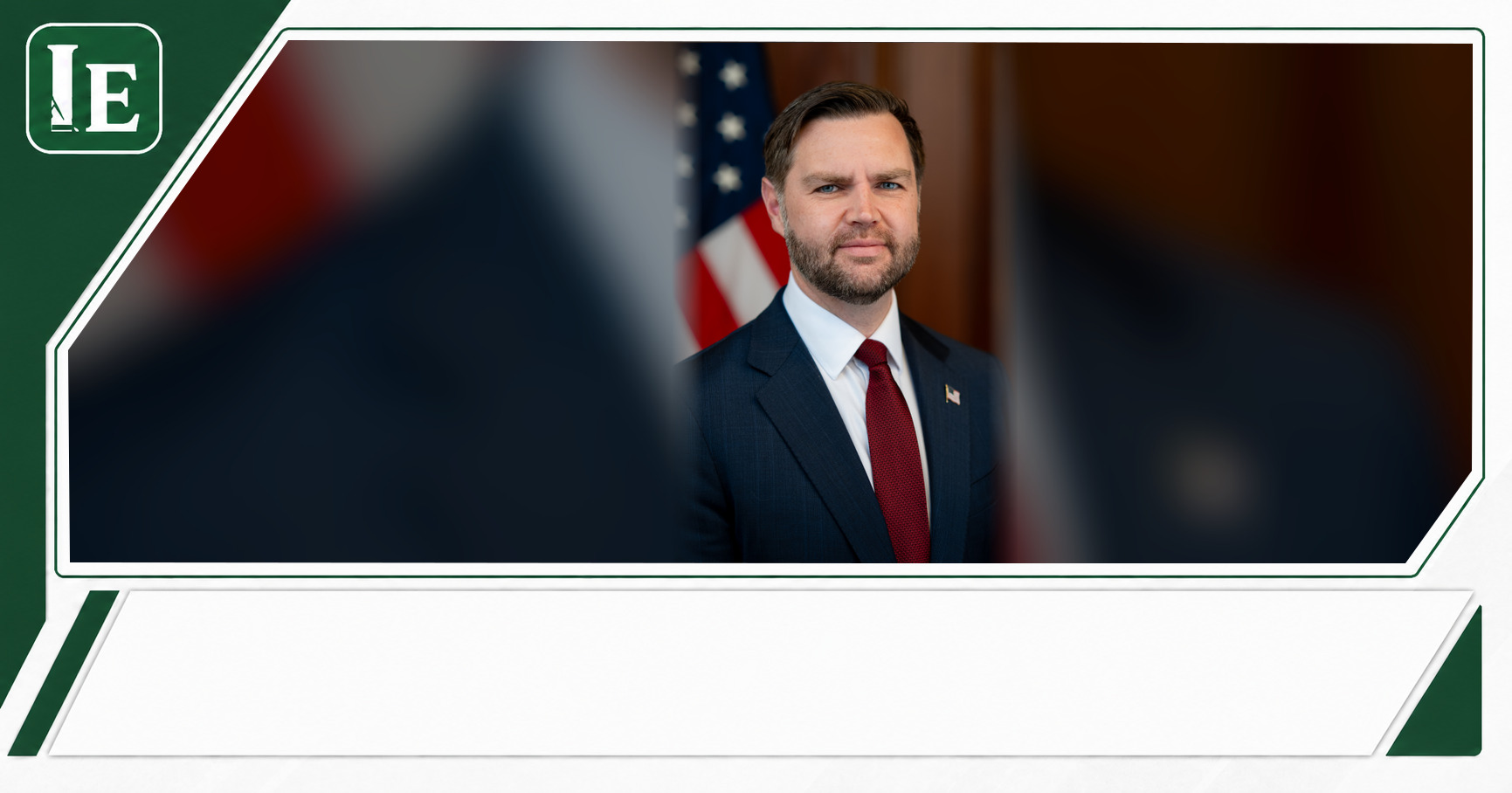
A brief story about religion and a falling glass has become a viral argument over how public officials should speak about private belief. The available reactions show online attention, not a measurable shift in voter opinion.
JD Vance shared a story about a falling glass that he felt was a message from God during a conversation about Christianity. Online critics mocked or criticized the account, turning the vice president’s personal faith anecdote into a fresh political flashpoint.
The story draws attention because it combines religion, a vivid image and a national political figure. It also raises a broader question: when elected officials describe private spiritual experiences in public, how should voters separate a personal testimony from a political claim?
A falling glass becomes the focus
According to an account summarized by Dagens.com and attributed to the Irish Star, Vance described talking with a friend about Christianity when a glass fell from a wall. He said skeptics could see the incident as meaningless, while he experienced it another way.

“At that moment, it felt like God was trying to send me a message,” Vance said, according to the report, which described the anecdote as coming from a Fox News interview.
That phrasing is central to the dispute. Vance described what the moment felt like to him; he did not present the falling glass as evidence that others had to accept. Still, a compact visual detail can spread far more easily online than a longer account of belief, conversion or doctrine.
Why critics seized on it
Online criticism centered less on Vance’s wider religious journey than on the image of the glass falling. Posts cited by Dagens.com treated falling or shattered glass as an ominous symbol, with one response calling it “not a great sign.”
Other commenters characterized the story as overly dramatic for a high-ranking elected official. Former French ambassador to the United States Gérard Araud was among those quoted in coverage expressing disbelief.
Those reactions help explain the story’s visibility, but they do not establish a consensus among voters. The available reporting points to individual social-media responses, not representative polling or evidence that the anecdote has changed public opinion of Vance.
That distinction matters in a political environment where a joke, repost or short clip can look like a broad public verdict. Viral mockery measures attention and engagement; it does not, by itself, show what a wider electorate believes about a politician’s faith or record.
Faith is part of Vance’s public story
The anecdote emerged while Vance was discussing his religious life and, according to Dagens.com, promoting Communion: Finding My Way Back to Faith, a memoir about his adult conversion to Catholicism.
His faith journey has long been part of his public biography. Vance was raised in an evangelical environment, later described himself as an atheist or skeptic, and entered the Catholic Church as an adult.
Reuters reported in 2024 that Vance had said he felt “a touch of God” before speaking at the Republican National Convention. The falling-glass account therefore did not introduce religion into his public image so much as return attention to a theme he has discussed before.
For many believers, finding spiritual meaning in an ordinary occurrence is familiar territory. Religious traditions often leave room for testimony, providence and experiences that may hold personal significance without being verifiable to others.
Private testimony meets public office
For skeptics and for people who prefer a clearer line between private faith and political identity, the same account may sound unpersuasive or uncomfortable. That difference in response is not only a disagreement over whether the glass fell by chance.
Politicians often speak about religion to explain their values, personal history and ties to a community. The tension rises when a figure near the center of federal power shares a spiritual experience, because some listeners may hear it as a suggestion of special authority.
In the available account, Vance did not say the falling glass instructed a government decision or gave him a divine mandate to govern. That is an important boundary. A personal statement of faith is different from asserting that a policy has been directed or endorsed by God.
Critics may nevertheless consider the anecdote politically relevant because a public official chose to tell it to a national audience. Supporters, meanwhile, may see the ridicule as a dismissive reaction to an openly held religious conviction.
What the online reaction cannot show
There is no indication in the available reporting that the episode has affected Vance’s standing in a measurable way. No broad, representative polling on the falling-glass story was identified.
It is also unclear how much of the original Fox News conversation focused on this particular incident, or whether reposts and short clips omitted context from a larger discussion of Vance’s conversion. That missing context is a recurring issue when a political conversation is reduced to one memorable line.
Personal testimony cannot be checked in the same way as a policy statistic or a factual claim. People can reasonably question Vance’s interpretation without claiming to know whether he was sincere, just as supporters can accept his account without treating it as proof of anything beyond his stated experience.
The episode’s clearest significance is not that it has proven a shift in voter sentiment. It is that Vance’s story gave opponents a vivid symbol for criticism while putting his religious identity back at the center of public discussion.
Leave a Reply