Blog

  • Abdul El-Sayed’s Senate Bid Puts 2007 Campus Protest Back in View

    Abdul El-Sayed’s Senate Bid Puts 2007 Campus Protest Back in View

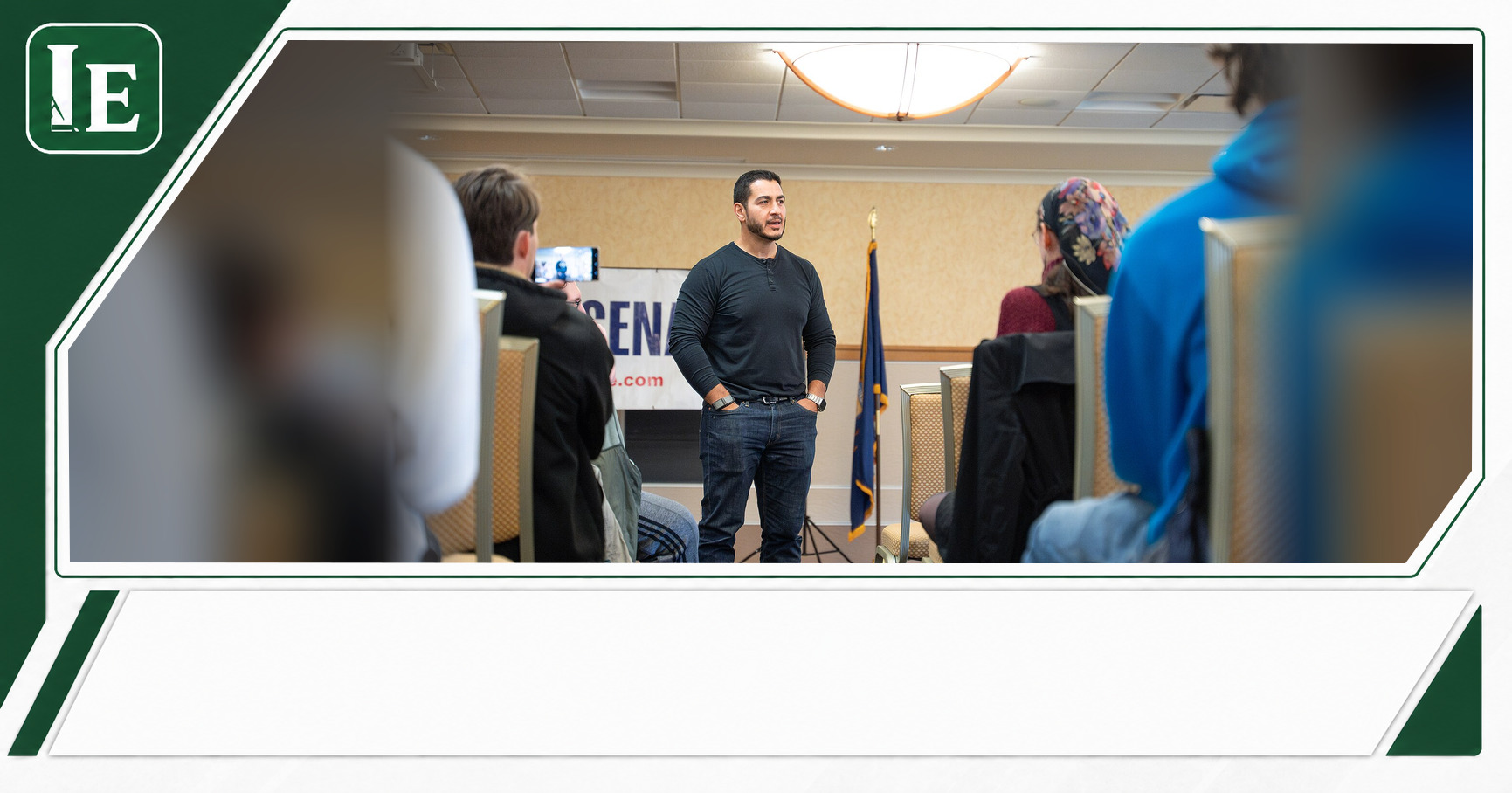
    Abdul El-Sayed’s role in a 2007 University of Michigan protest has resurfaced as he runs as the Democratic nominee for a U.S. Senate seat in Michigan.

    Contemporary reporting from The Michigan Daily shows that El-Sayed joined a walkout from a terrorism-focused event hosted by Young Americans for Freedom and later spoke at a separate counter-discussion. The archival record presents a dispute over free expression, representation and whether the program’s framing generalized about Muslims.

    The available accounts do not show that El-Sayed opposed condemning terrorism itself. They show that he participated in a protest over what demonstrators regarded as an overly broad portrayal of Muslims.

    Why the 2007 episode has returned

    The incident is receiving renewed attention because El-Sayed is now the Democratic nominee for a U.S. Senate seat in Michigan. He attended the University of Michigan from 2003 to 2007 and served as vice president of the Muslim Student Association during his senior year.

    President’s House, University of Michigan, University Avenue, Ann Arbor, MI
    Image: w lemay, via Wikimedia Commons, CC BY-SA 2.0.

    A recent Michigan Daily archive review included the protest among episodes from his university years, along with his commencement appearance with former President Bill Clinton and later recognition as a graduate student.

    Campus activism can become part of the public record surrounding a candidate, particularly when it involves religion, speech and political violence. But the reporting does not establish that the political meaning assigned to the protest today is the same meaning participants attached to it in 2007.

    What happened at the event

    The University of Michigan chapter of Young Americans for Freedom hosted the January 2007 program, titled Terrorism: The World’s Greatest Threat, according to contemporary reporting by The Michigan Daily.

    The event featured Walid Shoebat, Zachariah Anani and Kamal Saleem. A later account described the three Arab men as having been involved in radical Islamic terrorism before converting to Christianity and publicly rejecting their former beliefs and conduct.

    The supplied reporting does not independently establish the speakers’ personal histories. What the record clearly documents is that Young Americans for Freedom presented them as former extremists at an event focused on terrorism.

    More than 300 students and non-students protested outside the Rackham Building before the scheduled start, according to the student newspaper. Protesters in yellow shirts filled many seats inside the auditorium, where they made up about a quarter of the audience by the time the program began.

    A dispute over the program’s framing

    Several student groups and the Michigan office of the American-Arab Anti-Discrimination Committee objected to the event, The Michigan Daily reported. Their stated concern was that it generalized about Muslims.

    Organizers and supporters viewed the program as a discussion of political violence and what they regarded as a serious security threat. Protesters objected to language and emphasis they believed linked Islam and terrorism in a way that implicated Muslims more broadly.

    Those competing views shaped the confrontation. Supporters could regard the speakers as people denouncing extremism from personal experience, while critics could see the event’s format as reinforcing collective blame against a religious community.

    The available account does not support treating the protest as a rejection of condemning extremist violence. Instead, it records an argument over whether the event scrutinized violent extremists or placed a wider population under suspicion.

    El-Sayed’s part in the protest

    El-Sayed was identified in the archival record as a participant in the walkout, rather than as the organizer of the entire demonstration. In his senior year, he was Muslim Student Association vice president under the name Abdul-Rahman El Sayed, the student newspaper reported.

    Organizers asked demonstrators occupying seats to leave so supporters could attend, but the request did not end the confrontation. The newspaper described tense exchanges between presenters and some audience members.

    At one point, Saleem asked why moderate Muslims were not protesting extremists within their faith, according to the report. About 30 minutes into the event, roughly 25% of the audience stood and left in protest.

    After leaving the auditorium, participants held a counter-discussion elsewhere on campus. El-Sayed spoke at that gathering, and The Michigan Daily quoted him afterward as saying, “We’ve done something good today, and we need to keep that going in the future.”

    What the archival record does and does not settle

    The reporting establishes a basic sequence: conservative students hosted a terrorism-focused event; El-Sayed and other demonstrators challenged what they saw as its portrayal of Muslims; and a substantial share of the audience left for a separate discussion.

    The estimate that roughly a quarter of the audience walked out reflects that auditorium at that time, not the views of the University of Michigan community as a whole. The record also does not establish how representative either side was of campus opinion in 2007.

    Neither the supplied archival reporting nor the available account includes a current statement from El-Sayed about the event. It also does not provide detailed accounts from every organizer, speaker or participant, leaving important parts of the dispute unresolved.

    What remains documented is a campus clash in which both sides addressed terrorism, but disagreed sharply over how Muslims were being represented in that conversation.

  • Riley Gaines’ ‘Milk Her Bull’ Remark Highlights Ongoing WNBA Transgender Review

    Riley Gaines’ ‘Milk Her Bull’ Remark Highlights Ongoing WNBA Transgender Review

    The attention-grabbing exchange has obscured the key point: the WNBA’s transgender eligibility review is still unresolved. What comes next will depend on a task force whose membership, timetable and recommendations have not been publicly detailed.

    Riley Gaines directed the remark “milk her bull” at WNBA commissioner Cathy Engelbert while the WNBA is reviewing its policy on transgender athlete participation. The phrase has drawn attention, but the larger outcome remains unsettled: the league has not publicly announced a final policy change.

    Gaines’s criticism puts Engelbert at the center of a broader argument over eligibility in women’s professional sports. Reporting cited by the available material indicates the WNBA has assigned a task force to examine the issue, leaving major questions about any future standard unanswered.

    The remark drew attention fast

    Gaines, a former NCAA swimmer, has become a prominent advocate for limiting women’s sports categories based on sex assigned at birth. Her public advocacy grew after she competed against Lia Thomas at the 2022 NCAA swimming championships.

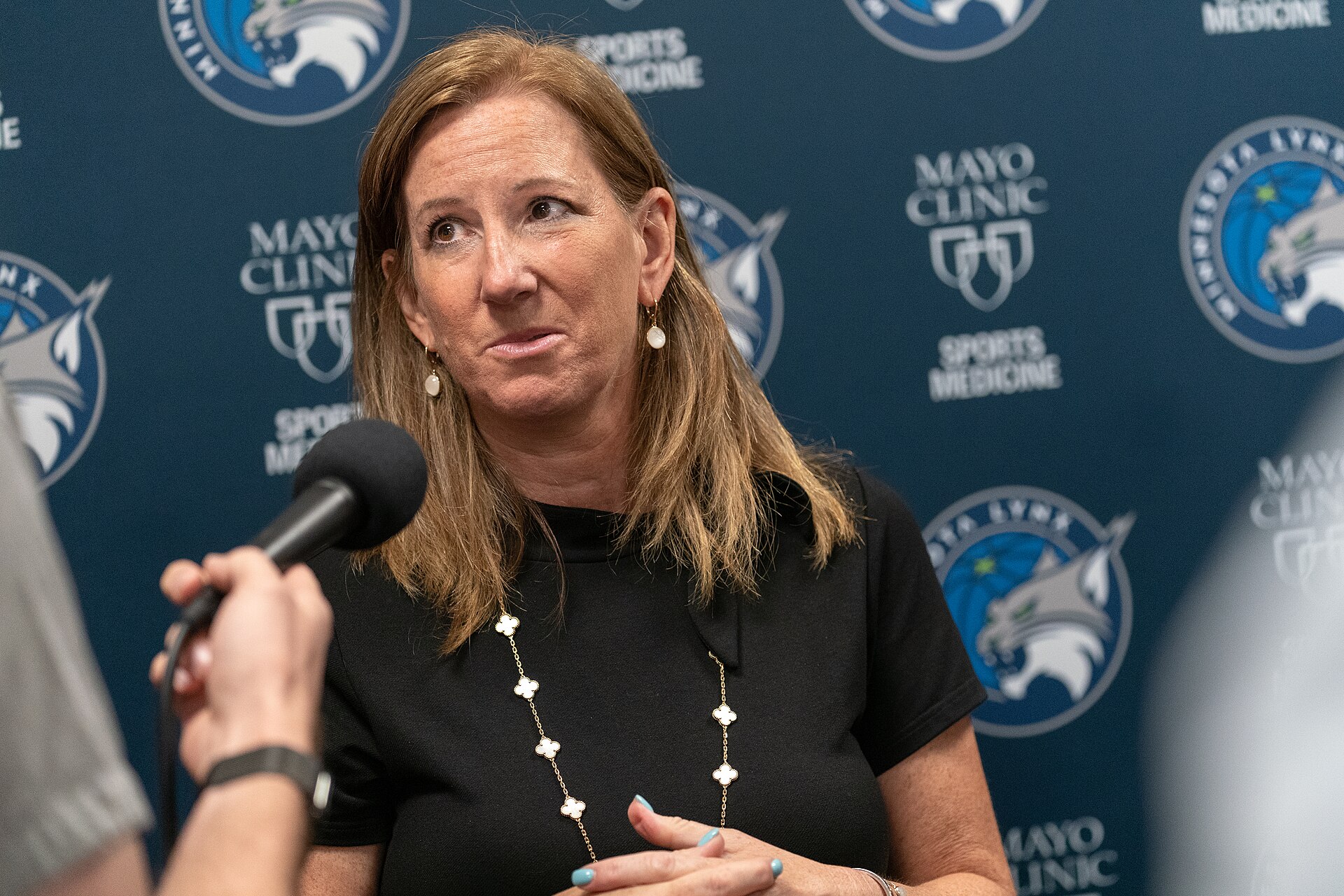
    Cathy Engelbert
    Image: Lorie Shaull, via Wikimedia Commons, CC BY-SA 4.0.

    Her message to Engelbert used deliberately blunt language to press a sex-based argument about transgender participation. It was not tied in the available reporting to a specific WNBA game, roster transaction or identified player.

    That distinction matters. A provocative line can travel quickly online and create the impression that a league has made, or is about to make, a major decision. The material available here does not support that conclusion.

    It also does not establish when or where Gaines made the remark, whether it came as part of a longer statement, or whether Engelbert responded directly.

    The review is still underway

    Just Women’s Sports reported that Engelbert told teams the WNBA would continue considering transgender eligibility and had assigned a task force to study the question. That reporting points to an active review rather than a completed rulemaking process.

    A task force can be a way for a league to gather medical, legal, player and competitive perspectives before adopting a standard. Its existence alone does not show that the WNBA has chosen a new policy, committed to a particular approach or set a date for action.

    The available material does not identify the task force’s members, its recommendations, proposed eligibility criteria or any schedule for completing its work. It also does not cite a public vote by team owners.

    Those unknowns are central to understanding the moment. Gaines’s remark has generated a public confrontation, but the policy question underneath it remains in an internal and unresolved stage.

    Gaines frames the issue around sex

    Gaines argues that female sports categories should be reserved for athletes she describes as biological women. She has said her concerns extend beyond medals and records to privacy, safety and fair competition in sex-separated sports settings.

    In earlier congressional testimony covered by WTOV and The National Desk, Gaines said female athletes had been put “on the back burner” as sports organizations navigated eligibility questions. Her criticism of Engelbert fits her wider challenges to the NCAA, schools, governing bodies and professional leagues.

    Supporters of Gaines’s position argue that physiological differences after male puberty are particularly relevant in elite competition. They say sex-based categories protect the competitive opportunities women’s sports were created to provide.

    Her latest phrasing is memorable, but it does not lay out a specific WNBA eligibility standard or explain how the league should administer one. The difference between a broad demand and an enforceable policy is substantial.

    Inclusion advocates make a different case

    Advocates for transgender athletes warn that broad exclusions can stigmatize a small group of people and prevent meaningful access to sports. They generally argue that eligibility decisions should be based on evidence, the particular demands of a sport and the practical effects of restrictions.

    That approach does not dismiss concerns about competition. Instead, it argues against assuming a single standard can resolve questions across every sport and level of play.

    Inclusion advocates have urged sports organizations to weigh medical standards, the nature of the competition and the experiences of transgender athletes. They also contend that political rhetoric should not replace sport-specific analysis.

    The conflict is difficult because both sides frame their arguments around women’s opportunity. Gaines and her supporters emphasize preserving a protected female category, while critics of categorical bans emphasize avoiding exclusion of transgender women from athletic communities.

    Any WNBA rule faces practical tests

    For Engelbert and the WNBA, the eventual challenge is bigger than responding to one pointed criticism. Any approach would need to be understandable to players, teams and fans while addressing eligibility, privacy, medical information, enforcement and appeals.

    The league would also have to explain the competitive rationale behind its decision. A policy that is unclear could invite more uncertainty, while a rushed public statement could leave affected players and teams without answers.

    Silence, meanwhile, can be interpreted by critics as indecision. The scrutiny aimed at Engelbert shows how a procedural review can become a broader test of league leadership before a final decision is even announced.

    For now, the confirmed picture is limited: Gaines made the “milk her bull” remark while pressing the WNBA on transgender participation, and the league’s eligibility review is ongoing. Whether the WNBA will revise, clarify or retain its approach—and when it will explain that decision publicly—remains unclear.

  • Trump Deletes AI Truth Social Post After Supporters Object to Jesus-Like Image

    Trump Deletes AI Truth Social Post After Supporters Object to Jesus-Like Image

    The image was meant, Trump said, to show him as a doctor. But its white robe, glowing hand and hospital-bed setting drew objections from conservative Christian figures as well as his usual critics.

    Donald Trump deleted an AI-generated Truth Social post depicting himself in a Jesus-like role after Trump faced backlash from supporters over the image. The picture showed Trump appearing to heal a sick man, and it also drew criticism from Trump’s opponents, turning a short-lived social-media post into a politically awkward dispute over faith, symbolism and the limits of loyalty.

    Trump said the image showed him “as a doctor” making people better. But the white robe, glowing hand and bedside scene led critics—including prominent conservative Christian voices—to see a reference to religious art rather than a medical illustration.

    Why removal became the story

    The post’s deletion did not erase the controversy. Screenshots and news coverage preserved the image, while its removal suggested that the reaction was serious enough to warrant a reversal.

    That does not establish a lasting political cost. There is no clear measure of whether the episode will affect Trump’s support, and many voters may view it as a brief online dispute.

    Still, the backlash mattered because it was not limited to Trump’s regular opponents. Some criticism came from figures closely associated with conservative Christian politics and from supporters who otherwise back Trump’s broader mission.

    Trump’s explanation met a different reading

    After the post was removed, Trump acknowledged sharing it but rejected the interpretation that it placed him in a sacred role. He said the picture was intended to portray him “as a doctor” beside a Red Cross worker.

    “It’s supposed to be as a doctor making people better,” Trump said, according to the BBC. “And I do make people better. I make people a lot better.”

    He later told CBS News that he removed the post because he did not want people to be confused. His stated intention and the reaction to the image are not necessarily the same thing: Trump described a medical scene, while critics focused on visual cues they believed evoked Jesus healing the sick.

    That gap is central to the dispute. In political communication, an image can carry a message viewers recognize immediately even when its creator or promoter describes it differently.

    The details critics found troubling

    The AI-generated image placed Trump beside a hospital bed, wearing white and resting a glowing hand on the forehead of a sick man. Those details formed the core of the objection.

    According to the BBC, the scene also included the Statue of Liberty, a large American flag, fighter jets, an eagle, a praying woman, a nurse and what appeared to be a uniformed soldier.

    The combination tied together religious imagery, patriotic symbols and military imagery, while presenting Trump as a figure of protection and healing. To critics, the religious element made the picture different from conventional political self-promotion.

    Some religious conservatives viewed the resemblance to familiar depictions of Jesus as disrespectful or blasphemous. The dispute was therefore not simply over whether the image was exaggerated; it was over whether a line involving sacred imagery had been crossed.

    Conservative Christian allies pushed back

    Sean Feucht, a Christian activist involved in faith-based events connected to this year’s 250th anniversary of the Declaration of Independence, said the post should be removed immediately. “There’s no context where this is acceptable,” he wrote.

    Conservative activist Riley Gaines wrote, “God shall not be mocked.” David Brody of the Christian Broadcasting Network said the image “crosses the line,” while also saying a supporter could support Trump’s mission and reject the post.

    Those responses illustrate why this drew attention beyond a familiar partisan clash. Trump has maintained durable support among many evangelical and conservative Christian voters, but that support does not mean every use of religious symbolism will be accepted.

    The objections do not prove a broad break with Trump. They do show that some allies distinguish between political support and what they view as reverence for Christian belief.

    The Pope dispute added context

    The image appeared less than an hour after Trump criticized Pope Leo XIV, calling him weak on crime and terrible on foreign policy, according to the BBC. That timing made it harder for critics to treat the post as an isolated piece of online imagery.

    Pope Leo, whom the BBC described as the first American pope, had repeatedly condemned the war in Iran and criticized what he called “absurd and inhuman violence.” He also said he had no fear of speaking loudly about the Gospel’s message.

    Trump defended his approach to Iran and said the pope was wrong. Their disagreement concerned foreign policy, but the AI image redirected attention toward a more personal and emotionally charged question: whether the post treated religious symbolism with sufficient respect.

    A narrow but meaningful constraint

    Trump’s political style has often converted criticism into attention, and attention into support. This case may follow that familiar cycle for many voters, especially if they accept his explanation that the image depicted a doctor.

    Yet the response also identifies a boundary that ordinary partisan conflict does not always reach. Critics were not only objecting to tone, policy or campaign-style spectacle; they were objecting to the use of imagery associated with Jesus.

    What remains unclear is whether the explanation will satisfy offended supporters or whether the deleted post will linger as an example of political theater colliding with religious conviction. For now, the removal has limited the image’s presence on Trump’s account without settling the argument over what viewers saw in it.

  • Georgia Dad Faces 15 Years in Jamaica After 30 Rounds in Carry-On

    Georgia Dad Faces 15 Years in Jamaica After 30 Rounds in Carry-On

    The case puts Jamaica’s strict rules on ammunition—not only firearms—into focus for U.S. travelers. Andrusceak has returned to Georgia on bond, but his case remains unresolved.

    Igor Andrusceak, a Georgia father from Athens, faces a potential minimum 15-year prison sentence in Jamaica after 30 rounds of ammunition were found in his carry-on backpack. Andrusceak says the ammunition was accidentally left in the bag before his family vacation, but Jamaica prohibits unauthorized ammunition possession—even a single cartridge.

    The U.S. State Department provided consular assistance after the arrest, yet that support cannot erase local charges or override a Jamaican court. The case turns on loaded magazines Andrusceak says he failed to spot in a backpack compartment, and on a law with consequences far beyond the presence of a firearm.

    Thirty rounds, no firearm found

    Andrusceak, a small-business owner and father of three, told Atlanta television station 11Alive that he routinely used the backpack as part of his everyday carry setup. Before departing for Jamaica, he said, he emptied the bag and put a handgun and other items in a safe.

    But he says two loaded magazines remained in an interior mesh compartment that he did not see. Each magazine contained 15 rounds, accounting for the 30 rounds Jamaican authorities found.

    According to Andrusceak’s account, airport security discovered the ammunition on July 28 as his family prepared to leave Montego Bay. The family had spent most of its vacation without incident before the screening.

    He was later arrested and spent less than 24 hours in jail, he said, before his lawyer obtained an earlier court appearance. No firearm was found in the backpack, according to Andrusceak’s account, but the ammunition itself is central to the allegation.

    Jamaica’s rule covers ammunition itself

    Jamaica prohibits importing or possessing firearms or ammunition without prior authorization. Its firearms law carries a mandatory minimum prison sentence of 15 years for unauthorized ammunition possession, according to U.S. Bureau of Alcohol, Tobacco, Firearms and Explosives guidance cited by Newsweek.

    That is the core legal distinction in Andrusceak’s situation: the rule does not depend on authorities finding a gun alongside the rounds. Under Jamaica’s restrictions, a single cartridge can trigger serious legal exposure when possession is unauthorized.

    The State Department’s travel information for Jamaica also says it is illegal to bring guns, ammunition, spent shells or casings into the country. For travelers used to framing gun restrictions around an actual firearm, the case underscores that ammunition can be treated separately and severely.

    Andrusceak has said he did not intend to bring the magazines into Jamaica. His account may be significant to his defense, but the available reporting does not establish how a Jamaican court will weigh that explanation or what evidence it will ultimately consider.

    Bond allowed a return home

    Andrusceak’s attorney secured bond of 500,000 Jamaican dollars—about $3,200—Newsweek reported. He was able to return to Georgia as the case proceeds, but bond did not resolve the charge or remove the potential statutory minimum.

    His sentencing was expected in October, according to 11Alive. Andrusceak told the station that the matter was transferred to Jamaica’s Gun Court because of the loaded magazines.

    The 15-year figure is a minimum sentence under the cited law, not a guaranteed final outcome. The reporting leaves open the precise evidence the court will consider, the arguments his defense may make and whether later developments could affect the result.

    Andrusceak has said the legal fight forced his family to borrow money and sell possessions to cover expenses. If a 15-year minimum were imposed, it would mean a lengthy separation from his children.

    What U.S. officials can do

    The State Department confirmed to Newsweek that an American citizen had been arrested in Jamaica and said U.S. Embassy staff had provided “all appropriate consular assistance.” A department spokesperson said the administration’s priority was the safety and security of Americans.

    Consular help can include assisting a detained U.S. citizen with communication with family, providing information about local legal resources and monitoring welfare concerns. It cannot dismiss charges, exempt a U.S. citizen from another country’s laws or direct the outcome of a foreign court case.

    The department said Americans remain subject to the laws of countries they visit or live in, including laws that differ from those at home. It urged travelers to research restrictions before leaving the United States.

    That limitation matters in a case where the personal explanation and the local law point in different directions. Andrusceak’s claimed mistake may be part of the legal fight, but consular involvement does not alter Jamaica’s authority to enforce its own border and possession rules.

    The TSA question remains unresolved

    Andrusceak says the backpack passed through Transportation Security Administration screening at Atlanta’s Hartsfield-Jackson International Airport without the magazines being detected. He has said he hopes airport surveillance video and TSA screening records will support his account that the magazines were overlooked before his flight.

    According to 11Alive, TSA is reviewing how the magazines may have passed through screening. The agency had not publicly confirmed Andrusceak’s account when the report was published.

    Even if a U.S. screening lapse is established, it would not itself determine how Jamaican authorities assess the case or change Jamaica’s restrictions on ammunition at its border. Airport screening policy and a destination country’s criminal law are separate issues.

    For people who hunt, shoot recreationally, lawfully carry firearms at home or use luggage that also serves other purposes, the practical warning is straightforward: inspect every bag, including rarely opened pockets and compartments, before crossing an international border.

  • Trump’s Jobs Claim Hinges on Census Data the Public Cannot Review

    Trump’s Jobs Claim Hinges on Census Data the Public Cannot Review

    The dispute over Stephen Moore’s chart turns on a basic question: Can a presidential jobs claim be assessed when its underlying data and calculation choices are not public?

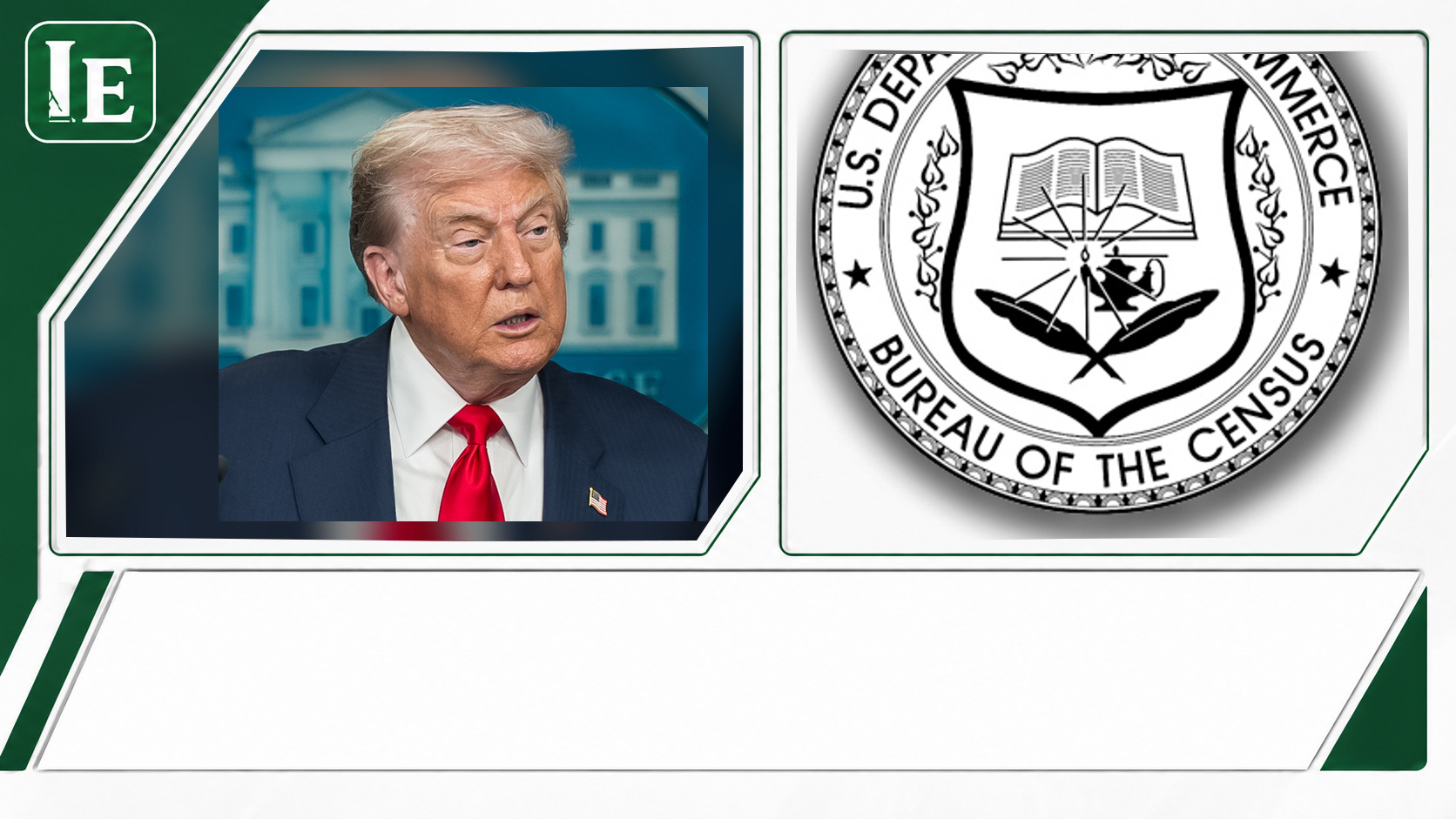
    Donald Trump used a jobs graph prepared by Stephen Moore to argue that his economic record outperformed Joe Biden’s. But the chart’s underlying Census Bureau figures had not been published, according to The New York Times, limiting outside review of the data, definitions, adjustments and calculations behind its conclusion.

    The episode illustrates why competing job-growth claims can produce sharply different narratives. Dataset selection, the date used as a baseline and the way employment is attributed to a president can all materially affect the result.

    Public review is the central issue

    Moore, a conservative economist affiliated with the Heritage Foundation, said his charts drew on unpublished Census Bureau data, according to the Times. That does not mean the figures are necessarily wrong. Researchers and government agencies can work with preliminary or specialized information before it is released publicly.

    Still, outside analysts cannot fully assess a chart without access to its inputs and method. For a claim presented as evidence of a president’s job performance, other economists need to be able to inspect the approach, rerun the calculations and compare the result with commonly used measures.

    The Bureau of Labor Statistics publishes monthly employment indicators, including total nonfarm payroll employment from its Current Employment Statistics survey. Those estimates are revised as more complete information arrives. Revisions can be substantial, but the process is intended to improve estimates over time rather than preserve a simple political scorecard.

    One payroll line cannot settle the argument

    Payroll figures are only one way to assess the labor market. Economists may also consider labor-force participation, unemployment, wage growth, hours worked, the share of working-age people with jobs, population growth and whether hiring is concentrated in a small number of sectors.

    Those measures do not eliminate political disagreement. They do show why a single graph cannot capture the entire labor market or automatically establish which administration had the stronger record.

    Trump and Moore can argue that their chosen measure identifies labor-market changes that official payroll figures do not fully capture. Supporters may contend that standard reports overlook differences in who is getting jobs or whether growth is reaching particular groups of workers.

    Critics, however, can point out that a chart challenging BLS conclusions needs a transparent methodology and data others can examine. Without them, it is difficult to determine whether the graphic identifies a meaningful trend or selects figures that favor a preferred conclusion.

    COVID-19 makes term-to-term comparisons especially difficult

    Trump’s first term included both pre-pandemic job growth and the 2020 economic shutdowns. BLS payroll data show that the United States added jobs in most months before the pandemic, then lost more than 20 million jobs in April 2020, an unprecedented decline.

    The recovery began before Trump left office and continued during Biden’s term. Large gains during the rebound partly reflected workers returning to jobs lost during shutdowns, rather than new expansion from a normal economic baseline.

    That history permits competing narratives built from real numbers. A president can highlight gains during a recovery, while opponents can emphasize losses over an entire term. Neither approach alone answers how employment performed relative to the conditions facing the economy.

    The same caution applies to Trump’s second term. Early employment results can reflect conditions inherited from the prior administration, Federal Reserve policy, business investment decisions made months earlier and revisions to previously reported data. Presidents can influence economic conditions, but they do not directly hire most workers counted in the monthly report.

    Starting points can reshape a jobs comparison

    Even a technically accurate chart can give a distorted impression if its baseline is unclear. Job totals may look very different depending on whether a comparison begins before or after a recession, a pandemic shutdown, a major revision or a population change.

    A single line that treats the pandemic collapse and recovery as uninterrupted presidential job creation has difficulty separating policy effects from an extraordinary public-health and economic shock. The choice of time frame is therefore not a minor technical detail; it can shape the conclusion a chart appears to support.

    Trump presented the charts after a weak BLS report

    According to the Times, Trump called reporters to the Oval Office in August 2025 to display Moore’s charts. He called them “all new numbers” and said they offered a better account of his economic performance than the latest federal jobs report.

    The presentation followed weaker-than-expected employment figures from the BLS. Trump criticized the report, claimed without offering evidence that the numbers were rigged, and fired BLS Commissioner Erika McEntarfer.

    That context made the charts part of a wider argument over which labor-market measures deserve public trust. There is a distinction between questioning a particular monthly report and claiming that an entire statistical system is manipulated. The BLS publishes its methodology, issues revisions and relies on career staff whose data are used by businesses, investors, state governments and economists across the political spectrum.

    Release of the data would allow the claim to be tested

    The unresolved issue is not whether Moore’s graph is visually persuasive. It is whether the Census data, formulas and comparison choices behind it can be released and evaluated.

    Until then, the chart is best understood as an argument rather than a settled measure of Trump’s job-creation record. A more durable assessment would use transparent data, consistent time periods and an explicit accounting of the pandemic’s disruption.

    For readers weighing rival employment claims, the practical checks are to identify the data source, find the starting date, ask how employment is defined and determine whether the numbers are public. In this case, those details carry more weight than the chart’s headline conclusion.

  • Mace Says Muslim U.S. Officeholders Are a ‘Trojan Horse,’ Drawing Democratic Backlash

    Mace Says Muslim U.S. Officeholders Are a ‘Trojan Horse,’ Drawing Democratic Backlash

    The dispute is centered on Mace’s sweeping language about Muslim Americans in public service, not simply a partisan clash online. Democrats say Republican leaders now face a choice over whether to publicly reject it.

    Rep. Nancy Mace characterized Muslim public officials as a “Trojan horse” in a Friday post on X, writing that every Muslim holding public office in America was a threat to national security and the republic. Democrats condemned Mace’s remarks, with Rep. Pramila Jayapal calling them “disgusting and dangerous.”

    The backlash has turned Mace’s posts into a broader argument about religious freedom, political rhetoric and whether concern about extremist violence can justify sweeping claims about Muslims who serve in government. It has also put attention on whether Republican leaders will respond.

    One phrase drove the backlash

    Mace, a South Carolina Republican who has served in the House since 2021, did not identify a particular official, policy, organization or allegation of wrongdoing. Her post instead applied the “Trojan horse” label to every Muslim public officeholder in the United States.

    That breadth is the core of the Democratic criticism. The phrase suggests that Muslim public servants are secretly working against the country, critics say, rather than being judged by their individual conduct, records or views.

    The dispute therefore reaches beyond the usual sharp language of a social-media fight. It concerns whether a religious identity can be treated as evidence of disloyalty among Americans who have been elected or appointed to public positions.

    Jayapal urges a Republican rebuke

    Jayapal, a Washington Democrat, responded on X the following day and called on Republicans to denounce what she described as blatant Islamophobia. She also said she would stand with Muslim communities in the United States.

    Her response shifted the focus from a direct exchange with Mace to a question for the GOP more broadly: whether party officials will publicly distance themselves from a member of Congress’s language about an entire faith group.

    California state Sen. Scott Wiener, who is running for a U.S. House seat in San Francisco, also criticized Mace. He accused her of demonizing Muslims and advocating the stripping of their full citizenship.

    For Democrats, the concern is not limited to tone. Their argument is that elected officials have an obligation to reject statements that cast Americans as inherently suspect because of their religion.

    Mace cites extremist-violence fears

    Mace has framed her position around the risk of violence by radical Islamists. In a later response to criticism, she wrote that if opposition to the possibility of being harmed by “a radical Islamist” led people to call her Islamophobic, “then so be it.”

    She also wrote in a reply that Islam “must be confronted” and “must be removed from civil society in the US.” Those subsequent posts indicate that Mace did not withdraw or soften her earlier statement about Muslim officeholders.

    Her defense presents the dispute as one about confronting extremist violence. Supporters of hard-line rhetoric may argue that political leaders should be direct when addressing threats associated with violent extremist ideologies.

    Critics reject that framing because Mace’s original statement did not confine itself to people accused of extremism or violence. It referred to every Muslim in public office, a distinction that has kept the condemnation focused on the scope of her claim.

    Security debate meets religious freedom

    Government officials routinely debate counterterrorism, law enforcement, foreign policy, civil liberties and how to prevent violence inspired by extremist ideologies. Those debates can involve serious disagreements over policy and public safety.

    But critics argue there is a consequential line between discussing extremist threats and describing members of a religious community as a collective internal danger. In this case, they say the language reaches Muslim Americans who have entered public life through election or appointment.

    The competing views expose the central tension. Mace ties her comments to security concerns involving radical Islamists, while opponents say invoking those concerns cannot support treating Muslims generally, or Muslim officeholders specifically, as disloyal.

    That is why the controversy has become a debate over civic participation as well as national security. At issue is whether public officials are evaluated on their actions or whether their faith itself is being used as a basis for suspicion.

    Republican leadership faces the next test

    There is no indication in the available material that Mace has apologized for or withdrawn her comments. Her later posts suggest she intends to continue defending a broad confrontation with Islam while grounding her argument in fears of radical Islamist violence.

    What remains unclear is whether House Republican leadership will issue a public response, whether other Republican lawmakers will defend Mace’s language, or whether the controversy will lead to any formal congressional action.

    Social-media disputes can fade quickly, but this one centers on the legitimacy of Americans serving in government. Democrats are pressing for a repudiation because they say Mace portrayed Muslim public servants as threats based on religion.

    The response from fellow lawmakers may determine whether the episode remains an exchange of posts or becomes a more lasting measure of how political institutions address rhetoric that critics say treats religious identity as incompatible with public service.

  • Colin Scott’s Yellowstone Death Shows Why Boardwalks Matter

    Colin Scott’s Yellowstone Death Shows Why Boardwalks Matter

    The fatal accident in Norris Geyser Basin was not a mystery of the wilderness. It showed why Yellowstone’s marked paths, warning signs and closures are critical protections around unstable geothermal terrain.

    Colin Scott, 23, died after falling into a boiling, acidic Yellowstone hot spring in 2016 after he left the marked boardwalk in Yellowstone National Park’s Norris Geyser Basin. Scott’s death shows why Yellowstone’s boardwalks are essential safety barriers near thermal features, where a few steps beyond a designated path can lead to water and ground that are dangerously unpredictable.

    The June 7, 2016 accident was tragic, but it was not an unexplained wilderness event. Public accounts based on a park incident report describe a visitor entering a closed, hazardous thermal area while looking for a place to soak.

    A fatal step beyond the path

    Scott, an Oregon resident, was visiting Norris Geyser Basin with his sister, Sable Scott. According to accounts of the incident report published by the BBC and CNN, the two had left the defined boardwalk area while seeking a thermal feature for soaking, sometimes known as “hot potting.”

    His sister was recording with a mobile phone as Scott reached down to test the water. Reports said he dipped a finger into the hot spring, slipped and fell in.

    Yellowstone officials did not publicly release the video or detailed descriptions of it, citing sensitivity toward Scott’s family. That decision keeps the focus where it belongs: on how quickly an apparently small move beyond a marked route can become life-threatening.

    The danger was not just heat

    Yellowstone’s thermal pools can appear still, colorful or even inviting. Those visible qualities do not show whether water is near boiling, highly acidic, or both.

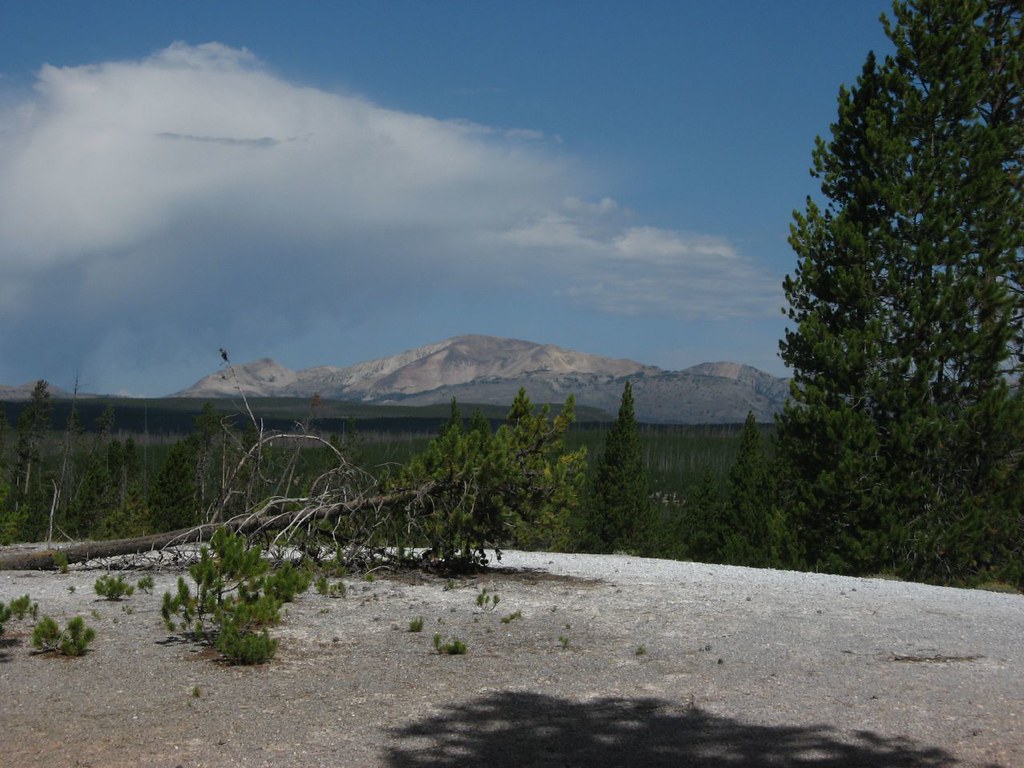
    In Norris Geyser Basin, hot springs, steam vents, mud pots and geysers are powered by heat beneath the park. Conditions can vary sharply over short distances, and the thin crust around a feature may conceal hot water or ground unable to support a person’s weight.

    That is why the boardwalk is not simply a convenient viewing platform. It is a route designed to keep visitors away from unstable edges and chemically aggressive water that cannot be safely judged by appearance alone.

    Why recovery became so dangerous

    Rescue personnel located Scott’s body in the pool after the fall, according to the reported incident record. Their recovery effort was suspended because of fading light, an approaching lightning storm and the dangers posed by the geothermal area itself.

    When workers returned the next day, officials said they could not find significant remains. Yellowstone deputy chief ranger Lorant Veress said there had been a significant amount of dissolving in a short time because of the pool’s high temperature and acidity.

    That explanation is the basis for reports that Scott “dissolved.” It does not describe a supernatural Yellowstone phenomenon; it describes what extremely hot, acidic water can do after prolonged exposure.

    The recovery also underscores a harder reality of thermal-area accidents: a person who enters danger can create a second danger for responders. A rescue is not as simple as stepping to the pool’s edge, because the ground, water and weather can all put additional people at risk.

    Why closures carry real weight

    The public accounts make clear that Scott did not fall from a standard visitor path. He and his sister had moved beyond the designated boardwalk into an area with closures and warning signs.

    That distinction does not reduce the loss or turn it into a simple cautionary tale about rule-following. It does explain the firm language used around Yellowstone’s hydrothermal areas: those boundaries exist because the risk can be immediate and because visitors cannot reliably see the conditions beneath their feet.

    There is a competing perception that can make the warnings easy to underestimate. Steam, mineral colors and warm water may evoke a natural spa. But Yellowstone’s hot springs are not controlled soaking facilities, and their temperature, chemistry and physical margins are not managed for recreational entry.

    The safest Yellowstone view

    The practical guidance drawn from Scott’s death is straightforward. Visitors can experience Yellowstone’s geothermal landscapes from boardwalks, overlooks and marked trails without entering the dangerous ground around them.

    • Stay on established boardwalks and trails. They direct visitors away from unstable ground and hazardous water.
    • Respect every posted closure. A quiet-looking thermal area may still present serious risks.
    • Do not test the water. Hands, feet and objects should remain out of natural thermal pools.
    • Do not attempt to soak. Yellowstone’s geothermal water is not a regulated recreational amenity.
    • Keep children close. Near a hot spring, a stumble can have consequences before anyone has time to respond.

    A boundary built for the unseen

    The lasting point of the 2016 death is not the most graphic detail associated with it. It is the gap between what a visitor can see—a beautiful pool, steam, a short distance off a path—and what they cannot see: unstable crust, extreme heat, acidity and a landscape that can make rescue hazardous.

    Yellowstone’s thermal features remain among its most striking attractions. Scott’s death is a reminder that the park’s boardwalks and closure signs are part of how visitors can appreciate those features safely, rather than barriers standing between them and the experience.

  • Wisconsin and Minnesota primaries test Democrats’ progressive push

    Wisconsin and Minnesota primaries test Democrats’ progressive push

    The contests are not only about who wins Tuesday. They reveal a familiar Democratic argument over whether the party’s safest path is a broad coalition behind establishment-backed candidates or an energized progressive base.

    Progressive candidates are challenging the Democratic establishment in the Democratic primaries in Wisconsin and Minnesota ahead of Tuesday’s elections. In Wisconsin, democratic socialist Francesca Hong is seeking the Democratic nomination for governor against Milwaukee County Executive David Crowley, who has Gov. Tony Evers’ endorsement. In Minnesota, progressive Lt. Gov. Peggy Flanagan faces U.S. Rep. Angie Craig in a Democratic U.S. Senate primary.

    These are different races with different local pressures, but each tests a central Democratic question: does the party improve its November chances by rallying around an establishment-backed candidate, or by embracing a progressive message that may better motivate disaffected voters?

    Wisconsin’s unsettled race for governor

    Wisconsin’s primary has been unusually fluid. Evers, who is not running for a third term, endorsed Crowley on July 18 after Crowley returned to the race. He had briefly stepped aside in favor of Lt. Gov. Sara Rodriguez, whose campaign later ended amid a campaign-finance scandal.

    The field did not simply reset. Former Lt. Gov. Mandela Barnes and Rodriguez remain on the ballot, and absentee ballots already cast for them cannot be changed. That leaves Crowley trying to consolidate late support while Hong argues for a campaign that reaches beyond the party’s usual power centers.

    Hong’s candidacy puts a recognizable ideological contrast before voters. She is a democratic socialist with a progressive platform; Crowley has the backing of Evers and other Democrats who see him as the strongest general-election option.

    Neither argument is inherently simple. Primary voters can choose a candidate because they share that candidate’s positions, because they want a fresh political voice, or because they are focused first on defeating the Republican nominee in November.

    Outside spending raises the stakes

    The Wisconsin contest has also drawn a form of intervention that can confuse a primary’s usual party lines. The Associated Press reported that the Republican Governors Association, through its Right Direction Wisconsin PAC, spent nearly $3.6 million on advertising that contrasts Hong with President Donald Trump while emphasizing her liberal policies.

    Republican groups often spend in the other party’s primaries when they believe a particular nominee could be easier to defeat later. Crowley and other Democrats contend the ads are designed to improve Hong’s standing, not because Republicans support her agenda, but because they prefer that matchup against Republican U.S. Rep. Tom Tiffany.

    That strategy presents progressives with an unavoidable complication. Outside money can amplify a candidate’s profile, but it can also supply opponents with an argument that the candidate is being elevated for the other side’s tactical benefit.

    Hong has said her coalition is about more than the primary and that Democrats must unite to defeat Tiffany. Crowley has made a parallel unity appeal, framing the general election as the larger fight. The disagreement is over the route to that unity, not whether it will be needed.

    Minnesota pits two Democratic theories

    Minnesota’s Senate contest has a cleaner two-candidate contrast. Craig, a congresswoman, is running against Flanagan, the state’s lieutenant governor, in a race shaped by voter frustration with Washington and by intense concern over federal immigration enforcement in the state.

    The AP reported that the campaign unfolded after the killings of Renee Good and Alex Pretti by federal immigration officers in Minneapolis, incidents captured on video that intensified backlash to Trump administration immigration policies. The developments have made the campaign’s arguments about federal power, public safety and representation especially immediate.

    Craig has paired progressive policy language with an explicit emphasis on winning governing majorities. In a weekend campaign stop, she argued that Democratic priorities require electoral victories and control of Congress, while also calling for restrictions on congressional stock trading, lobbying after public service and corporate campaign spending.

    Flanagan offers progressives a different case: that a nominee grounded in a more forceful left-wing coalition can speak directly to voters who believe national Democrats have not adequately answered the moment. The primary will test how many Minnesota Democrats see that approach as an asset rather than a risk.

    The establishment is not one bloc

    “Establishment” can make a complicated set of relationships sound like a single organization. In these primaries, it means a mix of elected officials, party networks, institutional donors and strategists who often prioritize candidates they believe can assemble broad general-election coalitions.

    That calculation is especially consequential in Wisconsin, a state decided by narrow margins in recent presidential elections. Democrats hold the governorship, while Republicans have maintained legislative majorities for years. Control of the governor’s office affects appointments, vetoes and the party’s ability to shape state policy.

    Progressives do not necessarily reject the goal of winning broad coalitions. Their critique is that a cautious, consultant-driven approach can fail to excite voters who want clear commitments on economic inequality, campaign finance, labor rights, immigration and social policy.

    More moderate Democrats answer that the party cannot govern without persuading independents, swing voters and people who may be uneasy with ideological labels. Both camps are making claims about electability; they are simply using different evidence and different definitions of the electorate Democrats must reach.

    Tuesday matters beyond the nominees

    The immediate result will be nominees, not a final verdict on the Democratic Party’s future. Still, a Hong or Flanagan victory would give progressives fresh proof that establishment endorsements do not settle competitive primaries. Crowley or Craig victories would reinforce the argument that Democratic voters value experience, alliances and a general-election-focused message.

    The more revealing question may come after ballots are counted: whether the losing side’s voters, donors and local organizers feel invested enough to work for the nominee. In Wisconsin, that question is heightened by the prospect of a race against Tiffany, a Trump-endorsed Republican. In Minnesota, it will shape how Democrats prepare for a consequential Senate campaign.

    There are limits to what any one primary can prove. Candidate quality, local conditions, turnout, advertising and ballot mechanics all matter. A vote in one state is not a national ideological referendum.

    But Wisconsin and Minnesota offer a timely measure of a real Democratic tension. The party is trying to hold together voters who agree on much of the policy agenda yet disagree sharply on the candidate, tone and coalition most likely to turn those goals into governing power.

  • James Talarico and Ken Paxton Turn Christianity Into a Texas Senate Fault Line

    James Talarico and Ken Paxton Turn Christianity Into a Texas Senate Fault Line

    The Texas Senate contest is testing competing political visions of Christianity, not simply competing campaign messages. Talarico’s faith-forward appeal and Paxton’s objections put religious identity, policy and the limits of government power in the same argument.

    James Talarico is making faith central to his Texas Senate campaign, using Christian language to discuss health care, immigrants and public service. Ken Paxton and other Texas Republicans are challenging Talarico’s religious message, turning faith into a Texas Senate battleground in a race NPR describes as close and important to Republican hopes of retaining control of the U.S. Senate.

    Talarico, the Democratic Senate nominee, says his Christianity informs his politics. Paxton, the Texas attorney general and his Republican opponent, has questioned whether that faith presentation is genuine. Their clash is really a dispute over who gets to define the role Christianity should play in public life.

    A campaign built around faith

    Talarico has not treated religion as a passing reference on the trail. He has spoken openly about being Christian and linked that identity to support for health care, veterans and immigrants.

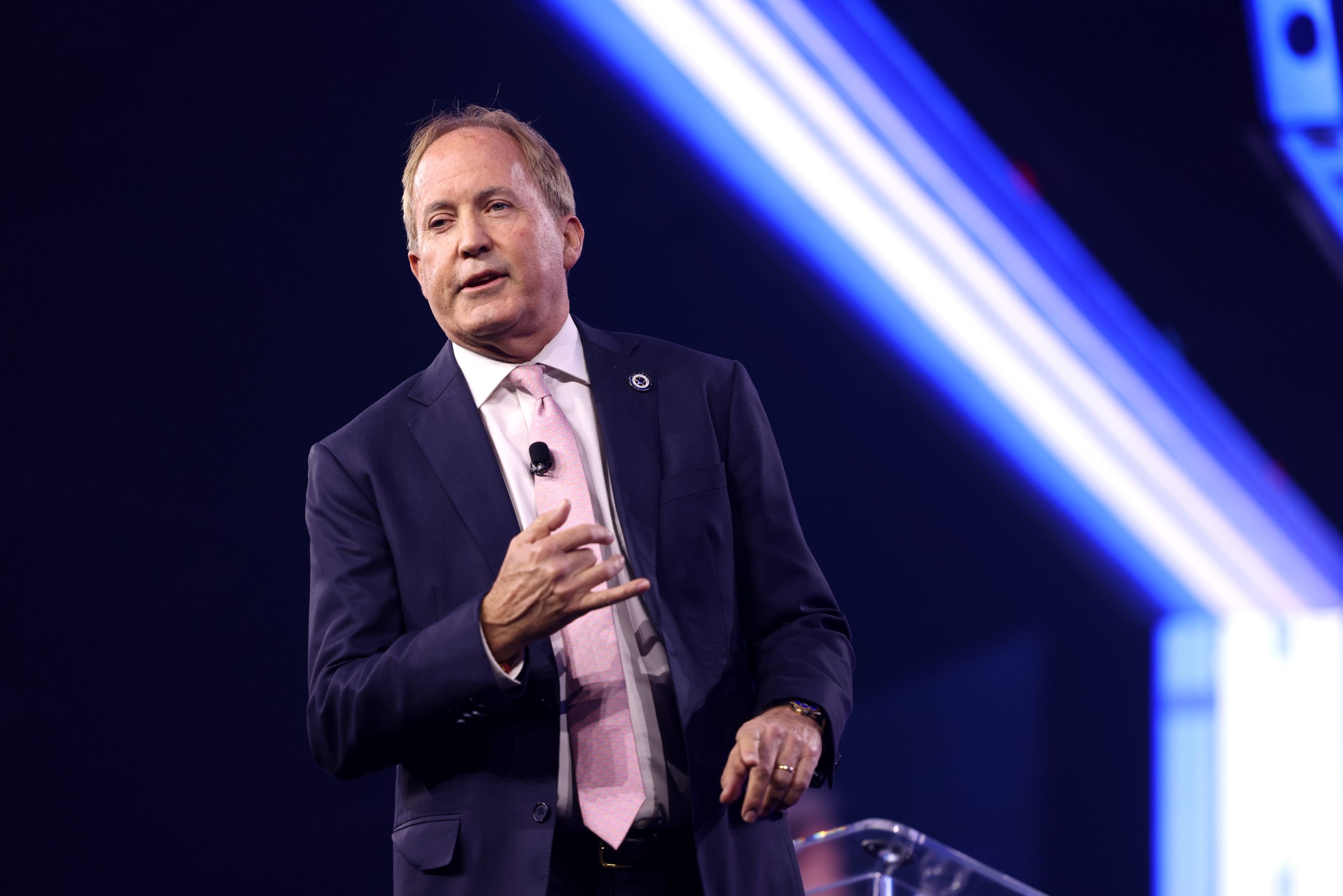
    Ken Paxton
    Image: Gage Skidmore, via Flickr, CC BY-SA 2.0.

    In an appearance at Brentwood Baptist Church in southwest Houston, NPR reported, Talarico addressed the congregation as “a fellow Christian.” He preached from the Gospel of Luke and described Christianity through the command to “love God and love neighbor.”

    That framing connects religious conviction with compassion for people facing hardship. It also gives Talarico a way to make a policy argument in explicitly moral terms rather than leaving faith language largely to Republicans.

    His biography is part of that appeal. Talarico is a Texas House member, former middle-school teacher and student at Austin Presbyterian Theological Seminary. He has cited his grandfather, a Baptist preacher in South Texas, as an important influence on his understanding of Christianity.

    Paxton contests Talarico’s credibility

    Paxton has made Talarico’s religious identity a direct target of his campaign critique. At a rally in July, Paxton called Talarico a “deceiver” and said Texans could not allow the state to turn on someone who, in Paxton’s words, did not want people to know “who he really is.”

    The attack is significant because Paxton is also presenting himself as a person of faith while appealing to conservative evangelicals. The argument is not merely whether religion belongs in the campaign; both candidates are putting faith before voters. The disagreement is over whose interpretation of Christianity carries credibility.

    Texas Lt. Gov. Dan Patrick has joined the criticism. At the state GOP convention, Patrick called Talarico’s religious language blasphemous and said he would pray for him.

    Those statements give the contest a sharper edge than a standard policy disagreement. Talarico is being challenged not only on his positions, but on whether he has the standing to invoke faith in support of them.

    Policy is Talarico’s counterargument

    Talarico’s response has been to move from questions about personal belief to the consequences of government choices. NPR reported that he told supporters the “real blasphemy” is removing sick people from health care to finance tax cuts for billionaires.

    His campaign has used biblical reasoning to defend health care, veterans and immigrants. The underlying case is that Christianity can lead a candidate toward a different set of priorities than those advanced by Texas Republicans.

    That distinction matters. Talarico is not arguing that faith should be excluded from politics. Instead, he is arguing that public religious conviction can support a more expansive view of public service and care for people in need.

    There is no public evidence that Paxton’s criticism has cost Talarico votes. What is clearer is that the criticism has drawn more attention to Talarico’s religious message and created more opportunities for him to explain its connection to policy.

    Theocracy marks a key divide

    Talarico’s appeal to Christianity comes with an explicit limit on religious power in government. He has said faith is central to his life while also arguing that theocracy is among the most dangerous forms of government, because leaders may believe they are acting on a mission from God.

    He is a prominent critic of Christian nationalism, broadly understood as the belief that the United States is a Christian nation and that government should promote Christianity. Talarico has argued that the ideology is influencing the federal government, including the Department of Defense.

    That makes his message more complicated than a simple effort to sound more religious. He is drawing a line between personal faith guiding a public official and government enforcing or elevating a particular religious identity.

    For supporters, that distinction may offer a way to speak about faith without endorsing religious control of government. For critics, his political positions remain central to their doubts about his religious claims. Neither side is treating the question as abstract.

    Democrats face their own tension

    Talarico’s approach also tests a tension within the Democratic coalition. NPR, citing Pew Research Center data, reported that fewer than one-third of Democrats nationwide say religion is very important in their lives.

    A longtime Brentwood Baptist Church member told NPR that Democrats have talked about religion for years, but Republicans often do not want to recognize them as Christians when their politics differ. That reflects the broader fight surrounding Talarico: whether faith can be publicly claimed across ideological lines.

    At a Democratic town hall, Talarico appeared to address that concern by distinguishing personal and political guidance from government-imposed religion. It is an argument aimed both at religious voters who may feel politically displaced and at Democrats wary of religious power in public institutions.

    Why the fight carries weight

    NPR has described the Texas Senate race as close, with Republicans viewing it as important to retaining control of the U.S. Senate. That larger stakes calculation makes the faith dispute more than a rhetorical sideshow.

    Talarico is trying to define Christianity through neighborliness, public services and limits on religious authority in government. Paxton and other Republicans are challenging whether Talarico can credibly occupy that ground at all.

    What remains unclear is how much the dispute will change voter behavior. But it has already made religion one of the principal arenas of the campaign, bringing questions of identity, policy and political power together in a contest where each side is asking Texans to trust a very different account of public faith.

  • Jake Tapper Confronts Kevin Hassett as Strait of Hormuz Stays Closed

    Jake Tapper Confronts Kevin Hassett as Strait of Hormuz Stays Closed

    The on-air exchange put a disputed economic message against a more immediate reality: a vital shipping route was still closed. That matters because disruptions in the Strait of Hormuz can feed into energy prices and the wider U.S. economic debate.

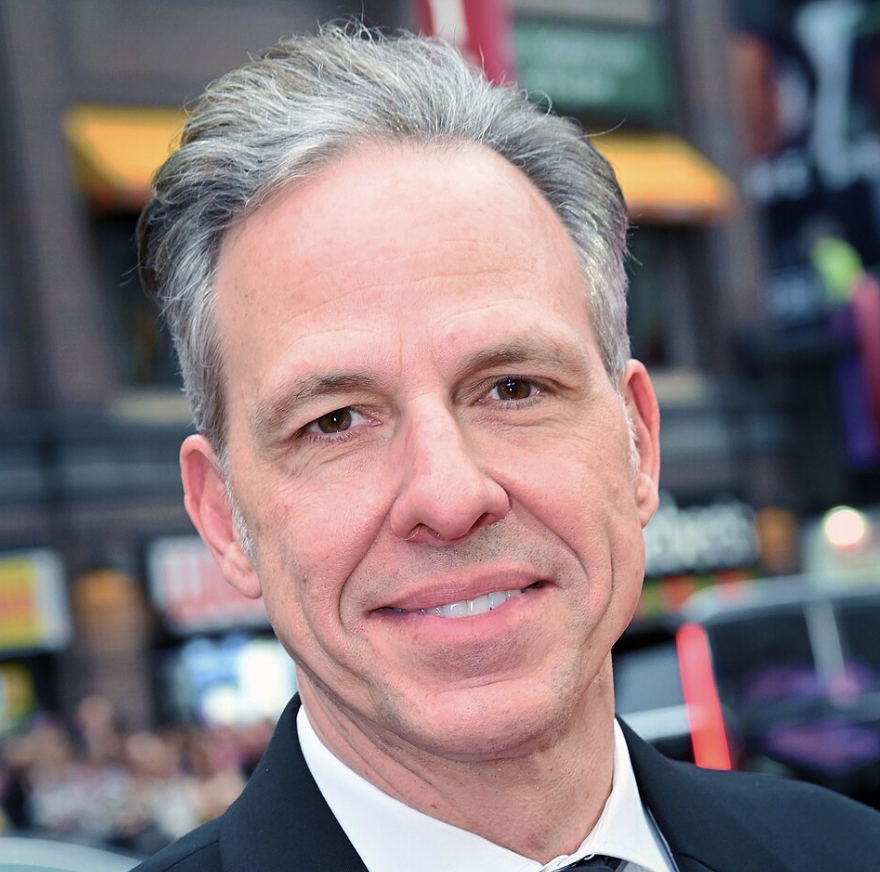
    Kevin Hassett, a top adviser to Donald Trump and director of the White House National Economic Council, was challenged on live television by CNN’s Jake Tapper over his failed Strait of Hormuz prediction. The Strait of Hormuz had not returned to normal as Hassett had predicted; it remained closed amid the war in Iran, turning the Trump adviser embarrassed exchange into a direct test of the administration’s economic message.

    Tapper’s point was straightforward: high gas prices were connected to the continuing disruption at the waterway. The moment mattered beyond a tough interview because the Strait of Hormuz is a crucial energy-shipping chokepoint, and its closure can quickly become a pocketbook issue for U.S. households.

    Tapper put the closure first

    During CNN’s State of the Union on Aug. 9, Tapper shifted the conversation from jobs data to gasoline prices. He told Hassett that prices were high because the Strait of Hormuz was still closed because of the conflict in Iran.

    That framing left little room for a purely abstract economic defense. The question was not simply whether the White House believed the economy was strong overall. It was whether a prominent adviser’s earlier expectation about shipping conditions had matched what was happening in the real world.

    According to the CNN transcript, Tapper had opened the program by noting that U.S. officials said they were nearing another deal with Iran. But Iran had issued demands before reopening the strait, demands Tapper described as widely seen as a nonstarter.

    A prediction met a visible reality

    Hassett’s prior prediction that traffic in the Strait of Hormuz would return to normal became the pressure point in the exchange. With the route still closed, Tapper used the gap between that prediction and conditions on the ground to challenge the credibility of the administration’s broader reassurances.

    The available transcript makes clear why the exchange drew attention: it connected a specific foreign-policy development to a familiar domestic concern. Americans may not follow every diplomatic development involving Iran, but they notice fuel costs and the price effects that can follow interruptions in global energy trade.

    Calling the segment an embarrassment is a judgment, not an independently measurable fact. What can be established from the transcript is that Tapper confronted Hassett with the continuing closure and the resulting gas-price pressure after Hassett had projected a different outcome.

    Why Hormuz affects everyday prices

    The Strait of Hormuz is the narrow passage between Iran and the Arabian Peninsula that connects the Persian Gulf to the Gulf of Oman and the open sea. It is one of the world’s most consequential maritime bottlenecks because major oil and liquefied natural gas shipments move through it.

    When traffic through the strait is restricted, markets can react well before an actual shortage reaches a local gas station. Traders factor in the possibility of delayed cargoes, higher insurance costs, rerouted ships and a prolonged interruption in supplies.

    That does not mean every rise in gasoline prices can be traced to one event. Retail fuel prices also reflect refinery capacity, seasonal demand, inventories, taxes, currency movements and crude-oil markets. Still, a sustained closure of Hormuz is exactly the kind of event that can intensify price concerns.

    • For drivers: higher crude prices can eventually lift gasoline costs.
    • For businesses: more expensive fuel and shipping can raise transportation costs.
    • For policymakers: a foreign-policy crisis can complicate claims about inflation and economic management.

    The jobs debate was already tense

    The Hormuz clash came during a broader argument over the U.S. economy. Tapper cited Bureau of Labor Statistics figures showing a loss of 23,000 jobs in July, compared with economist expectations for a gain of 95,000, and noted that the prior two months had been revised downward.

    Hassett disputed the negative interpretation. He argued that other indicators, including construction activity, unemployment claims and job openings, showed an economy that was still booming. He also attributed the July weakness in part to changes in government employment and the end of FIFA-related hospitality work.

    Tapper countered with a longer-term comparison, saying job losses had occurred in six of the first 18 full months of Trump’s second term and questioning the pace of net job creation. Hassett disputed Tapper’s count and said the jobs being added were concentrated in areas such as manufacturing and construction.

    Neither side’s economic case rests on a single monthly report. Employment figures are revised, and economists often examine several measures before drawing conclusions. But the exchange showed how a concrete disruption such as Hormuz can cut through dueling statistics.

    Economic confidence has a foreign-policy limit

    For the White House, the difficult issue is not just whether a forecast proves wrong. Governments routinely make forecasts under uncertain conditions, especially during conflict. The more consequential question is how officials explain a changed situation when it has direct consequences for prices and public confidence.

    Supporters of the administration can reasonably argue that Hassett was discussing a fluid conflict and that diplomatic negotiations could still change the status of the strait. Critics can point out that public predictions carry greater weight when they are made by the president’s top economic advisers, particularly when consumers are absorbing higher costs.

    The CNN transcript does not settle when, or under what terms, the Strait of Hormuz might reopen. It does show that Iranian demands remained an obstacle and that U.S. officials were still pursuing a deal.

    What remains unresolved after the interview

    The immediate uncertainty is practical: whether negotiations can produce an arrangement that restores safe, normal passage through the Strait of Hormuz. Until that occurs, energy markets and consumers will remain alert to every signal from Iran, the United States and shipping operators.

    There is also a political question. The Trump administration has emphasized favorable economic indicators while facing scrutiny over jobs, inflation and gas prices. A continuing disruption at Hormuz gives critics a tangible counterexample whenever officials offer broad assurances that conditions are improving.

    Hassett’s exchange with Tapper did not determine the outcome of the conflict or the direction of fuel prices. It did crystallize the stakes of an unmet prediction: when a vital shipping route remains closed, the consequences are harder to explain away as a television talking point.