The public record confirms Navarro’s demand and the criticism directed at Pirro, but key details about the requested personnel action remain unavailable. The dispute has sharpened a wider argument over prosecutorial independence in Washington, D.C.
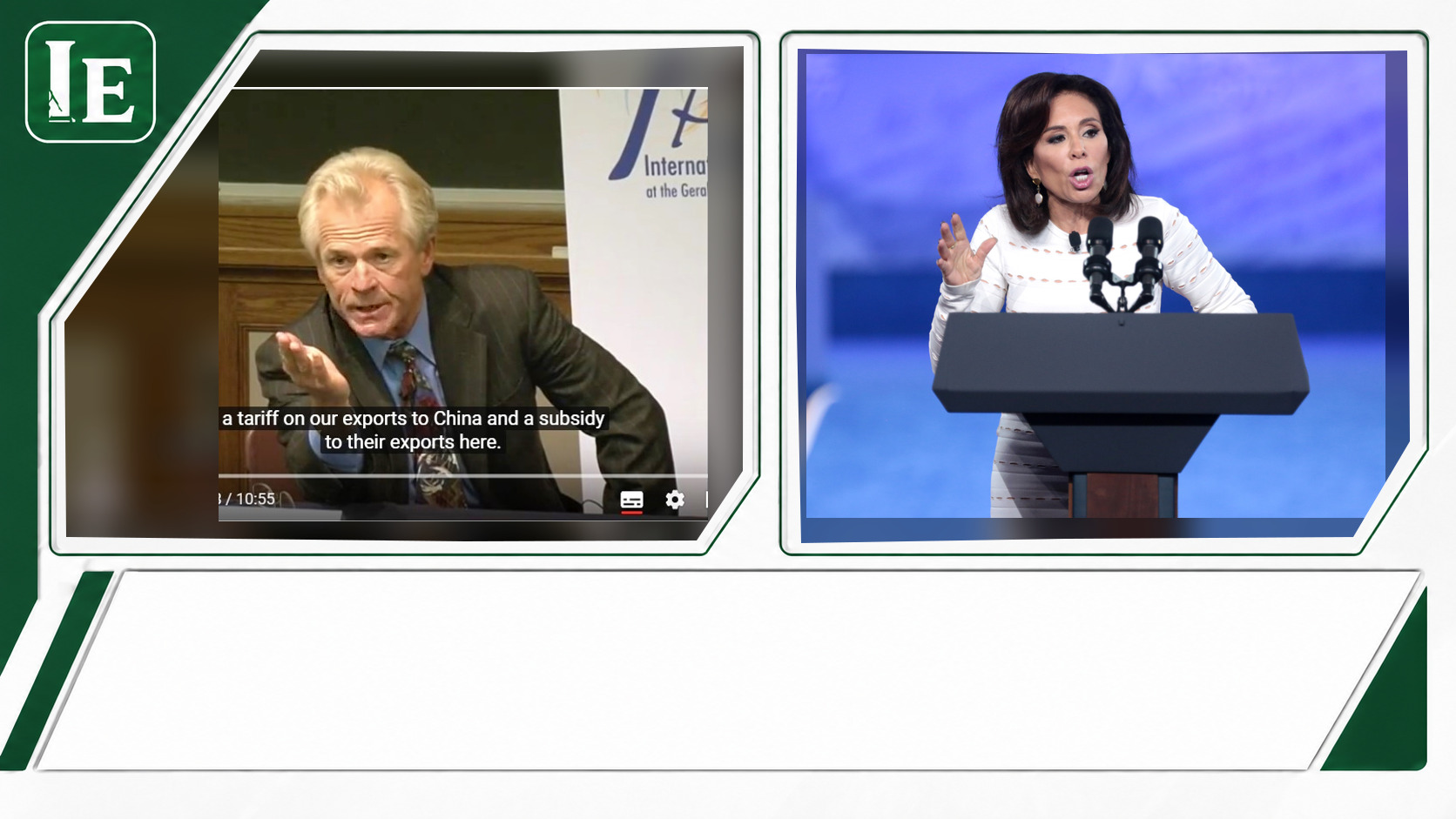
Peter Navarro demanded that a prosecutor be removed, and Jeanine Pirro is facing scrutiny over the demand as leader of the U.S. Attorney’s Office for the District of Columbia in Washington, D.C. The episode has put fresh pressure on Pirro’s office after questions about the Reflecting Pool vandalism case, while raising a larger issue: whether politically sensitive charging decisions are being judged on evidence, political expectations, or both.
What is publicly known is narrower than the political dispute around it. Available reporting does not identify the prosecutor Navarro wants removed, explain his full rationale, or show that the Justice Department has removed, disciplined or formally investigated anyone.
The demand is clear, details are not
Navarro’s call for a prosecutor’s removal has become a focal point in criticism of Pirro, whose office handles federal prosecutions in the nation’s capital. It is clear that Navarro made the demand and that Pirro has come under fire in the resulting controversy.
But a request from a prominent political figure is not the same thing as an official personnel decision. The available public record does not establish that Justice Department leaders acted on Navarro’s demand or concluded that a prosecutor committed misconduct or exercised poor judgment.
That distinction is at the center of the story. Calls for removal can create immediate political pressure and generate attention, yet they do not by themselves reveal the facts, internal deliberations or legal standards that would govern an actual Justice Department action.
Pirro leads a highly visible office
Pirro is the Senate-confirmed U.S. attorney for the District of Columbia, according to the Justice Department. The department says she was confirmed in August 2025 after serving as interim U.S. attorney beginning in May 2025.
The District of Columbia office occupies an unusually prominent position because it handles federal matters in Washington alongside day-to-day criminal cases. That visibility can make individual decisions especially consequential politically, even when the underlying case record is incomplete.
Pirro’s office has resisted the idea that one disputed case should define its work. Politico reported that the office pointed to its own figures showing more cases filed in Superior Court, fewer arrests abandoned than under the prior administration, and more than 7,000 convictions since Pirro arrived.
Those figures describe volume and outcomes, but they do not settle whether any particular charge was adequately supported. Equally, one failed prosecution does not on its own establish a broader pattern across an office handling thousands of cases.
The Reflecting Pool case fuels criticism
The controversy follows a case involving alleged vandalism at the Reflecting Pool in Washington. CNN reported that President Donald Trump criticized Pirro’s handling of that matter, saying she had “choked” over the case.
Politico reported that prosecutors dropped the case after disclosing that they lacked evidence to support the felony charge brought against a man. Former federal prosecutor Randall Eliason told Politico that he believed the evidence had never been sufficient to establish vandalism and that the case would have faced difficulty in court.
Eliason’s view is a serious critique of the prosecution, but it is not a court finding that Pirro or her office engaged in misconduct. The available reporting also does not establish who made each charging decision, whether there was an internal review, or what communications occurred among Pirro’s office and other Justice Department officials.
Cases can fall apart for many reasons, including new evidence, weaknesses in the initial facts, witness problems, legal disputes or a conclusion that prosecutors cannot prove a charge beyond a reasonable doubt. The reporting available here does not resolve which factors drove the outcome in this case.
A debate over enforcement and independence
The clash illustrates a longstanding tension within the Justice Department. Prosecutors are appointed by political leaders, but charging decisions are expected to rest on law and evidence rather than political messaging.
Supporters of a tougher approach to enforcement in Washington may regard the failed Reflecting Pool case and Navarro’s demand as a call for accountability. From that perspective, officials should respond more forcefully to conduct involving public order or federal property.
Critics see a different danger: that visible pressure from political allies could make prosecutors appear to bring or advance symbolically powerful cases before the evidence is strong enough. Even if an office believes its decisions are proper, public confidence can suffer if those decisions are seen as answers to political demands.
Neither argument establishes what happened in the specific personnel dispute. The public material does not offer a detailed explanation for Navarro’s demand, identify the prosecutor involved or document a formal Justice Department response.
Key questions remain unresolved
The unanswered issues are concrete. It remains unclear who Navarro wants removed, what conduct he cited, whether he delivered the request directly to Justice Department leadership, and whether any official acted on it.
It is also unknown whether the prosecutor remains assigned to related work, whether Pirro has directly addressed the request, or whether Navarro’s demand is tied specifically to the Reflecting Pool case. A spokesperson for Pirro declined to comment to Politico on the criticism described in its report; the office instead cited its statistics.
For Pirro, the dispute adds another layer of scrutiny to the job of running one of the country’s most watched U.S. attorney’s offices. For the Justice Department, it underscores the difficult balance between forceful law enforcement and evidence-based restraint.
Until officials provide more information, the political fight is more developed than the public account of the requested removal. That gap is why Navarro’s demand has intensified attention on Pirro without establishing what, if anything, will happen next.
Leave a Reply