Feeley’s resignation was an unusually direct statement of principle from a career diplomat. His account of a Trump meeting adds a personal dimension to a break that had already exposed strains inside the U.S. diplomatic corps.
John Feeley, who resigned as U.S. ambassador to Panama, has described a meeting with Donald Trump that he says helped lead to his departure. In the account introduced with the phrase “I kid you not,” Feeley said he could no longer serve under Trump, putting fresh attention on a 2018 resignation that was already remarkable for its plain language.
The key point is not that Feeley simply disagreed with a president’s policies. The career diplomat said he had reached a point where he could no longer carry out his duty to serve the administration in an apolitical way. Public reporting documents that explanation clearly; the precise details, timing and subject of the Trump meeting remain less fully established in the materials available.
Feeley’s resignation was unusually direct
Feeley announced in January 2018 that he would leave his Panama posting, with his departure set for March 9. He had been a career Foreign Service officer and a specialist in Latin America, rather than a political appointee brought in from outside the diplomatic service.
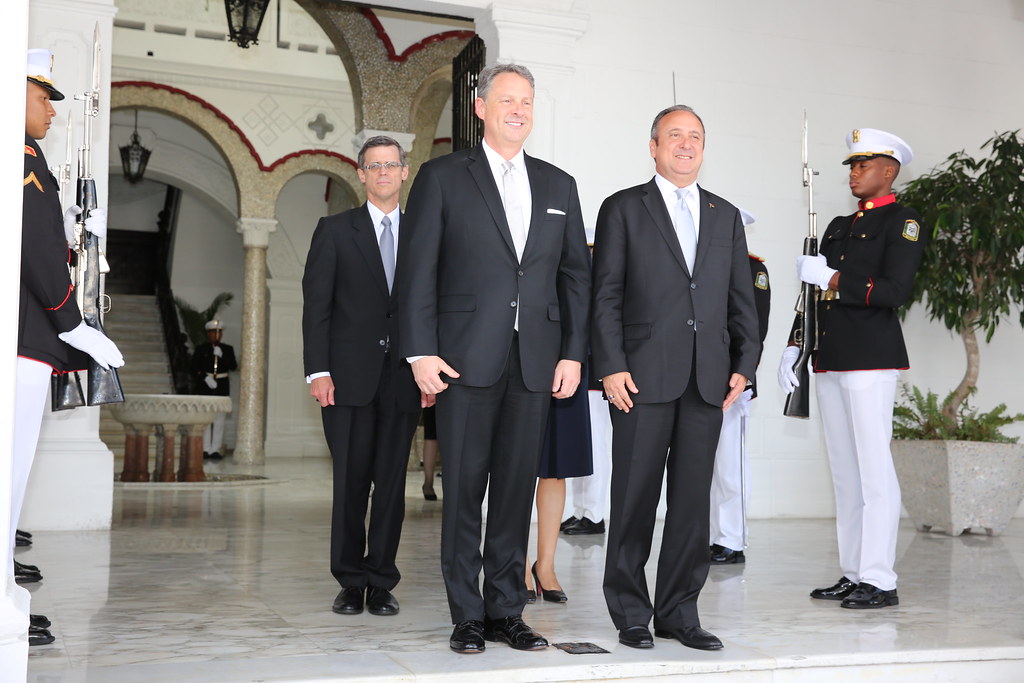
In language reported by Reuters and quoted by NPR and the BBC, Feeley recalled the oath he took as a junior Foreign Service officer: to serve the president and the administration faithfully and without partisanship, even when he disagreed with policy.
He said his training also taught that an officer who believed he could no longer meet that obligation was “honor bound to resign.” His conclusion was brief and consequential: “That time has come.”
That framing matters because it put the focus on institutional duty, not one isolated disagreement. Diplomats routinely represent policies they did not write. Feeley’s statement said he believed he had crossed the line at which he could no longer do so.
The Trump meeting adds a personal turning point
Feeley’s description of a meeting with Trump gives the resignation a more immediate human narrative: a former ambassador identifying a personal encounter as part of the path to walking away. It does not, on the available record, replace the broader reason he gave in his resignation letter.
The public accounts from 2018 did not spell out the full substance of the meeting now associated with his decision. They establish that Feeley resigned because he felt unable to continue serving under Trump; they do not provide a complete transcript, date or official White House account of the encounter.
That distinction is important in political stories built around a vivid recollection. A firsthand account can illuminate how an official experienced a presidency. It should not be treated as proof of details that have not been independently documented.
Feeley’s “I kid you not” framing signals the disbelief or intensity he attaches to the episode. But the strongest verifiable takeaway remains his own stated conclusion: the meeting sat within a wider loss of confidence in his ability to serve.
Why the timing caused confusion
Feeley’s departure became public amid international outrage over reports that Trump had used a vulgar term in a January 2018 immigration meeting to describe Haiti and African nations. Trump denied making the reported comments.
News organizations at the time cautioned against treating Feeley’s resignation as a direct response to those remarks. NPR reported that he had tendered his resignation before that meeting took place, while the BBC reported that the State Department had learned of his planned departure in late December.
That sequence undercuts a simple one-event explanation. Feeley’s public reasoning pointed to a longer-running conflict over whether he could represent the administration, even if later-reported meetings or remarks sharpened the public’s understanding of the divide.
The State Department, meanwhile, described his exit as being for “personal reasons,” according to contemporaneous reports. That official formulation was far less revealing than Feeley’s own explanation, but it reflected the government’s restrained public posture around a senior diplomat’s departure.
Diplomats are expected to absorb disagreement
U.S. ambassadors serve at the direction of the president, and career diplomats are trained to implement elected leaders’ foreign policy regardless of their personal political preferences. That expectation is central to a professional, nonpartisan Foreign Service.
There is also a limit embedded in that tradition. Officials can resign when they believe continued service would conflict with their oath, conscience or professional responsibilities. Feeley invoked that limit directly rather than offering a conventional, vague retirement explanation.
Supporters of Feeley’s decision can view it as an act of candor: a diplomat recognizing that his credibility and his duty had come into conflict. Critics might argue that senior officials should remain in place to provide expertise, continuity and internal advice during turbulent periods.
Neither view eliminates the basic reality of diplomatic service. An ambassador abroad is a public face of the United States. If that representative no longer believes he can faithfully speak for the administration, staying can create its own institutional problem.
Panama made the departure consequential
Panama is not a symbolic posting. The country sits at a strategic crossroads for global shipping through the Panama Canal, and the U.S.-Panama relationship carries long historical, commercial and security significance.
Feeley brought substantial regional experience to the role. His exit therefore drew notice not just as another staffing change but as a loss of a veteran official in a strategically important part of the hemisphere.
The resignation also came during a period in which the Trump administration faced broader scrutiny over diplomatic vacancies, morale and the role of career officials. Feeley’s letter became a high-profile example of a Foreign Service officer publicly explaining why he would not continue.
His account of a Trump meeting now revives that moment because it shifts attention from an official document to the private experiences that can precede one. The record supports the larger story of a principled resignation; it is more limited on the encounter’s specific contours.
What remains clear and unresolved
Feeley’s core position is not in doubt: he resigned as ambassador to Panama after deciding he could no longer serve under Trump. His resignation letter laid out an ethical and professional rationale grounded in the obligation of a nonpartisan diplomat.
What remains unclear from the available reporting is exactly what occurred in the meeting Feeley now identifies as part of his decision, when it happened and whether any contemporaneous official accounts corroborate his characterization.
That gap does not erase his account. It sets its proper weight. The meeting is Feeley’s explanation of a breaking point, while the resignation letter is the contemporaneous document that shows how he publicly justified leaving government service.
For readers revisiting the episode, that is the lasting significance: a career ambassador made the rare choice to say that serving a president had become incompatible with the standard he believed his oath required.
Leave a Reply