Blog

  • Francesca Hong’s Wisconsin Loss Reveals Limits of the Far Left

    Francesca Hong’s Wisconsin Loss Reveals Limits of the Far Left

    Hong’s loss to Crowley does not settle the Democratic Party’s ideological argument. It does show how quickly a movement’s visibility can collide with the practical demands of winning a statewide race.

    The far left suffered a setback in Wisconsin’s Democratic gubernatorial primary on Tuesday night: democratic socialist Francesca Hong lost to David Crowley. Hong’s defeat revealed limits to the far left’s power in a race that had been cast as evidence of an emerging insurgency inside the Democratic Party.

    Crowley’s win matters beyond one primary because Wisconsin is a closely contested state, where Democratic candidates must assemble broad coalitions. The result undercuts the idea that a left-wing candidate’s activist profile alone can carry a statewide contest — while leaving open a larger fight over what Democratic voters want from their party.

    Crowley wins a closely watched primary

    POLITICO reported that Crowley secured a surprise victory against Hong, ending a campaign that drew national attention because of the ideological contrast between the candidates.

    Tammy Baldwin and David Crowley
    Image: Sen. Tammy Baldwin, via Wikimedia Commons, Public domain.

    Hong, a democratic socialist, had become a focal point for activists who saw her candidacy as a possible breakthrough. Her campaign was closely associated with the argument that Democrats should embrace a more confrontational economic and political agenda.

    Crowley’s victory instead gave Wisconsin Democrats a nominee whose coalition proved broader than many observers expected. The available reporting does not make the result a clean referendum on every issue either candidate supported. Primaries are shaped by candidate familiarity, local networks, spending, turnout and late-breaking events as much as ideology.

    Why Wisconsin was a hard test

    Wisconsin is not simply another blue-state primary laboratory. It is a perennial battleground where statewide candidates face narrow margins and where general-election viability can heavily influence primary voters.

    That setting made the race an unusually demanding test for Hong’s political project. A candidate can generate attention among online supporters, ideological groups and younger activists, yet still face a different electorate when the contest expands across urban, suburban and rural communities.

    POLITICO’s election-night coverage pointed to concerns among progressives about Wisconsin’s razor-thin political margins. Those concerns help explain why some Democratic voters may have prioritized perceived electability, unity or familiarity over a sharper ideological break.

    There is also a basic distinction between influence and control. The left can shape party debate, push issues onto the agenda and produce energetic volunteers without necessarily commanding enough votes to win every high-profile statewide race.

    The insurgency narrative takes a hit

    Hong’s defeat is a setback for the claim that the far left is steadily taking over Democratic primaries. That claim has often rested on highly visible wins by progressive candidates, strong fundraising bursts and the growing prominence of democratic socialist organizations in local and legislative races.

    But political momentum is rarely uniform. A movement can win in districts with a concentrated base and still struggle in races requiring a much larger, more ideologically mixed electorate. Wisconsin’s primary appears to be one of those moments where the coalition required to win was wider than the movement’s core.

    That does not mean progressive priorities have disappeared from Democratic politics. Questions around affordability, wages, housing, health care and corporate power remain central to many Democratic voters. The more immediate lesson is that voters may separate their interest in those issues from their choice of the candidate they believe should lead a statewide ticket.

    The phrase “far left” is itself politically loaded and often used loosely. In this case, it reflects the ideological framing around Hong’s democratic socialist candidacy, not a precise description that can be applied to every progressive voter or policy advocate.

    Even progressives saw risks

    One of the most striking details in POLITICO’s coverage was that some progressives welcomed Hong’s loss. That response suggests the conflict was not simply establishment Democrats versus a united left.

    Some party members may share parts of Hong’s policy vision while worrying that her label, campaign style or perceived ideological positioning would make the general election harder in a swing state. Others may see Crowley’s win as a chance to reduce an internal feud and focus on the next contest.

    Those judgments are political calculations, not proof that progressive ideas lack support. They do reveal a recurring Democratic tension: whether the party should use primaries to make a strong ideological statement or select the candidate most likely to hold together a diverse statewide coalition.

    • For Hong’s supporters: the loss exposes the need to build deeper geographic and institutional support, not just national enthusiasm.
    • For party moderates: Crowley’s win offers evidence that broad-coalition politics still has a strong constituency.
    • For Democratic leaders: the challenge is avoiding a victory lap that alienates voters and activists they will still need.

    Unity is now Crowley’s next test

    After the primary, Crowley moved to emphasize unity, according to POLITICO. That is the expected message, but it carries real strategic importance. A nominee cannot afford to treat a contested primary as though the losing side has no role in the coalition that follows.

    Hong told supporters that they were ready to keep fighting and that she remained confident, according to POLITICO’s live coverage. Her next moves, and those of allied activists, will help determine whether this campaign becomes a temporary disappointment or a catalyst for longer-term organizing.

    Wisconsin Democrats also face practical questions that the primary result alone cannot answer. How much of Hong’s support will transfer to Crowley? Will the party’s ideological divide soften after the nomination fight? And can Crowley’s coalition hold when the electorate becomes larger and more politically mixed?

    A loss, not a final verdict

    It would be premature to treat one Wisconsin primary as the end of the left’s influence. Political movements often grow unevenly, suffering losses in marquee contests while making gains in local offices, issue campaigns and party organizations.

    Still, the outcome is a meaningful corrective to a sweeping narrative of inevitable insurgency. Francesca Hong’s loss to David Crowley showed that in a competitive statewide Democratic primary, visibility and ideological energy may not be enough.

    The far left remains a force in the argument over the party’s future. Wisconsin’s result suggests that turning that force into statewide power will require more than a compelling message: it will require a coalition broad enough to win when every faction of the party is voting.


  • McConnell’s Record Shows One Confirmed Vote Against Paid Sick Leave

    McConnell’s Record Shows One Confirmed Vote Against Paid Sick Leave

    A viral-style claim can turn several separate legislative moments into one simple number. The official Senate record clearly documents one vote by Mitch McConnell against a paid sick leave amendment, while the four-vote assertion needs a fuller list of measures and roll calls to be assessed fairly.

    Mitch McConnell’s U.S. Senate voting record includes a documented vote against a paid sick leave amendment, but the available official record does not by itself prove the claim that he voted against sick leave four times. The Senate roll call shows McConnell voting “Nay” on March 18, 2020, on an amendment aimed at providing Americans paid sick time and paid leave.

    That distinction matters because a precise claim about four votes requires four identifiable legislative actions. One confirmed vote is meaningful evidence about McConnell’s position on that amendment; it is not, on its own, a complete accounting of every sick-leave-related vote attached to his Senate record.

    The vote the Senate recorded

    The official roll call was for an amendment offered by Democratic Sen. Patty Murray of Washington during Senate consideration of H.R. 6201, the Families First Coronavirus Response Act.

    Mitch McConnell 2016 official photo
    Image: Office of Senator Mitch McConnell, via Wikimedia Commons, Public domain.

    The amendment’s stated purpose was direct: to provide Americans with paid sick time and paid leave so they could address their own health needs and the health needs of family members. The vote took place early in the COVID-19 pandemic, when lawmakers were debating emergency responses to the outbreak’s economic and public-health effects.

    The amendment failed, 47 to 51. McConnell, then the Senate Republican leader from Kentucky, was listed among the 51 senators voting “Nay.”

    What McConnell voted against

    The March 2020 vote was not a generic question asking senators whether they supported workers taking time off when ill. It was a vote on a particular amendment, with its own scope, policy language and legislative setting.

    That is an important limitation in nearly every voting-record dispute. A senator may oppose an amendment because of its cost, drafting, timing, relationship to a larger bill or preferred alternative—even when critics characterize the vote as opposition to the policy goal in broad terms.

    None of those possible considerations changes the roll-call result: McConnell voted against Murray’s paid sick time and paid leave amendment. But they do explain why the wording of a claim deserves scrutiny.

    Why the number four needs evidence

    To verify that McConnell voted against sick leave four times, a fact-check would need to identify each of the four votes and establish that each one genuinely concerned sick leave or paid leave. That means naming the bill or amendment, date, vote number and McConnell’s recorded position.

    The Senate document available here supplies those details for one event: Senate Roll Call Vote 74 in the 116th Congress, second session. It does not provide three additional roll calls.

    So the narrow finding is clear: there is one official, confirmed “Nay” vote on a paid sick leave and paid leave amendment. The broader four-vote claim cannot be established from this record alone.

    How legislative claims get compressed

    Political claims often turn complex procedural votes into shorthand. “Voted against sick leave” may refer to a vote against a standalone paid-leave proposal, an amendment to a broader emergency bill, a procedural motion that affected a proposal’s path, or a final package containing multiple provisions.

    Those categories are not interchangeable. A vote on an amendment can be especially hard to summarize because the amendment may have been offered to alter legislation that later passed in a different form.

    Supporters of an accusation may reasonably point to the policy the measure sought to advance. Defenders may argue that the vote reflected objections to a particular legislative vehicle rather than opposition to all forms of leave. Readers can weigh those arguments, but first need the exact vote being described.

    The pandemic context shaped the vote

    The March 18, 2020, roll call occurred as Congress was moving rapidly on pandemic relief. Paid leave became a central issue because workers who were sick, quarantining or caring for family members could face immediate pressure to remain on the job without job-protected time away.

    In that environment, the Senate’s 47-51 rejection of the Murray amendment reflected a sharp partisan division. All 47 “Yea” votes listed in the Senate roll call came from Democrats and independents who caucused with Democrats, while McConnell and most Republican senators were recorded as voting “Nay.”

    The result also shows why one vote can become politically durable. Paid sick leave touches wages, workplace rules, public health and family care, making it an issue that remains potent long after the immediate legislative fight ends.

    A better way to read voting records

    The most reliable approach is to start with the official question before drawing a broad conclusion. In this case, the question was whether to adopt Murray Amendment 1559, an amendment explicitly intended to provide paid sick time and paid leave.

    From there, the record supports a straightforward statement: McConnell voted no on that amendment, and it was rejected. A claim that he did so four times requires documentation for the other three alleged votes, not just repetition of the number.

    That does not settle every political argument over McConnell’s record on worker protections. It does set a useful standard: specific claims should come with specific roll calls, particularly when a single number is being used to describe a lawmaker’s history.

  • Upstate New York Sheriff Rebukes Hochul Over Sanctuary-Policy Threats

    Upstate New York Sheriff Rebukes Hochul Over Sanctuary-Policy Threats

    A reported dispute between an upstate New York sheriff and Gov. Kathy Hochul centers on sanctuary-policy threats and cooperation with federal immigration authorities. The sharper question is what New York law actually permits local police and sheriffs to do.

    An upstate New York sheriff has criticized Gov. Kathy Hochul over reported sanctuary-policy threats, according to a New York Post item distributed through MSN. The dispute concerns New York sanctuary policies, local law enforcement and whether sheriffs should cooperate with federal immigration enforcement.

    The available source material does not identify the sheriff or provide the full exchange, so the precise policy proposal and Hochul’s stated position cannot be independently confirmed from the materials provided. What is clear is why the confrontation matters: “sanctuary” is politically charged language, but it is not a single legal rule in New York.

    A clash built around “sanctuary”

    The phrase “sanctuary policy” can suggest a straightforward choice between enforcing immigration law and refusing to do so. In practice, it usually describes rules that limit how state or local agencies use their staff, jail space, information or other resources in civil immigration matters.

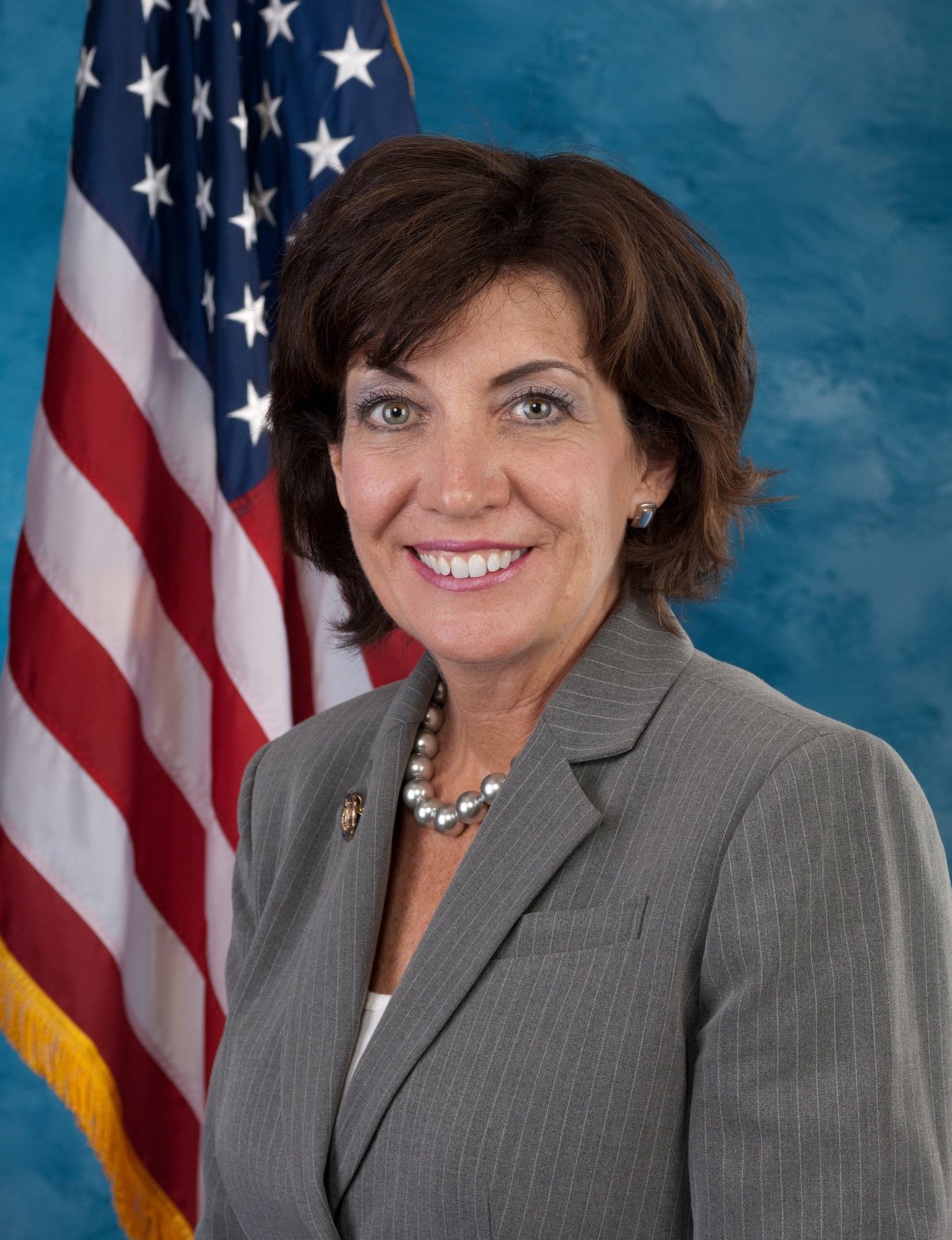
    Kathy Hochul official portrait
    Image: US Congress (Official Photo), via Wikimedia Commons, Public domain.

    New York Attorney General guidance makes an important distinction often lost in political arguments: “sanctuary” has no fixed or uniform legal definition. A county, city, police department or sheriff’s office can have different policies, and the legal questions can change depending on whether an encounter occurs on the street, during a traffic stop or after a person has been booked into jail.

    That leaves room for competing political claims. Officials favoring closer cooperation with Immigration and Customs Enforcement, or ICE, often argue that local agencies should assist in removing people they believe pose public-safety risks. Opponents argue that broad cooperation can divert local resources, undermine trust in police and expose agencies to constitutional liability.

    What sheriffs can and cannot do

    Sheriffs are locally elected law-enforcement officials, but their responsibilities are shaped by state law and constitutional limits. Their departments may run county jails, serve court papers, investigate crimes and work with other agencies. That authority does not turn every civil immigration request into a mandatory local policing duty.

    The New York Attorney General’s immigration-enforcement guidance says that local law-enforcement agencies include sheriff’s departments, local police, corrections personnel, probation officers and certain school safety officers. The guidance focuses heavily on the use of local resources for federal civil immigration enforcement.

    One central issue is the difference between a criminal arrest warrant and an immigration detainer. An ICE detainer is generally a request for a local agency to hold someone longer so federal authorities can take custody. It is not automatically the same as a warrant signed by a neutral judge.

    That distinction matters because holding someone after they would otherwise be released can raise Fourth Amendment concerns. The state guidance cites court decisions and warns that detention based solely on suspected civil immigration violations can create legal exposure for local governments and officers.

    Detainers remain the pressure point

    Immigration detainers have long been one of the most contentious points in the sanctuary-policy debate. Supporters of honoring them say they provide a route for federal authorities to take custody of people already in local custody, particularly those accused or convicted of serious offenses.

    Critics say local agencies should not hold people beyond their scheduled release without a judicial warrant or another sufficient legal basis. They also point out that being in the country unlawfully is generally a civil immigration matter, not by itself a criminal offense.

    New York’s attorney general guidance draws that line explicitly, noting that an immigration official’s administrative paperwork is not equivalent to a judicial warrant. The document also discusses the risk of wrongful or prolonged detention when local agencies hold a person solely on an ICE request.

    That legal tension helps explain why a governor and a sheriff can talk past each other. A sheriff may frame cooperation as a public-safety obligation. State officials and civil-rights advocates may frame limits as a constitutional safeguard and a way to keep local agencies focused on state and local crime.

    Why Albany-county disputes resonate

    The reported upstate dispute lands in a familiar New York political divide. Statewide leaders make policy and issue guidance, while county sheriffs answer directly to voters in their jurisdictions and often have distinct views about crime, borders and the proper role of local government.

    Those differences can become especially visible in upstate communities, where sheriffs may present themselves as the officials closest to residents’ public-safety concerns. Hochul, meanwhile, must balance statewide law, the position of state agencies and the legal consequences of policies applied across a much larger and more diverse population.

    Neither side can simply settle the matter through rhetoric. State law, federal immigration law, court rulings, local policy and the specific facts of an individual detention all affect what is permissible. A broad label such as “sanctuary” can conceal those operational details.

    There is also a practical question beneath the political fight: whether local agencies have the money, staffing and legal protection to take on a larger role in federal immigration enforcement. Those questions affect taxpayers, jail administrators, deputies and people caught in the system.

    The details still need scrutiny

    The source materials available for this report establish that a public dispute was framed as an upstate sheriff pushing back on Hochul over sanctuary-policy threats. They do not provide enough detail to verify which county was involved, what action Hochul allegedly threatened, or whether a formal state policy change was proposed.

    Those missing facts are consequential. A disagreement over an ICE detainer, for example, is different from a dispute about information sharing, access to a county jail, notification of release dates or state funding. Each raises different legal and policy questions.

    Readers should also be cautious with claims that New York is, or is not, a “sanctuary state.” The attorney general’s own guidance says the term lacks a uniform legal meaning. It is more accurate to examine the specific rule at issue and the authority an agency is being asked to exercise.

    The larger fight is not settled

    The clash between an upstate New York sheriff and Hochul reflects a national argument being fought locally: how much should county law enforcement participate in federal immigration enforcement, and who bears the legal risk when an arrest or detention goes wrong?

    For supporters of tougher cooperation, the priority is ensuring that local custody does not prevent federal authorities from acting. For supporters of tighter limits, the priority is protecting due-process rights, preventing unconstitutional detention and keeping local police from becoming immigration agents.

    Until the reported participants provide fuller statements or a specific policy document emerges, the immediate dispute remains short on verified particulars. The underlying stakes, however, are concrete: local control, constitutional limits and the day-to-day decisions made by sheriffs’ departments across New York.

  • Ohio Haitians report ICE summonses and ankle monitors amid TPS upheaval

    Ohio Haitians report ICE summonses and ankle monitors amid TPS upheaval

    For Haitian families who built lives in Springfield, the immediate concern is not only whether they can remain in the U.S., but what federal monitoring orders mean for work, travel and family stability. The full legal picture remains unsettled.

    Haitians in Ohio are facing threatened deportation as U.S. Immigration and Customs Enforcement, or ICE, is preparing to deport them, according to reporting from The Guardian. In Springfield and nearby Blue Ash, the deportation threat is shattering their American dream: some Haitian residents have received unexplained Department of Homeland Security summonses, been fitted with ankle monitors and fear losing the ability to work, travel or remain with their families.

    The anxiety comes after an Aug. 5 court development affecting Temporary Protected Status, or TPS, for roughly 350,000 Haitians in the United States. What is known is that people in the Ohio community are being called to ICE appointments; what remains unclear is how broadly the agency intends to use monitoring or what each individual case means for removal.

    Summonses turned into monitoring orders

    The Guardian reported that dozens of Haitian nationals in Springfield had recently received emails directing them to report to ICE’s Blue Ash office, about 75 miles south of the city. The notices reportedly did not state why people were required to appear or say that a tracking device could be attached.

    Advocates and lawyers told the newspaper that some people who showed up left wearing ankle monitors. They said the monitoring terms can restrict a person from traveling more than 75 miles from home without an immigration judge’s approval.

    That distance matters in a region where employment, medical appointments, family support and legal services may require travel between cities. A restriction that appears narrow on paper can quickly complicate a worker’s commute or a family’s ability to respond to an emergency.

    ICE and the Department of Homeland Security did not directly answer The Guardian’s questions about the stated purpose of attaching ankle bracelets to Haitian nationals. That absence of a detailed public explanation has intensified uncertainty among people called to the facility.

    A visible sign of legal uncertainty

    Electronic monitoring is not itself a deportation order. It can be used while immigration proceedings are ongoing, and the circumstances of each person’s case can differ. Still, for people already worried about removal, an ankle monitor can feel like a highly public warning that their status is precarious.

    Immigration attorney Heather Campbell, who represents several Haitian immigrants, told The Guardian that advocates were helping people seek changes that could remove the ankle monitor or substitute a wrist-worn device. She said a wrist monitor may be less stigmatizing, while acknowledging that any device marking someone as different can cause discomfort.

    That distinction is important. The reporting describes fear of deportation and heightened enforcement, but it does not establish that every Haitian person summoned to Blue Ash has received a final removal order or will be deported.

    For families, however, the practical effect begins before a final legal outcome. A surprise appointment can mean missed work, legal fees, childcare challenges and the fear of separation from relatives who may have different immigration statuses.

    The TPS shift raised the stakes

    TPS is a temporary immigration designation that allows eligible nationals of certain countries facing extraordinary conditions to live and work in the United States for a defined period. It does not automatically provide permanent legal status, but it has offered essential protection to many Haitians unable to safely return.

    The Guardian reported that U.S. District Judge Ana Reyes had previously blocked the Trump administration from ending TPS protections for hundreds of thousands of Haitians. On Aug. 5, the judge removed that stay after a Supreme Court decision that backed the administration’s efforts, according to the report.

    The immediate legal consequences for individual TPS holders can depend on timing, eligibility, separate asylum claims, pending motions and other case-specific facts. That complexity makes reliable legal advice especially important, and it also helps explain why a summons with little detail can trigger alarm.

    Supporters of tighter immigration enforcement argue that the federal government must be able to enforce immigration law and oversee people in removal proceedings. Advocates for Haitian immigrants counter that returning people to Haiti amid severe instability and gang violence would be dangerous and inhumane.

    Springfield’s workers face fresh pressure

    Springfield has become central to the national argument over Haitian immigration, though its Haitian residents’ daily lives are often less visible than the political rhetoric around them. The Guardian reported that more than 12,000 Haitians moved to the Rust Belt city over the past decade, taking manufacturing and food-packaging jobs that employers had struggled to fill.

    Many newcomers arrived after fleeing conditions in Haiti, where armed groups and political instability have compounded economic hardship. The reporting described one man, Monsanto Maler, who came to the United States in June 2023 after fleeing gang violence in Cap-Haïtien.

    Springfield also became a flashpoint during the 2024 presidential campaign, after then-candidate Donald Trump falsely claimed that immigrants in the city were eating pets. The claim was followed by bomb threats, school closures and extremist activity, putting Haitian residents under an unusually harsh national spotlight.

    Now, local community leaders say enforcement fears are adding another layer of strain. Pastor Carl Ruby and Viles Dorsainvil of the Haitian Support Center were among those assisting people reporting to the Blue Ash office, according to The Guardian.

    Why unanswered details matter

    The central question is not only whether ICE can place someone on electronic monitoring. It is whether people are receiving enough information to understand the purpose of the appointment, the restrictions placed on them and the legal steps available afterward.

    Clear notice matters because immigration law is difficult to navigate even when a person has a lawyer. When notices do not explain the reason for an appearance or a potential consequence, people may arrive frightened, unprepared or unsure whether they should bring legal representation.

    There is also a broader economic impact. If workers lose permission to work, must relocate, or leave the country, the effects could spread to employers, schools, landlords, churches and local businesses in communities that have come to depend on Haitian residents.

    At the same time, no single account can settle what will happen next for Ohio’s Haitian community. The available reporting points to a pattern of summonses and monitoring, but it leaves unresolved the scale of planned enforcement, the criteria ICE is using and how many people could ultimately face removal.

    Families are seeking legal answers

    For now, advocates are focused on immediate steps: helping people understand notices, seeking less restrictive monitoring arrangements and reviewing possible immigration protections. Those steps are individualized, because TPS status, asylum applications and prior immigration history can lead to very different outcomes.

    The larger reality is that a legal shift in Washington is now being felt in ordinary Ohio routines. A worker’s Sunday-morning ICE appointment, a device attached at a federal office or a newly limited travel radius can reshape a family’s plans in a single day.

    Haitians in Springfield are not only confronting a distant policy debate. They are navigating the possibility that the lives they built through work, community and safety in Ohio could be interrupted by enforcement decisions whose full scope has not yet been publicly explained.

  • Trump Threatens Federal Action to Block Mamdani’s Luxury Second-Home Tax

    Trump Threatens Federal Action to Block Mamdani’s Luxury Second-Home Tax

    The fight over a proposed surcharge on luxury New York City second homes is becoming a test of how far Washington can reach into local tax policy. Supporters say it would help close a budget gap; Trump argues it could damage the city.

    Donald Trump threatened to take federal action against Mamdani’s proposed pied-à-terre tax, saying he is reviewing whether the federal government has legal authority to block the New York City measure. Trump’s threatened action is aimed at stopping the tax championed by Mayor Zohran Mamdani, a proposed annual surcharge on certain luxury second homes that supporters say could raise money for the city.

    The immediate dispute is political, but it also raises a practical question: what federal power, if any, could be used to challenge a state- and city-backed property-tax proposal? Trump has not publicly identified a specific legal tool or lawsuit.

    Trump’s warning targets a local tax

    Trump said on Truth Social that he was looking into whether the federal government had “any legal right” to avert what he called a disaster. He characterized the pied-à-terre proposal as a dangerous political experiment and argued it could harm New York City.

    Donald Trump
    Image: Gage Skidmore, via Flickr, CC BY-SA 2.0.

    That is a threat to explore action, not an announcement of a completed federal intervention. The distinction matters. A president can direct executive agencies to review policies, investigate potential legal claims or participate in litigation, but a public objection alone does not nullify a local tax proposal.

    The White House’s potential theory has not been laid out in the reporting available so far. That leaves the debate centered on a large unresolved issue: whether federal officials believe the measure conflicts with a federal law, constitutional protection or another federal interest.

    What the pied-à-terre proposal covers

    A pied-à-terre is generally a second residence, often used part-time by someone whose main home is elsewhere. The proposal described by New York Gov. Kathy Hochul would apply an annual surcharge to qualifying New York City residential properties worth $5 million or more that are not their owners’ primary residences.

    Hochul’s office says the tax would not apply when the property is a primary home, is rented to a primary resident or is occupied by the owner’s family. Its stated target is luxury homes owned by people who do not live in the city full-time and do not pay New York City income tax.

    In that framing, the proposal is not a broad levy on every second home. It is a narrowly aimed tax on high-value properties, though the details of valuation, occupancy rules, enforcement and exemptions would be central to how widely it ultimately reaches.

    Mamdani sees revenue from wealth

    Mamdani has championed the proposal as part of a larger effort to address New York City’s fiscal pressures without putting more of the burden on ordinary residents. In a statement released by Hochul’s office, he described the measure as a way to tax ultrawealthy and global elite property owners while helping balance the city budget.

    Hochul has paired the proposal with an estimate of at least $500 million a year in recurring revenue. Her administration says that money could support a city facing a significant budget gap, while preserving funding for services such as parks and policing.

    Supporters’ basic argument is one of fairness: owners of expensive homes that sit empty for much of the year still benefit from the city’s infrastructure, workforce and amenities. They say a targeted surcharge asks those owners to contribute more toward the services that sustain the value of their properties.

    Critics see risks for the city

    Trump’s criticism reflects a longstanding concern among opponents of taxes on high-end properties. They argue that New York risks discouraging investment, pushing affluent owners to sell or spend less in the city, and signaling that policymakers view wealth as a revenue source that can be tapped repeatedly.

    There is also a competitiveness argument. Luxury-property owners can choose where to buy, maintain or expand their real-estate holdings. Critics say an added annual charge could make other cities or lower-tax jurisdictions more attractive, particularly for owners who use a Manhattan apartment only occasionally.

    Backers counter that homes valued at $5 million or more belong to a small and exceptionally wealthy segment of the market. They argue that the city’s affordability and budget problems are more pressing than preserving favorable tax treatment for apartments that are not full-time homes.

    Federal authority remains unclear

    Property taxation has traditionally been a state and local responsibility. New York State law and city administration would therefore be at the core of any final pied-à-terre tax, making a federal effort to stop it legally complicated.

    That does not mean federal involvement is impossible. A federal challenge could depend on the final text of the law, how it treats residents and nonresidents, whether it affects interstate or foreign commerce, and whether opponents identify a constitutional claim. But none of those arguments has been specified by Trump or his administration in the material reported so far.

    New York also already has legal provisions concerning certain non-primary residences. A New York City Department of Finance document refers to Tax Law Section 1350 and a pied-à-terre tax on certain city properties generally not used as an owner’s primary residence. The current proposal’s scope and implementation still matter because tax labels can cover different rules.

    The next fight is over details

    The proposal still must move through the relevant state and city policy process before its final shape is known. Its projected revenue, the properties covered and its legal resilience will all depend on the language that emerges.

    Trump’s intervention may sharpen the political divide around that process, turning a New York budget measure into a broader argument over taxation, federalism and the role of wealthy part-time residents in major cities.

    For now, the clearest fact is limited but consequential: Trump has said he is examining federal options to block Mamdani’s pied-à-terre tax. Whether those options amount to a viable legal challenge remains unproven.

  • Kenny Smith and Tia Jurcic Share Newport Coast Wedding News

    Kenny Smith and Tia Jurcic Share Newport Coast Wedding News

    The former NBA champion and Inside the NBA analyst marked a major personal milestone in a polished but notably private California ceremony. What the couple shared offers a glimpse of the celebration while leaving many details off-camera.

    Kenny Smith married Tia Jurcic at a Newport Coast resort in California, sharing photos from an outdoor wedding ceremony at The Resort at Pelican Hill. The former NBA champion and longtime Inside the NBA analyst and Jurcic, a Croatian entrepreneur, confirmed the marriage in a joint social-media post captioned “Mr. & Mrs. Smith.”

    The Newport Coast resort celebration gave fans a rare look at a relationship the couple had mostly kept private. Reports describe an elegant Southern California event with formal attire, elaborate floral décor and a coastal backdrop, but the newlyweds have not publicly detailed the guest list, vows or reception.

    A confirmation kept deliberately brief

    For someone who has spent years in the public eye, Smith’s wedding announcement was strikingly compact. The joint post confirmed the news without a lengthy statement or a detailed public account of the day.

    The COLISEUM Pool
    Image: Thank You (25 Millions ) views, via Flickr, CC BY 2.0.

    That choice is central to the story. Smith, 61, is widely known to basketball viewers for his work on television, while Jurcic, 42, has not made their relationship a regular public narrative. The photos allowed them to celebrate the moment without opening every element of it to scrutiny.

    There are different ways to view that balance. Fans can see the post as a welcome update from a familiar sports-TV figure, while others may view the limited disclosure as a sensible boundary around a major family occasion. Both interpretations fit what the couple shared: confirmation of the marriage and selected images, rather than a complete wedding report.

    Pelican Hill set the scene

    The ceremony took place at The Resort at Pelican Hill in Newport Coast, a Southern California setting known for views of the coastline. Reporting from TheGrio and Sporting News described the event as an outdoor celebration with a formal, resort-style look.

    According to TheGrio, which cited the New York Post’s coverage, the ceremony included white drapery, cascading chandeliers and white and blush-colored roses. Those details help explain the polished appearance of the images shared by the couple.

    The visual approach was traditional but highly styled. Jurcic wore a strapless gown with a full skirt, floral accents and a veil, TheGrio reported. Smith wore a white tuxedo jacket with black trousers and a black bow tie.

    The reported décor and clothing made the event visually expansive, even as the public announcement itself remained restrained. The result was a wedding reveal that conveyed the scale of the occasion without supplying a minute-by-minute narrative.

    From October engagement to marriage

    The wedding followed Smith and Jurcic’s engagement announcement in October 2025. TheGrio reported that the couple shared that news in a beachside post that showed Jurcic’s diamond ring.

    The progression from engagement to marriage drew attention in part because Smith is such a recognizable broadcaster. Yet the available reporting suggests that the pair did not turn their relationship into a prolonged public campaign between those milestones.

    That contrast separates this news from the usual celebrity-wedding cycle. Rather than frequent updates, public countdowns or extensive interviews, Smith and Jurcic offered occasional glimpses and then a direct confirmation that they had married.

    It also leaves the public record appropriately limited. The timing of the engagement is known, as are the venue and several visual details from the ceremony. A fuller timeline of the wedding day has not been publicly confirmed.

    Why sports fans recognize Smith

    Smith first became a household name as a guard who won NBA championships with the Houston Rockets. After retiring as a player, he began a second major career in television.

    He has long been one of the core personalities on Inside the NBA, alongside Charles Barkley, Shaquille O’Neal and Ernie Johnson. That sustained on-air visibility gives the marriage announcement meaning beyond celebrity wedding coverage: many viewers have followed Smith through separate chapters of his basketball and broadcasting life.

    His work has often placed him in lively studio debates and high-profile basketball conversations. His family life, by comparison, has generally been less central to his public persona. The wedding news therefore arrived as a personal update from a figure audiences more often associate with analysis, humor and game-night discussion.

    That difference may be why the announcement resonated. The event was not framed around basketball, television or a publicity campaign. It was a private milestone shared on the couple’s terms.

    A blended family enters a new chapter

    This is Smith’s third marriage, according to TheGrio. He was previously married to writer and director Dawn Reavis, with whom he shares two children, Kayla and KJ.

    Smith later married model and television personality Gwendolyn Osborne. They share two children, Malloy and London, and divorced in 2018.

    Jurkic also has a son, Domenik, from a previous marriage to former professional basketball player Chris Warren, TheGrio reported. Those details provide context for the family lives joining around this marriage, though Smith and Jurcic have not publicly discussed how they plan to organize their blended family life alongside their careers.

    That is one of several areas they have chosen not to elaborate on. The public materials identify the venue and show elements of the ceremony, but the officiant, attendees, reception program and honeymoon plans remain unclear.

    The celebration, and the limits of it

    The most firmly established takeaway is straightforward: Smith and Jurcic are married, and their ceremony took place at a Newport Coast resort with an elegant outdoor presentation. The shared images and “Mr. & Mrs. Smith” caption provided the confirmation.

    What remains unknown is just as revealing about the way the news was handled. There has been no publicly released full account of the vows, guest list or post-wedding plans. A lavish-looking location did not become an invitation to disclose every private detail.

    For Smith’s audience, the announcement offers a brief look beyond a career that has made him a familiar face in basketball television. For the couple, it appears to be a carefully chosen public marker of a personal event—celebrated openly, but only to the extent they decided to share.

  • Eric Trump’s unusual pose hijacks Lara Trump’s Instagram summer roundup

    Eric Trump’s unusual pose hijacks Lara Trump’s Instagram summer roundup

    One posed image overtook the rest of Lara Trump’s summer post and prompted sharply different readings online. The episode shows the limits of drawing conclusions about a relationship from a single social-media frame.

    Lara Trump shared a summer photo carousel on Instagram, but an opening image featuring Eric Trump drew the most attention. Viewers debated Eric Trump’s unusual pose behind Lara, with his hands around her arms; some called it awkward while others defended the couple. The image sparked differing interpretations, not proof of anything definitive about their relationship.

    The reaction turned a broader collection of family and leisure photos into a conversation about one still frame. It is also a reminder that an image can invite strong assumptions long before it provides enough context to support them.

    One frame overshadowed the roundup

    According to reporting by the Irish Star, Lara Trump posted the Instagram summer roundup on August 5. The carousel reportedly included pictures with friends, horseback-riding images and photos of the couple’s children, Eric “Luke” Trump and Carolina Dorothy Trump.

    Yet viewers concentrated on the first slide. It showed Lara standing in front of Eric, with both facing in the same direction while he held her arms for the camera.

    The Times of India also reported that reactions centered on that opening photo rather than the carousel as a whole. Its placement likely mattered: as the first image people encountered, it set the terms of the response to everything that followed.

    Commenters read the pose differently

    Some comments cited by the Irish Star treated the photo as strange or uncomfortable. One person joked, “Eric let her go!” while others described the pose as awkward or especially odd.

    Supportive commenters saw it differently. The Irish Star reported responses calling Lara and Eric Trump a “lovely couple” and expressing affection for them.

    Those opposing reactions are central to the story. The same arrangement of hands, posture and positioning that some viewers saw as awkward registered to others as harmless, playful or simply not worth scrutinizing.

    A social-media audience does not arrive at an image without prior views. Humor, criticism and political feeling can all shape the meaning assigned to a photo, particularly when the people in it are already familiar public figures.

    Body-language reading has limits

    The Times of India reported that body-language commentator Judi James interpreted the image as creating a “state of helplessness” and putting Eric in a possible “control position.” That was an interpretation of the visual presentation, not a factual finding about the Trumps’ private lives.

    Posture, hand placement, eye line and who stands in front can affect how a posed image lands with viewers. They can help explain why a photograph looks formal, uncomfortable or theatrical to some people.

    They cannot reliably establish consent, emotional well-being or relationship dynamics from one still image. Words such as “control” and “restraint” carry implications that require more evidence than the reported photograph provides.

    The narrow conclusion supported by the reporting is that the composition stood out to enough viewers to eclipse the rest of Lara Trump’s post. It does not establish why the pair chose the pose or what either person intended it to convey.

    Public profile changes the scrutiny

    Eric Trump is the son of President Donald Trump, while Lara Trump has held a prominent political and media profile, including as a Fox News host. That visibility gives even a casual family post a larger and more politically charged audience than a typical private account might have.

    For supporters and critics alike, a lifestyle image involving members of the Trump family can become a proxy argument about public image, personality or power. That helps explain why the discussion became more expansive than the apparent occasion: a summer roundup.

    There is also a reasonable counterpoint. Public figures who share photos widely can expect people to react to what they post. But widespread reaction does not make any single interpretation correct, especially when it rests on a moment frozen without context.

    The carousel had a wider story

    The attention on the opening image left much of the reported post in the background. The carousel was also a record of Lara Trump’s summer activities, friendships and family time, including horseback riding and time with her children.

    That imbalance reflects how image-led platforms work. A single visual detail can become the memorable part of a multi-photo post, while more ordinary moments are quickly passed over.

    There was no reported announcement, public dispute or direct statement from Lara or Eric Trump attached to the image. Neither the Irish Star nor the Times of India reported a response from either of them addressing the online reaction.

    What the image does and does not show

    The Instagram post establishes that Lara Trump shared family and leisure photographs and that one image with Eric Trump attracted disproportionate attention. It also shows how quickly viewers can transform an ambiguous pose into a broader debate.

    It does not establish the intention behind the pose, whether it was meant to be humorous or formal, or whether the comments reveal anything meaningful about the couple beyond a passing online impression.

    For public figures, the first frame of a carousel can become the whole story. In this case, the clearest takeaway is not a verdict on a marriage from a screenshot, but the gap between what was posted and what audiences believed they saw.

  • Margot Robbie’s Suicide Squad Remarks Resurface as Jared Leto Denies BBC Claims

    Margot Robbie’s Suicide Squad Remarks Resurface as Jared Leto Denies BBC Claims

    Old promotional interviews involving Margot Robbie and Jared Leto have returned to public view following serious allegations detailed in a BBC documentary. The renewed attention has created a separate online conversation that should not be confused with the reporting at the center of the controversy.

    Margot Robbie’s past comments about Jared Leto have resurfaced after a BBC documentary released July 29, 2026, detailed allegations against Leto from four women. The renewed attention centers on the actors’ Suicide Squad-era interviews, while Jared Leto has denied the allegations.

    The connection is professional history, not proof: Robbie’s old remarks are being recirculated because she co-starred with Leto, not because the available reporting identifies her as an accuser, witness or participant in the BBC documentary.

    Why the old interviews returned

    Robbie and Leto promoted 2016’s Suicide Squad together, with Robbie playing Harley Quinn and Leto playing the Joker. Their press appearances created a large archive of cast conversations, anecdotes and promotional material that can quickly be rediscovered when a former co-star becomes the subject of major news.

    That is the immediate reason Robbie’s name has been pulled into the discussion. Online audiences often revisit old interviews through a new lens when allegations emerge, especially when the people involved appeared together in a prominent franchise.

    But the available reporting does not provide a full transcript or independently verified context for the specific comments attributed to Robbie that are now circulating. Without the surrounding exchange, a clip or headline can leave out timing, tone, questions and the broader purpose of the interview.

    What the BBC documentary reported

    According to The Associated Press, four women accused Leto of sexual misconduct in the BBC documentary Jared Leto: Hollywood’s Dark Secret. The allegations were said to concern events between 2002 and 2016, when the women were teenagers and Leto was an adult.

    AP reported that the BBC said it corroborated the women’s accounts. AP also reported that it could not independently verify the accounts. The women were not identified by their full names in the documentary.

    The allegations described by AP include accusations of sexual assault, statutory rape, threats of sexual assault, sexually explicit phone calls and propositions. They remain allegations, rather than findings of fact established through a court or another verified process.

    Leto issued an unequivocal response in a statement to AP: “I have never sexually assaulted anyone in my entire life. These claims are absolutely and categorically false.”

    Robbie is not part of the claims

    The most important distinction in the current conversation is that Robbie’s archived comments are separate from the women’s allegations. The supplied reporting does not identify Robbie as an accuser, a witness or a contributor to the BBC documentary.

    A past comment from a co-star may provide a snapshot of a film’s publicity cycle or the way a performer was discussed publicly at the time. It does not independently verify alleged conduct involving different people and different circumstances.

    That boundary matters for all involved. It avoids attributing claims to Robbie that she has not made in the available reporting, while keeping the focus on the accounts presented in the documentary and Leto’s direct denial.

    Why short clips need context

    Celebrity press interviews are typically made to promote a project. Performers may be encouraged to trade jokes, tell memorable production stories or describe colleagues in broad terms designed to entertain an audience.

    When isolated years later, material made for that setting can acquire a meaning it did not originally have. A short social-media video, reposted quote or partial headline may be compelling, but it cannot fill gaps about what was said before or after it.

    There are competing impulses in moments like this. Viewers may see older footage as useful context for understanding a celebrity’s public image, while others may treat it as evidence of events it cannot establish. Responsible coverage requires keeping those categories separate.

    • Reported allegations: Accounts attributed to four women in the BBC documentary.
    • Leto’s response: A categorical denial made in his statement to AP.
    • Resurfaced material: Older Suicide Squad-era discussion involving Robbie that is not corroboration of the allegations.

    Questions around Leto’s work

    The allegations have also prompted scrutiny of Leto’s professional commitments. NBC News reported July 31 that Lunik Heist, a Searchlight Pictures project to which Leto is attached, was listed as in preproduction on IMDb but was on hold, according to a source with knowledge of the production.

    NBC News also reported that another potential role for Leto did not materialize. Those developments do not determine whether the allegations are true or show a final, industry-wide response to them.

    They do illustrate how quickly an unresolved public controversy can create uncertainty for projects, studios and collaborators. Companies may weigh public reaction, obligations to staff and talent, contractual considerations and the risk of making statements before facts have been established.

    What remains unresolved

    There is no indication in the supplied reporting that Robbie has commented on the documentary allegations. It is also unclear which of her past comments are receiving the widest circulation, whether further reporting will emerge, or whether any legal action will follow.

    What is established in the available reports is narrower: the BBC documentary brought allegations from four women into public view; Leto has categorically denied them; and older Robbie-Leto publicity material is now being revisited because of their shared Suicide Squad history.

    The renewed interest in archived interviews may explain why Robbie’s name is trending alongside this story. It does not turn those old remarks into evidence, and it does not resolve the contested claims at the center of the BBC documentary.

  • Trump Hits 33% Approval in Economist/YouGov, a New Low

    Trump Hits 33% Approval in Economist/YouGov, a New Low

    The latest Economist/YouGov result puts President Donald Trump at his lowest approval mark in that tracker since returning to office. It also arrives as several national surveys show Democrats ahead on the generic congressional ballot.

    Donald Trump’s approval rating reached another record low in a new Economist/YouGov poll found that 33% of Americans approve of his job performance. The survey, released August 11, 2026, marked a 3 percentage-point decline from the prior week and the lowest reading in YouGov’s tracking since Trump returned to office in 2025.

    The number is a warning sign for Republicans heading toward November’s midterm elections, though it is not a forecast. Approval polls measure a president’s standing at a particular moment; the harder question is whether a weak national rating will change turnout, candidate races and party control of Congress.

    33% is the latest low

    The Economist/YouGov survey was conducted August 7-10 among 1,589 U.S. adults. Its reported margin of error was plus or minus 3.2 percentage points, an important reminder that modest week-to-week movement can fall within a poll’s statistical uncertainty.

    川普總統第一任期 維基百科,自由的百科全書
    Image: f09797722910, via Flickr, Public Domain Mark 1.0.

    Still, the direction is notable. The 33% approval figure was down from 36% the previous week and was described as Trump’s lowest result in YouGov polling since he returned to the White House.

    A poll is best read as a snapshot rather than a final judgment. Results can shift based on events, economic conditions, which issues are most prominent and the precise group of people reached by a survey.

    Other averages show negative territory

    The YouGov finding is unusually low, but it does not stand apart from the broader picture cited in recent polling averages. On August 11, RealClearPolitics showed Trump at 39.2% approval and 58.6% disapproval.

    A New York Times polling average listed 37% approval and 59% disapproval that day. Silver Bulletin’s average put Trump at 38.1% approval and 58.5% disapproval.

    Those figures are not interchangeable with one another. Averages use different combinations of polls and methods, while individual surveys use different wording, timing and samples. Their shared message, however, is that Trump was underwater nationally: more respondents disapproved than approved.

    Trust, direction and age concerns

    The latest Economist/YouGov poll measured more than job approval. Sixty percent of respondents said they viewed Trump as not honest and trustworthy, while 65% said the country was headed in the wrong direction.

    The survey also found 53% saying the 80-year-old president was too old to be in the White House. Sixty-one percent said they believed Trump was using the presidency for personal gain, and 55% said they believed he was using the Justice Department against political enemies.

    Those are perceptions reported by survey respondents, not independent findings of fact. But politically, they help explain why a president’s approval number can remain weak even when supporters are strongly committed: evaluations of character, power and direction often shape voter views alongside prices, jobs and policy disputes.

    The midterm signal is real but limited

    The same Economist/YouGov poll gave Democrats an 8-point advantage over Republicans on the generic congressional ballot, a broad question asking which party voters prefer to control Congress. Separate early-August polls from Marquette Law School and Reuters/Ipsos showed Democratic advantages of 6 points and 5 points, respectively.

    That consistency gives Democrats a favorable national signal. Yet a generic ballot is not a seat-by-seat projection. House and Senate contests depend on candidate quality, district lines, local issues, fundraising, state political leanings and whether voters actually show up.

    Trump has pushed back on the idea that his personal standing tells the whole story. In comments to Punchbowl News, he said Republican voters were angry with congressional GOP leadership rather than with him, while pointing to his 2024 wins and questioning whether his supporters would vote if he were not on the ballot.

    Why one weak poll still matters

    Presidential approval matters because it can affect how a governing party’s candidates frame campaigns. When a president is popular, allies often seek to nationalize races around the administration’s agenda. When a president is unpopular, candidates may emphasize local credentials or put more distance between themselves and the White House.

    Republicans can reasonably argue that more than three months remain before the midterms, leaving ample time for public attitudes to change. They may also point out that Trump’s electoral coalition has not always behaved like a conventional polling model, especially when the president himself is directly on the ballot.

    Democrats, meanwhile, will see the 33% approval result and the generic-ballot edge as evidence that dissatisfaction is broad enough to be translated into congressional gains. Whether that happens will depend on whether those views persist and whether Democrats can turn a national mood into victories in competitive districts.

    What the next polls need to show

    The most useful follow-up will be less about whether Trump’s approval rises or falls by a single point. It will be whether multiple pollsters find a sustained change over several weeks, particularly among independents and voters in closely contested states and districts.

    Economic sentiment will also be central. The Marquette survey released August 5 identified inflation and the cost of living as the most important issue for respondents, with the economy next. If those concerns improve or worsen, Trump’s standing could move with them.

    For now, the Economist/YouGov result offers a clear benchmark: 33% approval, down 3 points in a week, and a new low in that pollster’s tracking of Trump’s second presidency. It is a meaningful data point, but the midterm consequences remain unproven.

  • Florida Supreme Court Halts James Aren Duckett Execution Over Pending DNA Testing

    Florida Supreme Court Halts James Aren Duckett Execution Over Pending DNA Testing

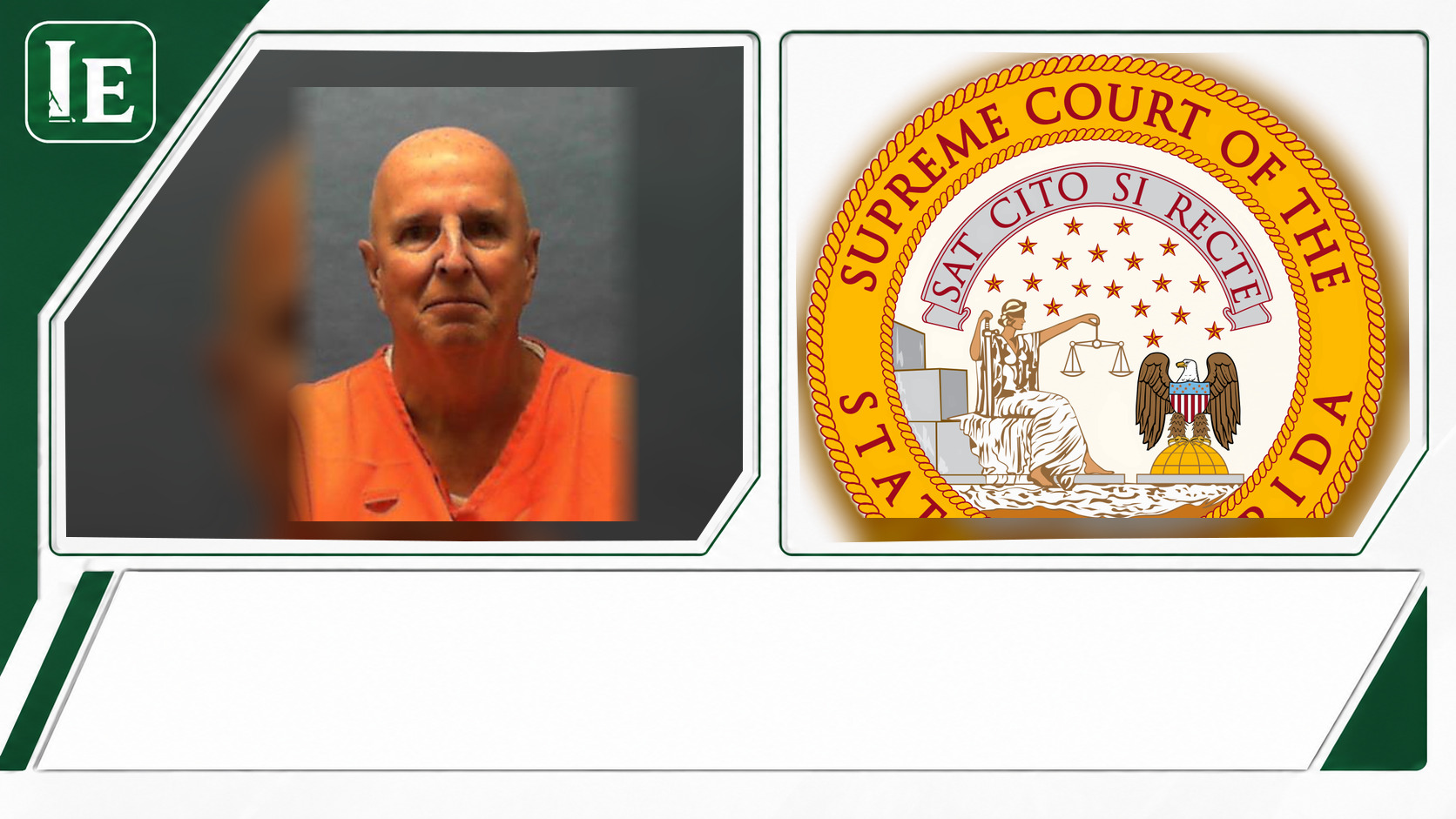
    Duckett was due to be executed at Florida State Prison near Starke on March 31, 2026. The stay puts new focus on what pending DNA testing can—and cannot—settle in a decades-old capital case.

    James Aren Duckett’s Florida execution was halted after the Florida Supreme Court issued a stay while DNA testing remains pending. Duckett, 68, had been scheduled for a 6:00 p.m. lethal injection on Tuesday, March 31, 2026, at Florida State Prison near Starke, Florida; the court paused the execution to allow the testing to be completed.

    The immediate result is a delay, not an exoneration or a reversal of Duckett’s conviction. But because the case involves a death sentence, the unresolved testing now sits at the center of whether Florida can move ahead with the execution and, if so, when.

    A stay stops the March 31 execution

    The Florida Supreme Court’s order temporarily blocks the state from carrying out Duckett’s execution. Under Florida’s lethal-injection protocol, he had been scheduled to receive a three-drug injection at the prison near Starke.

    Florida Supreme Court with Bunting 2019
    Image: Bruin79, via Wikimedia Commons, CC0.

    A stay of execution does not erase a death warrant or settle every appeal. It suspends the state’s authority to carry out the sentence while the court addresses a specific legal issue—in this case, the status of DNA testing that a lower court had allowed.

    The state supreme court also directed the state to report on the testing’s status by 5 p.m. Friday, according to reporting by The Associated Press. That deadline signals that the court wants a clear record of where the forensic review stands before deciding whether the stay should remain in place.

    What the pending DNA testing means

    Duckett sought DNA testing during his appeals, arguing that results could exonerate him. A circuit court granted the request, but the testing had not been completed when the execution date approached.

    That does not mean the testing will necessarily produce a result favorable to Duckett, or any result that changes the legal case. DNA evidence can confirm prior evidence, exclude a person from a particular sample, prove inconclusive because of age or degradation, or raise questions that require further litigation.

    Still, the timing matters. Once an execution is carried out, a court cannot revisit an unresolved forensic question in any meaningful way. The stay preserves time for the testing process and for the parties and courts to assess what the results show.

    The conviction remains in force

    Duckett was sentenced to death in 1988 after being convicted of first-degree murder and sexual battery in the killing of 11-year-old Teresa McAbee. Court records cited by AP say Duckett was a Mascotte police officer at the time; Mascotte is west of Orlando.

    McAbee disappeared on May 11, 1987, after she was seen getting into Duckett’s patrol car at a convenience store, according to the records. Her body was found in a lake the following morning, less than a mile from the store.

    Prosecutors’ evidence included blood and hair evidence said to link McAbee to Duckett, tire tracks at the lake that matched tires on Mascotte patrol cars, and both Duckett’s and McAbee’s fingerprints on the hood of Duckett’s car. Three teenage girls also testified at trial that Duckett had previously given them rides and made sexual advances, AP reported.

    Those facts explain why the state secured a conviction and death sentence. The pending DNA request reflects a separate legal question: whether additional testing of available evidence could materially affect the case.

    Why the court’s pause matters

    Capital cases bring a finality that other criminal sentences do not. Supporters of the stay argue that courts should resolve potentially relevant forensic testing before an execution, particularly when a lower court has already found that testing appropriate.

    Others may point to the age of the case, the trial evidence and the years of post-conviction litigation as reasons to avoid repeated delays. The stay does not resolve that broader debate. It addresses the narrower question of whether Florida should execute Duckett before the authorized DNA work is finished.

    For victims’ families, lengthy proceedings can prolong an already painful process. For defendants, defense lawyers and death-penalty critics, the possibility of unexamined biological evidence is precisely why courts must move cautiously. Both realities shape the stakes of a temporary halt.

    Florida’s execution pace adds pressure

    The Duckett case arrives after a year in which Florida carried out 19 executions, a state record since the death penalty was reinstated in 1976. Gov. Ron DeSantis oversaw more executions in 2025 than any Florida governor had in a single year during that period, AP reported.

    Florida’s previous annual record was eight executions in 2014. Nationwide, 47 people were executed in 2025, with Florida leading the country, according to AP’s tally.

    That context makes the court’s intervention notable. Florida has been moving rapidly through a substantial number of death warrants, yet the state supreme court found reason to pause this case while the DNA issue remains unresolved.

    What remains unresolved for Duckett

    The key unanswered question is when the testing will be completed and what, if anything, it will show. The public record summarized by AP does not establish that the results are expected to be exculpatory; it establishes that Duckett sought the testing and that a circuit court approved it.

    It is also unclear whether the Florida Supreme Court will lift the stay before March 31, extend it until results are available, or require additional briefing after the state’s status report. If the stay remains in effect through the scheduled date, the timing of any future execution is uncertain.

    For now, Duckett’s death sentence remains intact, but the execution cannot proceed on the planned timetable. The case has shifted from a scheduled lethal injection to a closely watched question about whether pending DNA evidence must be resolved first.