
Luke Bronin’s victory over a longtime congressman was about more than age. It tested whether Democratic voters want proven institutional experience or a more visibly confrontational, movement-focused style in Washington.
John Larson lost the Democratic primary in Connecticut on Tuesday, August 11, 2026, as former Hartford Mayor Luke Bronin defeated John Larson after campaigning on generational change. Larson, 78, had spent 27 years in Congress; Bronin, 46, argued that Democratic voters and the Democratic Party need younger leadership with a different kind of political energy.
The result matters beyond Hartford. It gives a concrete victory to Democrats who believe experience alone is no longer enough in a party trying to respond to President Donald Trump’s second term and win back voters who have lost confidence in its direction.
Bronin beat a deeply rooted incumbent
Larson was not an unknown or isolated House member. He had been a fixture of Connecticut politics for decades, serving in the state Legislature before his long tenure in Congress and previously holding a party leadership role.
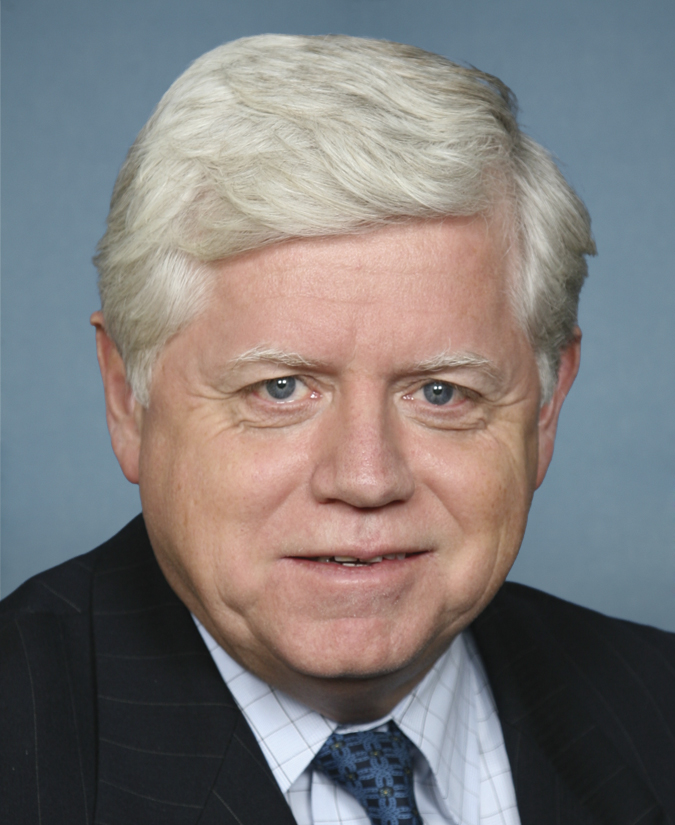
He also entered the race with prominent support. Connecticut’s congressional delegation, House Minority Leader Hakeem Jeffries and key labor unions backed Larson, according to NBC News.
That made the outcome a meaningful upset. Incumbent members of Congress generally begin with advantages in name recognition, fundraising networks, constituent service operations and endorsements. Larson had each of those assets, plus a record he repeatedly emphasized during the campaign.
But endorsements and longevity did not settle the contest. Bronin raised more money than Larson and secured the Connecticut Democratic Party’s endorsement at its state convention, showing that the challenger’s case had support inside as well as outside established party circles.
A campaign centered on change
Bronin framed the race as an argument about the kind of representation Democrats need now. His message was not simply that Larson had served a long time; it was that the political moment demanded a new approach.
In a late-May interview with NBC News, Bronin said a member of Congress has responsibilities beyond work in committee rooms and formal Capitol proceedings. He argued that Democratic lawmakers must use their platforms to build a broader movement and reconnect with people who have become disillusioned with the party.
That pitch draws a sharp distinction between legislative experience and political visibility. A lawmaker can be effective at navigating Congress, Bronin’s argument suggested, while still falling short of what voters expect from an opposition party confronting a Republican president.
For supporters of generational change, Bronin’s victory is evidence that this message can break through even against a well-known incumbent. It does not establish that every older Democrat is vulnerable, but it shows the argument can become decisive when a challenger pairs it with organization, money and a credible résumé of his own.
Larson argued experience still matters
Larson rejected the idea that a change in personnel was the answer. Speaking on NBC News’ “Meet the Press Now” before the primary, he said the change Democrats needed was continued opposition to Trump and pointed to his own record.
He highlighted what he described as his accomplishments for constituents and his work on Social Security. Larson’s campaign offered a familiar incumbent case: seniority, relationships and policy expertise can produce results that a newcomer may not be able to match quickly.
Larson also challenged Bronin’s lack of a congressional record. That criticism gets at a real tension in these races. Voters may want fresh leadership, yet Congress rewards institutional knowledge, coalition-building and an ability to turn public priorities into legislation.
The primary result does not prove that Larson’s record lacked value. It shows that enough Democratic primary voters preferred Bronin’s promise of a different style and direction over Larson’s argument for continuity.
The broader Democratic warning sign
Larson became the 10th House member to lose a primary this year, NBC News reported. Seven of those defeated incumbents were Democrats and three were Republicans.
Those figures should be read carefully. Primary losses are shaped by local conditions, district boundaries, fundraising, candidate quality and the timing of a challenge. One Connecticut race cannot speak for every Democratic district.
Still, Larson’s defeat fits a visible debate inside the party over leadership, age and urgency. Some Democrats see veteran lawmakers as indispensable figures who understand how to defend programs, negotiate policy and counter Republican power. Others believe the party has been too cautious and too tied to an older political generation.
The debate is not only about birthdays. It is also about communication, public organizing and whether Democratic officeholders are meeting a moment in which voters often judge representatives by their ability to project urgency as much as by their committee work.
What Bronin’s victory does and does not mean
Bronin now has a primary victory that validates his central campaign theme, but winning the nomination is not the same as proving that generational change is a complete governing strategy. He will face the practical demands attached to serving in Congress: constituent service, complicated federal legislation and the need to work with colleagues who may not share his approach.
There is also an unresolved question for Democratic leaders. Should they treat Larson’s loss as a call to promote younger candidates more aggressively, or as a reminder that incumbents need to make a clearer case for what their experience delivers in the present?
Bronin’s campaign suggests challengers can succeed when they make that contrast specific. He did not run only against Larson’s age or tenure; he argued that the party needs lawmakers who can organize, communicate and create momentum outside Washington.
For Larson, the defeat ends a congressional run that lasted nearly three decades. For Democrats, it adds another data point to an unsettled question: whether the party’s next chapter will be led by experience, by generational turnover, or by candidates able to convincingly combine both.
Leave a Reply