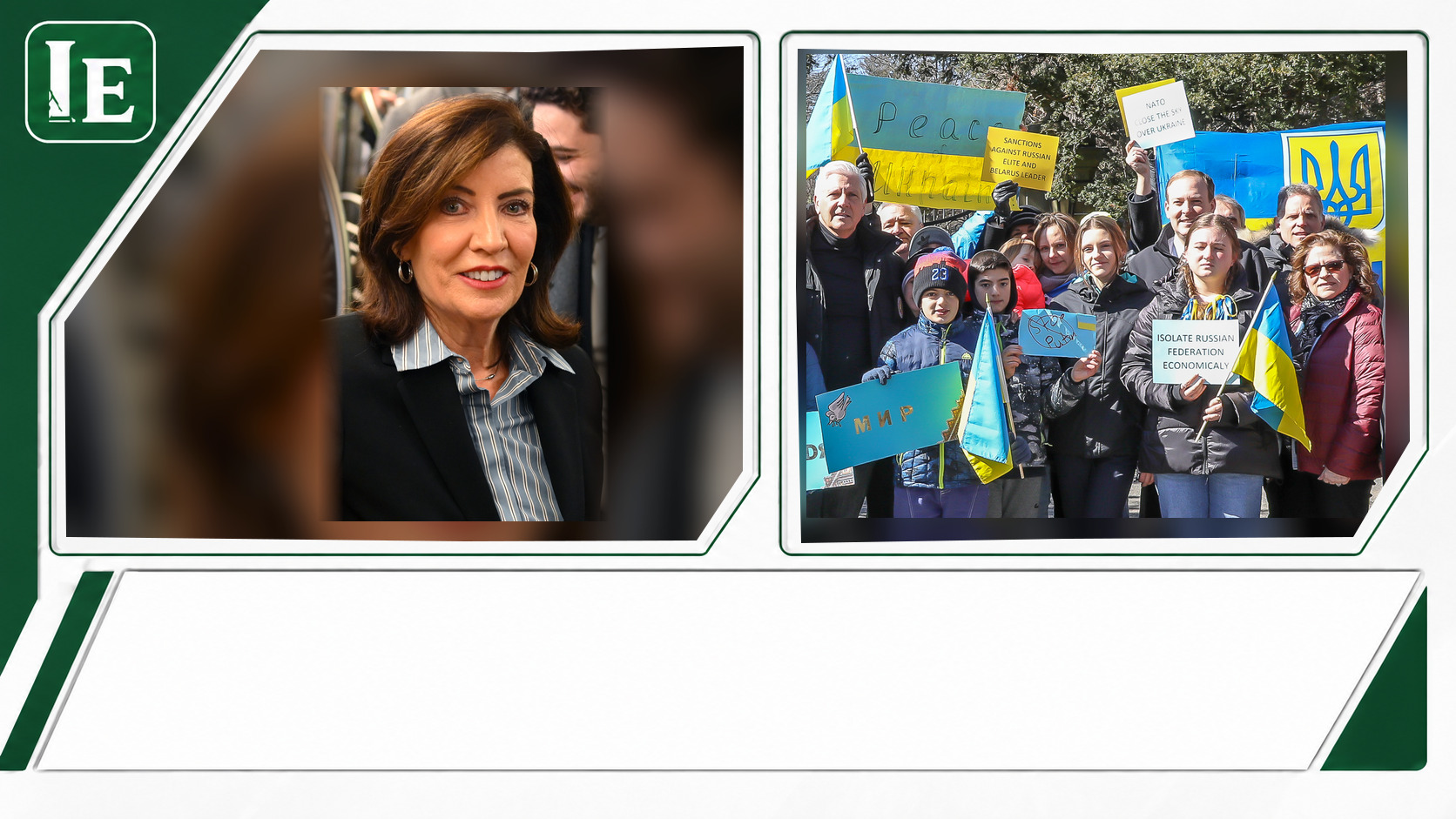
Kathy Hochul is ahead, but she remains below 50% in Siena’s first likely-voter survey of the cycle. Bruce Blakeman’s stronger standing with independents and in the suburbs shows why the race is not settled.
Bruce Blakeman’s chances of defeating Kathy Hochul in the New York governor’s race are improving but still trail the incumbent, according to a new Siena Poll. Among likely New York voters, Hochul leads Blakeman 49% to 39%, a 10-point lead that indicates Blakeman has not yet flipped New York.
The result gives Hochul a clear advantage with less than three months until Election Day, while also leaving her short of majority support. For Blakeman, the Nassau County executive, the poll points to a viable path only if he can turn regional and independent-voter strengths into broader statewide support.
Hochul leads, but remains below 50%
Siena Research Institute’s survey is its first poll of likely New York State gubernatorial voters this election cycle. It puts Democratic Governor Kathy Hochul at 49% and Republican Bruce Blakeman at 39%.
That is a notable improvement for Blakeman compared with Siena’s June survey of registered voters, when Hochul led 52% to 32%. The surveys do not measure exactly the same electorate, so the figures are not a clean one-to-one trend line. Still, the new likely-voter result presents a substantially tighter contest.
Siena pollster Steven Greenberg highlighted another important distinction: Hochul’s 49% does not clear the 50% threshold. A candidate can win with less than a majority in a two-candidate matchup only if support shifts, turnout changes, or minor-party dynamics alter the final vote. But the result leaves Hochul with less cushion than a 52% or 53% showing would provide.
At the same time, a 10-point deficit is not a small hurdle. Blakeman would need to consolidate Republican backing, protect his slim advantage with independents and persuade voters who have not formed a firm opinion of him.
Independent voters offer Blakeman an opening
The candidates are overwhelmingly supported by their own parties. Hochul leads among Democrats 80% to 8%, while Blakeman leads among Republicans 84% to 9%, according to Siena.
The more competitive group is independents. Blakeman leads Hochul 45% to 40% among likely independent voters, a narrow edge that matters in a state where both parties begin with large and dependable bases.
That finding helps explain why the race is closer than the overall statewide number alone suggests. It also exposes the limits of Blakeman’s current position: winning independents by five points has not offset Hochul’s commanding Democratic advantage.
For Hochul, the central challenge is less about holding her party than preventing independent voters from drifting further toward her opponent. For Blakeman, the task is converting a modest independent edge into a larger statewide coalition without losing the voters who already back him.
New York City anchors Hochul’s advantage
Regional results show where Hochul’s 10-point lead is built. She holds a 64% to 19% advantage in New York City, an enormous margin in the state’s largest population center.
Blakeman performs better in the downstate suburbs, where he leads 49% to 41%. He also runs virtually even with Hochul upstate, Siena said. Those results give the Republican a clear geographic argument: he is competitive outside the city and ahead in a politically important suburban region.
But New York City’s Democratic margin remains a formidable obstacle. A suburban gain matters, yet it must be large enough to counter the city’s overwhelming numbers and avoid losses in upstate areas where the poll currently shows a near tie.
The regional picture also explains why turnout will be a major factor. Neither campaign can treat its natural strongholds as automatic; each needs to maximize participation where it already has an advantage while limiting losses elsewhere.
Housing is Hochul’s clearest issue edge
Likely voters give Hochul her strongest policy advantage on increasing the supply of affordable housing. They pick her over Blakeman by 51% to 35%, a 16-point margin.
Her leads are much narrower on other issues. Hochul is ahead 48% to 41% on making prices more affordable for average New Yorkers and 47% to 42% on developing the state’s energy future.
On keeping New Yorkers safe, the margin is 47% to 44%. On addressing undocumented immigrants living in New York, it is 45% to 44%. Those close numbers suggest that Blakeman has room to contest issues that often animate Republican and independent voters, even as Hochul has the overall advantage.
Independents sharpen that contrast. Siena said they favor Hochul by nine points on housing, but favor Blakeman by between eight and 15 points on affordability, energy, public safety and immigration. The question is whether those issue preferences become decisive voting priorities or remain secondary to party identification and broader views of the candidates.
Character ratings complicate the race
Blakeman outperforms Hochul on the four character measures Siena tested. Likely voters give Blakeman a positive net rating for being tough, honest and someone who gets things done; Hochul’s net ratings on those measures are weaker.
Specifically, voters say “tough” describes Blakeman by a 25-point margin, while Hochul is only two points positive. Blakeman is five points positive on honesty, eight points positive on getting things done and four points negative on being in touch with average New Yorkers.
Hochul is two points negative on honesty, five points negative on getting things done and 12 points negative on being in touch with average New Yorkers, according to the poll. These impressions are a potential vulnerability for an incumbent who is otherwise ahead on the ballot test.
Yet Blakeman has a major name-recognition gap. His favorability rating is 33% favorable and 26% unfavorable, while 40% of likely voters say they do not know enough to offer an opinion. Hochul’s rating is 46% favorable and 49% unfavorable, reflecting a much more defined public image.
The poll is a starting point, not a forecast
Siena’s comparison with the 2022 governor’s race offers a reason to avoid treating August numbers as a final verdict. In August 2022, Hochul led Republican Lee Zeldin 53% to 39% among likely voters, a 14-point advantage. She ultimately won 53% to 47%, a six-point margin.
That history does not predict a repeat result. It does show that campaigns can tighten significantly in the final stretch, particularly when a challenger can focus attention on issues where the incumbent’s advantage is narrow.
Hochul begins this stage of the campaign ahead statewide, dominant in New York City and stronger on affordable housing. Blakeman’s route is narrower but visible: hold Republicans, expand his independent support, press his suburban advantage and turn close issue ratings into votes.
For now, the Siena Poll says the same thing in two ways. Hochul is the favorite at 49% to 39%, but New York’s governor’s race is closer than Siena’s June registered-voter survey suggested—and not yet a closed case.
Leave a Reply