Blog

  • Mamdani’s city-run grocery plan targets 30% cheaper staples in five stores

    Mamdani’s city-run grocery plan targets 30% cheaper staples in five stores

    New York City is advancing a public-grocery experiment built around lower prices, rent-free city space and outside operators. Its first proposed store in Hunts Point puts the debate over affordability, neighborhood competition and public spending into sharper focus.

    Mayor Zohran Mamdani’s proposed government-run grocery-store plan in New York City calls for five city-owned stores and a monthly 30% discount on a core basket of staple groceries. The specifications now taking shape include a proposed 20,000-square-foot first store in Hunts Point in the South Bronx, making the idea a concrete test of whether city-owned retail can lower food costs.

    Mamdani says the municipal grocery stores can charge less because they would operate rent-free in government-owned buildings. Supporters see a direct response to grocery affordability; critics see a plan that still needs to prove it can coexist with neighborhood supermarkets, bodegas and other independent food businesses.

    A campaign pledge becomes a retail plan

    Mamdani made public grocery stores a signature element of a broader cost-of-living agenda. The basic premise is simple: eliminate some major fixed costs that private grocers face, especially rent, then use the savings to offer selected essentials at lower prices.

    According to NPR’s reporting, the city is seeking operators for five government-owned grocery stores across the five boroughs. The stores would not be described as traditional city agencies stocking shelves themselves; outside operators would run them under the city-owned model.

    That distinction matters. A publicly owned storefront and a publicly operated grocery chain are very different undertakings. Contracting with experienced operators could give the city access to existing food-retail expertise, but it also leaves essential details open: who would be selected, what performance standards they would face, and how the city would enforce the promised savings.

    The price pledge is also narrower than a blanket promise that every item will be 30% cheaper. Mamdani said the five stores would set prices once a month for a core set of goods at 30% below typical retail prices. Which items make that core basket, and how the city measures a typical retail price, will determine what shoppers actually experience.

    Hunts Point supplies the first test

    The first proposed location is at the Peninsula, an affordable-housing development in Hunts Point, according to The New York Times. Mamdani has proposed a 20,000-square-foot store in the South Bronx neighborhood, which has a high poverty rate and long-standing concerns about access to affordable, fresh food.

    That location gives the policy a practical focus. A large grocery store can offer a wider range of produce, staples and prepared foods than a small corner shop, but it also has to solve the ordinary challenges of food retail: stocking perishable goods, controlling waste, managing deliveries and keeping prices stable when wholesale costs rise.

    The Peninsula site is part of a city Economic Development Corporation redevelopment of the former Spofford Juvenile Detention Facility. Locating the store in a city-linked development fits the plan’s strategy of using public real estate to avoid commercial rent, rather than trying to outbid private retailers for storefronts.

    The administration has also identified East Harlem’s La Marqueta as a future Manhattan location, while locations in Brooklyn, Queens and Staten Island were still under examination, the Times reported. The five-store promise therefore remains more a framework than a finished citywide network.

    The subsidy is built into the address

    Rent-free space is the center of Mamdani’s case for lower prices. Grocery stores work on tight margins, and New York City commercial rent can be a substantial part of a retailer’s overhead. Removing it gives a city-backed store a cost advantage that private competitors often cannot match.

    The city also plans to waive rent and taxes for the five stores, the Times reported. Those choices are not cost-free simply because cash does not change hands at a checkout counter. They amount to a public subsidy through city property and forgone revenue, so the central policy question is whether the food savings justify that support.

    There is a strong argument for testing that proposition in neighborhoods where residents face high prices or poor access to fresh food. A reliable, well-stocked store offering meaningful discounts on essentials could stretch household budgets in a way that broad messaging about affordability cannot.

    But the savings need to be durable and easy to verify. A monthly advertised basket may help shoppers compare prices, yet it can also leave room for confusion if other necessities are priced at market rates or if the comparison benchmark is unclear. The public will need a transparent list of covered products, package sizes and reference prices to judge the 30% figure fairly.

    Small grocers see a harder question

    Opposition is not limited to ideological objections to municipal ownership. Some small business owners and economists have raised concerns that city-owned stores could draw customers from existing supermarkets and bodegas, especially in neighborhoods that already have multiple food retailers.

    At a forum cited by the Times, Jerry Nunez, a manager at City Fresh Market near the proposed East Harlem site, questioned why a city store would be placed so close to existing businesses. His concern gets to the most difficult design issue: a public store intended to relieve high prices may compete most directly with the local operators already serving that community.

    Mamdani has argued that dense neighborhoods have room for both established grocers and one city-run store. The administration’s view is that residents should have access to an affordable option, not that the city should eliminate private food retail.

    Both claims can be true in principle, but the outcome will vary block by block. A store that expands fresh-food access in an underserved area may fill a gap. A store offering publicly supported prices near a struggling independent market could create a different problem. Site selection, product mix and the scale of each store will matter as much as the headline discount.

    Funding and oversight remain unresolved

    The City Council would need to approve funding for the project. The Times reported that Mamdani had sought $70 million in capital funding to build the stores, while City Council Speaker Julie Menin expressed concern about possible effects on bodegas.

    Capital money answers only part of the equation. Building or fitting out stores is different from paying for utilities, refrigeration, workers, inventory systems, security and unexpected operating losses. The city’s eventual contracts and budgets will show whether the rent-free model can support the advertised discounts without requiring larger recurring subsidies.

    There are also basic accountability questions. Will operators have to meet targets for food quality, stock levels, local hiring and savings? What happens if a supplier disruption leaves the core basket unavailable? Will the city publish audited price comparisons and operating results? These are not peripheral issues; they are the test of whether the program is a replicable affordability tool or a heavily subsidized pilot.

    The first opening sets the standard

    NPR reported that plans called for the first store to open by the end of 2027, while earlier reporting described the Hunts Point opening as planned for the following year. The shifting timelines underscore that the project is still in development and that construction, procurement and funding approvals can alter the schedule.

    For shoppers, the clearest measure will be straightforward: whether a predictable basket of groceries is genuinely cheaper, available and good enough to become part of a regular shopping routine. For policymakers, the broader measure will be whether five stores can improve affordability without weakening the small-business ecosystem they are meant to complement.

    Mamdani’s grocery-store proposal has moved beyond an abstract promise into questions of floor space, locations, operators and public support. That makes it more ambitious, but also more measurable. The first South Bronx store will have to demonstrate that a city can use its real estate and purchasing power to make a visible difference at the checkout line.

  • Lisa Demuth defeats Trump-backed Mike Lindell in Minnesota GOP primary

    Lisa Demuth defeats Trump-backed Mike Lindell in Minnesota GOP primary

    Demuth’s victory sends her to a general-election contest against Democratic Sen. Amy Klobuchar. The result also adds Minnesota to the list of Republican primaries where a Trump-backed candidate did not prevail.

    Mike Lindell lost the Republican primary for Minnesota governor, with Minnesota House Speaker Lisa Demuth defeating him despite President Donald Trump’s endorsement of Lindell. Updated election results reported by the Associated Press show Demuth won the GOP nomination and will face Democratic Sen. Amy Klobuchar in the fall.

    The result matters beyond one unusually visible primary. Lindell, the MyPillow founder and a prominent promoter of false claims about the 2020 election, entered as Trump’s preferred candidate. Demuth prevailed with a message centered more on her legislative experience and ability to work in a closely divided state House.

    Demuth wins a three-way contest

    NPR reported that Demuth received 43.4% of the Republican primary vote, or 179,573 votes. Lindell finished second with 32.5%, or 134,202 votes, while businessman Kendall Qualls received 21.4%, or 88,350 votes.

    The Associated Press called the race for Demuth, according to both NPR and The Washington Post. The margin gave Demuth a clear win in a field that included candidates with distinct bases of support inside Minnesota’s Republican Party.

    Qualls had received the Minnesota Republican Party’s endorsement before the primary, while Trump later backed Lindell. Demuth did not have either of those advantages, but she brought a substantial statewide political profile as speaker of the Minnesota House.

    Trump endorsement did not decide it

    Trump endorsed Lindell during the campaign’s final stretch, elevating a candidate whose national identity is closely tied to the former president. Lindell has been among the most outspoken supporters of Trump’s false assertion that the 2020 presidential election was stolen.

    That endorsement made the Minnesota race a test of whether Trump’s support could overcome the advantages of an experienced state officeholder. It did not.

    The result should not be read as proof that a Trump endorsement has little value in Republican primaries. It remains a major signal to many GOP voters and donors. But Minnesota illustrates a recurring complication: endorsements can shape a contest without erasing voters’ interest in local records, campaign organization and perceived general-election strength.

    The Washington Post noted that Trump-backed candidates had also fallen short in gubernatorial primaries in Iowa and Georgia this year. Demuth’s win adds another example of a state-level race where the president’s preferred candidate was not the nominee.

    A speaker with a governing record

    Demuth is Minnesota’s highest-ranking Republican elected official. As House speaker, she has led a chamber divided almost evenly between Republicans and Democrats, an experience that allowed her to present herself as a candidate familiar with negotiation as well as partisan conflict.

    Her campaign emphasized working across the aisle, according to NPR. That posture can be politically useful in Minnesota, where statewide elections often turn on suburban and independent voters as well as each party’s core supporters.

    Supporters can point to Demuth’s legislative leadership as evidence that she understands the mechanics of state government. Skeptics may argue that her time in a narrowly divided House could make it harder to draw sharp contrasts with Democrats. The general election will show whether her governing experience becomes an asset with a broader electorate.

    Klobuchar now awaits in November

    On the Democratic side, Klobuchar won her party’s nomination decisively. NPR reported that she took 89.7% of the vote, with 614,467 votes.

    The Senate Democrat is a well-known statewide figure whose 2020 presidential campaign raised her national profile. The Washington Post described her as heavily favored heading into the general election, though campaigns can shift as nominees define one another and voters focus on state issues.

    The contest is for an open governorship. Gov. Tim Walz, a Democrat, chose not to seek reelection after a period in which a major welfare-fraud scandal became a central political issue in the state, according to The Washington Post.

    Demuth will try to make the race a case for Republican control after years of Democratic leadership. Klobuchar will seek to use her name recognition and long record winning statewide elections to argue for continuity and competence. A Republican has not won Minnesota’s governorship since Tim Pawlenty, who served from 2003 through 2011.

    The primary reshapes the GOP case

    Lindell’s loss removes from the general-election ballot a candidate whose public profile was dominated by national election-conspiracy politics and his close association with Trump. That could change the tone of the Republican campaign.

    Demuth still faces hard choices. She must retain voters drawn to Lindell and Trump while making a broader appeal in a state where Republicans have struggled in recent statewide races. Her House leadership provides a potentially different message: practical experience in a divided government rather than celebrity and confrontation.

    Questions remain about how closely Trump will involve himself in the Minnesota general election, whether Lindell will quickly unify behind Demuth, and how much the state party’s earlier support for Qualls exposed lasting divisions. The primary result settled the nomination, not those tensions.

    What Minnesota voters learned

    The immediate outcome is clear: Lisa Demuth is the Republican nominee for Minnesota governor, and Mike Lindell’s Trump-backed campaign is over. The vote demonstrated that a prominent endorsement and national notoriety were not enough to defeat a state leader with a conventional governing résumé.

    The larger verdict will come in November. Demuth now has the task of turning a coalition that beat Lindell and Qualls in a Republican primary into one capable of challenging Klobuchar across Minnesota.

  • Scaramucci Says Trump’s White House Dinner Outburst Revealed His Feelings About Melania

    Scaramucci Says Trump’s White House Dinner Outburst Revealed His Feelings About Melania

    Anthony Scaramucci’s account has renewed attention on Melania Trump’s limited public appearances alongside the president. But the former aide’s interpretation of one dinner exchange is not independent proof of the couple’s private relationship.

    Donald Trump’s angry outburst at a White House dinner allegedly revealed his feelings toward Melania Trump, according to former White House aide Anthony Scaramucci. Scaramucci says Trump objected when he was seated beside Melania Trump in the Blue Room, an episode he interprets as evidence that Trump was uneasy about their rapport.

    The Trump dinner outburst is drawing attention because Melania Trump has made 38 public appearances in the first seven months of 2026, compared with 47 appearances in 2025 after Donald Trump’s January 20, 2026 inauguration, according to reporting cited by the Irish Star. Those numbers have fueled public speculation, though they do not establish what is happening inside the marriage.

    A seating dispute becomes a story

    Scaramucci’s account centers on a White House dinner held during Trump’s first administration. The former communications director said he was seated next to Melania Trump and that the president reacted angrily when he noticed the arrangement.

    In Scaramucci’s retelling, Trump asked why he was sitting beside the first lady. Scaramucci said he responded that he had not arranged the place cards and did not know why he had been assigned that seat.

    Scaramucci said Trump calmed down after realizing he had not chosen the seating arrangement. The episode, as described, was brief and concerned protocol at a formal dinner. Its renewed visibility comes from the meaning Scaramucci attaches to it years later.

    That distinction matters: an account of a tense exchange is one thing; a conclusion about a marriage is another. The available reporting relies on Scaramucci’s recollection and does not include an independent account from other attendees, the White House, Donald Trump or Melania Trump.

    What Scaramucci says it revealed

    Scaramucci has said he had a positive relationship with Melania Trump, describing her as pleasant and down to earth. He argued that Trump was bothered by the idea of another person having a good rapport with her.

    That is the basis for his claim that the dinner reaction exposed Trump’s feelings. It is also an interpretation, not a verified window into the couple’s private life.

    Personal behavior can have multiple explanations, especially in a setting as controlled as a White House dinner. A president may react to security, etiquette, hierarchy, seating protocol or personal discomfort without that reaction carrying the broader meaning assigned to it afterward.

    Scaramucci’s political position also supplies important context. He served as White House communications director for 11 days in July 2017, was dismissed from the role, and has since become a prominent critic of Trump. That history does not disprove his account, but it is relevant when weighing his reading of the event.

    Melania Trump’s limited public schedule

    The anecdote has landed amid persistent attention to Melania Trump’s public visibility. Reporting cited by the Irish Star says she made 38 public appearances during the first seven months of 2026, following 47 appearances in 2025 after the January 20 inauguration.

    Those totals are lower than the public profiles often associated with recent first ladies, including Michelle Obama, Jill Biden and Laura Bush. Comparisons like that can be striking, but first ladies have not all approached the role in the same way, and appearance counts do not measure a marriage.

    A limited schedule may reflect personal preference, family priorities, staffing choices, political strategy, travel, the types of events a first lady chooses to support, or other factors that are not publicly known. It can also simply reflect a different understanding of the office.

    Public absence is therefore visible, but its cause remains unclear. The public can count events; it cannot reliably infer private conversations, agreements or emotions from those counts alone.

    Why speculation keeps returning

    The Trumps’ marriage has long attracted unusual scrutiny because both spouses are globally recognizable and because Melania Trump has often maintained a more selective public profile than many modern presidential spouses. Every absence, photograph or anecdote can become raw material for competing narratives.

    Supporters may see the pair’s approach as a boundary around private family life and a first lady choosing her own role. Critics may view the limited joint appearances as evidence of distance. Neither reading can be confirmed solely by public optics.

    Scaramucci has previously made strong claims about Melania Trump’s views of her husband and their relationship. Those statements have helped make his dinner story compelling to people already inclined to see deeper significance in the couple’s appearances.

    But repetition does not convert a political commentator’s claim into independently established fact. The central evidence in this case remains Scaramucci’s own account and his own assessment of what Trump’s response meant.

    The public record has limits

    No response from Donald Trump, Melania Trump or the White House is included in the reporting summarized here. There is also no public confirmation from dinner guests or staff members who could corroborate the precise wording, tone or circumstances of the encounter.

    That leaves several questions unresolved: when exactly the dinner occurred, who arranged the seating, who else witnessed the exchange, and whether Trump’s reaction was as Scaramucci remembers it. It also leaves the larger conclusion about the Trumps’ relationship unproven.

    The account is still notable because it comes from someone who briefly worked inside Trump’s White House and who says he knew Melania Trump. Yet proximity does not eliminate subjectivity, particularly when a former official is interpreting a single moment years later.

    Anecdote is not a verdict

    For now, the strongest verified takeaway is narrow. Anthony Scaramucci says Donald Trump challenged him over sitting beside Melania Trump at a White House dinner, and Scaramucci believes the confrontation reflected Trump’s discomfort with their rapport.

    The broader claim—that the exchange disclosed Trump’s true feelings about Melania Trump—belongs to Scaramucci. Melania Trump’s lower number of public appearances gives the story a timely context, but it does not independently confirm his interpretation.

    That gap between what was reportedly said, what can be documented and what observers believe it means is why the story is likely to keep generating attention. It is also the reason to treat its most personal conclusions with caution.

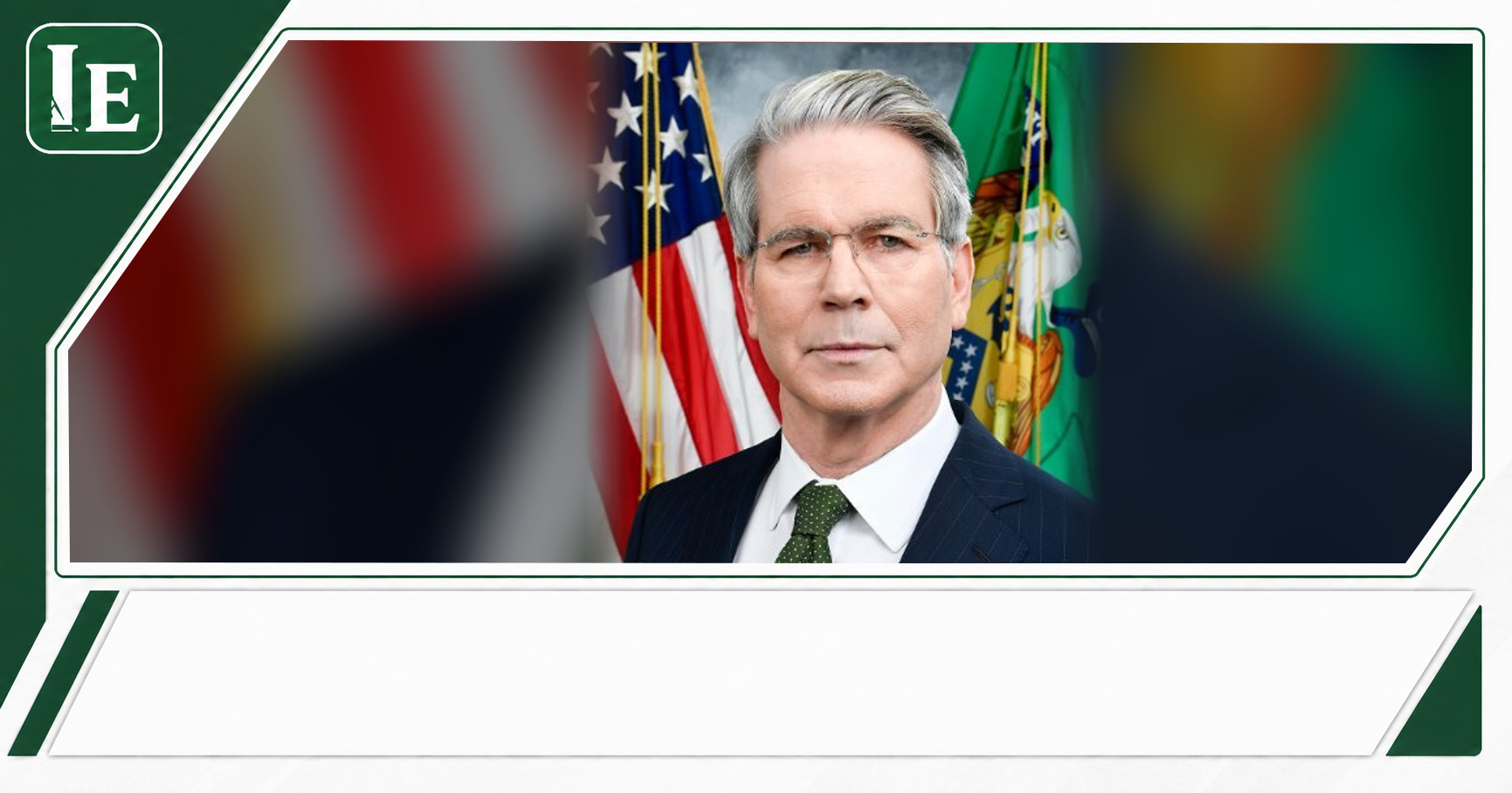
  • Scott Bessent’s Tariff Case Hinges on Relief for Indebted Households

    Scott Bessent’s Tariff Case Hinges on Relief for Indebted Households

    Bessent’s economic case focuses on people facing rent, credit-card bills and auto loans. His administration argues that tariffs and domestic investment can help, while critics question how costs will be shared.

    Treasury Secretary Scott Bessent has made household financial pressure central to his defense of the Trump administration’s economic program. In a Treasury Department account of his interview with Tucker Carlson, Bessent contrasted the financial circumstances of households with debt and recurring bills with the concentrated ownership of stocks among higher-income Americans.

    His argument is that tariffs, reduced regulation, tax changes and expanded U.S. production can produce more relief for workers and families. Whether that happens remains disputed, because an economy’s performance can look different through measures of prices, wages, jobs, debt, investment and borrowing costs.

    Household budgets are at the center of Bessent’s argument

    Bessent said the bottom half of households are more exposed to credit-card bills, rent and auto loans, while stock ownership is concentrated among higher-income households. That distinction underpins his focus on affordability rather than stock-market performance alone.

    A rising market does not necessarily change the financial position of renters, borrowers or families managing large recurring expenses. For those households, an improved economy would mean that earnings stretch further against debt payments and everyday costs.

    Bessent also linked the administration’s agenda to proposals involving taxes on tips, Social Security and overtime, as well as interest deductions for certain U.S.-made autos. He said tariff revenue could help pay for parts of that agenda.

    Tariffs are intended to reshape where goods are made

    In Bessent’s account, tariffs are not only a source of revenue. They are leverage intended to influence corporate decisions about manufacturing locations. He encouraged companies to bring factories to the United States rather than face a tariff barrier on goods made in China, Mexico or Vietnam.

    The administration connects that approach to economic and national-security concerns. Bessent cited dependence on foreign production involving medicines, semiconductors and ships, as well as broader supply-chain vulnerabilities.

    Supporters see a possible path to more domestic investment, stronger selected industries and less exposure to geopolitical disruption. Bessent has also argued that predictions of inflationary harm from China tariffs during Trump’s first term did not occur as critics expected.

    Critics emphasize that tariffs are collected at the border and can lead companies to raise prices, accept lower margins, change suppliers or delay investment. The consequences for consumers and businesses can differ by product, industry and the availability of viable U.S. alternatives.

    The administration’s broader plan favors private-sector expansion

    Bessent’s tariff position is part of a wider case for reducing regulatory barriers, increasing private investment and moving production back to the United States. He has argued that the private sector was effectively in recession during the Biden years because of what he considers excessive regulation, government spending pressure and an economy too dependent on finance and imports.

    That assessment is a political argument from a senior Trump administration official, not an independently settled conclusion in the material available here. Bessent described the Biden-era economy in sharply negative terms while presenting Trump’s approach as a corrective.

    The administration’s preferred mechanisms include tariffs, deregulation, energy policy, domestic manufacturing and tax policy. Its stated aim is a different balance between production, investment and regulation, not simply better quarterly economic readings.

    Economic gains can be measured in more than one way

    The claim that the economy is improving does not point to a single definitive indicator. It can refer to hiring, wage growth, inflation, investment, output, consumer confidence or lower borrowing costs.

    Those measures may not move in tandem. Employment can strengthen while borrowing remains costly, for example, and investment can increase before households feel meaningful relief in monthly budgets.

    The Treasury material describes the administration’s policy approach, but it does not offer one current set of figures proving that every economic problem Bessent attributes to Biden has already been solved. The key question is whether broader gains in wages, jobs, investment and purchasing power emerge without creating new burdens for households and businesses.

    Credit and blame remain difficult to assign

    Economic conditions reflect more than a president’s policies. They can also be shaped by earlier decisions, Federal Reserve policy, global demand, wars, supply disruptions and private-sector choices. New factories, altered supply chains, hiring plans and price changes can take months or years to unfold.

    Bessent’s critique of the Biden years holds that government intervention weakened private-sector activity. Democrats and defenders of Biden’s record have generally pointed to job growth, infrastructure and industrial investment, and efforts to expand U.S. manufacturing capacity.

    The disagreement includes both the statistics worth prioritizing and the causes behind them. One side sees public investment and industrial policy as necessary to rebuild capacity; the other sees them as government overreach that can restrain private activity.

    The clearest evidence for Bessent’s case would be sustained gains in household purchasing power alongside durable private investment and job creation, especially in sectors the administration wants to grow. Until then, unresolved issues include whether tariffs increase costs before domestic capacity expands, whether tax changes are fully financed and whether companies build in the United States instead of passing added costs to customers.

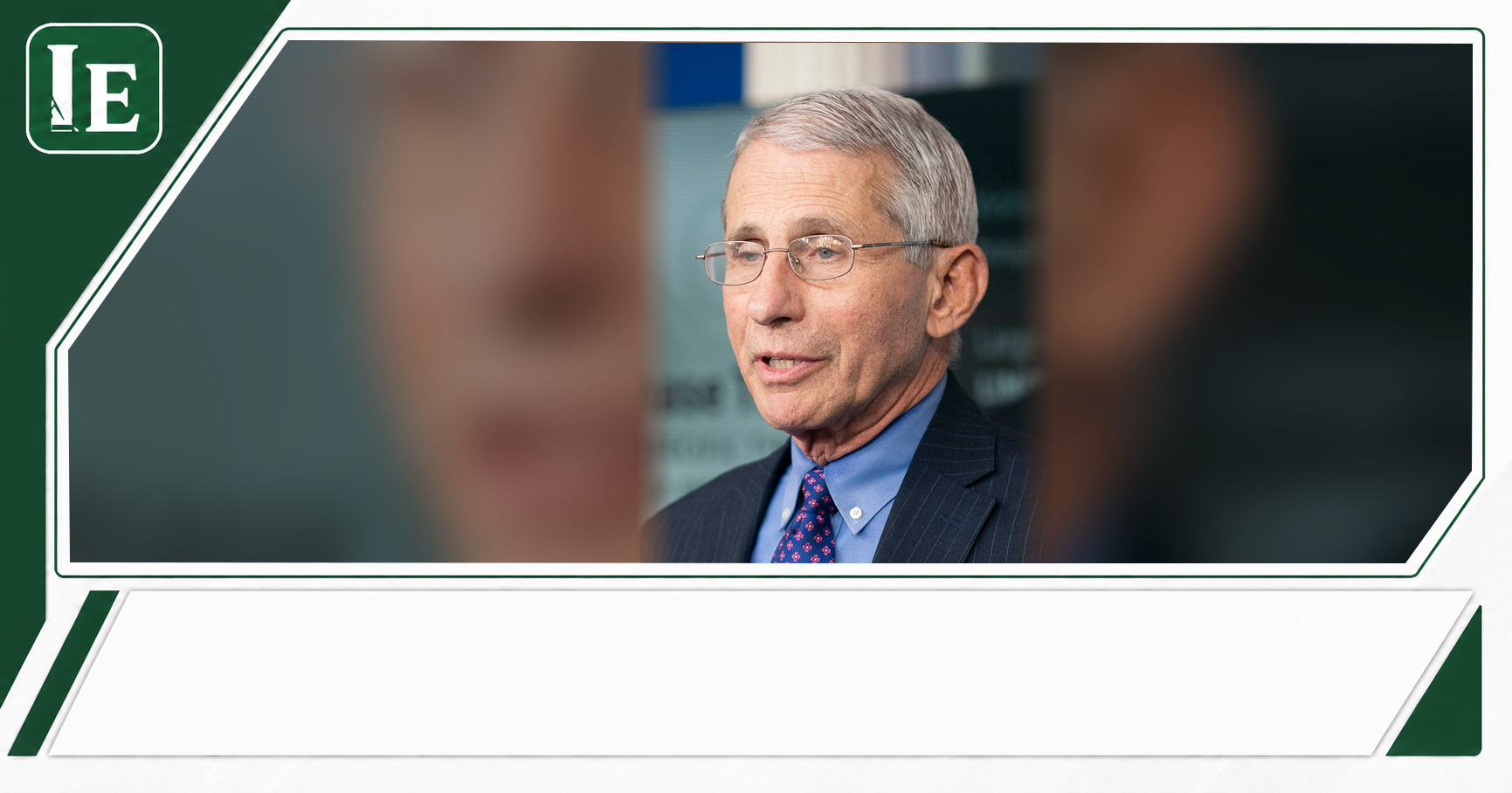
  • Fauci’s June 2024 House hearing drives fresh scrutiny of his COVID record

    Fauci’s June 2024 House hearing drives fresh scrutiny of his COVID record

    The renewed focus on Fauci is rooted in a highly contentious congressional examination of the U.S. pandemic response. The official hearing record shows intense oversight, but it also highlights the difference between political allegations, witness testimony and established findings.

    Evidence and scrutiny are mounting around Dr. Anthony Fauci in political debate over the U.S. COVID-19 response, but the central documented event remains a June 3, 2024 congressional hearing in Washington, D.C. The House Select Subcommittee on the Coronavirus Pandemic questioned Fauci about his COVID-19 record, including issues tied to former senior scientific adviser David Morens.

    That hearing put Fauci’s decisions and communications back under a national microscope. It also underscored a crucial point: congressional allegations, disputed testimony and official findings are not interchangeable, especially in an inquiry still shaped by fierce partisan disagreement.

    The hearing that reset attention

    Congress.gov records that Fauci, the former director of the National Institute of Allergy and Infectious Diseases, appeared before the House Oversight and Accountability Select Subcommittee on the Coronavirus Pandemic on June 3, 2024.

    The hearing took place at the Rayburn House Office Building in Washington, D.C., and its materials include Fauci’s written statement, supporting documents, video and a transcript. The public record makes clear that lawmakers intended the session to revisit major questions from the pandemic rather than simply review Fauci’s long government career.

    Those questions covered how public-health guidance was developed, how federal officials discussed the origins of COVID-19, and whether communications involving agency personnel were handled appropriately. The issues carried unusual weight because Fauci became one of the most recognizable and divisive officials of the pandemic years.

    For critics, the hearing was an opportunity to argue that federal agencies had not fully answered for mistakes or uncertainty. For Fauci and his defenders, it was a chance to explain decisions made amid an emergency where evidence, transmission patterns and clinical knowledge changed rapidly.

    Why David Morens drew attention

    David Morens, a senior adviser to Fauci at NIAID, became a major focus of the broader congressional investigation because lawmakers examined messages in which he discussed using personal email and avoiding certain records practices.

    That raised questions about transparency and federal recordkeeping. The concern is not minor: public access laws and records rules exist so that official work can be reviewed by Congress, journalists, watchdog groups and the public.

    But Morens’ conduct and Fauci’s own conduct are separate factual questions. The existence of allegations involving a senior adviser does not by itself establish that Fauci directed, approved or participated in any effort to evade recordkeeping requirements.

    This distinction explains much of the continuing argument. Critics see Morens’ messages as a reason to scrutinize the leadership culture around Fauci. Defenders say responsibility must be tied to evidence about a specific person’s actions, knowledge and intent—not inferred solely from an adviser’s communications.

    Scrutiny is not a verdict

    The phrase “evidence is building” can imply that a legal or official conclusion has already been reached. The official congressional hearing page, however, documents an oversight proceeding: it identifies Fauci as the witness, provides hearing materials and preserves the transcript. It does not itself announce a finding that Fauci committed wrongdoing.

    Congressional hearings can reveal documents, test competing narratives and create a public record. They can also be political events, with members emphasizing evidence that supports sharply different interpretations of the same pandemic-era decisions.

    That does not make oversight meaningless. The federal response involved decisions that affected schools, workplaces, travel, medical care and public trust. Testing how those decisions were made is a legitimate function of Congress.

    Still, readers should separate three categories: questions raised by lawmakers, testimony and documents entered into the record, and formal findings by a court, inspector general or other authorized body. Treating each as the same thing distorts what the record can show.

    The COVID record remains contested

    Fauci’s role during the pandemic made him a lightning rod because he advised presidents and appeared frequently in public as guidance evolved. Masking, social distancing, vaccines, school closures, the lab-leak debate and the balance between individual choice and public protection all became lasting points of conflict.

    Some criticism concerns changes in public messaging. Critics argue that evolving guidance sometimes damaged trust and that officials should have communicated uncertainty more directly. Fauci has maintained that recommendations changed because the available evidence changed, a common feature of responding to a novel infectious disease.

    The hearing’s partisan setting matters as well. The official event page includes supporting material from Democratic members alongside committee documents and Fauci’s testimony, reflecting the fact that the investigation produced competing accounts rather than one universally accepted narrative.

    That broader context does not erase valid questions about transparency or judgment. It does mean that any claim about Fauci’s record should identify the underlying document, the specific conduct alleged and whether an independent body has made a finding.

    What the official record establishes

    Several points are clear from the government’s published hearing materials:

    • Fauci testified before the House Select Subcommittee on the Coronavirus Pandemic on June 3, 2024.
    • The hearing was conducted by the House Committee on Oversight and Accountability during the 118th Congress.
    • Fauci was listed as a former NIAID director and the hearing record includes his witness statement and later transcript.
    • The proceeding became part of a wider effort to examine federal pandemic policy, communications and accountability.

    What remains less clear from the hearing listing alone is whether any particular allegation ultimately meets the standard for administrative, civil or criminal liability. That requires more than heated exchanges or suggestive language; it requires evidence evaluated under the applicable process and standard.

    Why the debate still matters

    The argument over Fauci is ultimately larger than one official. It is about whether institutions can explain high-stakes decisions after a crisis, preserve records properly and maintain credibility when scientific advice changes.

    People who believe Fauci and other officials were insufficiently candid want a fuller accounting of internal deliberations and public messaging. Those who defend Fauci warn that retrospective blame can punish scientists and public servants for acting under uncertainty, making future crisis response more timid and less transparent.

    Both concerns can coexist. Effective oversight should press for records, direct answers and clear accountability while resisting the temptation to convert political suspicion into a settled conclusion.

    The June 2024 hearing ensures that Fauci’s COVID-19 record will remain part of that discussion. Its lasting value lies less in declaring a final verdict than in leaving a public record that can be examined claim by claim.

  • Gorsuch Rebukes Vance’s Claim That Christianity Defines America

    Gorsuch Rebukes Vance’s Claim That Christianity Defines America

    The disagreement is not over whether Christianity influenced American history. It is over whether that influence can define the country’s constitutional identity and the place of Americans with different beliefs.

    Trump-appointed Supreme Court Justice Neil Gorsuch rejected J.D. Vance’s claim that Christianity is America’s creed, arguing that the United States is protected by the First Amendment and religious liberty rather than united by one official faith. Gorsuch said the United States was not founded around “one race or one religion,” putting a constitutional answer to a cultural argument made by the vice president.

    The exchange matters because it exposes a real divide within conservative politics: whether Christianity’s historic influence should be treated as a description of the nation’s moral tradition, or whether constitutional pluralism must remain the country’s defining public principle.

    Two different ideas of America

    Vance’s argument, made at Turning Point USA’s AmericaFest in December, was not that non-Christians cannot be Americans. According to The Hill, he said: “I’m not saying you have to be a Christian to be an American.”

    His broader claim was that Christianity is “America’s creed,” a shared moral language that ran from the Revolution through the Civil War and beyond. Vance, who converted to Catholicism in 2019, framed Christian thought as part of the country’s vocabulary for rights, conscience, duty and protecting the weak.

    That position treats Christianity primarily as a cultural and historical foundation. It recognizes that religious ideas and institutions have been deeply present in American public life, from colonial communities to abolitionist movements and civil rights rhetoric.

    Gorsuch’s response works from a different starting point. The question for him was not whether Christian traditions influenced Americans, but whether the government can make one faith the nation’s defining identity.

    Gorsuch points to religious liberty

    In an interview with PBS host Margaret Hoover on Firing Line, in an episode published Friday and reported by The Hill, Gorsuch stressed the constitutional protections that allow people to practice different faiths.

    “We have a First Amendment for crying out loud,” he said. He described early America in terms of religious pluralism and the opportunity to practice one’s faith “in your own way.”

    Gorsuch also said the country was “never supposed to be a nation that was about one race or one religion.” Instead, he pointed to principles including life, liberty and the pursuit of happiness, saying those ideals “speak to every human heart.”

    His concise constitutional formula was: “No established religion, everybody has a freedom of religion, everybody has the freedom of speech, we are all equal under law.” The point was not that religion has no place in public life. It was that no religion receives official ownership of the nation.

    History and constitutional authority differ

    There is a distinction at the center of this dispute. Christianity can have shaped American history without making the United States a constitutionally Christian nation.

    Gorsuch did not dispute the country’s religious history. He instead emphasized the range of religious communities present in early America. According to The Hill, he referenced Charles Carroll, the Catholic signer of the Declaration of Independence, as well as Amish and Quaker communities in the colonies.

    That diversity supports Gorsuch’s argument that the nation’s founding story cannot be reduced to a single tradition, even where Christianity was highly influential. The First Amendment’s establishment clause prevents the government from creating an official religion, while the free exercise clause protects religious practice.

    Those protections operate together. They protect Christians from government interference, while also guarding against Jews, Muslims, Hindus, atheists and others being treated as lesser citizens because government favors another belief system.

    Why Gorsuch’s role changes the optics

    Gorsuch’s comments drew added attention because Donald Trump nominated him to the Supreme Court. His appointment remains one of Trump’s most consequential judicial achievements for many conservatives.

    That history does not make Gorsuch a political figure in the same sense as Vance. Supreme Court justices are not simply representatives of the presidents who nominated them, and Gorsuch’s interview remarks were not a ruling by the court.

    Still, the contrast is notable. A justice often associated with conservative legal outcomes articulated a broad view of religious liberty and non-establishment in response to a major conservative political figure’s description of national identity.

    Gorsuch has written or joined major conservative opinions and is described in the source reporting as a textualist with a libertarian streak on civil-liberties questions, including free speech and religious liberty. In this instance, those commitments led to a principle that the state does not select a church and citizens do not need a shared theology to hold shared constitutional rights.

    The argument is ultimately about belonging

    Supporters of Vance’s language may hear an acknowledgment of the Christian moral traditions that helped shape American discussions of liberty and obligation. Critics may hear something different: an implicit ranking in which Christians occupy the center of national life and everyone else is assigned a more conditional place.

    Gorsuch’s framing attempts to place unity elsewhere—in equal legal status, freedom of speech, religious liberty and the refusal to establish an official faith. That is not an argument that religious conviction is irrelevant to public debate. It is an argument that government cannot turn one religious tradition into an identity test for belonging.

    The distinction has practical significance as disputes over schools, religious expression, public funding, LGBTQ rights, abortion and national identity continue through campaigns and courts. Cultural heritage and constitutional authority may overlap in political argument, but they are not the same thing.

    No Supreme Court ruling follows

    Gorsuch’s remarks were made in an interview, not in a Supreme Court decision. They do not resolve a pending case or establish that the court is moving as a bloc on questions involving religion and public life.

    It also remains unclear whether Vance will respond directly to Gorsuch’s framing. Their roles explain much of the disagreement: Vance was making a political and cultural case to an audience, while Gorsuch was describing what he sees as a constitutional baseline.

    The sharpest point of agreement may be that religion remains central to American argument. The divide is over whether the country honors that history by elevating one creed, or by protecting every person’s freedom to believe, practice or decline to follow one.

  • Trump Health Claim Remains Unverified, Lacks Any Medical Diagnosis

    Trump Health Claim Remains Unverified, Lacks Any Medical Diagnosis

    The allegation about Donald Trump illustrates the gap between a politically charged health claim and the evidence needed to establish a neurological diagnosis. Here is what the phrase can mean — and what the available material does not show.

    Donald Trump is the subject of an unverified claim by a former Trump official about an alleged “frontal lobe illness.” The claim does not establish a medical diagnosis: the available material provides no medical evidence, medical records, clinician’s assessment or independently verifiable evidence supporting it.

    That gap matters because “frontal lobe illness” carries serious medical implications, while the information available does not identify the former official, quote the person directly or explain the basis for the allegation. It is a health claim about Trump, not a confirmed account of his medical status.

    What is actually known

    The supplied material says only that a former Trump official reportedly made comments raising concerns about Trump’s alleged frontal-lobe health. It does not name that official or provide the full remarks, their setting, a date, or the evidence the speaker may have cited.

    There is also no diagnosis from Trump’s treating physicians, no test results, no imaging findings and no medical statement confirming a frontal-lobe condition. There is no included response to this particular allegation from Trump, his representatives or his medical team.

    Those omissions leave fundamental questions unresolved. It is not established whether the assertion came from direct knowledge, an interpretation of behavior, secondhand information or a medical source.

    The phrase is not a diagnosis

    “Frontal lobe illness” is broad and medically imprecise. A National Institutes of Health StatPearls review describes frontal lobe syndrome as a group of cognitive, behavioral, emotional and motivational changes associated with dysfunction in frontal-subcortical brain networks.

    The frontal lobes have roles in planning, working memory, judgment, attention, impulse control, social behavior and goal-directed activity. But difficulties involving any of those functions do not, by themselves, identify one illness or prove dysfunction in one particular area of the brain.

    The NIH review lists a wide range of possible causes of frontal-lobe dysfunction, including traumatic brain injury, cerebrovascular disease, neurodegenerative disorders, tumors, infections, inflammation, and metabolic or toxic injury. That range is precisely why the phrase cannot responsibly function as a stand-alone diagnosis.

    Clinical assessment requires context

    According to the NIH review, a suspected frontal-lobe problem can require a medical history, neurological examination, neuropsychological testing and, when appropriate, neuroimaging. Clinicians also consider a person’s baseline functioning and other explanations for a change in behavior or performance.

    Fatigue, stress, medication effects, hearing problems, ordinary aging and acute illness can affect how a person speaks, remembers details, responds under pressure or appears in public. None automatically establishes a neurological disorder.

    Public video clips provide an especially narrow slice of information. They may show a confusing phrase, a stumble or an intense reaction, but they cannot reveal medical history, interaction context, laboratory data or the results of standardized cognitive testing.

    That is why impressions — including impressions from a former aide — are not equivalent to a neurological examination. A claim about a specific condition requires specific evidence from qualified clinicians or documented testing.

    Public concern has real limits

    Questions about presidential fitness are a legitimate public matter. Voters can reasonably want to know whether a president is able to meet the physical and cognitive demands of office, and presidents face unusual public scrutiny of their health.

    Trump supporters may see the allegation as a partisan effort to convert selected public moments into a diagnosis. Critics may argue that a former insider’s comments make fuller health disclosure worth pursuing. Those views can exist alongside the same evidentiary standard: serious medical claims need credible substantiation.

    Terms such as “illness,” “cognitive decline” and “frontal lobe syndrome” have clinical significance. Applying them loosely can blur the line between medical reporting and political messaging, while also stigmatizing people who actually live with neurological conditions.

    What would change the picture

    A more assessable account would need verifiable details: an identified, on-the-record speaker; a complete quotation and its context; an explanation of the alleged basis for the claim; or relevant medical documentation. A statement from a qualified clinician with direct knowledge could also add important context.

    Even then, responsible diagnosis cannot be made from afar. The available material does not offer the information needed to evaluate the allegation’s scope, basis or reliability.

    The distinction readers should keep

    For now, three separate things should not be treated as interchangeable:

    • A political allegation from a person described as a former Trump official.
    • Observations about public behavior, which may be incomplete and open to competing interpretations.
    • A verified medical diagnosis, which requires clinical evidence and professional assessment.

    The current reporting supports the first category, not the third. The phrase “frontal lobe illness” remains an unverified allegation about Donald Trump’s health, and any stronger conclusion would go beyond the available evidence.

  • H.R. 1’s Medicaid cuts hit after Republicans vote, critics warn

    H.R. 1’s Medicaid cuts hit after Republicans vote, critics warn

    The sharpest effects of H.R. 1’s Medicaid changes are designed to emerge after the political vote is over. That timing has made the law a flashpoint over whether budget savings can be separated from the health risks facing people who lose coverage.

    Republicans are expected to vote for the bill known as H.R. 1, while critics warn that the bill could harm people through Medicaid cuts and other federal-program changes. The stakes are tied to estimates involving 4.8 million people and $344 billion, with key Medicaid provisions set to begin taking effect in January 2027—after lawmakers have cast their votes.

    That delayed timeline is the point of the fiercest criticism. Opponents argue that reducing Medicaid coverage can become life-threatening when people postpone care, lose access to prescriptions or struggle to manage chronic illness. Supporters frame the changes as a way to curb spending, tighten eligibility and focus assistance on people they say are most entitled to receive it.

    Why the timing drives outrage

    The argument surrounding Republicans and H.R. 1 is as much about political timing as it is about federal spending. A vote is immediate and public; the administrative work of changing eligibility, enforcing work-related rules and adjusting state budgets unfolds later.

    That gap makes it harder to connect a single congressional vote to a single patient’s outcome. It does not make the concern abstract. Medicaid is the insurer people rely on for routine doctor visits, hospital treatment, mental-health care, long-term services and prescription drugs.

    Critics use unusually blunt language because coverage loss can have serious consequences. They contend that the effects will be felt after the legislative victory has already been declared, when recipients encounter paperwork barriers, eligibility reviews or fewer services in their communities.

    What H.R. 1 changes

    Congress.gov describes H.R. 1 as a reconciliation law covering taxes, federal spending, the debt limit and a broad set of agency programs. The measure became Public Law 119-21 on July 4, 2025, according to the official congressional record.

    Its Medicaid provisions include changes to federal Medicaid financing and eligibility-related rules. The law also reduces the federal matching rate for emergency Medicaid services provided to people who are not lawfully residing in the United States, among other program changes.

    The bill’s reach extends beyond Medicaid. It changes SNAP, the food-assistance program, including work requirements for some adults and new state financial responsibilities. It also reduces the federal share of SNAP administrative costs beginning in fiscal year 2027.

    Those provisions matter because low-income households often use more than one safety-net program. A person dealing with less health coverage may simultaneously face stricter food-benefit rules or a state struggling to absorb more program costs.

    Numbers behind the coverage fight

    The figures cited in the debate—4.8 million people and $344 billion—are not simply accounting entries. They are used by critics to illustrate the scale of potential Medicaid disruption if federal reductions and new eligibility rules translate into fewer people enrolled or fewer services available.

    Precise outcomes will depend on implementation. States administer Medicaid within federal rules, and their responses can vary widely: some may put more state money into the program, while others may reduce eligibility, reimbursement rates, benefits or outreach.

    That is why projections should not be treated as a guaranteed count of people losing care on one date. Budget estimates rely on assumptions about enrollment, state policy, employment, paperwork compliance and provider participation. Still, large projected savings generally require someone—states, providers or beneficiaries—to bear lower federal support.

    How coverage loss becomes a health risk

    It is not accurate to say every person who loses Medicaid coverage will suffer the same outcome, or that a vote alone determines an individual death. Health outcomes depend on age, disability, income, local providers, medical conditions and whether another form of insurance is available.

    But the pathway critics describe is straightforward. Losing coverage can mean skipping preventive visits, delaying tests, rationing medication or seeking care only when a condition becomes an emergency. For people receiving dialysis, cancer treatment, behavioral-health services or care for complex chronic conditions, disruptions can be especially consequential.

    Hospitals and clinics also absorb part of the pressure. When more patients are uninsured, providers can face more uncompensated care, particularly in rural areas and communities where Medicaid is a major source of payment. Reduced provider participation can then make access harder even for people who remain covered.

    Supporters see a different tradeoff

    Republican supporters of tighter Medicaid and SNAP rules often argue that programs need stronger safeguards against improper payments and that work requirements can encourage employment among adults considered able to work. They also argue that federal spending must be restrained rather than automatically expanded.

    That case rests on the belief that eligibility reviews and work-related policies can distinguish between people who need assistance and people who could move into work or other coverage. Critics counter that real-world systems do not operate so cleanly: beneficiaries can lose coverage because of missed notices, limited internet access, unstable work schedules or confusing documentation rules.

    The dispute is therefore not just about whether government should save money. It is about what degree of enrollment loss policymakers consider acceptable, who should pay when federal funding declines, and whether administrative hurdles identify ineligible recipients or push eligible people out.

    January 2027 is the real test

    January 2027 matters because delayed effective dates can shift the most visible consequences beyond the initial political fight. States will need to interpret the law, update systems, train workers and decide whether to cover more costs themselves.

    Medicaid recipients may not experience the change as a Washington budget decision. They may experience it as a new renewal form, a request to document work, a narrower network or a notice that their coverage has changed.

    The core warning from opponents is that delayed policy effects should not be confused with harmless ones. The core response from supporters is that the law’s savings and eligibility standards are necessary corrections. What remains unclear is how aggressively states will implement the changes, how many people will retain coverage through other routes and whether the projected savings arrive without the severe health consequences critics fear.

  • Trump’s Iran Timeline Drives a USA TODAY Critique of Repetition

    Trump’s Iran Timeline Drives a USA TODAY Critique of Repetition

    A USA TODAY columnist’s case rests on a series of Trump statements about Iran, then asks whether familiar political themes can still break through as voters weigh prices, war and results.

    A USA TODAY opinion column makes a pointed argument about President Donald Trump’s political message: repetition, in the columnist’s view, may be diminishing the force of a style built on attention and disruption.

    The column’s conclusion is opinion, not a measured finding. Its most concrete example is a timeline of Trump’s public comments on a possible Iran peace deal, which the writer uses to question whether repeated assurances retain their political impact when a settlement has not arrived.

    A timeline is at the center of the column’s case

    The columnist lists five dates on which Trump described a deal with Iran as near: March 9, March 23, May 23, June 8 and Aug. 2.

    Russian White House and Comecon building
    Image: Dmitry Ivanov., via Wikimedia Commons, CC BY-SA 4.0.

    On March 9, according to the column, Trump told CBS News that the war was “very complete, pretty much.” On March 23, he said there were “major points of agreement” and “almost all points of agreement.” The later statements described the sides as getting closer, negotiating and, eventually, having an imminent deal.

    The writer argues that the continued absence of the anticipated agreement undercuts the value of repeating those assurances. That is the article’s central political judgment: language that may command attention initially can lose its effect when audiences hear the same promise over time.

    Diplomacy can be uncertain, and ongoing negotiations do not by themselves establish that earlier optimistic statements were meaningless. The column instead focuses on the potential political cost of setting expectations that remain unmet.

    Costs and the war frame the writer’s criticism

    The opinion piece places the Iran comments alongside food, fuel and household costs. It argues that Republican messaging centered on cultural conflict, attacks on opponents and claims about the economy may not answer concerns held by voters facing current prices.

    The columnist also points to $4-per-gallon gas and cites an estimate that the conflict could cost taxpayers more than $37 billion by September. Those figures are part of the writer’s argument that practical pressures may compete with the administration’s preferred political themes.

    Republicans can argue that Biden-era policies, spending and regulation continue to affect economic conditions. Democrats can argue that the party controlling the White House and Congress must account for present conditions. The column’s concern is whether either explanation gives voters a concrete answer on costs.

    Other examples are meant to show a familiar pattern

    The writer cites Republican rhetoric involving Muslim and transgender political targets, including comments by Rep. Nancy Mace of South Carolina and an Aug. 10 Oval Office statement in which Trump referred to “jihadists” being elected.

    The columnist describes that rhetoric as offensive and politically exhausted, particularly in references to Democratic figures including New York City Mayor Zohran Mamdani and Michigan Senate nominee Abdul El-Sayed. Those are the columnist’s assessments, not settled factual conclusions.

    The article also highlights Trump’s attention to White House construction and design projects, including a ballroom, gold-plated statues and the Lincoln Memorial Reflecting Pool. It cites a PolitiFact analysis that found Trump spoke about construction projects in nearly 45,000 words across 84 events on 66 days since January.

    As presented by the columnist, PolitiFact’s calculation found that Trump discussed those projects more often than the economy or immigration at events where construction came up. The writer uses that comparison to argue that spectacle can appear disconnected from affordability concerns.

    The column separates visibility from persuasion

    The USA TODAY piece does not contend that Trump has disappeared from public view. Its narrower assertion is that frequent attention and political persuasion are different things.

    In the writer’s view, Trump and Republican allies have returned often to attacks on opponents, warnings about cultural threats, economic claims and blame directed at former President Joe Biden. The columnist argues that this familiar mix has become predictable.

    Whether voters agree remains an open question. Some may regard repeated messages as consistency; others may see them as evidence that the administration lacks new answers. The article offers no election result that resolves that dispute.

    The midterms provide the practical test

    The columnist declares that “The Trump Show is over,” but that is a prediction rather than an established outcome. The coming midterm campaign will offer a clearer test of the argument.

    One question will be whether Republican candidates emphasize grievance and cultural confrontation, or combine those messages with specific proposals on prices, jobs, health care, energy and the federal budget.

    The writer’s verdict is unmistakably negative: Trump, the column argues, risks becoming politically dull because repeated spectacle can become background noise. The unresolved issue is whether voters will experience that repetition as exhaustion or continue to respond to it as a familiar political signal.

  • Trump Presses Voters on $4 Gas as Iran War Costs Linger

    Trump Presses Voters on $4 Gas as Iran War Costs Linger

    Trump’s frustration over stubbornly high gasoline prices is colliding with a basic political problem: voters feel the cost of a conflict before they see any promised economic relief. The available reporting also raises questions about how much control a president or oil company has over the number on a station sign.

    Donald Trump has asked voters to accept $4-per-gallon gasoline prices, linking the cost to the war with Iran even as the war lacks voters’ support, according to the trend headline. The political problem is immediate: drivers confronting prices near $4 want to know why the cost remains high and when, if ever, it will ease.

    Available reporting from the Associated Press shows Trump has instead focused recent public frustration on oil companies, saying gasoline prices should be falling faster as crude oil declines. That puts his broader war message up against a stubborn reality: a president can pressure the industry, but cannot make fuel already moving through refineries and supply chains instantly cheaper.

    Trump’s pump-price political problem

    Gasoline is one of the most visible household costs in American politics. Unlike a broad economic statistic, it appears on large signs outside stations and becomes a repeat expense for commuters, parents, delivery workers and businesses.

    Donald Trump
    Image: Gage Skidmore, via Flickr, CC BY-SA 2.0.

    That visibility makes a national average close to $4 especially uncomfortable for an administration trying to contain the economic consequences of a conflict. AP reported that regular gasoline averaged about $3.93 a gallon nationwide at the time of its report, according to AAA.

    That price was down 49 cents over the preceding month, AP said. But it was still 32% higher than before the Iran war, leaving the administration little room to claim that falling oil prices have already delivered meaningful relief to drivers.

    What Trump has actually said

    The source material available here does not include a full transcript of remarks in which Trump explicitly told voters to accept $4 gasoline, nor does it supply polling that measures support for the war. Those are important limits when assessing the framing of the original headline.

    What is documented by AP is Trump’s public anger at the pace of price declines. In a Truth Social post, he said he had directed the Justice Department to investigate whether consumers were being “gouged,” and argued that major oil companies were not lowering pump prices as quickly as their oil costs had declined.

    His complaint is politically understandable: voters typically connect a lower crude-oil price with an expectation of immediate relief at the pump. Energy analysts say that connection is real over time, but far less direct week to week.

    Why gasoline trails crude oil

    Crude oil is the biggest component of the retail price of gasoline, but it is not the only one. The U.S. Energy Information Administration said oil accounted for about 51% of a gallon’s price last year.

    The rest includes taxes, refining costs, distribution, marketing and retailer margins. AP cited EIA figures showing that federal and state taxes made up roughly 17% of the 2025 price, refining costs and profits about 14%, and distribution and marketing another 17%.

    There is also a built-in delay. Refineries may be turning crude purchased when prices were much higher into gasoline weeks or months later. The fuel must then move through terminals, pipelines, ships and trucks before it reaches retail stations.

    That lag helps explain why drivers can see gasoline rise quickly during a supply disruption but wait longer for it to fall. It does not make the expense easier for households, but it complicates claims that a single company or political demand can immediately reset the price.

    The Strait of Hormuz effect

    The Iran war shook oil markets because of the disruption around the Strait of Hormuz, a vital shipping route through which roughly one-fifth of global oil and natural gas typically passes. Before an interim agreement with the Trump administration, AP reported, Iran had blocked ships from crossing the waterway.

    Even with more vessels moving through the strait and oil prices falling, the supply system remains exposed to renewed disruption. AP reported that S&P Global Energy did not expect Persian Gulf oil production to fully recover until at least the first quarter of 2027.

    That forecast matters because a lower benchmark oil price does not mean supply chains have returned to their prewar condition. Refining capacity, inventories, shipping patterns and risk premiums can all keep pressure on fuel prices after the most dramatic market move has passed.

    Industry rejects a simple blame story

    Trump’s accusation of gouging has a clear political target, but experts and industry representatives dispute the idea that the retail market works that simply. Karen Young of Columbia University’s Center on Global Energy Policy told CNBC that the accusation sounded like political theater because that is not how U.S. gasoline pricing works.

    Rob Smith, S&P Global’s director of global fuel retail, told AP that gasoline’s rise during the conflict was smaller than the increase in crude oil. He said retailers had absorbed part of the earlier cost increase and could later recover some of those losses as oil prices came down.

    The American Petroleum Institute made a similar point, saying gasoline does not move in lockstep with crude during a major global disruption affecting supply, inventories and refining. Critics may still argue that companies should pass lower costs to consumers faster; the available evidence suggests the timing dispute is more complicated than either side’s messaging.

    War support and household tolerance

    The larger political question is whether Americans will accept higher everyday costs as part of the price of the Iran conflict. The trend headline asserts that the war lacks voter support, but the supplied reporting does not identify a poll, its sample or its wording. That claim should therefore be treated cautiously unless corroborated by current polling.

    Still, the underlying pressure is plain. A war’s strategic rationale can feel distant from a family’s budget, while a higher fuel bill is immediate. That disconnect is why gasoline prices so often become a referendum on confidence in leaders rather than a narrow debate about oil markets.

    For Trump, a sustained decline toward prewar fuel prices would strengthen his argument that the economic disruption is temporary. If prices remain elevated, his push to blame oil companies may resonate with some drivers, but it will not erase the deeper question of whether voters believe the conflict justifies its personal cost.

    The next signs to watch are not only the daily price of crude, but the safety of shipping through the Strait of Hormuz, refinery and inventory conditions, and whether national pump prices keep falling. Those factors will determine whether the $4-gas debate fades into a temporary wartime shock or becomes a lasting political liability.