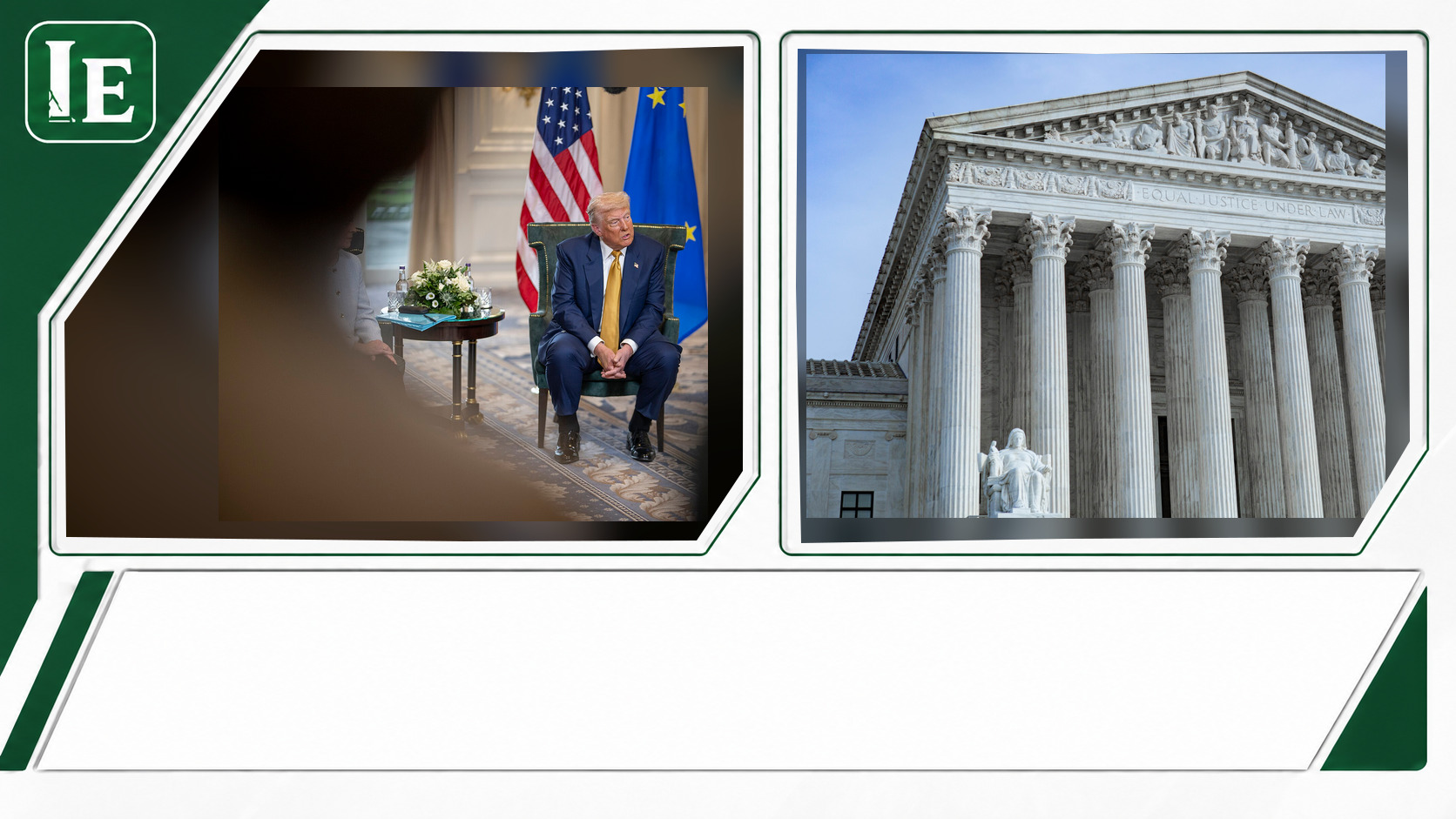
The case is not simply about immigration policy. It asks whether an executive order can narrow a constitutional understanding of citizenship that has generally applied in the United States for more than a century.
Donald Trump’s birthright citizenship order is facing a Supreme Court test on April 1, when the court is scheduled to hear Trump v. Barbara. Trump issued the order in January 2025 seeking to restrict automatic citizenship for some children born in the United States, and the case turns on the 14th Amendment’s language.
The outcome could determine whether the Trump administration can apply a narrower interpretation of birthright citizenship despite more than a century of legal precedent. For now, the order has not taken effect after federal courts blocked it while the constitutional challenge continues.
The dispute reaches beyond immigration policy
The immediate issue is whether a child born in the United States can be denied automatic citizenship when the child’s parents are in the country unlawfully or temporarily.
But the argument before the court reaches further than the terms of one executive order. It concerns the constitutional boundaries of presidential power and the meaning of a rule that has broadly applied to people born on U.S. soil for generations.
A decision favoring the administration could change the citizenship status of future children born under the categories described in the order. It could also create practical fights over documentation, public records and the responsibilities of federal and state agencies.
A ruling against the order would leave the prevailing understanding of birthright citizenship in place and reinforce limits on using executive action to alter a constitutional citizenship rule.
What Trump’s order would do
Trump issued the order after beginning his second term in January 2025. According to SCOTUSblog’s summary of the case, it would deny automatic citizenship to some babies born in the United States whose parents are in the country unlawfully or temporarily.
Legal challenges followed quickly. Federal judges temporarily prevented enforcement, meaning the policy has not gone into effect while the courts consider its constitutionality.
The administration does not argue that the 14th Amendment lacks importance. Its position is that the amendment was intended to reverse the Supreme Court’s Dred Scott v. Sandford decision and secure citizenship for formerly enslaved people and their children—not to establish an unlimited birthright-citizenship rule for children of all noncitizens.
Opponents regard that as a restrictive reading of constitutional text, judicial decisions and longstanding practice. They argue that the order attempts to make a foundational change to American citizenship through executive action.
One phrase carries the case
The legal fight centers on the Citizenship Clause of the 14th Amendment, ratified in 1868. It provides that people born or naturalized in the United States, and “subject to the jurisdiction thereof,” are citizens of the United States and the state where they live.
That phrase has generally been understood to cover nearly everyone born in the country, with narrow exceptions, including children of foreign diplomats. The administration argues that “subject to the jurisdiction” has been interpreted too broadly.
Its argument is that physical presence in the United States alone does not settle citizenship. The administration contends the amendment’s original meaning linked citizenship to allegiance, which it describes as a fuller obligation of loyalty than is held by people in the country illegally or only temporarily.
The court’s task, then, is not limited to the broad principle of birth on American soil. It must decide how far the constitutional term “jurisdiction” reaches.
Lower courts have rejected the policy
Every lower court that has considered the order’s constitutionality so far has ruled against the administration, according to SCOTUSblog. Those courts concluded that the directive is likely inconsistent with the 14th Amendment and Supreme Court precedent.
U.S. District Judge Joseph Laplante issued a preliminary injunction protecting a class of children born after Feb. 20, 2025, who otherwise could be denied citizenship under the order. He wrote that the directive likely conflicts with the amendment and “the century-old untouched precedent” interpreting it.
Those rulings were preliminary, not final decisions resolving the constitutional merits nationwide. Still, they found sufficient legal problems to stop the order from being implemented while litigation moved ahead.
The administration’s earlier Supreme Court case, Trump v. CASA, initially focused on a different question: whether lower courts could issue universal, or nationwide, injunctions. That procedural issue has been separate from whether the citizenship order itself is constitutional.
The injunction ruling changed the path
In Trump v. CASA, the Supreme Court ruled 6-3 against universal injunctions issued by lower courts. Justice Amy Coney Barrett’s majority opinion said courts historically did not provide that kind of sweeping relief.
That decision affected how the birthright-citizenship litigation proceeds, but it did not answer the core question about the executive order. The April 1 argument gives the justices an opportunity to address that question directly.
The distinction matters for families who could be covered by the order. A ruling on the geographic or class-wide scope of an injunction is about who receives temporary protection; a ruling on the constitutional merits determines whether the policy can stand at all.
The 1898 precedent remains pivotal
The major historical precedent is the Supreme Court’s 1898 decision in United States v. Wong Kim Ark. Wong Kim Ark was born in San Francisco to parents of Chinese descent and was denied reentry after traveling abroad because officials said he was not a U.S. citizen.
The Supreme Court disagreed, holding that he was a citizen. The decision described the 14th Amendment as confirming a longstanding principle of citizenship by birth in the country for children of resident aliens.
The Trump administration argues that the decision does not resolve every group covered by the current order, pointing to the history of the amendment and earlier cases. Its opponents argue that Wong Kim Ark is exactly the precedent that forecloses the administration’s position because it adopted a broad understanding of the Citizenship Clause.
When the Supreme Court hears arguments on April 1, the justices may focus on constitutional text, Reconstruction-era history, the force of the 1898 decision or the administrative consequences of changing a rule embedded in American law for more than a century. The case will test a specific Trump order, but its holding could shape the constitutional meaning of being born in the United States.
Leave a Reply