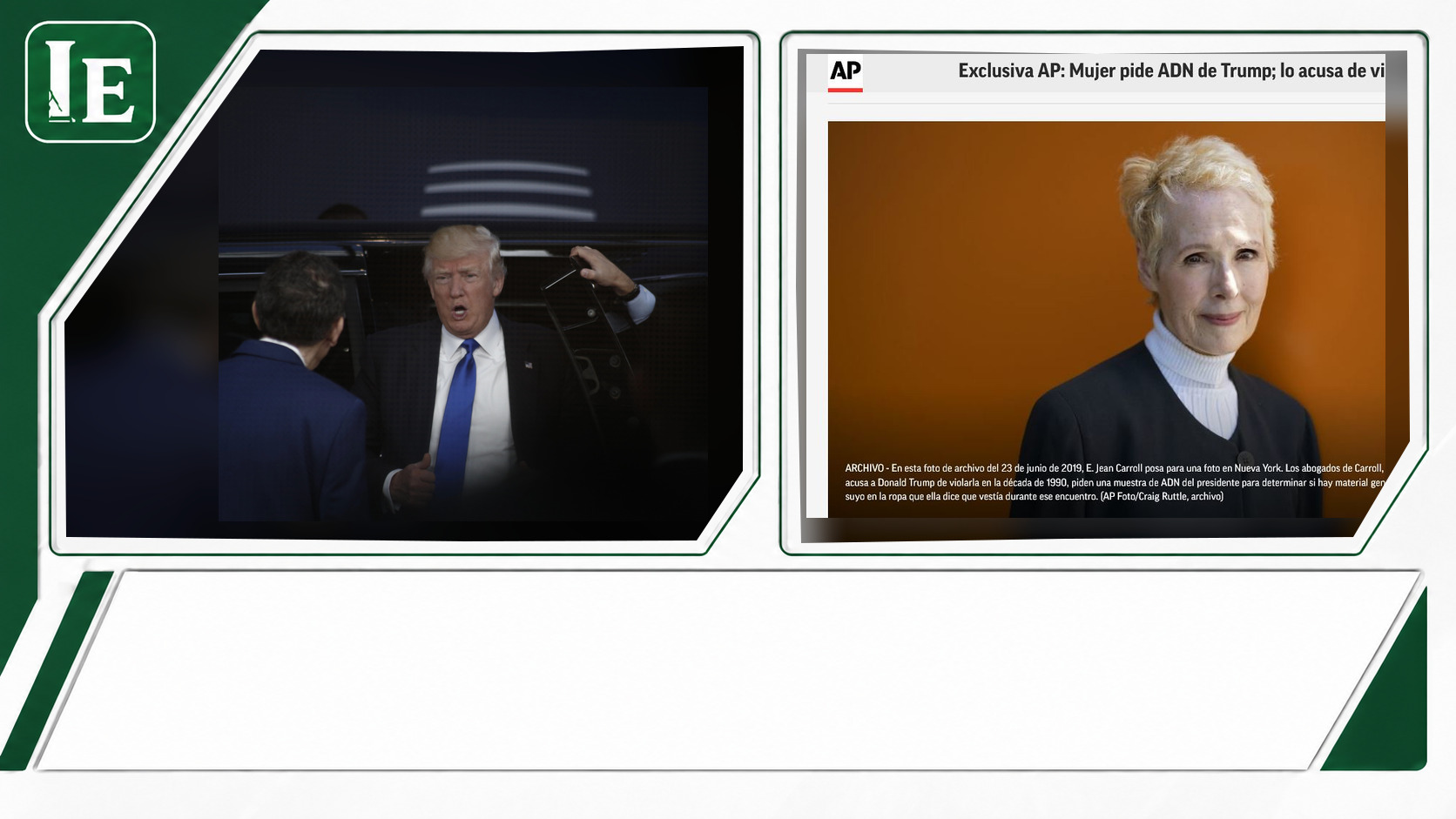
The justices gave no explanation for refusing to reconsider their earlier decision not to hear Trump’s appeal. The order ends one route of challenge in Carroll’s first defamation case, while a separate $83 million judgment remains under review.
The Supreme Court rejected Donald Trump’s effort to avoid a $5.6 million payment to E. Jean Carroll, declining to reconsider its earlier refusal to hear his appeal in the Trump-Carroll civil litigation. The action leaves in place the jury verdict for Carroll, a journalist who sued Trump for defamation after he publicly denied her accusation that he sexually assaulted her in the 1990s.
The amount began as a $5 million verdict and rose with interest while appeals proceeded. The practical result now is that the first Carroll judgment is no longer headed back to the Supreme Court through this request, even as Trump continues to challenge a separate, far larger award to Carroll.
A procedural denial with real consequences
The court did not issue a lengthy opinion or explain its reasoning. That is typical when the justices deny a petition for rehearing, particularly one seeking reconsideration of a decision not to take a case in the first place.

Trump had asked the court to revisit its prior decision declining to review the case. The justices had already turned down his initial petition after the U.S. Court of Appeals for the 2nd Circuit upheld the verdict.
That distinction matters. The Supreme Court did not newly decide the facts of Carroll’s lawsuit, and it did not issue a broad statement about defamation law, presidential immunity or trial evidence. It simply declined to reopen Trump’s unsuccessful bid for review.
Still, the denial has a concrete effect: the lower-court judgment remains intact, and Trump’s challenge in this case has reached the end of the line at the nation’s highest court.
Why the award reached $5.6 million
A New York federal jury awarded Carroll $5 million in 2023. It found Trump liable for sexually abusing Carroll and for defaming her in an October 2022 Truth Social post that called her allegation a “hoax” and said she was not his “type.” Trump has denied Carroll’s account and has maintained that he did not know her.
The figure cited now, roughly $5.6 million, reflects interest added during the extended appeals process. According to SCOTUSblog, Carroll received the $5 million verdict amount plus interest from an escrow account in July.
That means the court’s latest move is not merely about a hypothetical future payment. It removes a final Supreme Court avenue Trump pursued to undo a judgment that had already been secured and paid out while litigation continued.
Trump’s legal team argued that the trial should not have included testimony from other women who accused him of sexual misconduct, along with the 2005 Access Hollywood recording in which Trump was heard making remarks about grabbing women. Carroll’s side argued that the evidence was properly admitted and that the overall evidence supported the verdict.
The case grew from 2022 statements
Carroll filed the lawsuit in 2022 under New York’s Adult Survivors Act, which temporarily allowed adults to bring otherwise time-barred civil claims involving alleged sexual abuse. She said Trump assaulted her in a Manhattan department-store dressing room in 1996.
The lawsuit also focused on Trump’s response decades later. After Carroll publicly described her allegation, Trump denied it and made statements that Carroll argued damaged her reputation by portraying her account as fabricated.
The first trial produced the $5 million verdict. A later case, based on a separate set of Trump statements made in 2019, produced an $83.3 million jury award for Carroll in 2024. The cases involve overlapping people and allegations, but they are legally separate proceedings with different statements, trials and judgments.
That separation is easy to lose in the headlines. The Supreme Court’s latest order concerns the first case and the award now described as $5.6 million with interest—not the $83 million judgment.
Trump raised an immunity argument
In seeking rehearing, Trump pointed to a related legal question about statements he made while serving as president. His lawyers argued that a separate appeal involving the $83 million judgment could raise whether some statements should be treated as protected official acts.
Trump’s position was that if the Supreme Court accepted that argument in the second case, it could affect the treatment of evidence in the first case as well. The justices did not adopt that reasoning in the rehearing request.
Carroll’s attorneys have argued that Trump’s remarks were personal and defamatory, not official presidential acts. They have also maintained that the evidence in the first trial supported the verdict regardless of the issues Trump raised on appeal.
The court’s refusal to reconsider does not resolve every constitutional or immunity question Trump has raised across his cases. It does make clear that those arguments will not revive this particular appeal.
Rehearing requests almost never succeed
The Supreme Court receives thousands of requests to hear cases each term and accepts only a small fraction. Requests asking the court to reconsider a denial of review face even steeper odds.
SCOTUSblog noted that the court rarely grants petitions for rehearing and had not done so since 2018. The justices’ brief order fits that institutional pattern: absent a major error or an exceptional change in circumstances, a denied petition usually stays denied.
For Trump, the loss is significant because it closes the Supreme Court chapter of the first Carroll case without a full merits hearing. For Carroll, it preserves a verdict that had already survived review in the 2nd Circuit.
Neither outcome converts the order into a sweeping legal precedent. A denial of review ordinarily does not signal that the Supreme Court agrees with every aspect of the lower court’s reasoning. It means, in this instance, that the court will not intervene.
The larger Carroll fight continues
Attention now turns to Trump’s challenge to the separate $83.3 million defamation award. That case remains the more consequential financial dispute between Trump and Carroll, and it includes arguments that were not resolved by the latest order.
The Supreme Court could consider Trump’s petition in that case later in the year. It is not required to take it, and there is no guarantee that the justices will address the immunity theory or any evidentiary question Trump has raised.
For now, the immediate takeaway is narrow but decisive: the Supreme Court has declined Trump’s last request to reopen the first Carroll verdict. The $5 million award, which grew to about $5.6 million with interest, remains in force.
Leave a Reply