The loss of a carrier-based combat jet was traced to more than a single failed component. The Navy’s findings put fresh focus on whether crews have the personnel, training and maintenance capacity to sustain demanding operations.
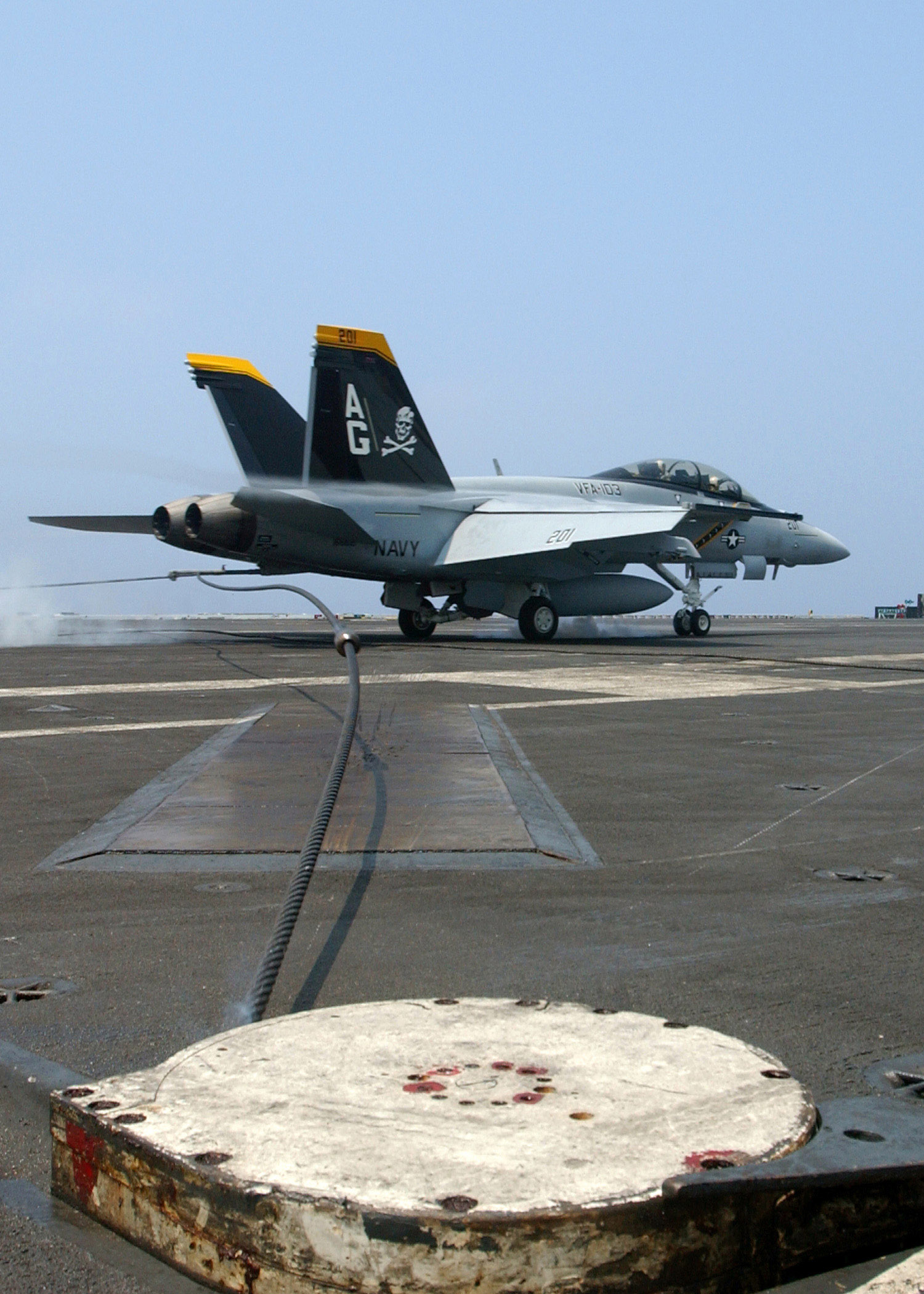
A U.S. Navy investigation linked the loss of an F/A-18F Super Hornet aboard USS Harry S. Truman to an arresting-wire failure on May 6, 2025. The Navy said the carrier’s No. 4 arresting wire failed because of a malfunctioning No. 4 starboard sheave damper, while maintenance, staffing, knowledge and training shortcomings also contributed.
The jet loss matters because an arresting-wire failure occurs at one of the most unforgiving points of carrier aviation: landing a combat aircraft on a moving ship. No injuries were reported, and flight operations resumed within hours, but the findings have intensified scrutiny of readiness during the Truman strike group’s demanding Red Sea deployment.
The part that failed
Aircraft carriers use arresting gear to bring incoming jets to a rapid stop. A landing aircraft lowers its tailhook, which catches one of several heavy cables stretched across the flight deck.

According to the Navy’s investigation summary, the F/A-18F belonged to Strike Fighter Squadron 11, known as VFA-11. The immediate mechanical cause of its loss was the malfunctioning starboard sheave damper in the No. 4 arresting-gear system.
That explanation provides a specific equipment failure rather than a broad description of the loss as an inherent risk of carrier aviation. It also does not reduce the incident to a single defective part.
The Navy cited wider conditions
The investigation identified inadequate maintenance practices, low manning levels, limited knowledge and insufficient training as contributing conditions. It also said the carrier was operating in a strained environment shaped by high operational tempo and combat conditions.
Those findings matter because the arresting system is not a standalone piece of hardware. Its reliable use depends on personnel who can maintain complex equipment, identify problems and operate under sustained pressure.
The public summary does not say how far the cited concerns extend beyond Truman or spell out every corrective measure taken. The Navy said it took appropriate accountability actions following the investigations, without publicly detailing each one.
A quick return, but lingering questions
Truman resumed flight operations within hours of the May 6 incident. Supporters of the Navy can reasonably point to that recovery, as well as the formal investigation, as evidence that the ship and its crew continued to function in difficult conditions.
Critics are likely to emphasize a different part of the same record: the Navy’s own finding that maintenance and personnel-related shortcomings accompanied the component malfunction. Rapidly restoring operations does not answer whether crews had enough time, staffing and technical depth to prevent the failure.
A single mechanical incident does not establish that the entire fleet cannot operate effectively. Still, a jet loss tied to both equipment failure and readiness conditions raises larger questions about how complex systems are sustained during combat deployments.
Several Truman incidents drew scrutiny
The May jet loss was one of several serious events involving the Harry S. Truman Carrier Strike Group. The Navy released separate investigation summaries, and the incidents had different systems, crews and circumstances; they should not be treated as one event with one cause.
In December 2024, USS Gettysburg mistakenly engaged an F/A-18F in a friendly-fire incident. The Navy cited a lack of integrated training opportunities, weak backup practices on the cruiser and insufficient cohesion across the strike group.
In February 2025, Truman collided with the merchant vessel BESIKTAS-M near Port Said, Egypt. The Navy found that collision avoidable, said the bridge team did not navigate safely past the vessel, and relieved the commanding officer.
Then, on April 28, 2025, an F/A-18E Super Hornet and a tow tractor went overboard from Truman’s hangar bay while the carrier carried out evasive maneuvers in response to an incoming ballistic missile in the Red Sea. Investigators identified an aircraft brake-system failure as the primary cause and said communication shortcomings compounded it.
Combat tempo changes the calculation
The Navy said the operational setting helped create the strain surrounding the May arresting-wire failure. Truman was operating in the Red Sea amid missile threats and a demanding mission connected to U.S. Central Command operations.
High operational tempo can narrow maintenance windows and stretch experienced personnel. It can also make communication between departments more consequential, particularly when a ship must respond quickly to an emerging threat.
The April 28 incident illustrates the distinction between operational pressure and technical responsibility. The maneuver was prompted by an incoming ballistic missile, but the Navy still found a brake-system failure and communication problems at the center of the loss.
Military units are expected to operate in difficult environments, and the Navy has stressed that Truman sailors continued their mission while adapting to setbacks. Vice Chief of Naval Operations Adm. Jim Kilby said the service is committed to learning from the investigations and investing in personnel to provide battle-ready forces.
Readiness is more than fleet size
The Truman findings arrive as the Trump administration argues for a stronger military and expanded naval power. The investigation does not assign personal blame to President Donald Trump, but it underscores that fleet strength involves more than ships authorized, budgets approved or aircraft assigned to a carrier wing.
Readiness also depends on whether equipment is maintained, whether crews are adequately staffed and whether sailors have the knowledge and training to sustain operations under pressure. Those are practical conditions that determine how well a force performs with the resources it already has.
Complete repairs to damage from Truman’s February collision are scheduled for the carrier’s upcoming Refueling and Complex Overhaul at HII-Newport News Shipbuilding. What remains unclear is which changes have already been made in response to the May investigation, how broadly the Navy sees its maintenance and manning concerns, and how it will measure whether those fixes work.
The loss of the F/A-18F is therefore not only a record of a failed arresting-gear component. It is a documented example of how a mechanical fault, maintenance practices, personnel depth and training can converge when a combat jet is trying to land at sea.
Leave a Reply