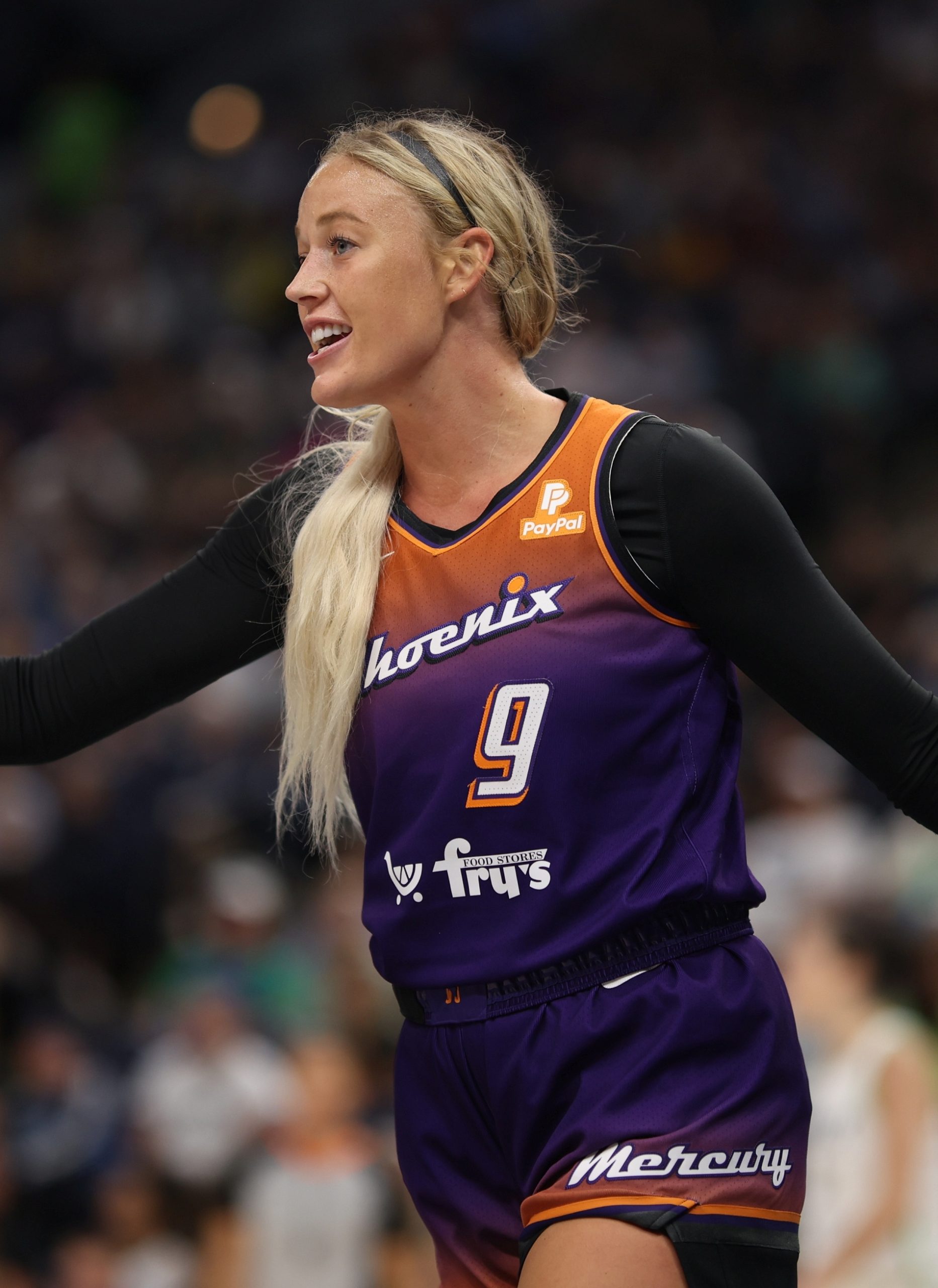
The clip traveled because it had more than a long stare: a Caitlin Clark flashpoint, Fever-Mercury tension and a player already built for social media.
Sophie Cunningham stared at DeWanna Bonner for 22 seconds on Monday night during the Fever-Mercury game in Indianapolis, and the gesture went viral as a WNBA meme. The moment came after Bonner and Caitlin Clark clashed during the Indiana Fever’s 86-77 win over the Phoenix Mercury, according to the Associated Press.
Cunningham stepped into the sequence, Bonner had to be held back, and both Cunningham and Bonner received technical fouls. What might have stayed as another tense in-game exchange became a widely shared clip because it was simple, readable and tied to the league’s biggest online conversation.
The stare became the story
The official record was ordinary enough: two technical fouls in a heated WNBA game. The video, though, had a different life.
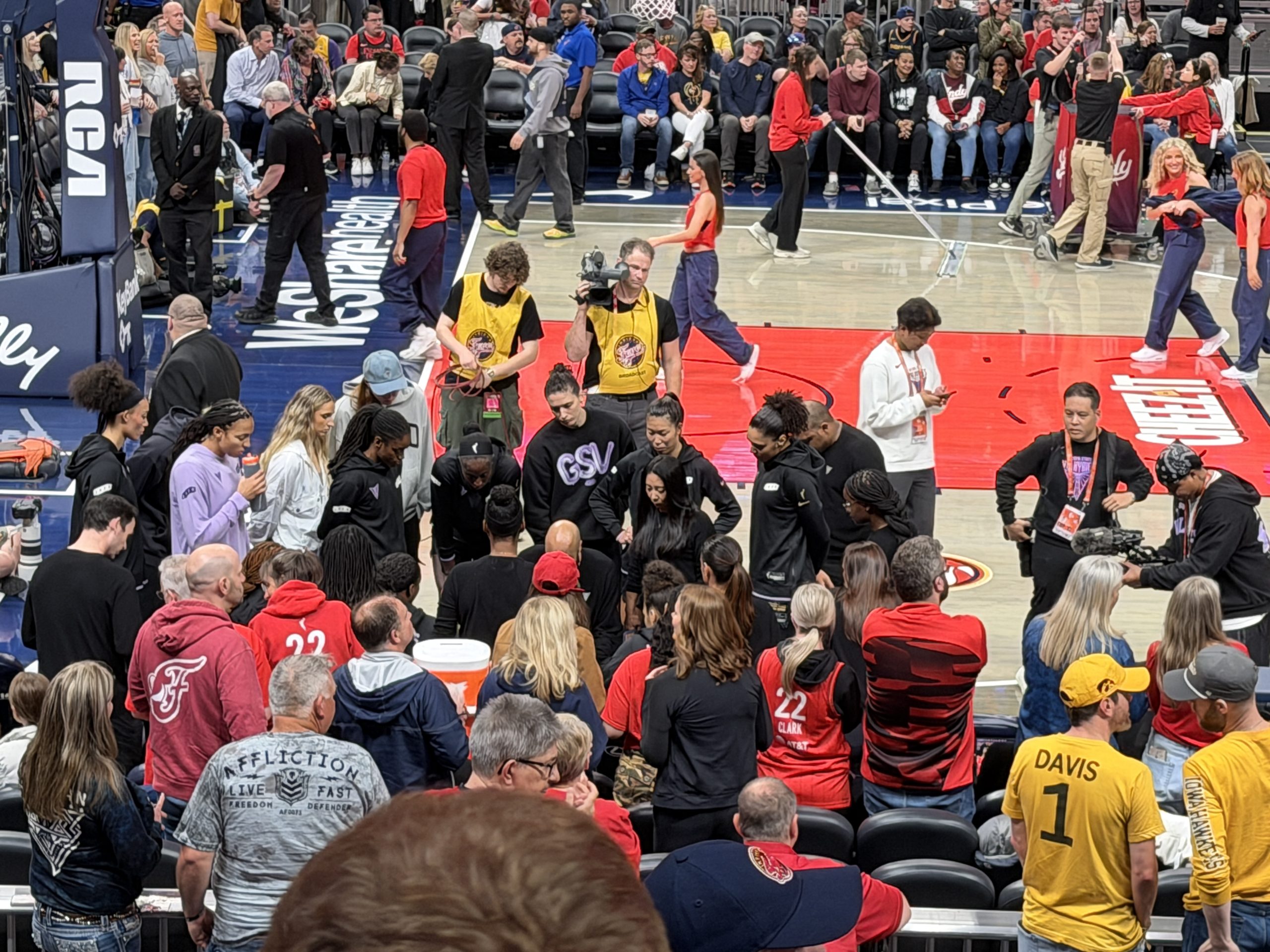
Cunningham pointed at Bonner and kept staring while Fever staff moved her away. AP described it as a 22-second pointing staredown, a detail that gave the moment its hook. It was long enough to look intentional and strange enough to become funny outside the game context.
That is why the clip did not need much explanation to travel. Viewers could understand the body language in a freeze-frame: Cunningham was not backing off, Bonner was the target, and the crowd had a reaction to read.
Sports memes often work best when they require almost no setup. This one had the advantage of being both specific to the Fever-Mercury game and broad enough for fans to apply to everyday situations.
How Clark raised the stakes
The viral moment began with Caitlin Clark, not Cunningham. According to AP, Bonner and Clark had a disagreement during Indiana’s win over Phoenix. Cunningham then became involved, turning a Clark-Bonner exchange into a Cunningham-Bonner image.
That mattered because Clark’s presence changes the temperature around almost any Fever flashpoint. Her games already draw heightened attention, and fan reaction often extends beyond the box score into debates about teammates, protection and physical play.
Cunningham has become part of that conversation. AP noted a separate incident in which she chased down and essentially tackled Connecticut Sun guard Jacy Sheldon after Sheldon poked Clark in the eye. Cunningham and Sheldon were ejected from that game.
For some Fever fans, the Bonner staredown fit the image of a teammate publicly standing up for Clark. For critics, it could look like escalation or performance. The same 22 seconds allowed both readings, which helped keep the clip moving.
Bonner brought a backstory
The staredown also landed because Bonner was not just another opponent. She has a recent Indiana connection, having played nine games for the Fever last season before moving on.
AP reported that Cunningham had previously criticized Bonner on a podcast for not texting her Fever teammates before leaving. Once the clip resurfaced and spread, that detail gave fans a ready-made storyline.
Without that history, the scene might have been processed as a routine basketball argument. With it, the clip looked more personal: a current Fever player pointing at a former Fever player after an exchange involving Clark.
There is a limit to what the video can prove. Fans can see the pointing, the stare and the reaction around them. They cannot know from the clip alone exactly what was said, how much was emotion, or how much was gamesmanship in the moment.
Why social media grabbed it
The Cunningham-Bonner clip had the ingredients social platforms reward: a clear visual, a recognizable player, a tense game, a Clark connection and enough backstory to invite argument.
It also had Cunningham’s own online profile behind it. AP reported she has about 1.5 million Instagram followers, meaning the moment did not begin with an anonymous player suddenly discovered by the internet. Many fans already had a sense of her personality.
That existing audience helps explain why the stare became a template so quickly. One user compared the look to a spouse judging a badly loaded dishwasher. NFL analyst Warren Sharp likened it to an offensive lineman spotting a defensive lineman flinch on a hard count.
By Wednesday, according to AP, the bit had moved into real-life fan interaction. Fever fans asked Cunningham to pose for photos while pointing, and she obliged. At that point, the gesture was no longer only a game clip; it had become a fan pose.
The league’s viral tradeoff
For the WNBA, this is part of a larger shift. More attention brings more highlight sharing, more jokes, more slow-motion debate and more attempts to turn single moments into symbols.
That can be good for reach. A clip like Cunningham’s stare can pull in casual viewers who may not have watched the full Fever-Mercury game. It gives fans a shorthand image and gives the league a place in broader sports conversation.
It also comes with a cost. Viral moments can flatten a game into one gesture. Indiana’s 86-77 win over Phoenix was the actual result, but the staredown traveled farther than the score.
Players can also become stand-ins for bigger arguments. Cunningham’s supporters may see loyalty and edge. Skeptics may see unnecessary theatrics. Bonner’s side of the moment can be reduced to a reaction shot. Clark’s involvement can make the entire exchange feel larger than a standard technical-foul sequence.
What remains after 22 seconds
The immediate basketball consequence was clear: Cunningham and Bonner received technical fouls. AP did not describe additional league discipline tied to the exchange.
The cultural consequence is less tidy. Cunningham’s point at Bonner is now part of the Fever’s season imagery, whether it fades quickly or gets revived the next time these teams meet.
That is what made the clip more durable than a normal confrontation. It was not only about who said what in Indianapolis. It connected Clark’s orbit, Bonner’s brief Fever history, Cunningham’s reputation and a WNBA audience ready to turn body language into content.
The standings are still decided by games like Indiana’s 86-77 win. But in the league’s current attention cycle, the moments people replay afterward can shape the story almost as much as the final score.
Leave a Reply