Blog

  • Trump’s WHCD Neck Photo Revives Health Questions at 80, With Limited Evidence

    Trump’s WHCD Neck Photo Revives Health Questions at 80, With Limited Evidence

    The viral reaction reflects a bigger tension around presidential health disclosures: legitimate public interest colliding with the limits of image-based speculation.

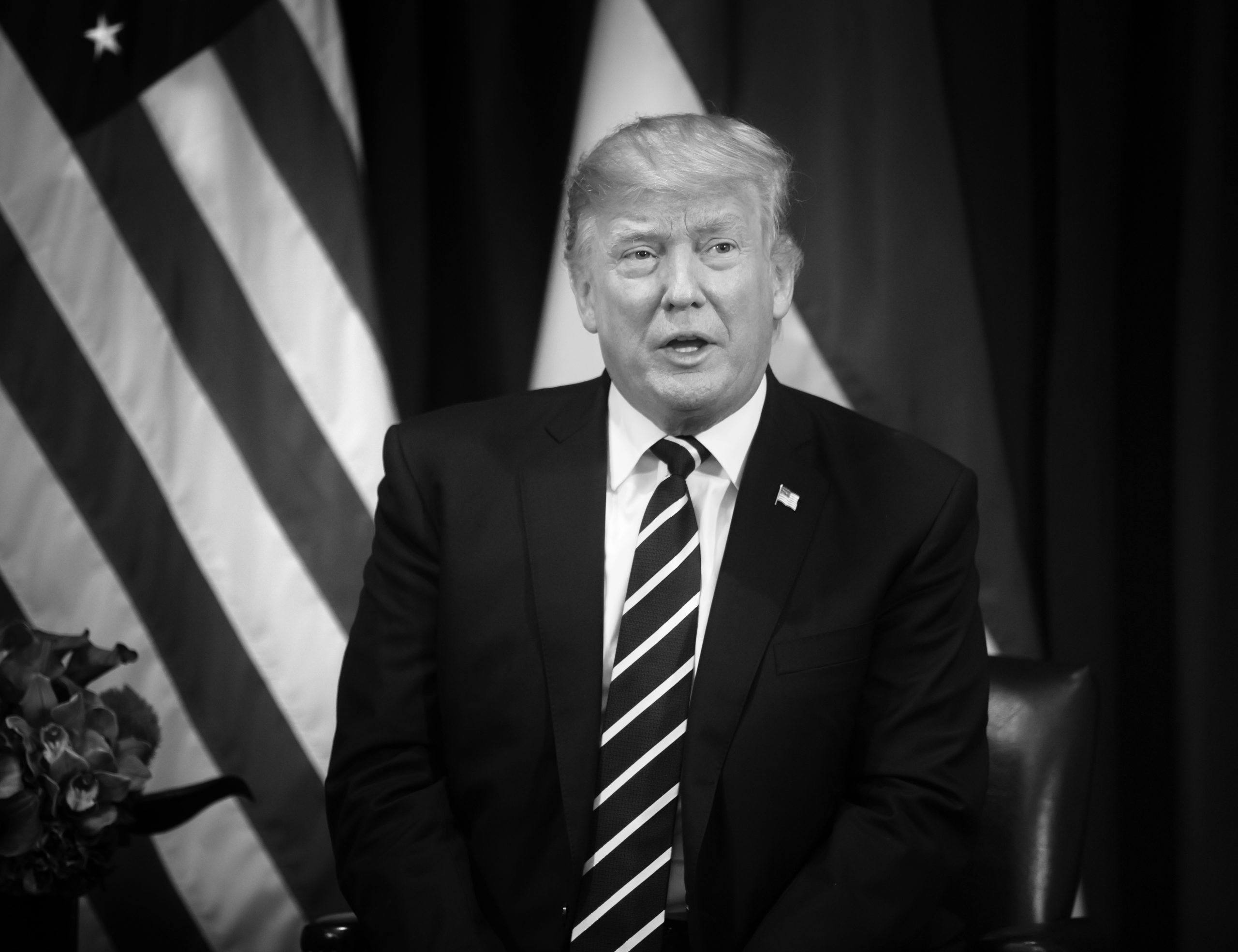
    Donald Trump’s neck was shown in close-up at the White House Correspondents’ Dinner in Washington, D.C., and the WHCD neck close-up images sparked health speculation online. This article explains what the photo showed, why online commentators focused on it, and what remains unproven about any medical meaning.

    The dinner, hosted by the White House Correspondents’ Association, became the setting for a public debate because scrutiny of Trump’s health, age and transparency is already intense. The available evidence confirms a visible close-up and a viral reaction, not a diagnosis.

    A close-up overtook the event

    The attention did not center on a policy statement, a joke or a formal announcement from the White House Correspondents’ Dinner. It centered on a tightly framed image of Trump’s neck and the way it appeared once it was zoomed, shared and discussed online.

    Commentators focused on the look of his skin, including perceived redness and texture. Some treated the photo as a legitimate reason to ask questions about the president’s health. Others mocked the image or dismissed the reaction as partisan theater.

    A third response was more cautious: a still image can be misleading. Lighting, makeup, camera angle, age, shaving, image compression and the quality of a shared screenshot can all change how skin appears to viewers who were not in the room.

    That is why the photo became more than a photo. It became a test of how quickly a visible detail can turn into a political health narrative before any official medical explanation is attached to it.

    The prior White House explanation

    The WHCD reaction landed in a context that already included public attention on Trump’s neck. NBC News reported that on March 2, 2026, White House physician Dr. Sean Barbabella addressed visible redness on the right side of Trump’s neck.

    Barbabella said Trump was using a “very common cream” as a “preventative skin treatment” prescribed by the White House doctor. He said the treatment would be used for one week and that the redness was expected to last for a few weeks.

    That explanation is important, but so are its limits. The statement did not identify the cream or describe the specific reason for the preventive treatment. It also did not say that every later photo of Trump’s neck showed the same issue.

    No public medical statement in the available reporting tied the White House Correspondents’ Dinner close-up to a specific condition. The White House had addressed a prior visible skin issue; online claims about the dinner image went further than that record supports.

    What a photo cannot prove

    Public figures, especially presidents, are photographed constantly. That creates an unusual amount of visual evidence, but not the kind of evidence a doctor would need to make a diagnosis.

    A close-up can reveal something real. It can also exaggerate ordinary details. Skin can look different because of irritation, treatment, sun exposure, makeup, shaving, lighting or the way an image is processed and reposted.

    That distinction matters because the online reaction moved quickly from observation to speculation. Saying that viewers noticed redness or texture is supported by the reaction. Saying the image proves a medical condition is not supported by the public evidence described in the available reporting.

    The careful reading is narrower: the photo drew attention to Trump’s appearance and intensified questions already surrounding his health. It did not, on its own, establish what caused what viewers saw.

    Age makes the scrutiny sharper

    Trump is now 80, and that fact gives health questions added political force. A president’s physical and mental fitness is a legitimate public concern for voters, lawmakers and foreign governments because the office carries unusual demands and risks.

    At the same time, legitimate public interest does not make social media a medical record. Supporters may reflexively reject every visible concern as hysteria. Critics may treat every mark, bruise or awkward image as proof of decline. Neither reaction gives the public a reliable answer.

    Presidents do not have the same privacy expectations as private citizens when it comes to fitness for office. The public has a reasonable interest in major illnesses, medications, procedures or impairments that could affect decision-making or stamina.

    But a zoomed-in image cannot show medical history, lab results, a dermatologist’s evaluation or whether a visible mark is temporary. Even when a White House physician comments, the public generally receives a summary rather than a full clinical picture.

    Earlier marks shaped the reaction

    The WHCD image was not the first time visible marks on Trump prompted public questions. NBC News noted that red, irritated skin on his neck was visible at a Medal of Honor ceremony in the East Room of the White House and in photographs from his State of the Union address.

    Trump has also faced attention over bruises on his hands. He previously told The Wall Street Journal that bruising was connected to taking a larger dose of aspirin than doctors had recommended. He said aspirin thins the blood and that he had taken the larger dose for years.

    The White House separately said in February 2025 that one visible hand bruise was the result of Trump shaking hands repeatedly. Those explanations did not end speculation, but they show how small visible changes can become part of a broader story about age and disclosure.

    Trump had an annual physical exam in April, according to prior White House disclosures cited by NBC News. The White House also said he underwent another routine yearly checkup in October. Trump later told reporters he had imaging that was “perfect,” and Barbabella later described imaging of Trump’s cardiovascular system and abdomen as “perfectly normal,” according to NBC News.

    The unanswered question remains

    The central unresolved issue is whether the WHCD close-up showed the same redness previously described by Trump’s doctor, a different temporary irritation, an artifact of photography or something else. No public evidence in the available reporting confirms a medical condition from the dinner images alone.

    It is also unclear whether the White House will address this specific wave of attention. Officials may decide the earlier explanation about preventative skin treatment is sufficient. Critics are likely to argue that the health disclosures of an 80-year-old president should be more detailed.

    The episode shows how modern political health stories can start without a medical bulletin. A camera angle becomes a screenshot, the screenshot becomes a claim, and the claim becomes a debate over trust.

    The safest conclusion is not that the WHCD image proves a serious problem. It is that one close-up of Donald Trump’s neck exposed the unstable line between legitimate scrutiny of presidential health and internet diagnosis built on limited visual evidence.

  • Alex Jones Breaks With Trump, Demands Impeachment Over Iran

    Alex Jones Breaks With Trump, Demands Impeachment Over Iran

    The demand stands out because it comes from a far-right media personality who has long been associated with Trump’s political orbit. His remarks show how the Iran conflict is creating strain inside parts of the president’s base.

    Alex Jones called for Donald Trump’s immediate impeachment on Tuesday, tying his demand to the Iran conflict and saying Trump should be removed over a crisis he described as “absolutely out of control.” The former InfoWars figure also warned that the Trump administration is preparing for a national draft, according to The Hill.

    That makes the outburst notable not because Jones is a mainstream Republican voice, but because it exposes pressure on Trump from a corner of the right that has often backed him. CNN also identified Jones as saying the president should be impeached over the war in Iran.

    Why Jones broke with Trump

    Jones’s remarks were aimed squarely at Trump’s handling of Iran, not at the usual domestic disputes that dominate impeachment talk. The Hill reported that Jones said Trump “must be impeached” over the conflict, framing the situation as dangerous and uncontrolled.

    Jones has built his career as a confrontational broadcaster and conspiracy-driven political figure. CNN described him as a far-right radio host and conspiracy theorist, while The Hill referred to him as the former owner of InfoWars.

    That context matters because Jones’s audience overlaps with some of the anti-establishment, America First currents that helped fuel Trump’s rise. A call for impeachment from that lane is not the same as criticism from Democrats, former national security officials or anti-Trump Republicans. It signals a fight over whether Trump’s foreign policy is being seen by some supporters as a betrayal.

    Iran is the pressure point

    The available reports center Jones’s anger on the Iran conflict. CNN’s short video summary says Jones argued that the president should be impeached over the war in Iran, while The Hill’s account says he made the comments Tuesday and tied them to a warning about a draft.

    The substance of that warning is politically explosive. Talk of a national draft reaches beyond foreign policy specialists and into the lives of families, young adults and veterans who remember how quickly military commitments can reshape public opinion.

    There is an important distinction, though: Jones’s warning is an allegation, not a confirmed policy. The reports provided do not establish that a national draft is underway, that Congress has authorized one, or that the administration has formally announced such a plan.

    Still, the draft claim explains why the remarks spread. It converts an overseas conflict into a domestic fear: that escalation abroad could eventually demand sacrifice at home.

    The impeachment demand has limits

    Calling for impeachment is dramatic. Making it happen is something else entirely.

    Under the U.S. constitutional system, impeachment begins in the House of Representatives. A president can be impeached by the House and removed only if convicted by the Senate. A media personality, activist or broadcaster can apply pressure, but cannot initiate removal on their own.

    That means Jones’s demand is best understood as a political signal rather than an immediate procedural threat. It may influence a slice of public conversation, especially among viewers already skeptical of U.S. military action, but it does not automatically translate into congressional action.

    It also raises a hard question for elected Republicans: whether criticism of Trump’s Iran policy stays confined to outside voices, or whether it starts showing up in formal statements, votes or oversight demands.

    A rupture inside Trump’s right

    Trump’s political strength has often depended on keeping several factions moving in the same direction: populists, traditional conservatives, hawks, isolationists, Christian conservatives, business interests and grievance-driven online movements. Foreign policy can strain that coalition faster than almost any other issue.

    Some Trump-aligned voters have supported a harder line against Iran. Others have backed Trump because they believed he would avoid extended wars and reject establishment interventionism. If the Iran conflict is viewed as open-ended, those groups may not react the same way.

    Jones’s attack lands in that gap. For his critics, it may look like another attention-grabbing escalation from a provocateur with a long record of inflammatory claims. For some listeners, it may sound like a warning that Trump has crossed a line on war powers, military risk or promises to avoid foreign entanglements.

    Both reactions can be true at once. The messenger is polarizing, but the issue he is invoking, fear of wider war, is politically potent.

    What Trump’s team hasn’t answered

    The available source material does not include a response from Trump or the Trump administration to Jones’s impeachment demand. It also does not provide the full transcript of Jones’s show, the evidence he cited for his draft warning, or whether he laid out a specific article of impeachment.

    Those gaps matter. Without the full context, it is difficult to separate rhetoric from a more structured political argument. Jones’s phrase “absolutely out of control,” as reported by The Hill, captures intensity, but not necessarily a detailed case.

    There is also no indication in the extracted reporting that congressional leaders have taken up Jones’s call. For now, the news value is the break itself: a high-volume figure on the far right publicly saying Trump should be impeached because of Iran.

    • Confirmed by available reports: Jones called for Trump’s impeachment and tied it to Iran.
    • Reported allegation: Jones warned about a national draft.
    • Not established in the provided reporting: that a draft is officially planned or that Congress is acting on Jones’s demand.

    The larger warning sign

    The immediate takeaway is not that Trump is suddenly on the brink of removal. The stronger point is that Iran is creating visible stress in parts of the president’s support network.

    Jones’s demand gives Trump’s critics a striking sound bite, but it may be more uncomfortable for Trump’s allies. It suggests that some right-wing anger over the conflict is not being channeled into mild disagreement. It is being framed as a violation serious enough to justify impeachment.

    Whether that remains a one-day media flare-up or grows into a broader revolt depends on what happens next in Iran, what the administration says about military commitments, and whether other influential pro-Trump voices echo Jones or dismiss him.

    For now, the remark is a warning flare from an unpredictable corner of the right: Trump’s Iran policy is not only being judged by his opponents. It is also being tested by people who once helped energize the movement around him.

  • Howard Stern’s Staff Cuts Shift Spotlight to Reported Severance NDAs

    Howard Stern’s Staff Cuts Shift Spotlight to Reported Severance NDAs

    The layoff count is only part of the story. Reported silence clauses and a leaner live schedule have made the SiriusXM shake-up harder for fans to read as routine.

    The center of the Howard Stern controversy has moved quickly from headcount to control over what former staffers can say. According to reports cited by Idaho Public Press and The U.S. Sun, around a dozen employees tied to The Howard Stern Show and Stern’s SiriusXM operation were let go last week, with severance agreements reportedly including a strict NDA.

    The backlash has also been shaped by timing. Related reporting said the show is moving toward one new live program per week after Stern returns from summer break in September, a sharp reduction from the three-day weekly routine listeners had associated with the show.

    The dispute starts with reported silence clauses

    The strongest reaction has focused on the reported severance terms, not just the layoffs themselves. The U.S. Sun, citing unnamed insiders, described the packages as modest and tied to a strict nondisclosure agreement.

    One source claimed employees received a little more than a week of pay for every year worked. Another framed the severance as roughly two months of pay for each decade of service.

    Those claims have not been verified through a publicly released agreement, and Stern or SiriusXM have not confirmed the full terms in the material reviewed. That leaves the exact language, limits and possible exceptions unknown.

    Still, the reported NDA has become the emotional center of the story. Critics who already viewed the cuts as unfair have treated the alleged silence requirement as a sign that former staffers may have limited room to explain their own exits.

    What reports say happened

    The U.S. Sun reported that staffers were informed of the cuts during a Zoom call last week. The reductions were described as affecting both production employees and on-air names.

    Reports placed the scale at roughly a dozen employees. The cuts were first reported earlier this month and drew wider attention after July 14 coverage.

    The 72-year-old host and SiriusXM have not provided a detailed public explanation in the material reviewed. The U.S. Sun said it reached out to representatives for Stern’s show for comment.

    That absence matters because the public record is still driven largely by insider accounts and media reports, rather than by a full statement from Stern’s side or by released severance documents.

    The names made the cuts feel less anonymous

    Among the people reported as affected were Benjy Bronk, Memet Walker, Jon Blitt and Mike Trainor. Bronk was described in the report as having been with the show for more than 25 years.

    Trainor has publicly acknowledged his layoff on X. The status of others has been reported through unnamed insiders rather than through broad official announcements from Stern or SiriusXM.

    That is one reason the story landed differently from a standard media layoff item. The reports did not describe only behind-the-scenes positions; they included people listeners knew as part of the show’s broader cast of voices.

    For a personality-driven program, those departures can affect how fans understand the show, even before any new schedule fully takes shape.

    A reduced schedule changes the staffing question

    The layoffs are being read alongside reports that Stern’s live output is shrinking. The U.S. Sun reported that the show is moving toward one new live program per week after Stern returns from summer break in September.

    On its own, a smaller live schedule offers a practical explanation for a smaller staff. Fewer live programs can mean fewer production hours, bookings, writing needs and daily support demands.

    That business logic has not ended the criticism. Listeners have long understood The Howard Stern Show as more than interviews and monologues; internal dynamics and staff personalities have often been part of the product.

    Because of that, cutting recognizable contributors can be read as a creative change as well as an operational one.

    Why the backlash has stuck

    The anger is fueled by a clash between Stern’s public image and the reported handling of the exits. Stern built one of radio’s most famous careers on direct talk, loyalty, conflict and public candor.

    When a workplace shake-up around his own show is paired with limited public comment and reported NDAs, critics see a contradiction. Supporters of a leaner structure may see the same facts as a painful but ordinary restructuring tied to fewer live hours.

    Both readings depend on details that remain incomplete. The full severance agreements have not been made public, and the precise internal reasoning for each cut has not been laid out by Stern or SiriusXM.

    That uncertainty has allowed the reported NDA issue to define the conversation more than any single personnel move.

    What remains unresolved

    The exact scope of the layoffs is still unclear. Around a dozen gives a rough scale, but it does not establish every department affected, how many full-time employees remain or whether more changes are planned.

    The severance dispute is unresolved as well. Reports describe strict NDAs and limited pay, but without the actual agreements, outside observers cannot fully assess the terms.

    What is clear is the timing: the cuts arrived as Stern’s show is reportedly moving toward fewer live hours. That has made the layoffs feel to many listeners like part of a larger transition rather than an isolated staffing decision.

    The practical takeaway is that the controversy is not only about Howard Stern’s operation letting people go. It is about whether a smaller version of The Howard Stern Show can keep audience trust while familiar names depart and reported silence clauses remain part of the story.

  • CNN Poll Finds Trump’s White Voter Approval at Record Low Before Midterms

    CNN Poll Finds Trump’s White Voter Approval at Record Low Before Midterms

    White voters remain central to Trump’s coalition, which is why even a polling shift inside that group gets immediate attention. The numbers also show broader frustration over costs, leadership and foreign policy.

    Donald Trump’s approval rating among white voters has fallen to a record low: a new CNN poll found the decline, putting his net approval with white voters at minus 20. That drop could matter ahead of the 2026 midterms because white voters have been a key part of Trump’s coalition, and Republican candidates and political strategists will be watching whether the weakness lasts.

    The CNN/SSRS survey also places the slide in a wider problem for Trump’s broader political standing. His overall approval rating is 34 percent, while 66 percent disapprove, matching his lowest approval mark in CNN’s polling series but with even deeper net disapproval than after January 6, 2021.

    A warning inside Trump’s base

    The most politically sensitive number is not simply that Trump is unpopular nationally. Presidents can govern through poor national ratings if their party remains energized and their coalition holds.

    The CNN poll suggests a possible stress point inside one of Trump’s most important voting blocs. His net approval among white Americans is now minus 20, according to the survey, the lowest point recorded in the series during his presidency.

    Net approval is calculated by subtracting the share who disapprove from the share who approve. A minus 20 figure means disapproval is outpacing approval by 20 percentage points among white voters in this poll.

    That does not mean white voters have suddenly become a Democratic constituency. It does mean a group that has usually viewed Trump more favorably than the country overall is now showing sharper dissatisfaction.

    The yearlong slide

    The movement looks more notable when measured across the past year. Newsweek, citing the CNN poll, reported that Trump’s net approval with white Americans stood at 0 in July 2025.

    It then moved to minus 7 in October, minus 5 in January 2026, minus 10 in February and minus 12 in March. After briefly returning to even in April, it fell to minus 20 in July 2026.

    Polls are snapshots, not forecasts. A single survey can be affected by timing, news events and sampling variation. But a repeated drift across months is the kind of pattern campaigns pay attention to, especially when it touches voters who have been central to past victories.

    For Republicans, the question is whether the July number reflects a temporary burst of frustration or a more durable change in how some Trump-leaning voters are judging his second term.

    Overall approval is also weak

    Trump’s national numbers in the CNN/SSRS poll are bleak. His overall approval rating is 34 percent, matching the lowest point CNN recorded for him in January 2021 after the Capitol riot and in the final days of his first presidency.

    The comparison is striking because the latest net approval figure is worse. CNN’s series now puts Trump at minus 32 overall, compared with minus 28 shortly after January 6, 2021.

    The reason is higher disapproval. In the July 2026 poll, 66 percent of Americans disapprove of Trump’s performance. In January 2021, CNN polling put disapproval at 62 percent.

    That distinction matters. An identical approval rating can carry different political meaning if opposition is harderening. High disapproval can make it more difficult for a president to persuade swing voters, protect vulnerable allies or shift attention away from bad news.

    Costs and Iran weigh heavily

    The poll points to several sources of public frustration. Trump’s weakest issue ratings came on inflation, gas prices and the conflict involving Iran, according to the CNN survey cited by Newsweek.

    Only 25 percent approved of his handling of inflation. Approval of his management of gas prices was even lower, at 21 percent. On the situation involving Iran, approval stood at 28 percent.

    Those are not abstract concerns for voters. Nearly three-quarters of respondents said rising gas prices have caused at least some hardship for their household, and 71 percent said Trump has not gone far enough to reduce the cost of everyday goods.

    The Iran numbers also suggest diminishing confidence. About one-quarter of Americans said Trump has a clear plan for handling the Iran situation, down from 40 percent at the start of the conflict, according to the poll.

    Leadership concerns cut deeper

    The survey also shows unease beyond individual policy fights. CNN found that 73 percent of Americans believe Trump has not paid enough attention to the country’s most important problems, while 27 percent said he has focused on the right priorities.

    Roughly three-quarters of respondents said Trump is not in touch with the problems ordinary Americans face in daily life. About two-thirds said he does not put the country’s interests ahead of his personal gain.

    Those findings are politically damaging because they go to presidential image, not just policy preference. Voters may dislike a decision and still trust a leader’s motives. This poll suggests many Americans are questioning both priorities and judgment.

    The White House rejected the negative framing. Davis Ingle, a White House spokesman, said in a statement reported by Newsweek that “No other President in history has accomplished more for the American people than President Trump,” adding that Trump is working to create jobs, cool inflation and increase housing affordability.

    Why midterm strategists care

    The 2026 midterms are the immediate political context. Midterm elections often become referendums on the sitting president, and a president’s approval rating can affect turnout, candidate recruitment, fundraising and the national mood around close races.

    Republican candidates do not need Trump to be broadly popular with every voter to win. But they do need enough of the party’s core supporters to remain motivated, and they need persuadable voters not to view their campaigns as extensions of an unpopular White House.

    The CNN poll contains signs of softer energy inside the party as well. Trump’s approval among Republicans fell to 78 percent, the lowest level recorded during his time in office in the CNN series. Just 19 percent of Republicans said they were enthusiastic about the years ahead, down from 38 percent last spring.

    That still represents strong partisan support by normal standards. The danger for Republicans is not necessarily mass defection. It is lower enthusiasm, weaker turnout, smaller margins in heavily white districts and more pressure on candidates in competitive states to decide how closely to run with Trump.

    What remains uncertain

    The CNN/SSRS poll was conducted from July 23 to July 27 among a random national sample of 1,225 U.S. adults drawn from a probability-based panel. Interviews were conducted online or by telephone with a live interviewer, and the margin of error was plus or minus 3.2 percentage points.

    That margin means small changes should be read carefully. Subgroup numbers, including results among white voters, can carry larger uncertainty than the topline national figure. Polling also cannot show whether dissatisfaction will translate into votes more than a year from Election Day.

    Still, the signal is hard for either party to ignore. Democrats will see evidence that Trump’s weaknesses are spreading into friendlier terrain. Republicans will look for whether the White House can improve perceptions on prices, priorities and competence before discontent settles in.

    The clean takeaway is this: Trump’s problem in the poll is not only that opponents remain opposed. It is that doubts appear to be growing among voters he has long relied on most.

  • Trump’s Bid to Block Jack Smith Report Hits a Jurisdiction Fight

    Trump’s Bid to Block Jack Smith Report Hits a Jurisdiction Fight

    Trump wants the special counsel’s final word stopped. The fight now turns on whether the judge who paused the report had the authority to do it.

    Donald Trump is retaliating against Jack Smith, and Trump’s payback against the former special counsel is already facing an early legal setback: on Tuesday, a Florida judge temporarily blocked the release of a Department of Justice special counsel report on Trump’s classified-documents case. The order by U.S. District Judge Aileen Cannon helps Trump for now, but the setback makes Trump’s payback effort look weak because the fight shifts immediately to whether she had power to stop the report at all.

    The dispute matters because Smith’s report may be the last official public accounting of two federal investigations that ended without trial after Trump’s return to power. Trump has denied wrongdoing and has long cast the prosecutions as political. Now he is trying to prevent Smith from getting the final word.

    A win with a weakness

    Cannon’s order temporarily barred Smith and Attorney General Merrick Garland from “releasing, sharing, or transmitting” the report, according to the BBC. The pause came after Walt Nauta, Trump’s personal aide, and Carlos De Oliveira, the property manager at Trump’s Mar-a-Lago club, asked the court to intervene.

    Nauta and De Oliveira were Trump’s co-defendants in the classified-documents case. Both pleaded not guilty. Cannon said the release should be put on hold while the 11th U.S. Circuit Court of Appeals in Atlanta considers their emergency appeal.

    Trump publicly praised Cannon after learning of the decision, calling her a “brilliant judge with great courage.” Politically, that gave him a moment to claim validation against Smith.

    Legally, the victory is narrower. Daniel Charles Richman, a Columbia University law professor, told the BBC it was far from clear that Cannon had jurisdiction to block the report. That question is why the order may be less a knockout than a temporary freeze.

    Why Smith’s report matters

    Smith led two federal investigations into Trump: one over alleged efforts to overturn Trump’s 2020 election defeat and another over the alleged mishandling of classified documents. Both produced criminal indictments. Trump pleaded not guilty and denied all wrongdoing.

    The cases were later shelved after Trump won re-election, in part because of the Justice Department’s long-standing position that a sitting president should not be prosecuted. That left the special counsel report as a potentially important document: not a trial verdict, but a formal record of what investigators found and why they charged what they charged.

    Special counsels are required to submit reports to the Justice Department. Attorneys general often make those reports public, especially when the underlying investigation involves a president or presidential candidate. Garland had previously said he intended to release special counsel reports in the interest of transparency.

    That is why Trump’s push to block disclosure is about more than paperwork. If the report is released, Smith’s narrative survives even though the prosecutions do not. If it is buried or delayed, Trump can argue the investigations collapsed under their own weight.

    Trump’s argument against disclosure

    Trump’s lawyers urged Garland not to release the report and accused the Justice Department of “weaponisation of the justice system,” according to the BBC. They argued Smith was politically motivated and lacked lawful authority because, in their view, he was unconstitutionally appointed.

    That argument tracks Cannon’s earlier ruling dismissing the classified-documents case. She found Smith’s appointment unconstitutional, a decision that was controversial and sharply criticized by many legal scholars.

    Trump’s side sees that ruling as central to the broader fight. If Smith was not properly appointed, they argue, his report should not be treated as a legitimate Justice Department product.

    The counterpoint is just as direct: the Justice Department’s special counsel regulations exist precisely to require a final report to the attorney general. Even when a prosecution ends, the department may still have an institutional reason to explain major charging decisions to the public.

    Cannon’s role draws scrutiny

    Cannon is not a neutral name in this fight’s political story. She oversaw the classified-documents case and dismissed it last July, handing Trump one of his biggest legal wins before the case could reach trial.

    Her latest order puts her back at the center of a dispute involving the same investigation and the same special counsel. For Trump allies, that may look like continuity: the judge who rejected Smith’s authority is again slowing Smith’s final move.

    For critics, it raises a different concern. If an appeals court decides Cannon lacked authority to stop the report, Trump’s short-term win could become evidence that his anti-Smith campaign depends on an unusually favorable judicial forum rather than settled law.

    That is the tension inside the “bad start” for Trump’s payback. The order gives him delay, but it does not yet give him durability.

    The political stakes are obvious

    Smith has not publicly responded to Trump’s lawyers, according to the BBC. That silence leaves the argument largely to Trump’s team, Garland’s next move and the appellate court.

    Trump’s supporters have long said the federal prosecutions were politically motivated and timed to damage him. Many of his opponents have argued the Justice Department moved too slowly and that delays helped Trump run out the clock.

    Both views help explain why the report carries such weight. It is not just a legal document. It is a fight over the historical record of criminal investigations into a president who returned to office before either federal case could be tried.

    That makes the report dangerous to one side and necessary to the other. It could reinforce Trump’s claim of persecution if the legal reasoning appears weak. It could also preserve damaging factual findings that no jury ever got to evaluate.

    What happens next

    The immediate question is what the 11th Circuit does with the emergency appeal. If the appeals court leaves Cannon’s pause in place, the report’s release could remain blocked or limited while the legal fight continues.

    If the appeals court rejects the intervention, Garland may have a clearer path to release some or all of the report. Trump’s lawyers could still try other legal maneuvers, but the momentum would shift.

    There are also unresolved practical questions: whether the report can be redacted, whether parts involving co-defendants can be withheld, and whether the Justice Department will separate the two Smith investigations for public release.

    For now, Trump has delay. What he does not yet have is a final legal ruling that Smith’s report must stay hidden. That is why the opening round of his retaliation looks shakier than the celebratory rhetoric around Cannon’s order suggests.

  • Trump’s 1,000-Plus Epstein File Mentions Include Insults, Unverified Claims

    Trump’s 1,000-Plus Epstein File Mentions Include Insults, Unverified Claims

    The insults are getting attention, but the documents sit inside a much larger and politically explosive Epstein file release. Here is the context, the caveats, and what remains unclear.

    Newly surfaced documents contain harsh criticism of Donald Trump: the documents call Trump “a true disgrace” and “an unbearable teenager,” language now circulating in a Dagens.com US/MSN item. With Trump being called those names, the sharper question is not only the insult. It is what these newly surfaced documents say, where they fit within the newly released Jeffrey Epstein files, and why Trump’s name appearing across the trove matters now.

    CNN reported that Trump is mentioned more than 1,000 times in millions of Epstein-related documents released by the Justice Department. Some references appear routine or benign. Others involve unverified allegations, disputed claims and politically charged material that Trump and the Justice Department have rejected.

    The insult is only the hook

    The phrases “a true disgrace” and “an unbearable teenager” are built for social media. They are short, cutting and easy to detach from the larger record.

    That is also why they need context. A line inside a document can be a direct quote, a secondhand remark, a tip, an investigator’s note, a summary of someone else’s claim or a document collected for reasons unrelated to whether the statement is true.

    The available reporting does not establish that those phrases amount to a legal finding, a verified factual conclusion or an official government judgment about Trump. They show that harsh descriptions of him appear in newly surfaced material now being read against the much larger Epstein record.

    That distinction matters because the Epstein files have become both a document dump and a political weapon. Readers are being asked to separate what is in the files from what the files prove.

    What the Epstein release includes

    CNN reported in January that the newly released Epstein documents included more than 1,000 mentions of Trump. The outlet described a vast release of roughly 3 million documents, while Deputy Attorney General Todd Blanche said the Justice Department had released 3.5 million documents, with some material withheld under exceptions to the law.

    According to CNN, many of the Trump references are not explosive on their face. Some are news articles mentioning Trump during his presidency. Others involve Epstein’s commentary about Trump with journalists and associates.

    Other material is more sensitive. CNN reported that the files include newly disclosed, unverified sexual assault claims against Trump, FBI notes related to allegations, and an interview in which one Epstein victim said Ghislaine Maxwell once “presented her” to Trump at a party.

    Those claims require caution. CNN reported there is no public evidence that the FBI deemed the allegations against Trump in the newly released documents credible. The Justice Department said the allegations were false, and Trump has long denied wrongdoing related to Epstein or allegations of sexual misconduct.

    Why the count can mislead

    The number of references is eye-catching, but it is not the same as evidence of wrongdoing. CNN reported that a search for “Donald Trump” on the Justice Department’s Epstein website produced more than 1,800 hits as the system continued indexing files.

    A search hit can mean many things. It may be a news clipping, a passing mention, an email thread, a public statement, a social reference or a document that contains allegations that were never substantiated.

    Trump’s name appears often in part because he had documented social ties to Epstein years before Epstein became a global symbol of elite impunity and sexual exploitation. Epstein, a convicted sex offender, died by suicide in 2019. Maxwell, his longtime associate, is serving a prison sentence for sex trafficking.

    That history makes every new mention politically radioactive. It also makes precision essential. The public interest is real, but so is the risk of treating any appearance in the files as proof of conduct the documents may not establish.

    The release followed a fight

    The document release did not happen in a political vacuum. CNN reported that Trump initially resisted the effort, even after pledging to release Epstein-related files when he took office.

    Congress ultimately passed a law requiring the Justice Department to release the files by mid-December. Blanche said the department later completed that duty, while emphasizing that the White House had no oversight of the review.

    “They had nothing to do with this review,” Blanche said, according to CNN. “They had no oversight over this review. They did not tell this department how to do our review, what to look for, what to redact, what to not redact.”

    The politics cut in multiple directions. Some Trump allies had spent years demanding the release of Epstein material, often suggesting the government was protecting powerful Democrats or celebrities. Once Trump’s own name and past ties drew renewed attention, the same release became more complicated for his circle.

    What Trump’s side says

    Trump has denied wrongdoing connected to Epstein. Commenting on the release, he said he had not personally reviewed it but had been told by “some very important people” that the files did not harm him.

    “I didn’t see it myself, but I was told by some very important people that not only does it absolve me, it’s the opposite of what people were hoping,” Trump said, according to CNN.

    The Justice Department also pushed back sharply on claims involving Trump. In its release, the department said some documents contained “untrue and sensationalist claims” against the president and called them “unfounded and false.”

    That denial is now part of the record alongside the documents themselves. The tension is obvious: transparency advocates want the files public, while Trump’s defenders argue that unverified material can be laundered into political attacks simply by appearing in an official archive.

    What remains unresolved

    The biggest unanswered question is not whether the documents contain ugly language about Trump. They do. The harder question is what weight those words deserve.

    Some readers will see the newly surfaced descriptions as another sign of the character questions that have followed Trump for years. Others will view them as cherry-picked insults from a sprawling archive filled with unverified tips, gossip and recycled public material.

    Both reactions point to the same problem: a massive release can create more confusion before it creates clarity. The files may contain important leads, but they also contain material that responsible reporting must label carefully.

    The safest read for now is narrow. The documents have renewed scrutiny of Trump’s connections to Epstein and include harsh, insulting descriptions of him. They do not, based on the available reporting, establish that every allegation or characterization inside the trove is verified fact.

  • Lawrence O’Donnell Says Trump Is ‘Lost’ in Iran War After Vowing to End Wars

    Lawrence O’Donnell Says Trump Is ‘Lost’ in Iran War After Vowing to End Wars

    The MSNBC veteran’s critique cuts at one of Trump’s oldest political claims: that he can negotiate his way out of conflict. The sharper question is whether pressure on Iran is strategy, branding or a war trap.

    Lawrence O’Donnell criticized Donald Trump on Tuesday on MS NOW over Trump’s handling of the Iran war, arguing that a president who vowed to end wars has, in five months, become lost in one. In the blunt segment, O’Donnell said “the whole world knows it,” described Trump as an exceptionally poor negotiator and called out what he characterized as genocidal threats against Iran in April.

    The remarks, reported by HuffPost and surfaced on MSN, were framed as a devastating reality check for Trump because they hit the center of his political identity: the self-styled dealmaker who says he can bend global crises to his will.

    O’Donnell targets Trump’s core pitch

    O’Donnell’s criticism was not just about one foreign policy decision. It was about Trump’s broader promise that his instincts, threats and personal diplomacy would keep the United States out of wars or end them quickly.

    That is why the “whole world knows it” line landed as more than cable-news flourish. O’Donnell was arguing that Trump’s weakness is visible not only to domestic critics but to foreign governments watching how he handles pressure, risk and negotiation.

    In that framing, the Iran war becomes a test of Trump’s strongest campaign mythology. If he cannot control escalation after promising to end wars, critics can cast the conflict as evidence that his brand has outrun his governing record.

    Trump’s defenders see the same posture differently. They often argue that his blunt threats and willingness to project force are part of the leverage needed to deter adversaries and bring them to the table. O’Donnell’s segment rejected that logic, portraying the approach as evidence of poor negotiation rather than strength.

    The negotiator image takes damage

    O’Donnell’s sharpest point was personal as much as political: he described Trump as an exceptionally poor negotiator. That matters because Trump has spent decades selling negotiation as his signature skill, from business branding to presidential campaigns.

    For supporters, that reputation is central to the argument that Trump can handle hostile leaders better than traditional politicians. For critics, it has always been inflated, built on performance, pressure tactics and media projection rather than disciplined statecraft.

    The Iran war gives that dispute a concrete stage. Negotiation in a war context is not a boardroom scene. It involves intelligence assessments, allied coordination, military risk, civilian consequences, domestic law, congressional pressure and the possibility that one misread signal can widen a conflict.

    O’Donnell’s “reality check” was aimed at that gap between image and execution. A president can promise simple answers on a campaign stage. A war, especially one involving Iran, tends to expose whether those answers survive contact with actual events.

    A vow to end wars collides

    The political tension is straightforward: Trump has long vowed to end wars, yet O’Donnell argued he has become entangled in the Iran war within five months. That contrast is the heart of the attack.

    Presidents frequently discover that foreign policy punishes clean slogans. Barack Obama campaigned against the Iraq War and still expanded drone warfare. Joe Biden ended the U.S. war in Afghanistan but faced lasting criticism over the chaotic withdrawal. Trump’s vulnerability is different because he made personal mastery the point.

    If the public sees the Iran conflict as unavoidable or successfully managed, Trump may try to frame it as proof of resolve. If it looks open-ended, improvised or driven by threats that did not produce results, the “end wars” promise becomes a liability.

    That is why O’Donnell’s critique is likely to travel beyond viewers who already agree with him. It offers a simple opposition message: Trump said he would stop wars, but he is now stuck in one.

    April threats raise the stakes

    O’Donnell also pointed to Trump’s April rhetoric toward Iran, which he characterized as genocidal threats. That is a serious charge, and it belongs in the realm of attributed criticism unless the exact language and context are evaluated separately.

    The distinction matters. In foreign policy, threats can be read as deterrence, escalation, domestic theater or reckless signaling depending on what was said, who heard it and what followed. Allies, adversaries and military planners all parse presidential language for clues.

    Critics of Trump argue that extreme rhetoric can narrow diplomatic options. Once a president publicly threatens overwhelming consequences, backing down can look weak, while following through can deepen a conflict. Either path carries costs.

    Supporters counter that adversaries such as Iran respond to strength, not restraint, and that explicit threats can prevent worse outcomes by making consequences unmistakable. O’Donnell’s response was to treat the rhetoric as part of the problem: a sign that Trump was not negotiating from control, but performing toughness while losing strategic ground.

    Why the segment resonated

    The reaction to the HuffPost/MSN item suggests the clip caught a nerve because it compressed a complicated foreign policy argument into one accusation: Trump’s public image is failing an international test.

    Cable commentary often thrives on sharp phrasing, but the underlying issue is real. Voters do not need to follow every military or diplomatic development to understand the political contradiction between “I will end wars” and “the country is now in a war.”

    O’Donnell is also a familiar Trump critic, which shapes how the segment will be received. Viewers on the left may see the remarks as a clear articulation of what they already believe. Trump supporters may dismiss them as partisan cable commentary. Persuadable voters are the harder audience, and they may focus less on O’Donnell than on whether the war appears controlled.

    That is the risk for Trump. Commentary can be brushed aside; events cannot. If the Iran war worsens, remarks like O’Donnell’s become part of a larger narrative. If tensions ease and Trump can claim a favorable outcome, the critique may fade as another heated television moment.

    What remains unclear now

    The biggest unanswered question is whether Trump’s handling of the Iran war will be judged by process or outcome. Presidents often survive criticism of their methods if voters believe the result was successful. They struggle when the result is uncertain and the method looks chaotic.

    It is also unclear how much congressional scrutiny, allied concern or public fatigue will shape the next phase. War powers, diplomatic backchannels and military objectives can quickly become central if the conflict drags on.

    O’Donnell’s segment did not settle those questions. It sharpened them. His argument was that Trump’s promise to end wars has collided with a conflict that exposes the limits of threat-based diplomacy.

    The clean takeaway is that Trump’s dealmaker brand is now being tested in the harshest possible setting. O’Donnell’s “the whole world knows it” line was designed as a verdict. Whether it becomes one politically depends on what the Iran war looks like in the weeks ahead.

  • Abbott’s Texas Governor Lead Falls to 3 Points as Hinojosa Gains

    Abbott’s Texas Governor Lead Falls to 3 Points as Hinojosa Gains

    The survey does not put Hinojosa ahead, but it suggests the Texas governor race may be more competitive than earlier summer polling showed. Abbott still leads, and the undecided share could decide whether the tightening is real or temporary.

    A new poll shows Gina Hinojosa narrowing the gap with Texas Gov. Greg Abbott in Texas, with the Democratic state representative trailing the Republican governor 45% to 42% in the Texas governor race. The July 28 Texas Public Opinion Research poll, conducted July 15-17 among 1,048 likely Texas voters, puts Abbott’s lead at 3 percentage points, near the survey’s stated plus-or-minus 3.4-point margin of error, with 10% undecided.

    This article explains the Texas governor race polling trend: the result does not show Hinojosa ahead, but it does show a race tightening from recent 5- to 7-point Abbott leads. That is why the number is drawing attention now in a state Democrats have long struggled to flip.

    Three points changes the mood

    The Texas Public Opinion Research survey gives Abbott the advantage, but not the cushion Republicans would prefer for a sitting governor. A 45% to 42% lead means Abbott remains in front, while Hinojosa is close enough to argue that the race is entering competitive territory.

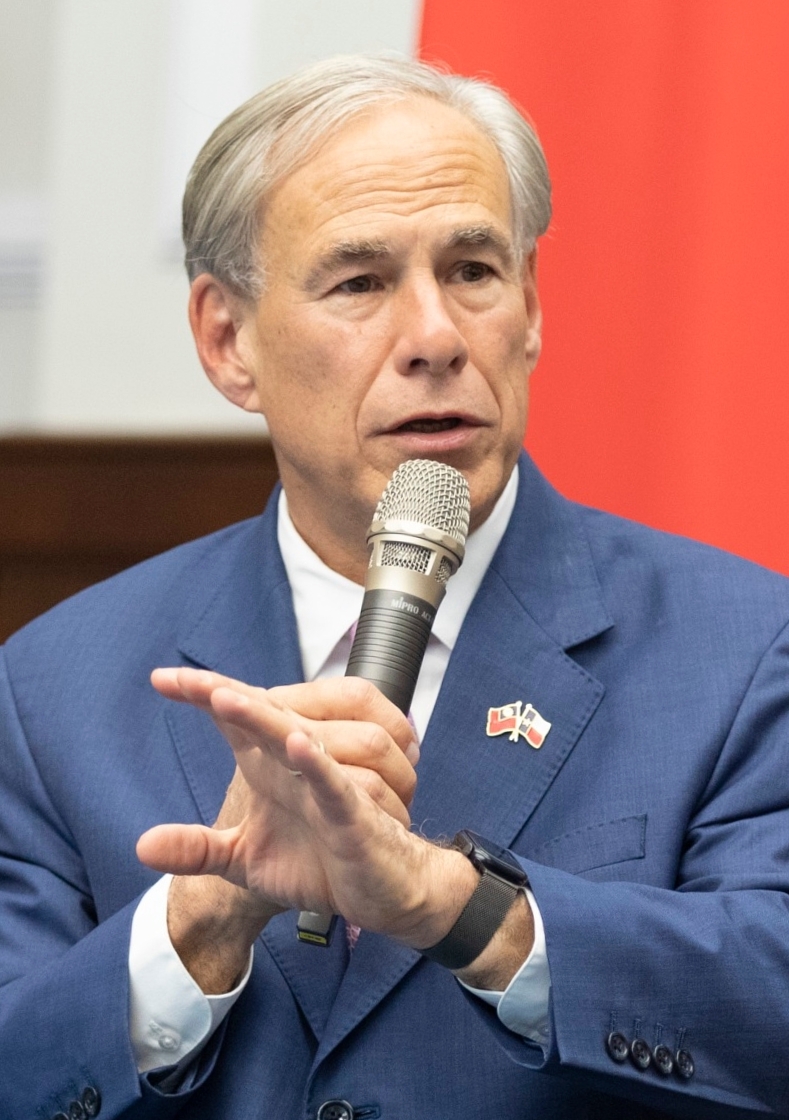
    Greg Abbott, Governor of Texas, at the Presidential Office of Taiwan 2024 07 07 (cropped)
    Image: ​中華民國總統府, via Wikimedia Commons, CC BY 2.0.

    The 10% undecided share may be just as important as the three-point gap. In a statewide race, voters who have not locked in can either restore the incumbent’s margin or confirm that a challenger is gaining traction.

    That is the tension inside the poll. It is not a Hinojosa lead. It is also not the kind of comfortable, double-digit incumbent advantage that would let either party ignore the contest.

    Abbott still leads every cited poll

    The clearest counterweight to Democratic optimism is simple: Abbott is still ahead. The July TPOR poll is the narrowest recent result cited in the reporting, but it does not overturn the broader pattern of Abbott leading the field.

    A New York Times poll released June 30 showed Abbott up 51% to 44%. A University of Texas/Texas Politics Project poll released June 22 had Abbott ahead 47% to 40%. Both measured a seven-point margin.

    Earlier spring polling also favored Abbott. TPOR’s May survey showed him leading 46% to 41%, while its April poll put him ahead 48% to 43%. An April University of Texas/Texas Politics Project poll had Abbott up 44% to 38%.

    That history matters because one tighter poll can be a signal, a sampling difference or the start of a real shift. Campaigns will treat it as evidence; cautious readers should treat it as a snapshot.

    Hinojosa’s opening is coalition math

    The July TPOR poll points to the voter groups Hinojosa would need if she is going to make the race genuinely close. According to the survey, she leads among independents, moderates, Black voters and Latino voters.

    Those groups explain why Democrats are paying attention. A Texas Democrat cannot rely only on base enthusiasm; the party needs strong margins with voters of color, better performance with independents and enough moderate support to cut into the Republican advantage.

    Hinojosa’s own message is aimed at that kind of coalition. In a statement reported by USA TODAY, she said her plan is to “save public schools, put money in your pocket, and end the Greg Abbott Corruption Tax,” while arguing that Texans across party lines are ready for change.

    Abbott’s advantage in the poll among white voters and college-educated voters shows why that path is still difficult. Hinojosa may be narrowing the race, but Abbott’s coalition remains large enough to keep him ahead.

    Why Texas makes this harder

    Texas has produced plenty of close-looking Democratic moments over the past decade, but Republicans have continued to win statewide offices. That history is why a three-point poll will be read differently by each side.

    For Democrats, the new number is a proof point that the race is worth investing in. If a challenger is within a few points months before November, donors, volunteers and national groups may see a reason to pay closer attention.

    For Republicans, the safer interpretation is that Abbott remains the incumbent with the lead, the fundraising network and the benefit of Texas’ recent voting history. A close poll can motivate a campaign without proving that the state’s fundamentals have changed.

    The real question is whether Hinojosa’s support is rising or whether Abbott’s number is temporarily soft. The difference matters: one points to a challenger building strength, the other to undecided voters who may eventually return to the incumbent.

    A second race shows pressure

    The governor’s race is not the only statewide contest showing a tighter margin in the same polling environment. USA TODAY also reported that the Texas attorney general race has moved close in recent surveys.

    In the July TPOR poll, Republican state Sen. Mayes Middleton led Democratic state Sen. Nathan Johnson 39% to 38%, with 18% undecided. Earlier polling had Middleton ahead by wider margins.

    That does not mean Democrats are suddenly favored statewide. It does suggest that economic concerns, dissatisfaction with incumbents or candidate-specific factors may be creating more competitive numbers than Republicans would like.

    For Texas voters, the practical takeaway is that several statewide races may be more fluid than they looked earlier in the cycle. For campaigns, the undecided share is the battlefield.

    The next polls need consistency

    The biggest mistake would be treating one survey as a forecast. Polls measure a moment, and likely-voter models can change as campaigns intensify, turnout expectations shift and undecided voters make choices.

    The next useful sign will be whether other pollsters show the same tightening. If Abbott’s lead repeatedly lands near three points, the race will look meaningfully different from the seven-point margins seen in June.

    If later polling moves back toward a larger Abbott lead, the July TPOR result may look more like a temporary narrowing than a durable trend. Either way, Hinojosa has gained something campaigns value: a credible argument that the race deserves attention.

    For now, the poll’s message is narrow but important. Abbott remains ahead in Texas, Hinojosa is closer than she was in several recent surveys, and the 10% of likely voters still undecided could determine whether this tightening becomes a race-changing trend.

  • Stephen Miller’s Hannity Broadside Runs Into Viewer Resistance

    Stephen Miller’s Hannity Broadside Runs Into Viewer Resistance

    A segment about left-wing primary victories became a test of how far a Trump-aligned attack can stretch before some friendly viewers hear provocation.

    A Hannity appearance built around progressive primary wins became notable for the reaction to Stephen Miller’s language as much as for the Democratic candidates he criticized.

    According to Fox News, Miller said voting for “any Democrat, anywhere” empowers a party that wants to strip the country “to the bone” and take away America’s “security,” “defense” and “way of life.” Some Fox News viewers reacted negatively to the remarks, turning a friendly cable-news setting into a test of rhetorical limits.

    Fox News Digital identified Miller as the White House deputy chief of staff for policy. That role made the exchange more than a routine pundit segment: Miller was speaking as a Trump-aligned policy figure closely associated with President Donald Trump’s hard-line agenda, especially on immigration and border enforcement.

    The setting made the response stand out

    Fox News is usually favorable terrain for Republican criticism of Democrats, progressive activists and left-wing policy proposals. Miller’s larger argument fit that environment: he cast recent primary victories as evidence that the Democratic Party has moved sharply left.

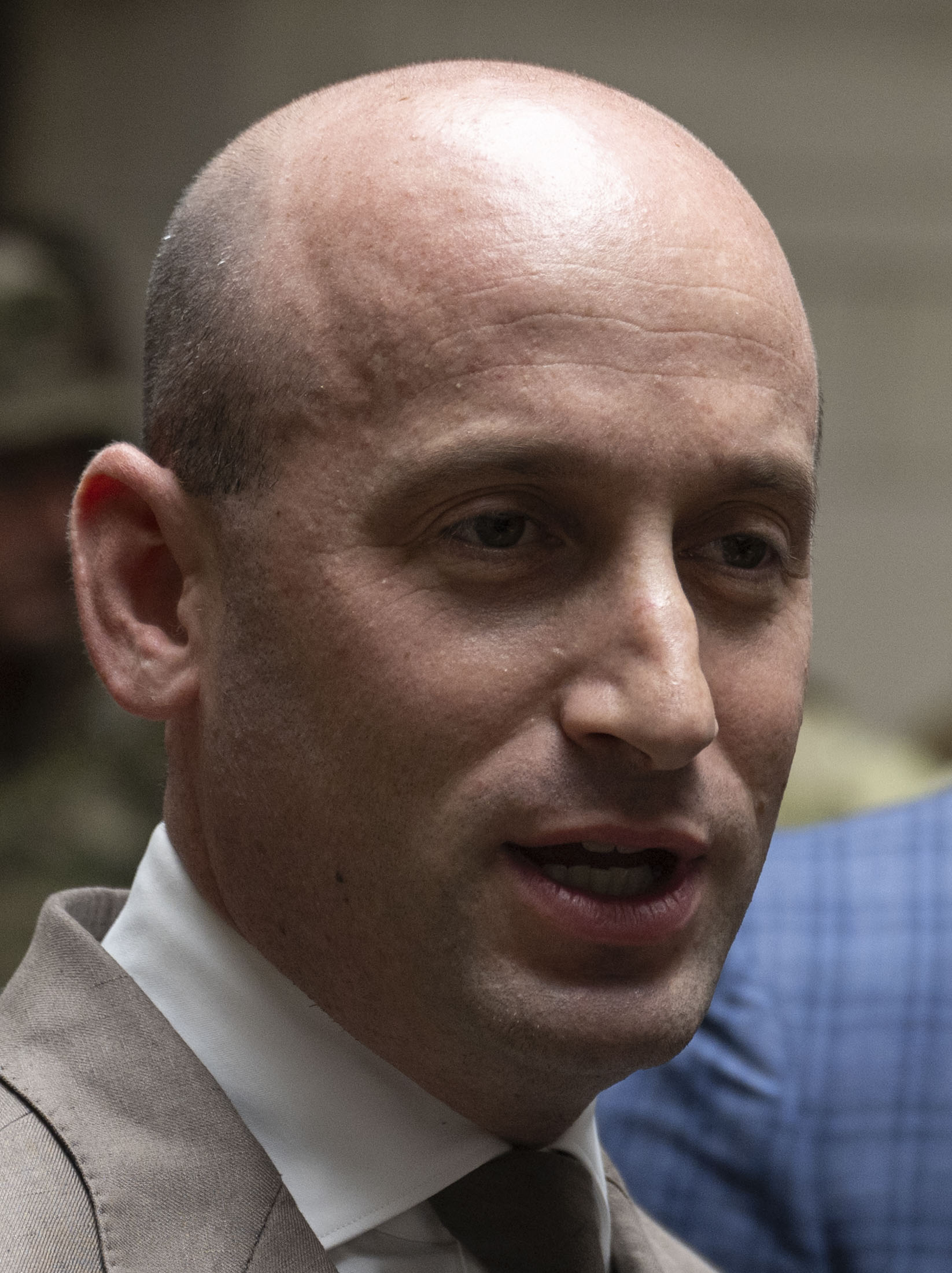
    2025 Stephen Miller (cropped)
    Image: U.S. Secretary of Defense, via Wikimedia Commons, Public domain.

    The negative reaction from some viewers was not simply about Miller attacking Democrats. The flashpoint was the scale of the attack.

    Rather than confining his critique to self-described socialists, candidates tied to Zohran Mamdani, or Democrats associated with proposals such as abolishing ICE, Miller treated the party as one political threat across offices and regions.

    That sweep is what changed the tone of the episode. A critique of particular candidates can sound like campaign analysis. A claim about every Democratic vote can sound, to critics, more like provocation.

    What Miller said on Hannity

    According to Fox News, Miller argued that Democrats today no longer resemble the party many voters remember from earlier generations.

    “The Democrats that your mom and dad grew up with, the Democrats that your grandma and grandpa grew up with, do not exist anymore at all, not at any level of government,” Miller said, according to Fox News.

    He then widened the point to voters’ choices across the ballot. “A vote for any Democrat, anywhere, for any office” helps a party that wants to take away America’s “security,” “defense” and “way of life,” he said.

    Fox News also quoted Miller describing the results as “terrifying evidence” of how far a “cancer” had spread through the Democratic Party. He described the party’s left flank as choosing “the most socialist, the most communist, the most lunatic candidates.”

    The primary wins behind the attack

    Miller’s remarks followed progressive primary victories that Fox News connected to Zohran Mamdani and other left-wing candidates. The report cited New York contests involving candidates backed by Mamdani, including Darializa Avila Chevalier, Claire Valdez and Brad Lander.

    Fox News also pointed to progressive contests in Maine, Los Angeles, Texas and Michigan as signs of a broader shift inside Democratic politics.

    That gave Republicans a clear campaign opening: local progressive wins can be tied to the national Democratic brand. In Miller’s telling, those victories were not isolated results but evidence of a party-wide transformation.

    Democrats face a strategic tension in that framing. Progressive candidates can energize younger and left-leaning voters, while their positions can also become material for Republican attacks in races far from the places where those candidates are running.

    Why some viewers heard trolling

    The backlash centered on breadth and tone. Miller did not argue only that certain progressive candidates had won important races. He turned those wins into a warning about any Democrat seeking any office.

    Supporters may hear that as blunt clarity. Critics hear a message built less to persuade than to insult.

    That distinction matters because Miller was speaking in one of the friendliest media environments available to a senior Trump-world figure. If some conservative-leaning viewers bristled there, it suggests a possible boundary in partisan messaging.

    Attacking Democratic policies may land differently than portraying every Democratic officeholder or voter as part of an existential danger.

    What the reaction can and cannot prove

    The phrase “Fox News viewers turn against Stephen Miller” needs caution. Viewer comments, social posts and online engagement around cable-news clips are not a scientific measurement of conservative opinion.

    They can show irritation without proving a broader revolt. It also remains unclear how much of the response came from Fox’s core audience versus online readers encountering the segment through aggregation and social platforms.

    Still, the reaction is politically useful to examine because of where it surfaced. Miller’s remarks were delivered on a program where anti-Democratic arguments are not unusual.

    That made the viewer pushback less about whether Democrats can be criticized and more about whether a sweeping, maximalist attack can undercut its own argument.

    The political trade-off

    Miller also framed Trump as the only force standing against what he called a “tyrannical wave of left-wing insanity.” That presented the issue not merely as commentary on primary results, but as a broader political worldview.

    The advantage for Republicans is simplicity. Democrats have moved left, Miller argued, and every Democratic win strengthens that direction. It is easy to repeat, clip and use in campaign messaging.

    The drawback is overreach. Many voters know Democrats who do not match Miller’s description: local officials focused on schools, roads, budgets and services. When rhetoric erases those distinctions, it may rally loyalists while alienating people still open to persuasion.

    The episode gave both parties something to use. Republicans got a forceful line tying Democrats to their left flank. Democrats got an example of Trump-aligned rhetoric they can describe as extreme and indiscriminate.

  • Talarico Bets Voter Fatigue Won’t Shield Paxton in Texas Senate Race

    Talarico Bets Voter Fatigue Won’t Shield Paxton in Texas Senate Race

    The Democrat’s challenge is not proving voters have heard the allegations. It is convincing them that old controversies have fresh consequences in a high-stakes Senate contest.

    James Talarico is attacking Ken Paxton’s scandals in the Texas Senate race, opening his general-election push in Houston on Wednesday after Paxton won the Republican Senate nomination in Plano on May 26, 2026. The question is whether Talarico can overcome Texas voter fatigue and make a Paxton attack stick in a state where Ken Paxton has survived repeated controversy before.

    According to Associated Press reporting, the contest puts a familiar corruption argument into a higher-profile U.S. Senate fight. The political stakes are clear: Talarico wants voters to see Paxton’s record as a present-day problem, while Paxton is leaning on party loyalty, conservative fights and his record of surviving investigations.

    The fatigue problem

    Talarico’s biggest obstacle may not be a lack of information. Many Texas voters have already heard years of accusations and investigations involving Paxton, and he has remained a powerful statewide Republican.

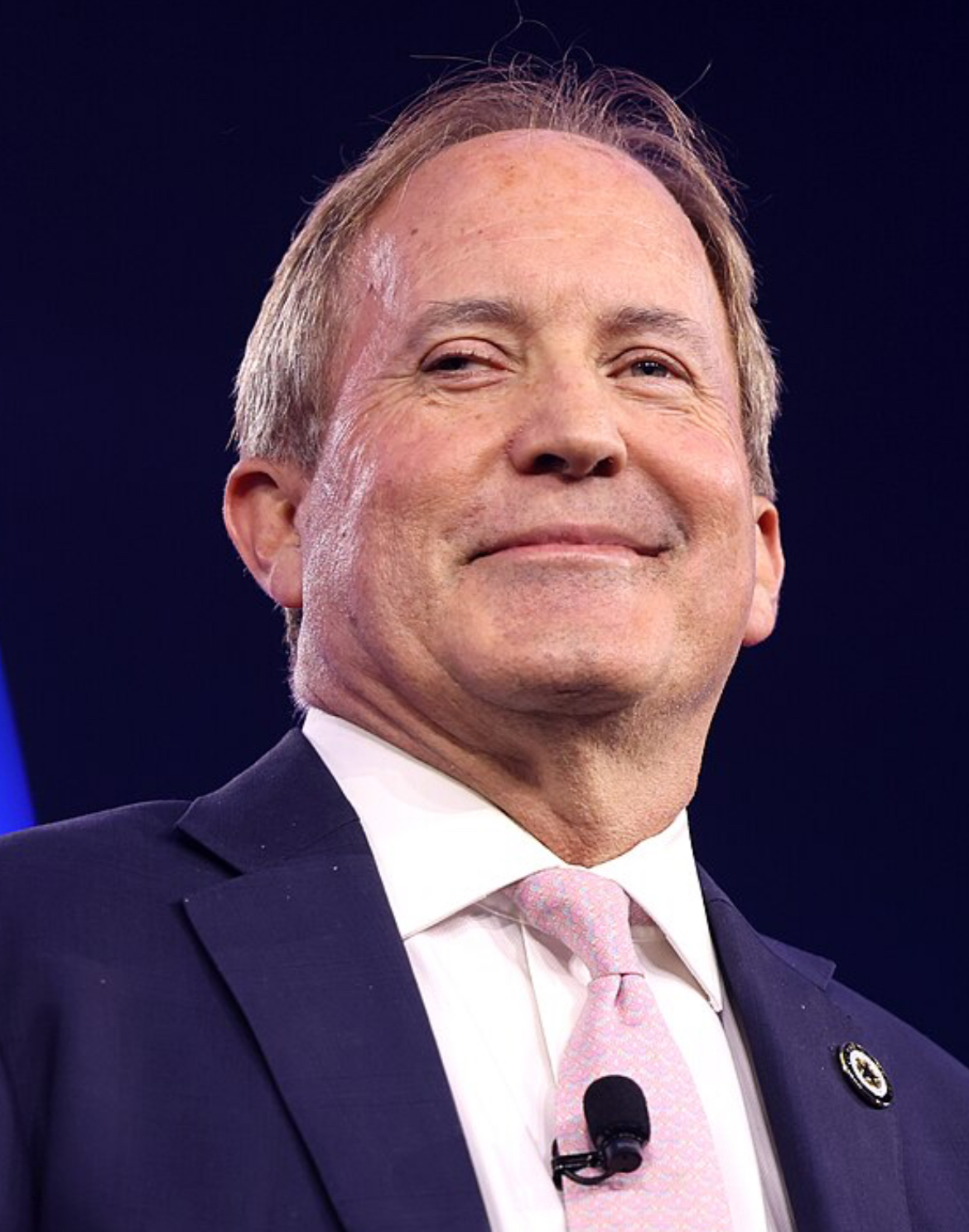
    Ken Paxton 2024 (cropped)
    Image: Gage Skidmore from Surprise, AZ, United States of America, via Wikimedia Commons, CC BY-SA 2.0.

    That makes this campaign different from a first-time opposition research dump. Talarico is not simply trying to introduce a scandal narrative. He is trying to persuade voters that a story they may consider settled, repetitive or partisan should matter again in 2026.

    That is a hard task in a Republican-dominated state. Paxton can argue that voters have seen the attacks before and still kept him in public life. Talarico has to argue that familiarity should not become immunity.

    Talarico’s cost-of-corruption bet

    Talarico, a Democrat who defeated Rep. Jasmine Crockett in a costly and hard-fought primary, is trying to widen the argument beyond Paxton personally. His campaign is tying corruption to everyday concerns, including affordability, public priorities and the idea that government power is serving insiders rather than ordinary Texans.

    That framing matters because a plain catalogue of controversies has failed against Paxton before. Talarico’s strategic bet is that voters may respond differently if the issue is presented not as old legal baggage, but as part of a governing culture that has not improved daily life.

    That remains a political argument, not a settled fact. But it shows why Talarico’s opening message is less about shocking voters with new material and more about changing how they interpret what they already know.

    Paxton’s answer is already set

    Paxton’s campaign is rejecting Talarico’s case. Spokesperson Madison Cercy told the AP that Talarico’s claims are meant to distract voters from what the campaign called his out-of-touch views.

    The campaign also compared Paxton to Donald Trump as a fighter against the permanent political class. That comparison is central to Paxton’s political defense: attacks from Democrats and establishment Republicans can be framed as evidence that he is battling the right opponents.

    Paxton has also built credibility with many conservatives through legal battles over immigration, abortion and transgender issues. For supporters who prioritize those fights, allegations against him may be outweighed by what they see as a record of taking on liberal institutions and political enemies.

    The losses Talarico inherits

    The warning signs for Talarico are concrete. According to the AP, previous Paxton opponents made his legal and ethical troubles central to their campaigns, and they lost.

    • Earlier this year, U.S. Sen. John Cornyn warned that “judgment day is coming” while trying to fend off Paxton in the Republican Senate primary.
    • Four years ago, George P. Bush challenged Paxton in a Republican primary and used billboards calling him a crook alongside Paxton’s mugshot from the securities fraud case.
    • Eight years ago, Democrat Justin Nelson ran for Texas attorney general with ads using courthouse security footage of Paxton pocketing an expensive pen that was not his. Nelson also emphasized Paxton’s securities fraud indictment.

    All three lost. Bush’s defeat was especially lopsided: Paxton beat him in the 2022 Republican runoff by 34 percentage points. Pro-Paxton groups spent more than $20 million, about twice what Bush and his allies spent, according to the AP.

    Nelson came closer in 2018. Paxton won by 3.6 percentage points, even as Republican Gov. Greg Abbott won reelection by more than 13 points. Nelson’s campaign spent about $6.5 million, roughly half of Paxton’s spending, according to the AP, and Nelson later argued his message needed more time and money.

    The legal record and its limits

    Paxton has never been convicted of a crime. That fact is essential to how his campaign can respond when opponents cite investigations, indictments and impeachment proceedings.

    He was indicted on securities fraud charges early in his tenure as Texas attorney general. That case ended in 2024, with Paxton directed to pay nearly $300,000 in restitution.

    He was also investigated over accusations that he abused his office to benefit an Austin real estate developer, accepted bribes and retaliated against whistleblower employees. In 2023, the Texas House impeached Paxton. The Texas Senate later acquitted him, allowing him to remain in office.

    Those facts give both campaigns material to work with. Talarico can point to a long record of controversy around Paxton’s public life. Paxton can point to the absence of a criminal conviction and the political outcomes that kept him in office.

    Why this race may differ

    A U.S. Senate race may change the scale of the fight. A statewide federal contest can draw national money, scrutiny and attention beyond a typical attorney general race.

    That does not erase Texas’ partisan realities. Democrats still face a steep climb in the state, and Paxton has repeatedly shown an ability to convert controversy into a loyalty test among conservative voters.

    Talarico’s path is narrow: make Paxton’s controversies feel current rather than archival, link corruption to everyday consequences without overstating what the record proves, and stop Paxton from turning every accusation into another persecution claim.

    The race will test more than one Democrat’s message. It will show whether a scandal-centered argument can still break through after years of repetition, partisan sorting and Paxton’s repeated political survival.